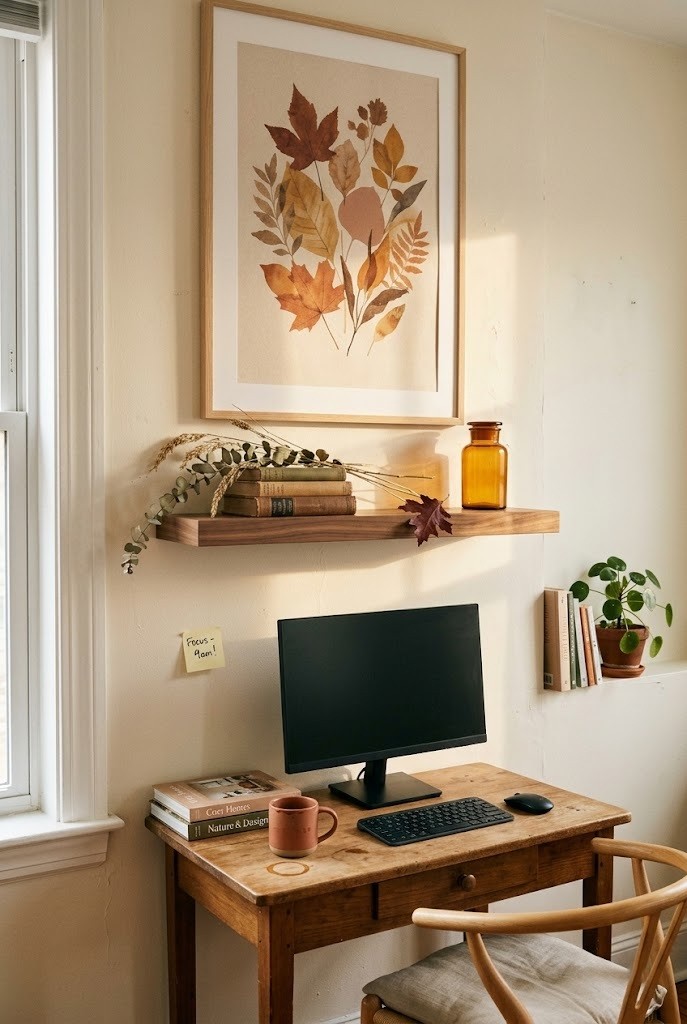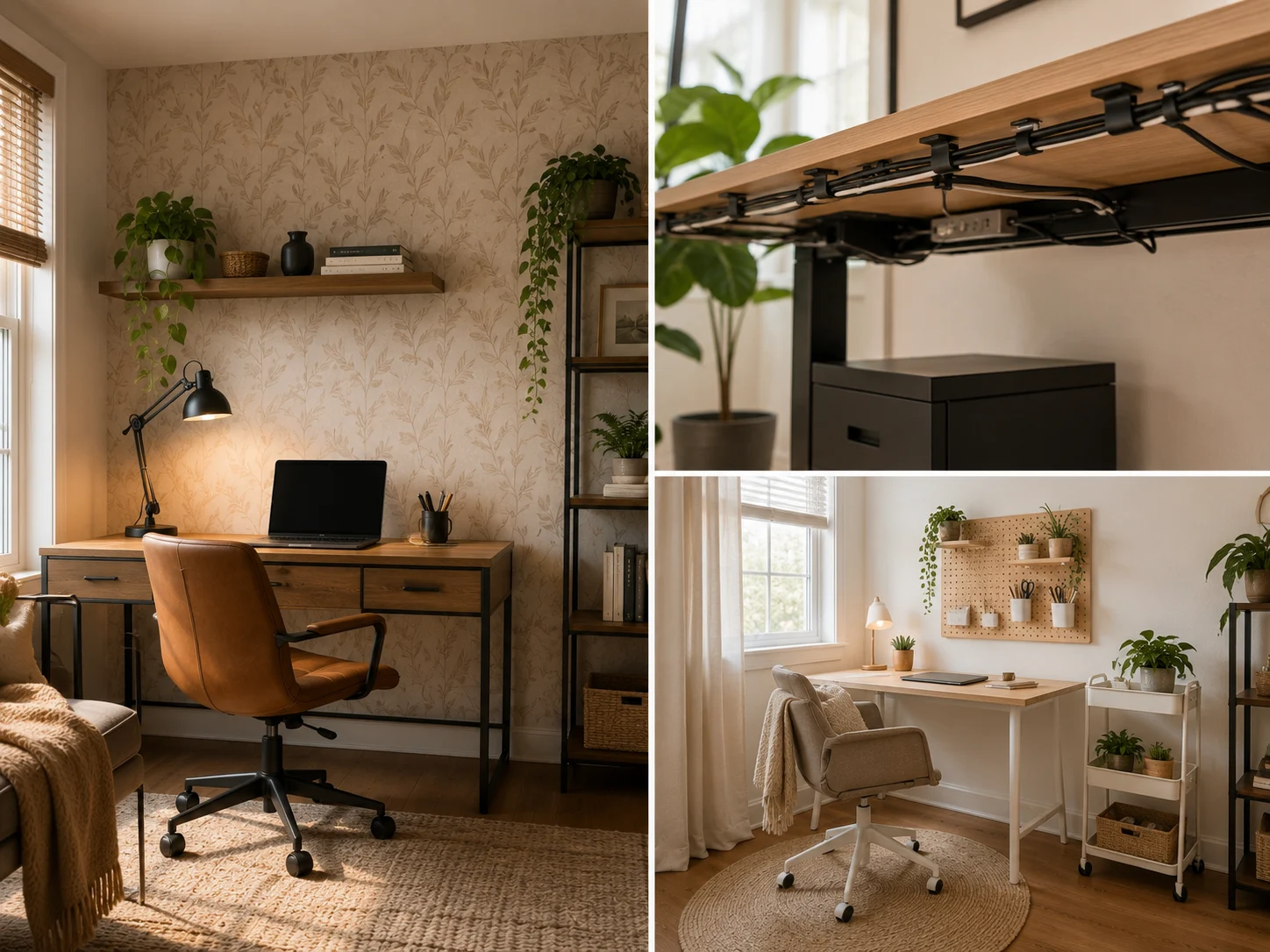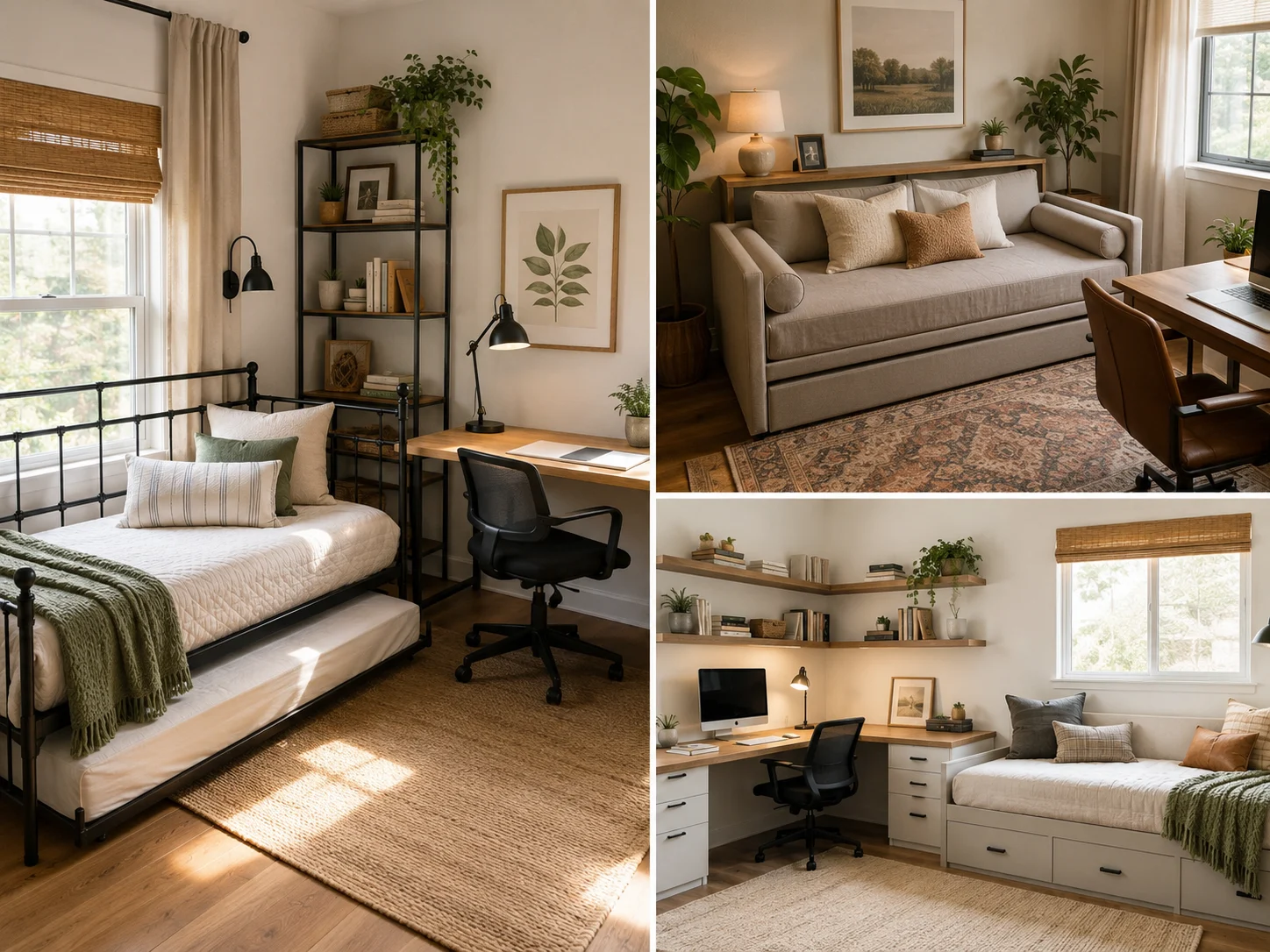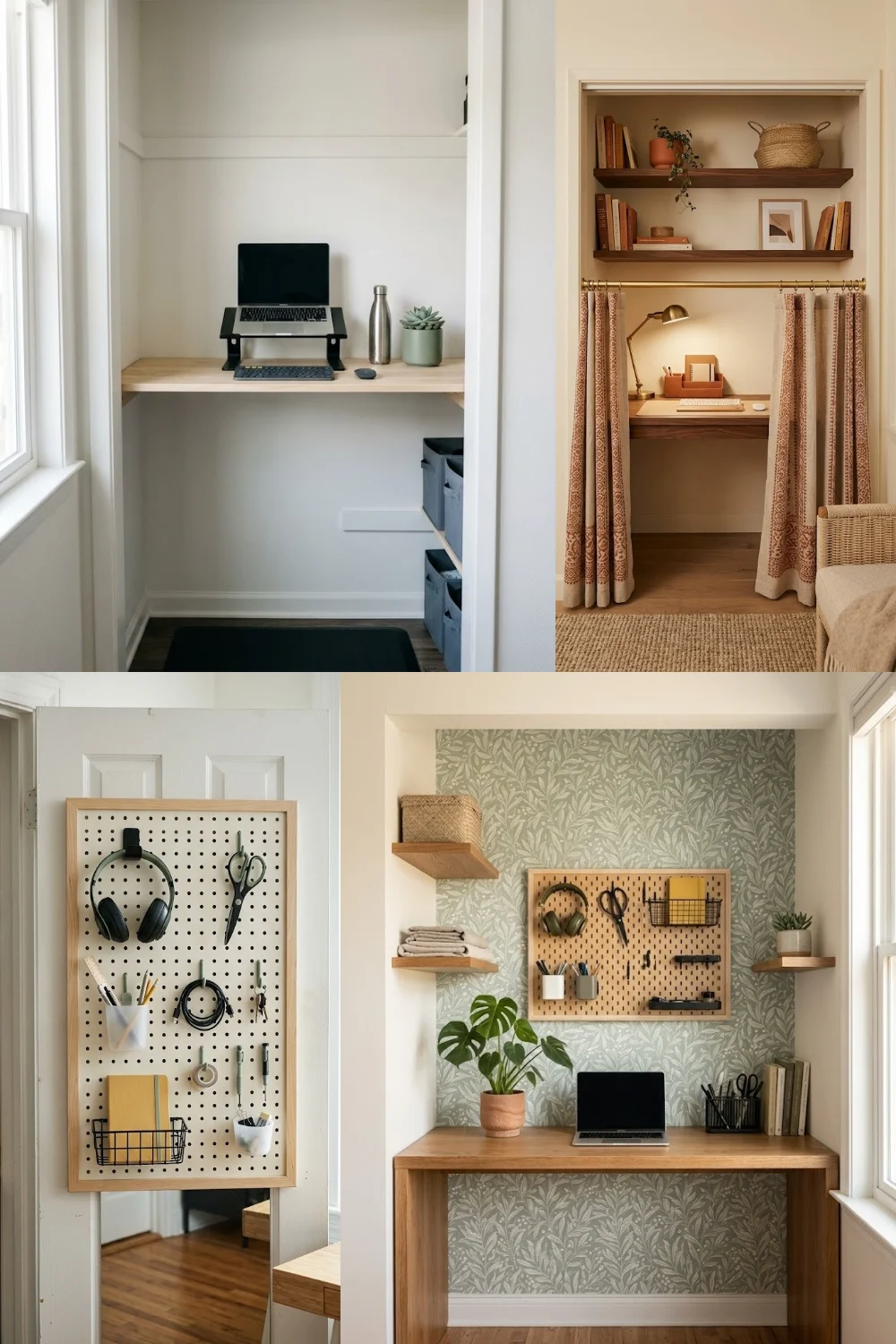
Closet office ideas for renters usually fall apart at the same two spots, and this post is built to fix exactly those. Most cloffice guides assume you'll drill a desktop into studs and screw in floating shelves, while the no-drill posts hand you generic renter storage instead of a real workspace. Nobody solves the two blockers that stop you: no outlet inside the closet, and no honest way to hang a desk surface without screws. I've moved through three rentals learning which damage-free products peel off clean and which take the paint with them. These 23 fixes send every pound to the floor or a tension pole and light it with no wall socket. Save this to Pinterest so it's here when your lease and your closet line up.
1. Floor-to-Ceiling Tension Poles Holding a Shelf Desk
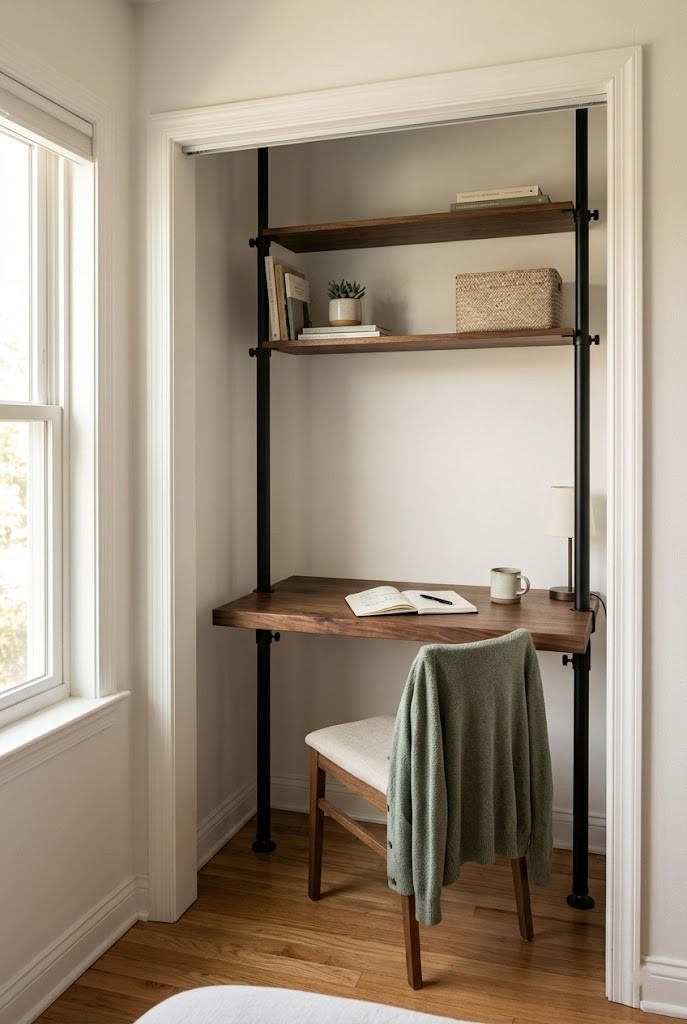
A pair of floor-to-ceiling tension poles carrying one deep shelf gives you a real desk that loads its weight into the floor and ceiling, not the wall. That part matters: nothing you lean on hangs from adhesive, so nothing peels off at 2 p.m. Run two spring-tension poles at the closet's back corners, set a 12 to 16 inch deep shelf across their brackets at about 29 inches for a seated desk, and keep the total load under the poles' rating, usually 20 to 40 pounds each. Tension-rod shelving kits sell the poles and brackets together. Center your laptop over the bracket line, not the open span, so the shelf never bows.
2. A Plank Laid Across the Closet's Existing Shelf Brackets
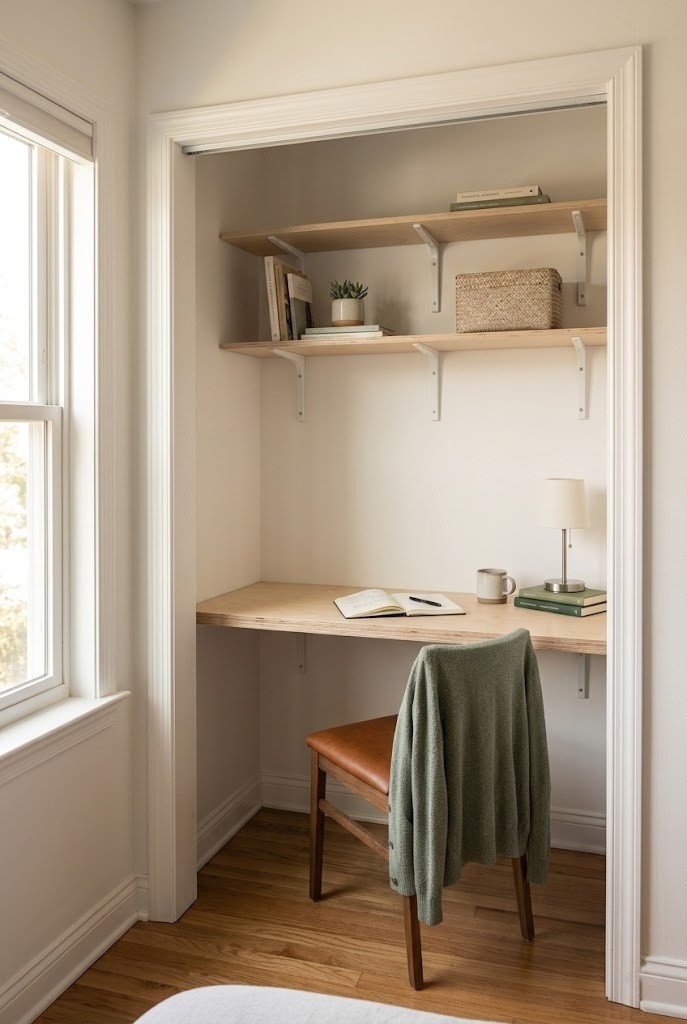
The bracket already screwed into your closet is free desk mounting you never had to install, if it can take the load. Most single wire or particleboard closet shelves are rated for folded sweaters, not a person's forearms and a laptop. Test it: press down hard on the front edge with both hands, and any flex, creak, or bracket lift means it's a shelf, not a desk. If it holds, lay a 3/4 inch plywood or solid-wood plank cut to the closet width across it, sand the front edge smooth, and you have a surface for zero new hardware. If it flexes, fall back to the tension desk in idea 1 instead.
3. A Desktop Slab Resting on Two Rolling File Cabinets
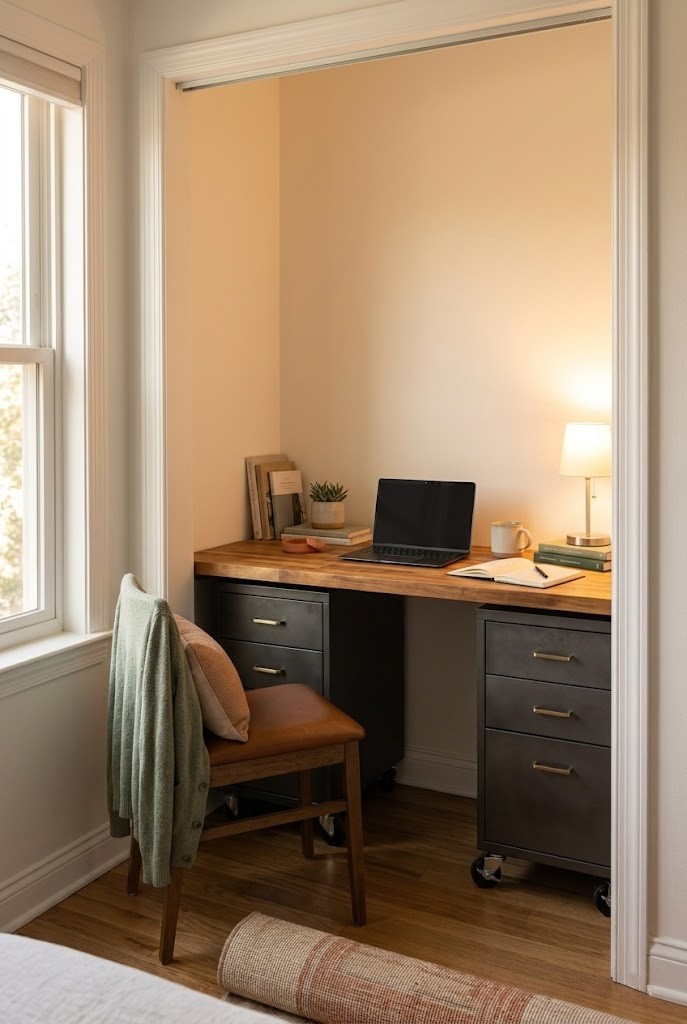
Two rolling file cabinets with a slab across the top make the most honest no-drill desk there is: every pound goes straight to the floor on casters. It also rolls out when you need the closet's back wall or want to vacuum. Space the cabinets so the slab overhangs each by no more than 6 inches, or the far end tips the moment you lean on it. A hollow-core door slab or a 1 inch butcher-block counter both work; butcher-block is heavier and won't slide around. This is a rolling alternative to the tension desk in idea 1 for anyone who doesn't want poles pressing on the ceiling.
4. A Narrow Freestanding Writing Desk Sized to the Closet Footprint
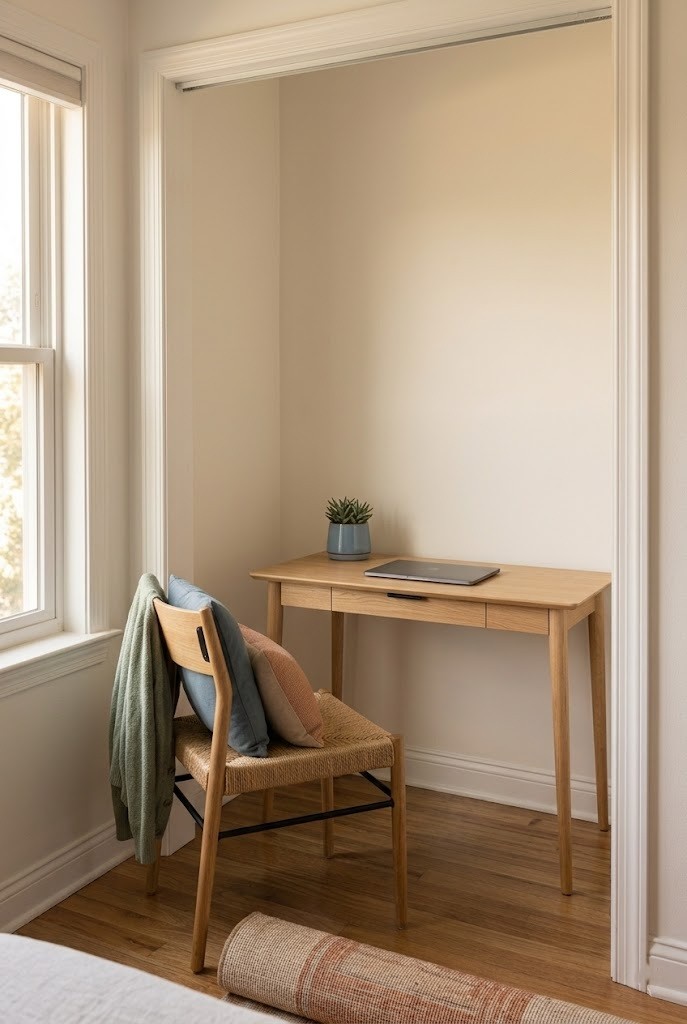
Skip every mounting question by sliding a narrow freestanding writing desk straight into the closet opening, where it stands on its own four legs. Measure the interior width and the door opening before buying: a 32 to 40 inch wide, 18 to 20 inch deep desk clears most reach-in closets and still fits through a standard 24 inch door. Depth is the trap. Anything past 20 inches and your chair won't fit inside the closet, so you'll end up sitting in the room with your knees in the doorway. Look for an open-back desk so cords can reach out toward the room's outlet.
5. A Fold-Down Surface Clamped to a Tension Pole
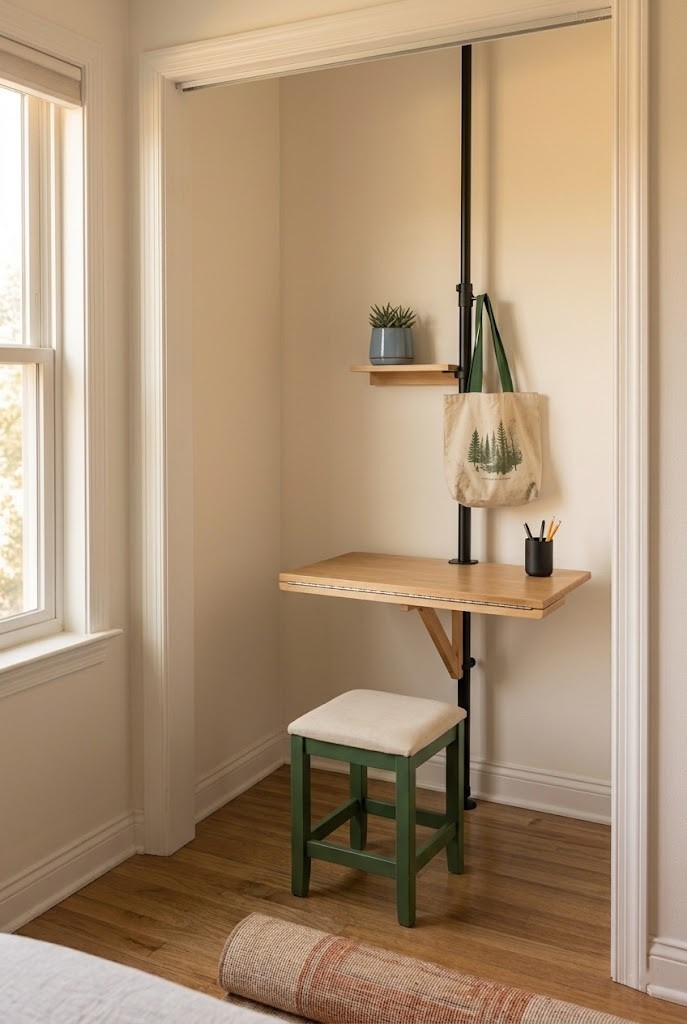
For a closet under 24 inches deep, a fold-down shelf clamped to a tension pole becomes a desk only when you want one, then drops flat to give the space back. It's the move when a fixed desk would block the door. Clamp a piano-hinged bracket shelf to one stout tension pole, keep the fold-down depth to about 14 inches so it doesn't sag on its own, and add a folding leg or a light support chain for anything heavier than a laptop. Returning the closet to storage at night is what makes this work in a studio, where every square foot does two jobs.
6. A Standing Nook Built on the Closet's Upper Shelf
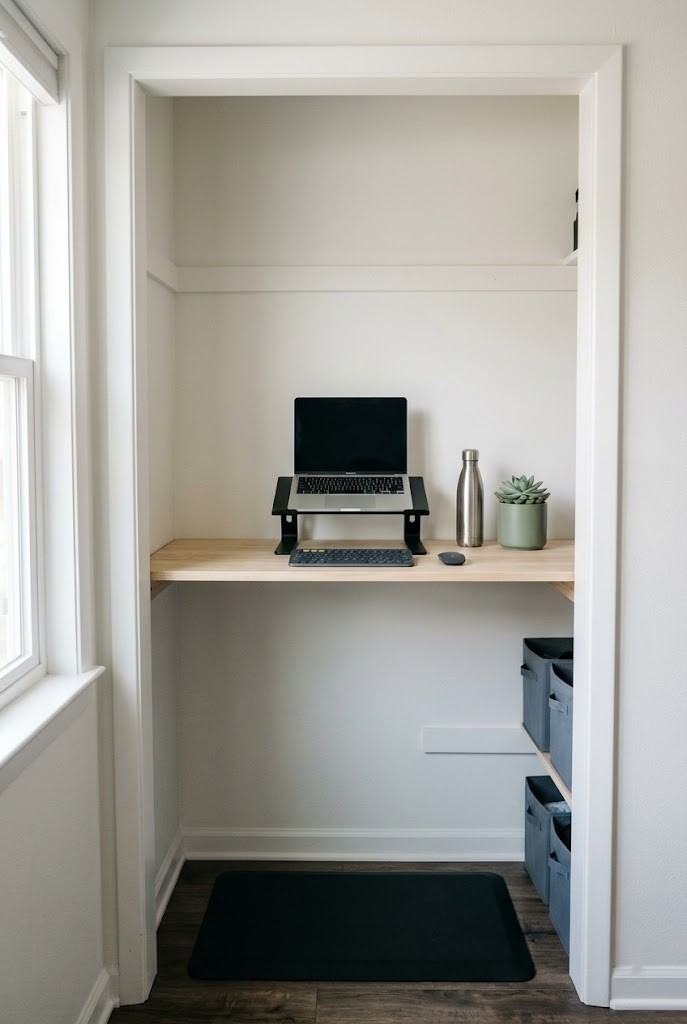
The closet's existing upper shelf is often already at standing-desk height, so a laptop riser set on top turns it into a stand-up workstation with nothing to mount at all. Standing height tracks your elbow bend: measure floor to bent elbow, and the keyboard surface should land there, usually 38 to 44 inches for most people. If the shelf sits a little low, the riser closes the gap; a little high, and you skip the riser. Put an anti-fatigue mat on the floor where you stand. This suits short, focused sessions far better than a full eight-hour day on your feet.
7. A Three-Tier Rolling Cart as Storage and Overflow Surface
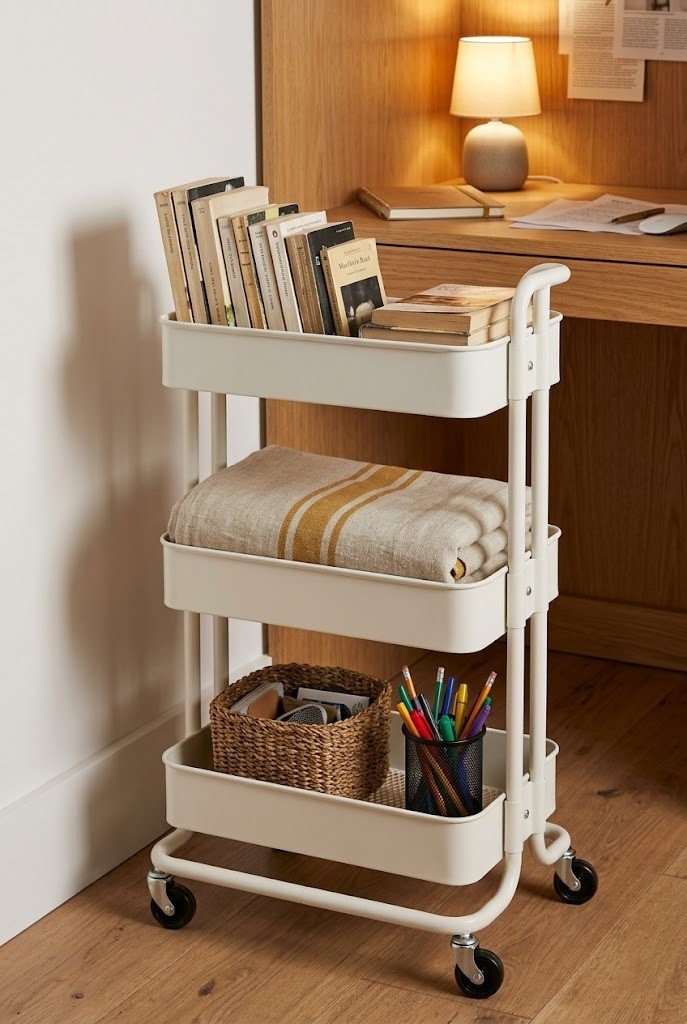
Park a slim rolling cart beside the desk and it carries everything the closet's shelves can't, doubling as an extra surface when you roll it to the desk edge. It earns its place by moving: out to work, back at night. Look for a cart under 12 inches wide so it fits between the desk leg and the wall, with a top lip that stops pens from rolling off. Load the heaviest items, books or a label maker, on the bottom tier so it doesn't get tippy. It pairs with the rolling file cabinets in idea 3 if you want the whole desk mobile.
8. A Vertical Tension-Rod Shelving Tower for Supplies
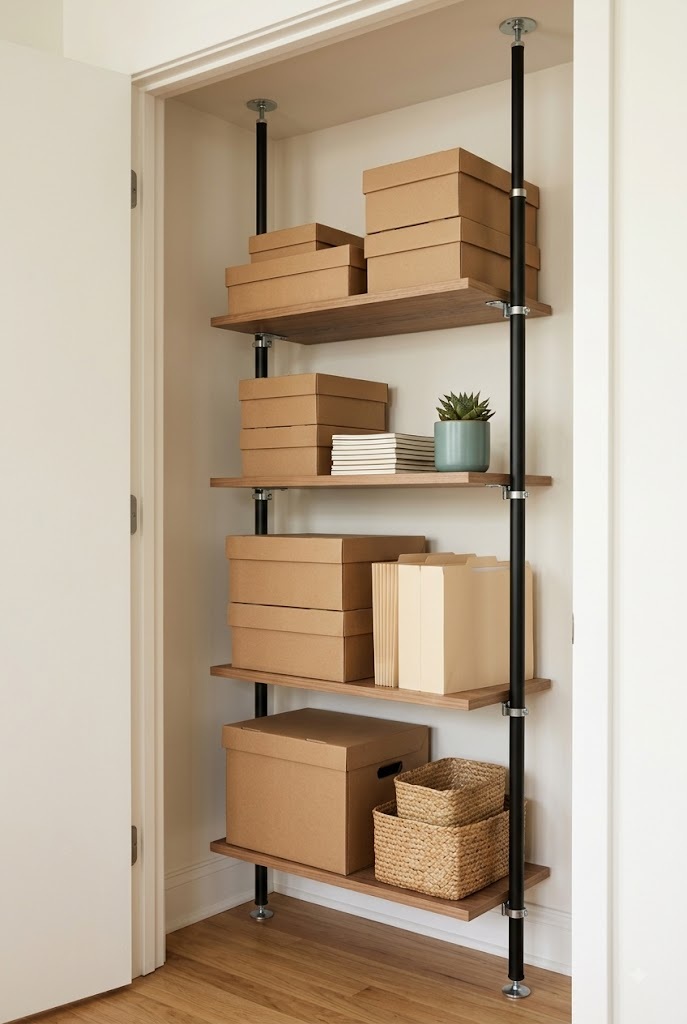
Storage goes straight up the closet's side wall on a tension-rod shelving tower, no screws needed, which is exactly where supplies belong once floor space is gone. Tension-rod shelving kits give you three to five shelves between two floor-to-ceiling poles; set them in a back corner so they don't crowd your chair. Keep each shelf's load modest and centered, and re-check the tension every few weeks, because poles creep down slowly under weight. Put daily items at desk height and rare stock up top. It uses the same tension principle as the desk setup, just built into shelving instead of a work surface.
9. An Over-the-Door Organizer on the Closet Door Itself
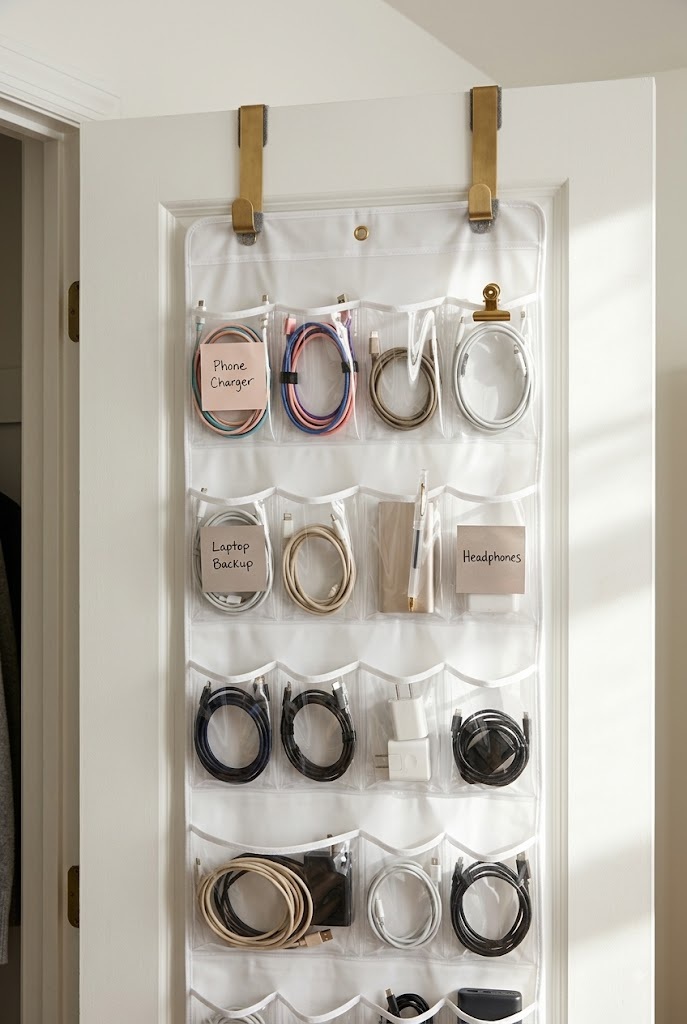
The back of the closet door is the one vertical surface nobody uses, and an over-the-door organizer claims it for cables, sticky notes, and chargers. Clear pocket organizers keep small gear visible; a hook-and-basket version handles bulkier bins. The catch renters miss: cheap over-door hooks are thin metal that dents or scratches the door's top edge, which a landlord will notice at move-out. Slip a felt pad or a strip of painter's tape under each hook where it meets the door, and confirm the door still closes fully once the organizer is loaded, since a stuffed one can stop the latch from catching.
10. Hanging File Pockets Clipped to a Low Tension Rod
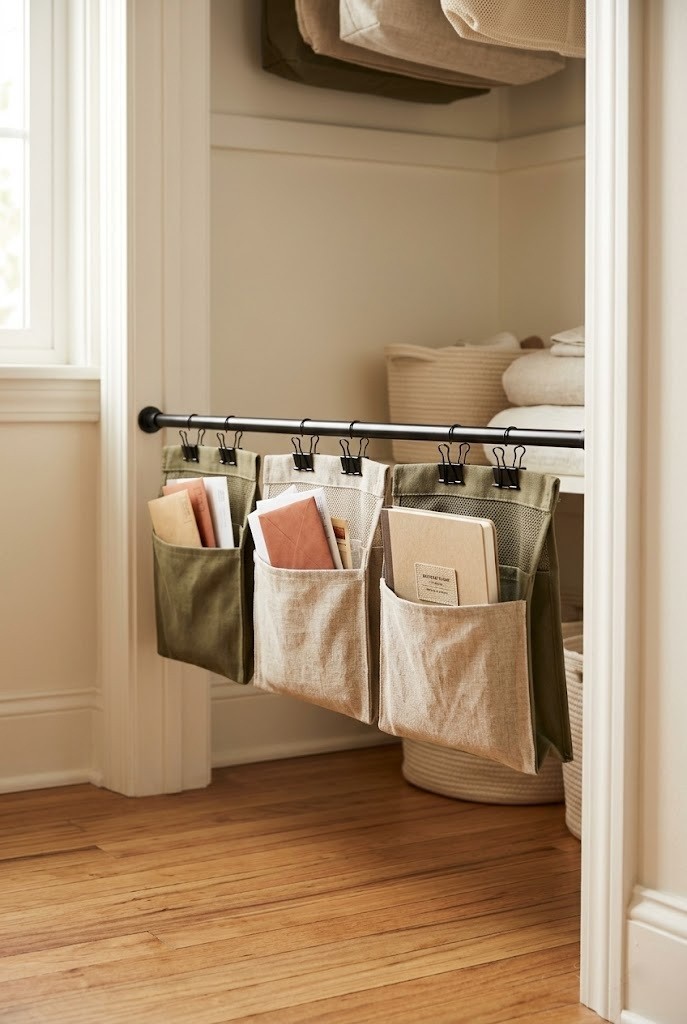
A short tension rod set low across the closet, hung with clip-on file pockets, keeps paper off your small desk and sorted where you can reach it. Mount a spring rod at the side of the closet around 40 inches up, then clip fabric or mesh pockets along it for mail, notebooks, and the one folder you actually open. What keeps it from looking chaotic: group the pockets in threes and leave gaps rather than cramming one into every inch, so the eye reads order instead of clutter. Load them light, because file pockets pull a thin rod down fast when treated like a filing cabinet.
11. A Freestanding Ladder Shelf Just Outside the Closet
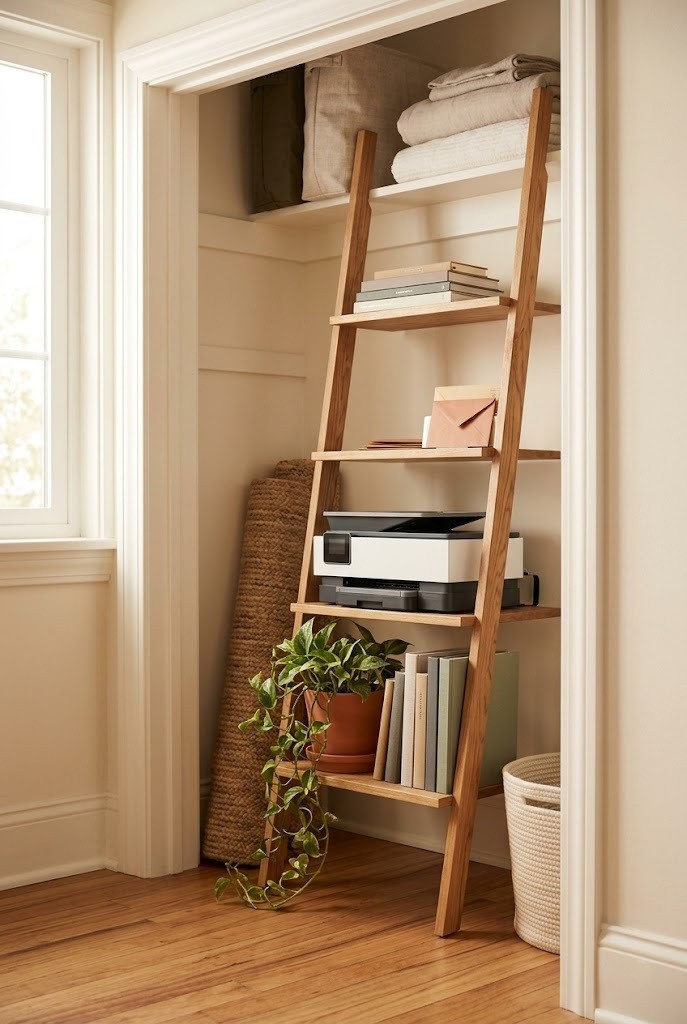
A leaning ladder shelf set beside the closet opening pushes storage out of the workspace, so the closet itself holds only the desk and you. Because it leans on the wall under its own weight, there's nothing to mount and nothing to patch later. Pick one whose footprint clears the door swing, and put the deepest shelf at the bottom for a printer or a supply box, tapering to books and plants up top. A ladder shelf reads lighter than a solid bookcase in a small room, so the corner doesn't close in. Strap it to the wall with a removable furniture strap if you have cats who climb, which mine do.
12. A Clamp-On Task Lamp Gripping the Shelf Edge
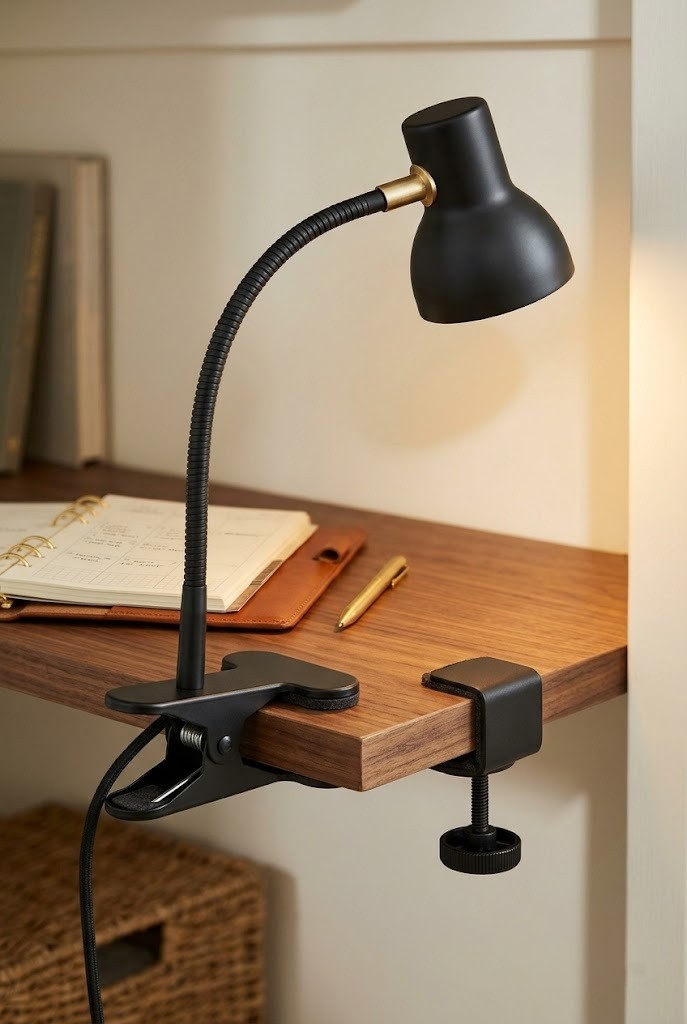
Clamp a task lamp onto the shelf edge and the entire 14-inch desktop stays free for actual work. A clamp-on lamp also cures the closet's darkness without a floor lamp you have no room for. Before buying, measure your shelf's thickness: most clamp jaws open 1.5 to 2 inches, and a thick butcher-block top or a doubled plank can be too fat to grip, so the lamp slips at the worst moment. Aim it from the side opposite your writing hand so you never work in your own shadow. A gooseneck arm lets you redirect the light without moving the clamp.
13. Rechargeable Puck Lights Stuck Under the Upper Shelf
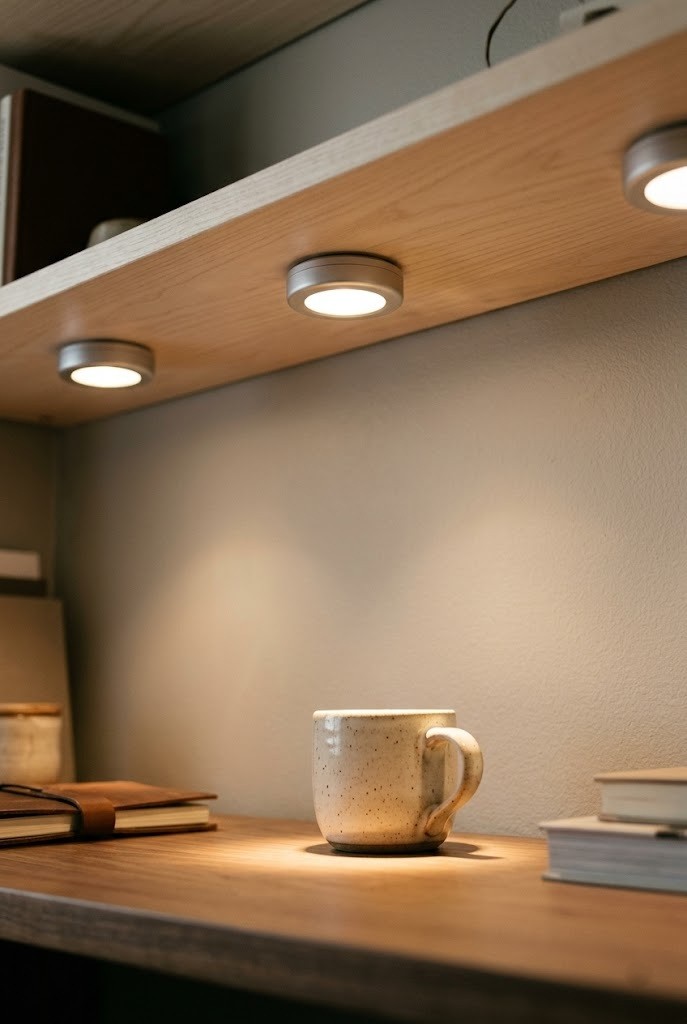
Rechargeable puck lights peel-mounted under the upper shelf light the desk in a closet with no outlet and no ceiling fixture, the blocker most cloffice guides skip. Stick two or three USB-rechargeable pucks along the shelf's front underside so light falls on the surface, not into your eyes. They pop off magnetic bases to recharge, so you never need a wall socket nearby. Expect to top them up every week or two under daily use, which is the honest trade for going wireless. Think of it as the cordless cousin of the clamp lamp in idea 12, for when you can't spare even the shelf edge.
14. A Cordless Rechargeable Desk Lamp You Charge Elsewhere
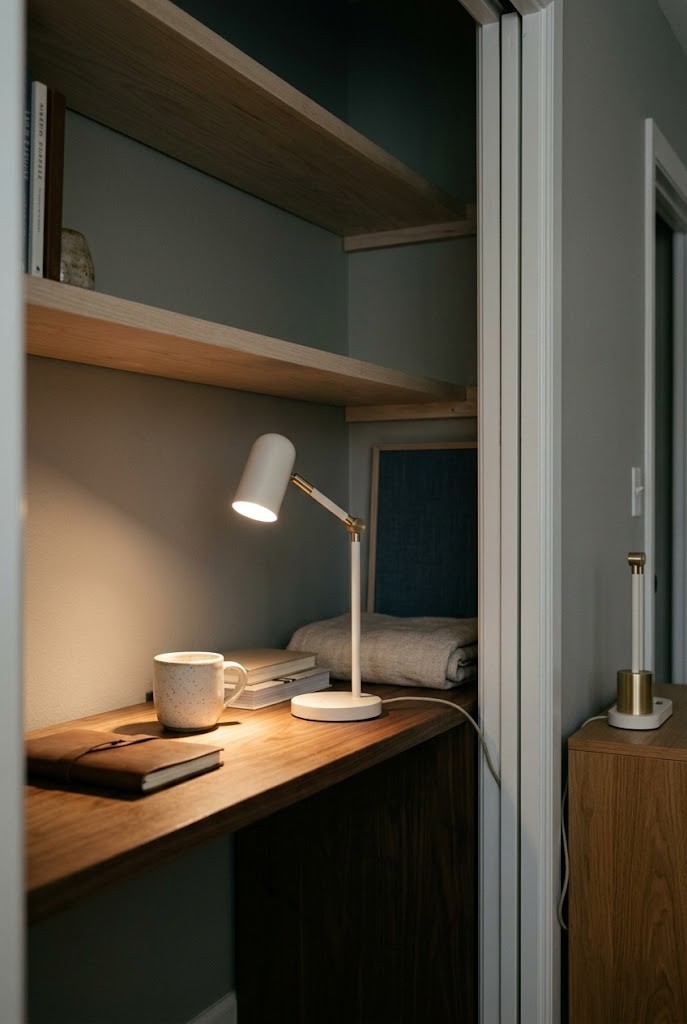
Real, aimable task light in an outlet-less closet comes from a fully rechargeable desk lamp you charge overnight at any socket in the room. Look for one rated 8 to 12 hours per charge on warm white; cool white at full brightness drains it faster. The maintenance truth nobody prints: lithium lamp batteries lose capacity over a year or two of daily cycling, so a lamp that ran ten hours when new may give six later. Buy one with a replaceable battery or a USB-C port if you can, and keep a charging spot by the door so topping it up becomes routine, not a scramble.
15. A USB LED Strip Run Along the Shelf's Front Lip
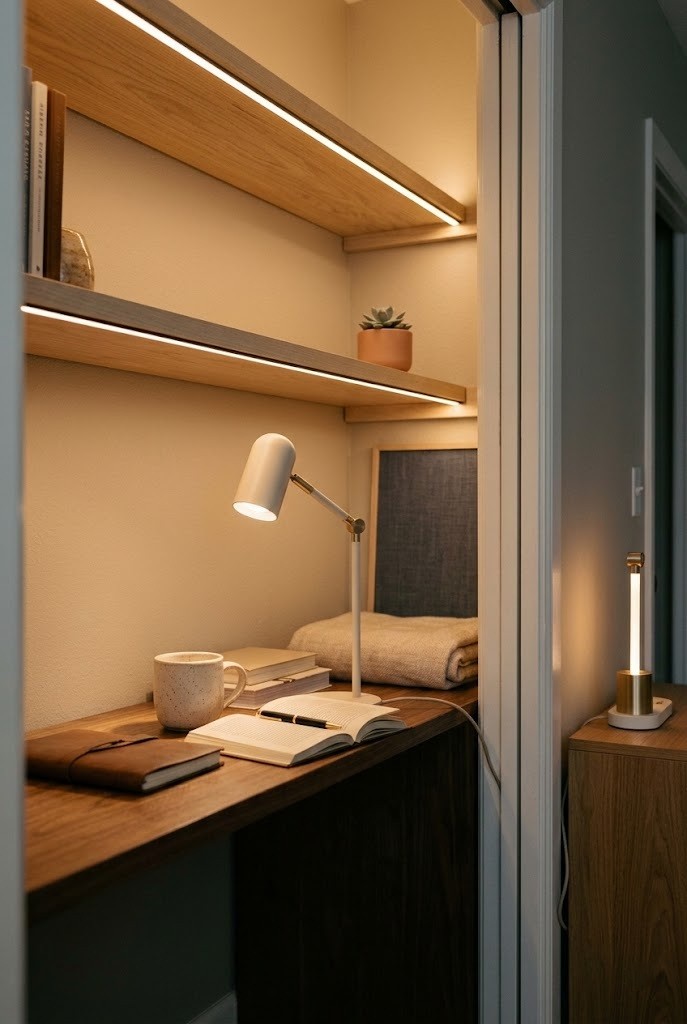
Run a stick-on LED strip along the front lip of the shelf and the whole desk gets even light with no lamp eating your surface, using USB or battery versions that need no outlet. Build it in three layers: the strip as ambient fill, a small task light for close work, and one warm accent so the closet doesn't read like an office bathroom. Pick a warm 2700 to 3000K strip for evening work; swapping to a cooler 4000K wakes the space up for daytime focus. Press it onto a clean, dry shelf edge, since the adhesive won't re-stick well once it has lifted.
16. A Flat Low-Profile Extension Cord Run Under the Door
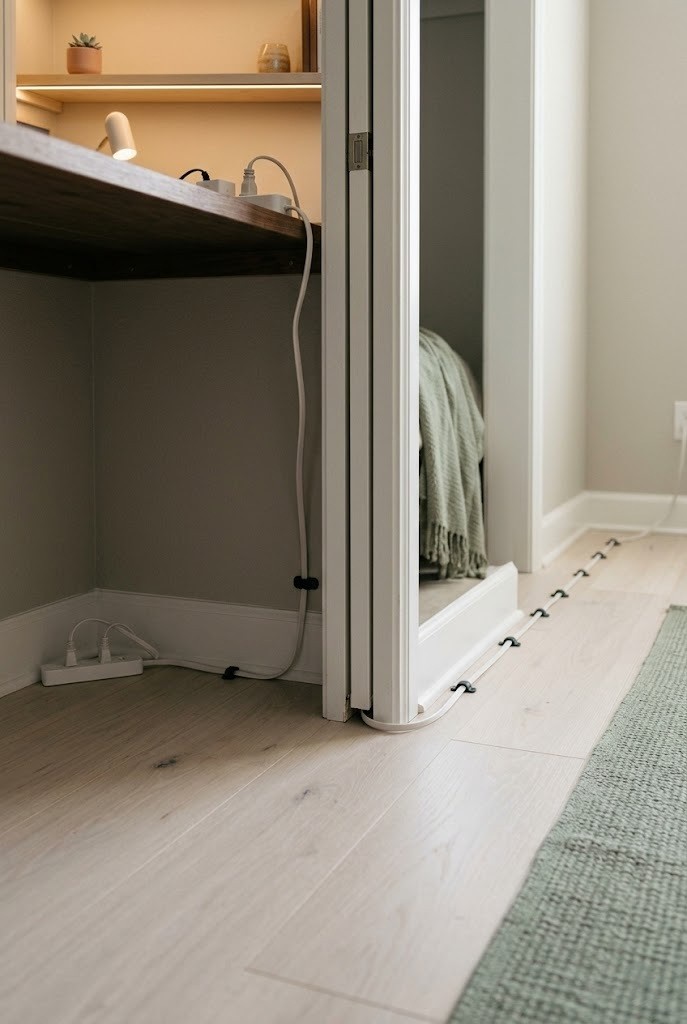
A flat, low-profile extension cord slides under the closet door to reach the room's nearest outlet, solving the no-power problem without touching a wall. This is the one idea where safety beats cleverness: use a cord rated for your actual load, never a thin lamp cord, and never pinch it in a door that latches hard on it, which crushes the insulation over time. Don't chain it into a second extension cord, and don't run a space heater on it. Route it along the baseboard with removable cord clips so nobody trips. Pair it with a small surge strip inside the closet for your laptop and lamp.
17. A Portable Power Station Parked on the Cart
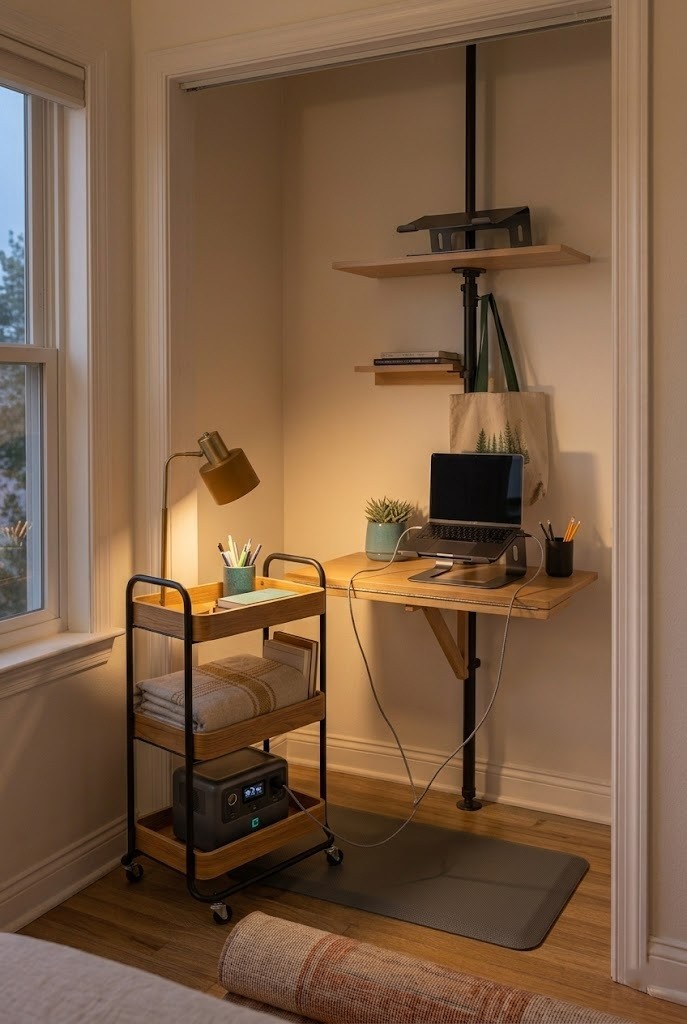
A portable power station sits inside the closet and runs your laptop and lamp for a full day with no wall connection at all, the cleanest fix when the nearest outlet is across the room. Small stations in the 200 to 300Wh range cost more than an extension cord but easily cover a laptop, a rechargeable lamp, and phone charging through a workday, then recharge overnight. A cheaper swap is a high-capacity USB power bank if all you run is a laptop and phone. Set it on the cart's bottom tier so its weight stays low. It trades the tethered cord in idea 16 for total freedom, at a price.
18. A Fully Cordless USB-C Setup That Charges by the Door
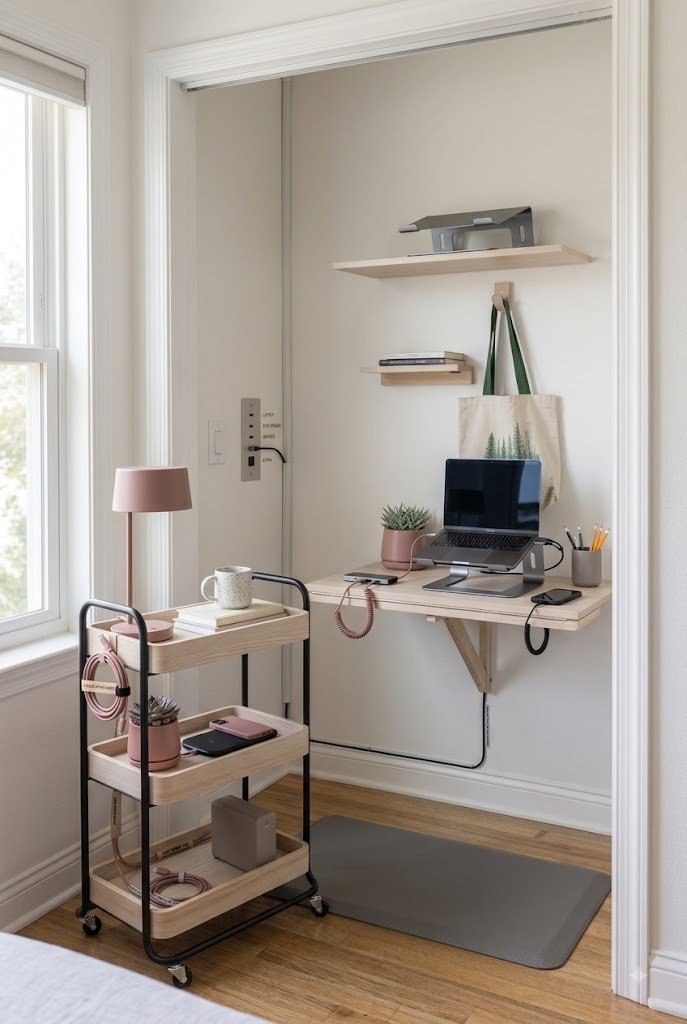
Building the whole desk around rechargeable USB-C gear means the closet never needs a live outlet: the lamp, the pucks, the keyboard, and the mouse all charge in the room and go back to the closet full. The trick is a routine, not more gear. Keep one multi-port USB charger by the door where you already pass, and top up one device a night on a rotation so nothing dies mid-task. Label the cables so you're not untangling a knot at 9 a.m. This suits laptop-only work; add a monitor or a printer and you're back to an extension cord or a power station.
19. A Slim Surge Strip Stuck Under the Desktop
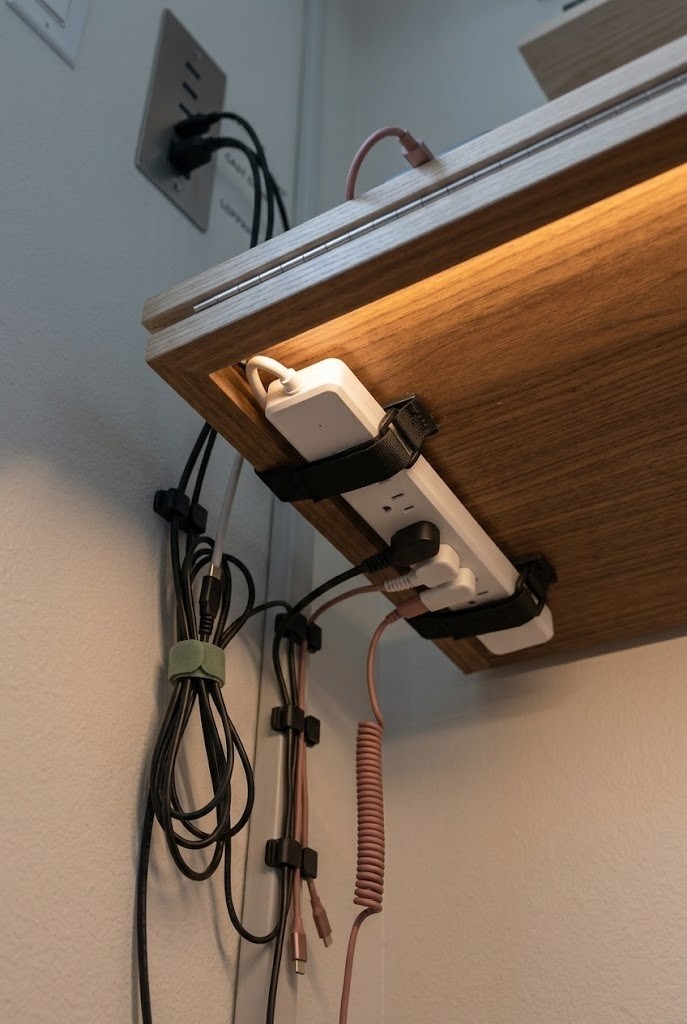
A slim surge strip mounted under the desktop keeps plugs off the closet floor and within reach, fed by the cord from idea 16. Use the strip's keyhole slots or a strap rather than trusting adhesive alone once cords start tugging on it. The upkeep reality: stick-on mounting tape and adhesive cable clips loosen over months as the closet warms and cools, so plan to re-stick them once or twice a year. Keep the strip's switch reachable so you can cut power at night, and mount it toward the back so cables run down the wall instead of across your knees.
20. A Curtain on a Tension Rod Where the Door Used to Be
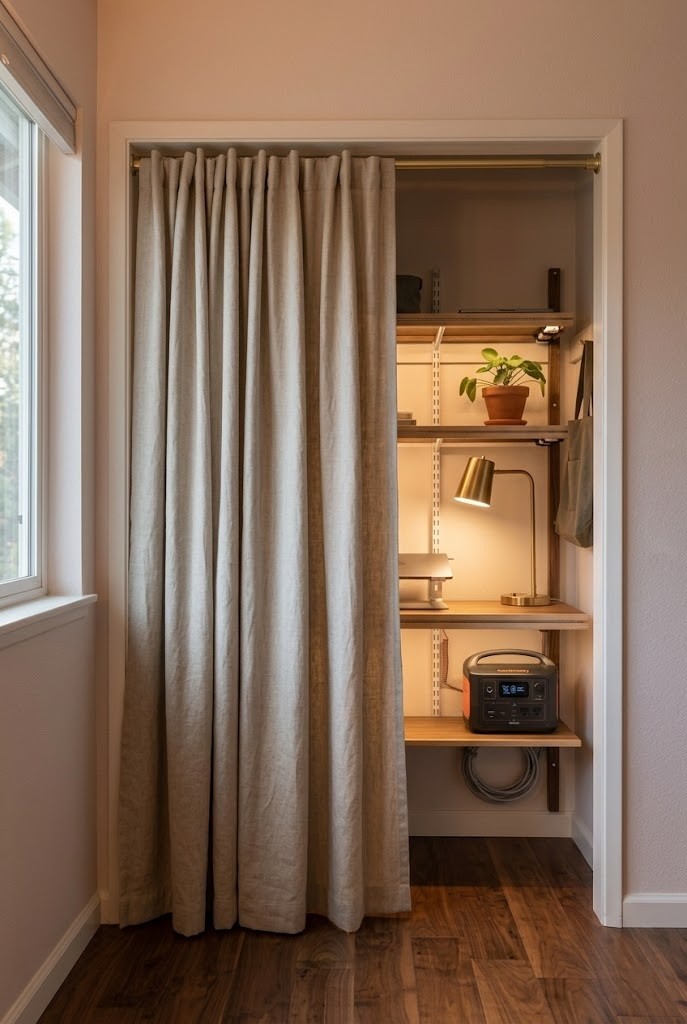
Hang a curtain on a tension rod across the opening and the whole workspace disappears in one pull, with no door swing stealing floor from a small room. Lift the door off its hinges, store it flat at the back of the same closet, and mount the rod at the top of the frame. For fabric, a medium-weight linen or cotton at about twice the opening width gives enough fullness to look intentional rather than like a hung bedsheet; too thin and it clings flat and cheap. A curtain also softens the hard echo of a closet, which helps on calls.
21. A Pegboard Hung on the Inside of the Closet Door
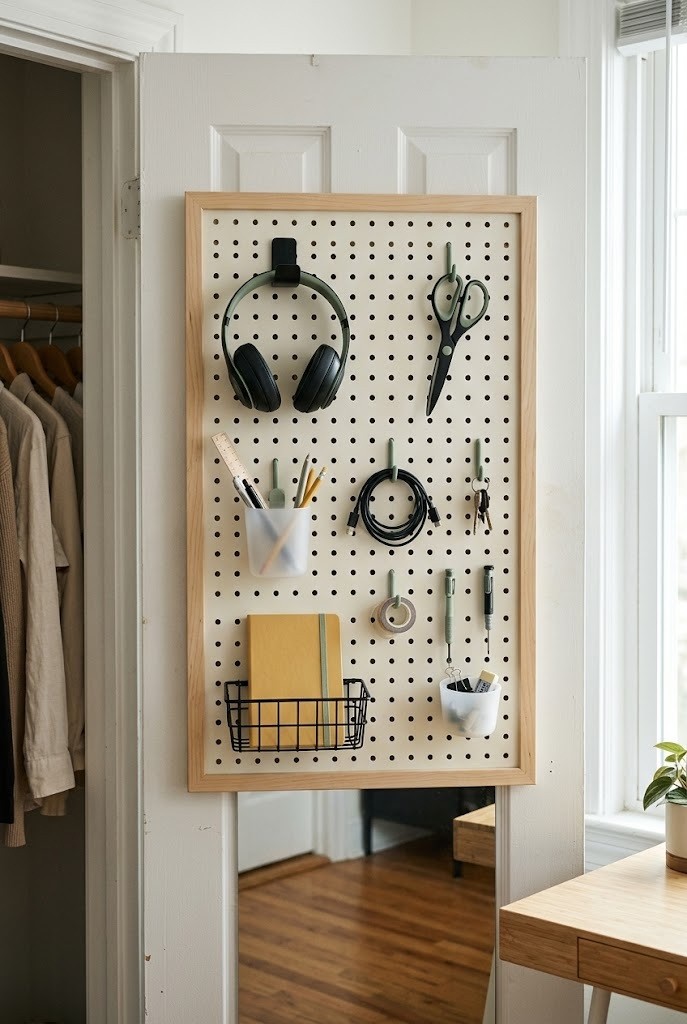
Turn the inside face of the closet door into hooks, cups, and small shelves with a pegboard hung on over-door brackets, no screws involved. It keeps the desktop clear and everything visible. The mistake that ruins it: loading a pegboard heavy on a hollow-core door, which makes the door sway and stresses the top edge where the brackets rest. Keep the hung weight light, pens and scissors and headphones rather than a jar of loose screws, and choose a framed pegboard so it sits flat instead of rattling against the door. Check that the door still latches once it's loaded.
22. The Bifold Door Taken Down and Stored Flat
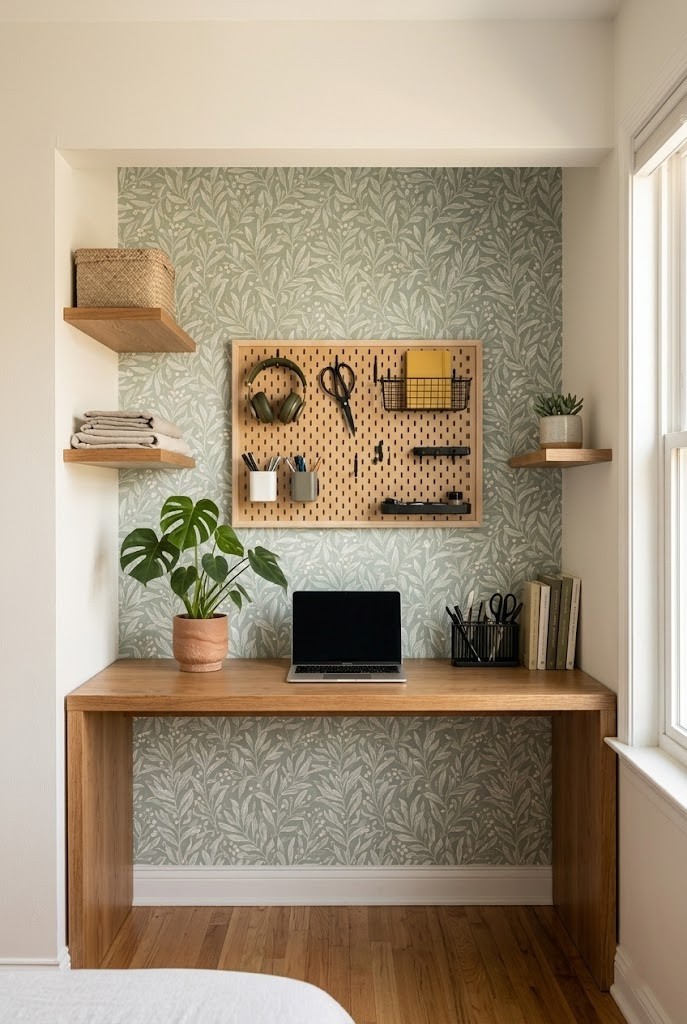
Taking the bifold door off entirely opens the closet into a true alcove desk and removes the folding panels that clip your chair every time you stand. Lift the panels off their track pins, wrap them in a blanket, and store them flat behind the desk or under the bed, so they go back on move-out day and your deposit stays yours. With the door gone, the closet reads as an intentional nook instead of a hidden hole, especially with a painted-look peel-and-stick backdrop on the rear wall. To hide the desk sometimes, a tension rod and a fabric panel cost little and reverse in seconds.
23. A Half-Height Cafe Curtain to Close the Desk at Night
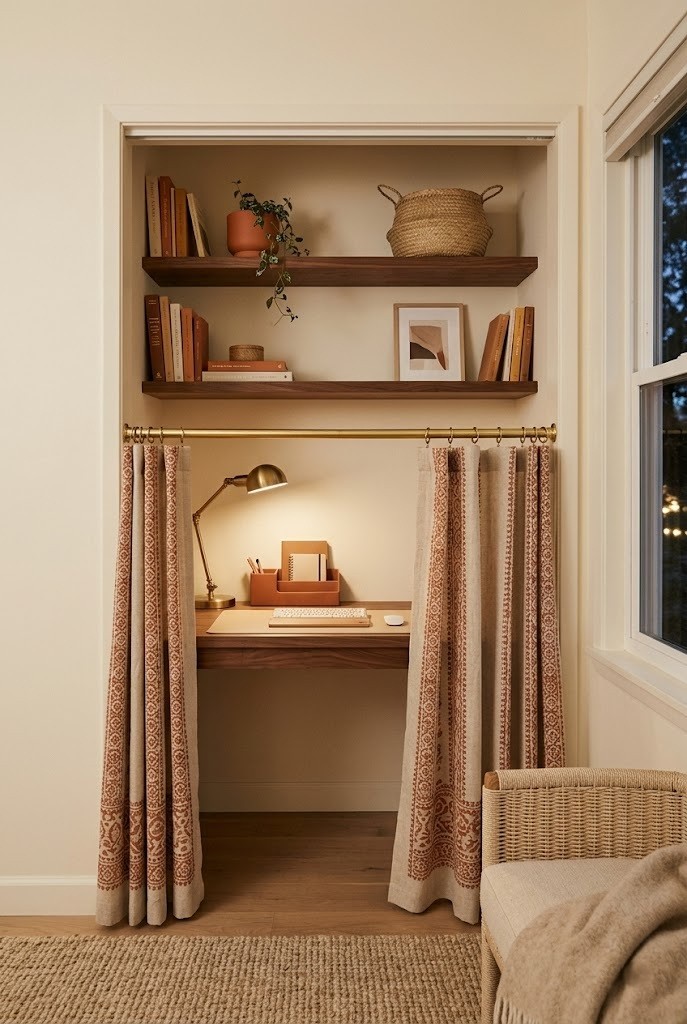
A half-height cafe curtain on a tension rod hides the messy desktop at day's end while leaving the upper closet open and airy, the fix for anyone who can't stop seeing their to-do list from bed. Mount a spring tension rod across the opening at desk-shelf height, around 40 to 44 inches, and hang a short panel that covers the surface and cables below while the shelves and light stay visible above. It's lighter and less formal than curtaining the whole opening. A patterned panel also gives the closet a face when the desk is closed, which a plain peel-and-stick backdrop behind the desk can echo.
Final Thoughts
A closet desk lives or dies on one rule: keep the weight off the walls. Route it to the floor with a slab on cabinets, onto tension poles, or across the closet's own rated brackets, and light it with something you charge by the door. If the rest of your place needs the same damage-free treatment, these fixes carry from the closet to the room. And when a closet isn't enough, a bed nook or a shared guest room buys square footage without a lease fight. Save this to Pinterest so the no-drill playbook is here when you set up.
Frequently Asked Questions
How do you power a closet office with no outlet inside?
Run a flat extension cord under the closet door to the room's nearest outlet, or skip the wall entirely with a portable power station or a high-capacity USB power bank charged overnight. For light, use rechargeable puck lights or a cordless lamp you top up by the door. Match any extension cord to your load and never pinch it in the door.
Can you build a closet desk without drilling into the wall?
Yes. Route the weight to the floor or ceiling instead of the wall: a slab across two rolling file cabinets, a shelf on floor-to-ceiling tension poles, or a narrow freestanding desk that slides into the opening. Skip adhesive hooks for the desktop itself, since anything you lean on eventually peels off and takes paint with it.
What size desk fits inside a reach-in closet?
Aim for 32 to 40 inches wide and no more than 18 to 20 inches deep. Depth is the real limit: past 20 inches your chair won't fit inside the closet and you'll sit in the room with your knees in the doorway. Measure the door opening too, since a standard 24 inch door caps how wide a pre-built desk you can carry in.
Will command strips hold a closet desk?
No, not a desk you actually work at. Adhesive strips hold light, static objects, but a desktop takes downward force every time you lean on it, and that shear is exactly what pops strips off the wall. Use them for a lightweight organizer or cable clips, and carry the desk's weight on the floor, a cart, or tension poles instead.