Guest room office combo ideas usually start and end with a Murphy bed, which is pricey, semi-permanent, and off-limits if you rent. This post skips the wall bed entirely and solves for the room you actually have: an office roughly 90% of the year that hosts guests maybe six nights. You'll find daybeds, sleeper sofas, fold-down desks and floating setups sorted by how the bed works, with no-drill picks called out for renters throughout. Every idea keeps your daily work comfort first and makes guest comfort a ten-minute setup, not a renovation. Save this one to Pinterest so it's handy when you finally tackle that spare room.
1. Metal-Frame Daybed Under a Window With a Slim Desk Facing In
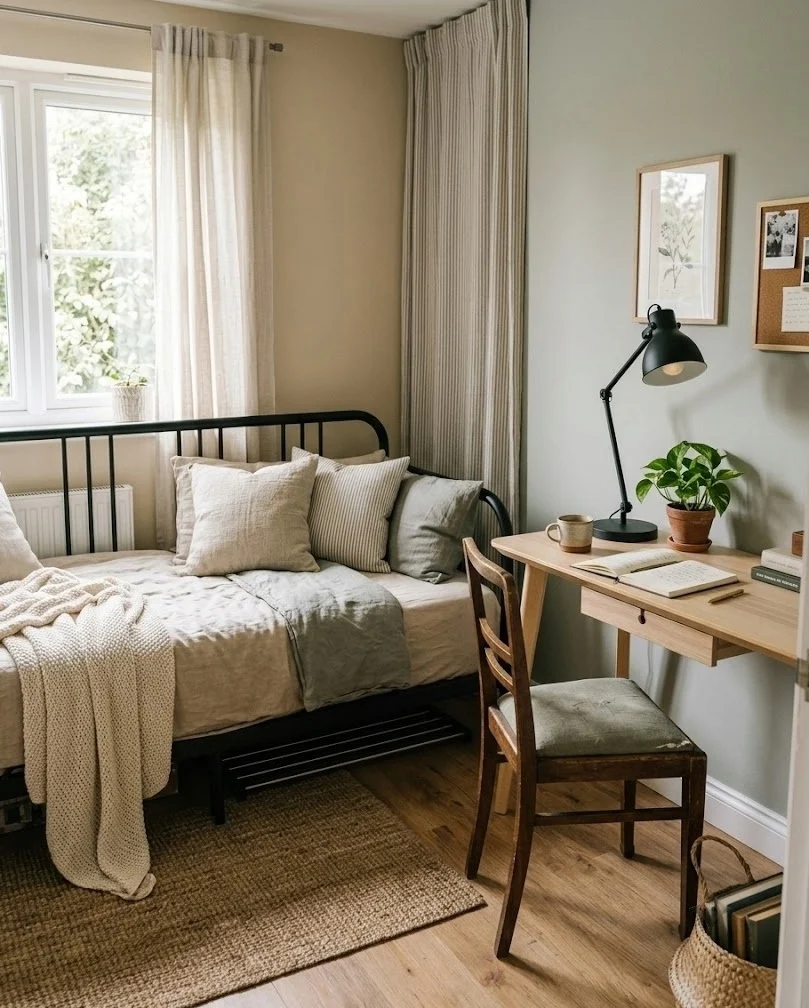
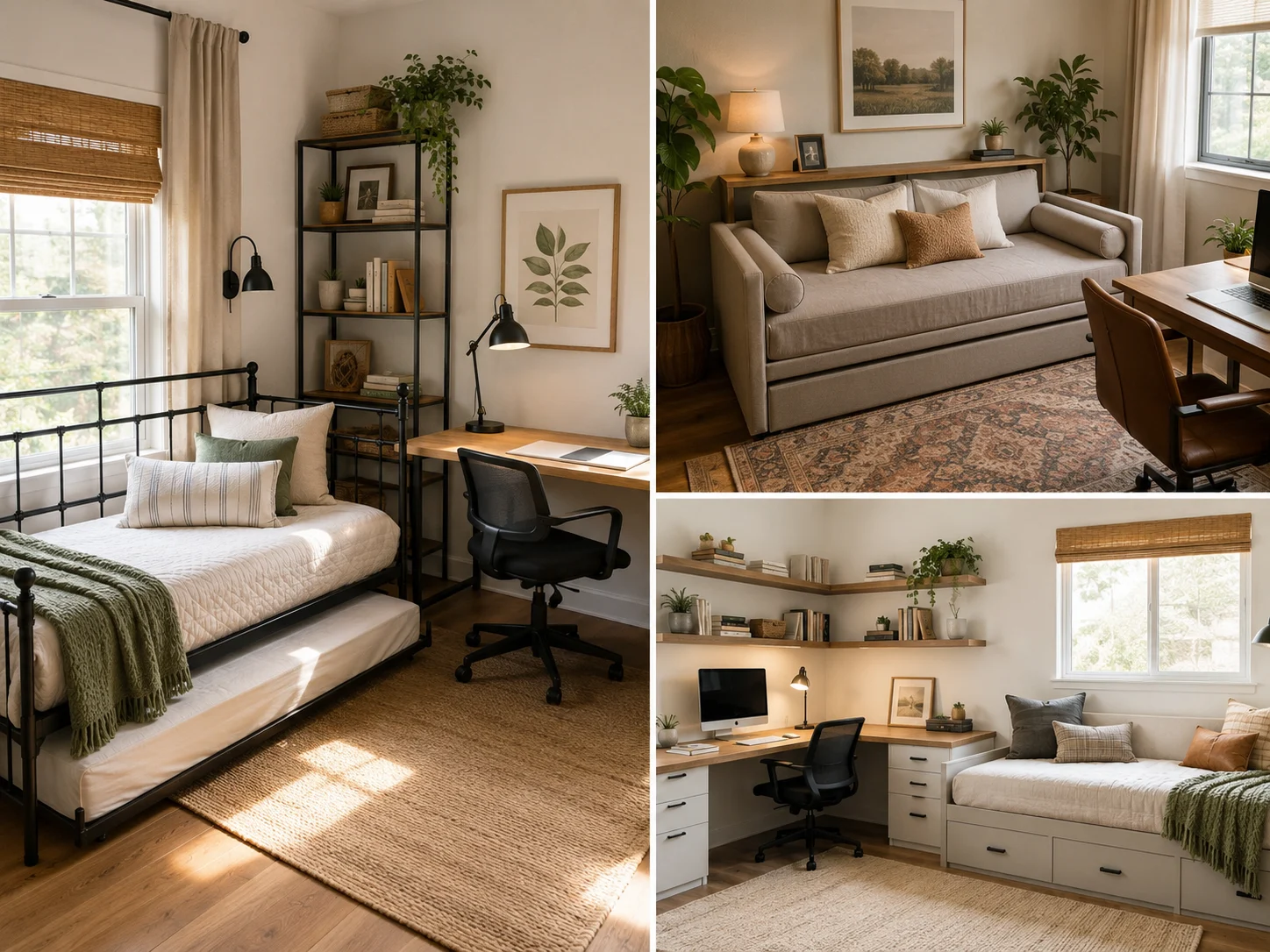
A metal-frame daybed pushed under the window doubles as a sofa for daily work and a real single bed for guests, and its open frame keeps a small room from feeling boxed in. Position your desk on the opposite wall facing into the room so your back isn't to the door during calls. Trundle versions add a second sleeper without adding footprint, which matters when the room is your office 350 days a year. Budget a low-profile mattress around six inches so the daybed reads as seating, not a bed, the rest of the time. Skip bulky bolsters; two firm lumbar cushions look intentional and actually support a guest's back.
2. Upholstered Daybed With Bolsters Styled as a Reading Sofa
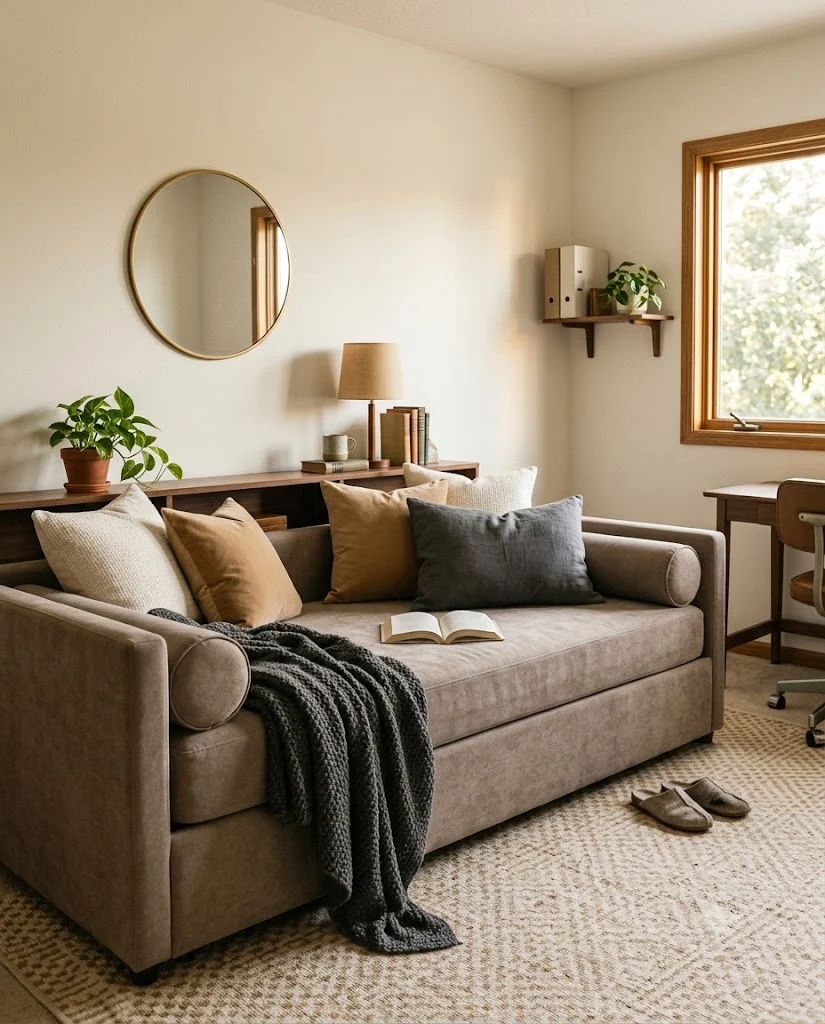
An upholstered daybed styled with bolsters at both ends reads as a proper sofa, which is what sells the office-first look when the room has no guest in it. Choose performance fabric in a mid-tone so coffee rings and pen marks don't end its life early. Keep the seat depth around 30 inches; deeper and you can't sit upright to read, shallower and a guest rolls off in the night. Anchor it with a washable rug that runs at least eight inches past the frame on the walk side. A narrow console behind the daybed hides a power strip and gives you a landing spot for a lamp and a glass of water.
3. Corner Daybed With an L-Shaped Desk Wrapping Two Walls
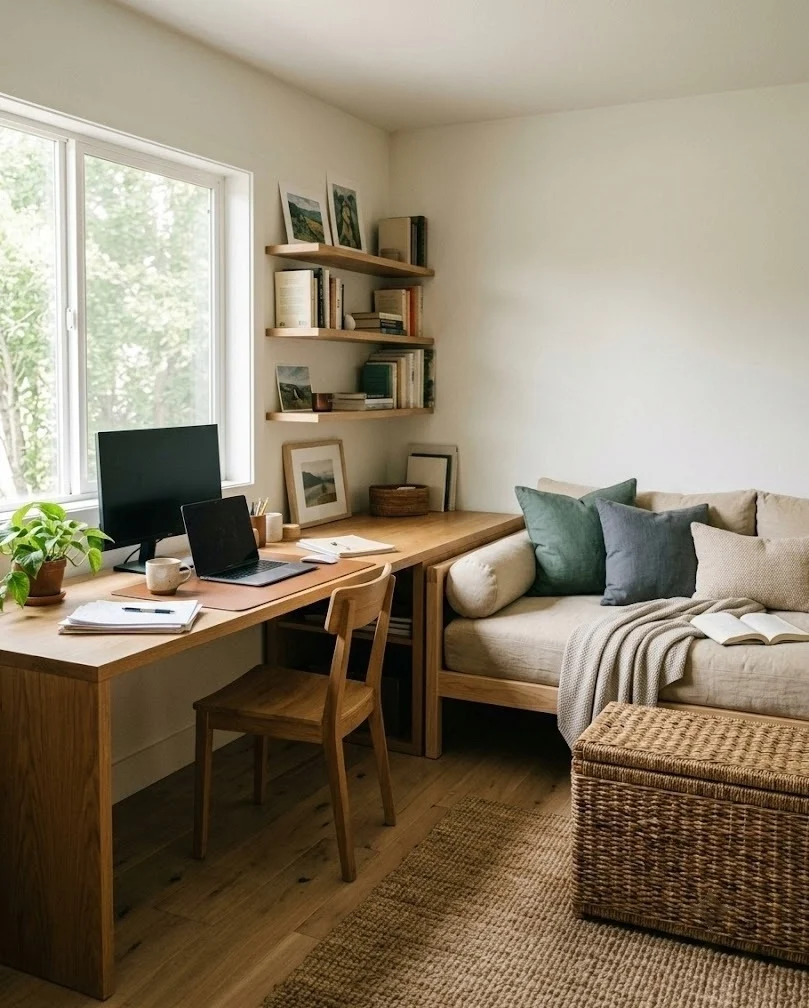
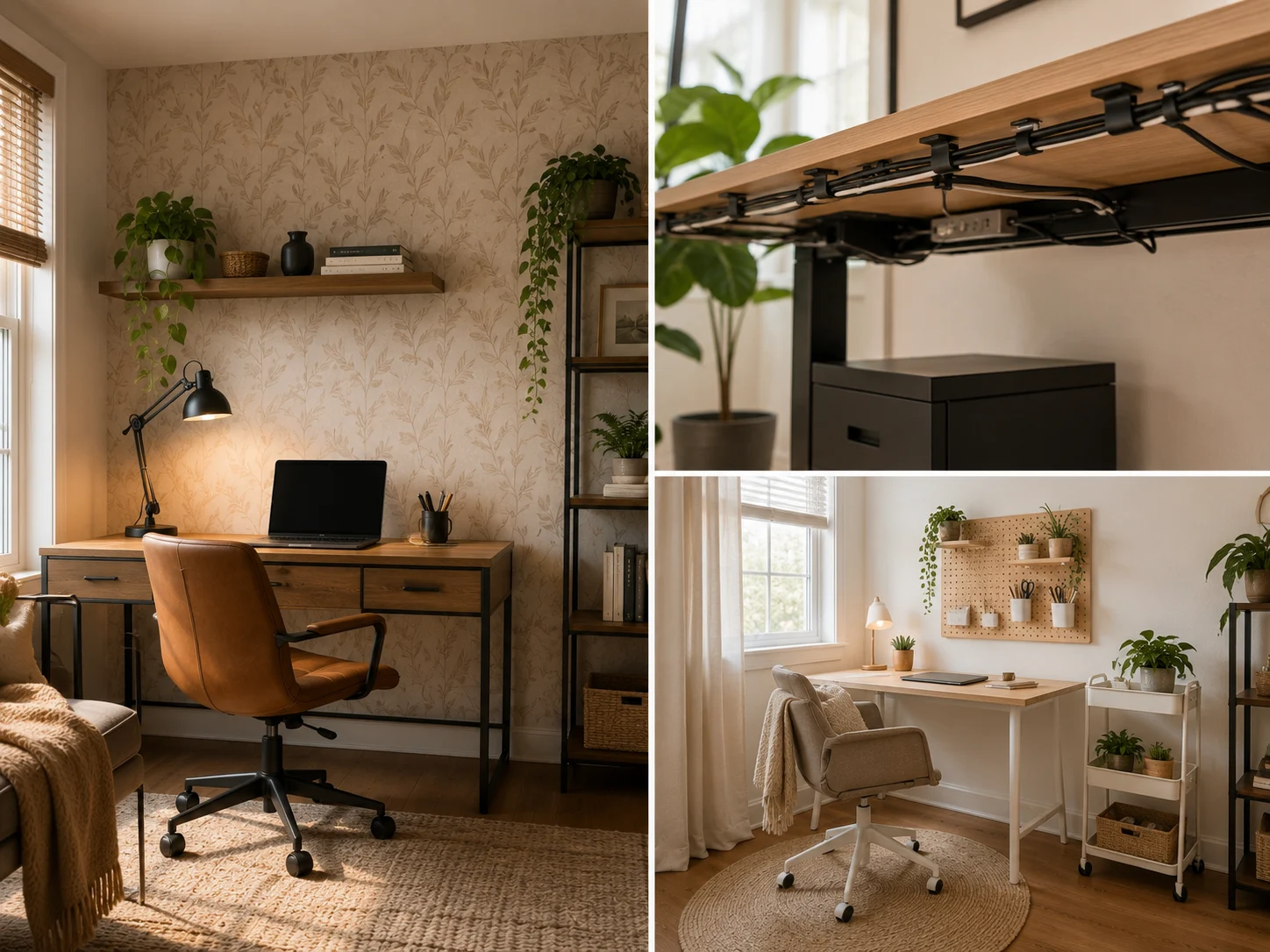
Wrapping an L-shaped desk into the corner beside a daybed gives you the largest work surface a small room can hold without the desk ever crossing into the sleep zone. Run the long leg of the L along the window wall for daylight, and keep the short leg under 42 inches so the door still swings clear. This is a roomier cousin of the slim single desk in idea 1, better if you run two monitors. Cable-manage along the back edge with a clip channel so guests never see the mess. A storage bench at the daybed's foot holds the sheets and spare pillow you'd otherwise have no closet for.
4. Daybed With Built-In Drawers Below for Guest Bedding Storage
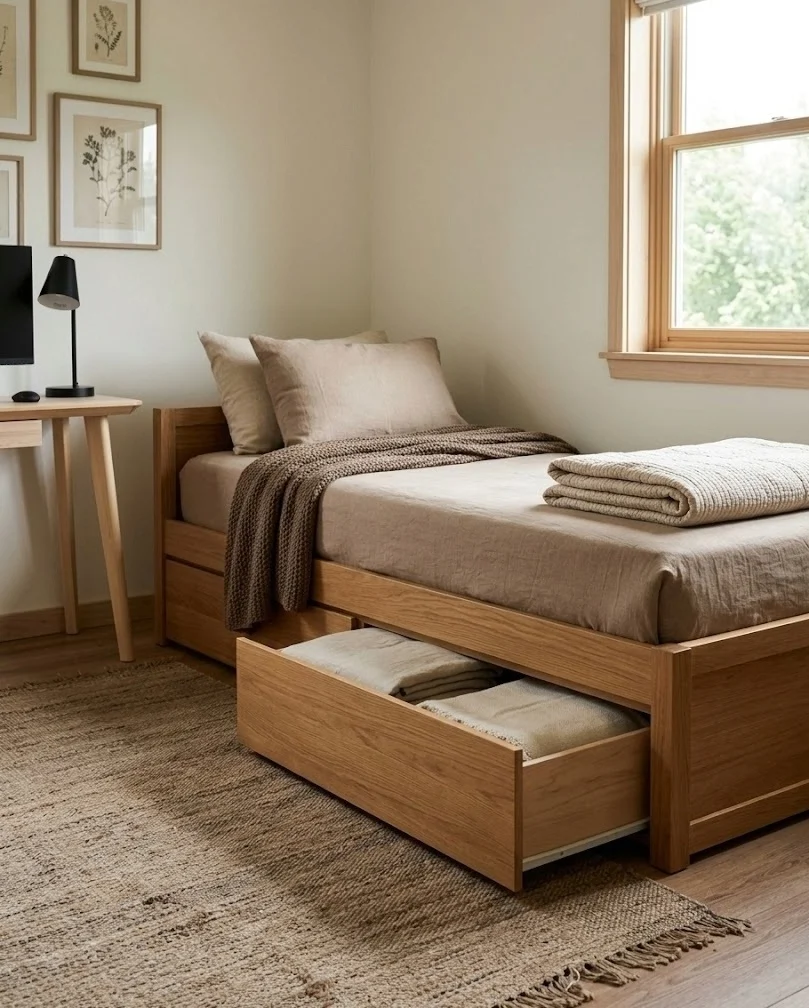
A daybed with drawers built into the base solves the one problem every combo room has: nowhere to keep sheets, a spare pillow and a blanket when the closet is full of office supplies. Look for at least two deep drawers, six inches or more, so a folded duvet lies flat instead of jamming. Hiding guest gear below the seat keeps the room reading as an office in your head, not a half-made bed. Measure drawer clearance against your rug pile, because thick rugs block low drawers from opening. Keep the top styled sparse, one throw and one cushion, so it never looks like a chest of drawers wearing a mattress.
5. Trundle Daybed Setup for Two Guests in a One-Desk Room
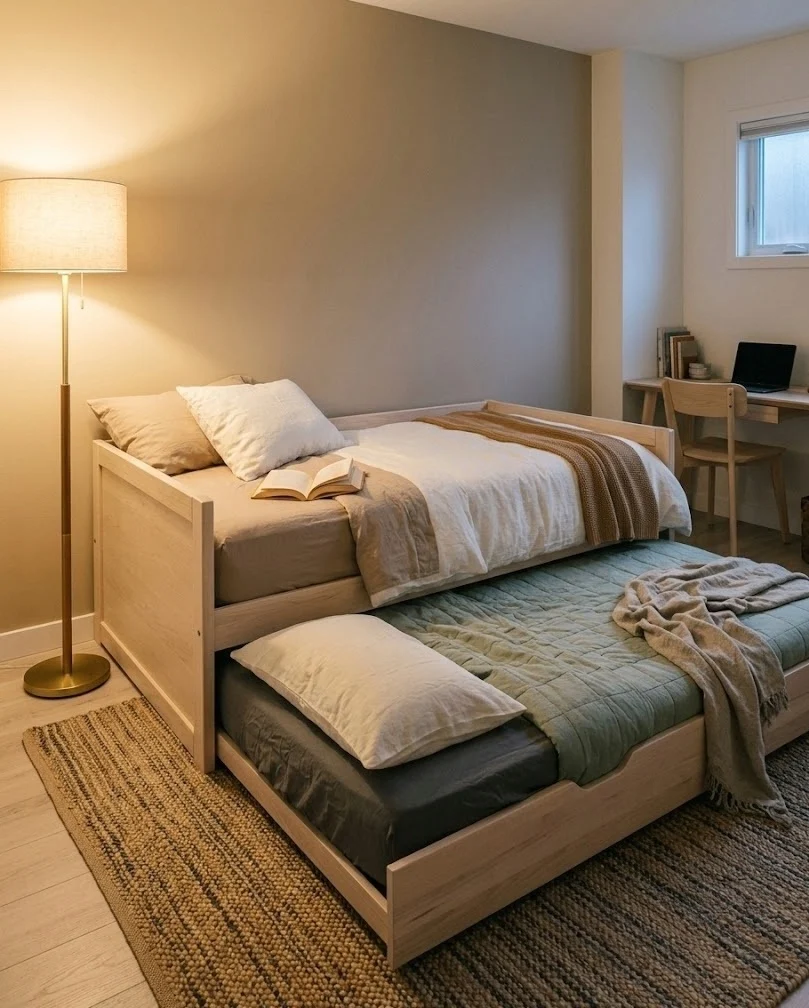
A trundle daybed sleeps two guests on the rare weekend they visit while taking a single bed's footprint the other fifty weeks, which is the whole point of solving for a room that's mostly an office. Pull-out trundles sit low, so pair one with a floor lamp rather than table lamps a low sleeper would block. Test the caster action before buying, because cheap wheels drag on carpet and wake the house at 2am. Like the drawer base in idea 4, the trundle cavity can swallow bedding, but only if you skip the second mattress and store flat. Keep 30 inches of pull-out clearance in front, or it won't clear your desk chair.
6. Narrow Daybed Along the Long Wall With a Floating Desk Opposite
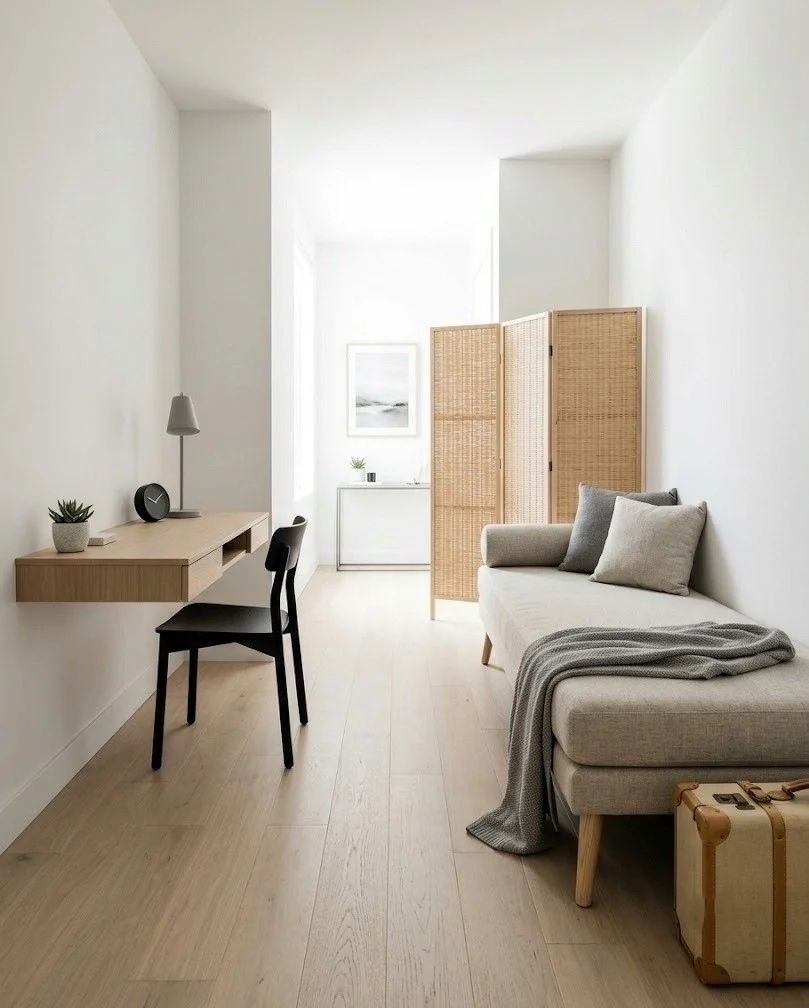
Running a narrow daybed down the long wall and floating the desk on the wall opposite keeps the room's center clear, which makes a nine-foot-wide room feel walkable instead of stuffed. A 30-inch-deep daybed still leaves a three-foot path if your desk is a shallow 20 inches. Wall-mounting the desk, a floating setup covered further down, frees the floor for a guest's suitcase and a rollaway if needed. Pick a daybed with turned or tapered legs so light passes underneath and the wall reads longer. A freestanding room divider at the foot gives an overnight guest a shred of privacy without a single drilled hole.
7. Compact Twin-Size Sleeper Sofa Facing a Wall-Mounted Desk
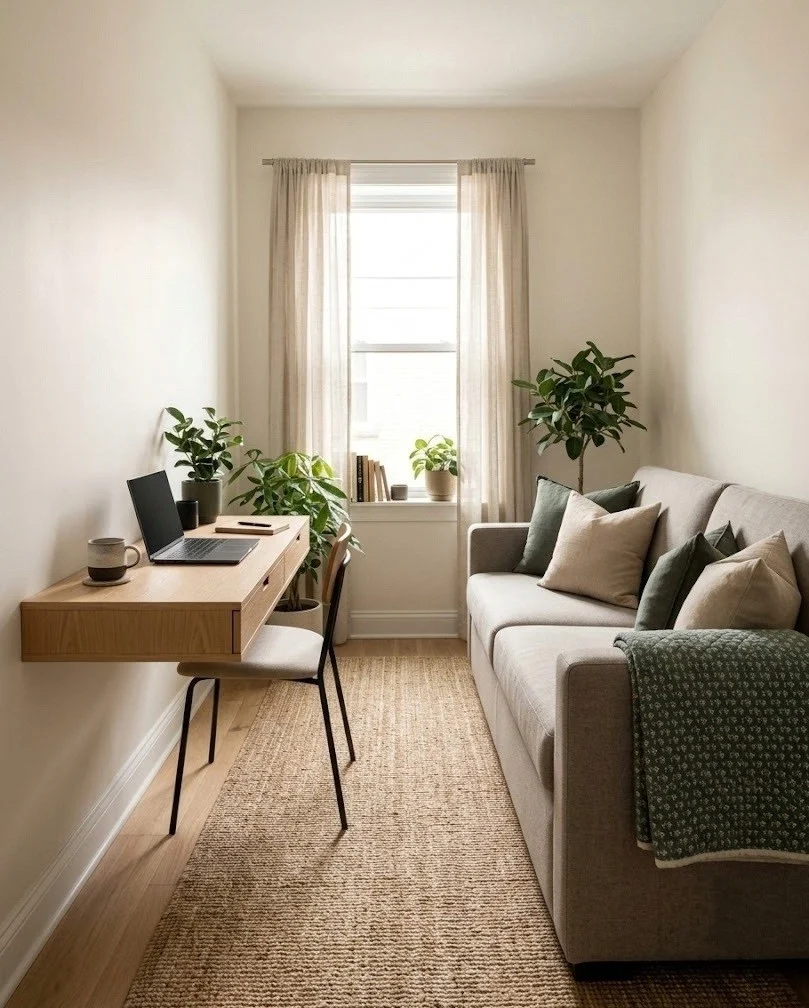
A compact twin sleeper sofa reads as lounge seating every workday and folds out to a real mattress for one guest, which suits a room that hosts overnight visitors only a handful of nights a year. Twin and apartment-size sleepers fit rooms where a full sofa bed won't; measure the fold-out depth, not just the closed footprint, because an open sleeper often needs 80 inches of clear floor in front. Keep the desk wall-mounted opposite so nothing blocks the pull-out path. A firm mattress topper fixes the bar-in-the-back complaint every sleeper earns. Choose a tight-back style, because loose cushions slide off every time the mechanism opens.
8. Sleeper Loveseat With a Storage Ottoman That Doubles as a Nightstand
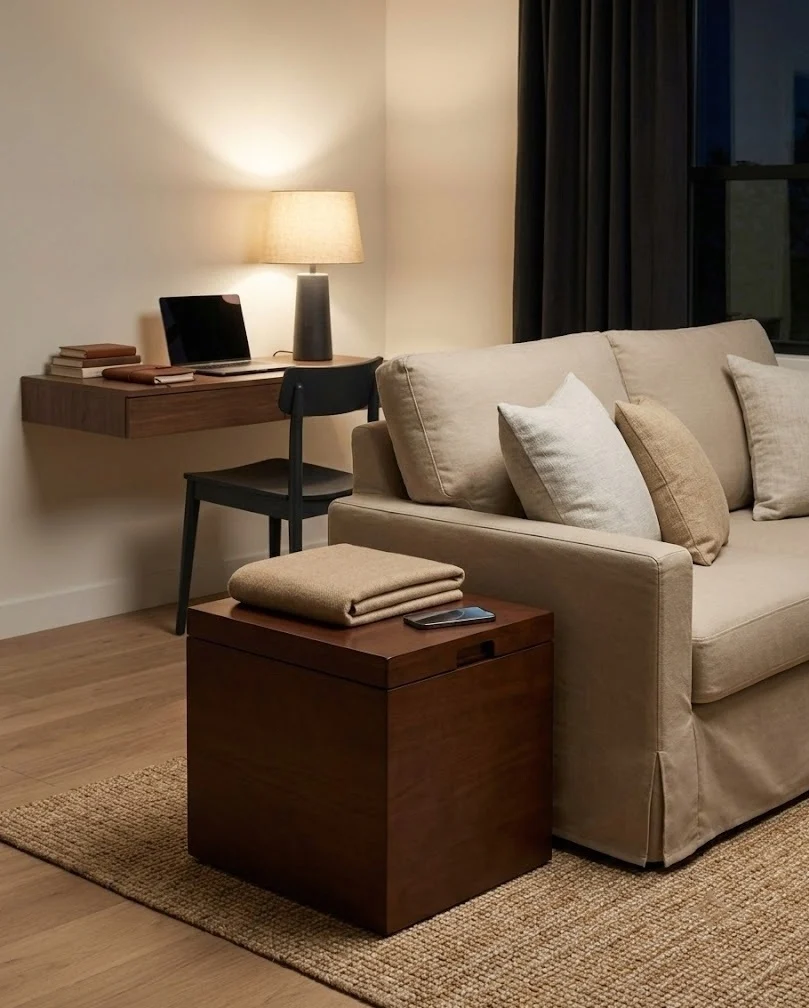
Pairing a sleeper loveseat with a storage ottoman gives a guest a surface for a phone and glasses while hiding bedding inside the ottoman the other eleven months. Loveseat sleepers open to a snug full, fine for one adult or a kid, and they cost less than a queen sleeper you'd rarely use at full size. Set the pull-out up the way idea 7 does, desk on the opposite wall, so the mechanism has room to clear. Choose an ottoman with a hard lift-top so it works as a seat and a footrest through your workday. A washable slipcover on the loveseat survives daily desk-chair traffic far better than fixed upholstery.
9. Queen Sleeper Sofa for Couples Who Visit, Angled Off the Desk Corner
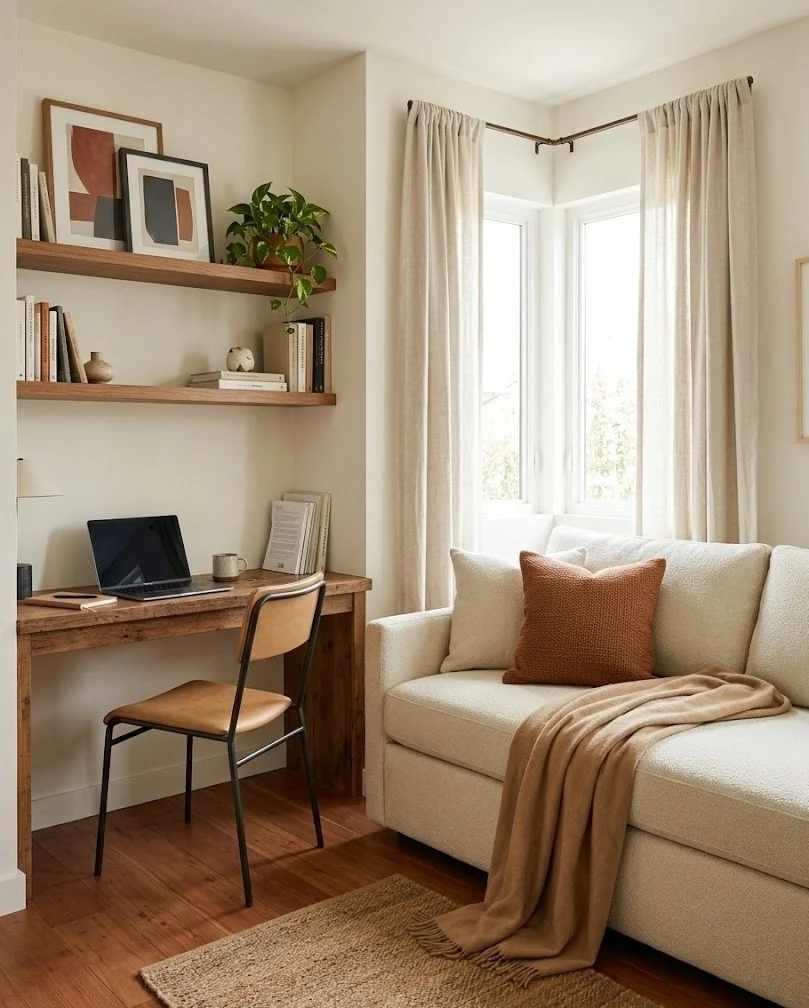
A queen sleeper sofa is the pick when the guests you actually host are a couple, and angling it off the desk corner keeps its bulk from swallowing the room. Queen sleepers run deep and heavy, 38 inches or more closed, so reserve them for rooms at least 11 feet along the sofa wall. The trade is honest: more comfort for guests, less floor for you the other 350 days. A 60/30/10 split holds it together, 60% neutral sofa, 30% wood desk and shelving, 10% one saturated accent like a rust cushion. Leave 36 inches between the closed sofa and your chair so you're not climbing over it every morning.
10. Slipcovered Sleeper Sofa in Performance Fabric for a Work-All-Day Room
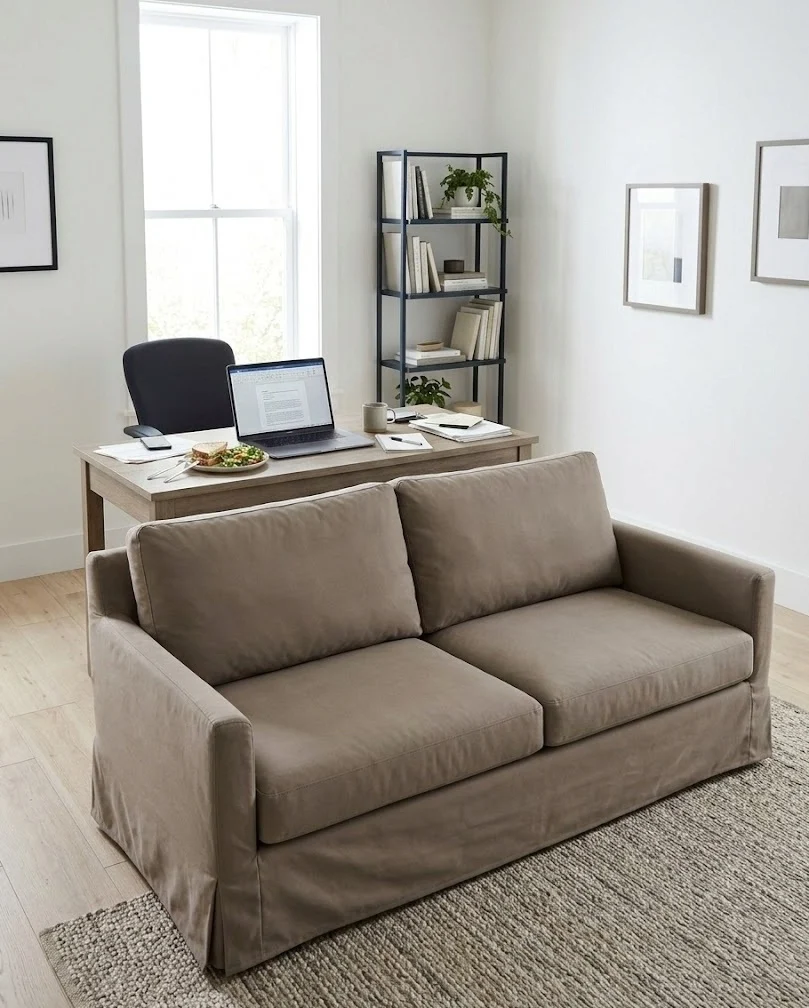
A slipcovered sleeper in performance fabric survives a room used eight hours a day, because you can pull the cover and wash out the coffee, ink and chair scuffs that daily work leaves behind. Bouclé and linen look great and stain fast; tight-woven poly blends fake the texture and shrug off spills. This is the practical answer to the softer upholstered look in idea 2, aimed at people who eat lunch at the desk. Check that the slipcover comes as separate cushion covers, not one stretched sock, or it bags within months. Vacuum the mechanism gap monthly, since crumbs and pen caps live there and eventually jam the fold.
11. Sleeper Sofa Under a Gallery Wall That Hides the Guest-Room Function
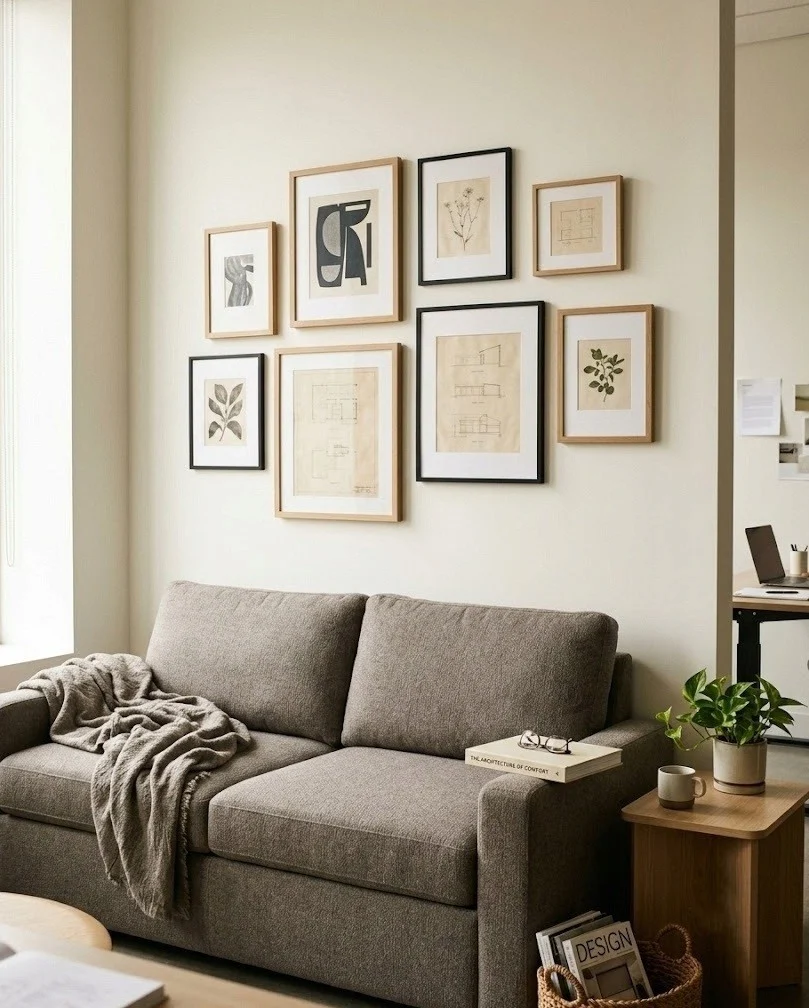
Placing a sleeper sofa under a tight gallery wall makes the room read as a styled office lounge, so nobody clocks it as a guest room until the bed folds out. Hang the lowest frame at least 10 inches above the closed sofa back so a sitting guest's head doesn't knock it. Keep the frames to two or three colors, because more than that fights your desk zone for attention. A gallery wall is also the cheapest way to make a combo room look deliberate rather than thrown together. For rental walls, use adhesive strips rated a few pounds over your frame weight, and re-check them before a guest sleeps under twelve pieces of glass.
12. Fold-Down Wall Desk Beside a Daybed So the Desk Disappears for Guests
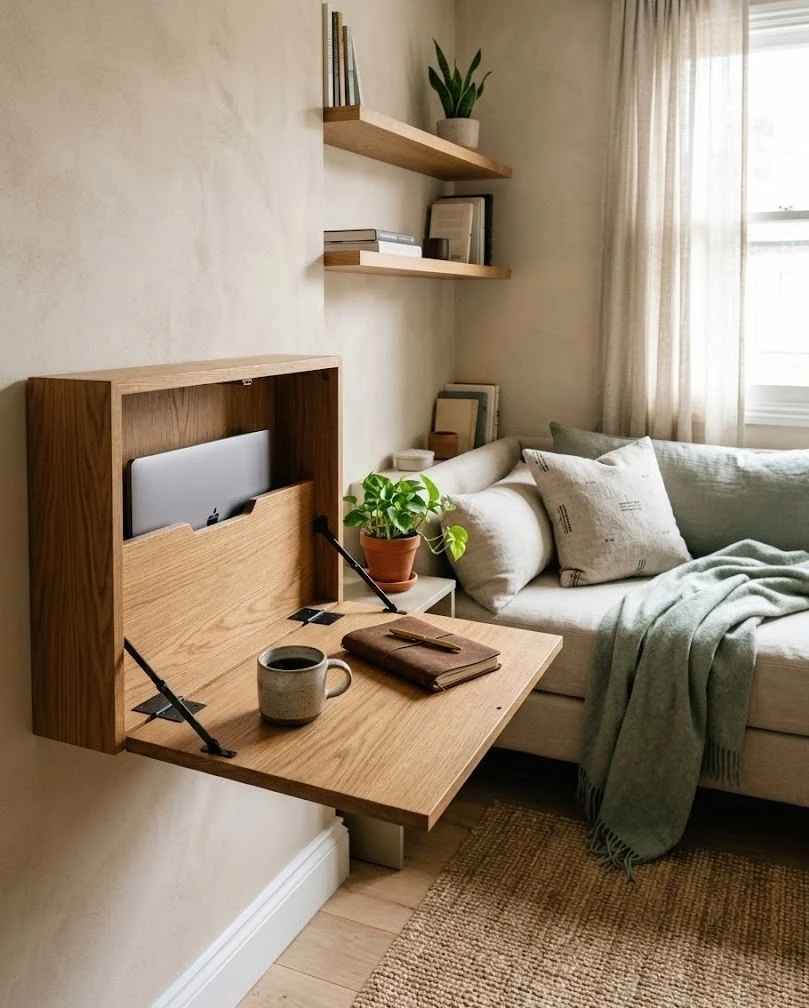
A fold-down wall desk folds flat when guests arrive, shrinking your workstation to a few inches of profile so the daybed becomes the room's whole story. Mount the cabinet so the work surface lands at 29 to 30 inches when open, standard desk height. Renters, this is the one wall-mount often worth the patch-and-paint at move-out, and a French-cleat version lifts off cleanly if you keep the hardware and fill four holes. Choose a unit with an interior lip that holds your laptop and pens in place when folded, so you aren't clearing the desk before every visit. Pair it with any of the daybed setups above for a room that flips fast.
13. No-Drill Freestanding Fold-Down Desk for Renters Who Can't Mount
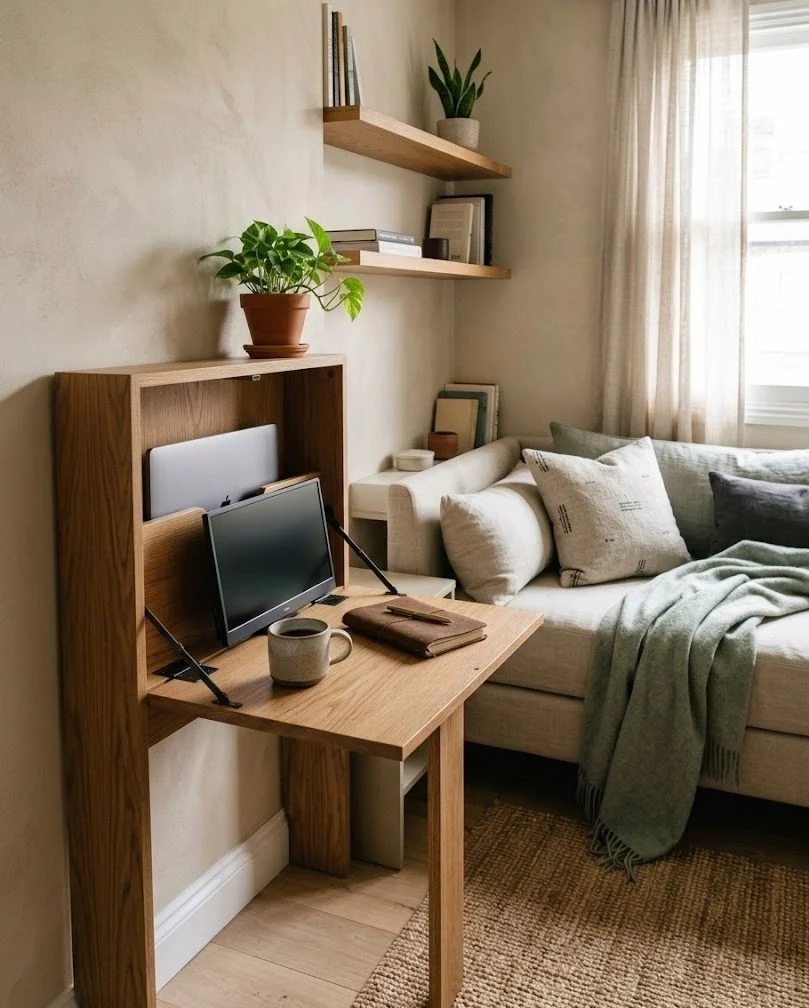
A freestanding fold-down or drop-leaf desk gives renters the disappearing-desk trick with no holes, because the leaf collapses against a slim cabinet that stands on its own. This is the honest answer to the wall-mounted unit in idea 12 for anyone whose lease bans anchors outright. Look for a locking hinge, since unlocked drop-leaves sag under a monitor's weight and creep down over a work session. Keep the closed depth under 12 inches so it tucks beside a daybed without stealing the walk path. The usual mistake is buying a decorative drop-leaf dining table and expecting desk stability; check the weight rating for a laptop plus an external monitor before you trust it with your setup.
14. Fold-Down Desk Over a Low Platform Bed in a Studio-Style Spare Room
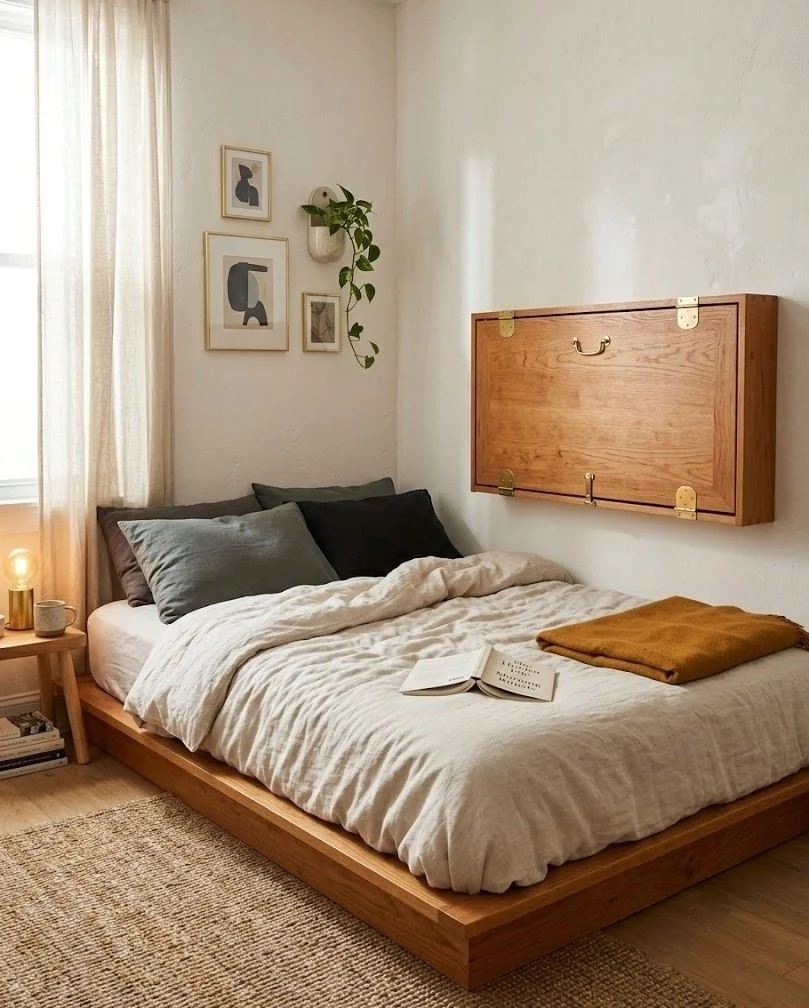
A fold-down desk mounted above a low platform bed stacks both functions on one wall, which is how you fit an office and a guest bed into the room's smallest dimension. Keep the desk's folded underside above head height when someone sits on the bed's edge; aim for 48 inches of clearance from mattress top to the closed unit. Run a 70/20/10 palette here, 70% quiet wall and bedding, 20% wood in the desk and frame, 10% a warm metal accent in the hardware and lamp. Swap the warm metal for matte black to cool the mood down. A low platform reads more like a lounge than a bed, which keeps the office feel in charge.
15. Wall Desk Cabinet That Closes Into a Console for Guest Weekends
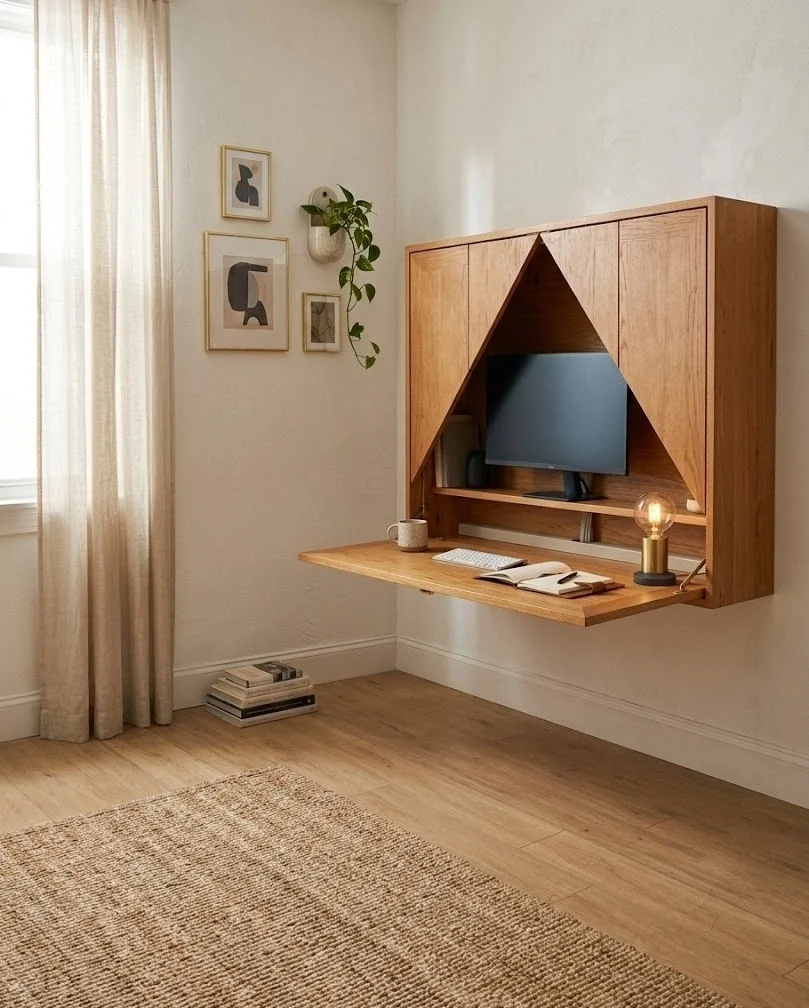
A wall desk that shuts into a flat console cabinet hides your monitor, cables and clutter behind a door, so the room turns guest-ready in the ten minutes before someone arrives. Cable-manage inside the cabinet with an adhesive channel so cords don't spill when the door swings shut. Upkeep is the catch, since enclosed cabinets trap laptop heat; leave a rear vent gap or run a small clip fan during long sessions. Wipe the interior monthly, because closed cabinets collect a film of dust you don't notice until a guest opens the wrong door. It's a tidier take on the fold-down desk in idea 12 for when you want everything hidden, not just folded flat.
16. Floating Desk and Matching Wall Shelves to Clear the Whole Floor
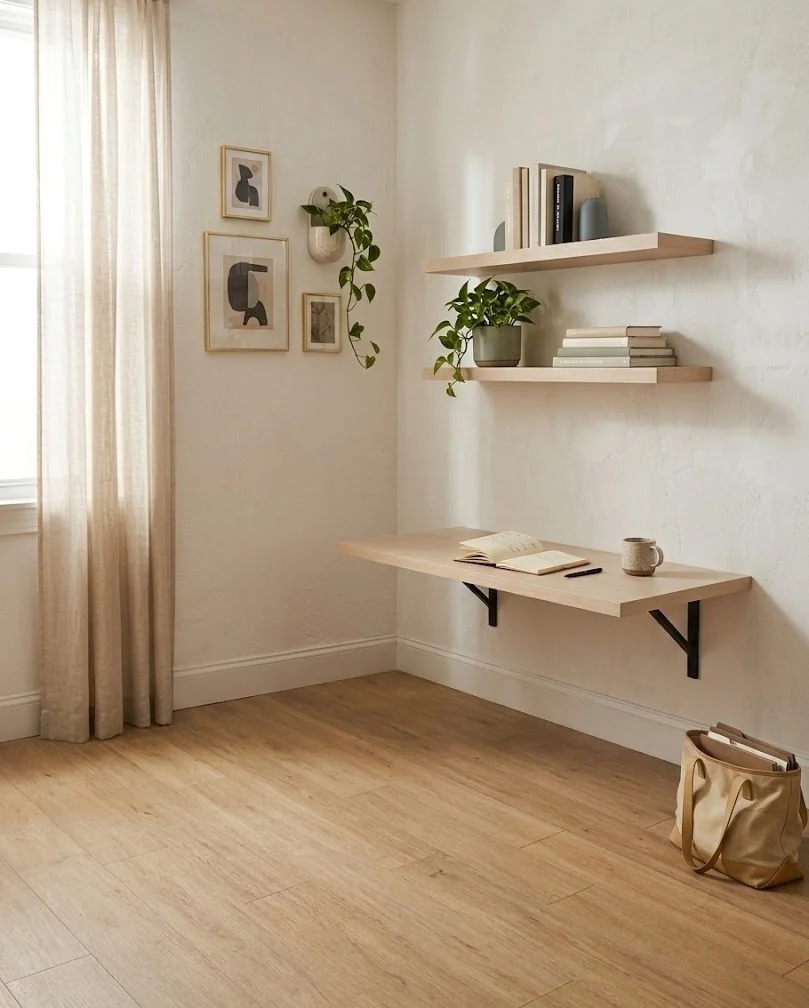
A floating desk paired with matching floating shelves lifts every work surface off the floor, leaving the ground clear for an air mattress or a guest's bag on the nights you host. Mount the desk at 29 inches and stack shelves 10 to 12 inches apart above it so a monitor fits between. Floating wall shelves are cheap and carry books, a printer and plants that would otherwise eat desk space. The budget win is real, since two brackets and a board beat a $300 desk outright. Hit studs or use toggle anchors rated well above your load, and never trust bare drywall under a printer that could fall onto a sleeping guest.
17. Wall-Mounted Drop-Leaf Desk With a Fold-Flat Guest Cot Nearby
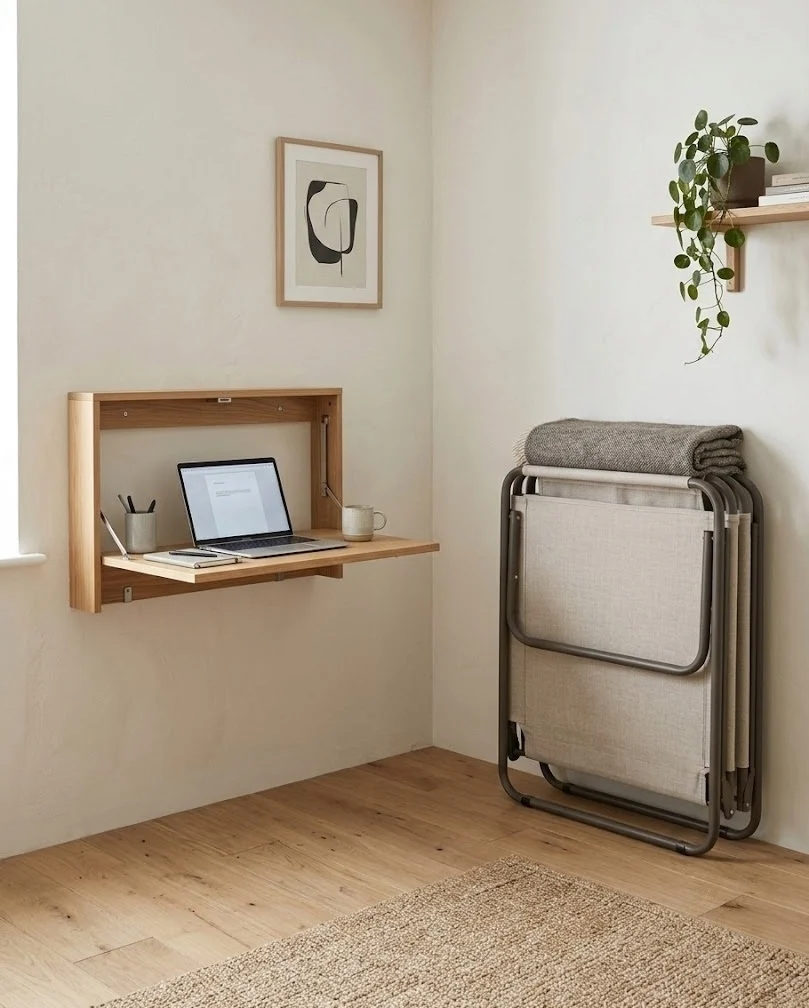
A wall-mounted drop-leaf desk beside a fold-flat guest cot keeps the room fully open by day and stores the entire sleep setup vertically when nobody's visiting. Fold-flat cots slide behind a door or into a closet, so the room never carries a permanent bed taking floor space. Set the desk leaf to lock at 30 inches and check the cot's weight rating before a heavier guest trusts it overnight. It pairs the same floor-clearing logic as a floating desk with a bed that vanishes completely between visits. Setup order matters: mount the desk cleat first, hang the leaf, then test-fold the cot in its storage spot so you know it fits before guests are in the doorway.
18. All-Wall Floating Office With a Freestanding Screen for Guest Privacy
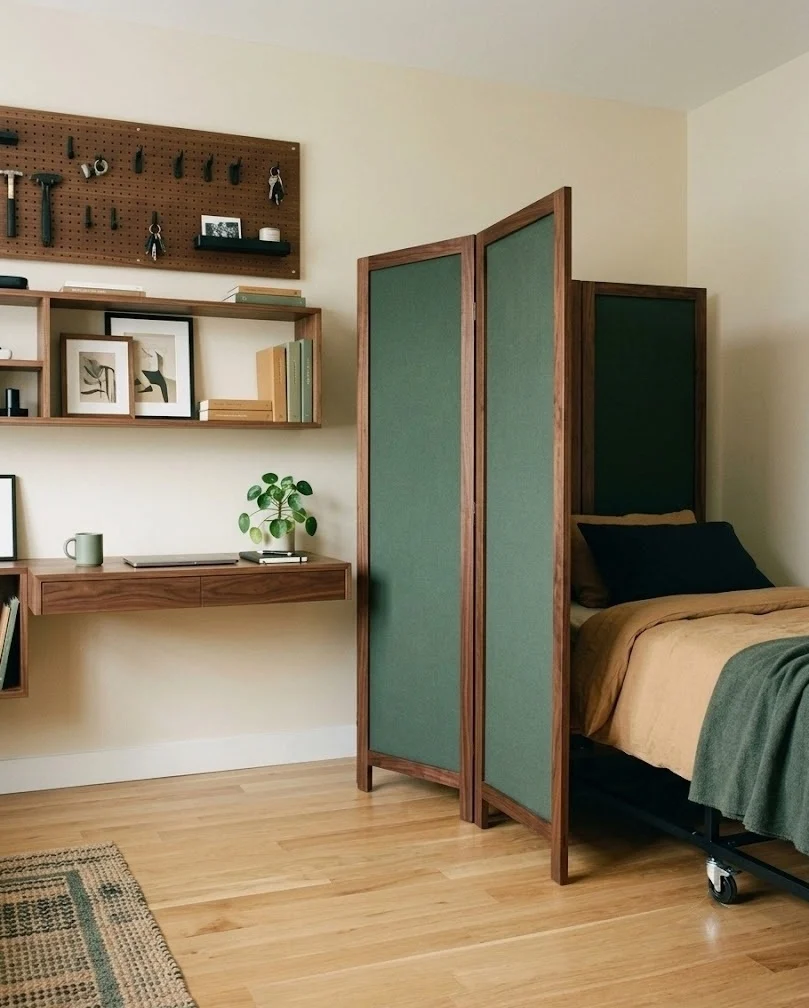
An all-wall floating office, desk, shelves and a pegboard mounted up high, leaves the entire floor free for a rollaway bed and a freestanding screen that gives a guest privacy without touching a wall. Run a 60/30/10 mix, 60% pale wall and floor, 30% warm wood on the desk and shelves, 10% a deep accent on the screen and one cushion. Swap the deep accent for sage to cool the whole room down. A freestanding room divider does double duty here, hiding your work wall when guests sleep and cutting monitor glare during the day. Keep the pegboard load light so anchors hold for years instead of pulling out after a few months.
Final Thoughts
The right pick comes down to how often you really host: a daybed or fold-down desk for a few nights a year, a sleeper sofa if couples visit and comfort matters more. Renters can get most of this look with freestanding, no-drill versions, so a lease clause doesn't force a compromise. Build the desk around the bed solution, not the other way around. If you want the work zone itself to feel warmer, the same cozy home office details apply here too. Pin this to your home office board so the layout is waiting when you're ready.
Frequently Asked Questions
how do you fit an office and a guest bed in one small room?
Start with a bed that works as furniture the rest of the year, since a daybed reads as a sofa and a sleeper sofa reads as a couch, then mount or fold the desk so it clears the sleep zone. Solve for your real ratio: an office most days and a guest room occasionally, not a forced 50/50 split.
what can I use instead of a Murphy bed in a home office?
A daybed, a twin or full sleeper sofa, or a fold-down wall desk paired with a fold-flat cot all replace a Murphy bed for far less money and no permanent install. Daybeds and sleeper sofas need zero wall work, which makes them the easiest swap for renters who can't anchor a wall bed.
can renters set up a guest room office combo without drilling?
Yes. A freestanding daybed or sleeper sofa, a drop-leaf desk that stands on its own, and a freestanding room divider give you the full combo with no holes. For shelving, use a leaning ladder shelf instead of floating brackets, and keep any adhesive-strip shelves under their rated weight.
how much does a guest room office combo cost to set up?
Expect roughly $400 to $1,200 for a functional setup: $200 to $700 for a daybed or sleeper sofa, $100 to $300 for a desk, and the rest on a mattress topper, bedding storage and lighting. A floating desk from a board and two brackets is the cheapest route; a queen sleeper sofa pushes the top.