Renter-friendly home office ideas usually get dumped into one flat list: Command hooks, a rolling cart, some peel-and-stick wallpaper, done. This post skips the pile and organizes every idea by the thing you actually care about, which damage-free method it uses and where in your apartment it fits, whether that is a dead corner, a closet, or a shared living room. I have moved five times and guarded every deposit like it owed me money, so nothing here drills, paints, or leaves a mark you cannot wipe away. You get twenty reversible setups grouped by adhesive, freestanding, vertical, and zoning tricks, each with the catch nobody mentions. Save this post to Pinterest so it is waiting when your lease and your patience run thin.
1. Peel-and-Stick Accent Wall Framing the Desk
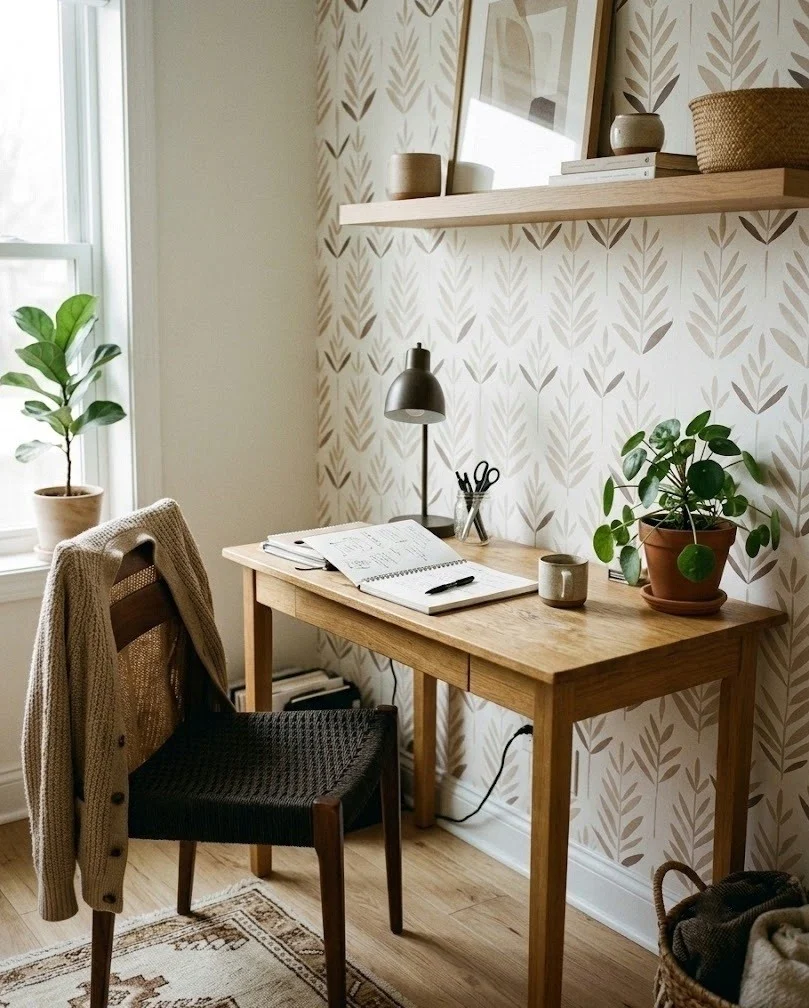
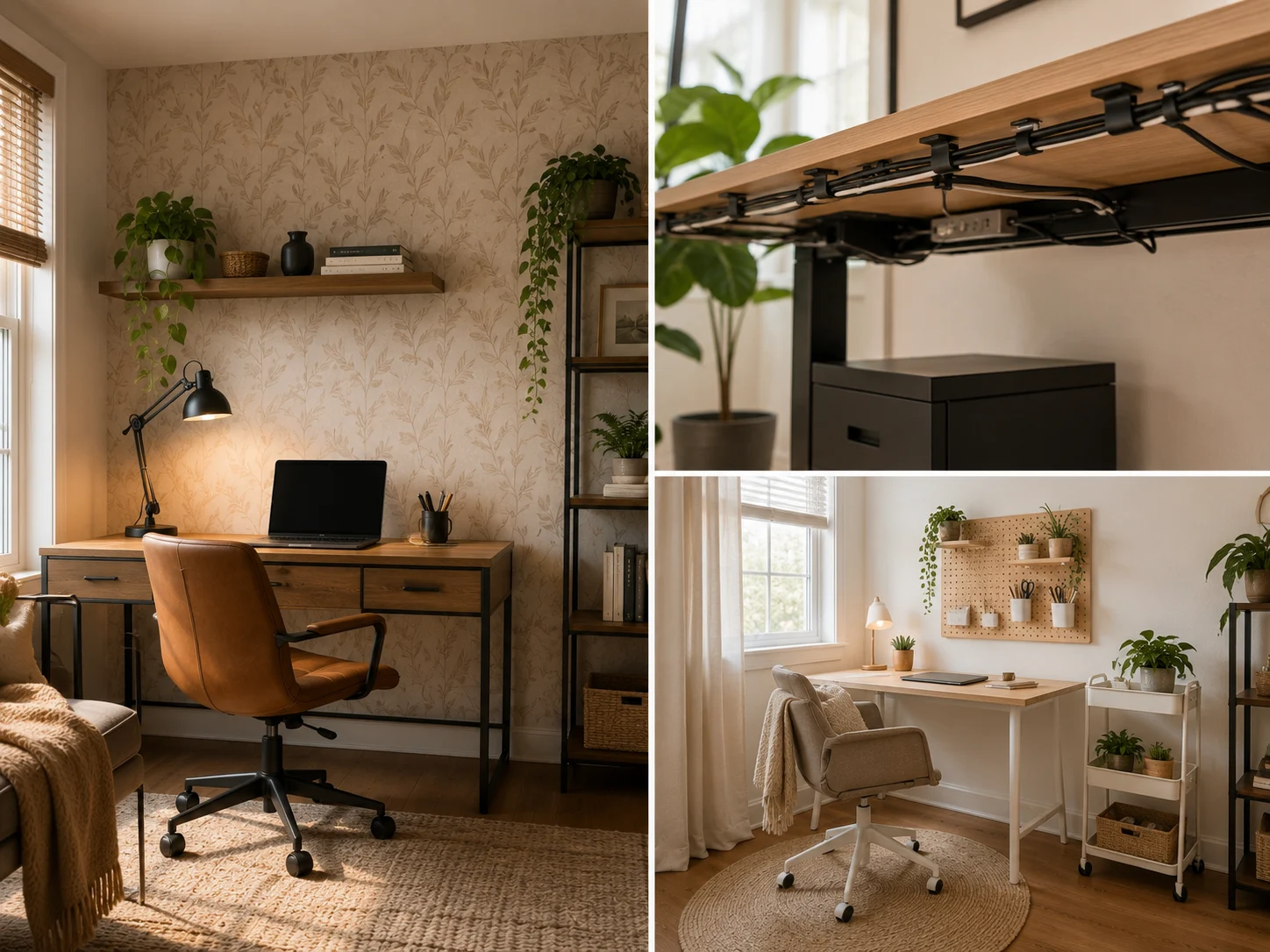
A single wall of peel-and-stick wallpaper behind your desk turns a blank rental corner into a defined workspace, and it lifts off in one piece when you leave. Stick to one wall only, because wrapping the whole room reads busy and doubles your removal work later. Choose a matte, textured pattern over high-gloss vinyl, since gloss telegraphs every wall imperfection and bubbles in humid rooms. Prep matters more than the paper: wipe the wall with a slightly damp cloth, let it dry fully, and start from a level pencil line, not the ceiling, which is rarely straight in older buildings. Overlap seams by about an eighth of an inch so gaps do not open as the adhesive settles. Cheaper rolls pull away cleanest if you go slow.
2. Adhesive Cable Clips Running Under the Desk Edge
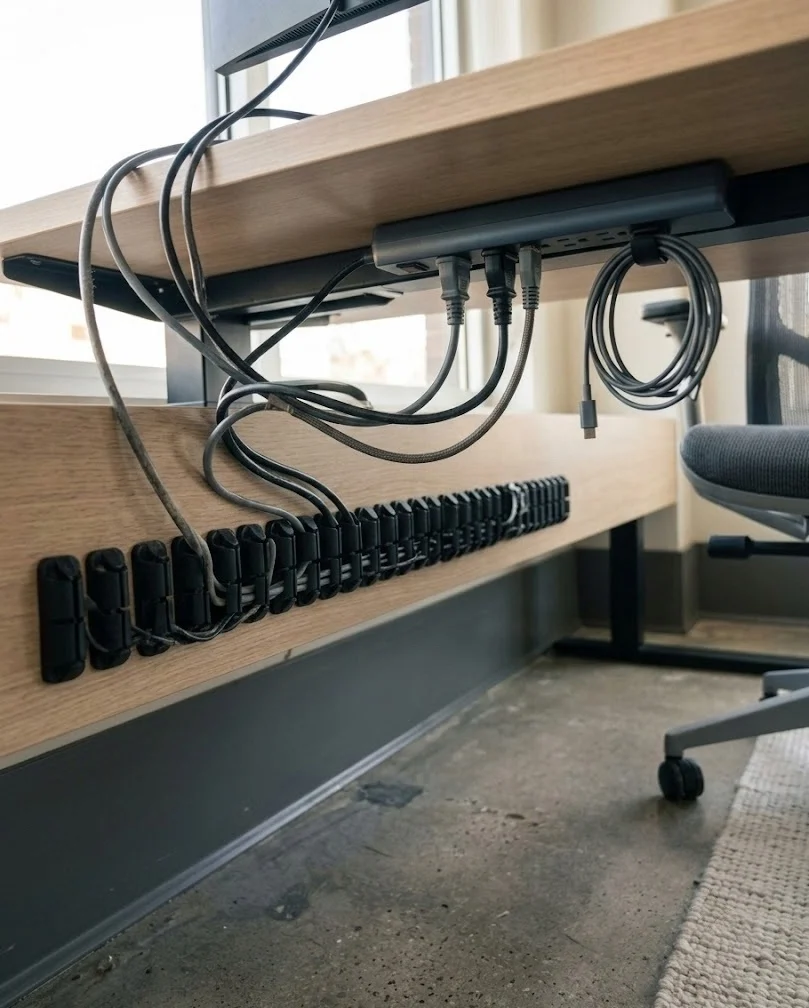
Adhesive-backed cable clips along the underside of the desk lift every cord off the floor and out of the camera frame, the fastest way to make a rental corner look deliberate instead of thrown together. Route the power strip flat against a desk leg, then clip cables in a single run so they trace one clean line rather than a nest. Use clips rated slightly above your cable count, because overloaded clips pop off within a week. Press each one for thirty seconds and let the adhesive cure a full day before loading it, especially on painted MDF furniture where the bond is weaker. When you move, warm the adhesive with a hair dryer for a few seconds and it peels off desk and wall without a mark.
3. Command-Strip Pegboard Above the Monitor
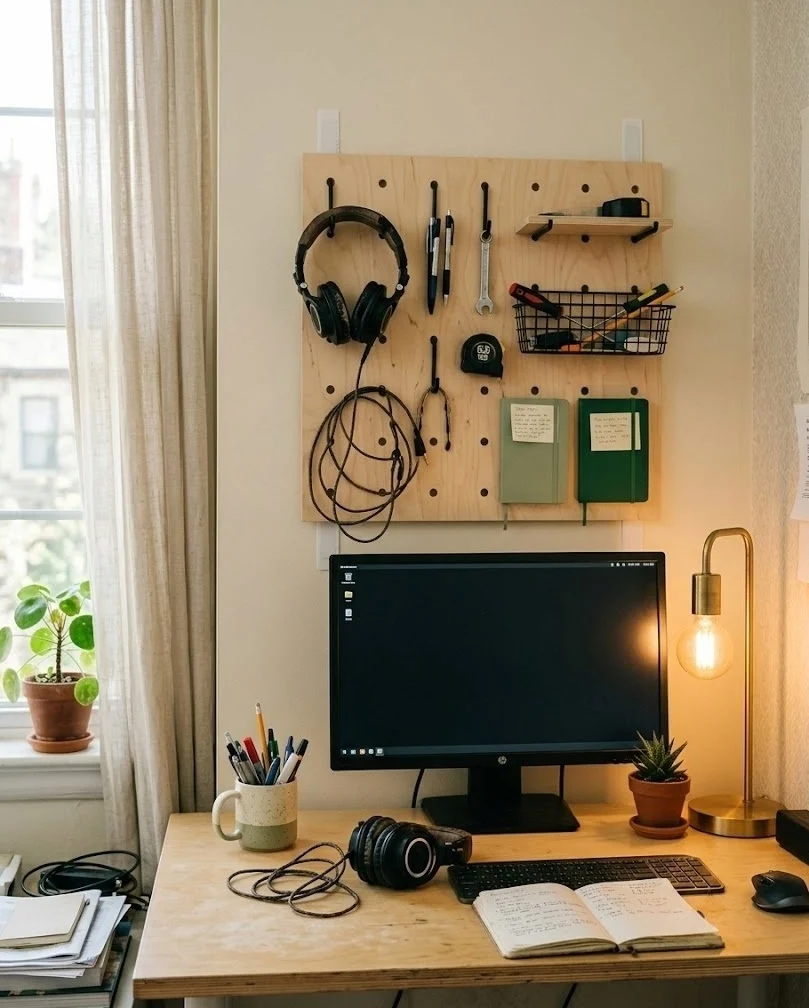
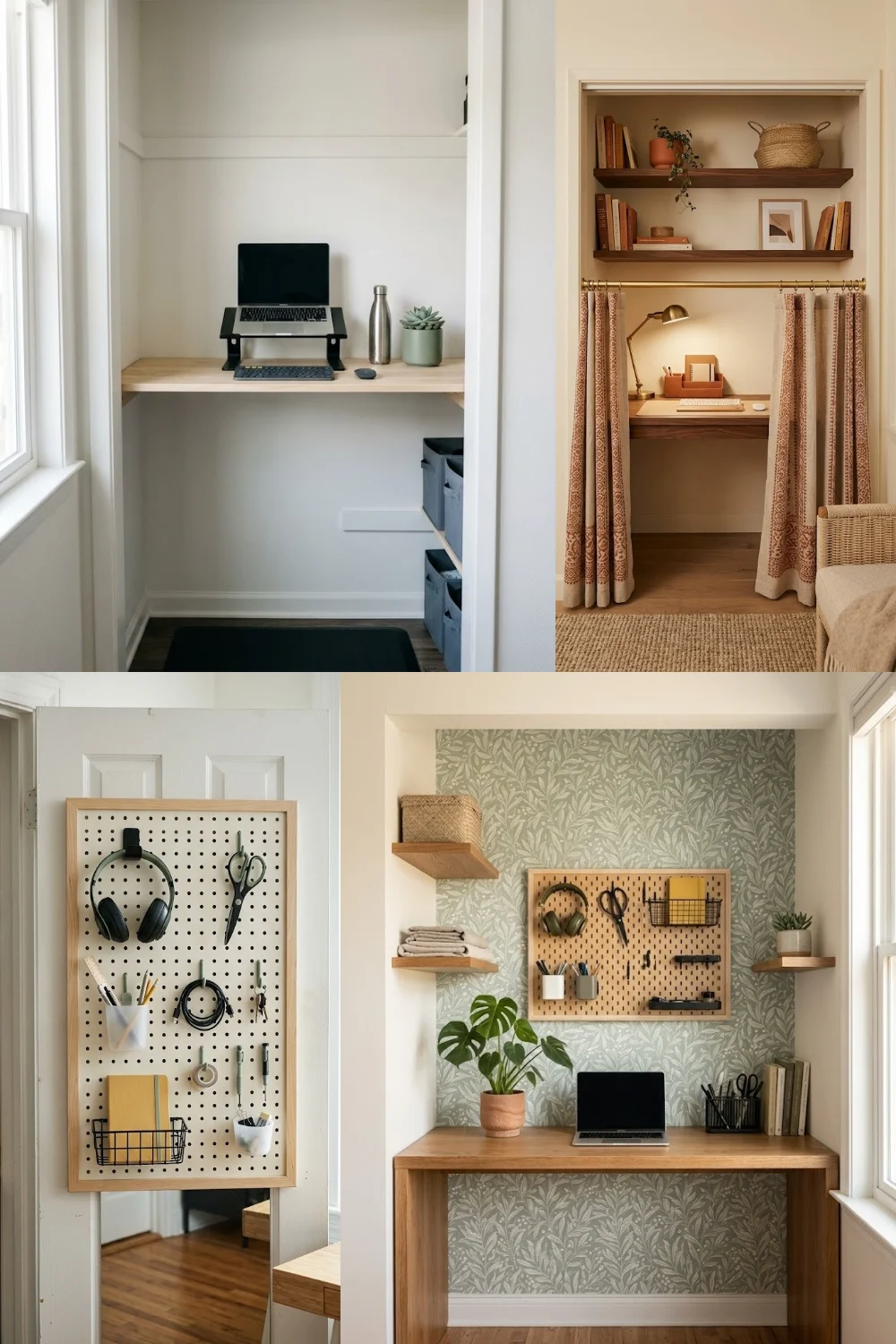
A pegboard mounted on heavy-duty Command strips gives you vertical storage for pens, headphones, and cables without a single screw, and it holds surprising weight when you spread the load. Rate the strips for the board plus everything you plan to hang, then add a fifty percent buffer, because pegboards only get heavier as you use them. Mount the board slightly higher than eye level so hooks clear your monitor, and keep the heaviest items near the mounting points, not the corners. The common failure is hanging it on flat or freshly painted walls, since the strips need cured eggshell or satin to grip. On removal, stretch each strip straight down slowly and the wall stays clean.
4. Peel-and-Stick Cork Tiles as a Silent Pinboard
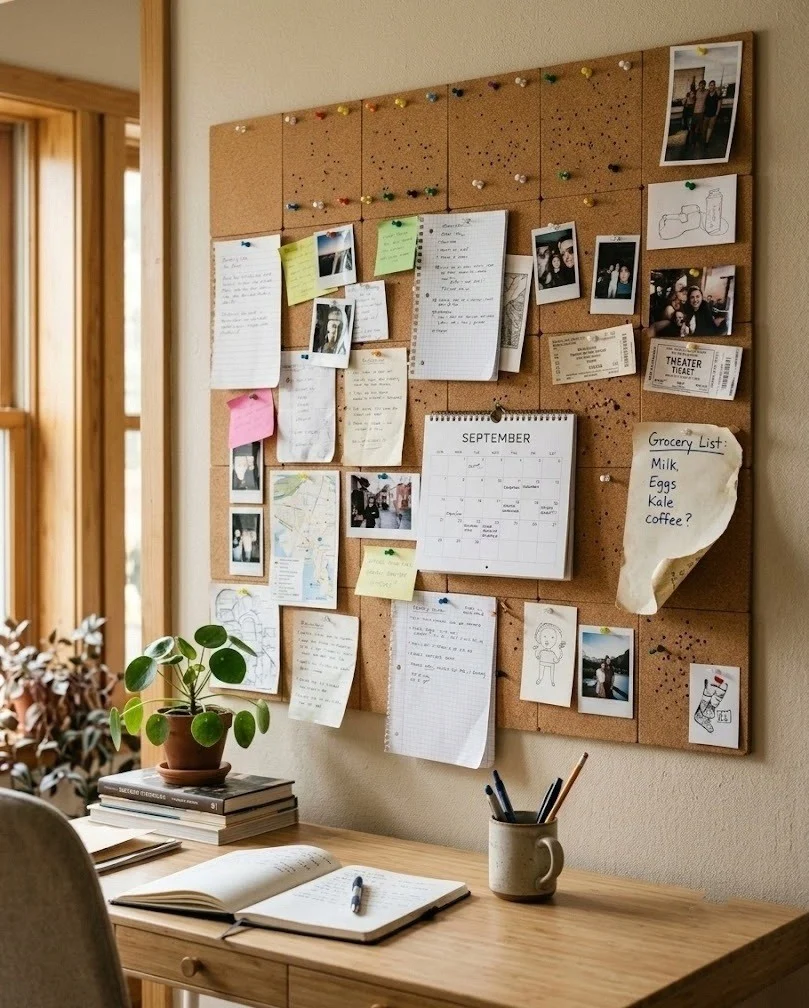
Cork tiles with a self-adhesive backing turn the wall beside your desk into a pinboard for notes and inspiration without cork-dust crumbling or nail holes. Buy self-adhesive squares and dry-lay them on the floor first to plan the grid, since mismatched seams read as a mistake once they are up. Press from the center of each tile outward to push air pockets to the edge. Cork this thin dents under thumbtacks over time, so use flat push-pins and rotate what you pin to spread the wear. A softer approach than the accent wall in idea 1, this covers a smaller footprint and comes off with the same slow peel. Expect a faint outline on removal that a magic eraser clears in seconds.
5. Adhesive LED Strip Lighting Behind the Shelf
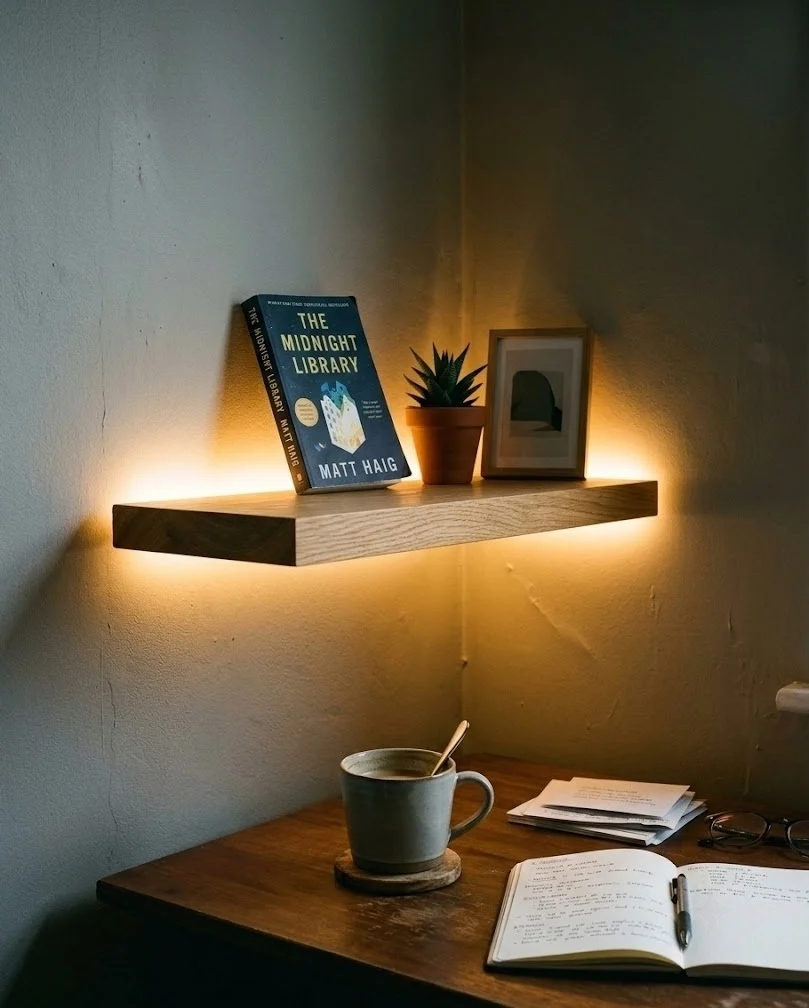
An adhesive-backed LED strip tucked behind a floating shelf or monitor washes the wall with light and hides the fixture completely, which fixes the flat overhead lighting most rentals are cursed with. Measure the run before buying and get a strip you can cut at the marked intervals, because forcing a too-long strip into a corner kinks the circuit and kills the far end. Clean the surface with rubbing alcohol first, since dust is why these strips sag within a month. Choose a warm white around 2700K for a workspace, because cool blue LEDs read like a server room and wreck your video-call skin tone. Run the controller to an outlet, not a hardwired switch, so removal is just a peel and a wipe.
6. Freestanding Fold-Down Wall Desk in a Tight Corner
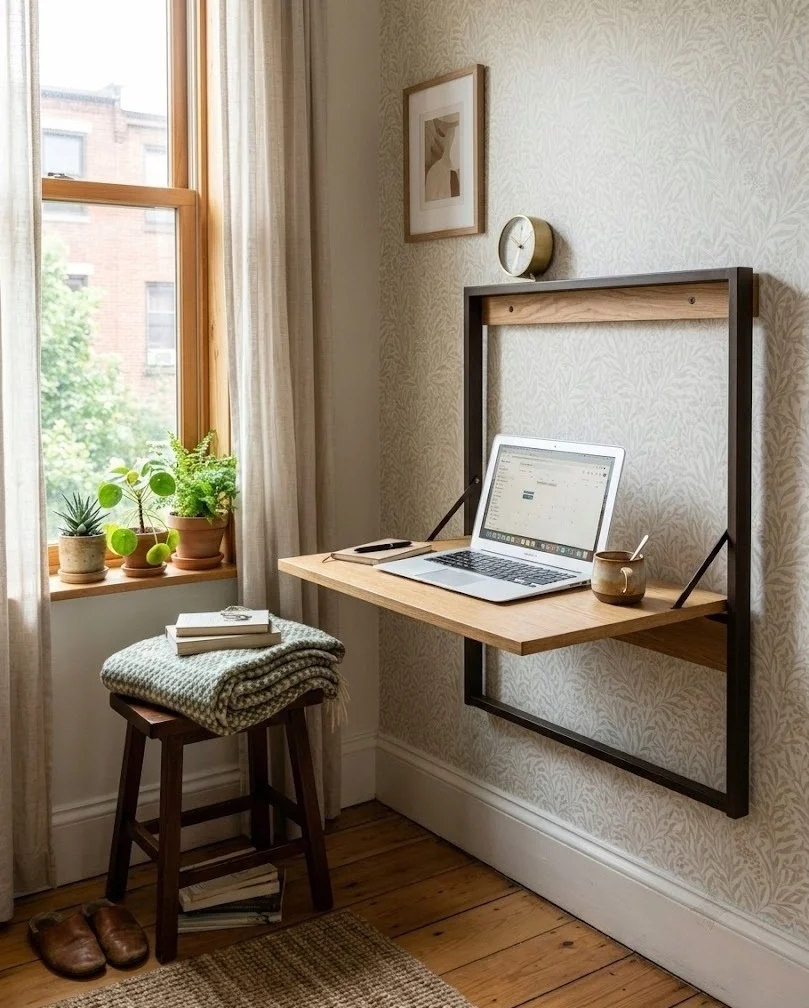
A freestanding fold-down wall desk gives you a full work surface that collapses flat when you are done, ideal when the office has to disappear at night. Look for a version that stands on its own frame or leans with an anti-tip strap rather than one that bolts into studs, since the whole point is zero wall damage. Depth matters more than width for rentals: fourteen to sixteen inches holds a laptop and a notebook without eating the walkway. Pair it with the peel-and-stick accent wall in idea 1 so the folded desk still looks like part of a designed corner. The catch is stability under typing pressure, so test the hinge locks before you trust a monitor on it, and keep heavy items off the fold-down leaf.
7. Rolling Storage Cart as a Mobile Supply Station
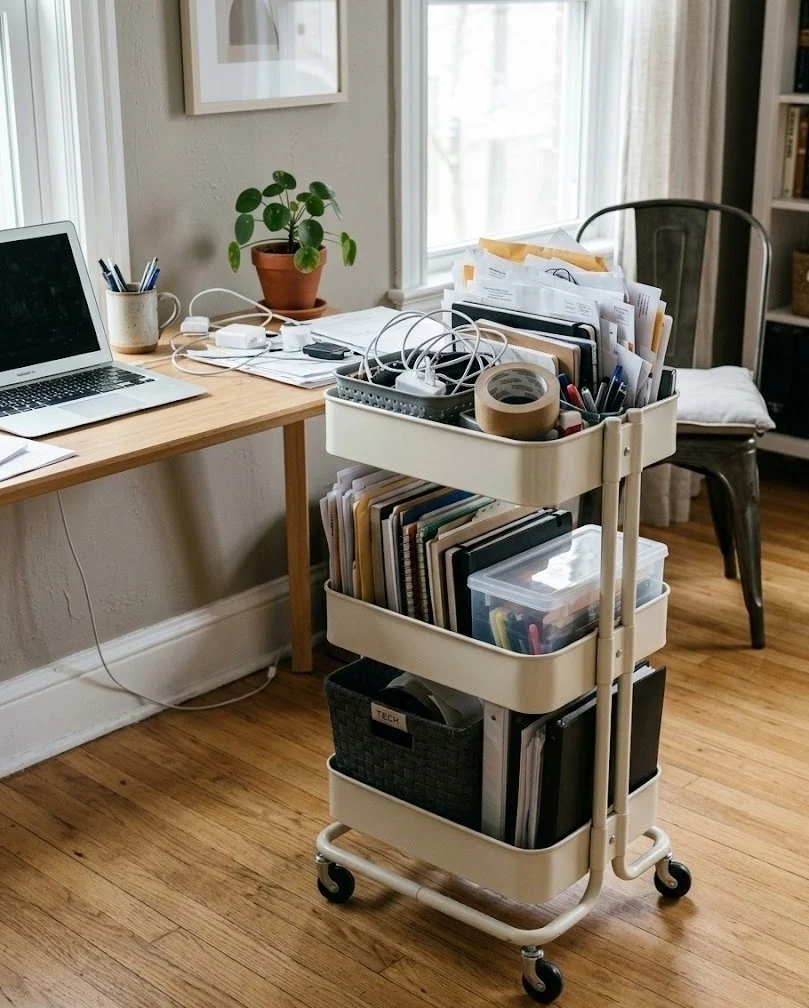
A rolling storage cart holds printer paper, chargers, and supplies and wheels out of sight into a closet when guests come, the freestanding answer to no built-in storage. Three tiers is the sweet spot, because taller carts tip when the top basket is loaded and the bottom is empty, so weight the base first. Lock at least two of the casters if your floors slope, a common quirk in older rentals, or the cart drifts away mid-reach. Metal mesh baskets let you see contents but let small items fall through, so line the bottom tier with a cut piece of shelf liner. Keep it within arm's reach of the desk so it earns its footprint instead of becoming a parking spot for clutter.
8. Leaning Ladder Shelf for Vertical Storage
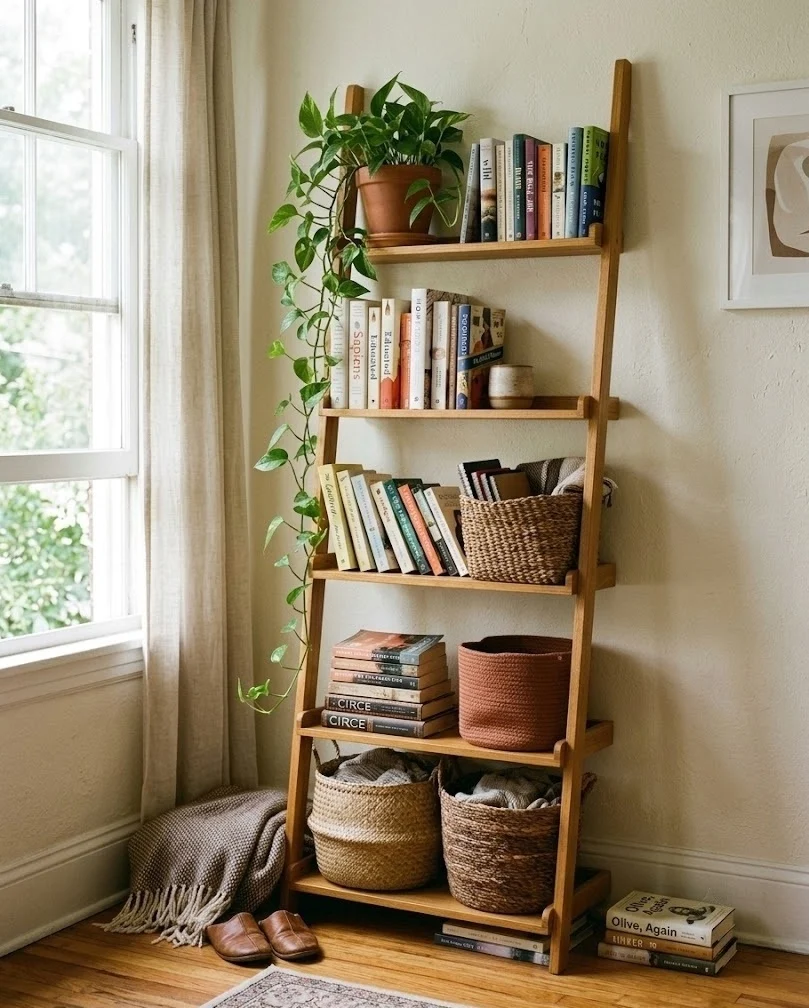
A leaning ladder shelf stacks books, plants, and bins upward against the wall using gravity and a footprint the size of a doormat, no anchors required. The lean angle is both the safety feature and the risk: too vertical and it tips forward when loaded, so keep the base far enough out that the top rests firmly, usually about a foot from the wall at the bottom. Load heavy on the lower rungs and light up top, or the whole thing becomes top-heavy. On hardwood or tile, stick felt pads under the feet so it does not slide as you pull books. Renters with pets or kids should add one removable adhesive strap at the top rung for tip protection that still peels off clean at move-out.
9. Freestanding Bookshelf Turned Sideways as a Room Divider
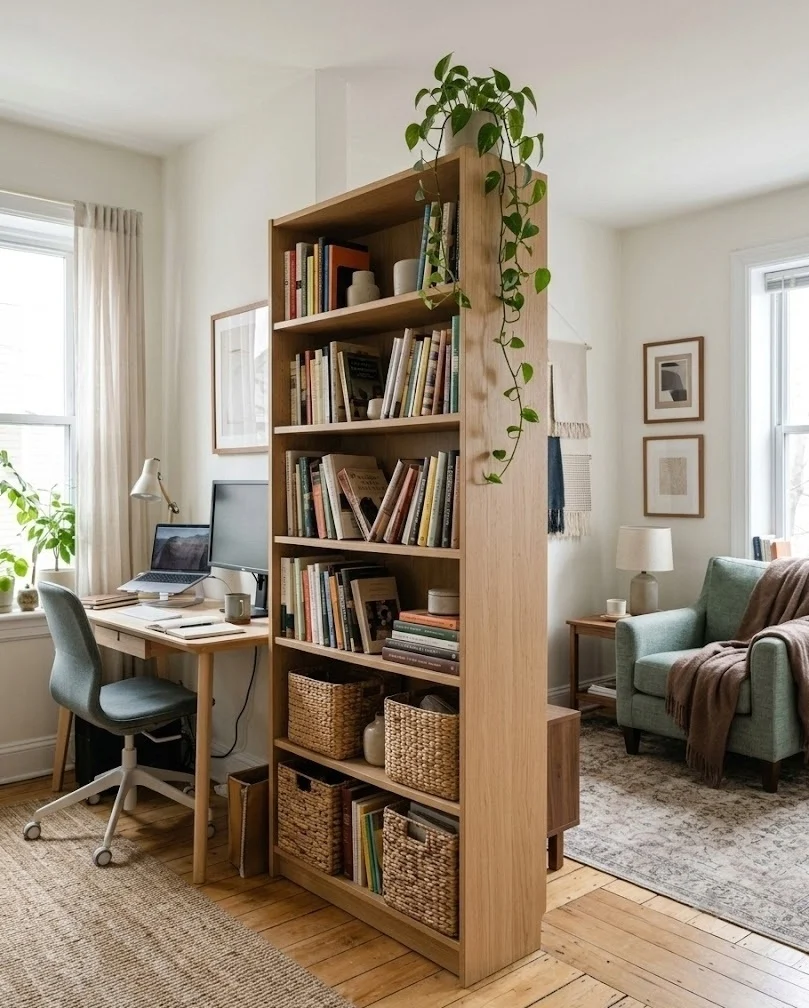
A tall bookshelf placed perpendicular to the wall splits a room into an office zone and everything else, no construction and no permission needed. Anchor it visually by facing the open back toward your desk and the finished front toward the rest of the room, or buy a finished-both-sides unit so neither view looks raw. Weight the bottom shelves heavily for stability, since a divider gets bumped from both sides. This is a standing take on the vertical storage in idea 8, but it blocks sightlines rather than just holding things upward. Leave a two-foot gap at one end as a walkway so the zone feels intentional, not barricaded. Add a strap-style floor anchor if the unit is over five feet and the floor is uneven.
10. Weighted Freestanding Floor Lamp for Task Light
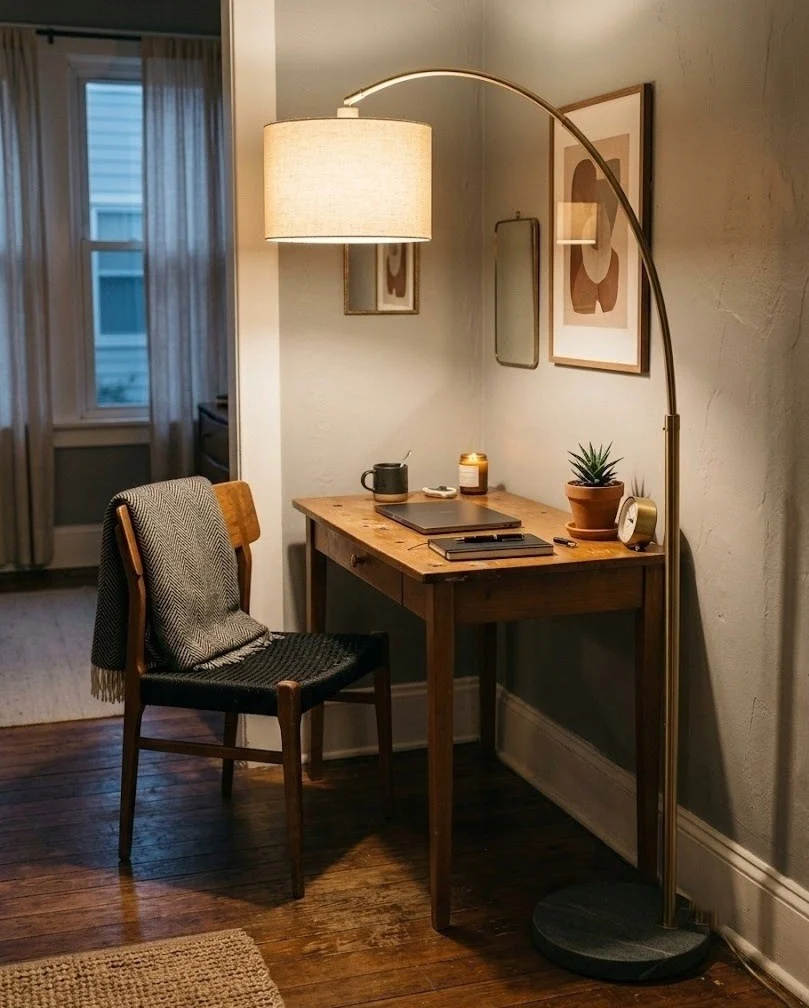
A freestanding floor lamp with a heavy base replaces the hardwired lighting you cannot change and puts warm, directional light exactly where the desk needs it. Position it behind and to the side of your monitor, never directly behind you on a video call, where it turns you into a silhouette. An arc or reading lamp with an adjustable head beats a fixed torchiere for desk work because you can aim the light down onto the surface. Weighted or wide bases matter in rentals with kids or pets, since a top-heavy lamp on uneven floors is a tip hazard. Run the cord along the baseboard with a couple of removable clips so it does not cross a walkway. Warm bulbs around 2700K keep the corner from feeling clinical.
11. Tension-Rod Shelf Inside a Closet Office
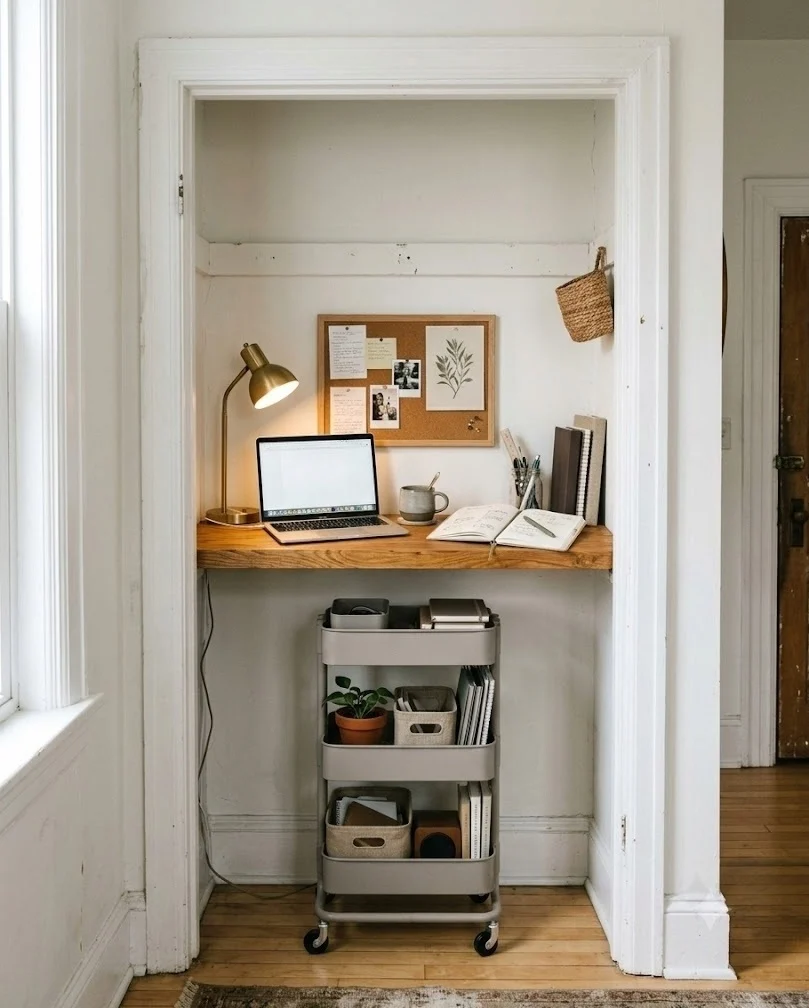
A tension rod wedged across a closet creates an instant shelf or a hanging rail for a cloffice, turning an unused closet into a private workspace that closes behind doors. Match the rod's weight rating to the load and buy the widest diameter that fits, because thin rods bow under a row of binders and slip. Set it at the right height before you commit, roughly a few inches above your seated eye level for a display shelf, lower if it is doubling as a laptop ledge. Roll the cart from idea 7 into the closet base for supplies you do not want on display. The failure mode is smooth-painted closet walls where the rubber tips slide, so a square of shelf liner behind each tip adds grip without a mark.
12. Over-the-Door Organizer for Supplies and Cables
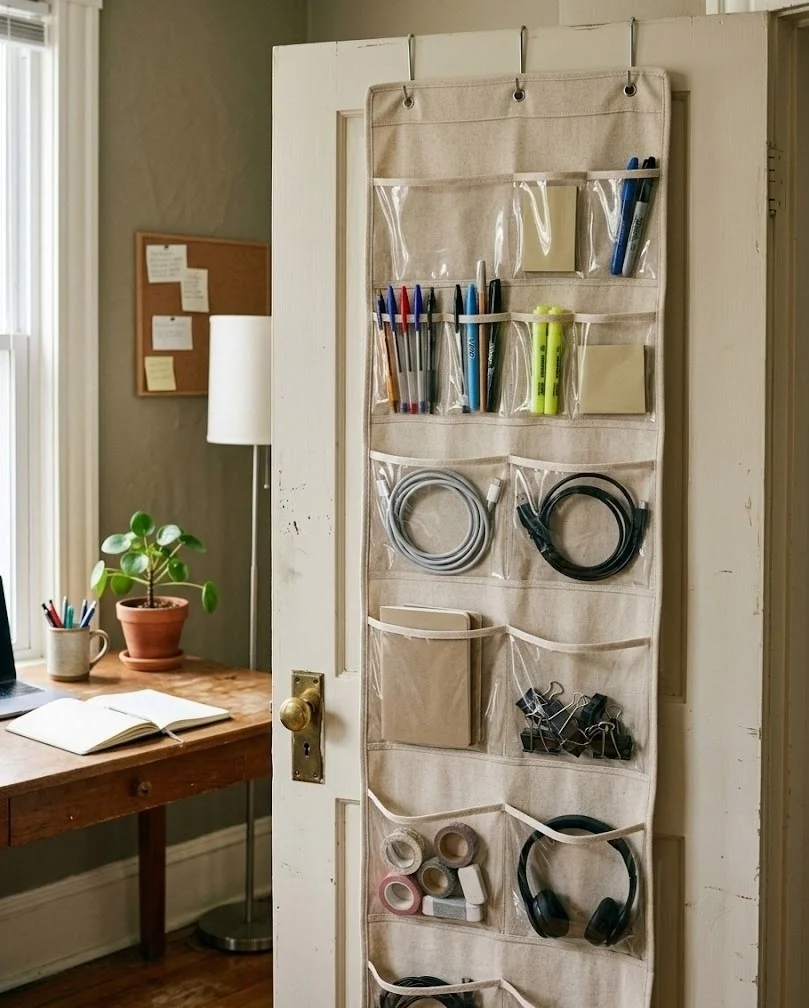
An over-the-door organizer hangs supplies on the back of a closet or room door using the door itself as the mount, reclaiming vertical space no drill can touch. Pick one with hooks sized to your door thickness, because hollow-core rental doors are thinner than solid ones and standard hooks gap and rattle. Clear pockets let you see contents, but load the bottom rows heavier so the whole panel does not swing when the door moves. On a frequently used door, adhesive bumpers on the back edge stop it from banging the frame and marking the paint. This keeps the desktop clear for actual work rather than storage, which is the point of nearly every idea in this list.
13. Leaning Full-Length Mirror to Bounce Desk Light
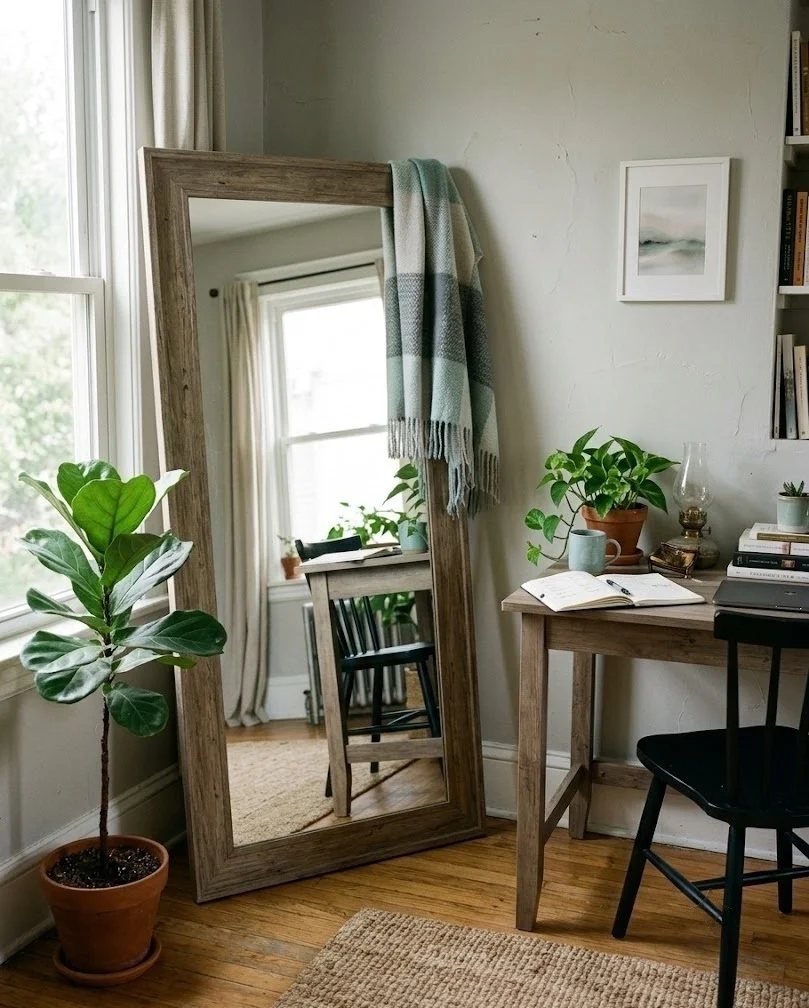
A full-length mirror leaned against the wall across from a window doubles the natural light hitting your desk and makes a cramped rental office feel less like a box. Angle it to catch the window, not to face your screen, where it creates glare and shows your setup to everyone on the call behind you. Leaning is safer than hanging for heavy mirrors and needs zero anchors, but it is a genuine tip risk with kids or pets, so add a low-profile removable anti-tip strap near the top. Felt pads under the base stop it sliding on hard floors. A wood or metal frame reads more intentional than a frameless mirror, which can look like it is waiting to be hung.
14. Tiered Plant Stand Bringing Green Up the Wall
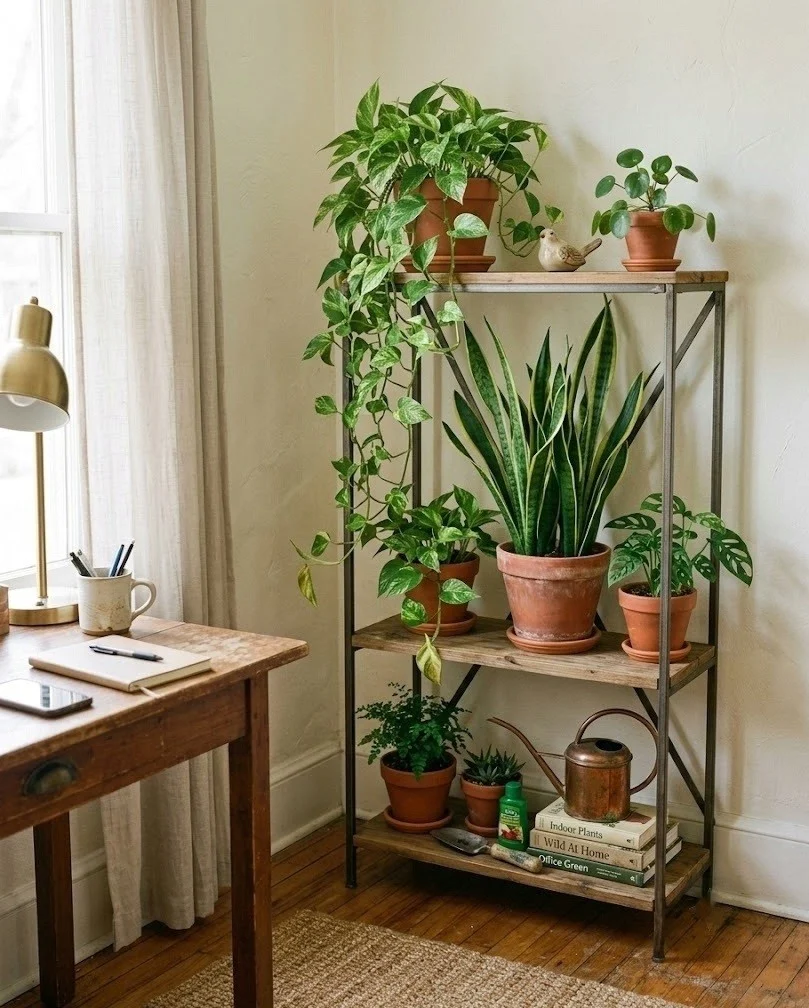
A freestanding tiered plant stand stacks greenery vertically in the corner beside your desk, softening a hard rental workspace without hooks or macrame anchored to the ceiling. Choose plants by the light you actually have, because a corner away from the window wants pothos or snake plants, not a fiddle-leaf fig that will drop leaves and guilt you. Put the heaviest pot on the bottom tier for stability and to keep the stand from tipping when you water. Use nursery pots inside decorative covers so drainage water never touches the floor, the fastest way to stain a rental and lose deposit dollars. Keep it off the desk itself so soil gnats and water rings stay away from your keyboard and papers.
15. Stacked Crate Shelving Tower Beside the Desk
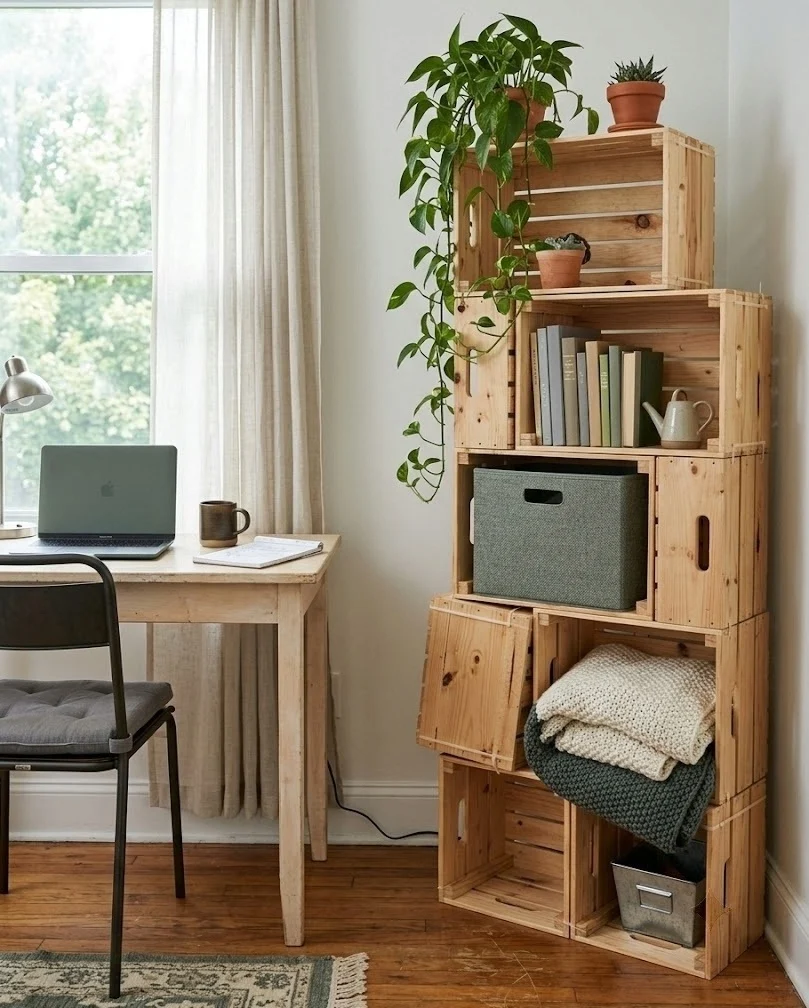
Wooden or plastic crates stacked and secured into a tower give you modular, reconfigurable storage that ships flat to your next apartment, no shelf brackets involved. Zip-tie or bolt the crates to each other at the corners so the stack cannot shear sideways when bumped, because a loose stack is a collapse waiting for a deadline. Keep it under four crates tall when freestanding, or lean it against the wall for anything higher. Orient the openings toward your chair so the tower is storage, not just a wall. Line the shelves you use for supplies with a cut mat so pens do not roll through the slats. Sand any rough wooden edges before your arm learns they are there the hard way.
16. Area Rug Anchoring the Desk Zone in a Shared Room
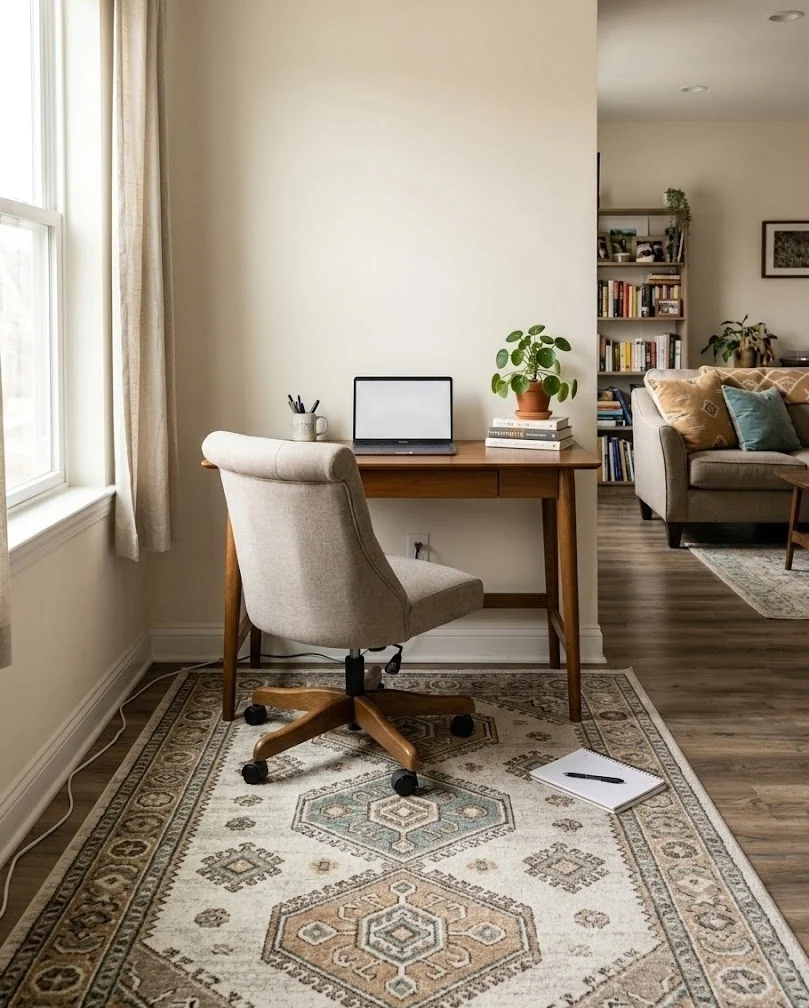
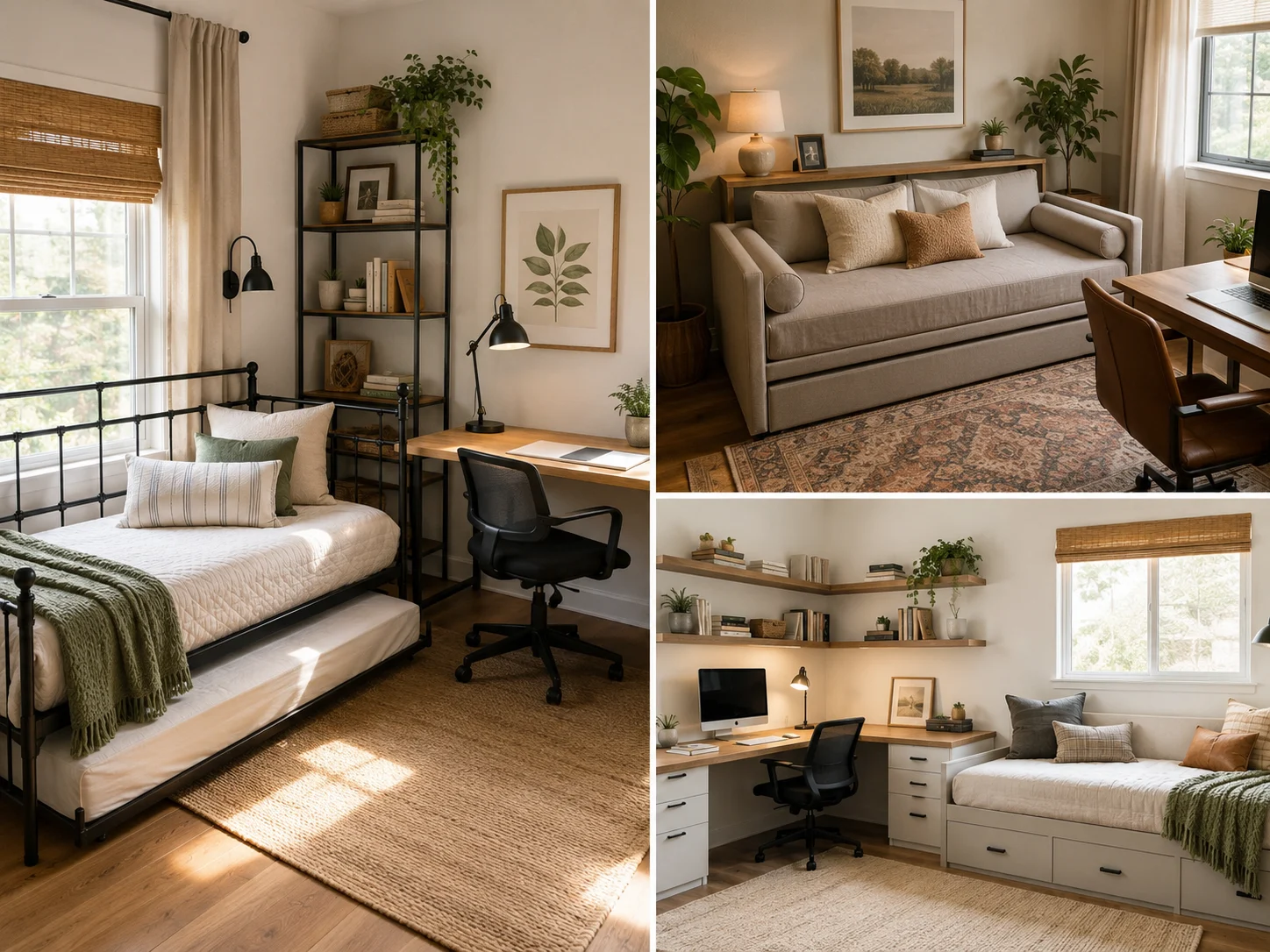
An area rug under the desk visually claims a patch of a shared living room as the office, drawing a border the eye reads even though nothing is built. Size it so the desk and chair both sit on the rug with the chair still on it when pushed back, usually five by seven feet minimum for a desk zone. Tie the rug's palette to the room it lives in so the office reads as belonging, not bolted on. Pair it with the desk from idea 6 and the zone reads finished the moment you unroll it. A low-pile rug lets the chair casters roll, while high pile fights every push and traps crumbs a landlord will find at inspection.
17. Freestanding Folding Screen Hiding the Desk on Calls
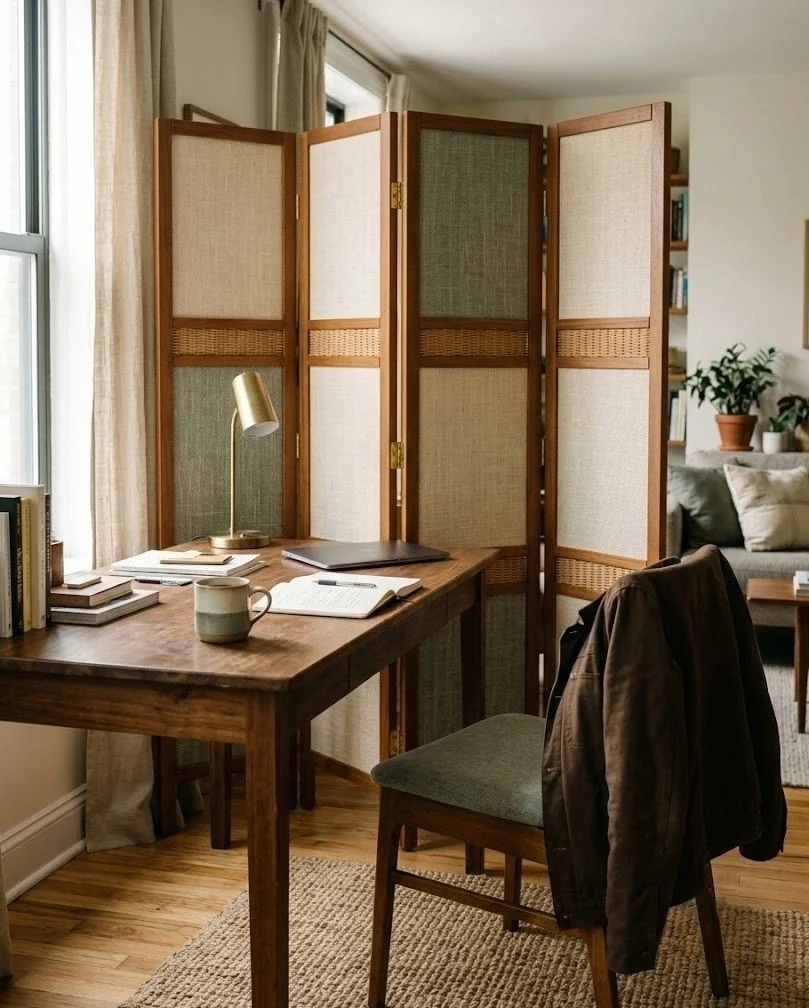
A folding screen behind or beside the desk blocks the messy reality of a work zone from the rest of the room and from your webcam, the freestanding fix for a shared space with no door. Three or four panels stand on their own without leaning, and the accordion shape is self-supporting as long as you angle the panels rather than opening them flat. Place it to hide the storage, not the person, so you still get light on your face. This does the same zoning job as the rug in idea 16 but works vertically, blocking sightlines instead of drawing a floor border. Fabric panels absorb a little sound for calls, while solid wood reflects it, so pick by whether your room echoes.
18. Corner Desk Placement Claiming Dead Square Footage
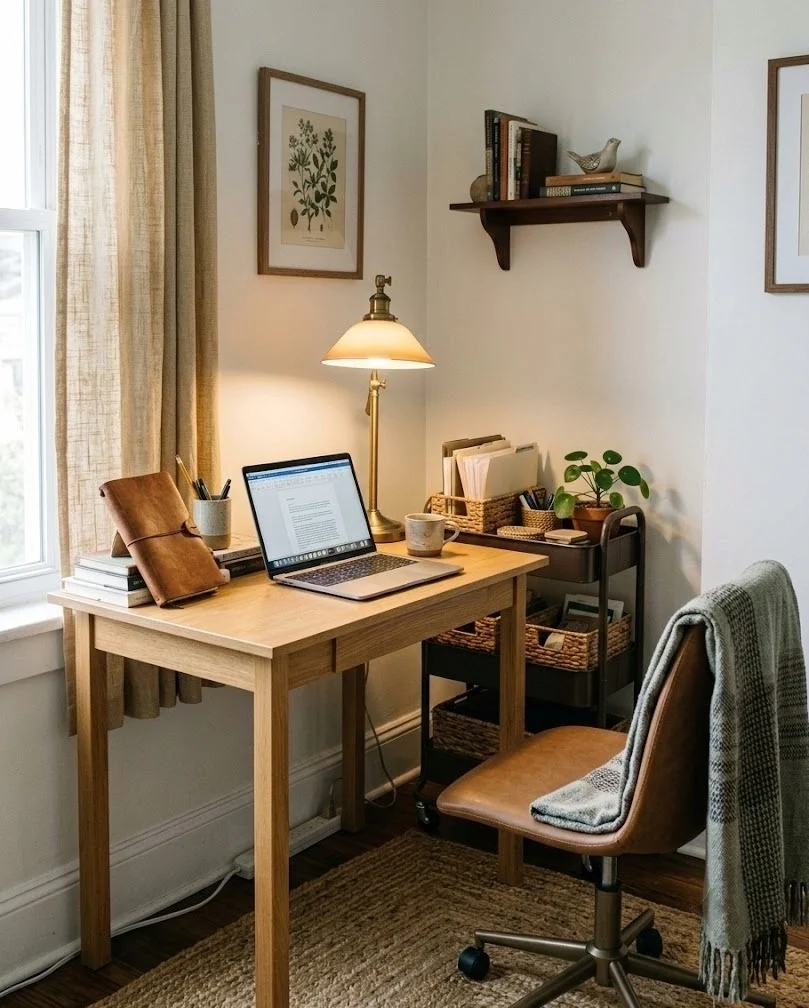
Facing a desk into an unused corner turns the most ignored part of a rental into an office and frees the walkable walls for everything else. Angle the desk across the corner rather than shoving it flat against one wall, because the diagonal gives your knees room and creates a triangle of hidden storage behind for a cart or bin. Sit facing out if you can, so the room is in front of you, not a wall a foot from your nose. Corners are the darkest spot in most rooms, so this placement leans hardest on task lighting to work. Keep at least one clear path to the corner so the zone does not feel like a trap you climb into every morning.
19. Peel-and-Stick Floor Tile Zone Marking the Office
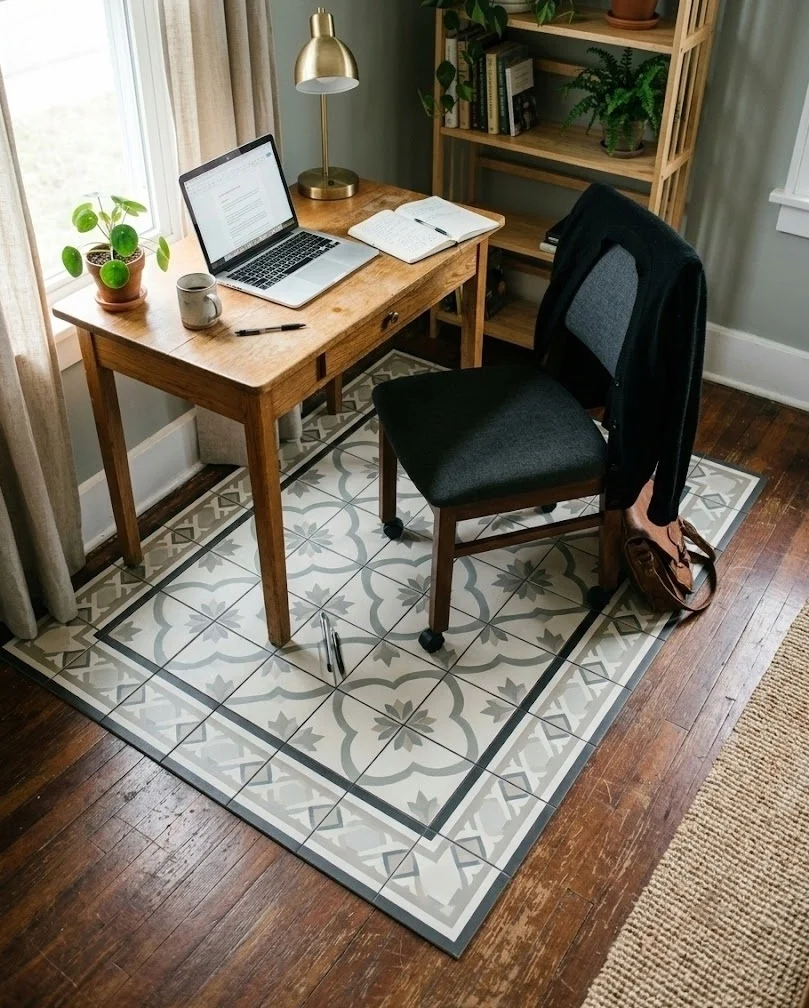
A patch of peel-and-stick floor tiles under the desk draws a hard border for the office zone, a floor-level version of the rug trick for renters who want a cleaner, wipeable surface. Lay them over the existing floor, not adhered to expensive hardwood you cannot risk, because on vinyl or laminate they lift cleanly while on raw wood they can grab the finish. Dry-fit the whole patch before peeling any backing, since floor tiles show every crooked seam underfoot. Bevel or trim the exposed edge so it does not catch chair casters and peel up. Keep the zone a clean rectangle that echoes the desk footprint, and it reads as a deliberate work area rather than a repair.
20. Cohesive Palette Tying the Whole Rental Office Together
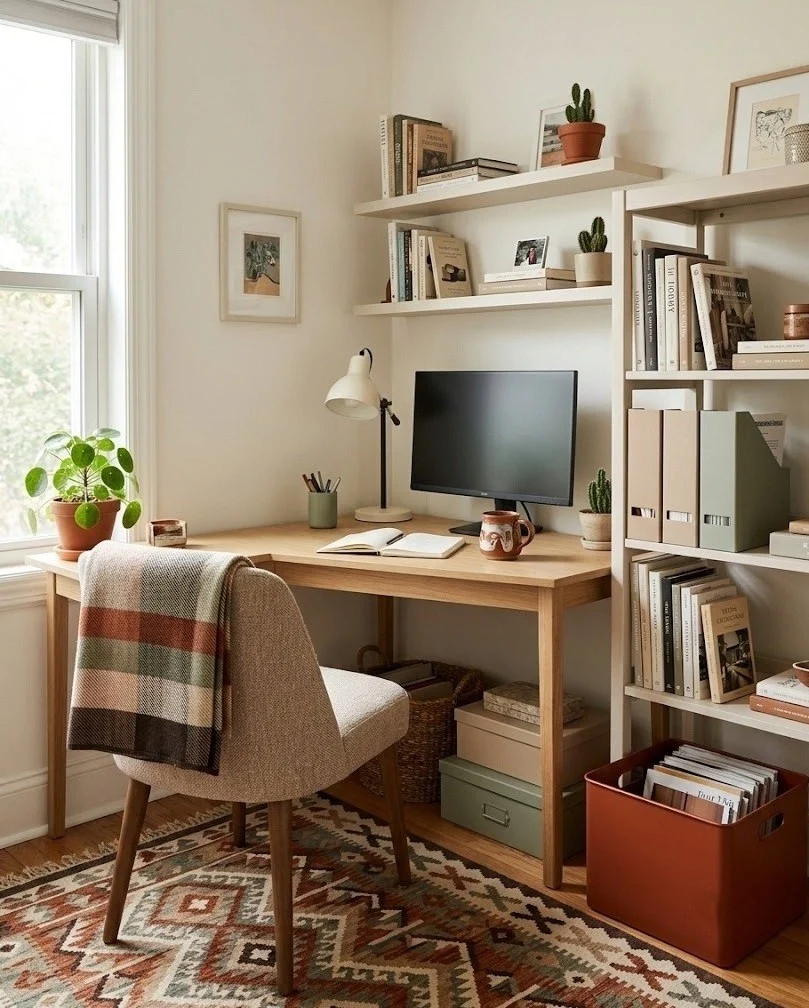
Limiting the entire office to three or four repeating colors is what makes a pile of reversible, mismatched rental pieces finally look like one intentional setup. Pull the palette from something you already own and love, then repeat each color at least twice across the desk, storage, and textiles so nothing floats alone. Keep bold color in the cheap, swappable items like a rug or bin, and neutral in the pieces you paid for, so a future taste change costs ten dollars, not two hundred. Matte finishes photograph and read calmer than a room full of glossy surfaces bouncing light. This is the quiet rule that makes every other idea in this list hang together instead of competing.
Final Thoughts
The through-line across all twenty is reversibility: every setup here comes apart faster than it went up, which is the only promise that keeps a deposit whole. Start with the method that matches your biggest constraint, adhesive for bare walls, freestanding for no-commitment flexibility, vertical for tight square footage, zoning for a shared room, then layer a second technique once the first proves itself. Your landlord never has to know the corner was ever an office. Save this post to Pinterest so the full method list is one tap away on moving day.
Frequently Asked Questions
how do I set up a home office in a rental without drilling?
Combine adhesive mounting, freestanding furniture, and tension rods so nothing touches the structure. Use removable adhesive strips for anything under a few pounds, a freestanding or fold-down desk instead of a wall-anchored one, and a leaning shelf for storage. Group the whole setup in one zone with a rug so it reads intentional rather than scattered.
will peel-and-stick wallpaper damage rental walls?
Usually no, if the wall is smooth, clean, and painted with a cured finish. Peel-and-stick wallpaper pulls away without residue on eggshell or satin paint that has aged past a few weeks. Fresh paint, flat matte finishes, and textured walls are the risky surfaces, since the adhesive can grab loose paint and lift it on removal.
how much does a renter-friendly home office cost to set up?
A basic reversible setup runs roughly 150 to 400 dollars if you buy a freestanding desk, a rolling cart, adhesive mounts, and a rug new. You can cut that under 100 dollars secondhand by sourcing the desk and cart used and adding only fresh adhesive strips and a peel-and-stick accent, which are cheap and the pieces that must be new.
how do I make a home office in a shared living room?
Zone it: define the desk area with a rug, a freestanding bookshelf turned sideways as a divider, or a folding screen that hides the desk during video calls. Face the desk into a corner to claim dead space, and keep the palette tied to the room so the office reads as part of it, not an intrusion.