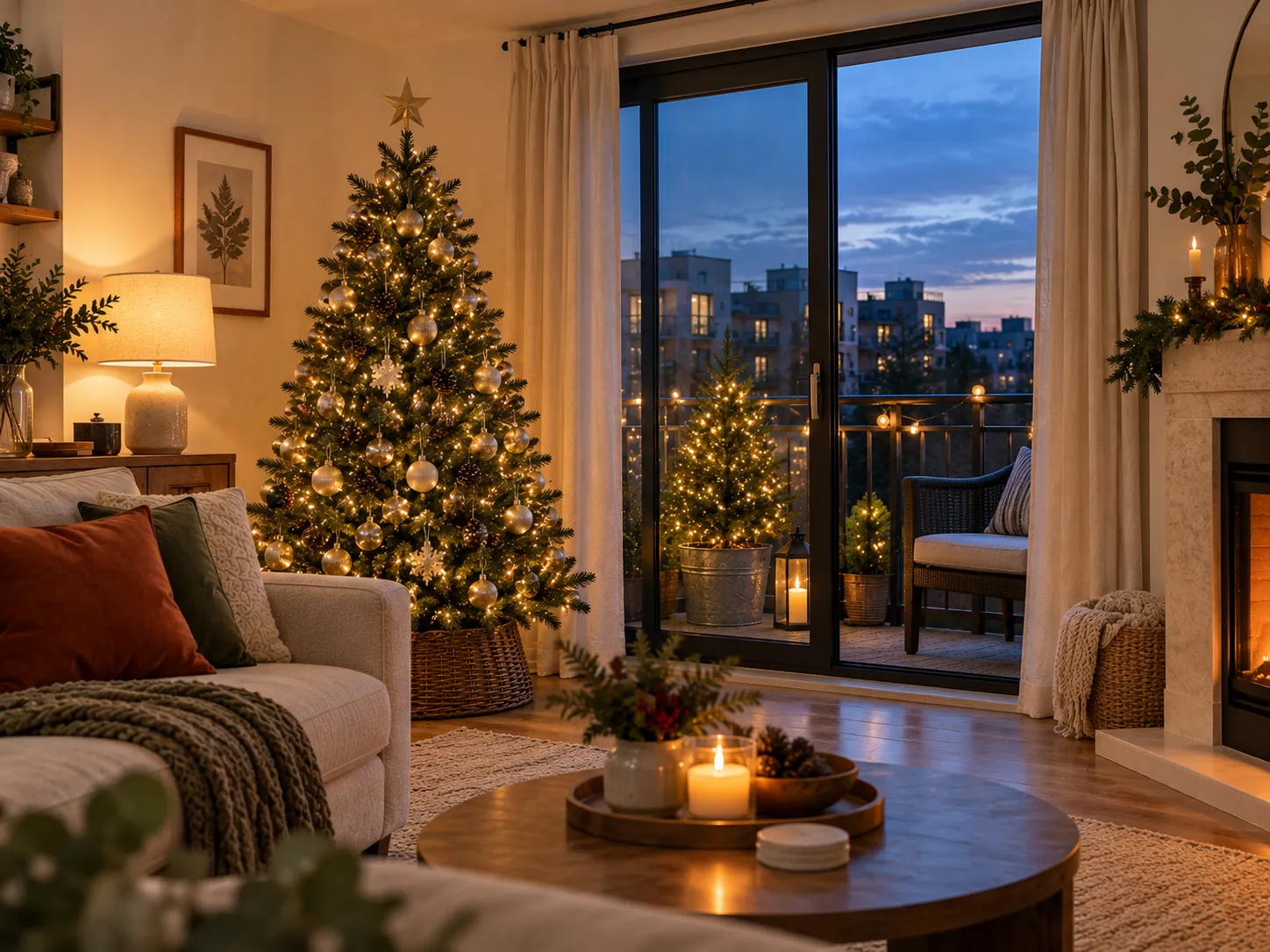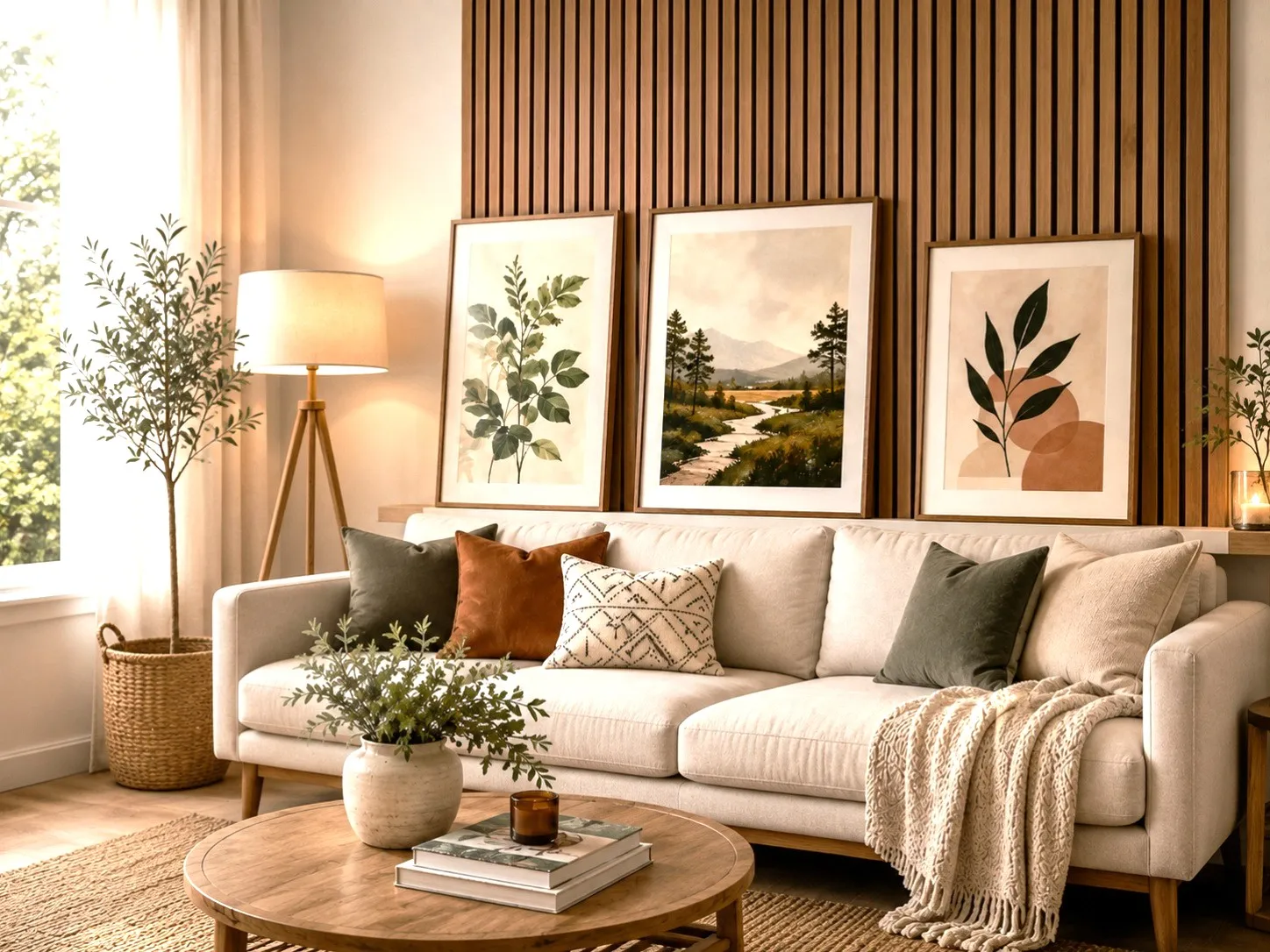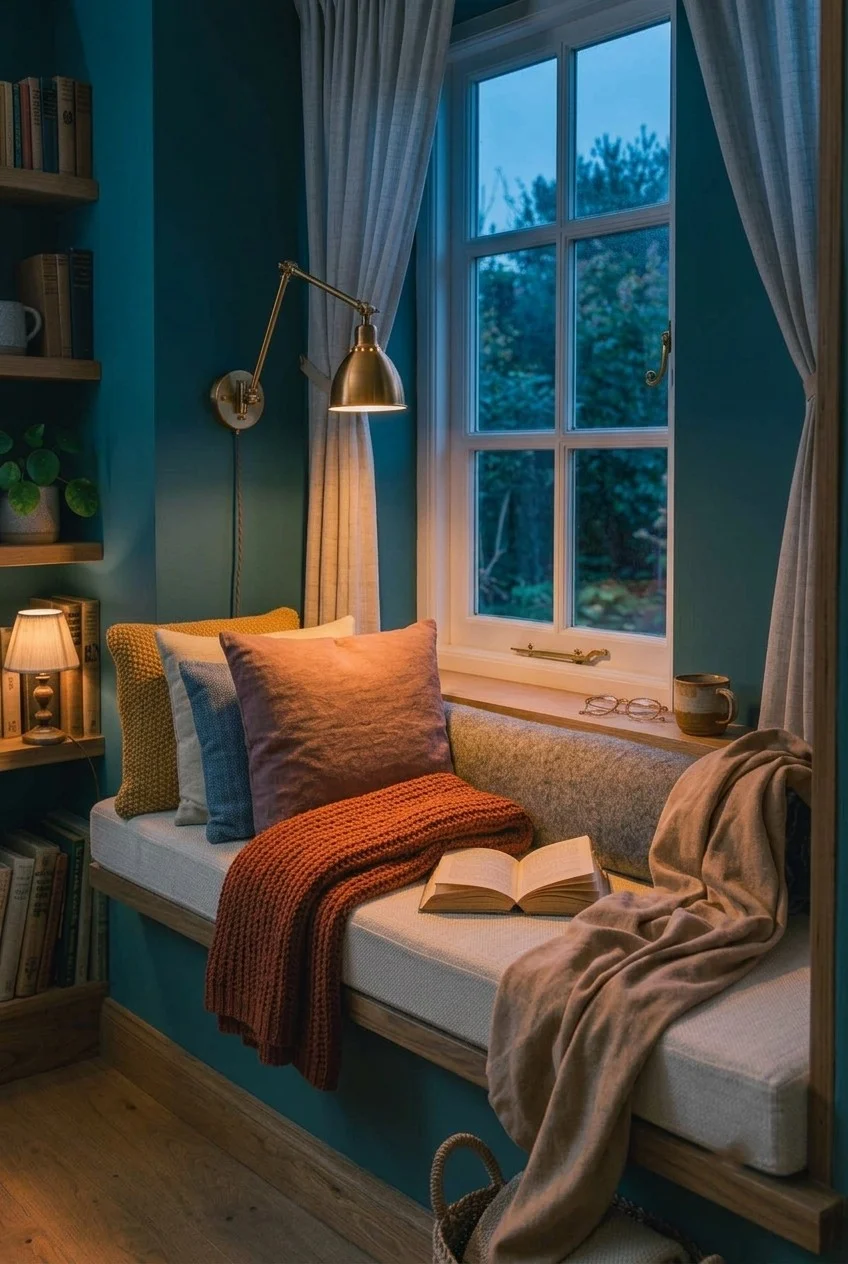
Living room lighting ideas for a room with no overhead light usually stop at 'buy a plug-in sconce' and leave you staring at a cord running across the wall. I learned this the expensive way; one anchor hole cost me most of a deposit, so this post skips the drilling and solves the parts nobody covers: routing a cord without wall damage, lighting a room with two outlets total, working around a switched outlet, and choosing adhesive over anchors when you cannot patch drywall. Nineteen ideas run from freestanding lamps you just plug in, through plug-in wall fixtures, clamp lights, rechargeable options, and concealed strips. Save this to Pinterest so it is here when the dark evenings arrive.
1. An arc floor lamp arcing over the sofa
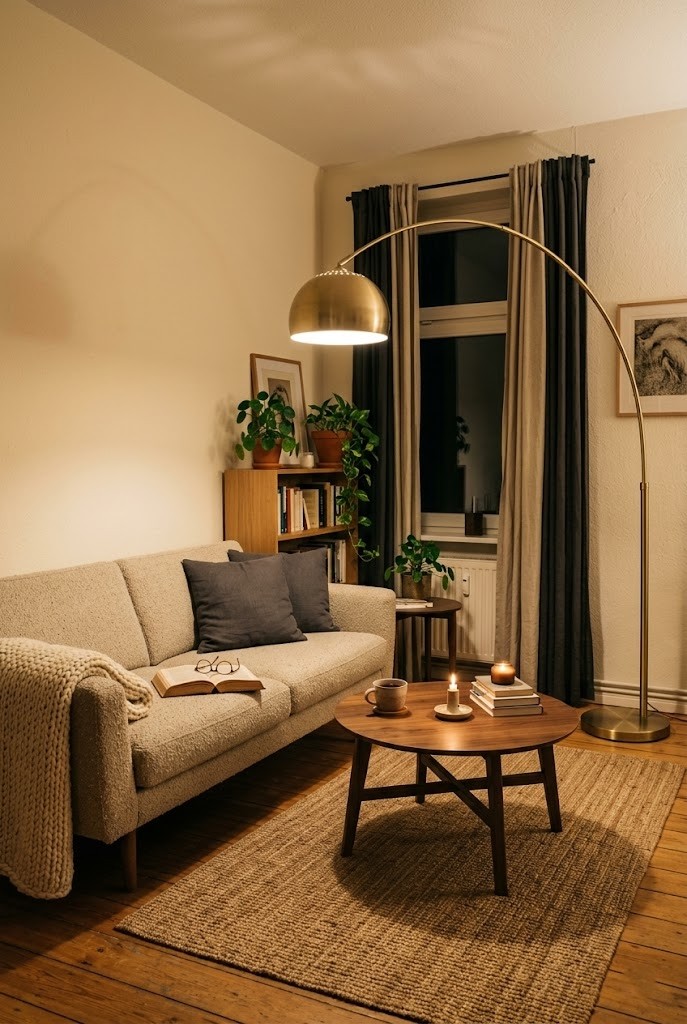
An arc floor lamp reaches its head out over the sofa, so you get downward light exactly where an overhead fixture would sit, without touching the ceiling. The weighted base stands behind or beside the couch and the arm curves out three to four feet, dropping a pool of light onto the coffee table and seating. Look for a base heavy enough that a cat brushing past won't tip it; the cheap ones are top-heavy and I have caught one mid-fall. Warm bulbs around 2700K keep the pool cozy instead of clinical. This single lamp can carry a whole small living room as your main light source, which is why I start here.
2. A torchiere bouncing light off the ceiling in a dead corner
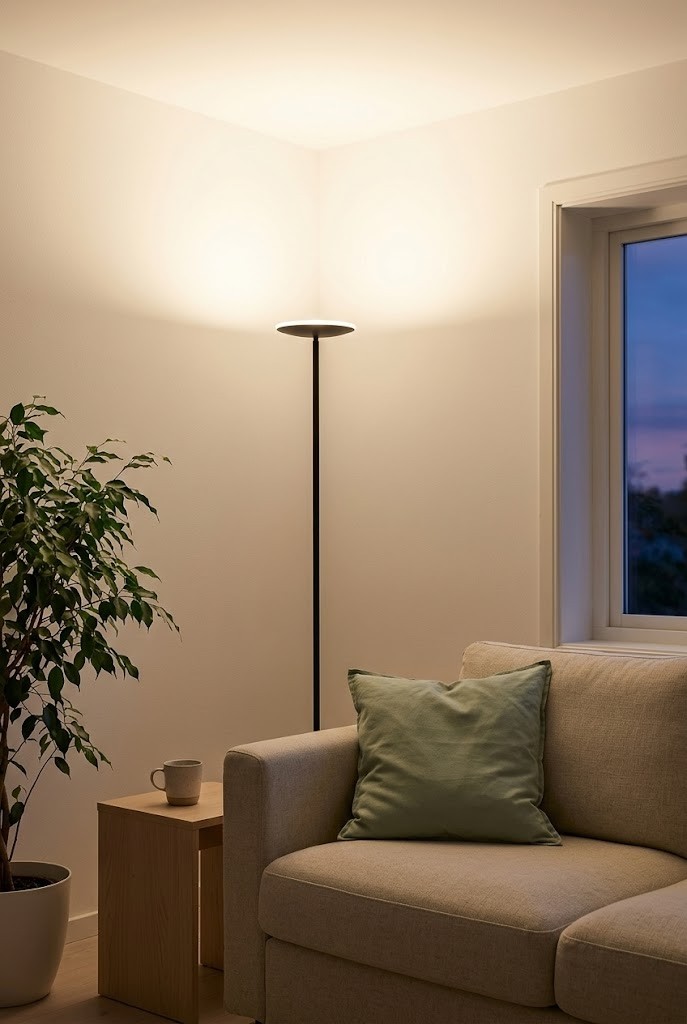
A torchiere throws all its light upward, bouncing it off the ceiling so the whole room fills with soft, sourceless glow that reads a lot like an overhead fixture. Stand one in a corner that is currently dead space and a white or light ceiling becomes your diffuser. This is the fastest way to kill the cave feeling, because indirect ceiling light casts no harsh shadows. Skip it if your ceiling is dark or textured popcorn, where the bounce dies and you just get a bright lamp. A torchiere with a built-in dimmer earns its keep here; you will want it low for TV nights and high when you are cleaning. Pair it with a table lamp so the room is not lit from one direction only.
3. A tripod floor lamp beside the reading chair
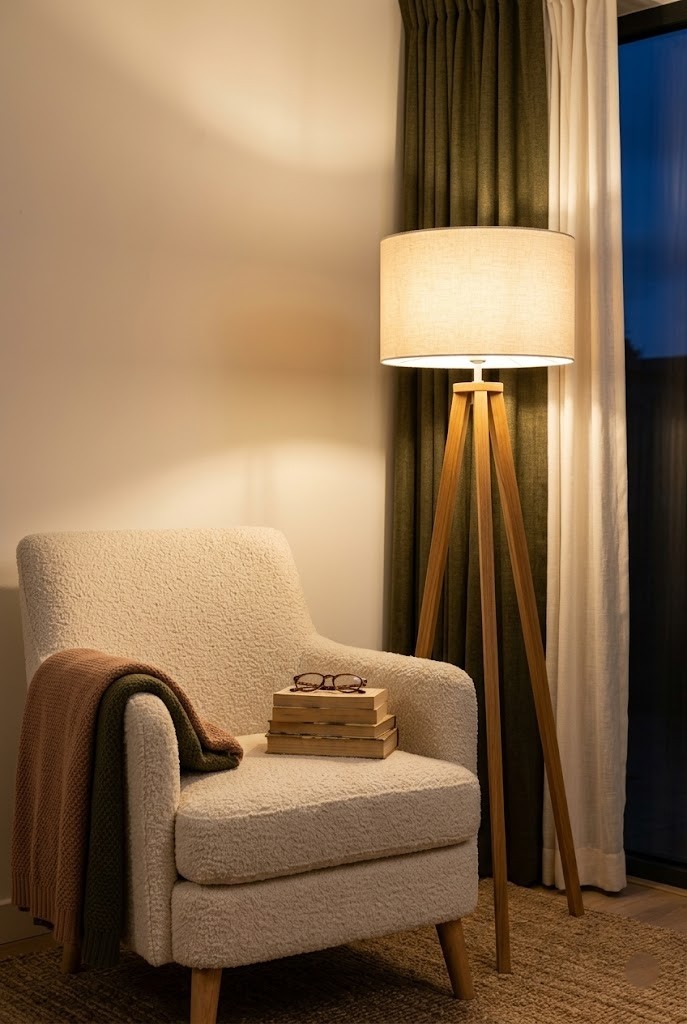
A tripod floor lamp parks beside an armchair and gives you a defined reading spot without any wall work at all: three legs, one plug, done. The tripod stance is more stable than a single-pole lamp on uneven floors or over a rug edge, which matters if the lamp lives near foot traffic. Choose a fabric drum shade for soft, wide light or a metal cone if you want it aimed down at a book. The most common misfire here is bulb color; a cool daylight bulb turns a cozy corner into an office, so stay warm. Height matters too. The shade bottom should sit around eye level when you are seated so the bulb does not glare straight at you.
4. A matched pair of table lamps for the base layer
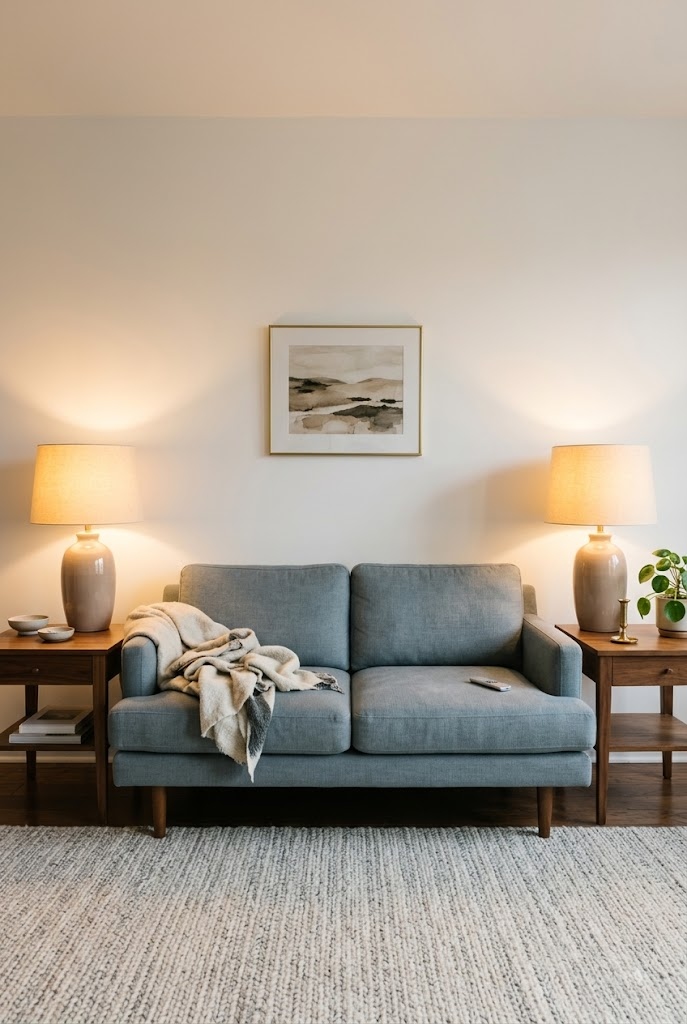
Two matching table lamps on either side of the sofa build the base layer every no-overhead room needs: symmetrical, glare-free light at sitting height. A single lamp lights one end and leaves the rest shadowy, while a pair balances the whole seating zone. Keep the shades at similar heights so the light feels even. If one of your outlets is a switched outlet, meaning it is controlled by the wall switch by the door (common in rooms built without a ceiling light), put a lamp there and you get a light you can flip on as you walk in. Medium-height ceramic or wood bases stay stable and hide a bit of cord. This pair plus one corner light usually covers a small living room fully.
5. A hidden corner uplight behind a plant
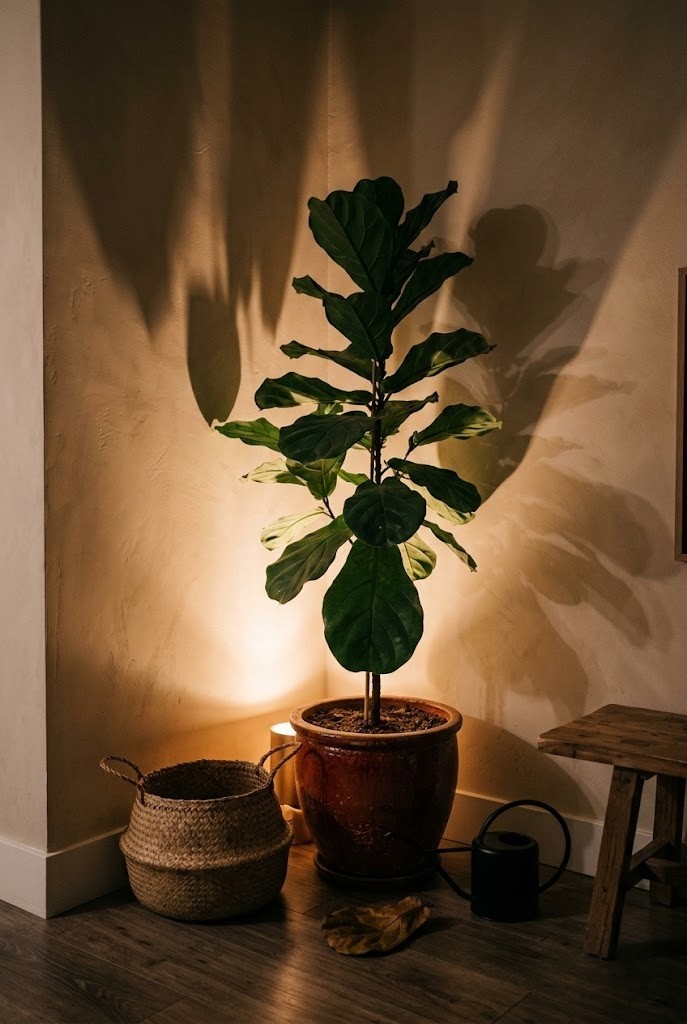
A small uplight can sits on the floor behind a plant or a chair and washes light up the wall and across the ceiling for almost nothing. It is the same bounce principle as the torchiere in idea 2, just cheaper and hidden, a little metal cylinder with an upward-facing bulb. Tuck one behind a tall fiddle-leaf or in the gap beside a bookshelf and the leaves throw a soft shadow pattern up the wall. Because it is on the floor with a short cord, there is no mounting and nothing to damage. Use it as accent rather than main light; on its own it is too dim and too low. Two of these in opposite corners can lift a dark room surprisingly well for the price.
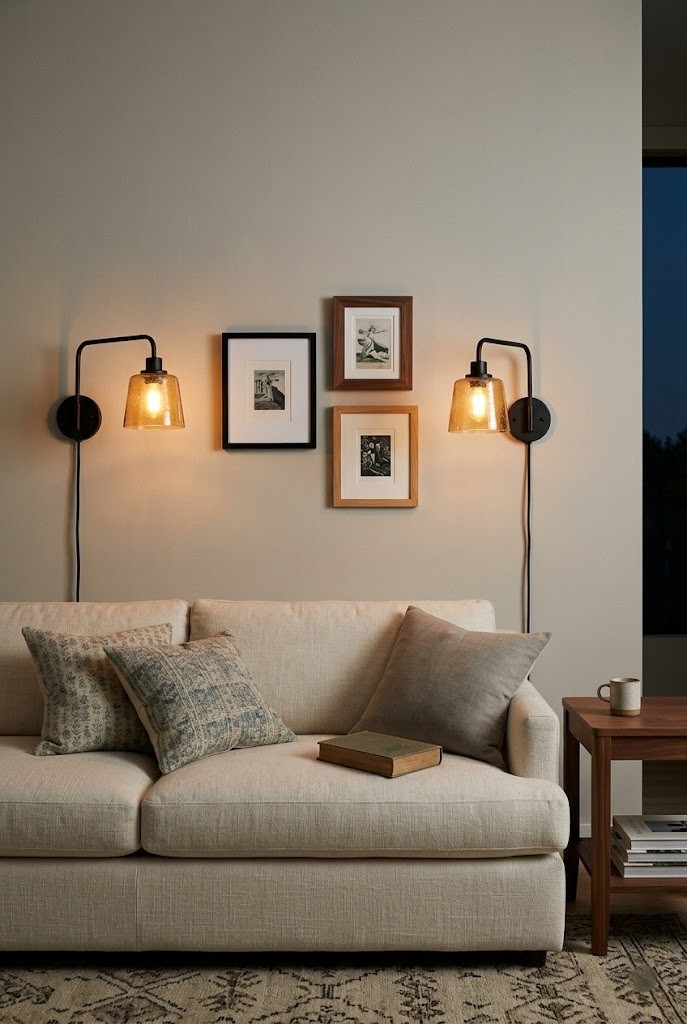
6. Plug-in swing-arm sconces flanking the sofa
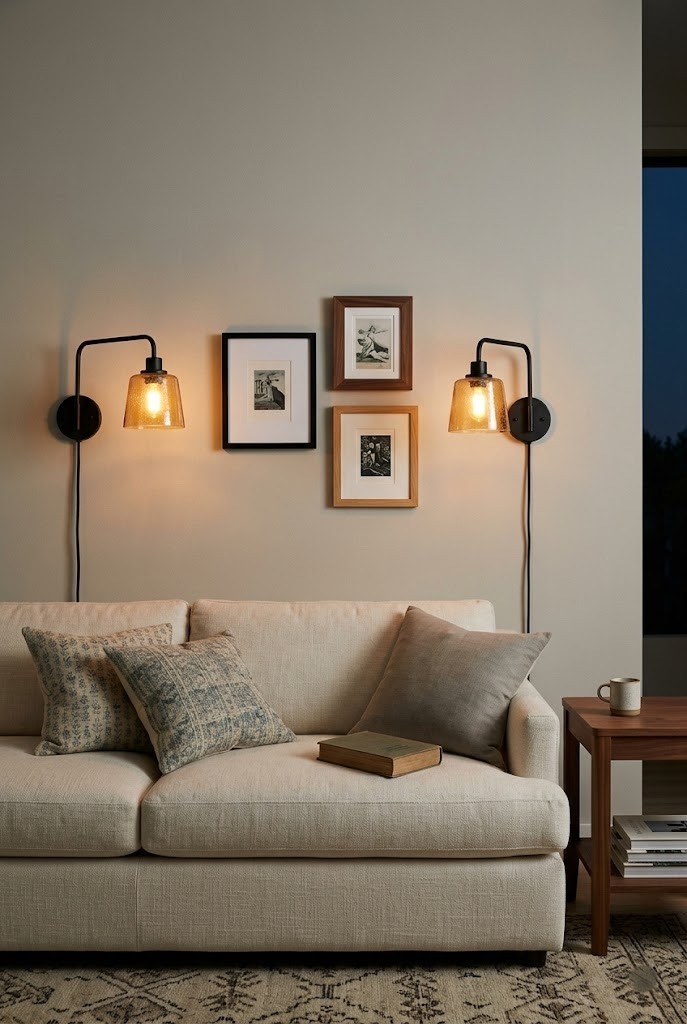
Plug-in swing-arm sconces mount on the wall above each end of the sofa and give you sconce-height light with a cord that runs down to an outlet, no electrician and no junction box. The swing arm lets you pull the light out for reading and push it flat when you are not. The catch every renter hits is the cord: it dangles down the wall and ruins the look. Mount the sconce roughly 58 to 62 inches up, directly above the outlet where possible, so the cord drop is short and straight, then cover that vertical run. Choose a plug-in wall sconce with a fabric or seeded-glass shade to soften the bulb, since these sit near eye level when you stand.
7. A plug-in picture light over the art
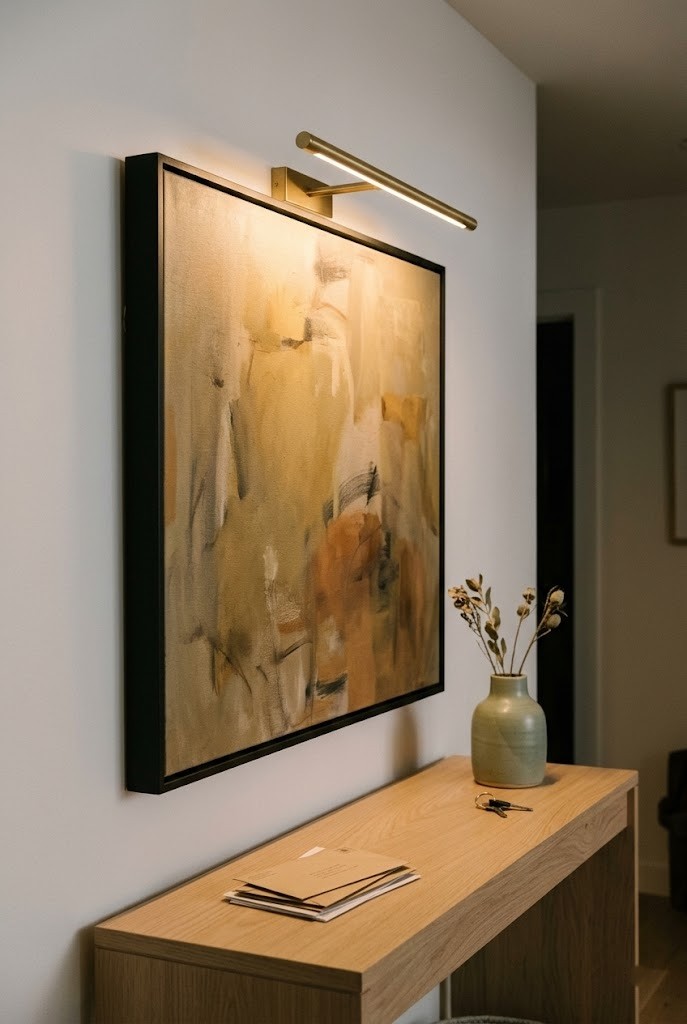
A plug-in picture light clips or mounts to the top of a framed piece and lights the art while spilling a warm glow into the room. It does double duty: accent lighting plus a small ambient boost in a corner a lamp cannot reach. Because the fixture is tiny and light, adhesive mounting usually holds it, so you can skip anchors entirely on a piece that already hangs from a single hook. Aim it so the light rakes down the artwork rather than blasting straight out. This works best over a large piece above a console or behind the sofa, where the light has a surface to wash across. It will not light a room alone, but layered in, it adds depth most renters skip.
8. One outlet, several lamps: the low-profile power strip
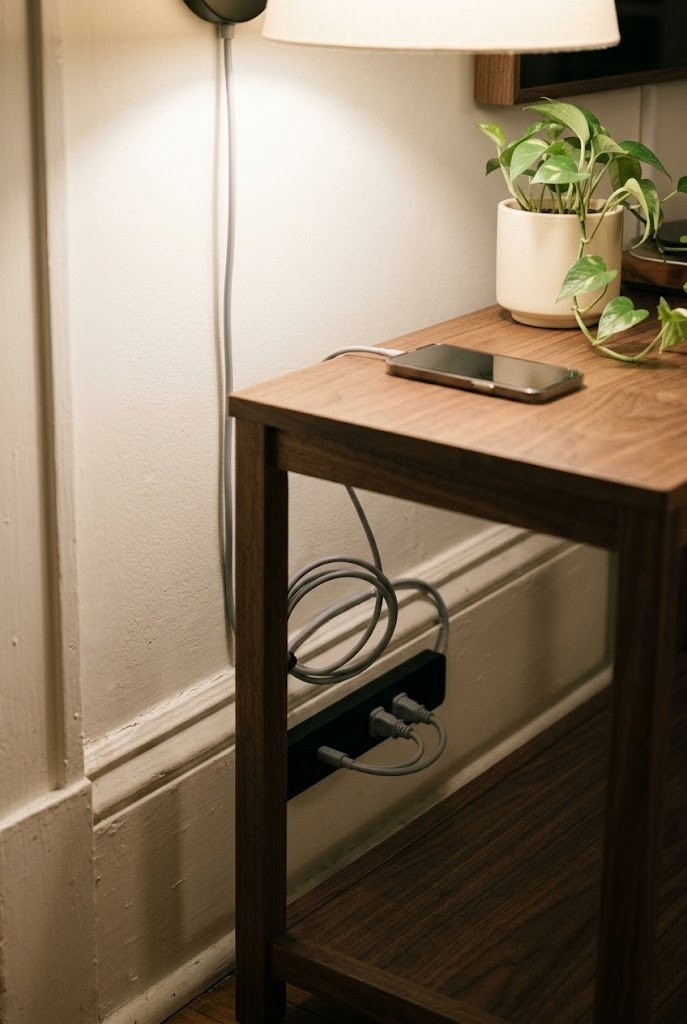
When the whole living room has only two outlets, the fix is a low-profile power strip that turns one outlet into several without overloading it. Rooms with no ceiling light are often old and outlet-starved, so this is the real blocker behind the sconce advice in idea 6. Mount a flat, tamper-safe strip behind the sofa or console and run your sconce, a lamp, and a phone charger off it. Keep total draw well under the strip's rating; LED lighting barely sips power, so lighting loads are rarely the problem, a space heater on the same strip is. Choose a strip with a flat plug so the sofa can sit closer to the wall. This one move unlocks most of the plug-in ideas here.
9. Adhesive vs anchor: the deposit-saving rule
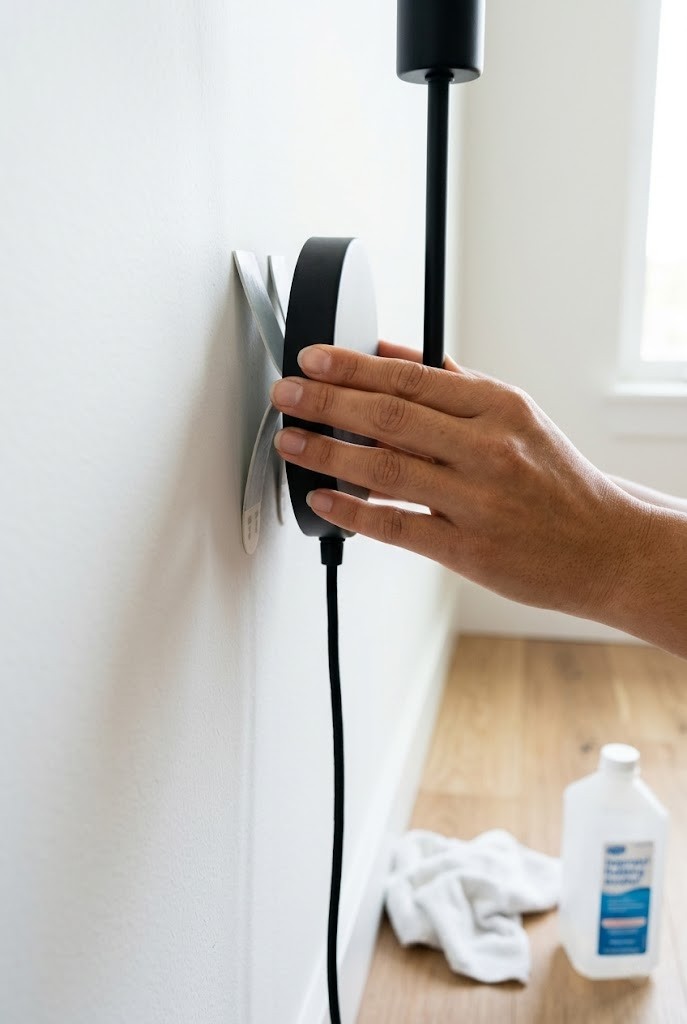
Choose adhesive mounting for anything under about two pounds and anchors only when the fixture is genuinely heavy; that single rule protects your deposit. Most plug-in sconces and picture lights, like the ones in ideas 6 and 7, weigh well under two pounds, so a set of quality wall strips or strong mounting tape holds them with zero holes. Clean the wall with rubbing alcohol first; skipping that is why adhesive fails and people blame the product. Press for thirty seconds and let it cure a full hour before you hang anything. Anchors leave a hole you must patch, and a bad patch is what costs deposits, so I treat them as a last resort for real weight only. When in doubt, weigh the fixture on a kitchen scale before deciding.
10. A paintable cord cover that makes the drop disappear
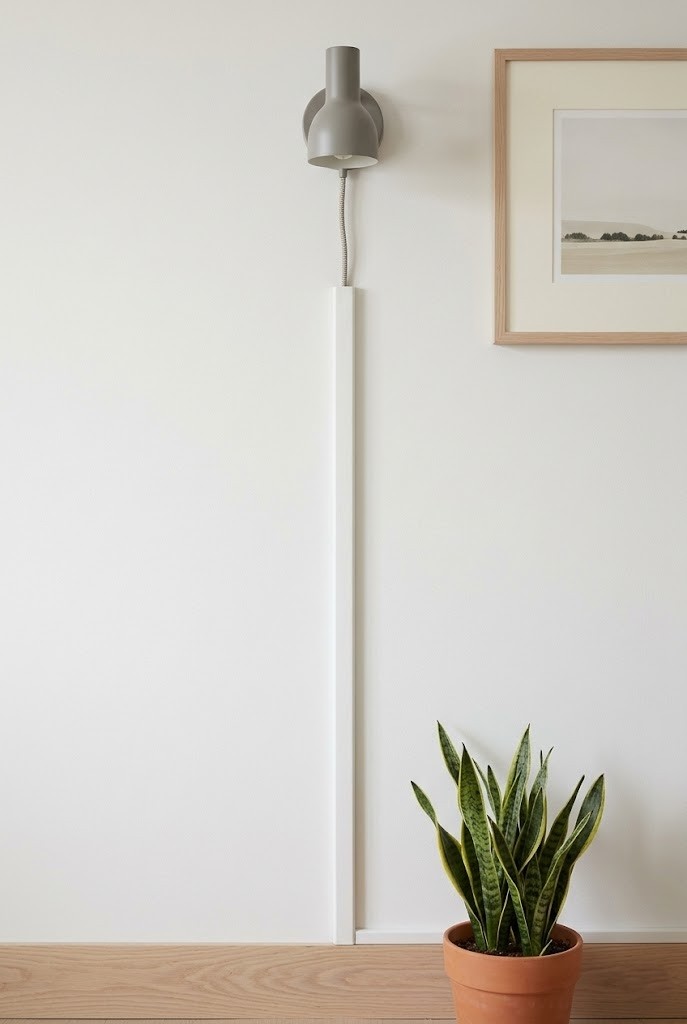
A paintable cord cover, a flat plastic channel that sticks to the wall, hides the vertical cord drop from a plug-in sconce and can be painted to match so it disappears. Run it straight down from the fixture to the baseboard, then along the baseboard to the outlet. The straight-down, straight-across path is what sells the illusion; diagonal runs always show. Prime it first so wall paint adheres, then two thin coats. Over months the adhesive can loosen in warm rooms and the channel edges yellow if it is cheap PVC, so buy a paintable cord cover rated for interior walls, not the dollar-store stuff. Done right, someone has to look hard to find the cord, which is the whole point in a rental.
11. A clamp lamp gripping a bookshelf edge
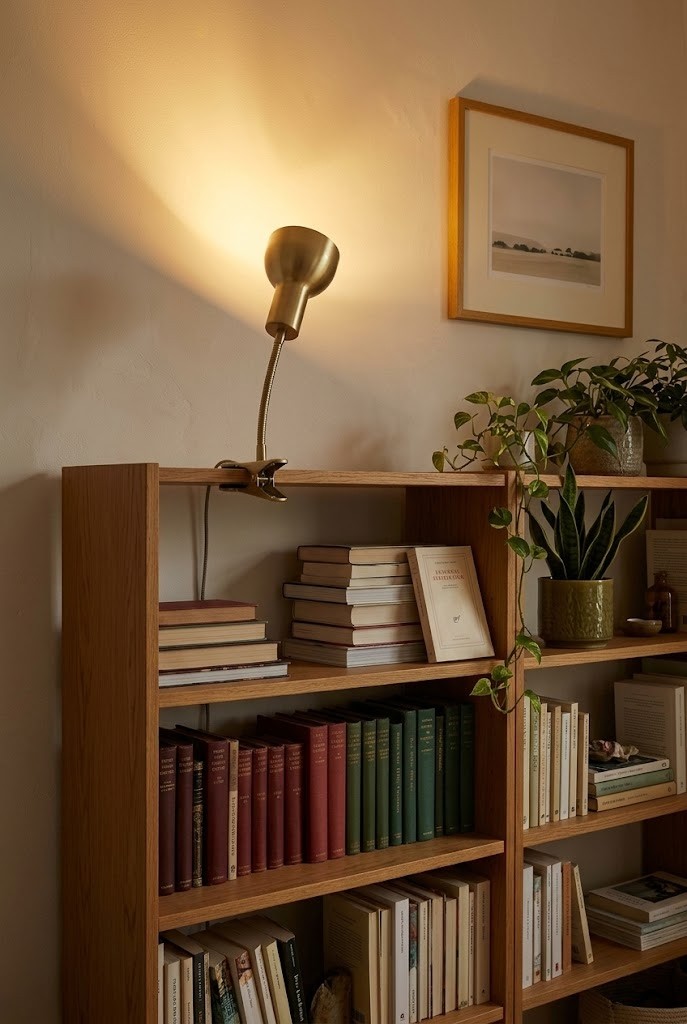
A clamp lamp grips the edge of a bookshelf or console and aims light wherever you point it, using furniture instead of walls for mounting. It is the renter's favorite for a reason: nothing touches the wall, the clamp leaves no mark on the shelf if you pad it, and you can reposition it in seconds. Clip one to a high shelf and aim it up for the wall-wash effect from idea 5, or down for task light over a chair. The metal dome shades get hot, so keep them off fabric and books. These are the cheapest real fixtures you can buy, which makes them a good way to test where you actually need light before committing to anything mounted.
12. An architect clamp lamp for task light
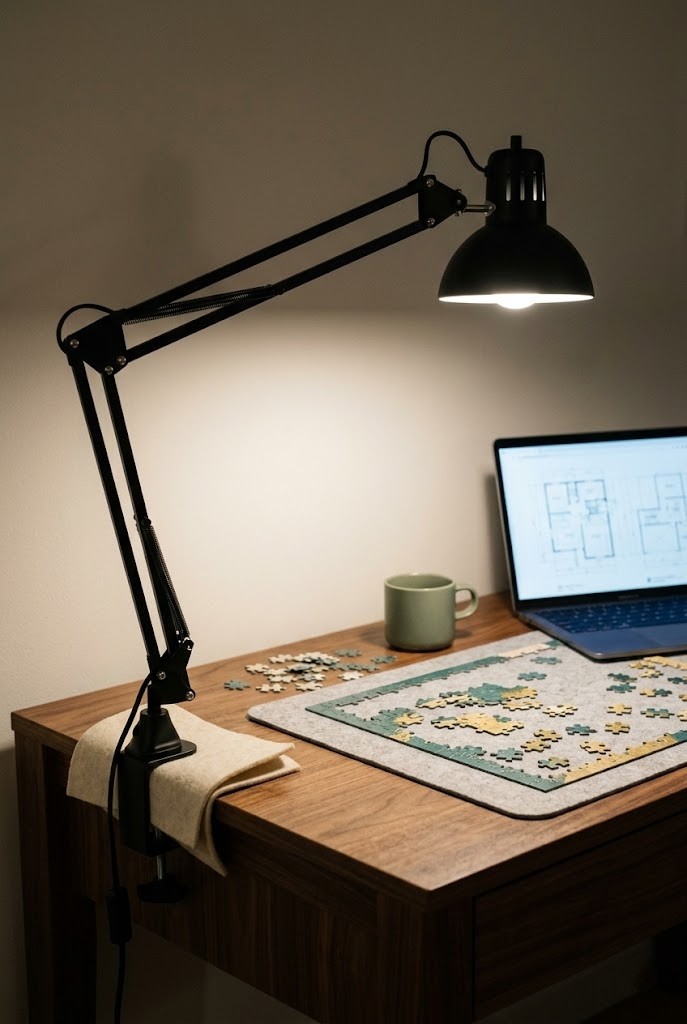
An architect-style clamp lamp, the kind with a jointed extendable arm, bolts to a console or side table and reaches out over a task zone like a laptop or a puzzle corner. It is the grown-up version of the basic clamp, with real reach and aim. The mistake people make is overtightening the clamp on a nice wood surface and denting it, or clamping bare metal onto veneer that then chips when you adjust. Slip a folded cloth or a felt pad between clamp and furniture every time. Position the head so light comes over your shoulder, not into your eyes or bouncing off a screen. In a no-overhead room this gives you focused light without adding another floor-standing base to trip over.
13. Clamp lights styled into a floating shelf
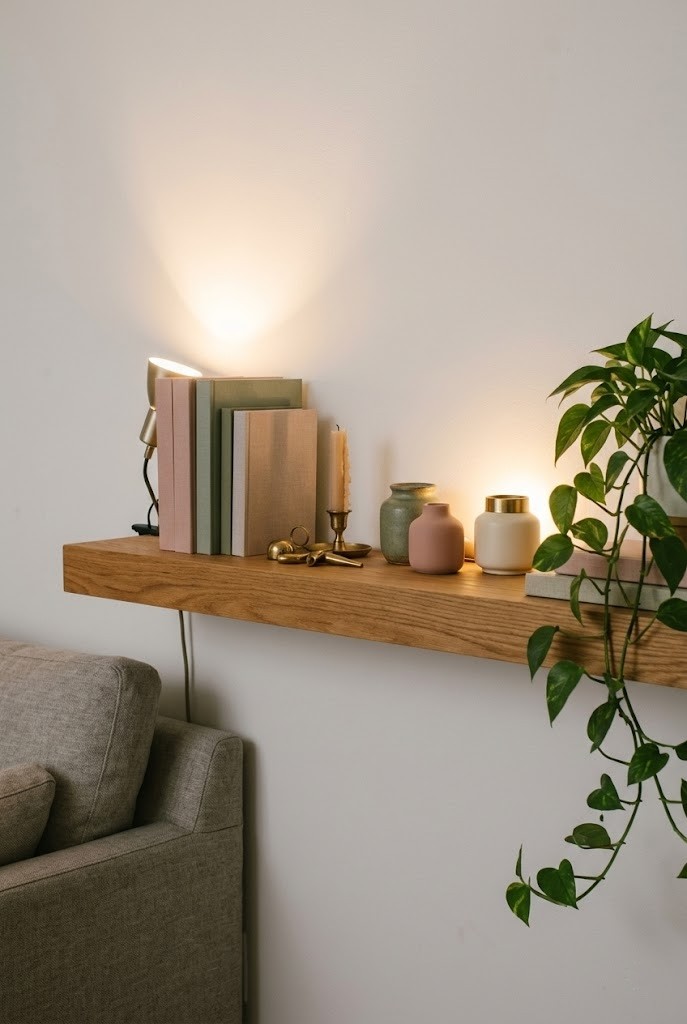
Clamping a couple of small lights onto an existing floating shelf beside the sofa gets you layered light plus a styled surface in one move. The shelf hides the clamp bases behind books and objects, so what shows is just the glow. Treating the lights as part of the vignette rather than standalone fixtures is what makes this look intentional. Vary the heights: one clamp aimed up to wash the wall, one lower and warmer for a resting pool of light near the seating. Keep bulbs consistent in color temperature across both so the shelf does not look mismatched. Because everything clamps, you can restyle the shelf anytime without patching a thing, which is exactly the freedom a rental needs.
14. A cordless rechargeable table lamp where no outlet reaches
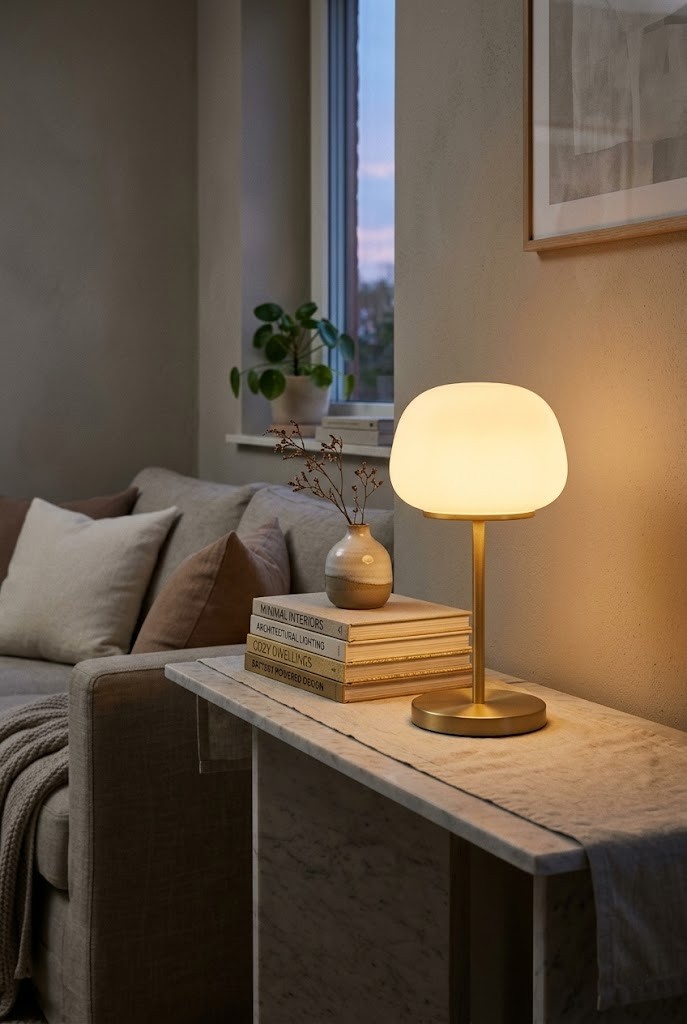
A cordless rechargeable table lamp puts light exactly where no outlet reaches: a center console, a shelf mid-wall, or the middle of a room, because it runs on a battery you top up every few days. This is the cleanest answer to the two-outlet problem, since the lamp needs no outlet at all while it is lit. Modern ones give six to twenty hours per charge depending on brightness, with a warm dimmable glow that suits evenings. Set it on a bar cart, a windowsill, or a stack of books and move it wherever the evening needs light. The trade-off is remembering to charge it, so I keep the cable at a spot I pass daily. For a room starved of outlets, one or two of these change what is possible.
15. Peel-and-stick rechargeable puck lights as a faux sconce
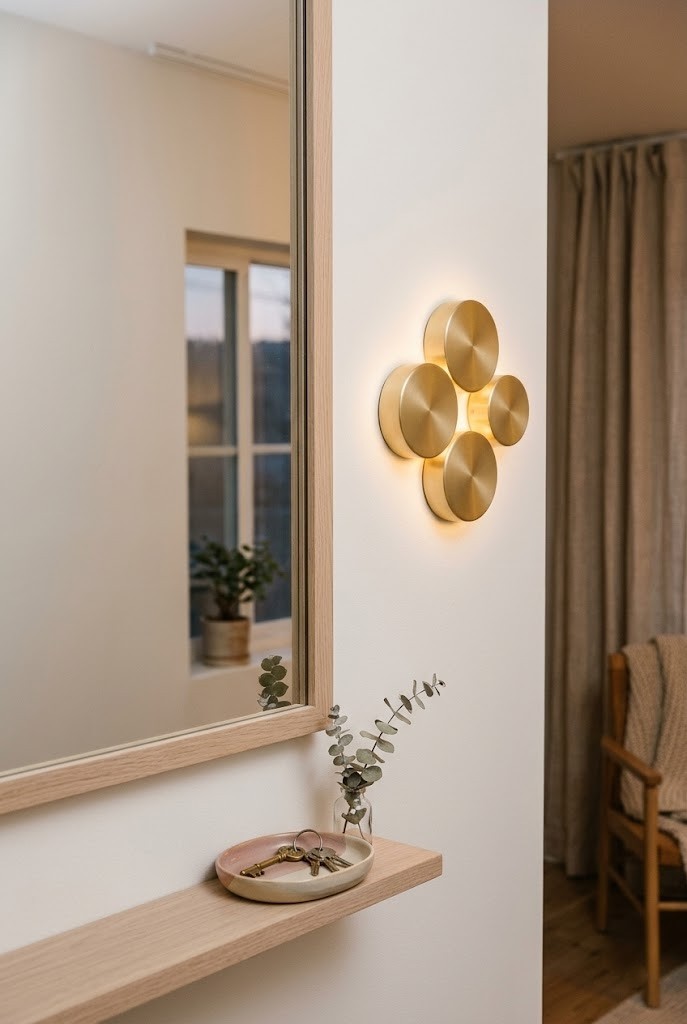
Rechargeable puck lights stick to the wall with an adhesive base and pop off to charge, giving you wall-mounted light with no cord and no drilling whatsoever. They are the sibling of the cordless lamp in idea 14, but they mount vertically where a sconce would go. Many come with a remote or tap-to-dim, and the good ones hold a warm tone instead of a flashlight-blue. Use a row of them up a stair edge, under a shelf, or in a cluster as a faux sconce beside a mirror. Because the mount is a small adhesive disc, removal is clean if you warm it first. They are accent-bright, not room-bright, so lean on them for zones and mood rather than as your main source.
16. A portable mushroom lamp for grab-and-go mood
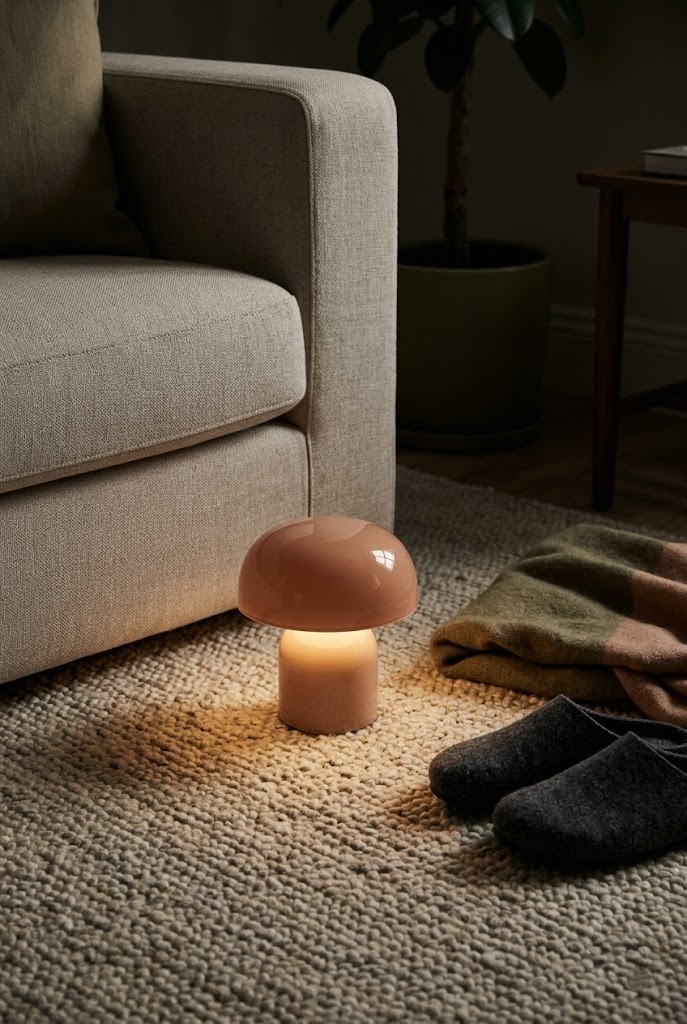
A portable mushroom lamp or LED lantern is a small rechargeable light you carry from spot to spot for instant mood: sofa arm now, floor beside a movie later. The rounded shade glows soft and even, and most dim from candle-low to reading-bright with a touch. In a no-overhead room this is your flexible accent, filling the gap a fixed fixture cannot because it goes wherever the evening moves. Set it low on the floor near the couch for a warm anchor of light that makes the whole room feel intentional. It will not replace your main lamps, but it is the piece that makes a dark room feel considered rather than under-lit. I keep one charged as the grab-it light for guests.
17. A battery LED strip tucked under a console
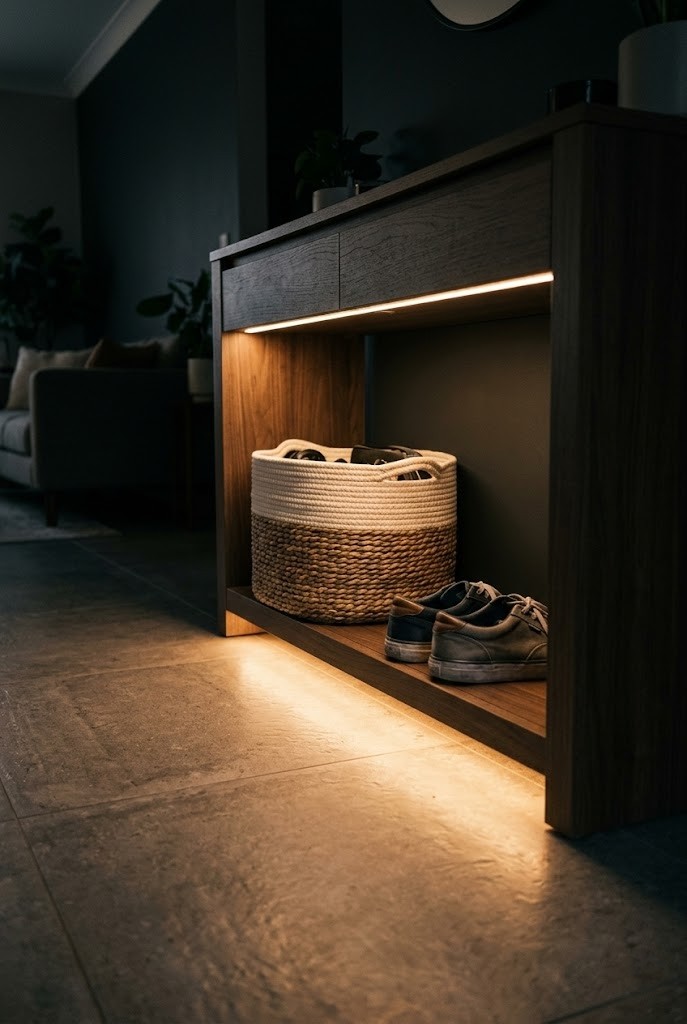
A battery-powered LED strip stuck under a console or along a shelf's underside adds a floating band of low light with zero wiring and zero wall damage. Peel the backing, press it to the underside so the strip itself is hidden, and you get a soft wash onto the floor or wall behind. Motion-activated versions are useful as a nightlight for the path to the kitchen, coming on only when you pass. Because it is battery-run, there is no cord to route, which is the whole appeal in an outlet-starved room. The honest downside is battery life; bright strips eat AAs, so keep these dim and use them as accent glow, not task light. Rechargeable-battery strips exist and save you the AA habit.
18. A warm LED bias strip behind the TV
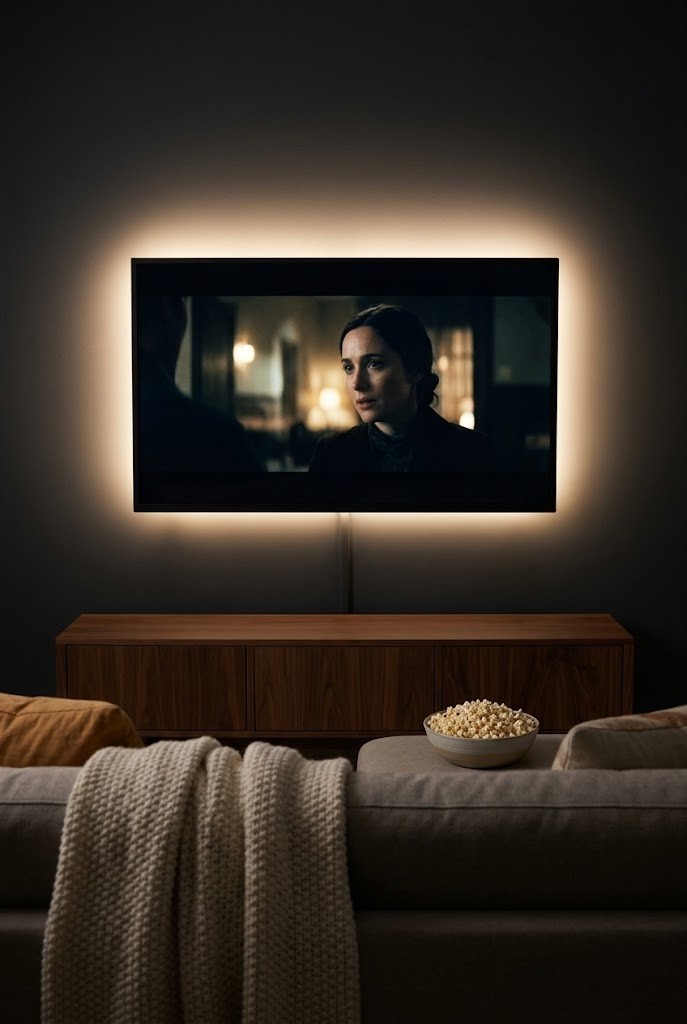
A USB-powered LED strip stuck to the back edge of the TV throws a halo of light onto the wall behind it, which cuts eye strain and makes a dark room feel less like a cave during movies. It runs off the TV's own USB port, so it powers on with the screen and needs no extra outlet or switch. Set it to a warm white rather than color-cycling rainbow if you want the room to read as considered rather than gamer-lit. The glow also visually widens the wall, making a small living room feel bigger. This pairs with your wind-down layers: dim the torchiere and let the bias light and screen carry the room. It is one of the cheapest upgrades here.
19. Smart plugs to rebuild the missing wall switch
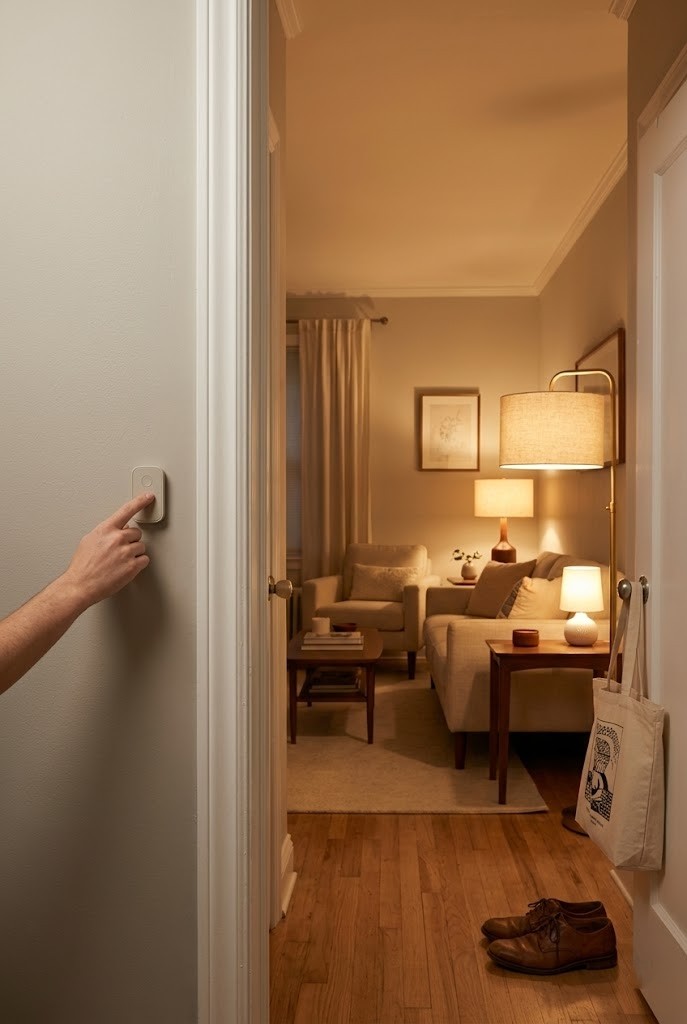
Smart plugs turn every lamp in the room into something you control from one switch, a phone, or a voice command, which is how you replace the wall switch a no-overhead room never had. Plug each lamp into a smart plug, group them in the app, and one command kills them all at once from the doorway or the couch. This solves the daily annoyance of a room lit by five separate lamps you would otherwise turn off one by one. Pair it with the switched-outlet trick in idea 4 for a hybrid: one lamp on the real wall switch, the rest on smart plugs under a single scene. Stick a cheap wireless remote button by the door and you have rebuilt the light switch your room was missing.
Final Thoughts
Lighting a room with no ceiling fixture comes down to layering: one taller light bouncing off the ceiling, a base pair at sitting height, and a few accents for depth, none of it needing a drill. Start with a freestanding lamp or two, add plug-in or clamp fixtures only where you will hide the cord, and lean on rechargeable pieces wherever an outlet will not reach. Put it all on smart plugs so the whole room turns off from the door. Save this to Pinterest and work through it one lamp at a time.
Frequently Asked Questions
How do you light a living room with no overhead light?
Layer three or four freestanding and plug-in lights instead of one ceiling fixture: a torchiere or arc lamp for ceiling-bounced ambient light, two table lamps at sitting height for the base, and a small accent like a picture light or LED strip. Put them on smart plugs so one tap kills them all. No drilling required.
How can renters add lighting without drilling holes?
Use freestanding lamps, clamp lights that grip furniture, adhesive-mounted plug-in sconces under two pounds, and rechargeable puck lights that peel on and off. Clean the wall with alcohol before sticking anything, and keep anchors only for genuinely heavy fixtures. Hide plug-in cords with a paintable channel run straight down to the outlet.
How do you hide the cord on a plug-in wall sconce?
Mount the sconce directly above the outlet so the cord drops straight down, then cover that vertical run with a paintable cord channel and run it along the baseboard to the plug. Straight lines disappear; diagonal cord runs always show. Prime and paint the channel to match your wall, and remove it at move-out by warming the adhesive first.
What's the best lighting for a living room with only two outlets?
Rechargeable and battery-powered lights, because they need no outlet while running: a cordless table lamp, peel-and-stick puck lights, and battery LED strips. For the two outlets you do have, add a slim UL-listed power strip to run several lamps off one, keeping heaters off it. Find the switched outlet for automatic walk-in light.