Moody living room lighting ideas usually stall at 'use warm bulbs and layer your lighting,' which tells you nothing you can actually buy. This post gives moody living room lighting ideas with the specs behind them: the bulb color temperature that reads golden instead of orange, a lumen ceiling per lamp so the room stays dim on purpose, the shade materials that soften a hot bulb, and roughly how many light sources a small room needs before it tips from cozy to gloomy. I keep my overhead light off from October to March and only flip it on to vacuum. Everything here runs on lamps, candles, and low pendants. Save it to Pinterest so you have the numbers when you're mid-rearrange.
1. A Linen-Shaded Table Lamp Right Beside the Sofa
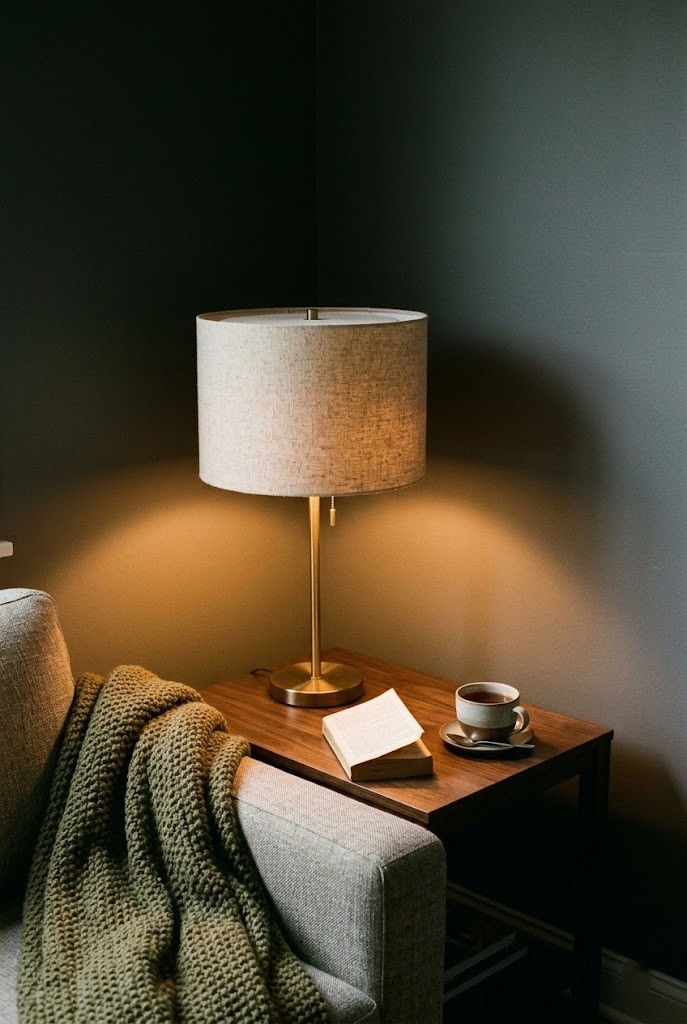
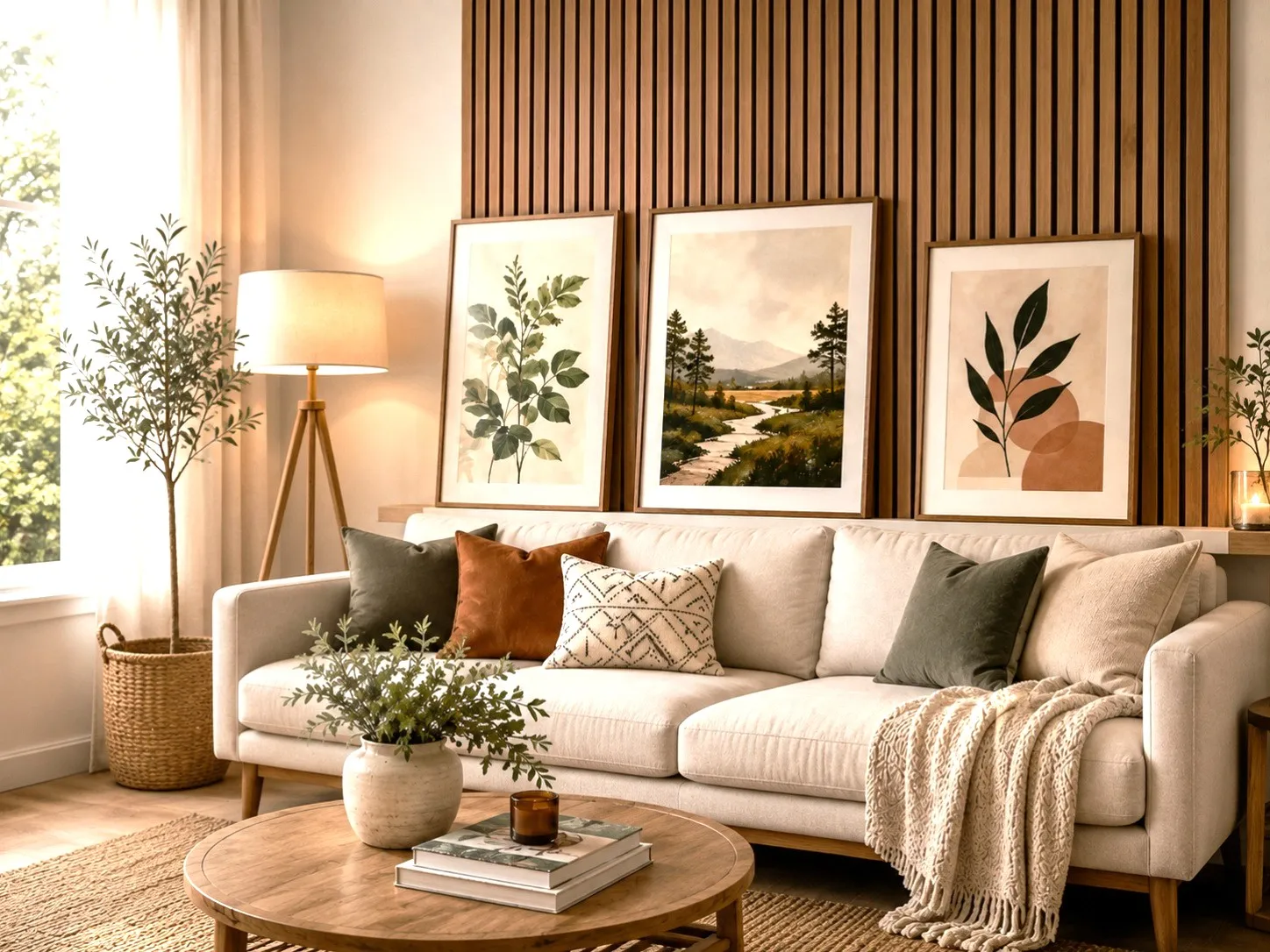
A fabric drum shade beside the sofa is the single most reliable moody light because the linen diffuses the bulb into a soft pool instead of a glare point. Put it on the side table at roughly shoulder height when you're seated, about 24 to 28 inches from base to shade top, so the light falls on your lap and the lower wall, not your eyes. Use a warm dimmable bulb around 2700K and keep it under 450 lumens; anything brighter fights the mood. An oatmeal or unbleached linen shade warms the light more than a stark white one, which can read cold even at low temperature. A separate plug-in smart dimmer lets you dial the exact dimness without buying a fancy lamp.
2. A Frosted-Glass Table Lamp on a Console
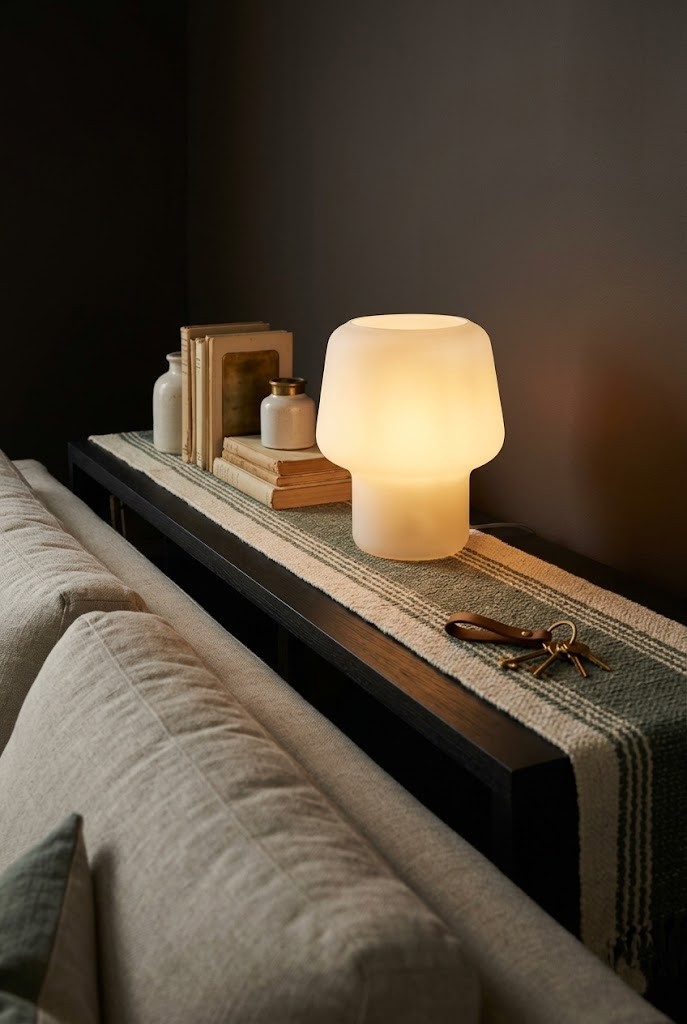
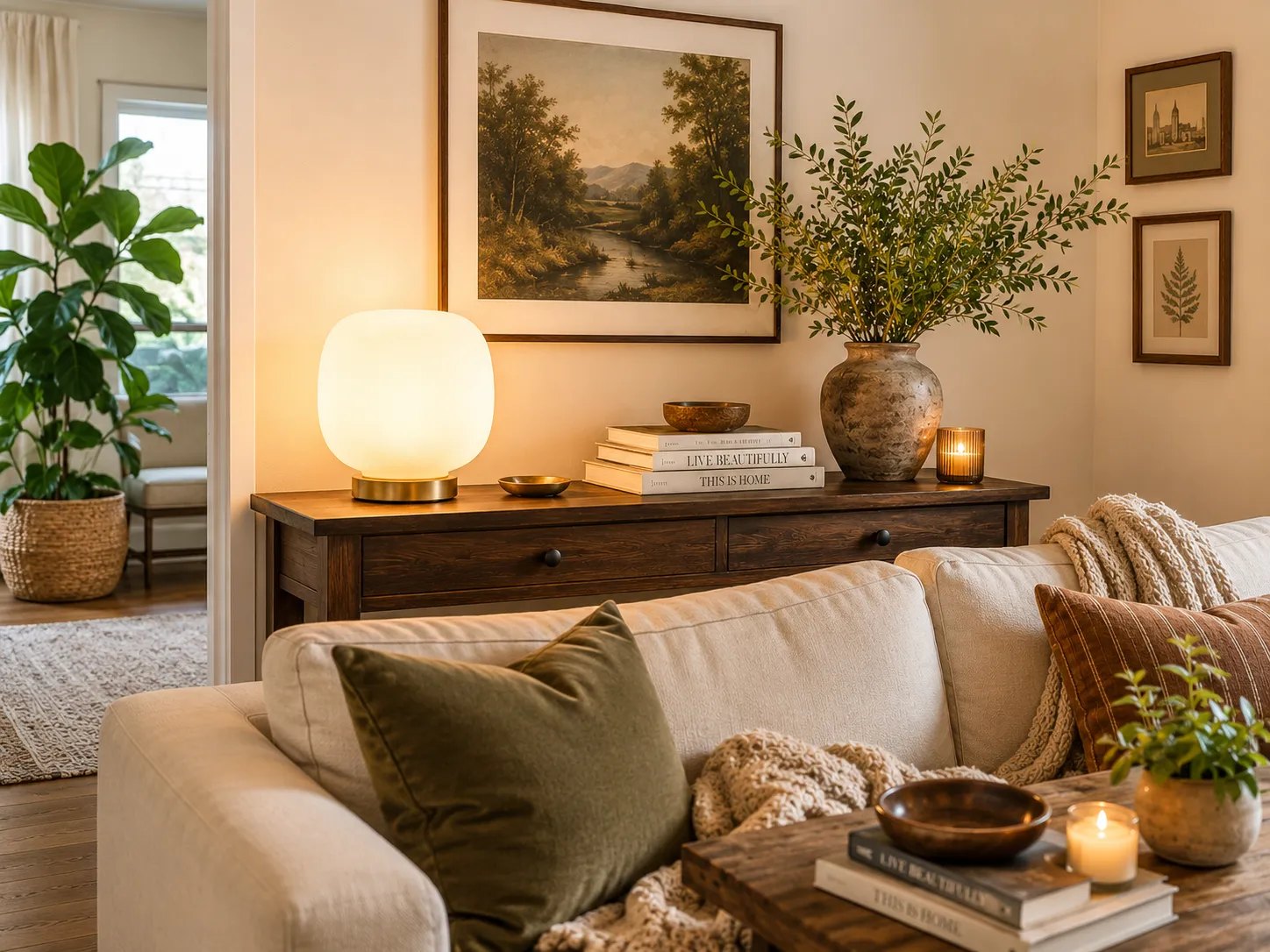
A frosted-glass table lamp on a console glows evenly because the glass itself becomes the light source, so there's no bright bulb hot spot to catch your eye across the room. This suits a console behind the sofa or a hallway-facing surface where the lamp is seen from several angles at once. Frosted or opal glass hides the filament, which matters if you like a bare-bulb look but hate the glare it throws. Keep the bulb warm, around 2400K to 2700K, and low output near 250 to 350 lumens so the glass reads honey, not white. Place it off-center on the surface rather than dead middle; a lamp centered like a trophy kills the lived-in feel and makes the whole console look staged.
3. A Tall Linen Floor Lamp Tucked Behind a Reading Chair
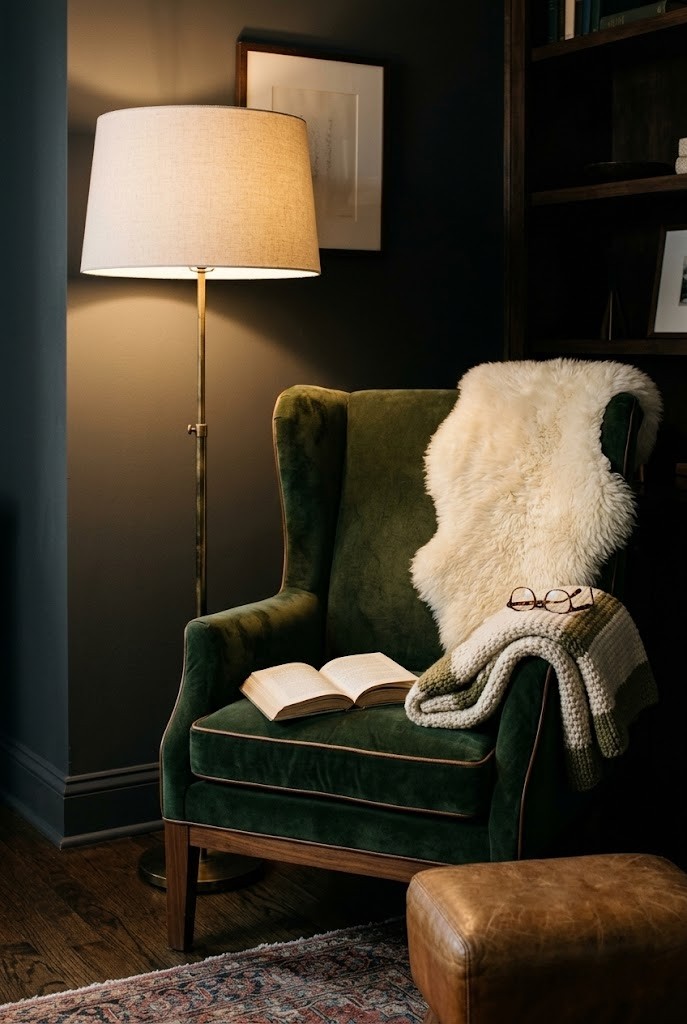
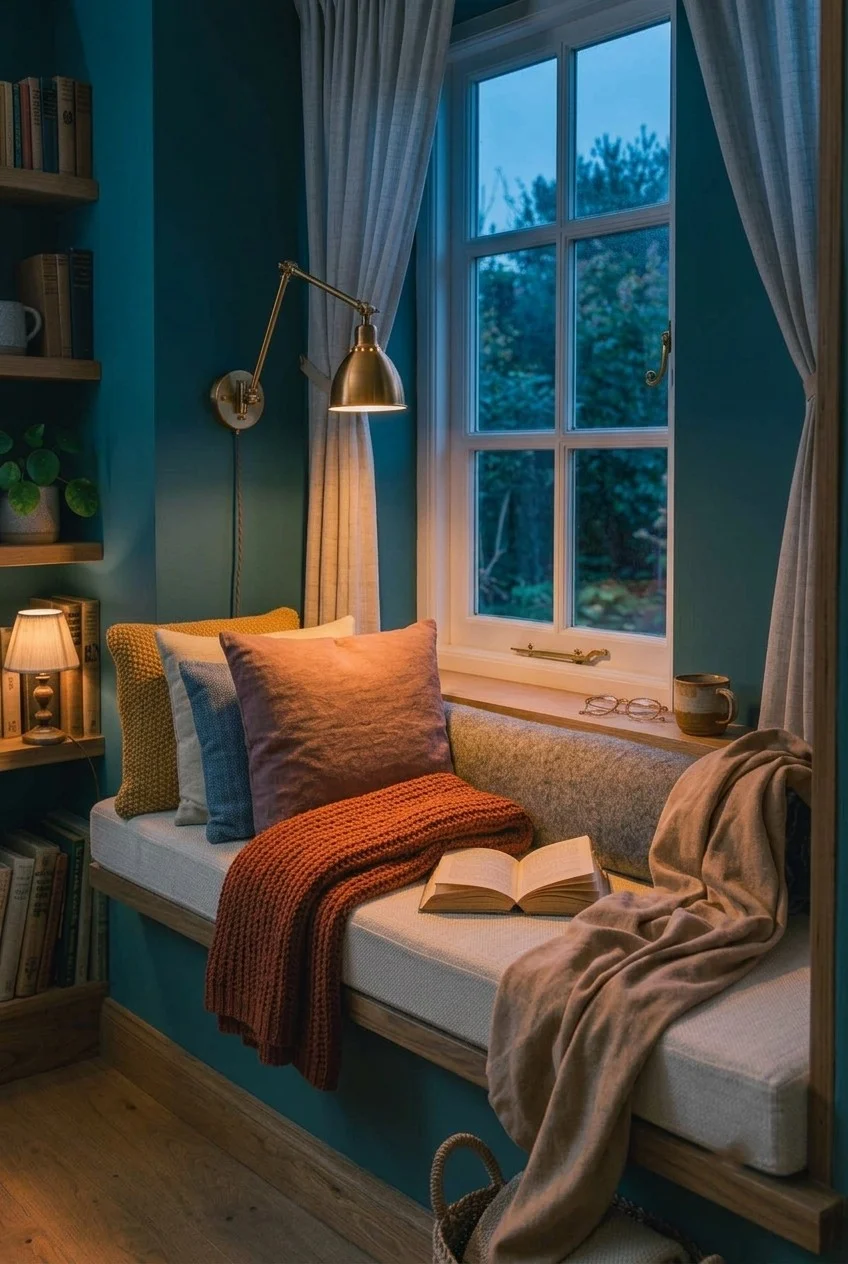
Standing a floor lamp behind and slightly to the side of a chair puts the light over your shoulder for reading while keeping the bulb out of your sightline entirely. Aim for a shade bottom around 40 to 42 inches off the floor, roughly at your seated head height, so the pool lands on the page and the arm of the chair. A wide fabric shade spreads the light; a narrow metal one spotlights and breaks the mood. A proportion that works: about 60% of the room's light from this one warm floor lamp, 30% from a lower table lamp, 10% from a candle or small accent, with a dimmer bulb swapped in to push the whole thing lower on slow nights. Keep the bulb near 2700K and under 400 lumens.
4. A Matched Pair of Table Lamps Flanking the Sofa
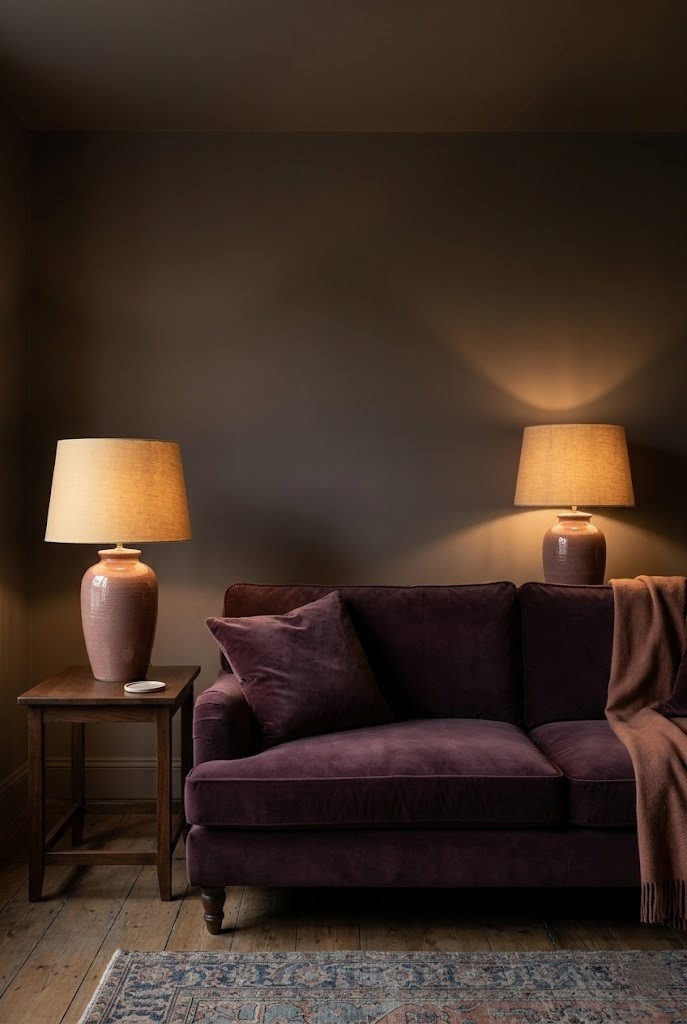
Two identical table lamps at each end of the sofa give symmetry that reads calm and deliberate, and they double your low light without adding a single bright source. This is the grown-up version of the single shaded lamp in idea 1: same warm bulb, same sub-450-lumen output, just mirrored. Match the shade height within an inch so the two pools sit level; a mismatched pair looks like an accident rather than a choice. Fabric shades collect dust on the top rim faster than you'd expect, so plan to lint-roll them every couple of weeks and vacuum the pleats monthly. Cheaper thrifted lamps work fine here as long as the two shades match in color and material; the bulbs do the real work.
5. A Torchiere Floor Lamp Bouncing Light Off the Ceiling
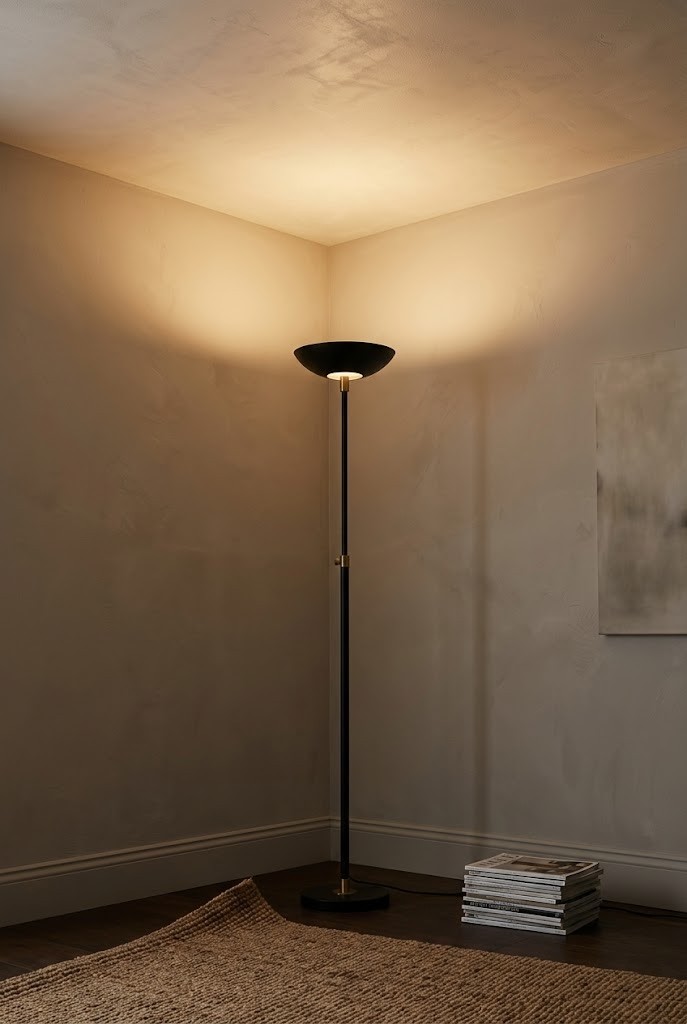
An uplight torchiere throws its whole output at the ceiling, which returns it as soft, sourceless glow with no visible bulb at all — the most flattering ambient light in the room. It fills a space evenly without the spotty look of scattered table lamps, and it's the fastest way to warm a rental with a flat white ceiling. Warm bulbs matter more here than anywhere, because a cool bulb bounced off white paint floods the room blue; stick to 2400K to 2700K. Keep output moderate, around 600 lumens at the bulb, since you lose brightness in the bounce and don't want a spotlight overhead. Put it on a smart dimmer so you can drop it to a whisper, and set it in a corner so the light wraps two walls.
6. A Small Uplight Hidden Behind a Floor Plant
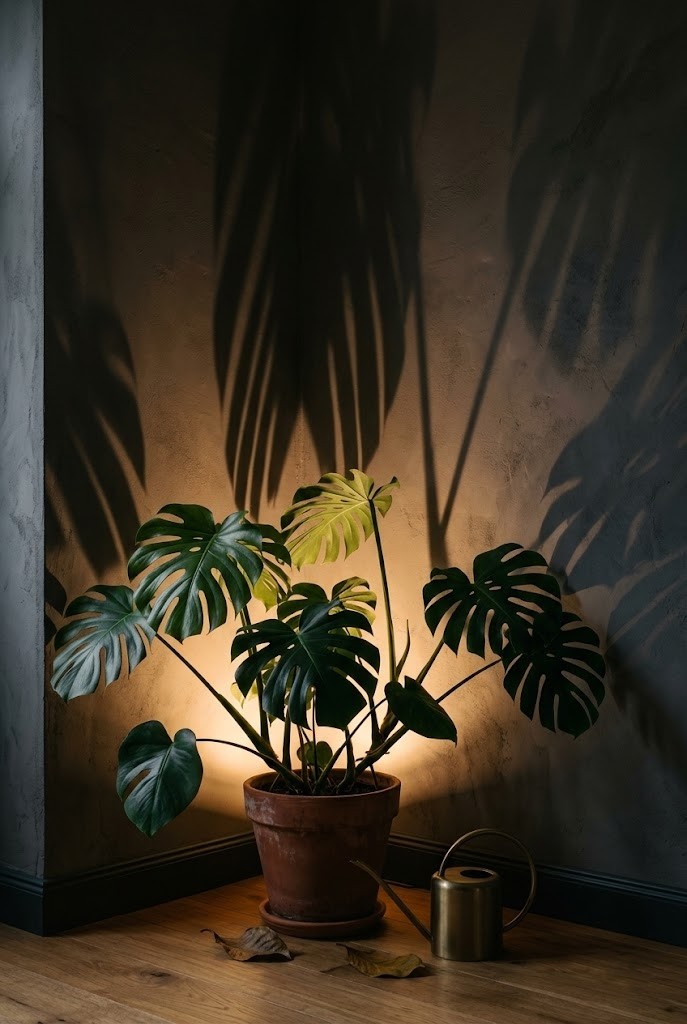
Tucking a little uplight behind a large floor plant throws leaf shadows up the wall and turns a bare corner into the most atmospheric spot in the room. The plant hides the fixture completely, so all you see is the shadow play, not the hardware. The common mistake is aiming it straight up a blank wall, which just makes a boring bright stripe; angle it so the light rakes across the leaves and casts real shadow texture. A monstera or a tall dracaena gives the best shadow shapes because of their broad, gappy leaves. Use a warm low-lumen bulb, around 200 to 300 lumens, so the effect stays subtle. A cheap puck-style uplight on a timer does this for very little money.
7. A Wall-Washer Uplight Grazing a Textured Wall
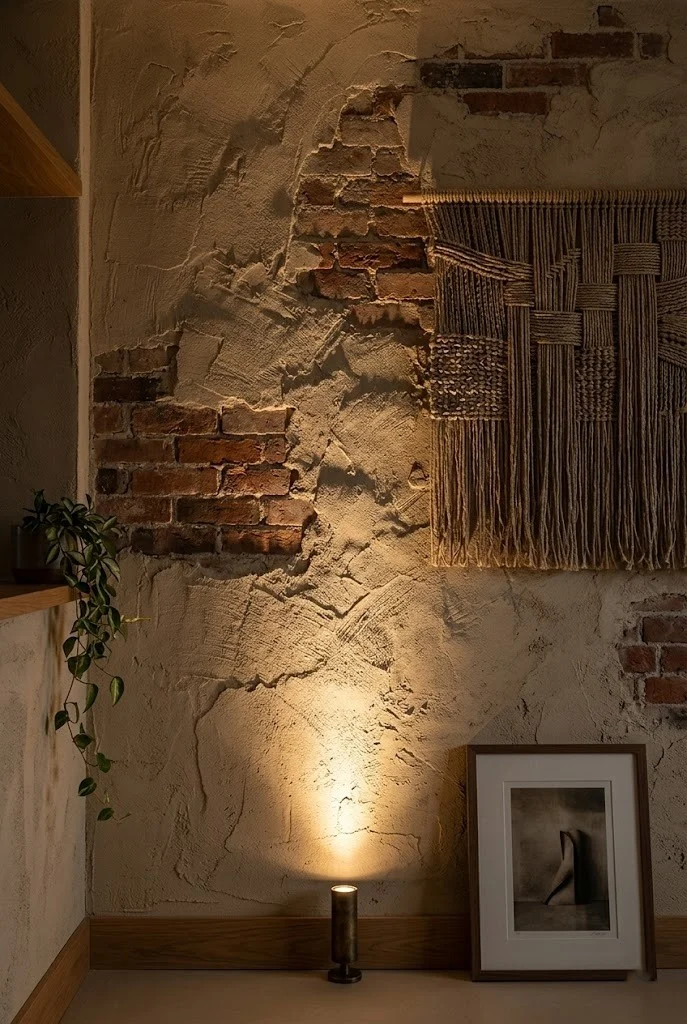
Placing a narrow uplight close to a textured wall and aiming it upward rakes light across the surface, pulling out every bump of plaster, brick, or a woven hanging. Where the ceiling-bounce torchiere in idea 5 fills a room evenly, this does the opposite: it's directional and dramatic, meant to highlight one surface rather than light a space. Set the fixture 6 to 10 inches out from the wall so the beam grazes rather than floods; too far and you lose the shadow that makes it work. This is a different job from parking a floor lamp in the corner to fill dead space, so don't expect it to light the room on its own. Pair it with a shaded table lamp for actual usable light, and keep the bulb warm and low.
8. A Hidden Uplight Behind the Sofa for a Backlit Halo
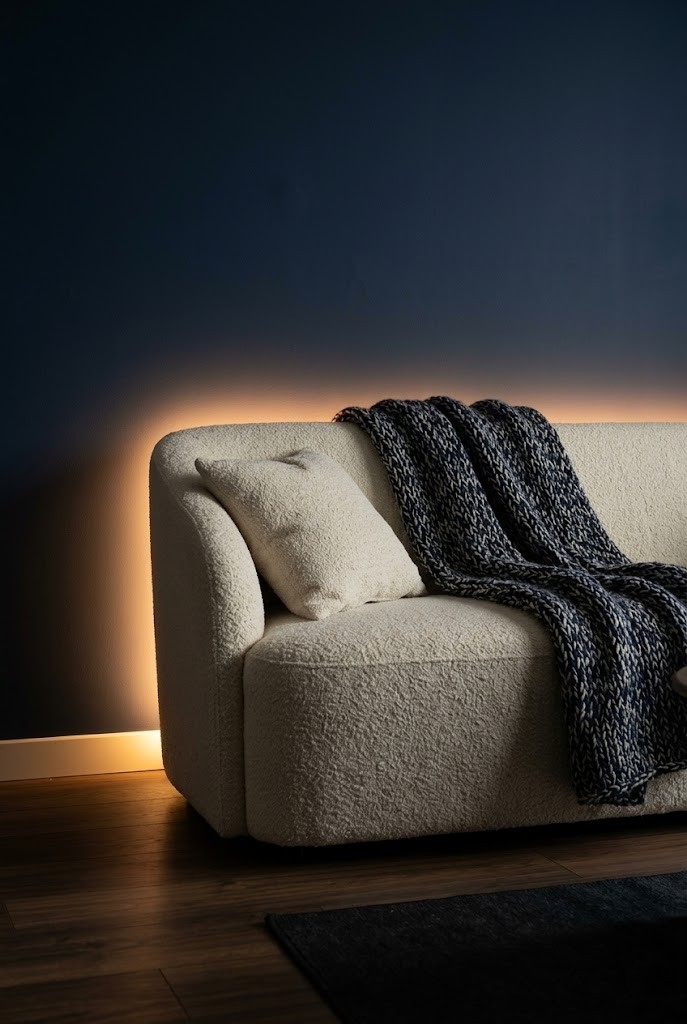
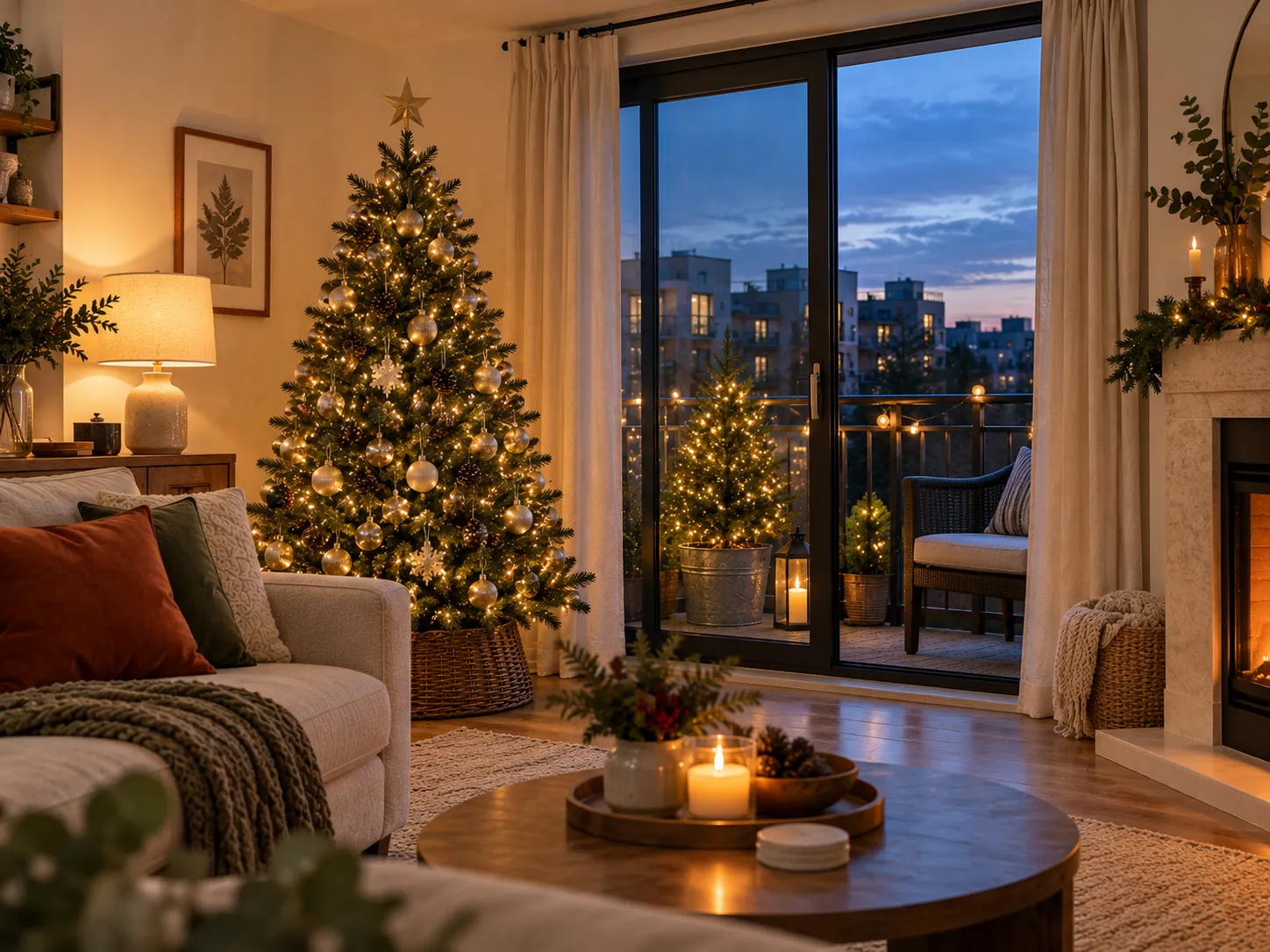
Running a slim uplight or warm LED bar along the floor behind the sofa backlights the whole seating group and floats it off the wall. The sofa blocks the source entirely, so you get a glow rim around the furniture with nothing to stare into: source invisible, glow visible. Keep it warm and dim, around 2200K to 2500K for a real firelit tone, and low output so it stays a background wash rather than a reading light. This pairs naturally with a front table lamp — the backlight sets the mood, the table lamp does the work you actually see by. A plug-in LED bar with a dimmer costs little and needs no wiring, which makes it one of the easiest moody upgrades in a rental. Tuck the cord down behind a sofa leg so nothing shows.
9. A Warm LED Strip Hidden Under a Floating Shelf
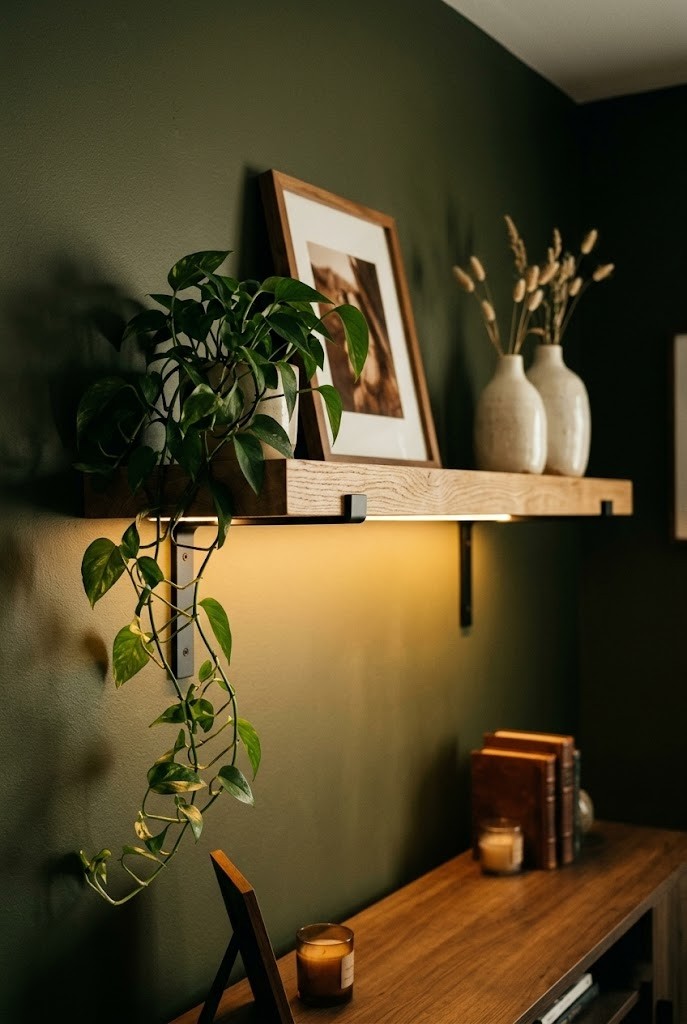
Sticking a warm LED strip to the underside lip of a floating shelf washes light down the wall and over whatever sits below, giving that built-in, architectural glow without an electrician. Choose a strip rated around 2400K to 2700K; the cheap bluish 6000K strips will wreck the mood the instant you switch them on. Mount it to the front underside edge, not the back, so the light spills forward and down the wall rather than getting trapped against it. A dimmer or a remote-controlled strip lets you set it low and leave it. This reads best on a shelf that already holds a few objects to catch the light. Most plug-in strips run off a small adapter you can hide behind a book or tuck into the shelf bracket.
10. A Small Lamp Nestled Among the Books on a Shelf
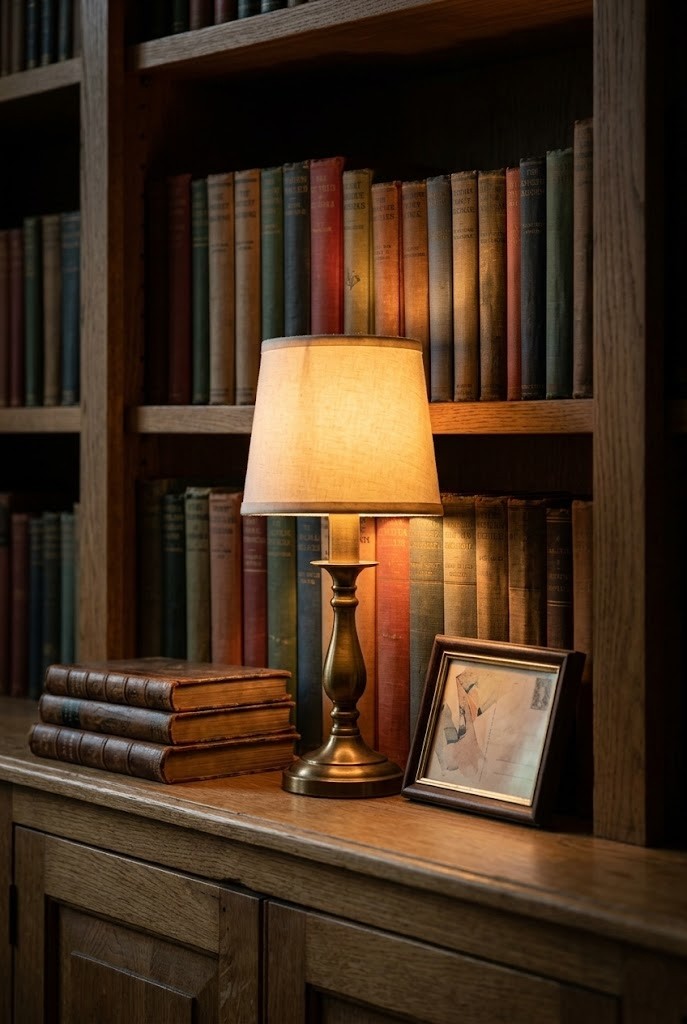
Setting a small lamp on a bookshelf, in front of the spines rather than on top, lights the shelf from within and makes the whole bookcase glow like a display. A compact lamp 10 to 14 inches tall fits a standard shelf without crowding it or hitting the shelf above. Leave a few inches of clearance around the bulb, or better, use a cool-running LED so nothing near the books gets warm over long evenings. Dust is the reality here: a lamp buried in a shelf collects it, and the shade needs wiping more often than one out in the open. Keep the cord running down the back of the unit so it disappears. Warm bulb, low output, and let the surrounding books soften the light.
11. A Warm Bias Light Behind the TV
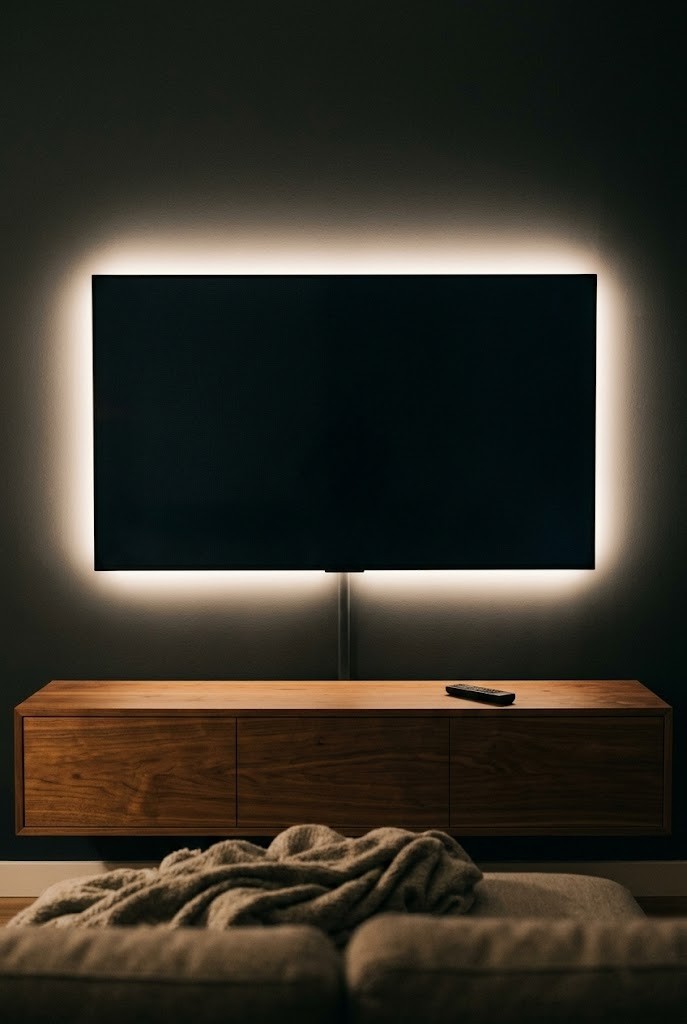
Running a warm LED strip around the back edge of the TV throws a soft halo on the wall that cuts screen glare and lets you keep every other light off during a movie. It's the same strip approach as the shelf glow in idea 9, just mounted to the back of the panel facing the wall instead of under a shelf. The mistake people make is buying a color-changing RGB kit and leaving it on a bluish white or, worse, cycling colors mid-film; for mood, lock it to a fixed warm white around 2700K. Mount it a couple of inches in from the TV's edges so the light spills onto the wall, not past the screen. Powered off the TV's USB port, it turns on and off with the set and needs no separate switch.
12. Warm Puck Lights Inside a Glass-Front Cabinet
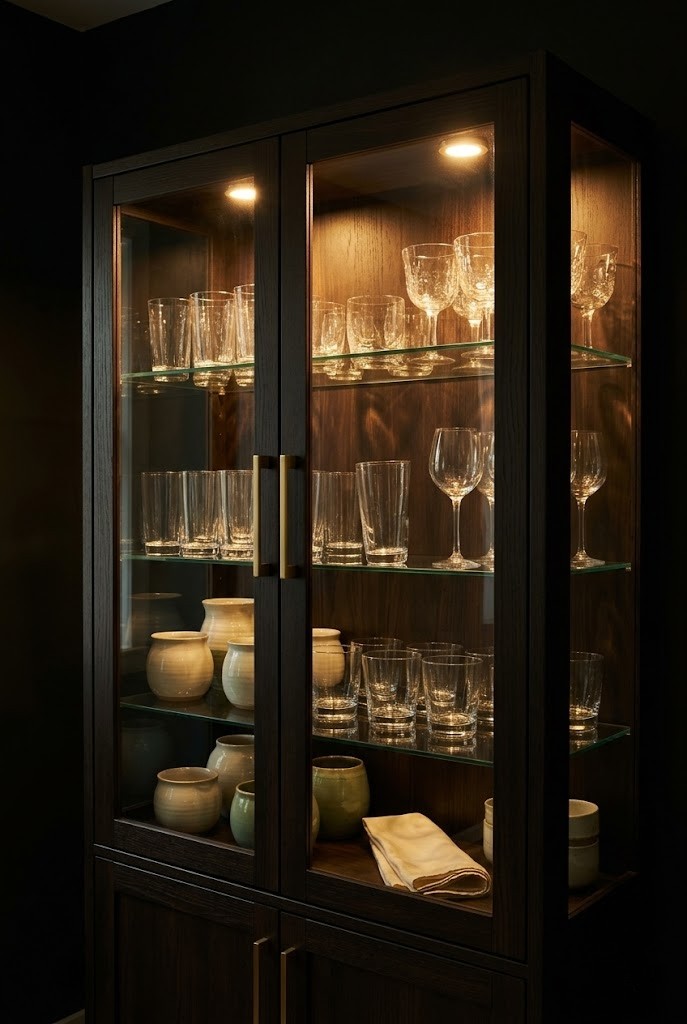
Dropping a couple of battery puck lights into a glass-front cabinet turns stored glassware or ceramics into a lit display that doubles as a soft light source for that side of the room. Stick-on pucks need no wiring and run on batteries or a small rechargeable cell, so a rental cabinet works fine. Warm pucks around 2700K flatter glass and wood; cool ones make everything inside look like a fridge. Place them at the top of each shelf aimed down so the light rakes over the objects instead of shining straight through the glass into your eyes. Rechargeable pucks save you the AA habit and the guilt. This is display lighting first and ambient light second, so pair it with a proper lamp nearby for the rest of the room.
13. A Cluster of Pillar Candles Grouped on a Tray
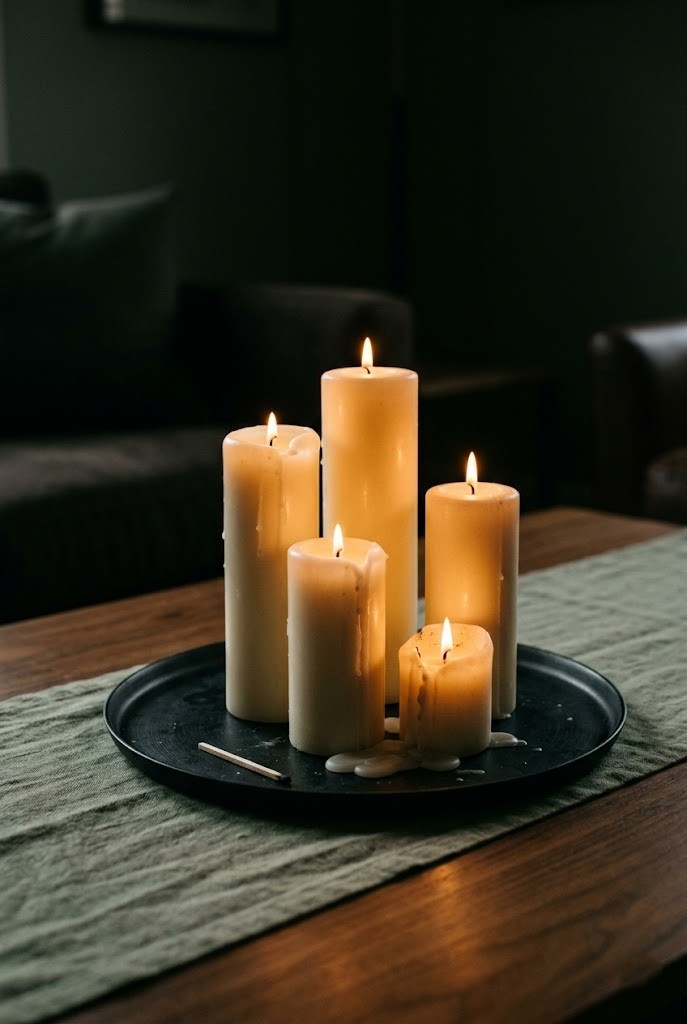
Grouping three to five pillar candles of different heights on a tray gives the warmest, lowest light in the room and a flame quality no bulb fully copies. Odd numbers and staggered heights look intentional; a matched row looks like a restaurant table setting. Set them on a hard tray, never directly on wood or a painted surface, because wax spits and heat marks the finish underneath. The upkeep reality: real candles drip, need trimming to a quarter inch of wick, and shouldn't burn unattended, so many people keep real ones for occasions and reach for flameless the rest of the time. Keep them well back from the tray edge and away from anything that can catch, like a draped throw or a curtain hem.
14. Flameless LED Candles Inside a Metal Lantern
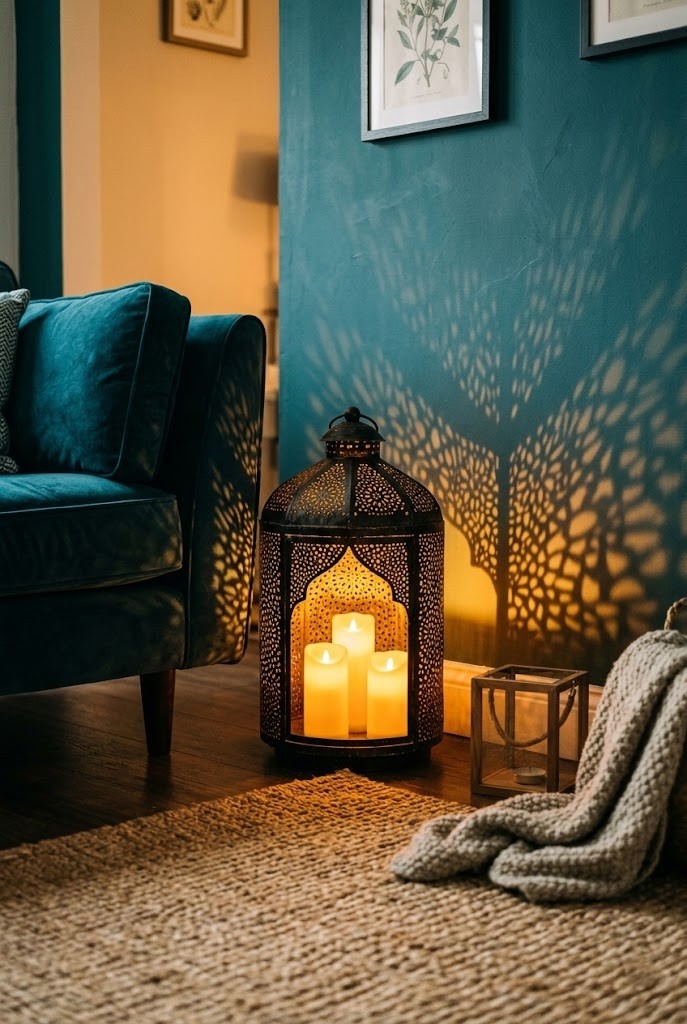
Putting flameless LED candles inside a lantern gives you the flicker and the cage-shadow of real candlelight with none of the fire risk, which is why they can sit on a shelf or a windowsill you'd never trust with a flame. Buy the ones with a genuine amber flicker and a built-in timer, not the steady cold-white kind that read fake the moment they turn on. A metal or punched-tin lantern throws patterned shadow on the wall behind it, which is half the point of using one. Group a couple at different heights on the floor by the sofa for a low, warm anchor. They run on AA or rechargeable cells for weeks at a time. This is the safe everyday stand-in for when you don't want to babysit an open flame.
15. A Plug-In Wall Sconce With a Flame-Flicker Bulb
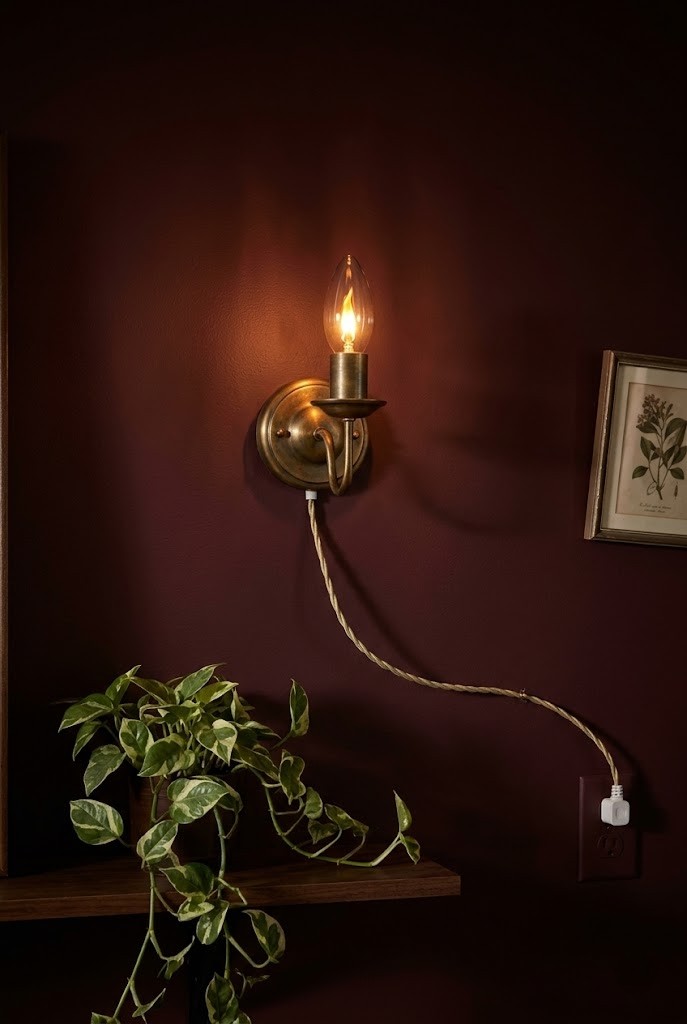
Mounting a plug-in sconce at eye level and fitting it with a flame-flicker LED bulb gives moving, candle-like light on the wall without an open flame or a hardwired fixture. Plug-in sconces hang on a single screw or a command hook and route the cord down to an outlet, so renters can use them freely. A good proportion for a moody wall: about 60% warm ambient from lamps, 30% from this kind of wall-level glow, 10% flicker or candle accent, swapping the flicker bulb for a steady 2400K bulb when you want calm instead of movement. This is a tidier, wall-mounted cousin of the pillar candles in idea 13 — same flame feeling, no wax. Keep the flicker subtle; aggressive strobing looks like a bulb about to die.
16. An Electric Fireplace Insert as a Low Amber Anchor
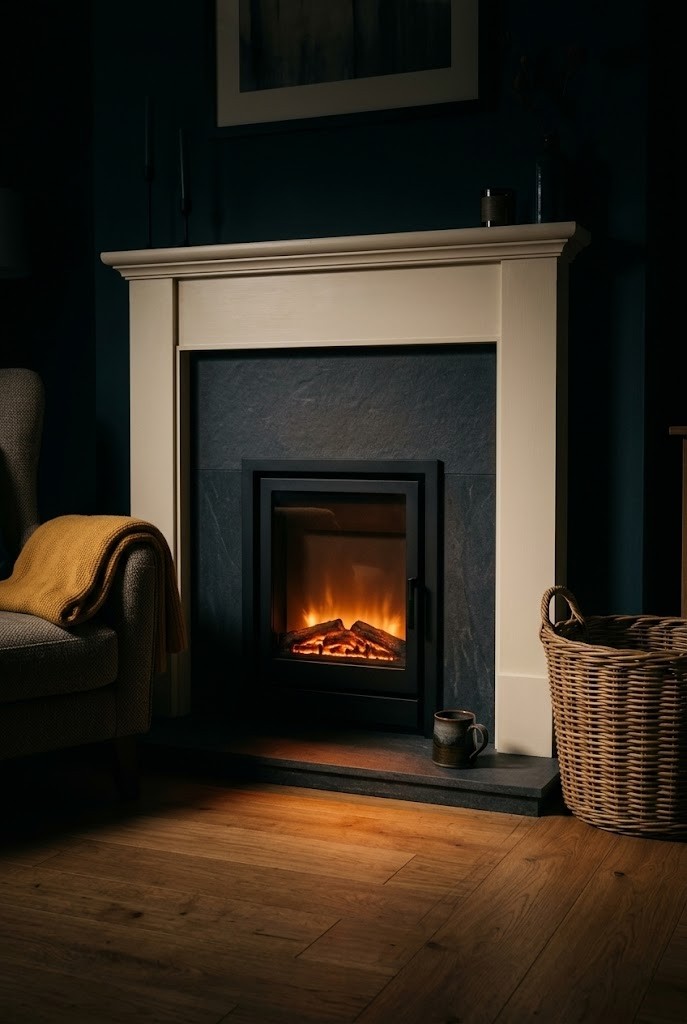
Running just the flame effect on an electric fireplace, heat off, gives a large low pool of amber movement that anchors the whole room after dark. Most inserts let you run the visuals without the heater, which matters in fall when you want the look but not the warmth. The mistake is leaving it on a bright orange cartoon setting; dial the flame brightness and color down until it reads like embers, not a screensaver. Freestanding and mantel-style inserts both plug into a standard outlet, so there's no gas line or venting to deal with. Set it as the lowest light in the room and let a shaded lamp handle anything you actually need to see by. Keep the vents clear of throws and curtains even when the heat is off.
17. An Amber Glass Table Lamp That Tints the Light
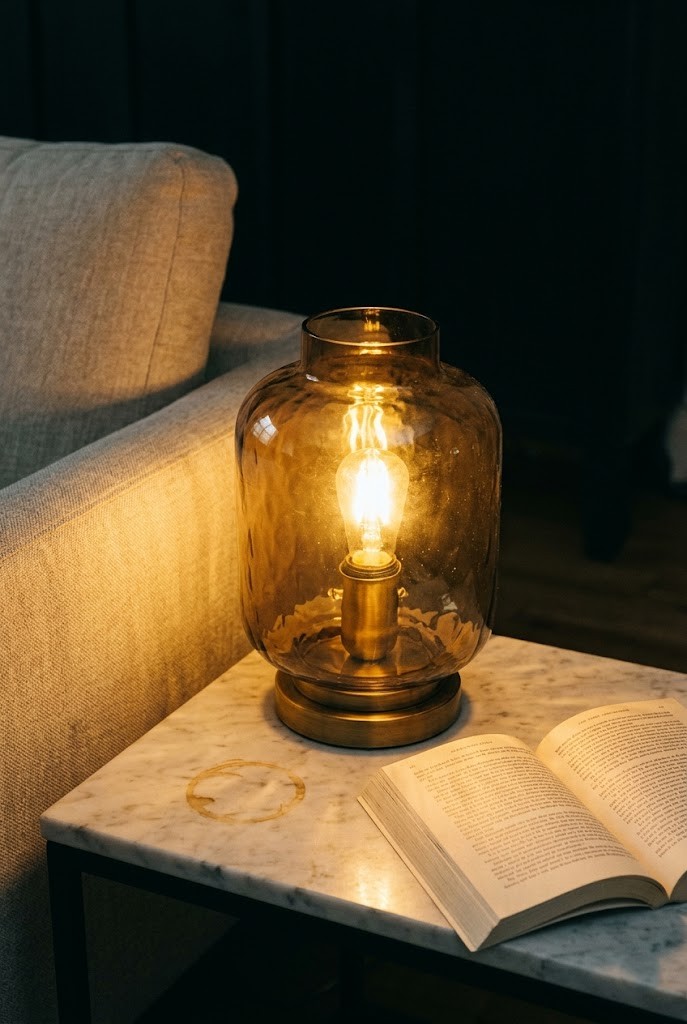
An amber or honey glass lamp body tints the light warm before it even leaves the fixture, so the glow lands golden without relying entirely on the bulb. The colored glass does half the work, which means you can use a slightly more neutral bulb and still read warm on the wall. Look for genuine amber or smoked glass rather than a painted coating, which flakes and yellows unevenly over time. Keep the bulb low, around 300 lumens, since colored glass already cuts output and you want atmosphere, not task light. This sits well on a side table or a small stack of books beside the sofa. It's the built-in-tint approach; the next idea gets the same warmth from a colored fabric shade instead, if glass isn't your look.
18. A Rust or Terracotta Fabric Shade Warming the Bulb
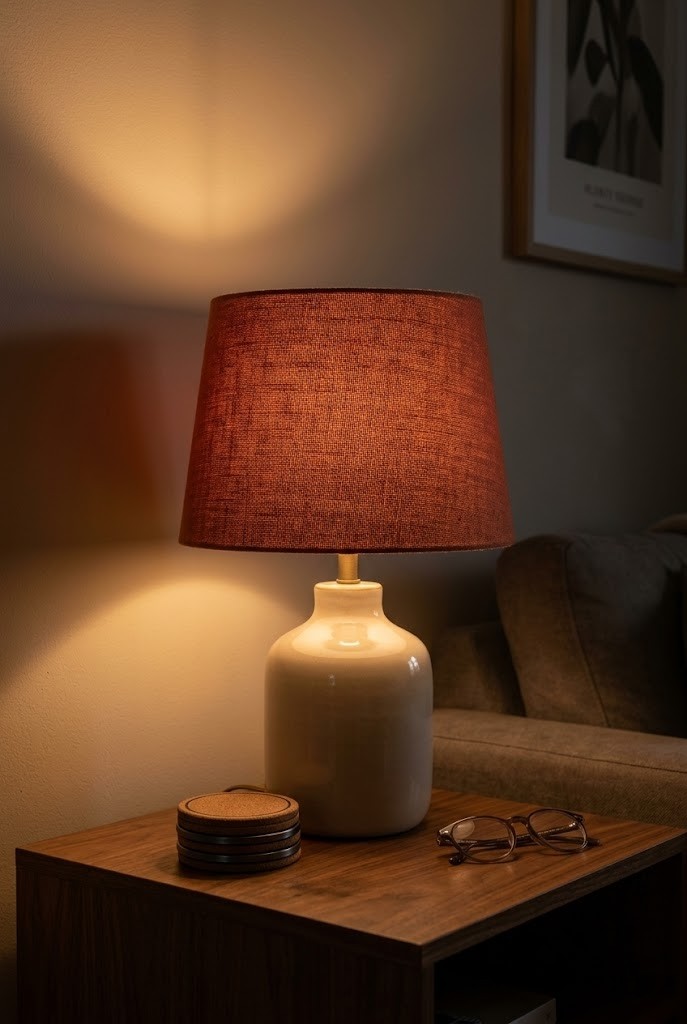
Swapping a white shade for a rust, terracotta, or deep ochre fabric one pushes the light warm through the fabric, the cloth version of the tinted glass in idea 17. A colored shade changes the mood more cheaply than a whole new lamp; you keep the base you already own and just change the shade. Darker and warmer shades cut more light, so bump the bulb slightly to compensate, but keep it warm at 2700K. The reality with colored fabric shades is that they fade unevenly if they sit in direct sun during the day, so a lamp that only earns its keep at night holds its color far longer. Lint and dust show more on dark fabric, so a quick lint-roll every couple of weeks keeps it looking deliberate rather than fuzzy.
19. A Smart Bulb Dialed to a Fixed Amber Scene
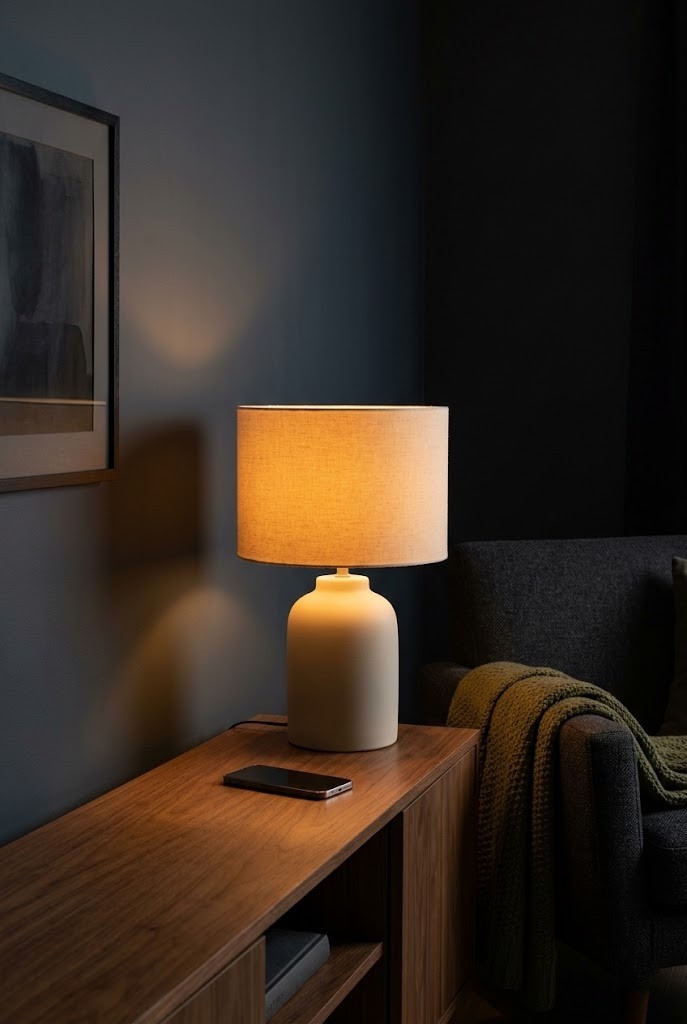
Putting a warm-to-amber smart bulb in a lamp you already own lets you set one dim golden scene and trigger it every evening, which is the cheapest way to get a moody room without buying new fixtures. Choose a smart bulb that goes genuinely warm, down to 2200K or lower, and save a scene at low brightness so a single tap drops the room into mood without fiddling with sliders. Skip the color-cycling party features entirely; you want one honest amber and a schedule. A smart dimmer or a warm dimmable bulb on a plug-in dimmer does the same job if you'd rather not open an app. Set it to fade up gently at sunset so the room is already glowing warm by the time you sit down.
20. A Himalayan Salt Lamp or Warm Ceramic Glow Lamp
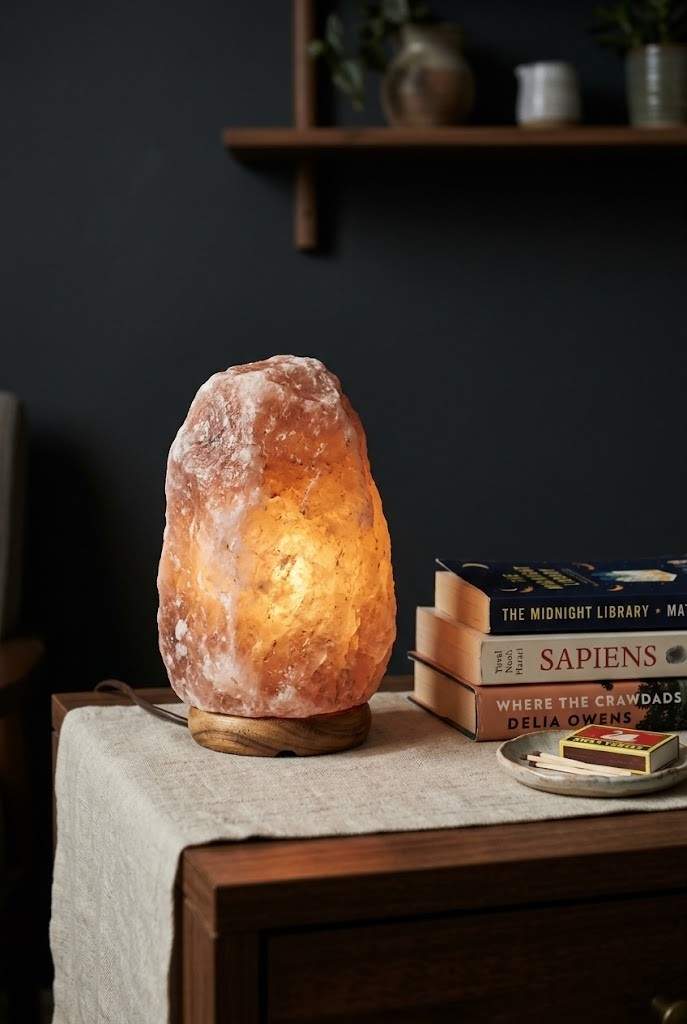
A salt lamp or a pierced ceramic glow lamp gives a small, fixed pool of amber that works as a permanent low anchor on a side table or shelf. The material itself is the shade, so the light is always warm and always dim, which is exactly what you want from a background source. A simple mix for a side table: about 60% of that corner's light from a nearby shaded lamp, 30% from this salt or ceramic glow, 10% from a candle, adjusting the shaded lamp's dimmer to shift the balance whenever you want. Salt lamps run warm to the touch and can weep moisture in humid rooms, so wipe the base now and then and keep them off good wood. Use the low-wattage bulb they come with rather than swapping in something brighter.
21. A Plug-In Pendant Hung Low Over a Side Table
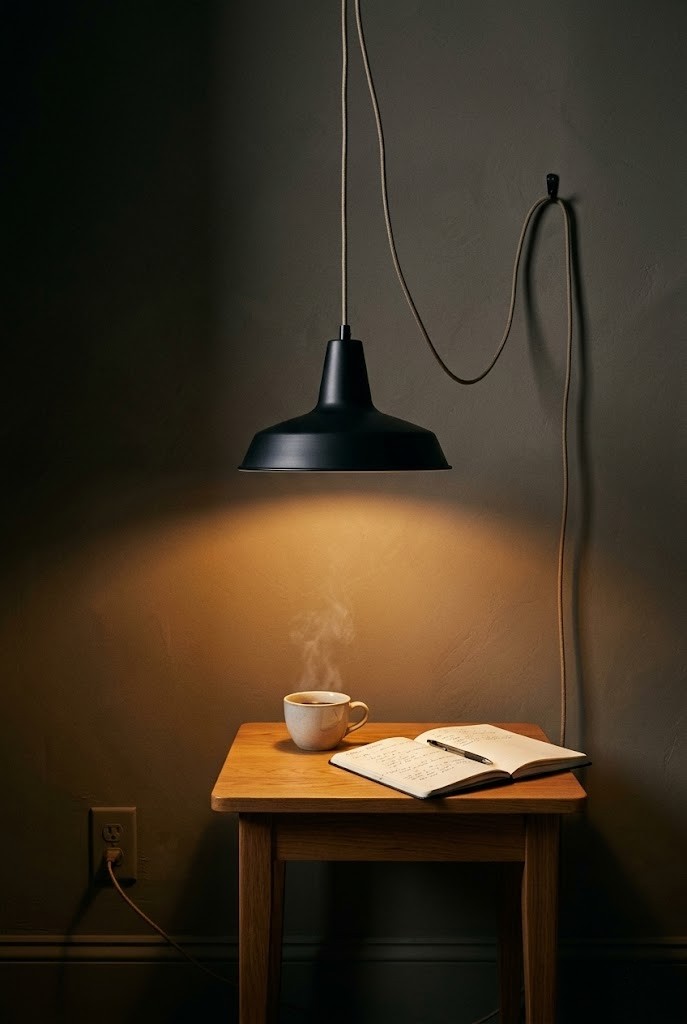
Hanging a plug-in pendant low over a side table or console drops a focused warm pool exactly where you want it, no ceiling wiring required. The cord runs to a wall hook and down to an outlet, so it's fully renter-safe and moves with you. The common mistake is hanging it too high out of habit; for mood, the shade bottom wants to sit low, around 30 to 36 inches above the surface, close enough to feel intimate. A shade that's open at the bottom concentrates the light downward and keeps glare out of the rest of the room. Use a warm dimmable bulb and a plug-in dimmer so the pendant can go from reading light to near-candlelight. Anchor the hook into a stud or use a ceiling hook rated for the shade's weight.
22. A Plug-In Pendant at Head Height in a Reading Corner
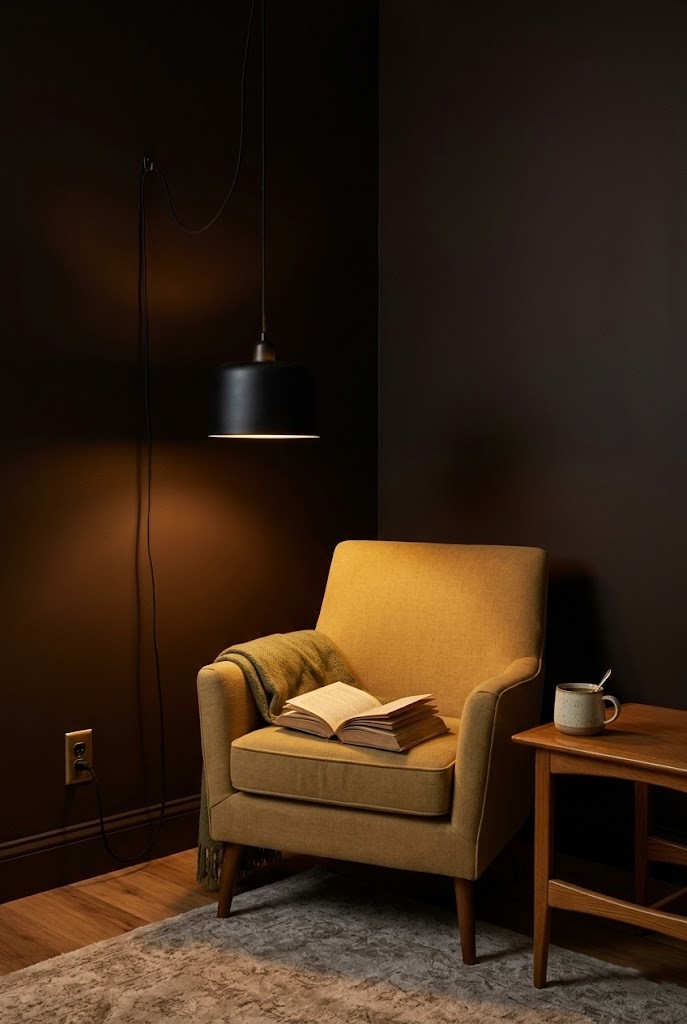
Hanging a plug-in pendant beside a reading chair, with the shade around your seated head height, turns a corner into a defined nook lit like its own little room. Placing it off to the side rather than dead overhead keeps the light on the page and off the top of your head. A metal or opaque shade aims the light down where you need it; a bare bulb here just glares straight into your eyes. Because the cord swags to a hook and then to an outlet, you can place the pendant exactly where a hardwired one could never go without an electrician. Keep the bulb warm and put it on its own dimmer so this corner can stay softly lit while the rest of the room goes fully dark around it.
23. A Woven Rattan Plug-In Pendant Casting Patterned Shadow
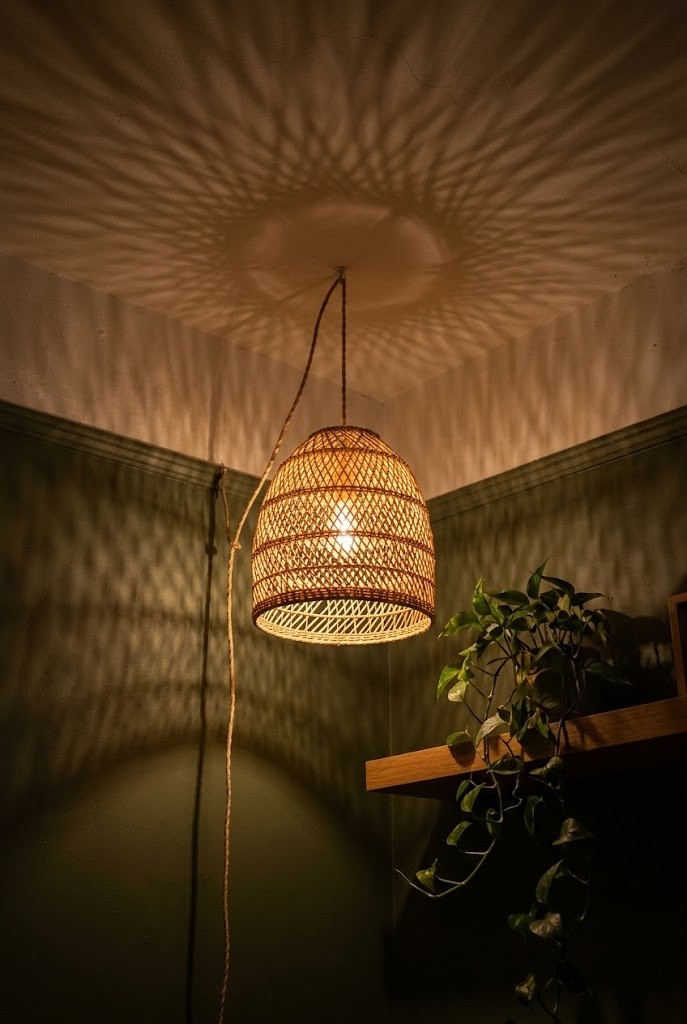
A rattan or woven pendant throws its own gaps as shadow across the ceiling and walls, adding pattern to plain surfaces the moment you switch it on. The looser the weave, the more dramatic the shadow, so hold the shade up to a phone flashlight in the store to preview what it'll actually cast before buying. Keep the bulb warm and the room otherwise dim so the shadow pattern reads clearly instead of washing out. Natural fiber shades collect dust in every gap and are a genuine pain to clean, so a quick blast with a hairdryer on cool or a vacuum brush every few weeks keeps them from going gray. A plug-in version swags to an outlet, so there's no wiring involved. Warm bulb, low room light, and let the shadows do the talking.
24. Two Plug-In Pendants Clustered at Staggered Heights
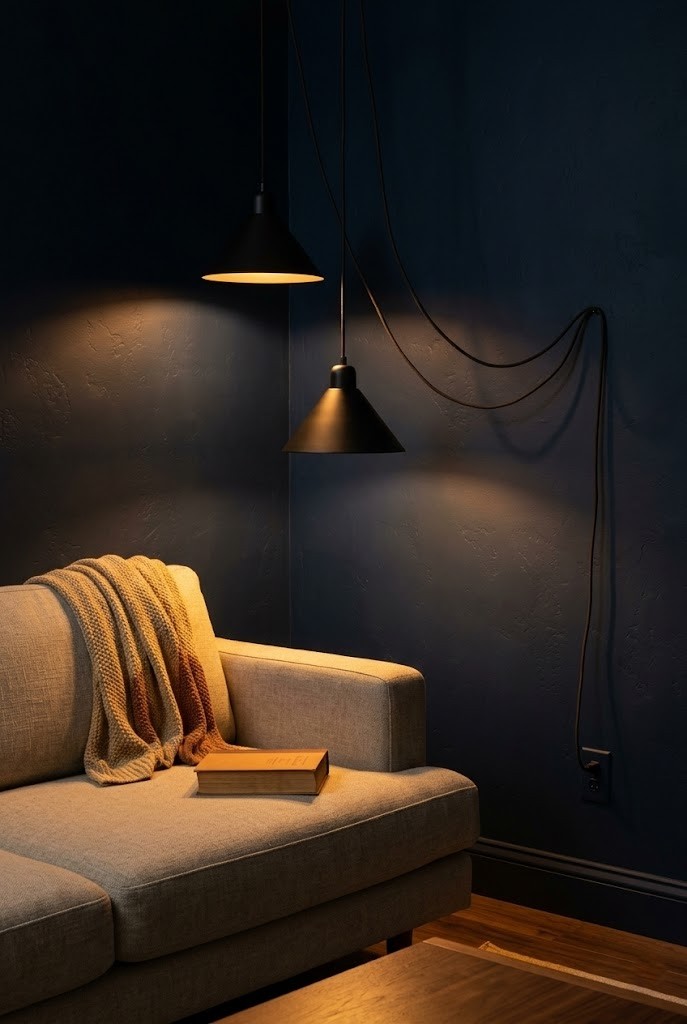
Hanging two plug-in pendants at different heights in one spot reads as a designed cluster and layers two pools of low light instead of one flat circle. Stagger the shade bottoms by 6 to 10 inches so they clearly sit at different levels; matched heights just look like you couldn't decide. This builds on the single low pendant in idea 21, using the same wall-hook swag trick twice, both cords routed to one outlet through a small splitter. Keep both bulbs warm and on a shared dimmer so the pair moves together as one source. Odd, gentle differences in height read as intentional; near-matches read as a mistake you didn't notice. Over a side table or the end of a sofa, two staggered pendants make a corner feel composed rather than lit by default.
Final Thoughts
None of this needs the big light. Pick three to five low, warm sources from the list, keep every bulb around 2200K to 2700K and under 450 lumens, and put the ones you use nightly on dimmers so the room can drop even lower when you want it to. Layer a shaded lamp for reading, an uplight or backlight for fill, and a candle or flicker for movement, and you've got the whole cozy fall living room mood running on lamps alone, ceiling switch untouched. Save this to Pinterest so the specs are handy the next time you rearrange the room after dark.
Frequently Asked Questions
How many lamps do I need for a moody living room?
Three to five low, warm light sources is the sweet spot for a small-to-medium living room. Fewer than three leaves dark gaps that read gloomy rather than cozy; more than five starts to look bright. Spread them at different heights, like a table lamp, a floor uplight, and a candle or pendant, so the glow feels layered instead of flat.
What bulb color temperature looks best for a moody room?
Aim for 2200K to 2700K, warm white down to amber. 2700K is the safe soft-warm default; 2200K reads almost candlelit. Avoid anything at 3000K or above, which starts to look like an office, and steer well clear of cool 4000K-plus bulbs. Warm dimmable bulbs let you push even lower on slow evenings.
How do I get a moody look without any overhead lighting?
Replace the one bright ceiling source with several dim ones: a shaded table lamp, a floor uplight bouncing off the ceiling, and a low pendant or candle. Keep each under about 450 lumens and warm in tone. The goal is a few small pools of light at different heights rather than one flood pouring down from above.
Are warm LED strips or smart bulbs better for mood lighting?
Both work; pick by placement. LED strips are best for hidden glow under shelves, behind the TV, or behind the sofa, where you want light with no visible source. Smart bulbs are better inside lamps you already own, letting you save one dim amber scene and schedule it. Just make sure either one goes genuinely warm, 2700K or lower.