Renter-friendly living room accent wall ideas usually come down to one question the listicles skip: will this come off clean, or is it a deposit deduction waiting to happen? Most guides hand you peel-and-stick wallpaper and stop. This post does two things they don't: it flags which looks fail on textured, orange-peel apartment drywall, and it tells you what a landlord actually writes down at the move-out walk-through. The 24 ideas below are sorted by damage level: zero-contact first, then adhesive-only, then a few that need small nails you can spackle over. Pick by how strict your lease is, and save this to Pinterest for setup or pack-out day.
1. A floor-leaning trio of oversized prints behind the sofa
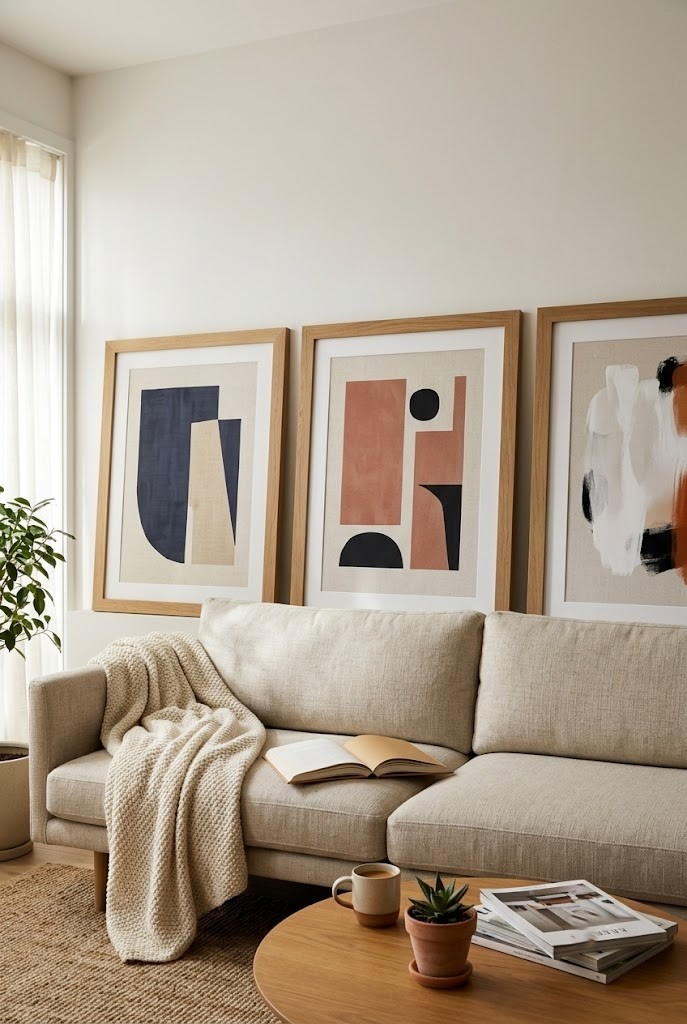
A trio of oversized art pieces leaned along the floor behind the sofa reads as a designed feature wall while touching the wall zero times. Buy or print three large canvases or framed prints, roughly 30 to 40 inches wide, and rest them on the floor or a low console, overlapping the edges slightly so they read as one composition. The weight of big frames keeps them stable against the wall; add a small furniture bumper behind the bottom edge if your floor is slick. Vary frame heights so the top line isn't flat. Because nothing is fixed, you can swap the art seasonally without patching a single hole.
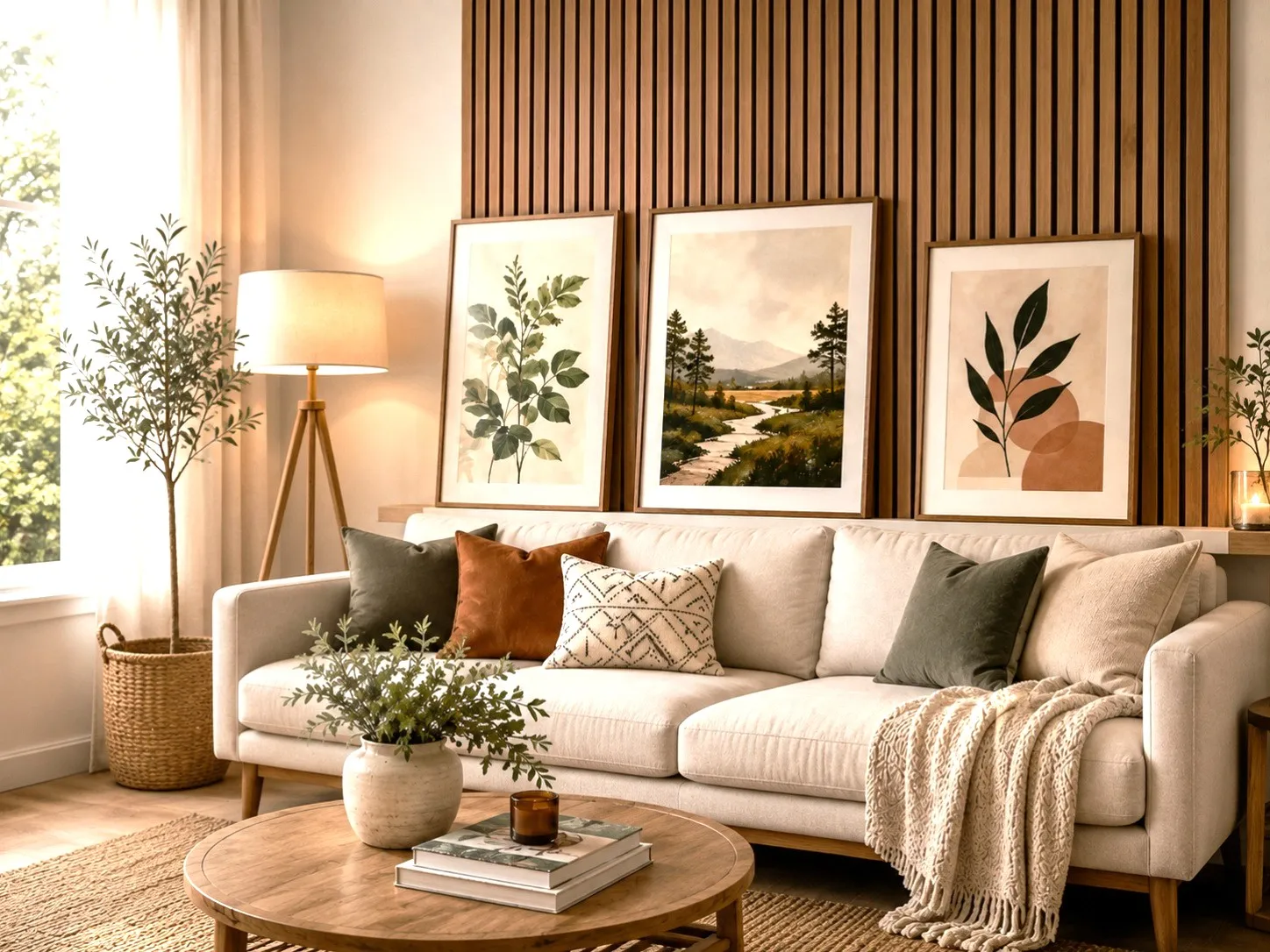
2. A freestanding wood-slat screen as a warm feature wall
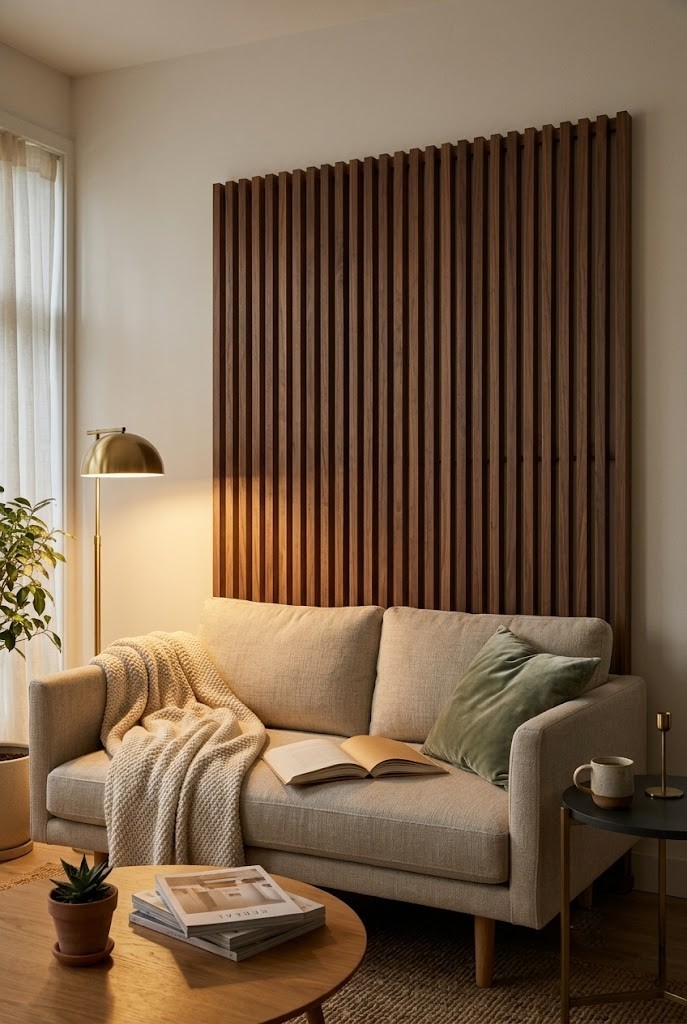
A freestanding wood-slat screen parked flat against the wall gives you the warm vertical-slat look with no adhesive and no drilling. These panels stand on their own feet, so you set the divider a couple of inches off the wall and it becomes the backdrop behind your sofa or TV. Look for solid or engineered wood at around 5 to 6 feet tall; anything shorter reads as furniture, not a wall. Slat spacing of roughly one to two inches keeps it from looking like a fence. Weight matters for stability, so heavier bases beat cheap hollow ones, especially in homes with kids or pets who lean on things.
3. A draped tapestry on a wall-to-wall tension rod
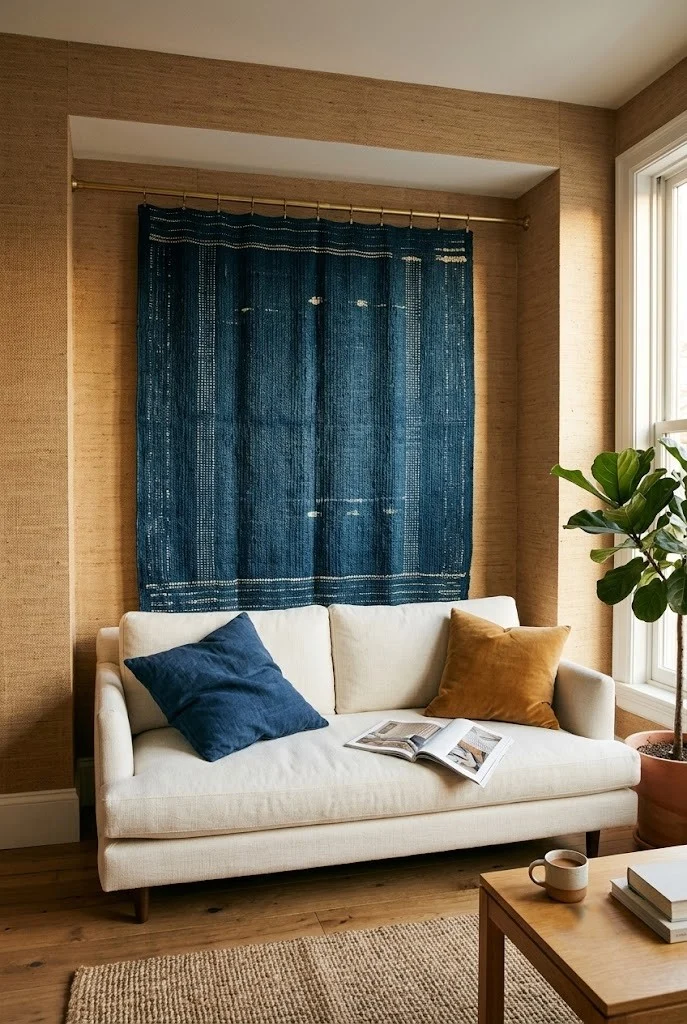
A large tapestry or fabric panel hung from a tension rod fills a wall with color and softness without a single hole. Wedge the tension rod between the two side walls of an alcove, or across the recess behind a sofa, and drape the fabric over it. Tension rods rely on wall friction, so measure the gap and buy a rod rated slightly wider, then twist it tight. Heavy woven tapestries hold their shape better than thin printed ones, which sag and wrinkle. This is a softer alternative to the framed art in idea 1 when you want texture instead of sharp lines. A steamer pass before hanging kills fold marks fast.
4. A tall styled etagere standing in for a wall
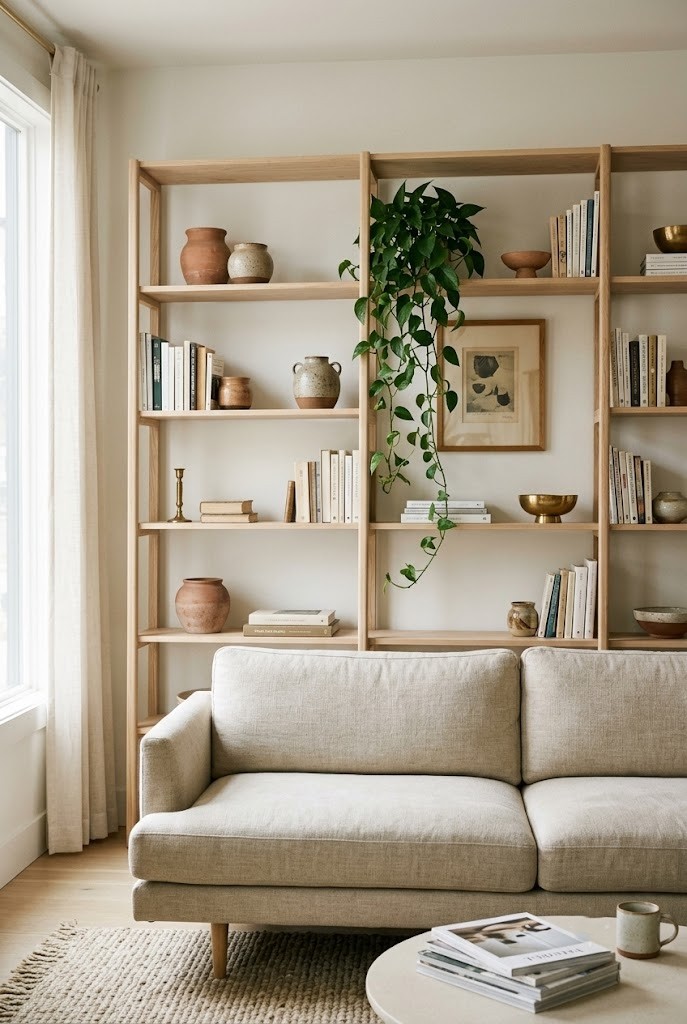
A wide, tall open shelving unit styled full works as a feature wall that also stores your things. Pick an etagere or ladder shelf that spans most of the sofa width and reaches near the ceiling, then style it in layers: books laid flat and upright, a few ceramics, one trailing plant, a small framed print resting against the back. The visual density is what makes it read as a wall rather than a bookcase. Keep roughly one-third of each shelf empty so it doesn't look crammed. Freestanding units over six feet should still get a discreet anti-tip strap to a stud or heavy neighbor for safety.
5. A cluster of leaning floor mirrors
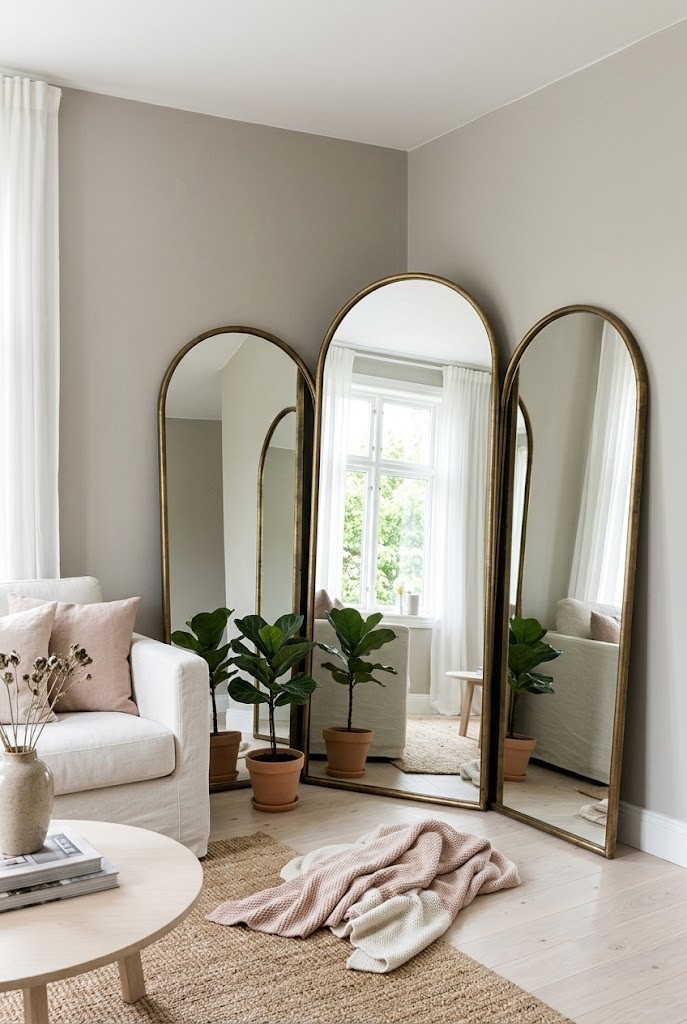
Two or three floor mirrors leaned side by side bounce light and double as a reflective accent wall with zero wall contact. Full-length arched or rectangular mirrors, roughly 5 feet tall, lean against the wall on their own weight. Overlap them slightly or space them evenly for a gallery effect. Mirrors make a small living room feel larger by reflecting the window, so angle at least one toward your main light source. Use clear rubber bumpers on the bottom edge so they don't slide on hard floors. Heavier framed mirrors stay put better than lightweight ones, which can creep forward over time and need re-setting.
6. A freestanding trellis grown into a green wall
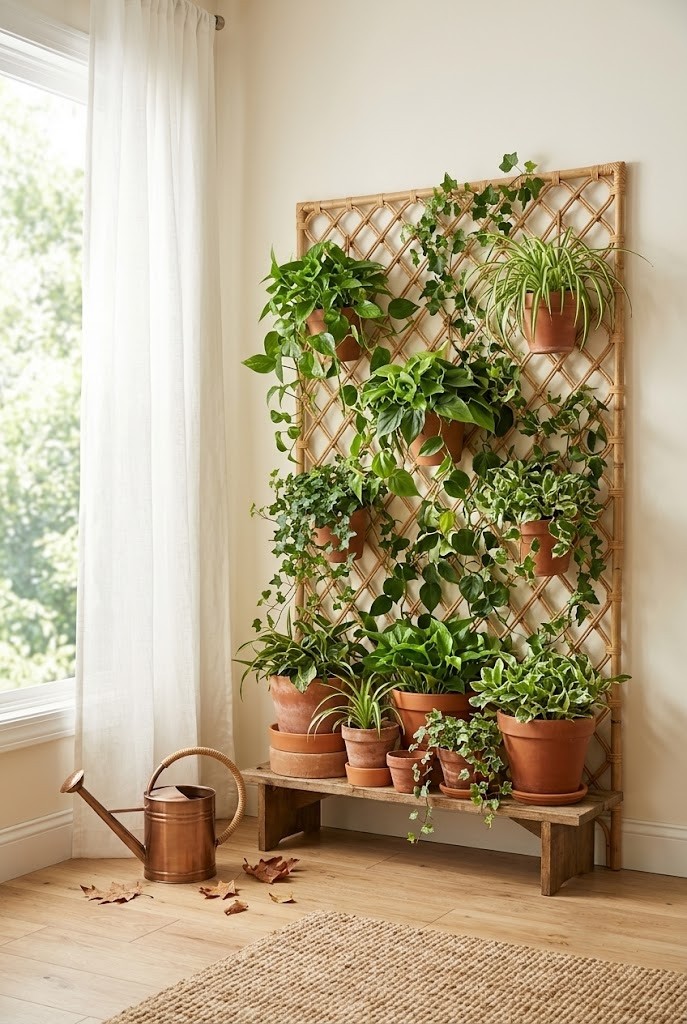
A freestanding trellis or plant ladder loaded with trailing greenery builds a living accent wall that leaves nothing behind. Use a standing trellis panel or a tiered plant stand set against the wall, then train pothos, ivy, or philodendron up and across it over a few weeks. Real plants need light, so this works best within about six feet of a window; low-light corners will need grow bulbs or good fakes. Cluster pots at varied heights so the green reads as a mass, not a row. Freestanding trellises are light, so weight the base with a heavy planter to stop it tipping when the vines get full.
7. A floor-length curtain wall on a tension rod
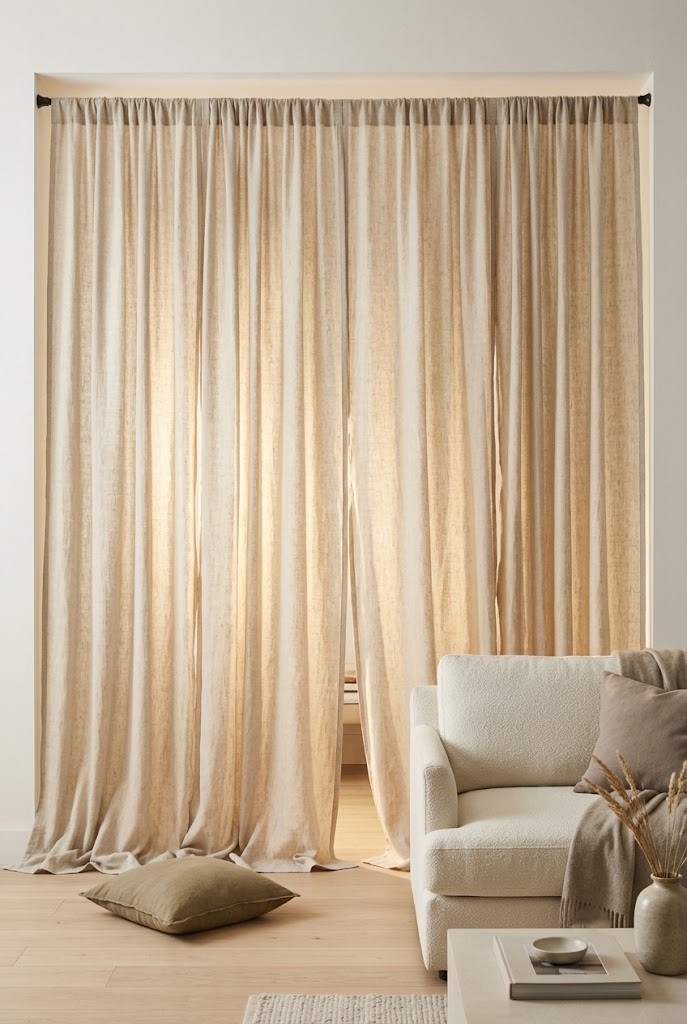
A wall of floor-to-ceiling curtains hung on a tension rod softens an entire wall and hides a bad one underneath. Run a wide, heavy-duty tension rod wall-to-wall near the ceiling of an alcove, then let full-length panels fall all the way to the floor. Choose panels a few inches longer than the drop so they pool slightly and read as intentional. Linen and velvet hang heavier and straighter than thin polyester, which billows and looks cheap. This is the move when you're renting a place with a scuffed or oddly painted wall you just want gone. Wide spans need a rated heavy-duty tension rod, not the flimsy shower kind.
8. A folding screen opened flat as a movable backdrop
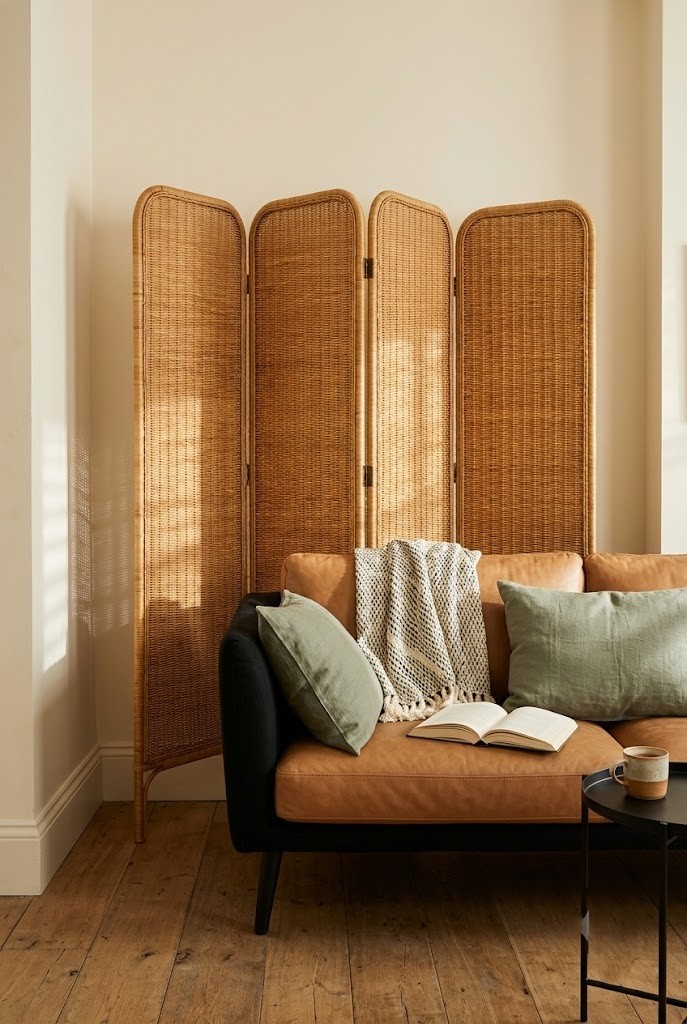
A folding room screen opened flat against the wall gives you a patterned or textured backdrop you can fold away on moving day. Rattan, cane, and carved-wood screens lean or stand behind the sofa and add instant texture with no fixings. Open it to a slight zigzag rather than dead flat so it stands on its own and casts a little shadow depth. Three to four panels usually span a sofa nicely. Cane and rattan keep things light and airy; solid painted screens make a heavier, moodier statement. Because it folds, it stores flat in a closet or slides behind a door when the lease ends, leaving the wall untouched.
9. A leaning ladder shelf trailing with plants
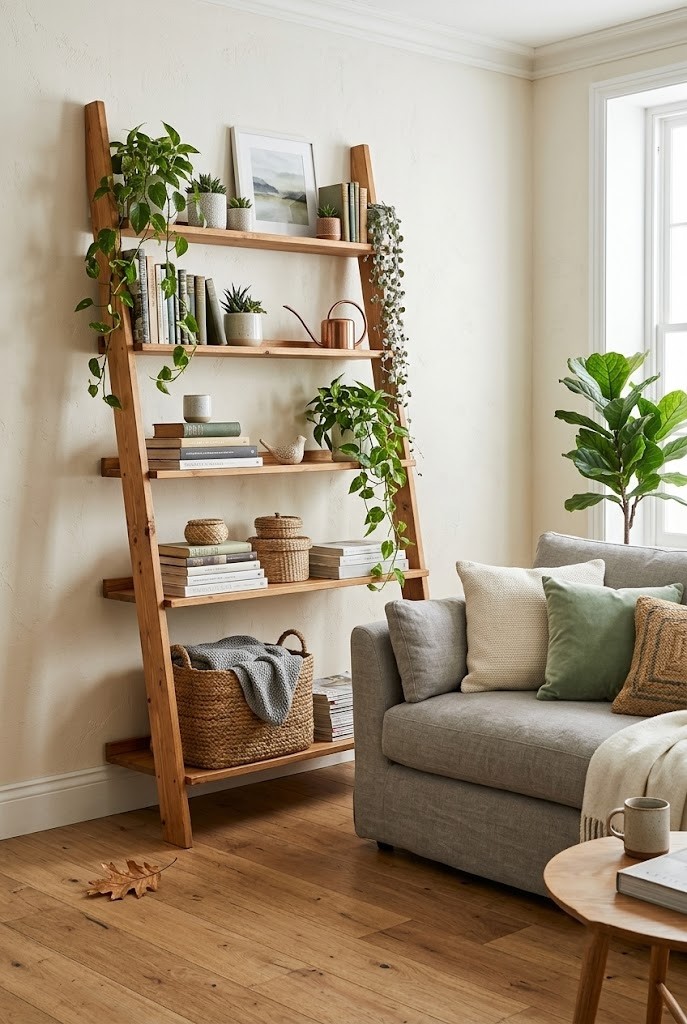
A leaning ladder shelf styled with plants and small objects delivers a casual accent wall that rests on the wall instead of biting into it. The ladder's top rail leans against the wall while the feet take the weight, so no anchor is needed for a light unit. Style the wider bottom shelves with books and a basket, the narrow top shelves with trailing plants that spill down the frame. This pairs well with the freestanding slat divider in idea 2 if you want one warm-wood moment repeated. Keep the lean angle shallow so it feels stable, and slip a felt pad where the top rail meets the wall so it doesn't mark the paint.
10. A freestanding pegboard display panel on a stand
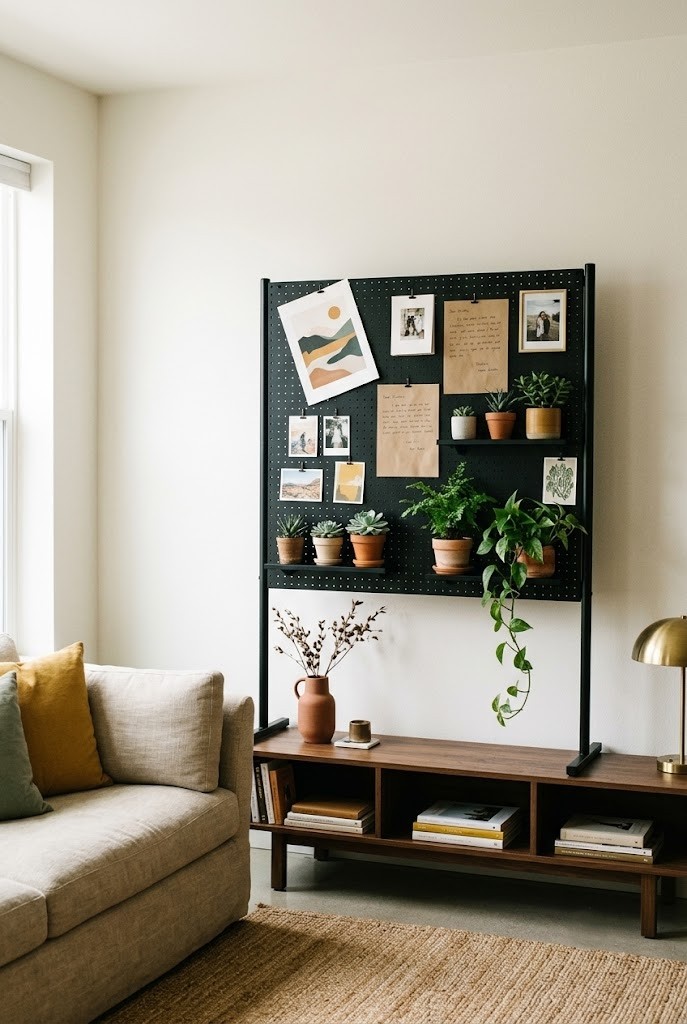
A freestanding pegboard or grid panel on a stand turns a rotating display into your accent wall without a single screw in the wall. These panels stand on feet and hold hooks, small shelves, and clips, so you hang prints, plants, and objects on the panel itself. A 3-by-4-foot grid behind a console reads as a feature; smaller than that looks like an office board. Black metal grids feel modern and graphic; light wood pegboards feel softer and warmer. Because everything attaches to the panel, you restyle in minutes and take the whole thing with you. Weight the base or brace it against furniture so a loaded panel doesn't lean forward.
11. Peel-and-stick wallpaper, but only after the texture test
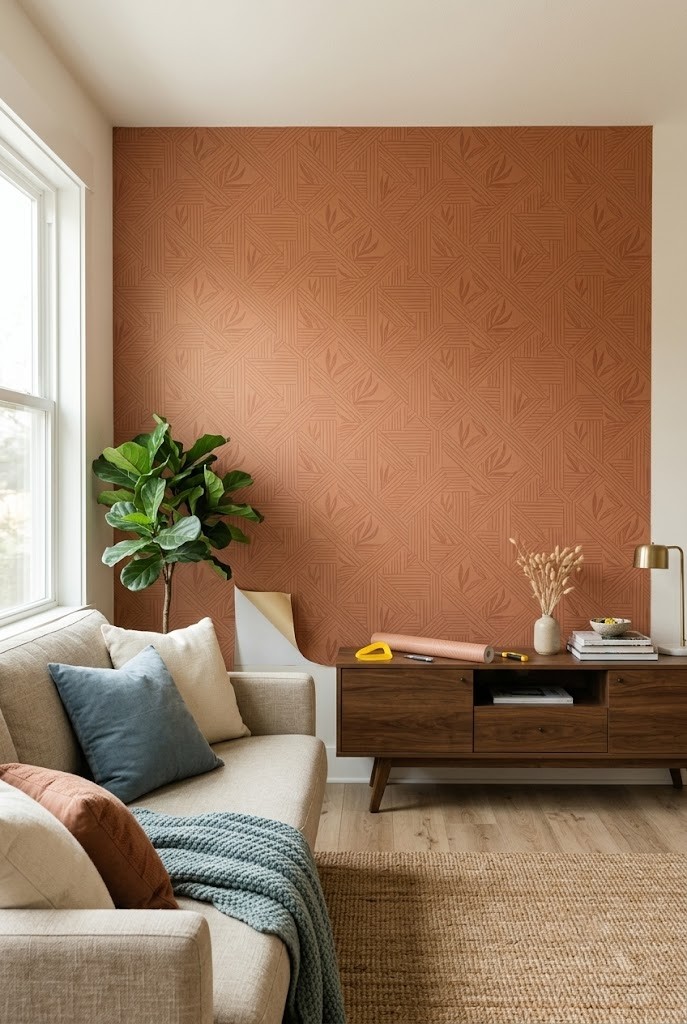
Peel-and-stick wallpaper only earns its 'removable' label on smooth walls, so the first thing to check is your wall texture, not the pattern. On flat drywall it goes up clean and peels off clean. On the orange-peel or knockdown texture common in apartments, the adhesive grabs the high points only, bubbles over the low points, and on removal it can lift paint or leave glue in the valleys. Test one strip in a hidden corner and leave it a week before committing. If it passes, work top-down and squeegee out the air. If your walls are heavily textured, skip this and use a freestanding or draped idea instead. Removable wallpaper is sold by the roll in standard widths, so measure square footage first.
12. Peel-and-stick wood-look slat panels
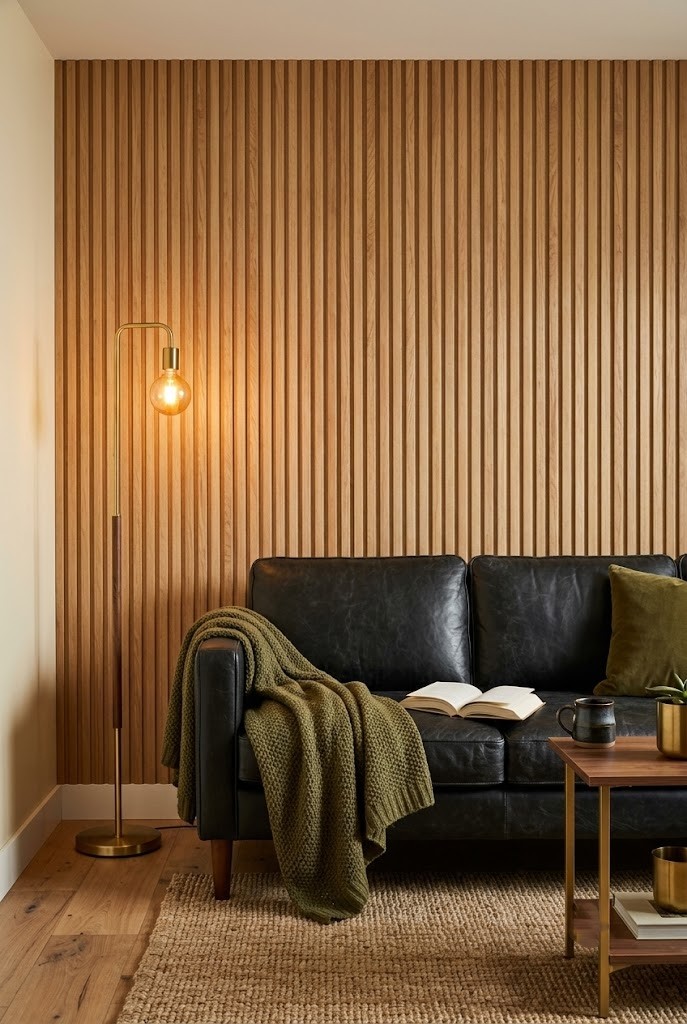
Peel-and-stick wood-look slat panels give the fluted-wall look of idea 2 as an adhesive product instead of a freestanding one. These lightweight panels back onto adhesive strips or the wall's own peel-and-stick backing and align edge to edge. They suit smooth walls; on texture they face the same adhesion problem as wallpaper, so test first. Run the slats floor to a picture-rail height rather than full ceiling for a cleaner, less busy result. Real-wood veneer panels look richer than printed foam ones, which can read plasticky under lamp light. Buy 10% extra for cut mistakes at outlets and corners. Removal is easier than paper but still needs slow heat from a hair dryer to soften the glue.
13. Scattered geometric vinyl decals
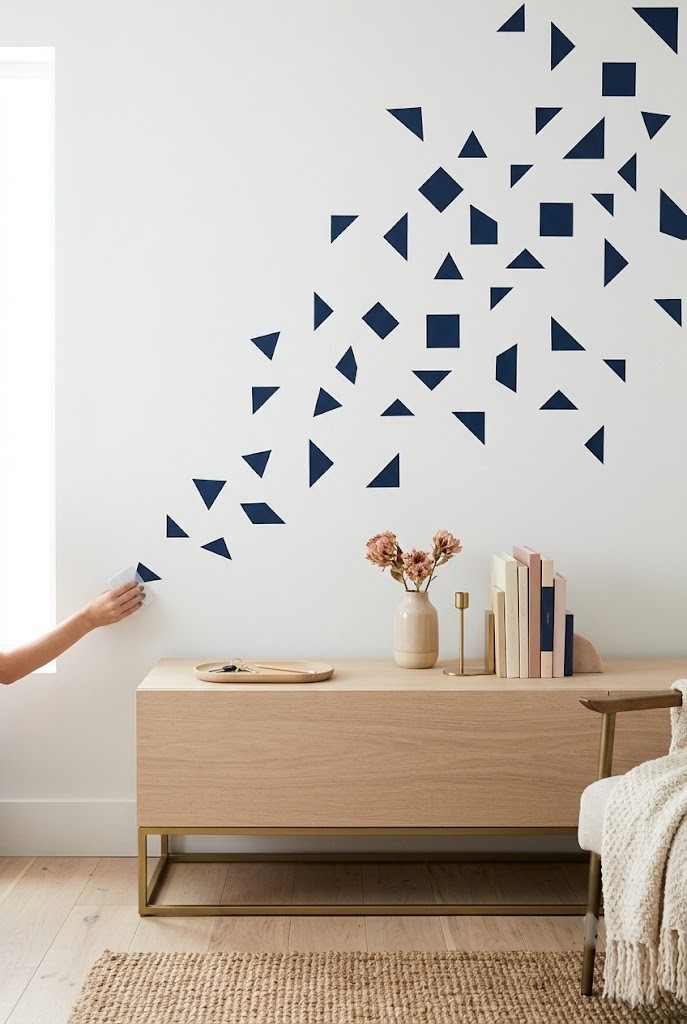
Geometric vinyl decals scatter shapes across a wall for a graphic accent that peels off in seconds. Buy a set of pre-cut shapes such as dots, arches, and half-moons, and place them in a loose grid or a falling pattern that thins out toward one side. Decals stick best to smooth, clean, fully cured paint; on texture they lift at the edges within weeks. Lay them out on the floor first to lock the spacing, then transfer to the wall. Matte decals photograph better and look less sticker-like than glossy ones. On removal they come away clean if you go slow, though very old paint can still scuff, so test one in a corner before doing the whole wall.
14. A washi tape grid drawn straight onto the wall
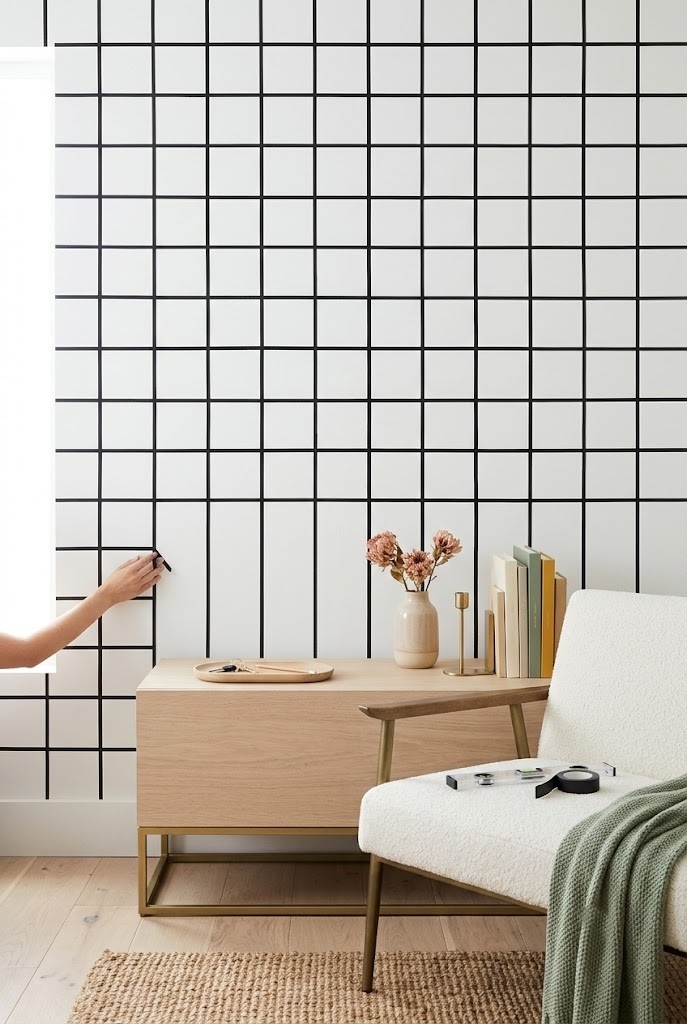
Washi tape laid in a grid, chevron, or vertical-stripe pattern draws a custom accent wall for a few dollars and pulls off without residue. Wide decorative washi is low-tack by design, so it lifts cleanly from most painted walls, even textured ones, better than vinyl does. Use a level and light pencil marks to keep the lines straight; freehand tape wanders and the eye catches every wobble. A simple large grid or a set of tall thin stripes behind the sofa reads as architecture rather than craft. Press the edges down firmly with a clean cloth. It fades in strong sun over months, so refresh sun-facing walls and pull it before it bakes on too long.
15. Fabric hung as removable starch wallpaper
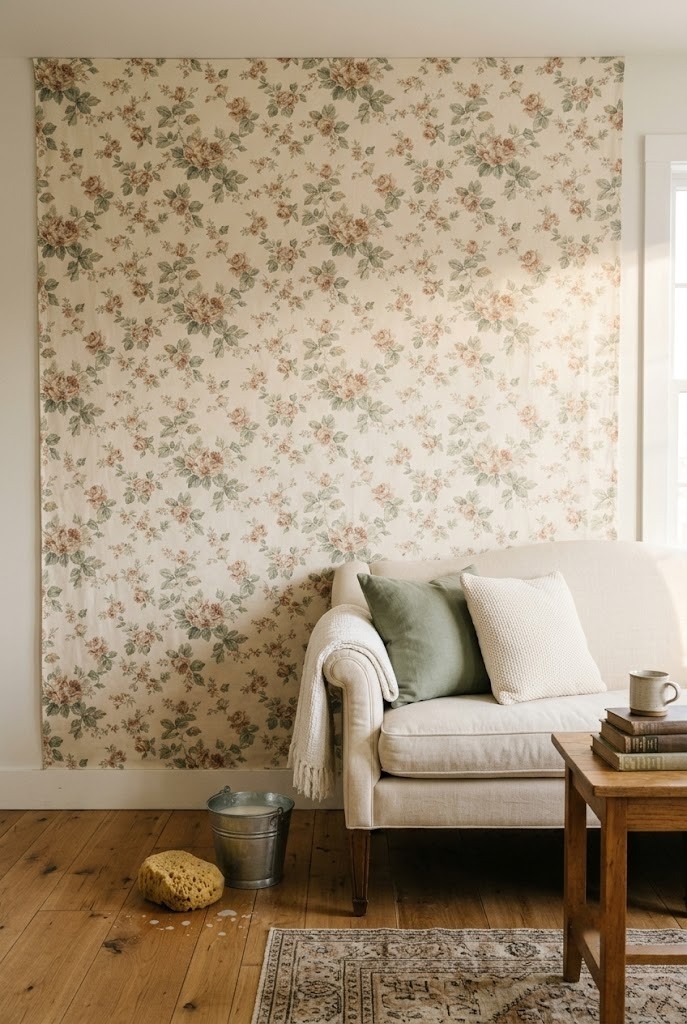
Fabric applied with liquid starch behaves like fully removable wallpaper and peels off with a tug and a wipe. Cut lightweight cotton to wall height, roll liquid starch onto the wall, press the fabric in, then starch over the top and smooth out the bubbles. It clings by starch alone, so at move-out you peel the fabric and sponge off the residue with warm water, with no glue and no paint damage. This forgives texture far better than peel-and-stick because the fabric flexes into it. Choose a small-to-medium print; big repeats are hard to match at the seams. It's the cheapest way to cover a full wall in pattern if you don't mind an afternoon of work.
16. A low band of peel-and-stick faux brick
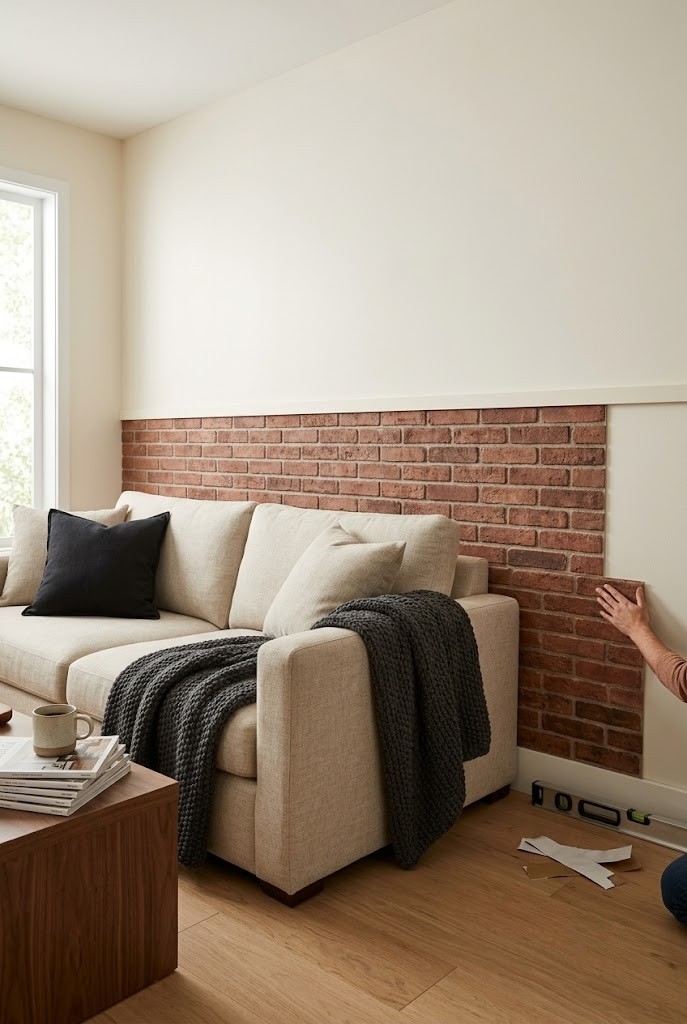
A lower band of peel-and-stick faux brick or stone panels builds a wainscot-style accent that hides scuffs at sofa-back height. Run the panels from the floor up to about one-third of the wall and cap the top edge with a thin removable trim strip for a finished line. Like the slat panels in idea 12, these are adhesive-backed and want a smooth wall, so the texture test applies. Lightweight foam brick is convincing from a few feet and terrible up close under raking light, so avoid it right beside a lamp. Keeping the band low means less material, lower cost, and less to remove later. Warm the panels before peeling at move-out to protect the paint.
17. Adhesive picture ledges for a leaning gallery
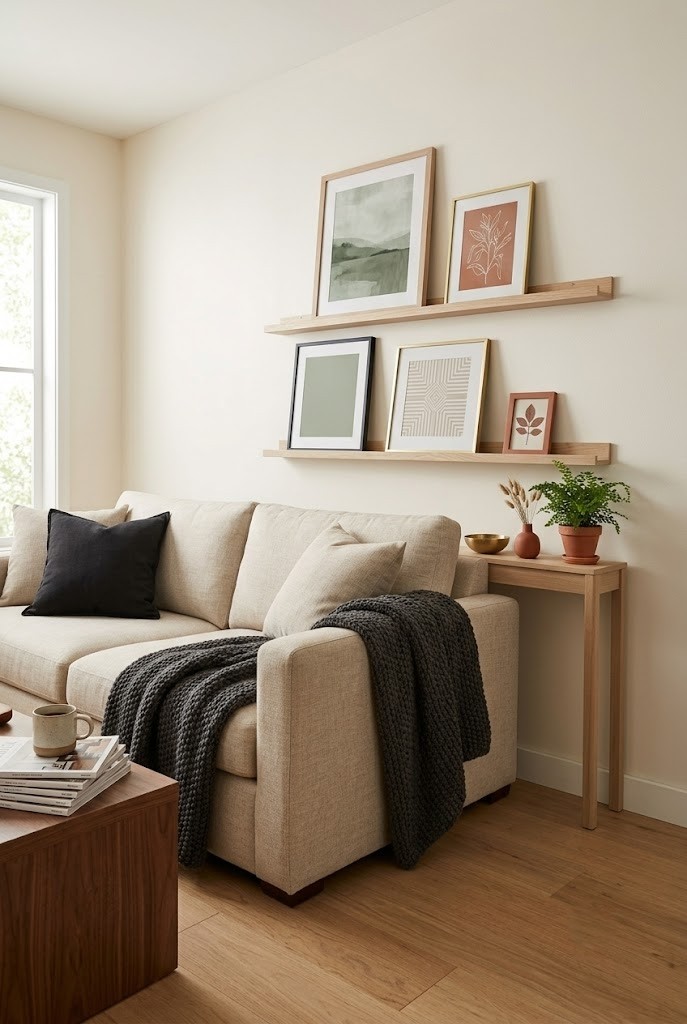
Adhesive picture ledges let you build a leaning gallery wall that carries real weight without a single nail. Mount slim ledges with heavy-duty damage-free wall strips rated well above your frame weight, then lean framed prints on the ledge instead of hanging each one. You restyle by swapping frames, not re-drilling, and removal is a clean pull-and-stretch of the strip tab. Respect the weight rating with a margin: rate for less than the strips claim, because ledges plus frames add up fast. Two or three ledges stacked vertically behind a console reads as a designed gallery. Press the strips for the full 30 seconds and wait an hour before loading, or they let go overnight.
18. An adhesive LED backlight washing the wall
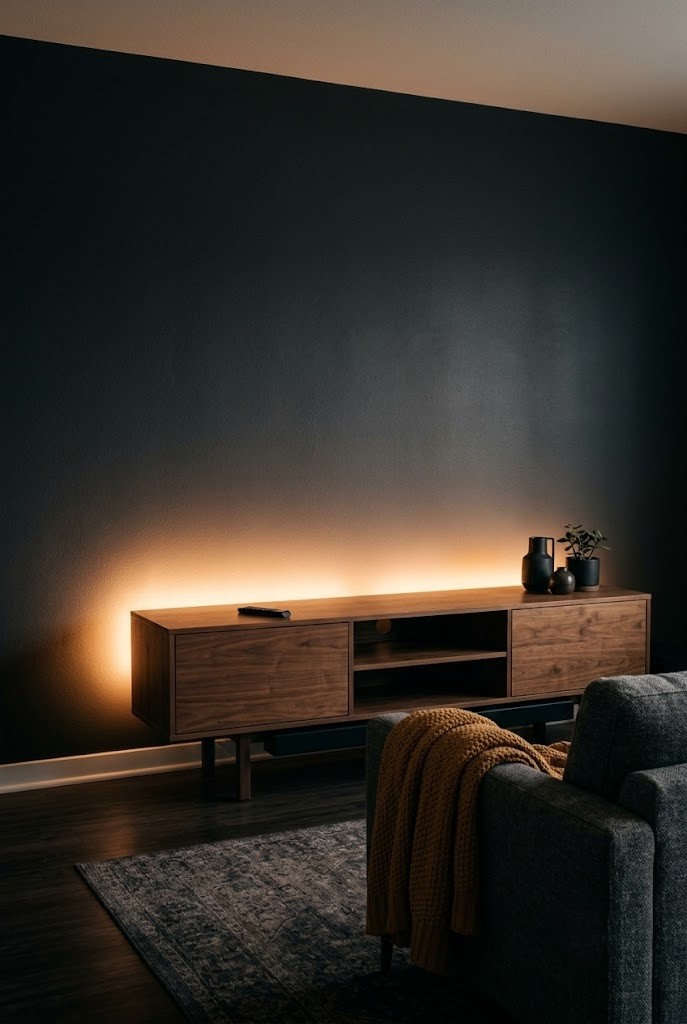
A strip of adhesive LED lighting run behind the sofa, TV, or a shelf washes the wall with color and turns plain drywall into a glowing feature after dark. Peel-and-stick LED tape mounts to the back of furniture or a shelf edge, not the wall itself, so the wall stays untouched. Aim the light at the wall rather than the room for a soft halo; a warm white reads cozy, while color-changing tape suits a media wall. Hide the controller and plug behind the furniture. This sits alongside other renter lighting fixes that skip the ceiling box when your rental has no good overhead light. Stick the tape to a clean, dry surface or it sags within days.
19. Fabric-wrapped foam panels for a soft upholstered look
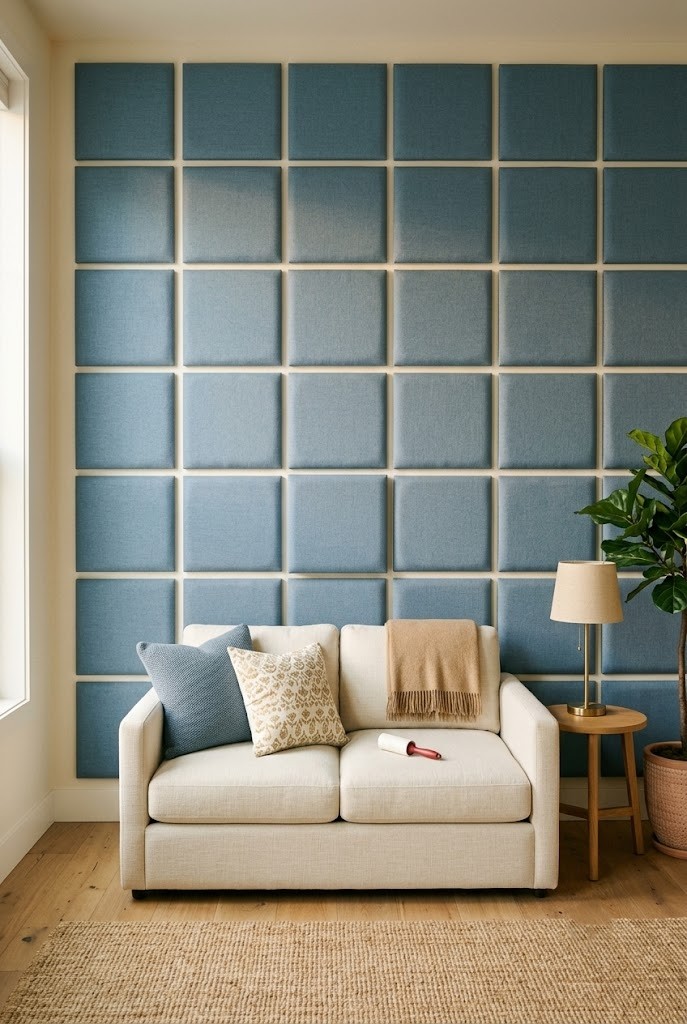
Fabric-wrapped foam panels stuck up with damage-free strips fake an upholstered accent wall that's soft, sound-dampening, and fully removable. Wrap lightweight foam or cork tiles in fabric, then mount them with heavy-duty adhesive strips in a grid behind the sofa. The panels add warmth and cut the echo in hard apartments. Keep each panel small and light so the strips hold; big heavy panels sag and pull. A tight grid with thin gaps looks deliberate, while random spacing looks unfinished. At move-out the strips release clean. Fabric collects dust and pet hair, so choose a tight weave you can lint-roll rather than a loose boucle that traps everything.
20. One large woven hanging on a single nail
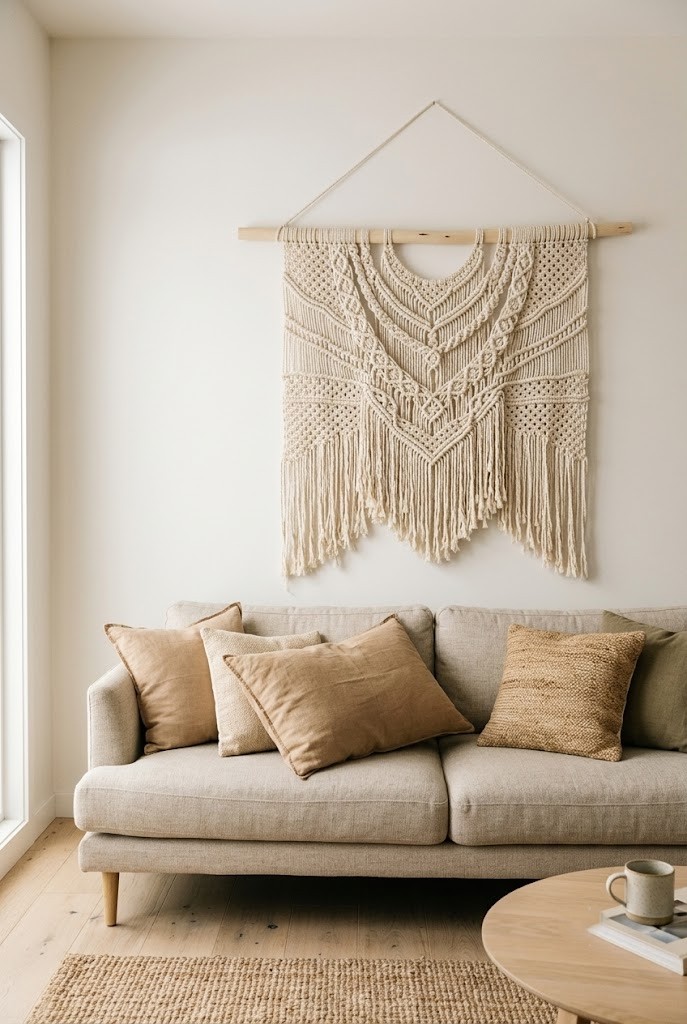
One large woven wall hanging on a single nail covers a lot of wall for one tiny, spackle-in-seconds hole. A 3-to-4-foot macrame or woven piece hangs from one nail or a single damage-free hook and drapes down to fill the space above a sofa. The texture does the work, so you skip the multi-hole gallery entirely. One small nail hole fills with a dab of spackle and a swipe of matching paint at move-out, which most landlords don't even flag. Natural cotton and wool hangings feel warm; jute and sisal read more rustic. Hang the top rail at roughly eye level or a touch above so the piece sits over the sofa, not floating near the ceiling.
21. A reclaimed wood plank column beside the TV
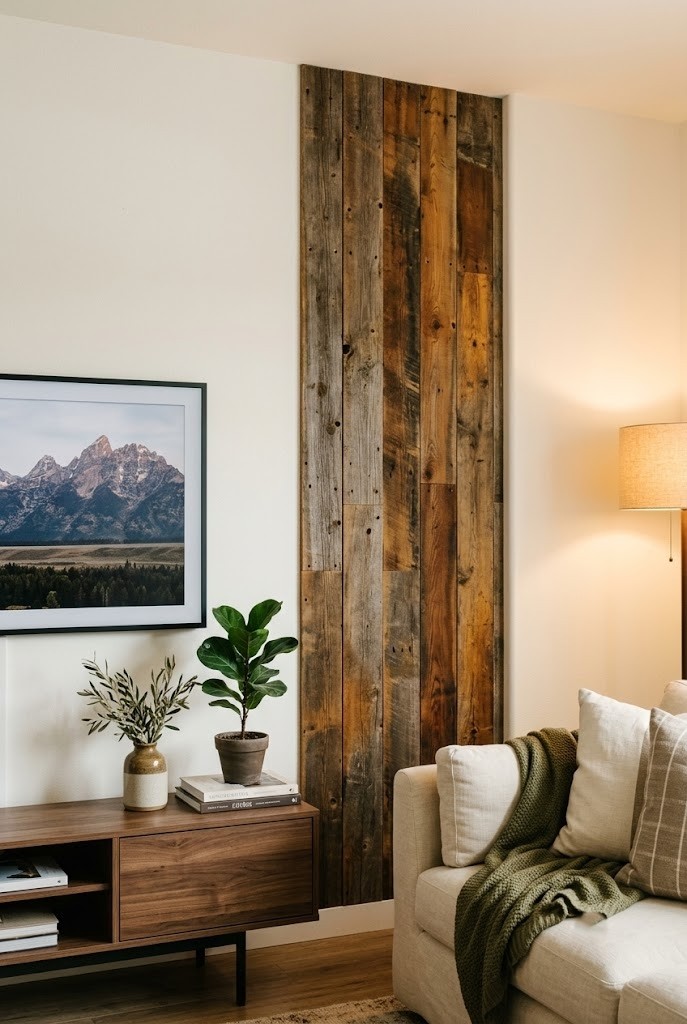
A partial wall of thin reclaimed wood planks gives real warmth for the price of a few screw holes you spackle at the end. Use lightweight thin planks and fix them with a minimal number of small screws or brad nails into the drywall, filling only a handful of holes later rather than the dozens a full nailed installation leaves. Run the planks behind the sofa or as a vertical column beside the TV instead of covering the entire wall to keep both cost and hole count down. Mixed wood tones read more collected than a single uniform stain. Real wood is heavier than foam look-alikes, so screws beat adhesive here for anything above a small panel.
22. A tight grid gallery wall you spackle away
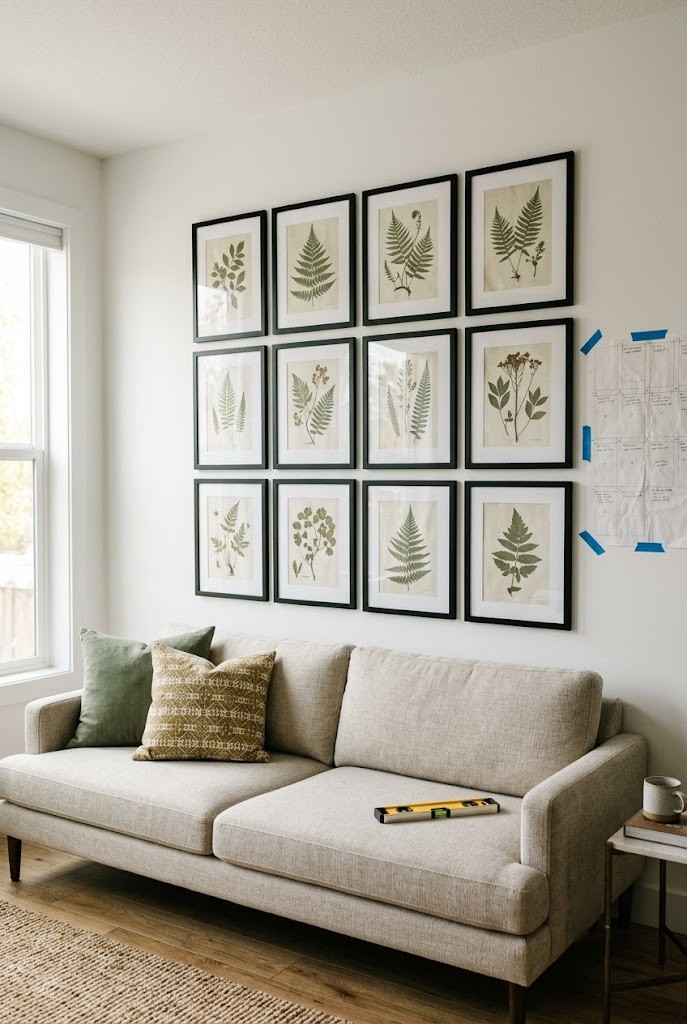
A tight grid gallery of matching frames makes a crisp accent wall using small nails or thin picture hooks that spackle away cleanly. Choose 6 to 9 identical frames, hang them in an even grid with consistent 2-to-3-inch gaps, and use the smallest picture hook that holds each frame's weight. Small pin-style hooks leave holes barely bigger than a thumbtack. If you'd rather avoid holes entirely, the adhesive ledges in idea 17 do a looser version of this. Cut a paper template for each frame and tape it up first so you nail once, not five times. Fill the holes with lightweight spackle, sand lightly, and dab matching paint; most walk-throughs won't catch it.
23. Floating picture ledges on two screws each
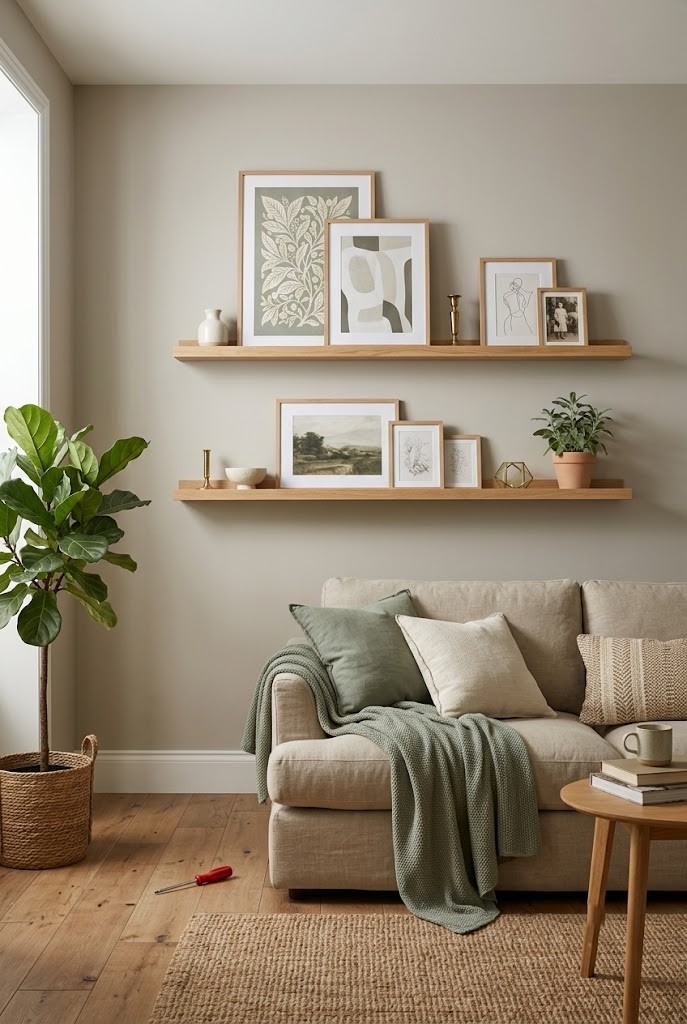
Floating picture ledges mounted with two screws each hold a rotating display and read as a built-in feature for a handful of fillable holes. Install two or three slim ledges in a stacked column or a wide row, each anchored with a couple of small screws into drywall anchors, then lean art, plants, and objects along them. Because you lean rather than hang each piece, you restyle constantly without new holes. Two screws per ledge means far fewer holes than hanging a dozen frames individually. Keep the heavier items near the ledge's screw points, not floating at the unsupported ends. At move-out, pull the anchors, spackle the small holes, and dab paint to match.
24. One oversized mirror on a single anchor
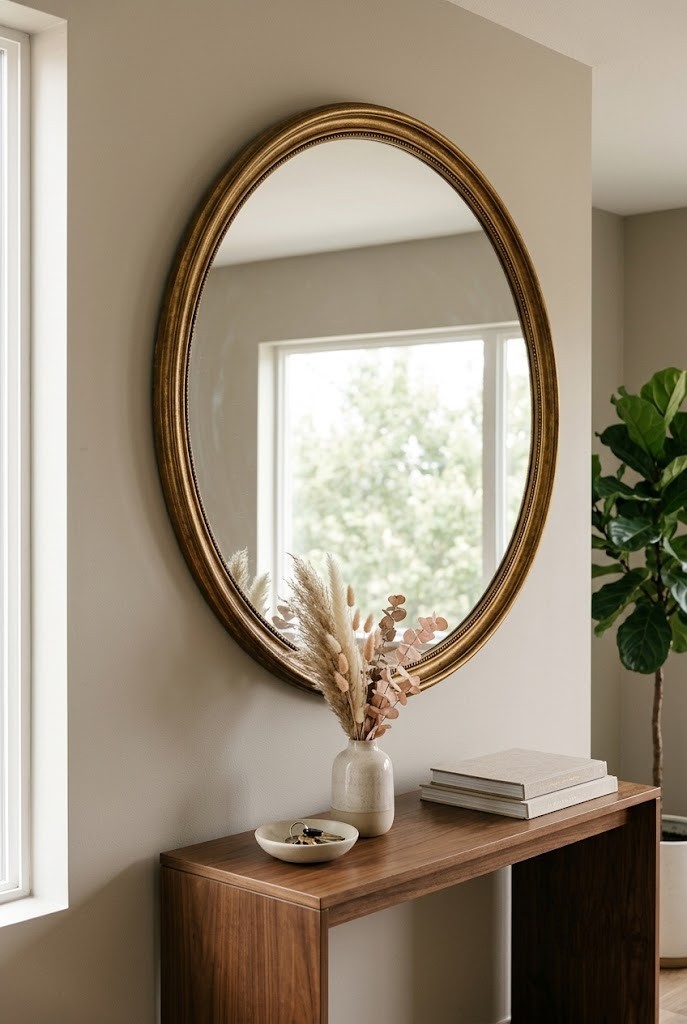
A single oversized mirror or clock on one solid anchor turns a bare wall into a focal point for exactly one hole. Pick one large piece, around 3 to 4 feet, and hang it centered above the sofa or console using one heavy-duty anchor rated for its weight. A big mirror does the light-bouncing job of the leaning mirrors in idea 5 but sits flush and permanent-looking. One anchor hole, properly filled, is the smallest possible move-out footprint for a real wall statement. Center the piece so its middle lands at roughly eye level when you're seated. Check the anchor rating against the actual weight, since a dropped mirror damages far more than a nail hole ever would.
Final Thoughts
The safest accent wall is the one that matches your lease, not the prettiest photo. If your walls are textured, lean toward the zero-contact and light-hardware ideas and skip anything adhesive that hasn't passed a week-long corner test. When you're ready to cozy up a small apartment for fall, layer warm textures on top of whatever wall you choose. And if the whole room still needs sorting, a zero-drill apartment layout handles the furniture side. Save this to Pinterest so it's with you on setup day and pack-out day both.
Frequently Asked Questions
Does peel-and-stick wallpaper come off clean from apartment walls?
Usually yes on smooth drywall, but not reliably on textured walls. Flat walls release the paper cleanly, while orange-peel or knockdown texture lets the adhesive grip unevenly and can lift paint or leave glue in the low spots on removal. Always test one strip in a hidden corner for a week before covering a whole wall.
What accent wall ideas leave zero holes for renters?
Zero-contact looks leave no holes at all: floor-leaning art and mirrors, freestanding slat or folding screens, curtain panels on a tension rod, styled tall shelving, and pegboard panels on stands. None of these touch the wall with adhesive or nails, so there's nothing to patch, test, or explain at your move-out inspection.
Will a landlord deduct my deposit for small nail holes?
Usually not for a few small, filled nail holes, which most leases treat as normal wear. Problems start with many holes, large anchors, or holes left unfilled. Fill each with lightweight spackle, sand it smooth, and dab matching paint. Keep before-and-after photos so you can show the wall was returned clean.
How do I put an accent wall on textured drywall without damage?
Skip adhesive products and use freestanding or draped ideas instead. Textured drywall fights peel-and-stick, so lean art or mirrors, stand a slat divider or folding screen, or hang fabric on a tension rod. If you want pattern on the wall itself, fabric applied with liquid starch flexes into the texture and peels off clean.