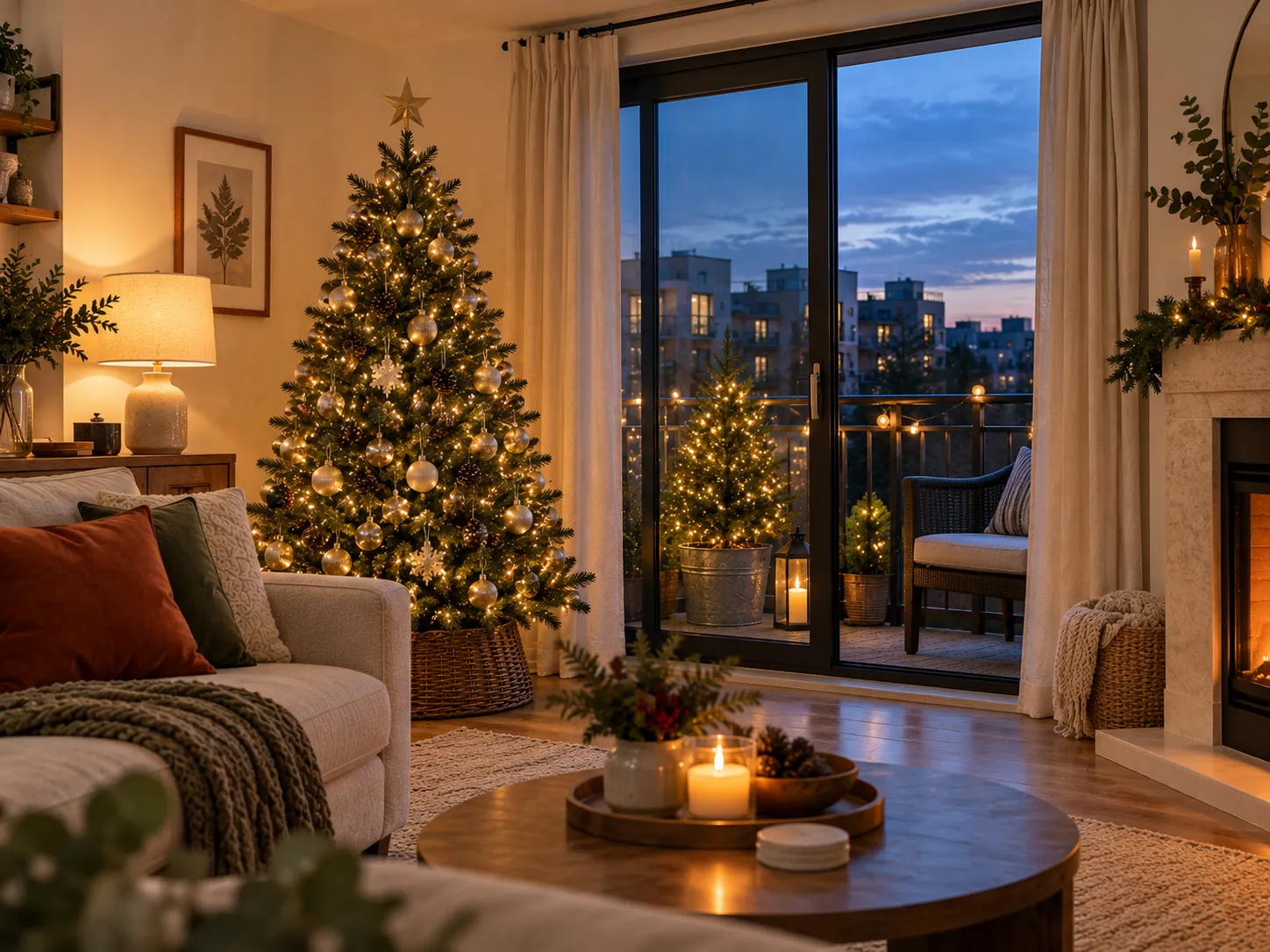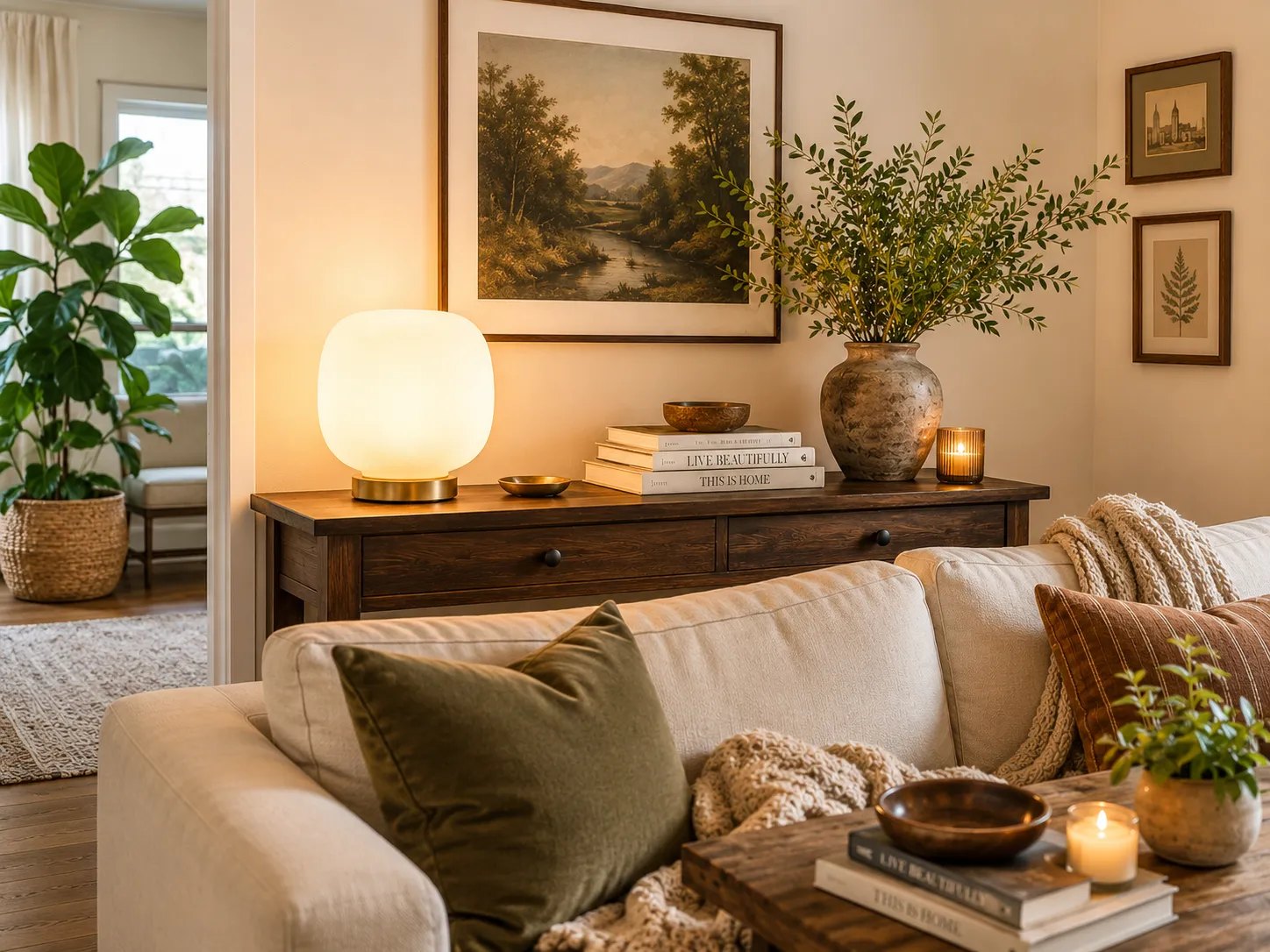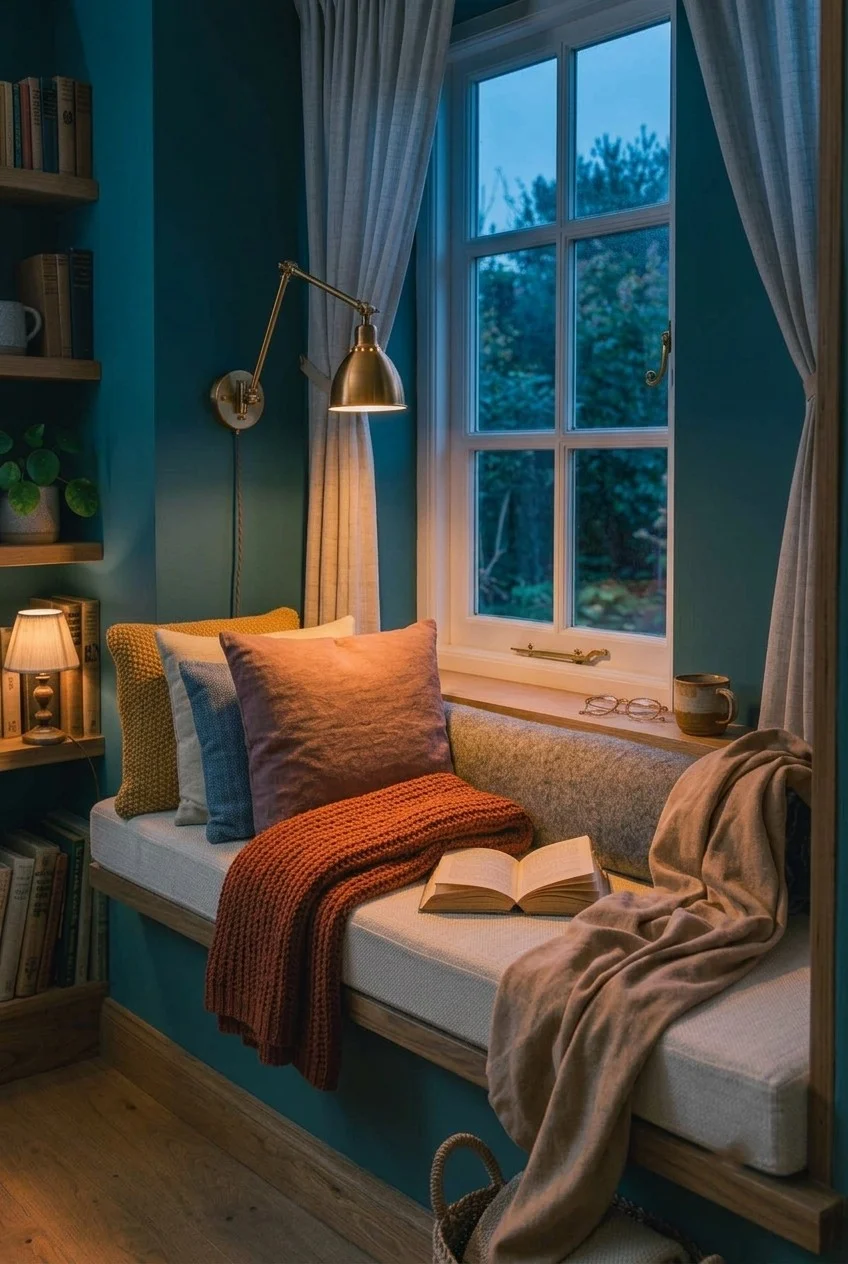
Cozy fall window seat ideas usually stop at plaid and a pumpkin, and skip the reasons the nook actually goes unused once the weather turns. This post is about the fall-specific problems most guides ignore: cold glass that makes the seat too chilly to sit on, condensation that soaks the cushion, and the dead 4pm light that leaves the nook gloomy by dinner. Everything here assumes you already have the bench or seat and want to restyle it this weekend, not build one from scratch. I tested each idea by sitting in the nook for an hour on a cold October evening and noting what failed. Save this to Pinterest so you can work through it one layer at a time.
1. A Dense Wool-Topped Seat Cushion That Blocks the Cold Glass
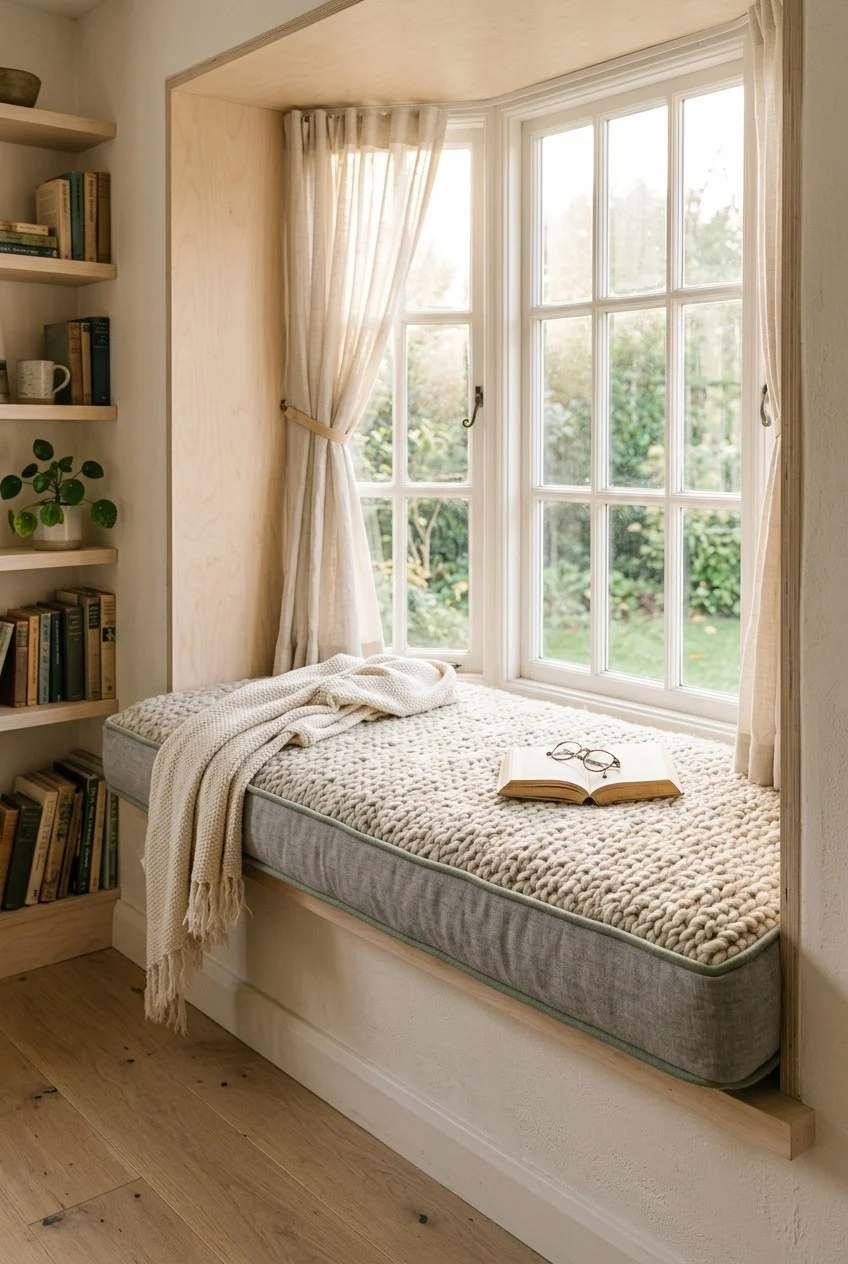
The seat cushion is the one layer that decides whether the nook gets used in fall, so start with a high-density foam base at least 3 inches thick topped with wool. Thin patio-style pads let cold from the glass pass straight into you within ten minutes of sitting. Foam rated around 1.8 density holds its shape under an hour of sitting; anything softer flattens and you feel the hard seat beneath. Wool on top traps a little warmth the way a rug does underfoot. If your existing pad is thin, you do not need to replace it: add a 1-inch wool topper over it and re-cover. Measure the seat before buying foam, since nooks are rarely a standard cushion size.
2. A Hidden Moisture Barrier So Condensation Never Soaks the Cushion
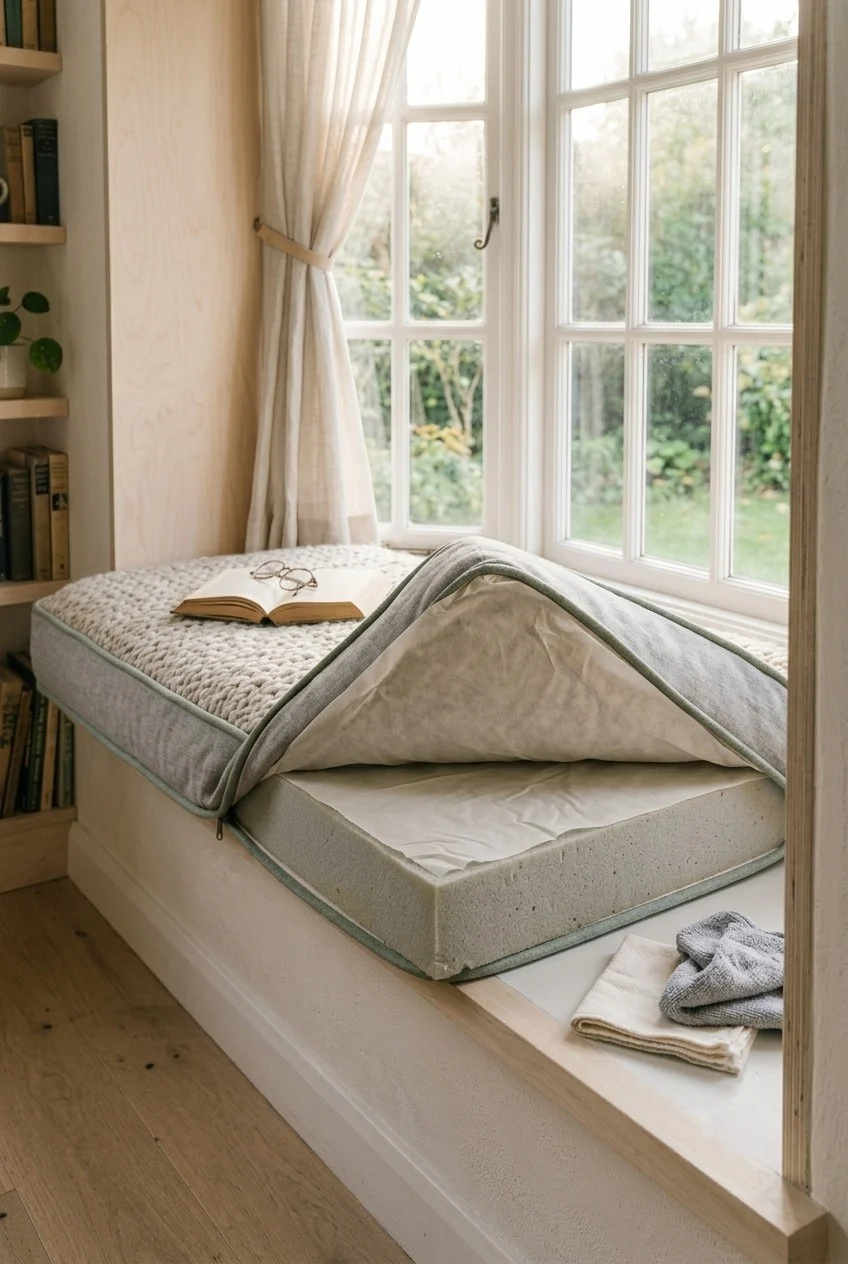
Condensation from cold glass is what actually ruins a window seat cushion, so slip a waterproof mattress-protector layer between the foam and the cover before you style anything on top. Cold panes sweat overnight, the water runs down to the sill, and the cushion edge nearest the glass stays damp for days. A thin PU-backed barrier costs little and pulls off for washing. Leave a finger-width air gap between the cushion back and the window instead of jamming it flush, because trapped air is what lets moisture sit. Check the underside once in October; if it feels cool and damp, the barrier is doing its job and the foam below stays dry. Skip this and you are drying a cushion all season.
3. Getting the Seat Depth Right So You Can Sit an Hour, Not Ten Minutes
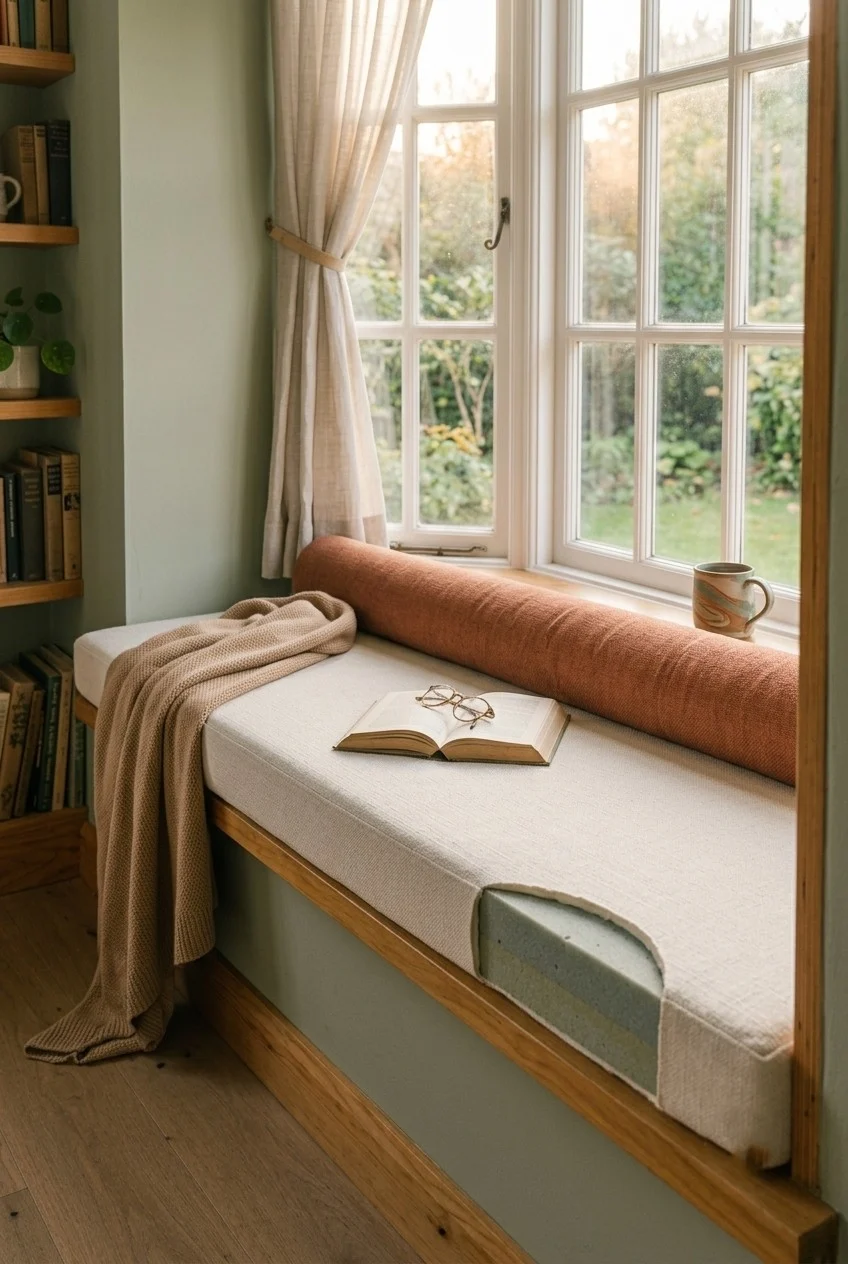
Seat depth decides whether the nook is a real reading spot or a photo prop, and 18-20 inches from front edge to wall lets an adult sit back with knees supported. Shallower than 16 inches and you perch, then shift, then leave. If the bench is deep, close the extra with a firm bolster along the back rather than more soft pillows, which just swallow you and go cold. Firmness matters as much as depth: a base you sink into presses you against the cold wall behind. I sat in three versions on an October evening, and the one I stayed in for the full hour was firm and 19 inches deep. Fix depth before you buy a single pillow.
4. One Washable Fall Cover Instead of a Whole Second Cushion
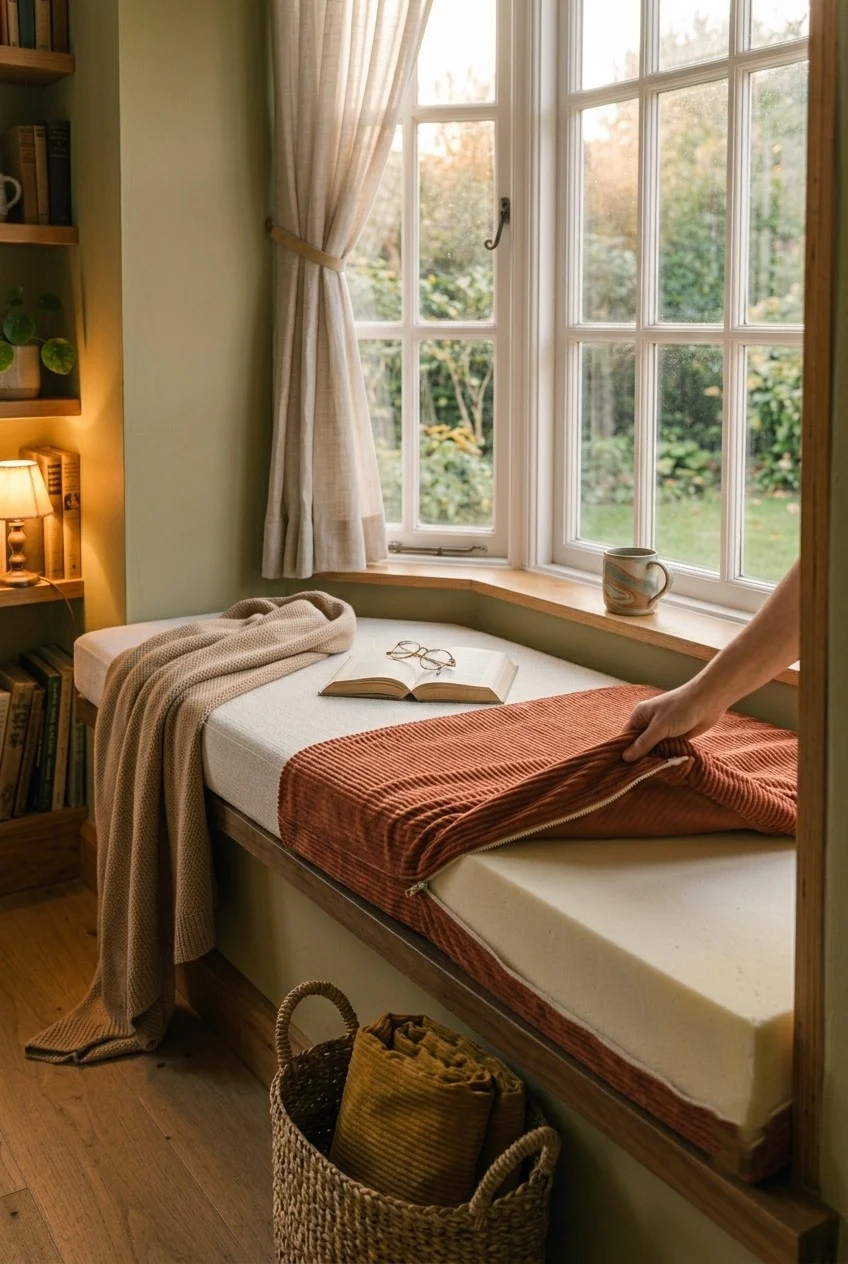
Swapping only the cover turns the summer nook into a fall one without a second cushion, so buy a washable cover in a fall texture and slip it over the same base from idea 1. A zip-off cover in brushed cotton, corduroy or a wool blend reads warm the moment it goes on, and it washes when the barrier below has kept the foam dry. Look for a cover with a full-length zip; the pull-over kind sags and never sits square. Size it to the foam, not the bench, or it bunches at the corners. Keep your summer cover folded in the same basket for the spring swap. Two covers, one cushion, both seasons handled.
5. A Two-Deep Pillow Stack That Doubles as a Back Barrier
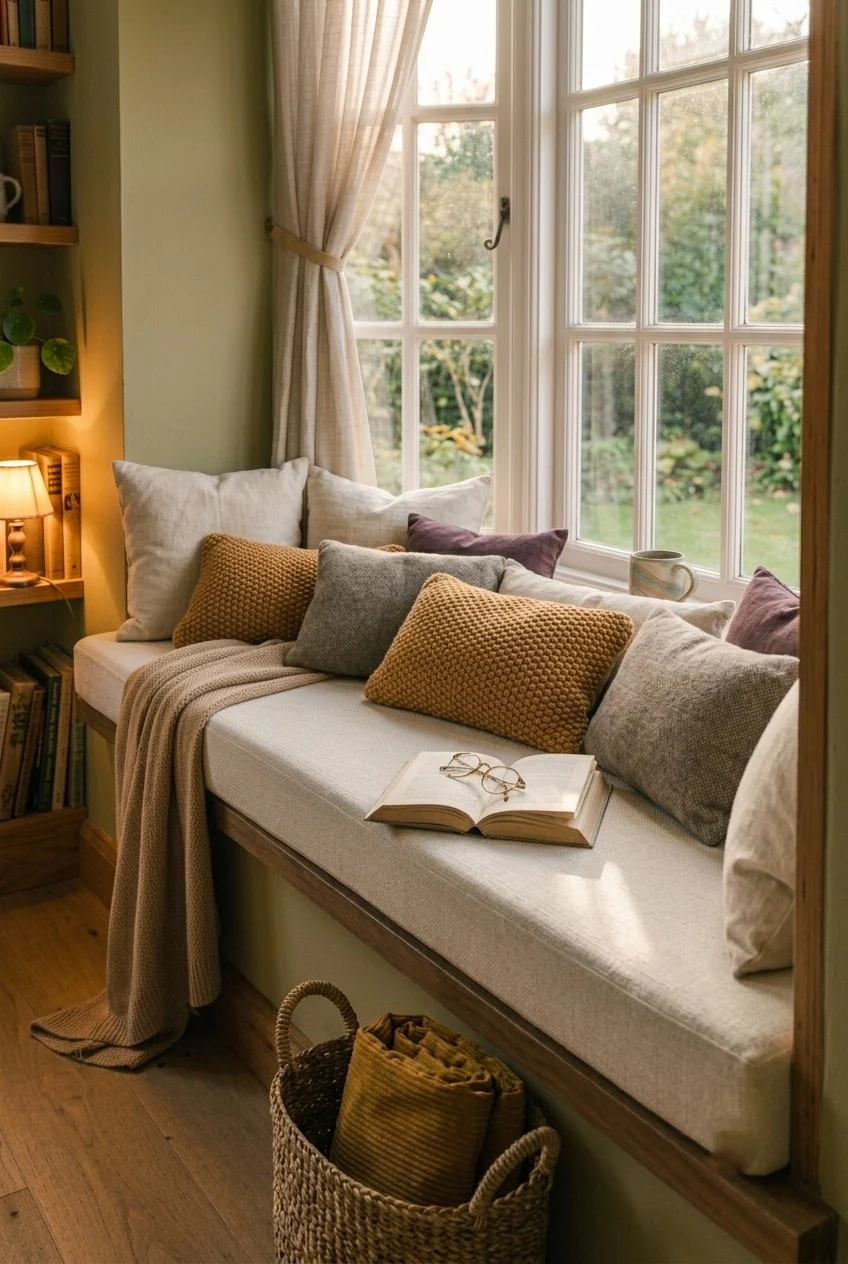
Build the pillow layer to do a job, not just fill space: two pillows deep against the window turns the cold pane into a padded backrest you can actually lean on. Put the firmest, plainest pillow at the back for support and a softer textured one in front for the look. Mixing pile heights reads richer than matching covers; a flat wool weave behind a chunky knit gives depth without buying a set. Keep the stack to a height you can still sit under, roughly two-thirds of the window's lower sash, so it frames the view instead of blocking it. This back barrier is why the nook stops feeling cold at shoulder height.
6. How Many Pillows a Narrow Nook Can Take Before You Lose the Seat
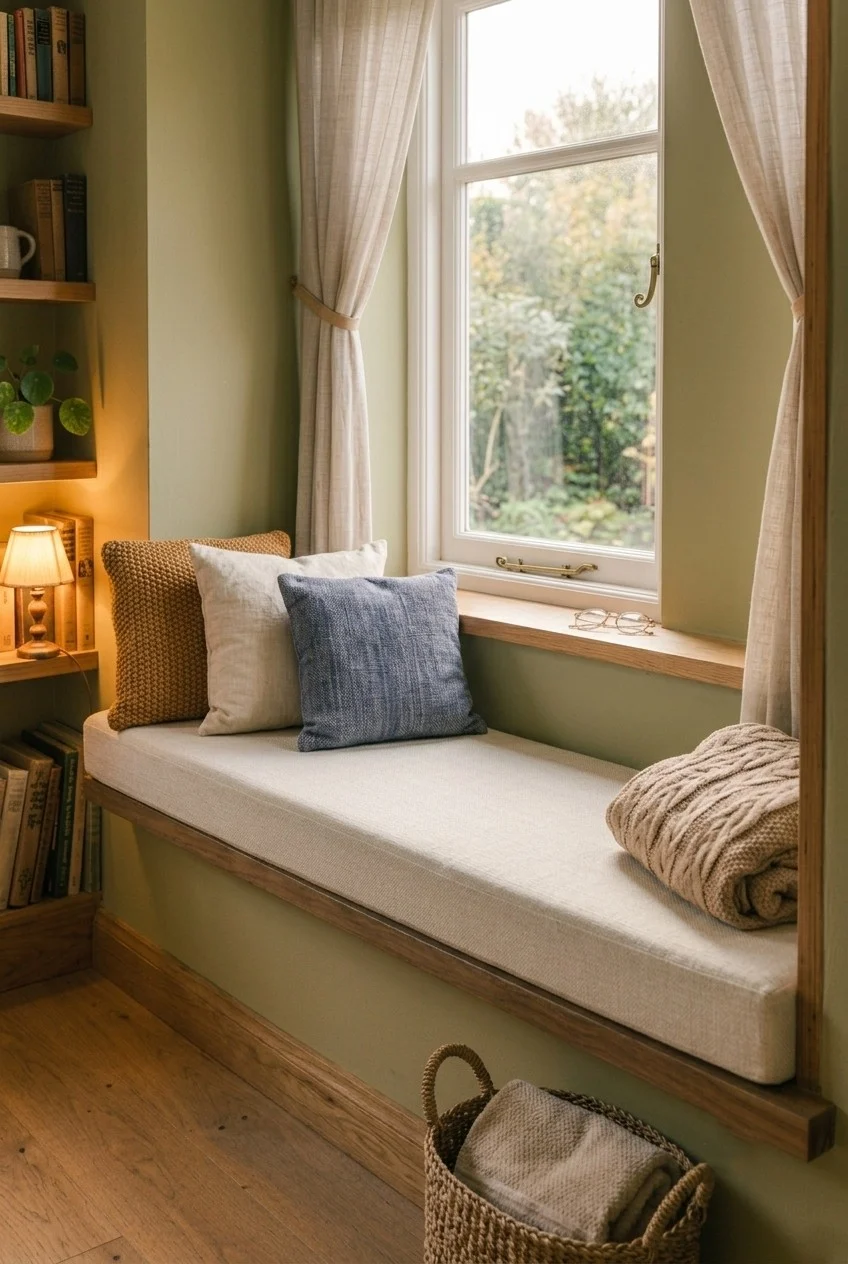
Count the pillows against the seat you have left to sit on: a nook under 40 inches wide holds three pillows before there is nowhere to put a person. Every pillow you add is seat you subtract, and the most common fail is a beautiful, unusable pile you move to the floor every time you sit. Anchor one at each end and one lumbar in the middle of your back, then stop. If you want more texture, go taller at the ends rather than wider across the seat. Place the ones you lean on where your spine actually lands, not centered for the camera. A nook is for sitting first; the styling has to survive a real evening in it.
7. Mixing Pillows You Own With Two New Fall Covers
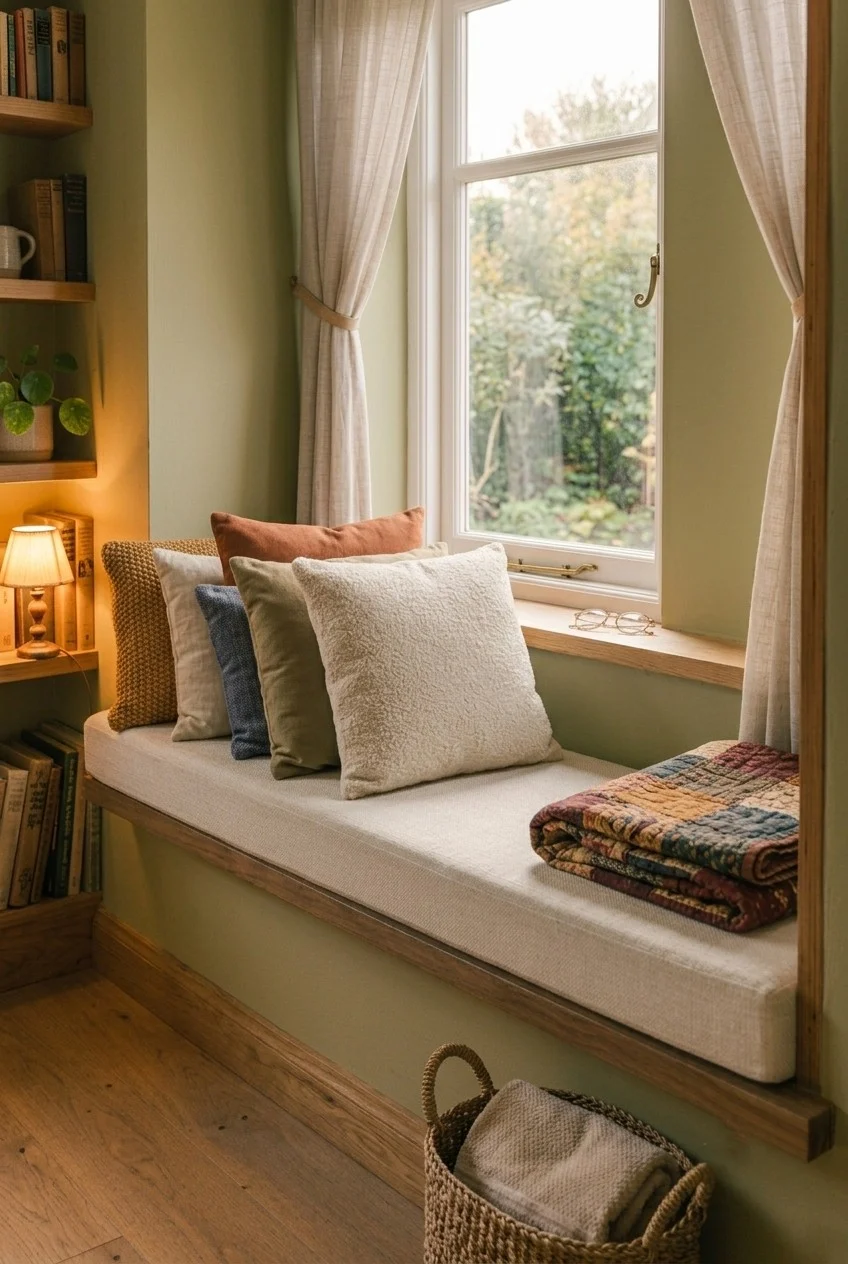
Reuse the pillow inserts you already have and change only the covers, which is how the stack in idea 5 turns autumn for the price of two zip covers. Your summer inserts do not know the season; a $12-18 cover in wool, boucle or brushed cotton over an existing insert reads fully fall. Buy covers in one shared undertone so mismatched inserts still look intentional together. Standard 18-inch and 20-inch covers fit most inserts, but measure yours, since throw-pillow sizing drifts by brand. Keep the summer covers in a labeled bag for the reverse swap in spring. You are buying fabric, not a second pile of pillows, and the nook still looks new.
8. A Chunky Knit Throw Heavy Enough to Actually Feel Warm
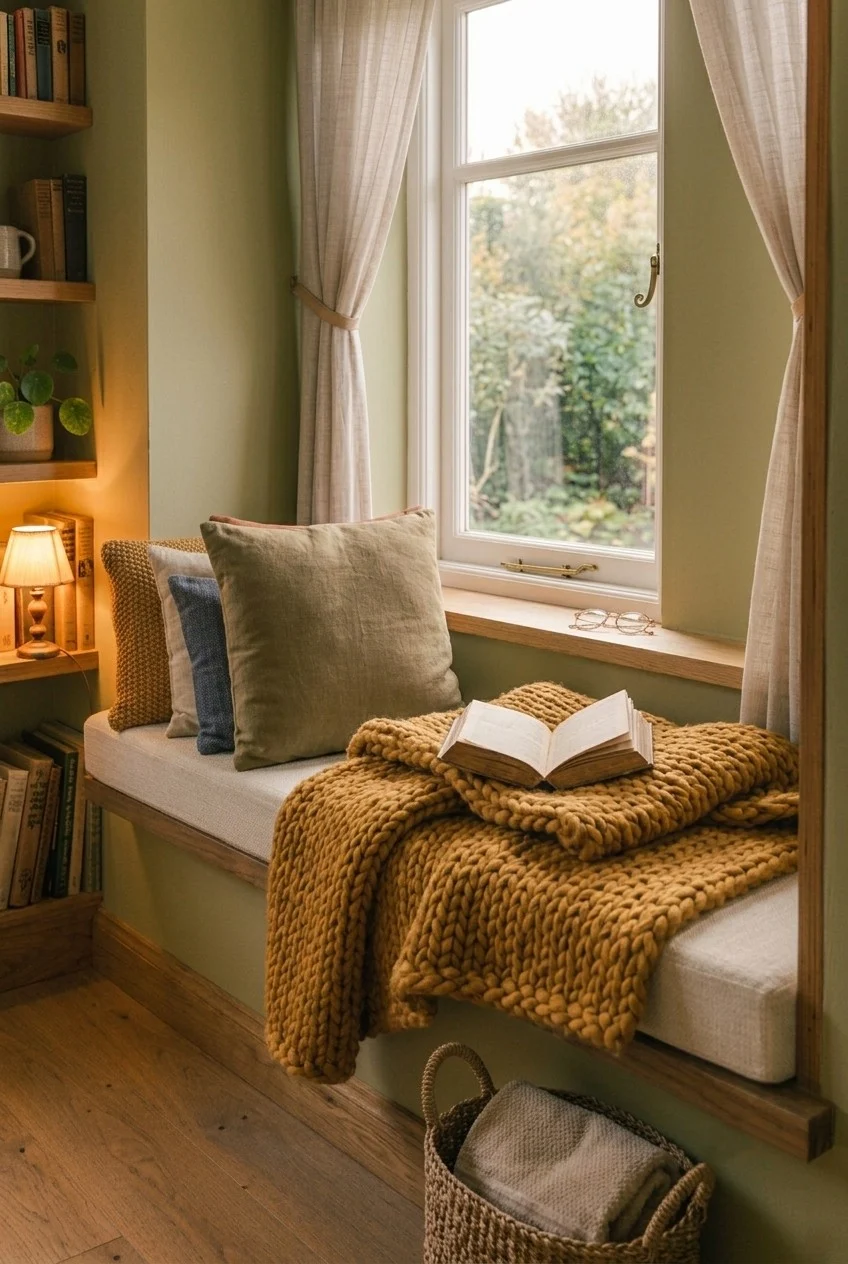
Weight is what makes a throw work in a cold nook, so choose a chunky knit or wool throw around 4-6 pounds rather than a thin decorative one that only looks warm. A featherweight cotton throw photographs well and does nothing at 6pm when the glass goes cold. Wool and heavy acrylic-wool blends hold heat, while pure decorative chenille does not. Keep it within arm's reach folded over one end of the seat, not draped where it slides off the moment you move. A big knit also fills a wide nook visually so the seat does not read empty. Buy one you will genuinely pull over your legs, because in fall you will.
9. Folding a Wool Throw Against the Window as a Draft Barrier
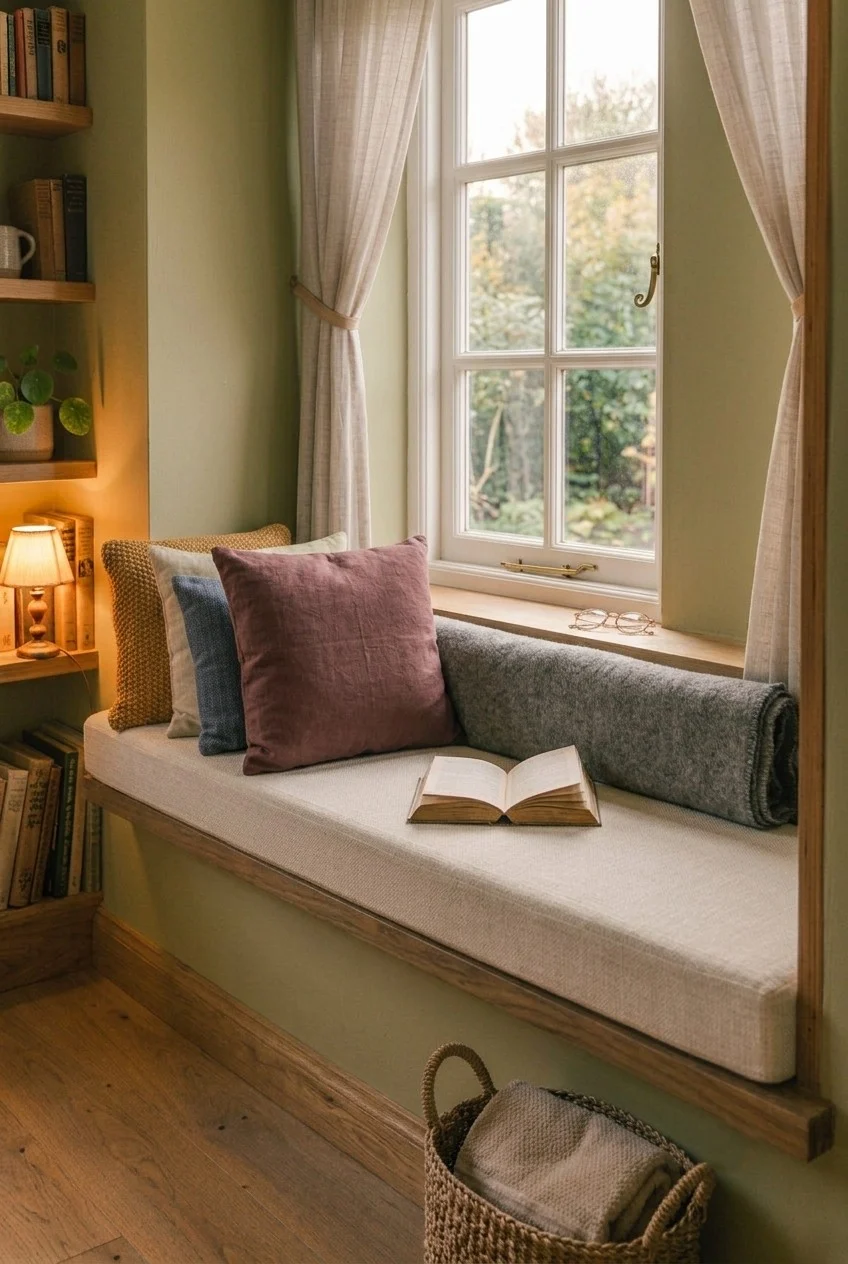
A folded wool throw stood along the window side of the seat blocks the draft that the heavier throw in idea 8 handles only on your lap. Cold does not just come up through the cushion; it rolls off the glass at your back and shoulders. Fold a wool throw in thirds and stand it against the lower window frame behind the pillows, where it works like a soft draft stopper without looking like one. Wool beats cotton here because it insulates even when the air is damp. On single-pane or old windows this is the difference between a nook you use in November and one you abandon. Swap it out for the lighter option in idea 10 once the worst cold passes.
10. A Lighter Second Throw for the 4pm-to-Evening Temperature Drop
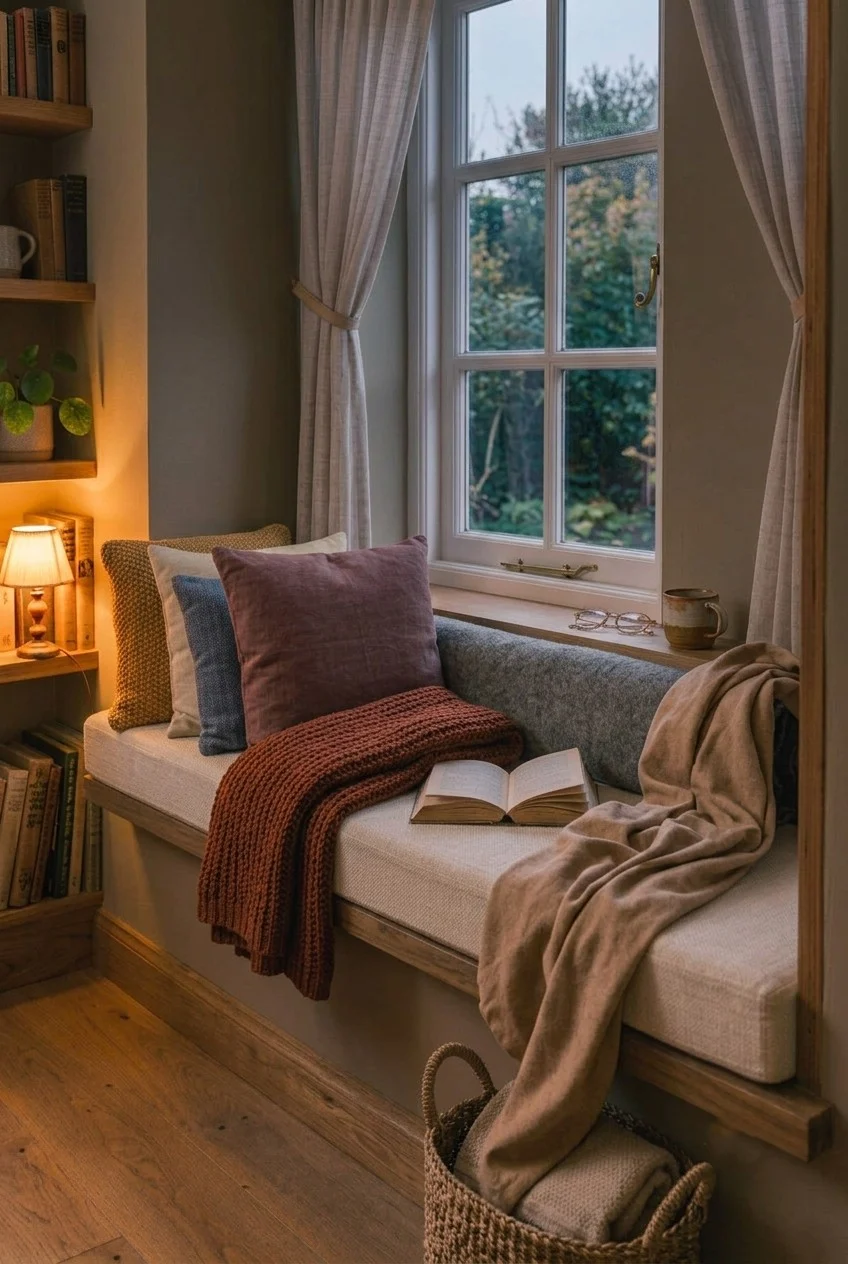
Keep a second, lighter throw within reach for the exact hour the nook cools, because the heavy wool from idea 9 is too warm at 4pm and not enough at 8pm on its own. A mid-weight cotton-wool or brushed flannel throw covers the in-between: you pull it over your knees when the sun drops and add the heavy one later. Two throws of different weights beat one that is wrong half the day. Store the lighter one folded over the seat arm and the heavy one in a basket so the nook does not look piled. Different textures between the two also add depth to the seat without another pillow. This is the layer people skip, then wonder why the nook feels off in the evening.
11. A Plug-In Wall Sconce That Lights the Nook With No Wiring
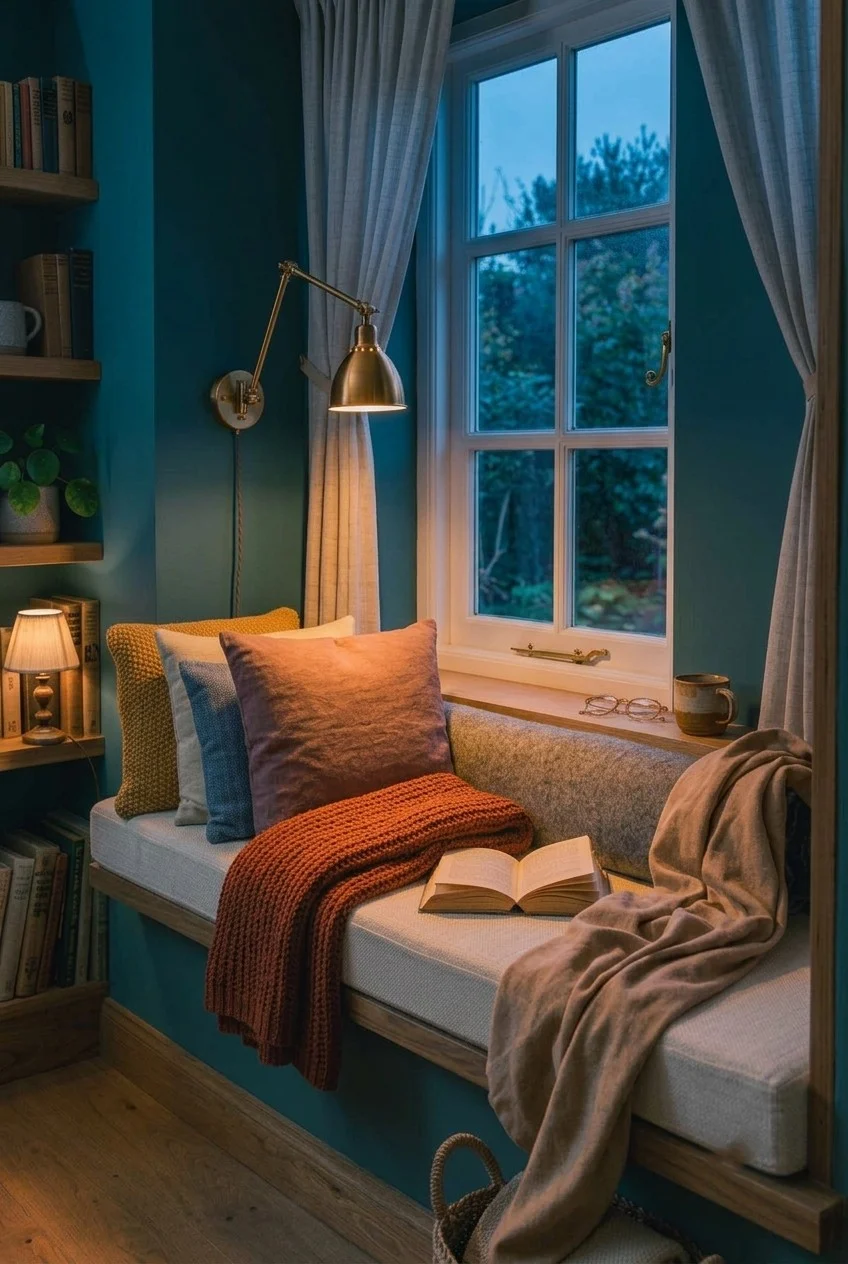
The 4pm light problem is a fixture problem, so mount a plug-in wall sconce beside the seat, which needs no overhead light and no ceiling wiring to fix the gloom. A window gives you nothing after dusk, and most nooks sit far from a lamp, so the seat goes dark first. A plug-in sconce screws to the wall or hangs on a single nail and runs a cord down to the nearest outlet, so renters can take it with them. Mount it 12-18 inches above shoulder height on the wall beside the seat so it lights your book, not your face. Use a warm bulb and, if the cord bothers you, a paintable cord cover. One fixture rescues the whole nook.
12. A Small Warm-Toned Table Lamp Instead of the Cold Overhead
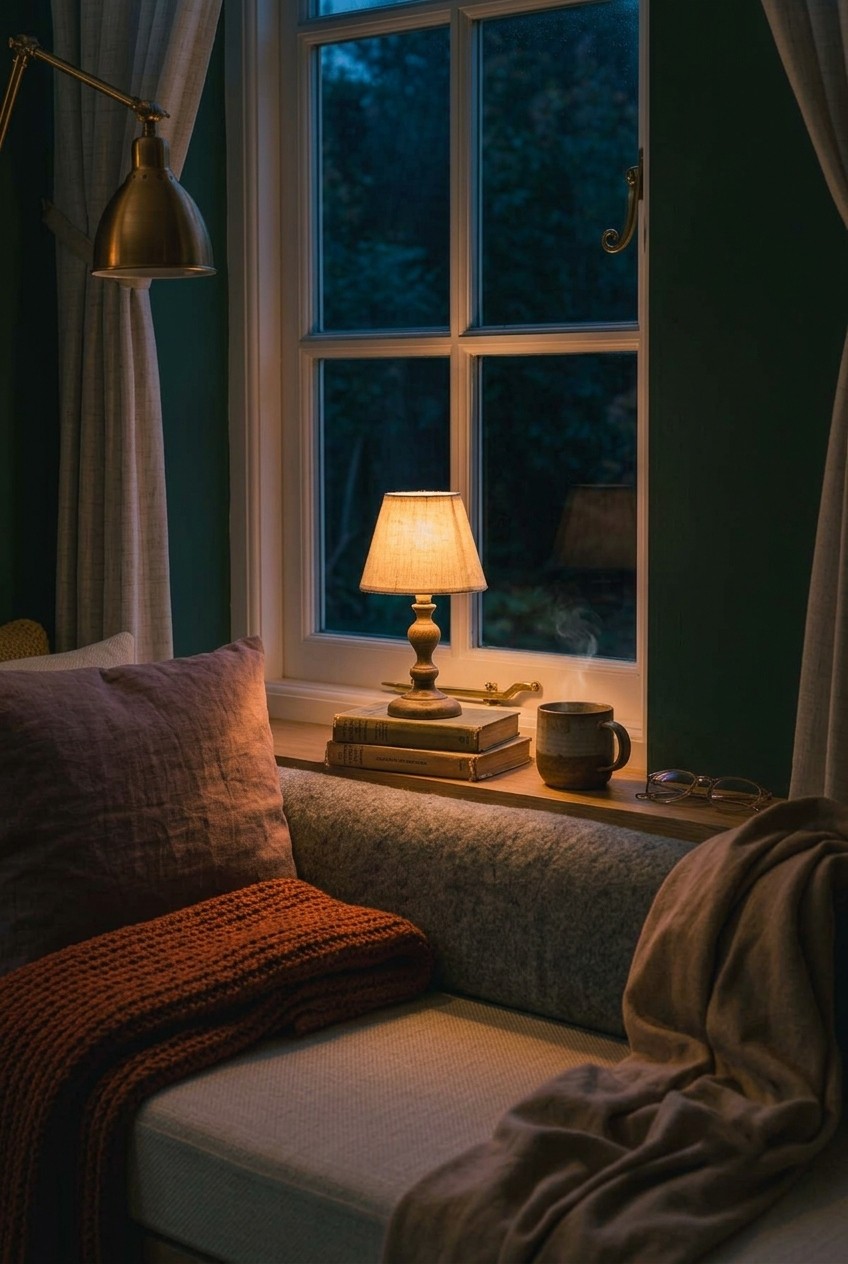
Bulb color decides the mood more than the lamp does, so put a small warm-toned table lamp on the side surface with a 2700K bulb and leave the ceiling light off. A cool white bulb turns a warm nook clinical on dark fall evenings, washing out every warm texture you layered in. Warm light around 2700K makes wool, wood and rust read the way they look at noon. A compact lamp under 15 inches tall fits a narrow ledge and sits at the right height to light a book without glare. Point the shade slightly toward the seat. If the nook has one power point, run the lamp and the sconce from idea 11 off a single warm-dimming smart plug.
13. Putting the Light on the Room Side So You Stop Sitting in Shadow
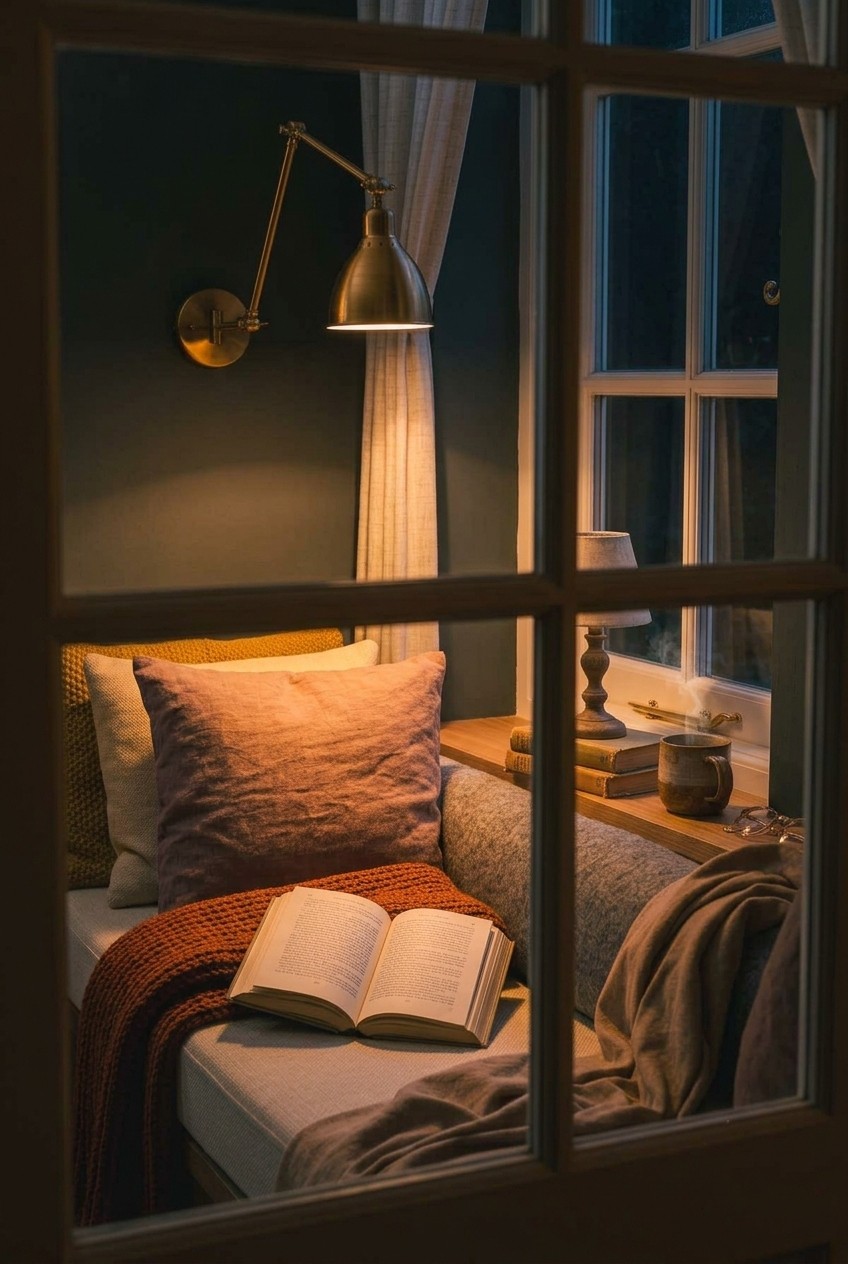
Where you place the light matters as much as the bulb: set it on the room side of the seat, between you and the open room, so the glow lands on your book instead of behind your head. A lamp left on the sill backlights you and leaves the page dark, which is why a well-lit-looking nook still strains your eyes. Think of it as lighting the seat from the direction the window used to, back when there was daylight. The same fix that rescues a dead corner across the room works here: light comes from beside and slightly in front, never from behind the sitter. Combine this placement with the warm bulb from idea 12 and the nook reads intentional after dark.
14. A Rechargeable Picture Light for a Nook With No Outlet Nearby
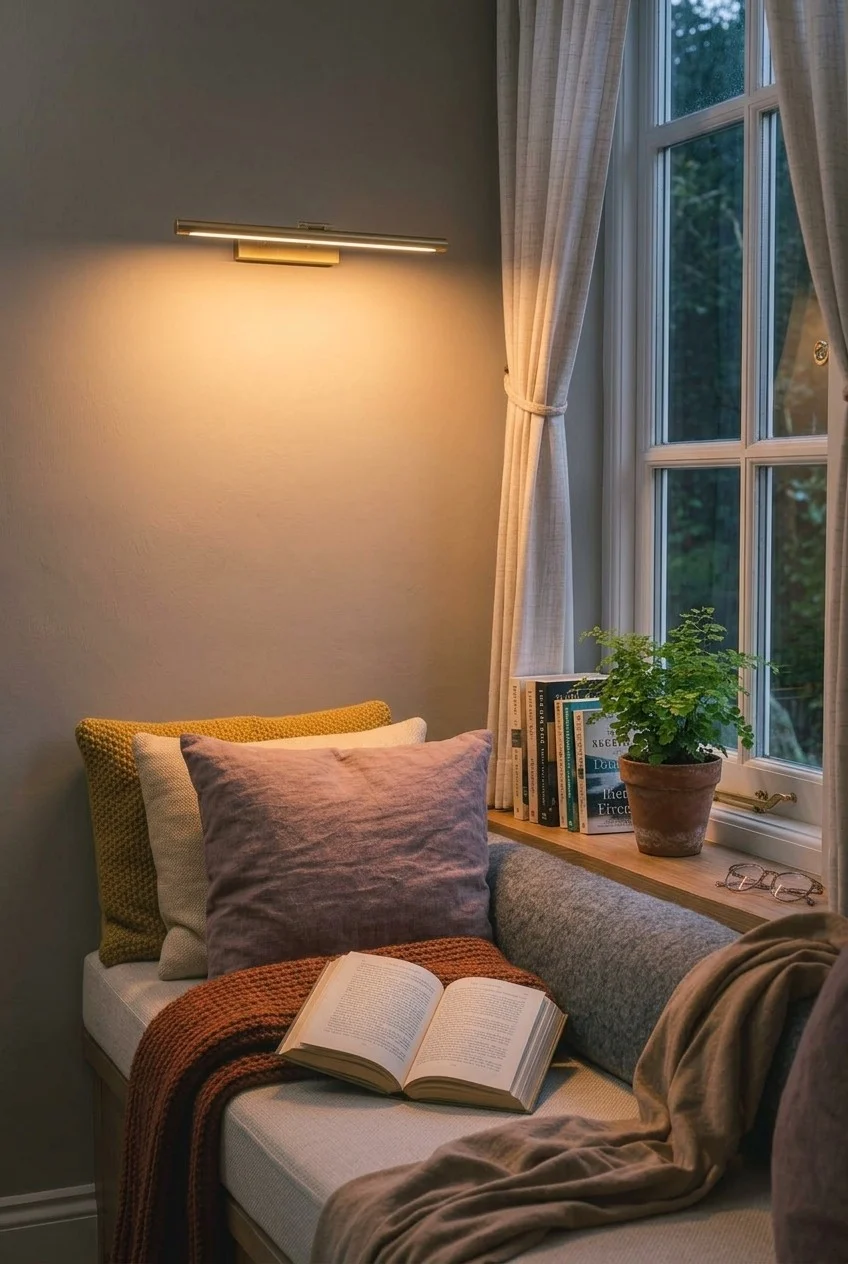
When there is no socket within cord reach, a rechargeable picture light or puck light gives the nook warm light with zero wiring. Older homes often put the prettiest window seat exactly where no outlet is, and a plug-in fixture just leaves a cord trailing across the floor. A magnetic rechargeable bar mounts above or beside the seat and lifts off to charge by USB every week or two. Choose one with a warm setting and a dimmer, since many default to a harsh cool white. Stick-on versions hold on painted wood but not on textured wallpaper, so test the surface first. It will not match a wired fixture for brightness, but for a reading nook that is plenty.
15. A Narrow Side Table Within Arm's Reach for Tea and a Book
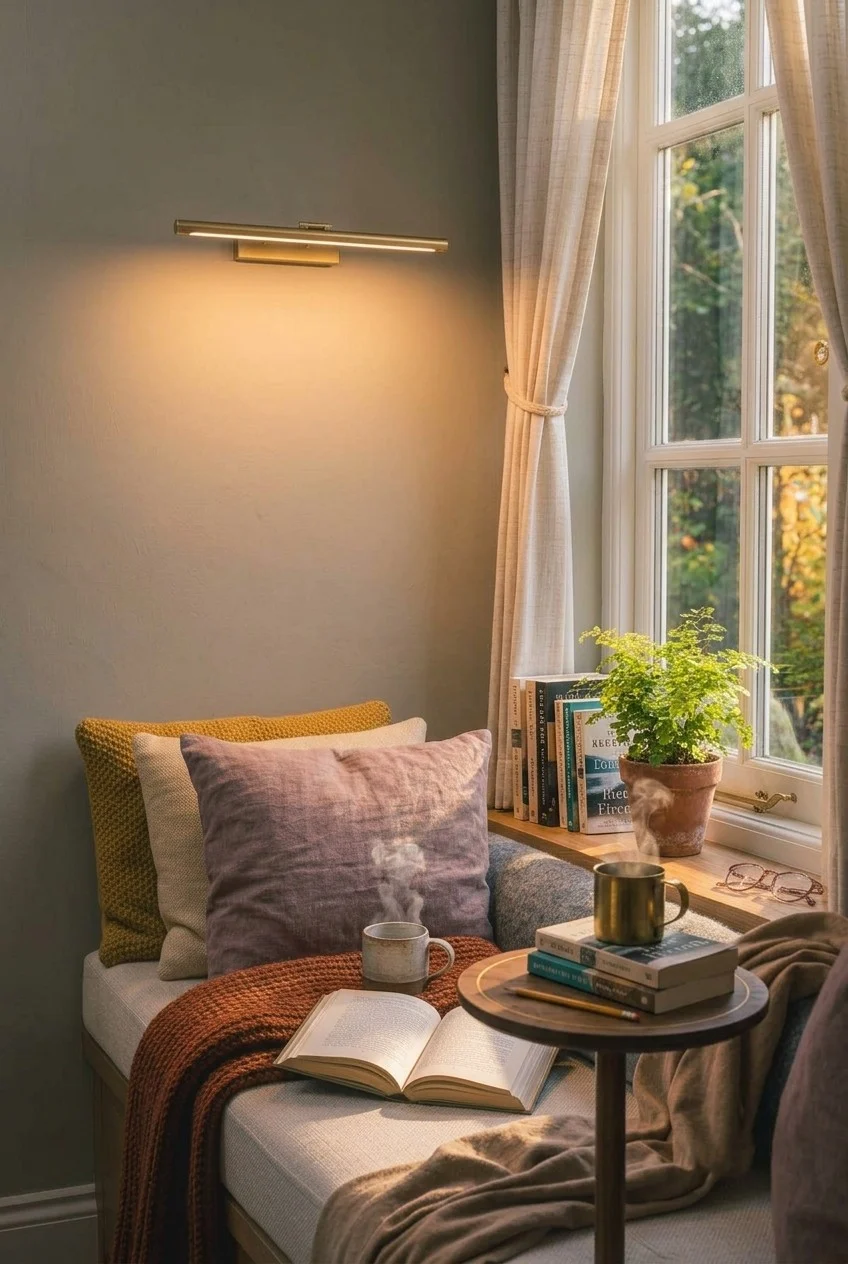
A nook needs somewhere to set a mug, so place a narrow side table or stool within arm's reach of the seat, no wider than 14 inches so it does not block the walk-up. Without a surface you balance tea on the cushion, spill it, and stop using the spot. A small drum table, a stump stool or even a stacked pair of hardback books works if it clears the seat edge and sits at roughly cushion height. Keep it to the open end of the nook, not jammed against the wall where you cannot reach it seated. A tiny surface is the difference between a nook you settle into and one you visit. Match the wood tone to the bench so the small piece reads deliberate.
16. A Wall-Mounted Ledge When There's No Floor Space for a Table
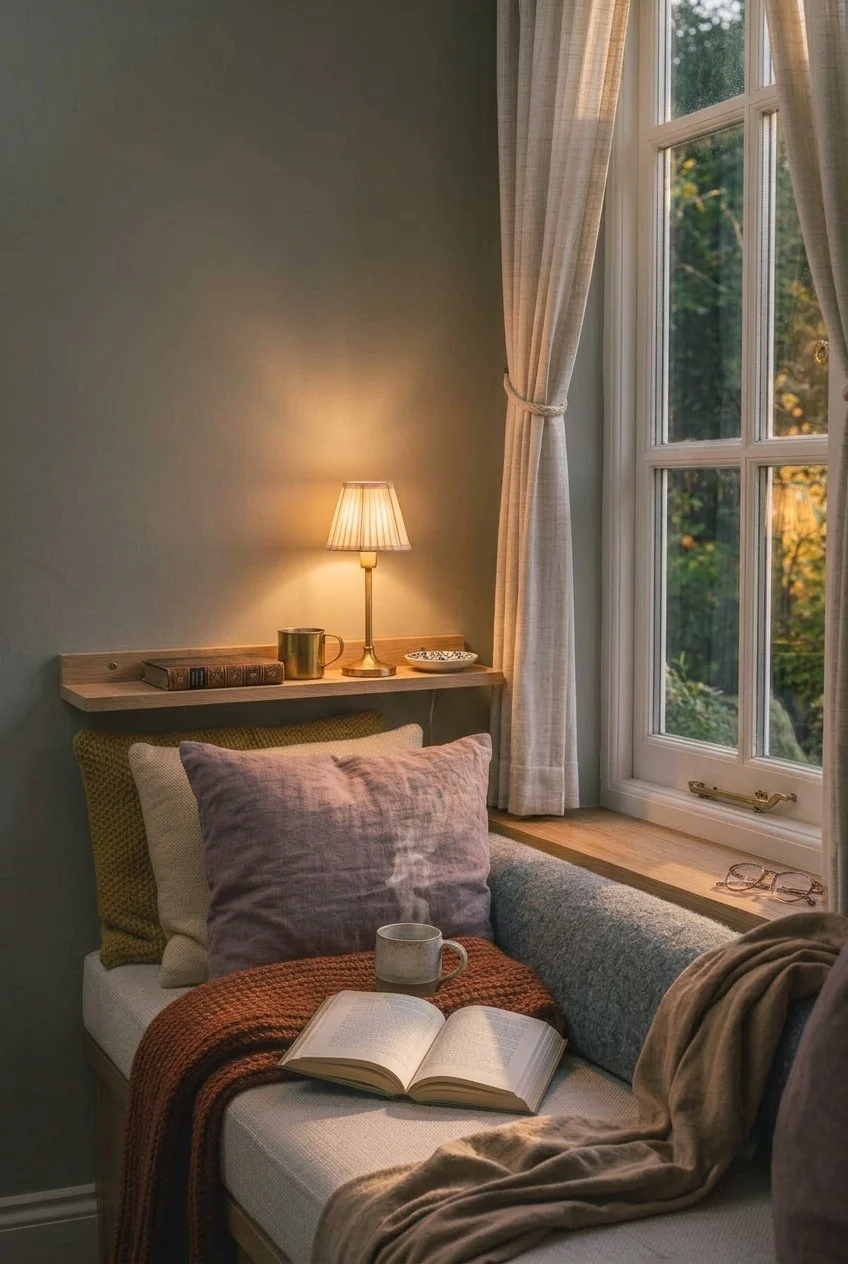
When the nook has no floor to spare, a narrow wall-mounted ledge beside the seat holds a lamp, a mug and a book without taking an inch of standing room. Many window seats sit in tight bays where even a slim stool will not fit, and the walls are the only free space left. A 4-6 inch deep picture ledge screws in with two anchors and carries a surprising amount at seat height. Mount it about 10 inches above the cushion so you can reach it without twisting. For renters, a command-strip ledge holds a light load, though not a heavy lamp. Keep what lives on it to three things so it stays a surface, not a shelf of clutter.
17. A Floor Basket That Hides the Throws You Rotate Through Fall
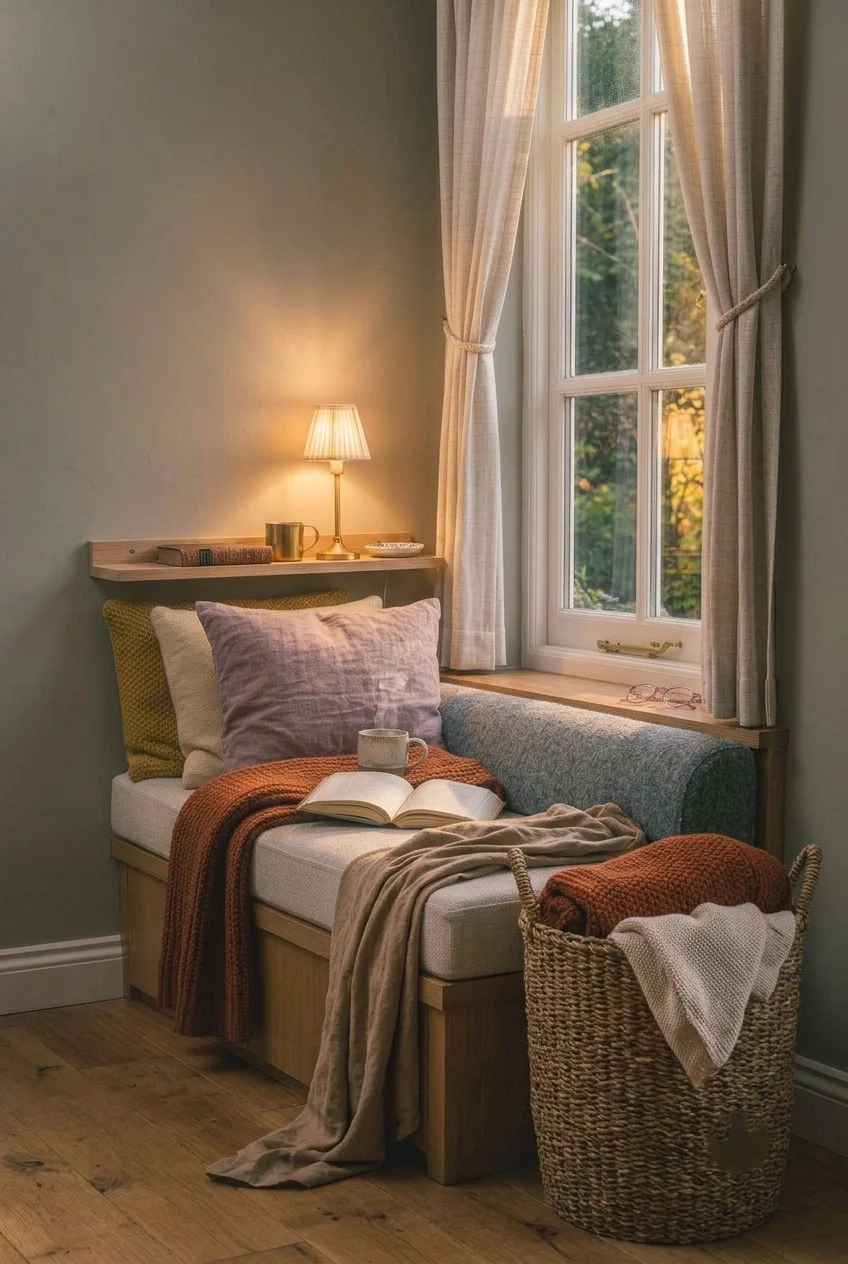
Give the throws a home so the nook never looks piled: a floor basket beside the seat holds the heavy and light throws from idea 10 and keeps the seat clear when you are not in it. Two or three throws draped at once turn a tidy nook into a laundry heap, and folding them away each morning gets old fast. A tall woven basket swallows them and reads as texture in its own right. Size it to sit under the window ledge or beside the open end, roughly knee height, so it is easy to reach seated. It also stores the summer covers off-season. One basket keeps the whole rotation out of sight between uses.
18. A Warm Scent Sized to a Small Nook, Not the Whole Room
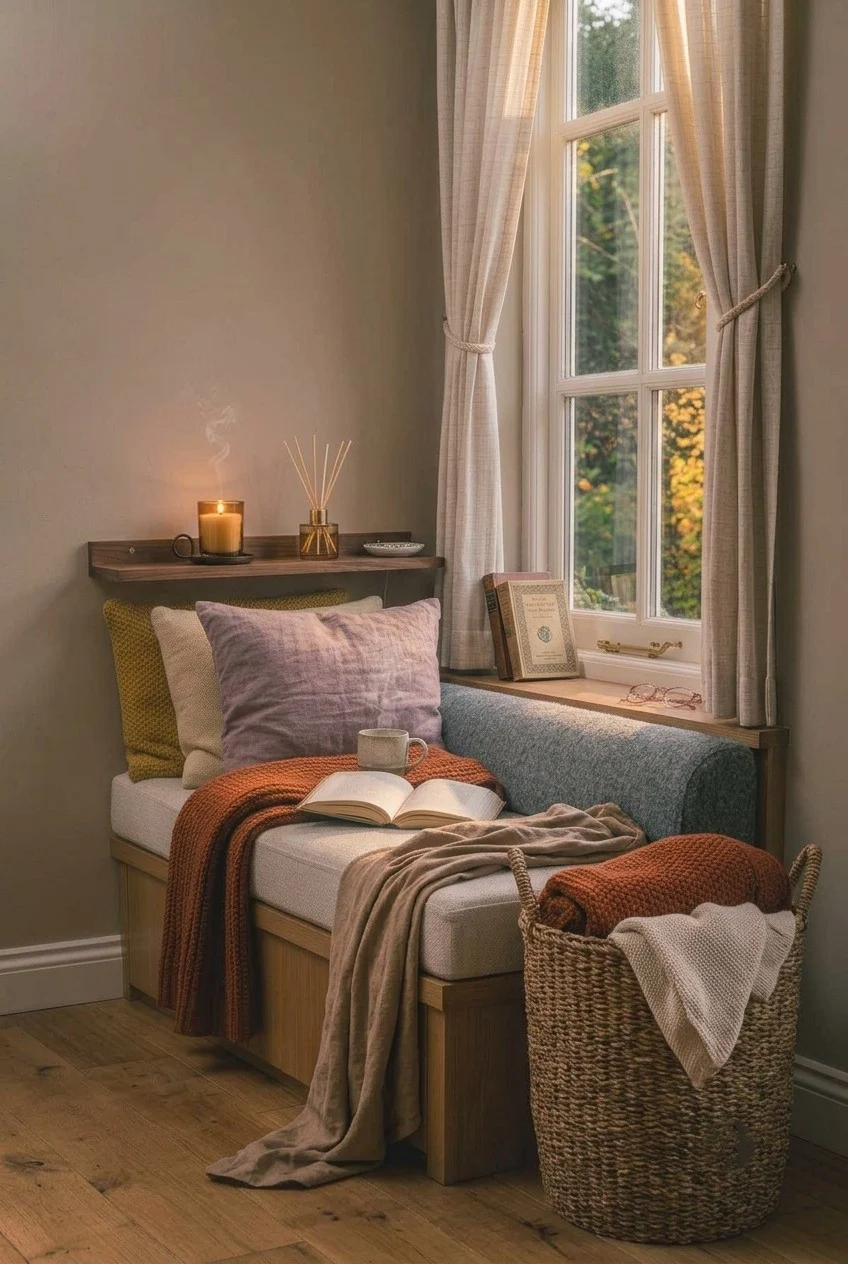
Scent in a nook should be small and close, so use a single small candle or a low-output reed diffuser rather than a big three-wick built for a living room. A nook is a tight pocket of air, and a full-size candle here goes from cozy to cloying in minutes and drives you out. Warm, dry scents suit fall better than sweet ones: cedar, clove, tobacco, dry amber. Keep any open flame well clear of the throws and covers you just layered in, since fabric-heavy nooks are exactly where candles get knocked. A flameless option removes that worry entirely near all that fabric. Light it fifteen minutes before you settle in, then let it fade while you sit.
19. A Few Small Objects That Read Fall Without Tipping Into Clutter
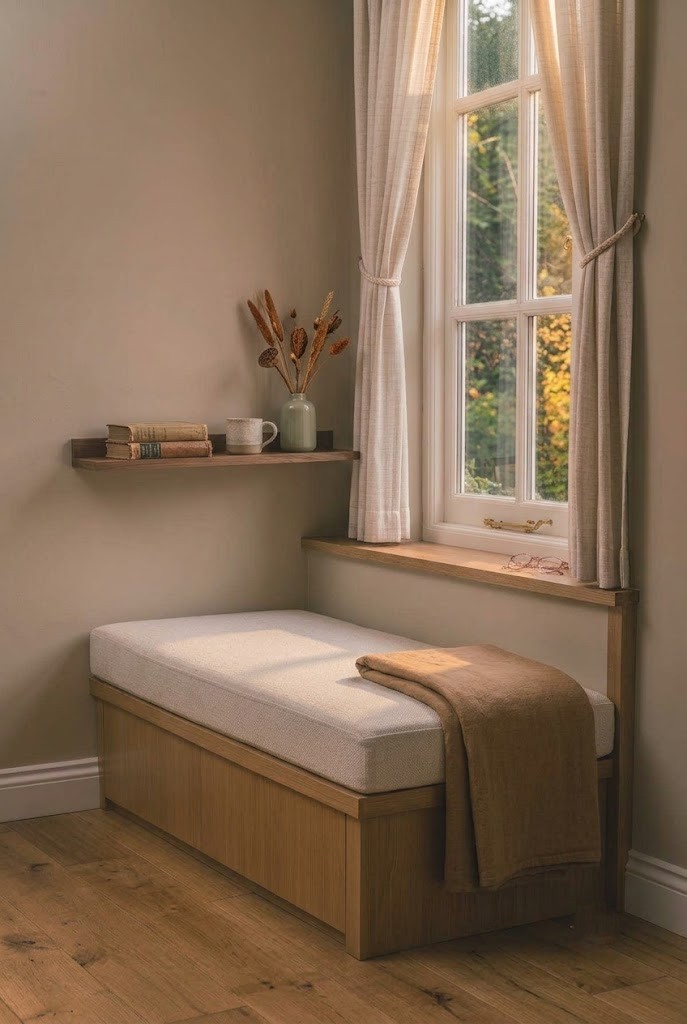
Finish with restraint: three small objects at most, or the nook you built for sitting becomes a shelf you photograph and never use. The tired version stops at a pumpkin and a plaid pillow; a better one uses things you would actually reach for, like a stack of two books, a warm mug and a short sprig of dried seasonal stems in a small vessel. Keep them at the open end or on the ledge, never spread across the seat where they compete with you for space. Dried grasses or a single stem beat plastic gourds and last the whole season. The test is simple: if you have to move an object every time you sit, it does not belong. Sit down, and let the nook prove itself.
Final Thoughts
The nook works when the layers solve real problems first and look good second: insulate against the glass, keep the cushion dry, and put a warm light where the window used to do the job. Swap two covers and a throw instead of a whole new set, and the seat carries the same warmth into the rest of your cozy fall living room. Sit in it for a full evening before you call it done, because that hour tells you what a photo never will. Save this to Pinterest and restyle one layer at a time.
Frequently Asked Questions
How do I stop a window seat from feeling cold in winter?
Insulate the base first: a high-density foam or wool cushion at least 3 inches thick breaks the cold coming off the glass, and a folded wool throw against the window side adds a second barrier. Thin patio-style pads let the chill straight through, which is why the seat feels unusable by evening.
Why does my window seat cushion get damp?
Condensation on cold glass runs down and collects where the cushion meets the sill. Add a moisture-barrier liner under the cover, leave a small air gap at the back so air moves, and choose a washable cover you can pull off and dry. Foam that stays wet grows mildew within a couple of weeks.
How do I light a window seat with no overhead light?
Use a plug-in wall sconce or a small table lamp with a warm 2700K bulb, placed on the room side of the seat so the light falls on your book rather than behind you. A backlit nook stays gloomy at 4pm because the window gives nothing after dusk, no matter how bright outside was.
Can I restyle a summer window seat for fall without buying all new textiles?
Yes. Keep the seat cushion and your existing pillow inserts, then swap only the covers and add one heavier throw. Two washable fall covers and a chunky knit read as a full seasonal change for a fraction of a second textile set. The base stays; only the top layer turns autumn.