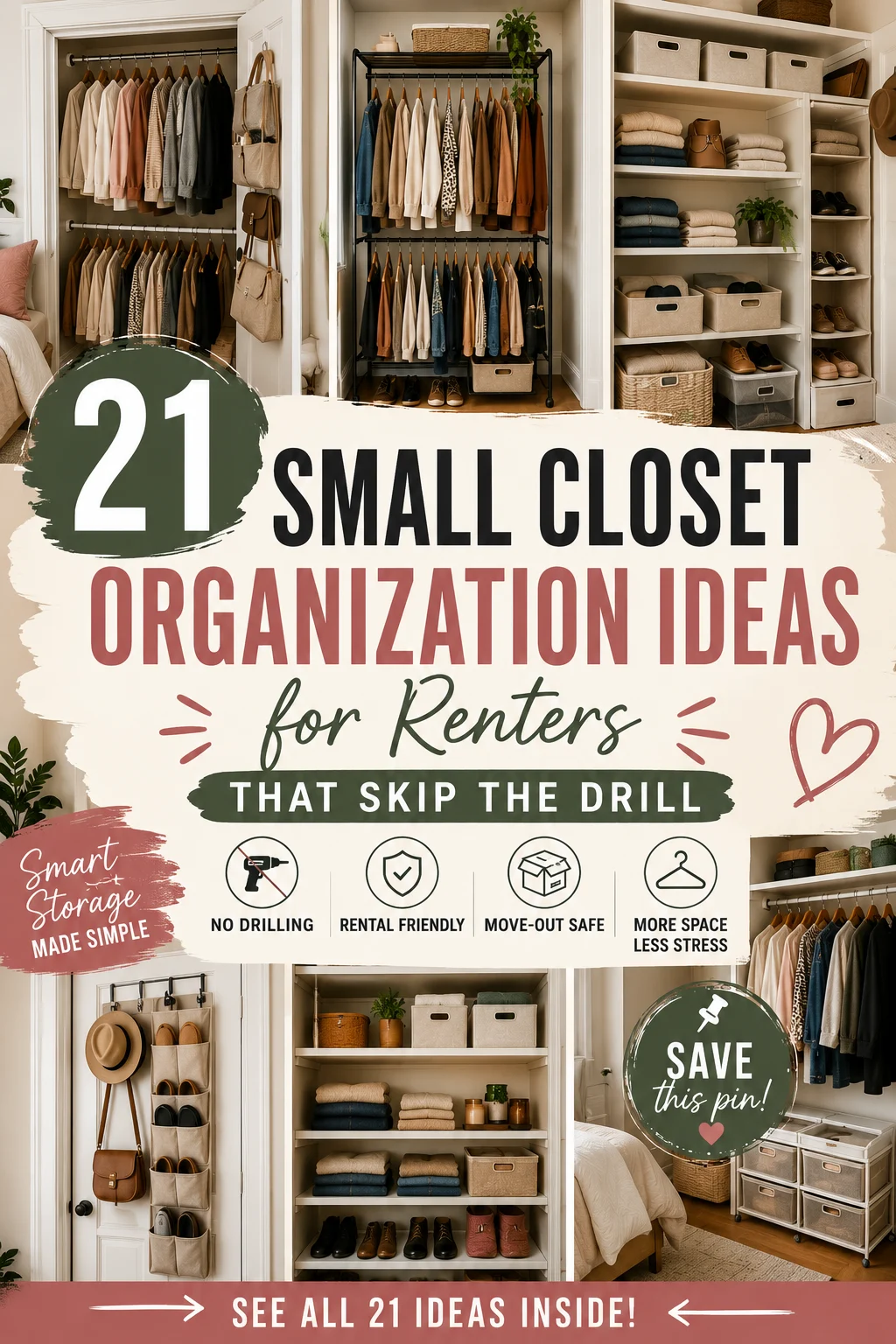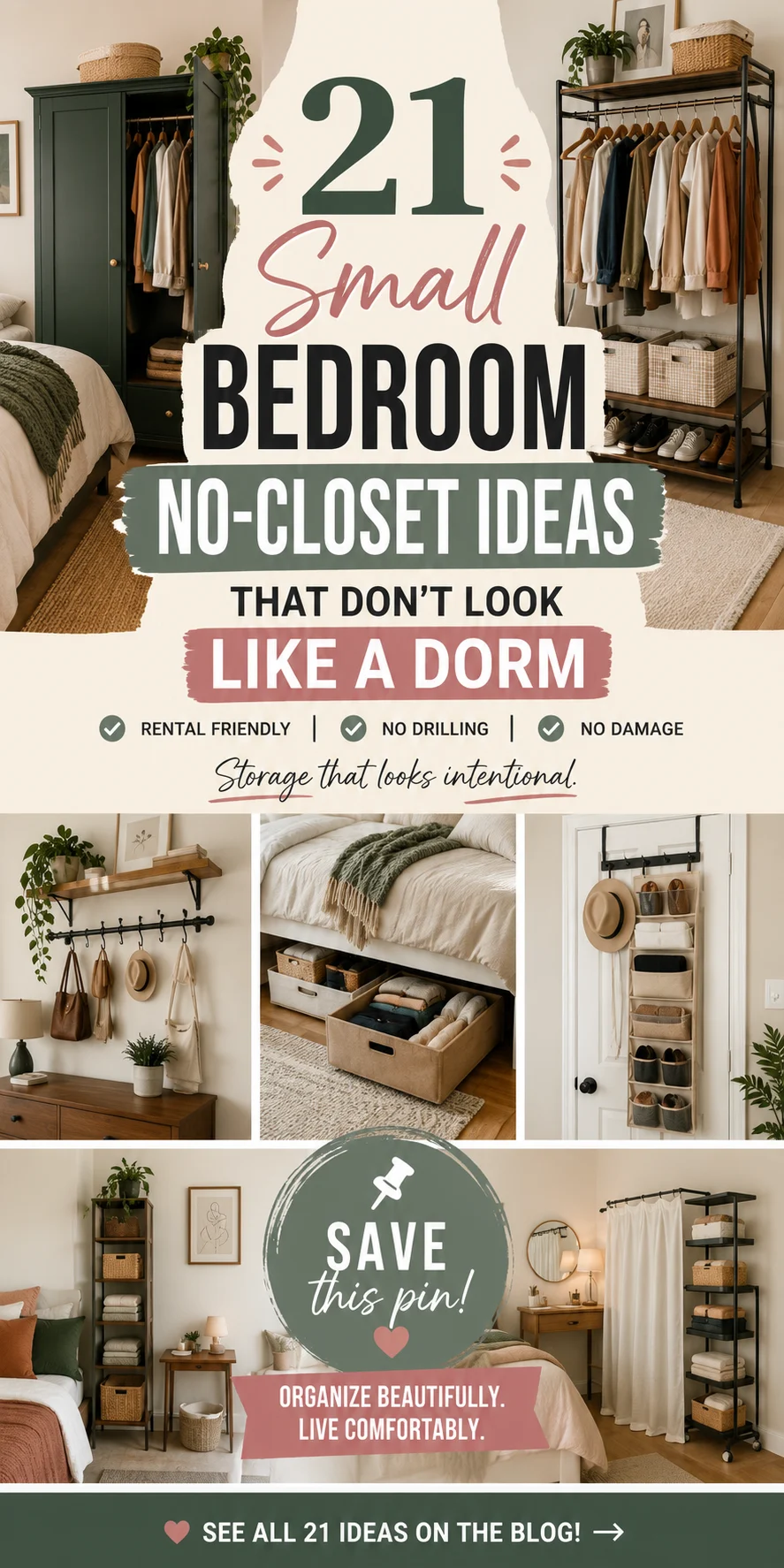
Small bedroom no closet ideas usually mean the same thing online: a rack, a bin, a few hooks, and a room that still reads like a dorm. This post is built to avoid that. Every idea does two jobs—real clothes storage that also looks deliberate, not makeshift. I'm writing as someone who signed a lease on an old apartment with zero closet and a landlord who counts nail holes, so nothing here needs a drill. No anchors, no damage, nothing you can't undo at move-out. The ideas are grouped by zone: freestanding pieces, walls, under-bed, behind the door, and dead corners. Save this to Pinterest so it's there when you're deciding where to start.
1. A Painted Freestanding Wardrobe as the Room's Anchor
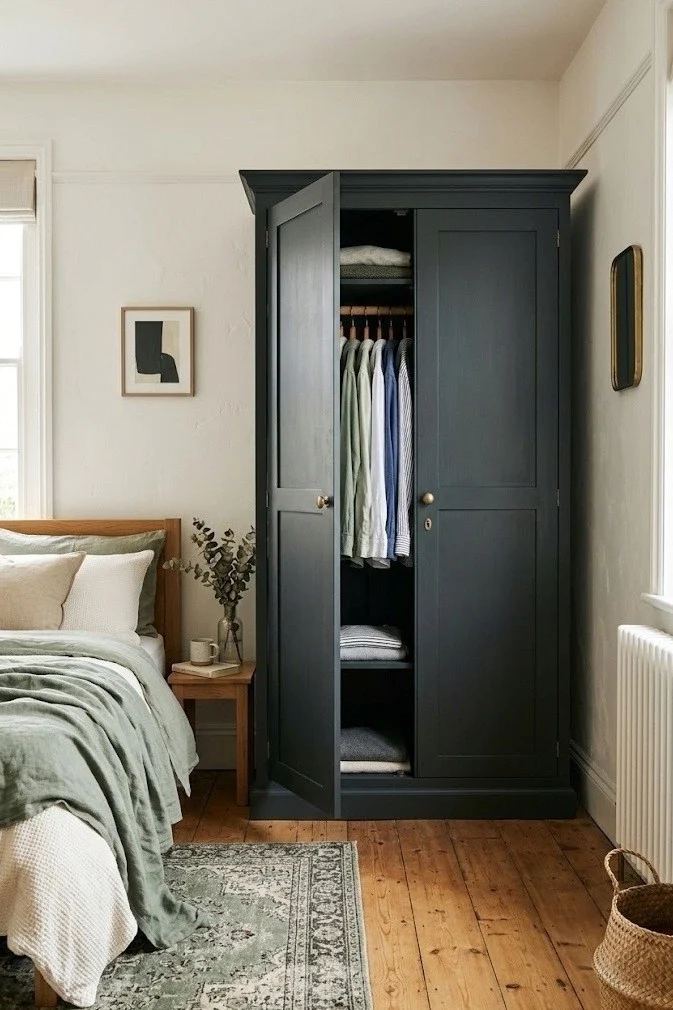
A freestanding wardrobe is the closest thing to a real closet you can buy, and it's the one piece worth spending on when the room came with none. Get one with a hanging rail plus a shelf or two so it holds both hung clothes and folded stacks in the footprint of a doorway. The trick that keeps it from looking like flat-pack filler: paint it, or buy it in a deep color instead of raw white. A wardrobe in charcoal, forest, or warm clay reads like furniture you chose, not storage you settled for. Push it against the longest empty wall and it defines the room the way a built-in would. Nothing here touches the wall structurally, so it leaves with you.
2. A Rolling Garment Rack Styled Like a Boutique Display
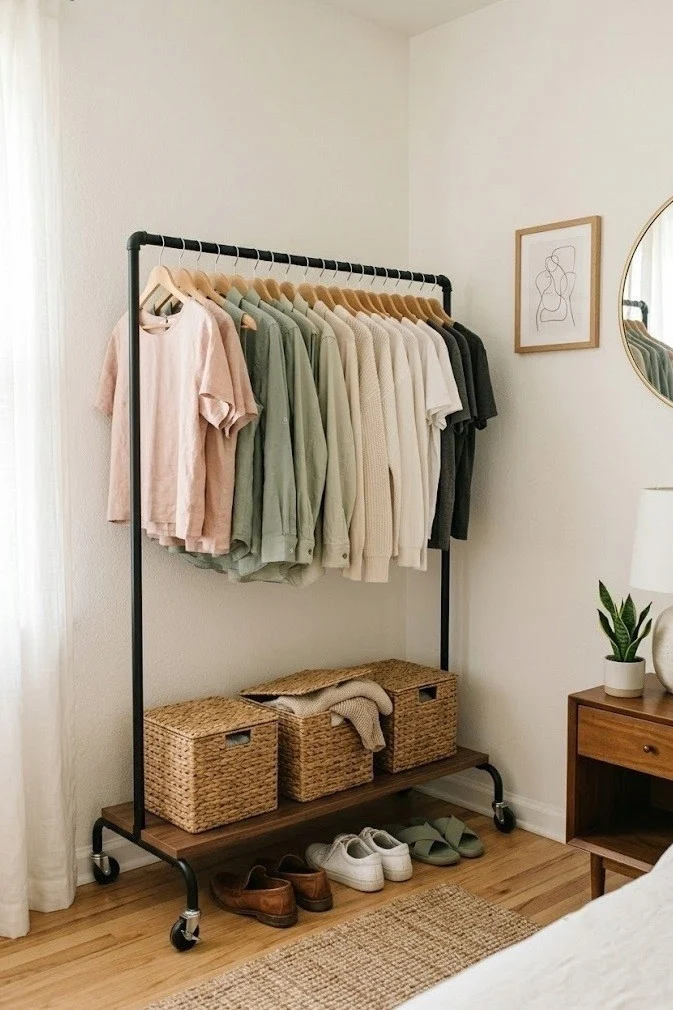
A rolling garment rack becomes intentional the moment you stop treating it as a laundry holder and start curating it like a shop rail. Buy one with a lower shelf, use matching wood or velvet hangers instead of the wire ones clothes come home on, and hang by color or length so the line reads clean. The lower shelf takes two or three fabric bins for folded items and a row of shoes. Casters matter more than they sound: they let you roll the whole thing away from the wall to clean behind it, which open storage always needs. Keep the rail two-thirds full, not crammed, so each piece has air around it. That single restraint is the difference between styled and overwhelmed.
3. An Open Pipe Rail With a Reclaimed-Wood Top Shelf
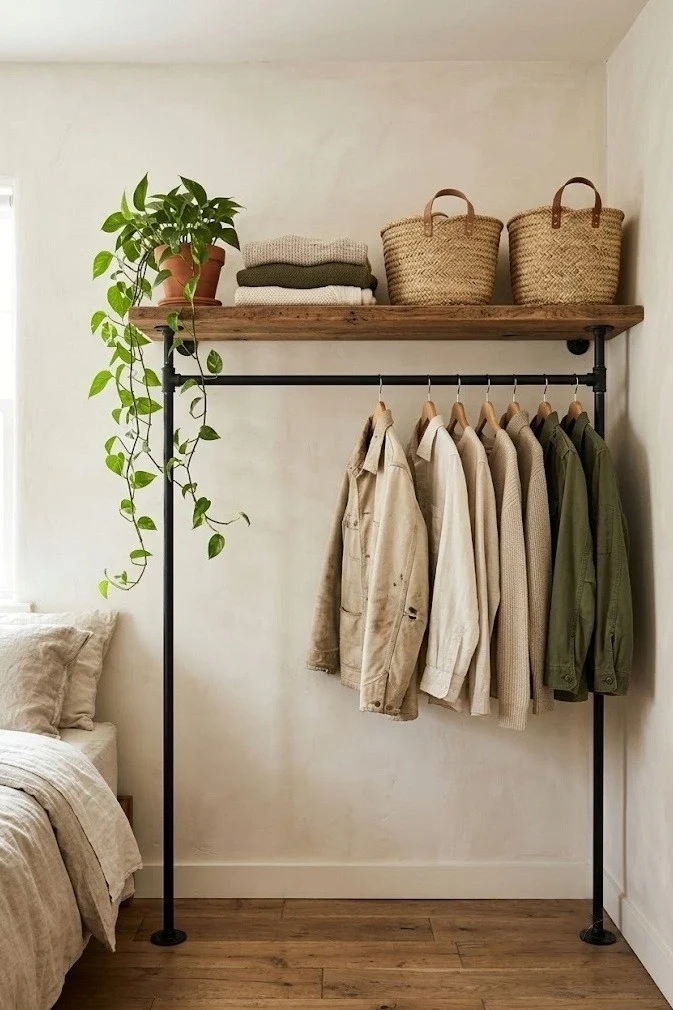
An open pipe-style rail with a wood top shelf gives you a hanging bar and a display ledge in one freestanding frame, no wall fixings required. The industrial look works precisely because it's meant to be seen, so open storage stops feeling like a compromise and starts feeling like a choice. Load the top shelf with folded knits, a couple of baskets, and a plant, and let the rail below hold your everyday rotation. Because everything is exposed, this only looks good if you keep the palette of hangers and bins consistent; mismatched plastic reads cheap fast. Free-standing black metal frames sit flat on the floor and lean slightly back for stability, so nothing anchors into plaster. Expect to dust the shelf weekly, since open shelving shows it.
4. A Secondhand Armoire Refinished to Look Custom
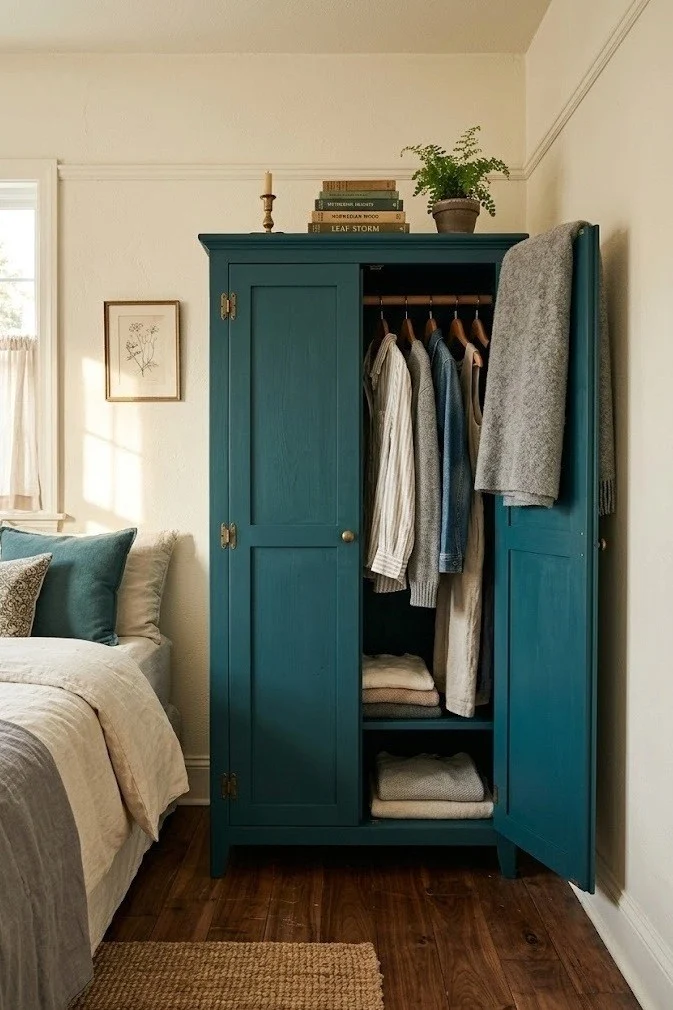
A secondhand armoire is the cheapest route to closet-grade storage that looks built-in, because age reads as character instead of budget. Marketplace listings and estate sales are full of solid-wood armoires people can't fit through modern doorways, often for less than a flat-pack wardrobe. Measure your door frame and stair turns before you buy; the reason these go cheap is that they're hard to move. Once it's in, a coat of paint in a saturated color and swapped hardware turns a dated brown box into a piece that looks chosen. Inside, a tension rod adds a second hanging tier if the original rail sits high. It's the most storage per square foot on this list, and it walks out the door with you when the lease ends.
5. A Curtained Garment Rack That Hides the Mess
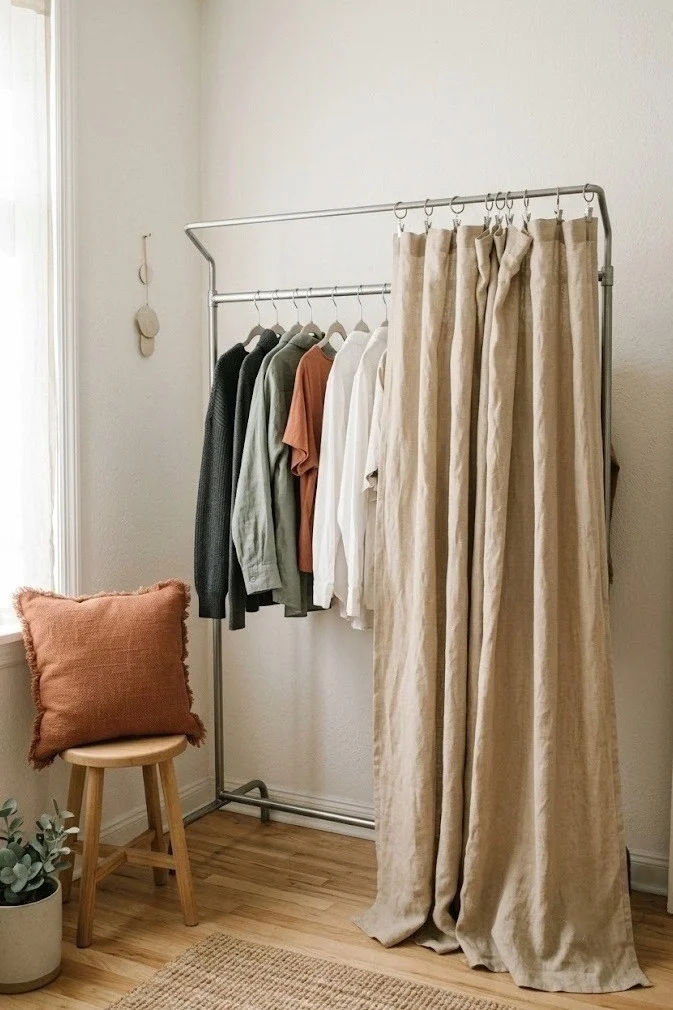
A fabric curtain across the front of a garment rack turns visible clothes into a clean, closed panel, which is the fastest way to kill the dorm look. Run a slim tension wire or a second rod along the top of a freestanding rack and hang a floor-length linen or canvas panel from clip rings. Closed, it reads like a soft built-in wardrobe; open, you reach everything. This is a hidden-front take on the open rack in idea 2, for anyone who'd rather not see the clothes at all. Use a heavier fabric than sheer voile so it hangs with weight and doesn't billow. Keep the curtain a shade or two off the wall color for a deliberate contrast rather than a hospital-cubicle match.
6. A Low Dresser Paired With a Slim Wall-Leaning Rail
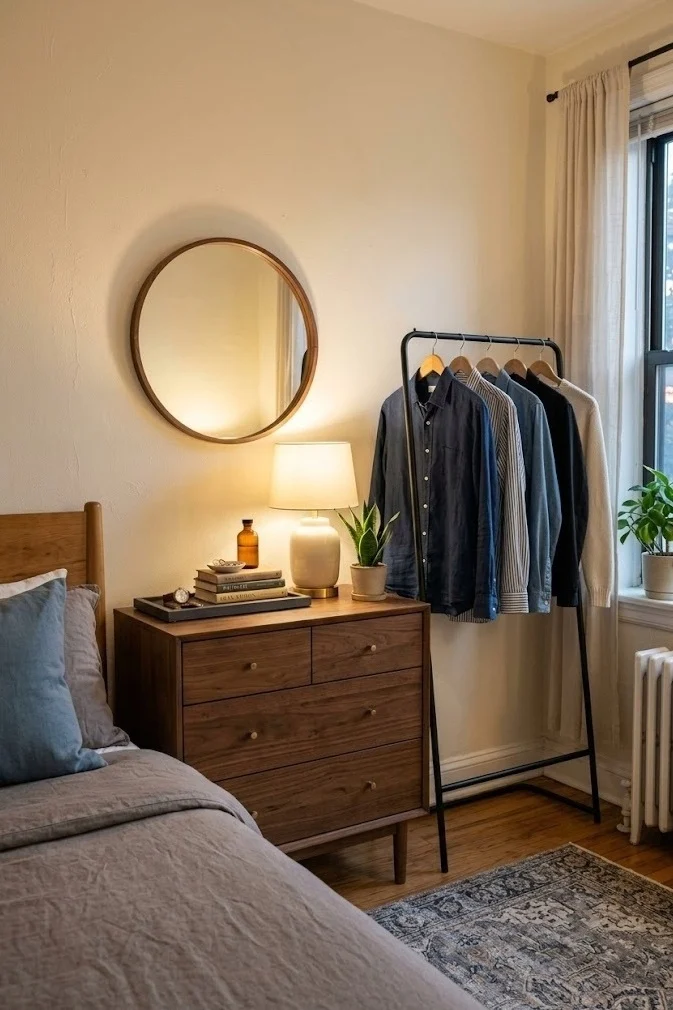
Pairing a low dresser with a slim leaning rail solves the folded-versus-hung problem in one corner without a closet. The dresser handles socks, layers, and anything that creases in a pile; the narrow rail beside it takes the five or six pieces you actually hang. A leaning rail rests against the wall at an angle and holds itself up by gravity, so there's no bracket and no hole. Style the dresser top to match the rest of the room with a lamp, a tray, and a mirror, and the zone reads like intentional furniture rather than a storage dump. Freestanding pieces like these are the backbone of a no-closet room because they carry weight the walls can't. Keep the dresser under window height so the room still feels open.
7. A Leaning Ladder Rack for Everyday Rotation
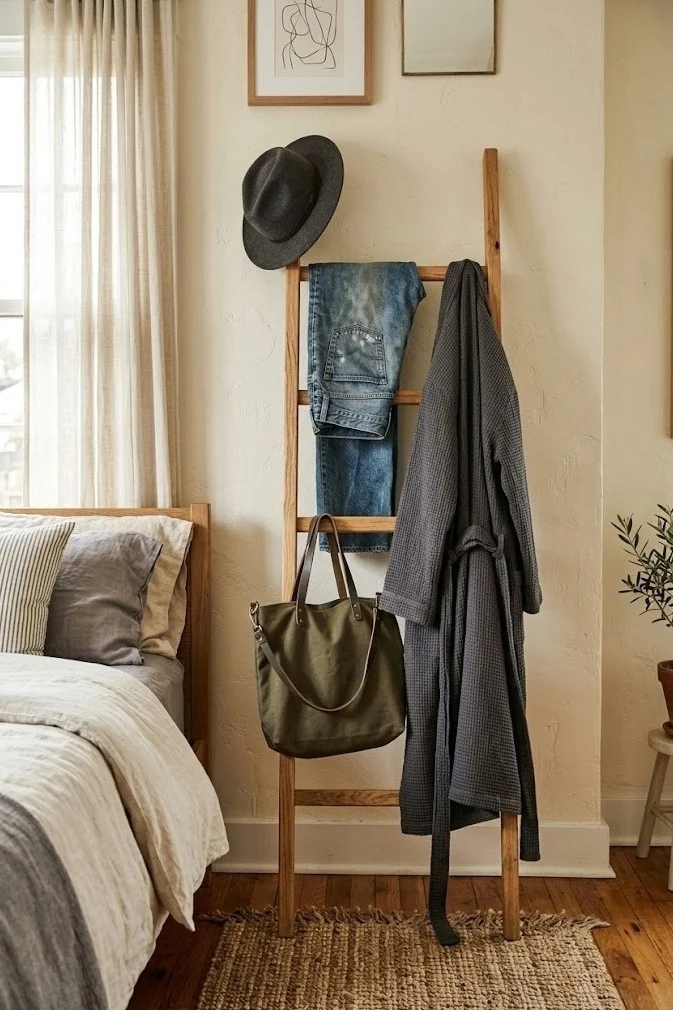
A leaning ladder rack holds the clothes you cycle through daily without a single fixing, since it rests against the wall on its own weight. Drape jeans, a robe, tomorrow's outfit, and a couple of bags over the rungs, and the pieces you reach for most stay off the floor and out of the dresser. The style formula that keeps it from looking like a drying rack: no more than one item per rung, alternate textures, and let one longer piece hang to break the grid. Lean it at a shallow angle against a stud-free stretch of wall and rest the feet on a rug so it won't slide. It's not deep storage, it's a staging piece, and it earns its footprint by keeping daily clutter visible but tidy.
8. A Tension-Rod Closet Strung Across an Alcove
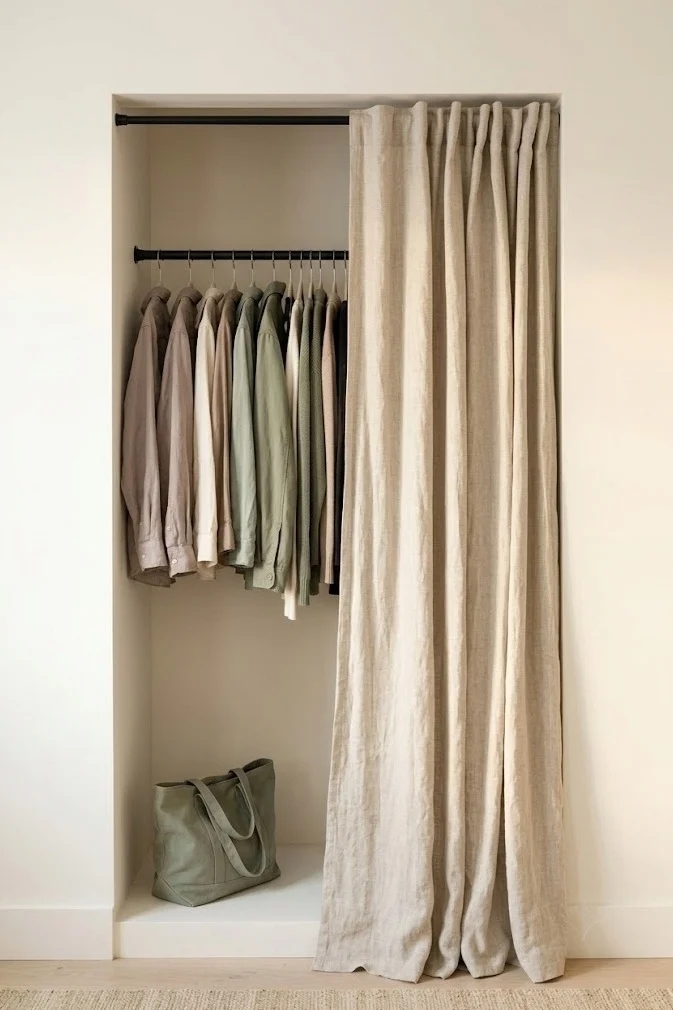
A tension rod wedged across an alcove or the gap between two walls creates a full hanging bay where the room never gave you one, with zero drilling. Find a recess, a chimney breast return, or the space beside a wardrobe, measure the span, and buy a heavy-duty tension rod rated well above your clothes' weight. Hang a curtain in front using the same trick as idea 5 and the whole bay disappears behind fabric. The honest caveat: tension rods hold by pressure, so overloading one drops it, and the wider the span the weaker the grip. Keep spans under about four feet and hang medium-weight items, not a winter coat collection. Done right, it's the closest thing to a reach-in closet you can install and remove in ten minutes.
9. A Cluster of Adhesive Hooks for Bags and Robes
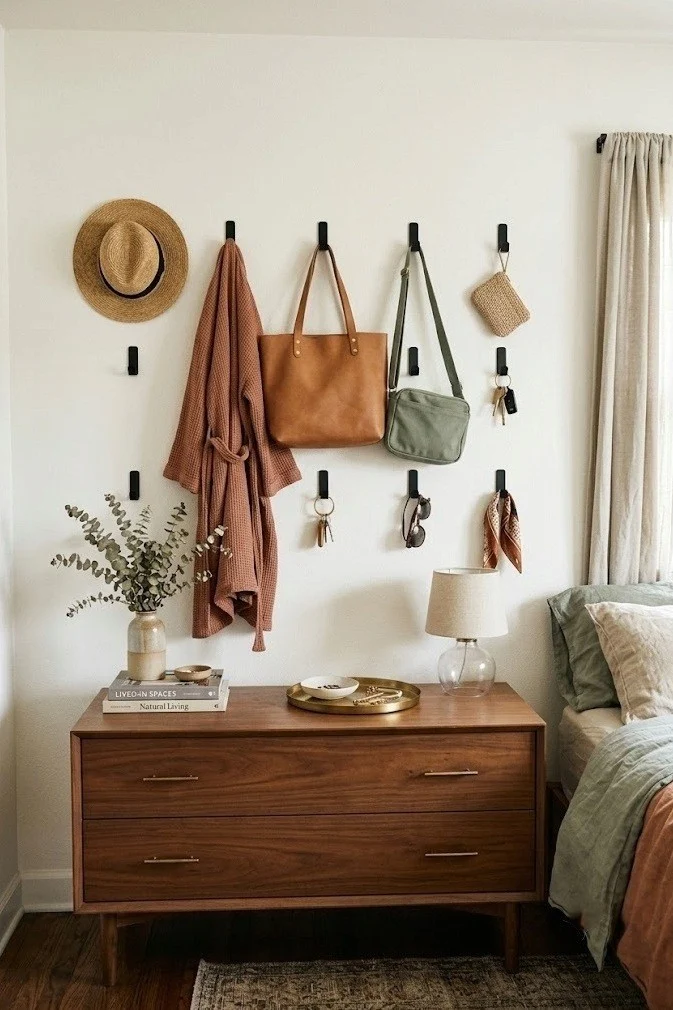
Adhesive hooks handle the light layer of clothes storage, bags, hats, robes, and belts, without a drill or a hole. Arrange them in a deliberate grid or a gentle arc rather than scattering them, and the wall reads like a considered display instead of random pegs. The rule that saves your deposit: respect the weight rating on the package and halve it in your head, because a hook that pops off takes a patch of paint with it. Stick them to a clean, fully cured painted wall, press for thirty seconds, and wait an hour before loading. Use them for accessories and lightweight pieces only; anything heavy belongs on a freestanding piece. Grouped over a dresser, they turn dead wall space into function while staying fully reversible.
10. Narrow Picture Ledges for Folded Knits and Shoes
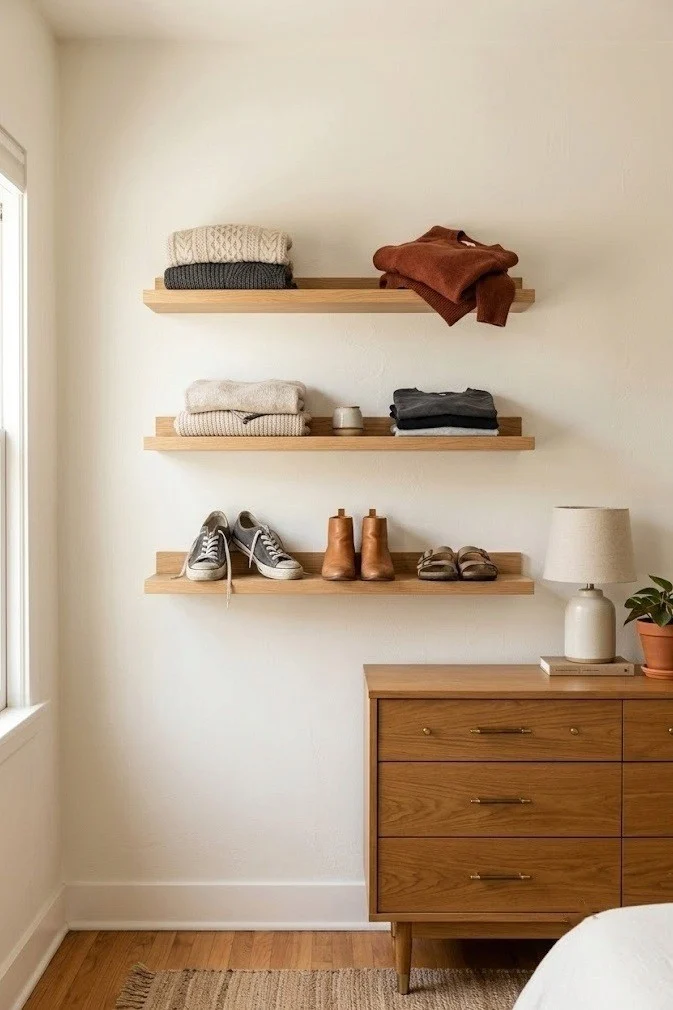
Adhesive-mounted picture ledges give you flat storage on the wall for folded knits, shoes, and a few styled objects, no bracket screwed into plaster. Narrow ledges, the kind sold for leaning art, hold a single row of folded sweaters or a line of shoes surprisingly well when you keep the load light. Like the hooks in idea 9, the limit is weight: adhesive ledges are for display-weight items, not a stack of denim. Space two or three ledges in a column above the dresser to build vertical storage in a room with no floor to spare. Fold to a consistent width so the row looks like a shop shelf, not a laundry pile. Dust settles on open ledges, so plan to wipe them when you dust the dresser.
11. A Freestanding Pegboard for Accessories and Small Storage
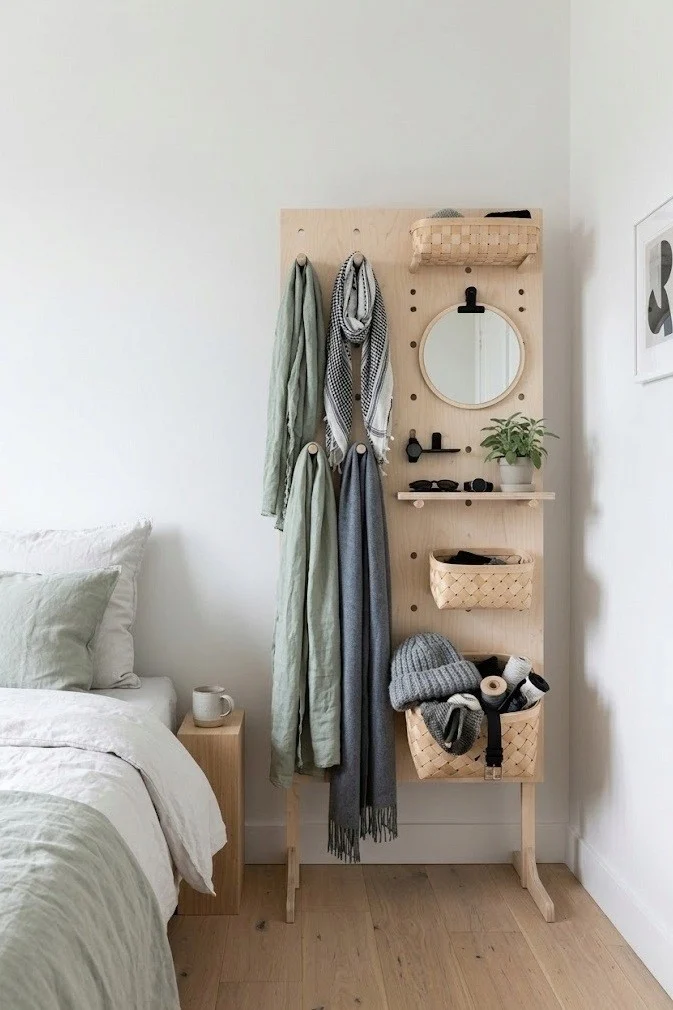
A pegboard mounted on a freestanding frame gives you a reconfigurable wall of storage that never touches the real wall. Buy or build a simple A-frame or floor-standing pegboard, and you get hooks, small shelves, and baskets you can rearrange whenever your needs change. It's ideal for the bits that clutter every surface: jewelry, scarves, caps, sunglasses, a small mirror. Because the board leans or stands on its own feet, you can angle it into a corner and reclaim space the room wasn't using. Here's the quick setup: assemble the frame, clip in a mix of hooks and one or two small shelves, then load heavier baskets low and light items high for stability. Keep the arrangement loose so it looks curated, not like a hardware display.
12. Rolling Under-Bed Drawers for the Off-Season Layer
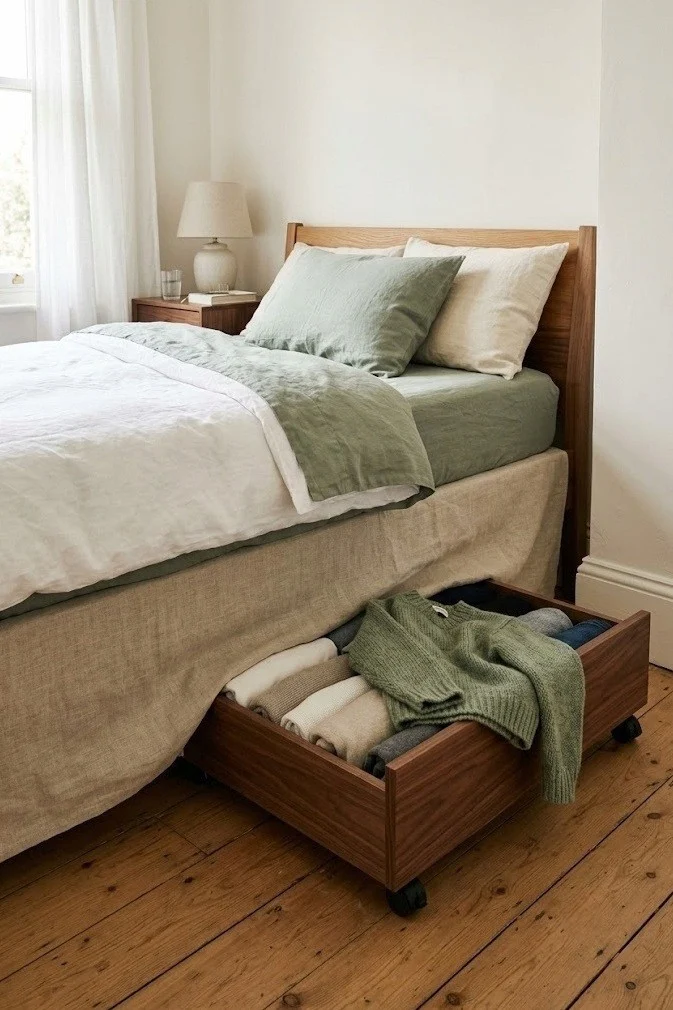
Under-bed rolling drawers turn the empty cavity beneath the mattress into a full second dresser, and they're the highest-value storage in a no-closet room because the space already exists. Choose drawers on casters over lift-lid bins; you'll actually open a drawer that rolls out, whereas a lidded box under a bed becomes a place clothes go to be forgotten. Measure your under-bed clearance first, height and depth, before buying, since a drawer an inch too tall won't slide. Keep off-season and bulky items down here and your everyday rotation up top. Structured under-bed storage bins with a fabric top also work if you want to see the contents. Add a bed skirt or a low valance and the whole layer vanishes from view while staying one pull away.
13. Bed Risers Plus Labeled Canvas Bins for New Clearance
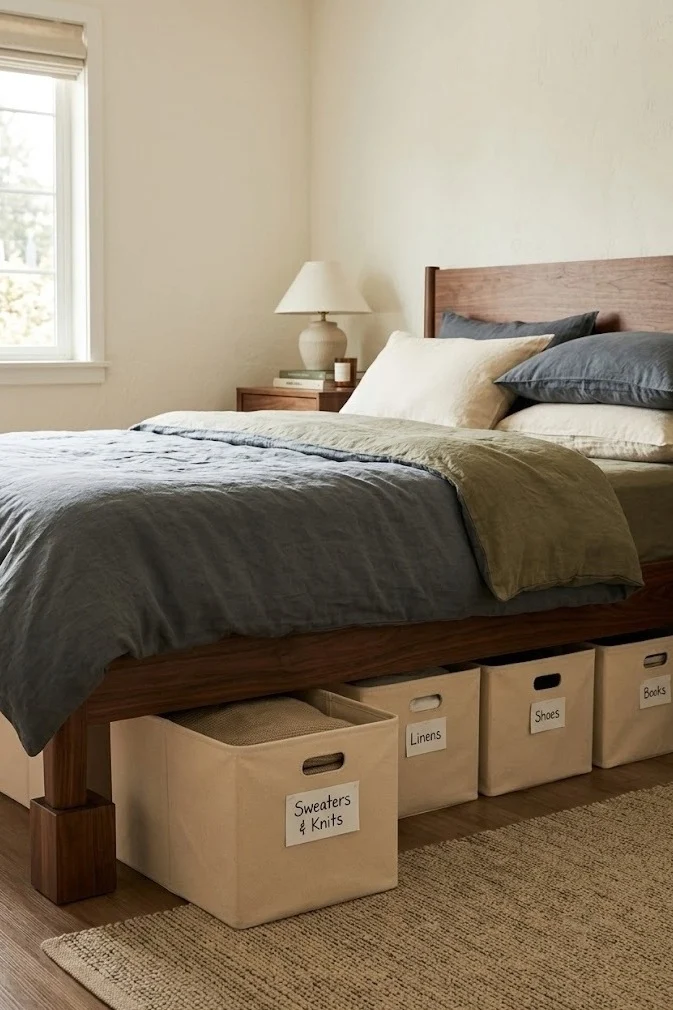
Bed risers buy you three to five inches of new storage clearance under the bed, which is often the difference between bins that fit and bins that don't. Slide sturdy risers under each leg, and the extra height lets taller canvas bins or a second row of shoes fit where nothing did before. Here's the order that works: lift one corner at a time, seat the riser fully under the leg, check the frame sits level, then load labeled bins so you're not dragging out five to find one. Label the short end that faces out. Choose risers rated for your bed's weight, not the cheapest set, because a collapsed riser at 2 a.m. is a bad trade for a few dollars saved. It's reversible in minutes when you move.
14. Flat Garment Bags for Under-Bed Off-Season Storage
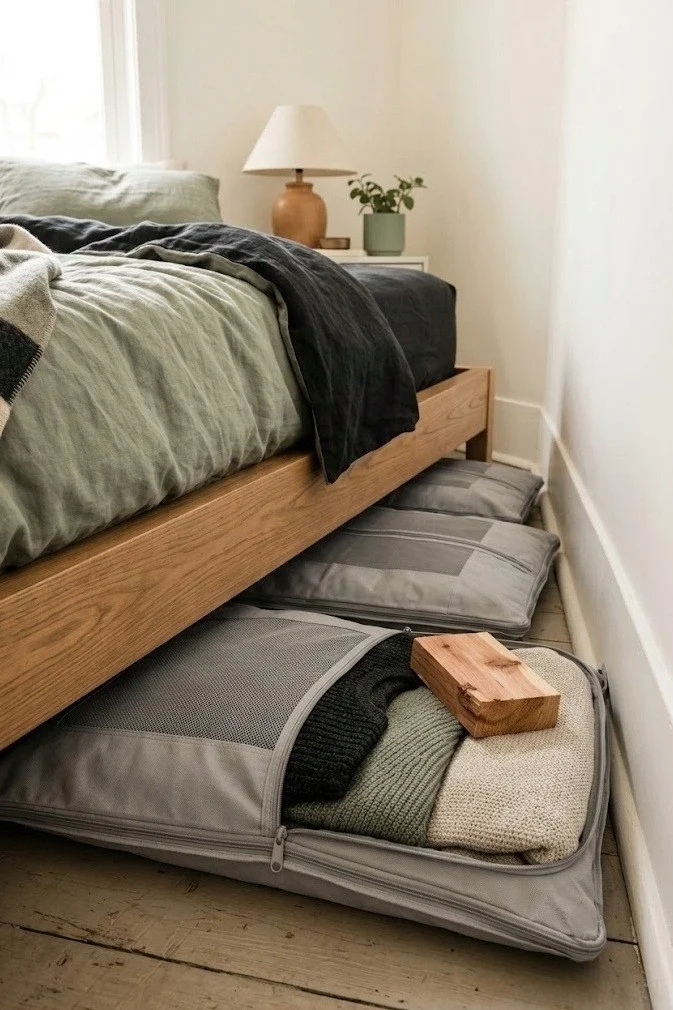
Flat under-bed garment bags store the clothes you don't wear this season lying down, protecting them while freeing your hanging space for what's in rotation. These low zippered bags hold folded coats, sweaters, and spare bedding in the shallow gap a rigid drawer can't use. The upkeep reality worth knowing: soft bags trap dust less than open storage but can hold moisture, so slip in a cedar block or a moisture absorber and avoid storing anything damp. Choose bags with a mesh or clear panel so you can see what's inside without unzipping all of them. Keep this layer strictly seasonal, rotating twice a year, so it never becomes a place clothes disappear into. When you move, they zip flat and stack in a car trunk.
15. A Storage Bed That Puts Drawers Where the Closet Isn't
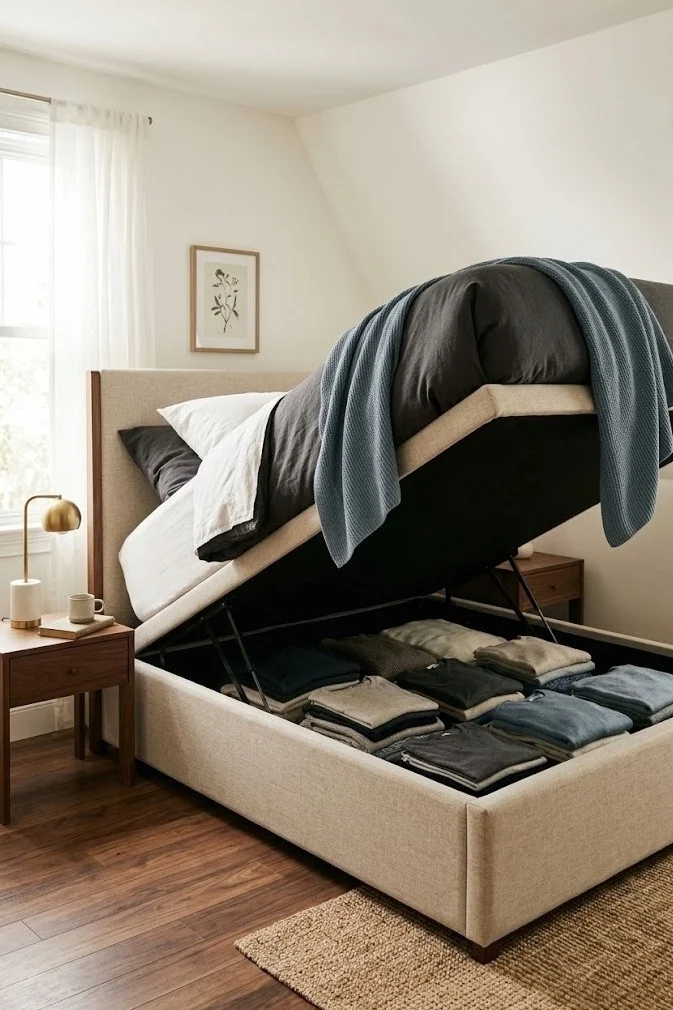
A storage bed builds drawers or a lift-up base directly into the furniture you already need, which is the most space-efficient fix when the room offers no closet at all. Ottoman-style beds lift on gas struts to reveal the entire under-mattress cavity; drawer divans give you four to six built-in drawers instead. It's a bigger upfront purchase than the rolling drawers in idea 12, but it looks fully intentional because the storage is invisible until you open it. Measure the room for the lift clearance an ottoman base needs to rise, and check a drawer bed has pull-out room on the side you'll use. Pick a frame with an upholstered or wood surround that matches your palette so it reads as a designed bed, not a storage unit with a mattress on top.
16. An Over-Door Hook Rack for Coats and Robes
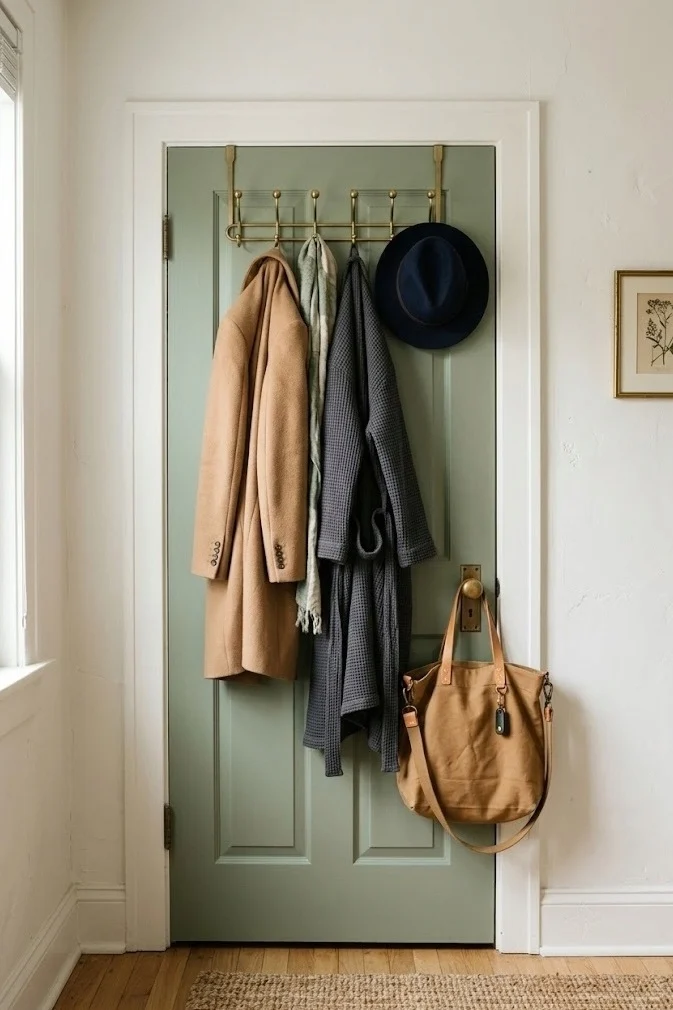
An over-door hook rack hangs coats, robes, and bags on the one surface a small room always has spare: the back of the door. It hooks over the top edge, so there's nothing to drill and nothing to patch later. The common mistake is loading a hollow interior door until it won't close or the hooks gouge the frame; hang lighter outerwear and bags, not your heaviest coats, and check the door still swings clear. Choose a rack with a felt or rubber strip on the bracket so it doesn't scratch the paint on the door's top edge. Behind a bedroom door this keeps daily layers off chairs and the floor while staying invisible when the door is open against the wall. It comes off in one lift on moving day.
17. An Over-Door Fabric Organizer for Folded Small Items
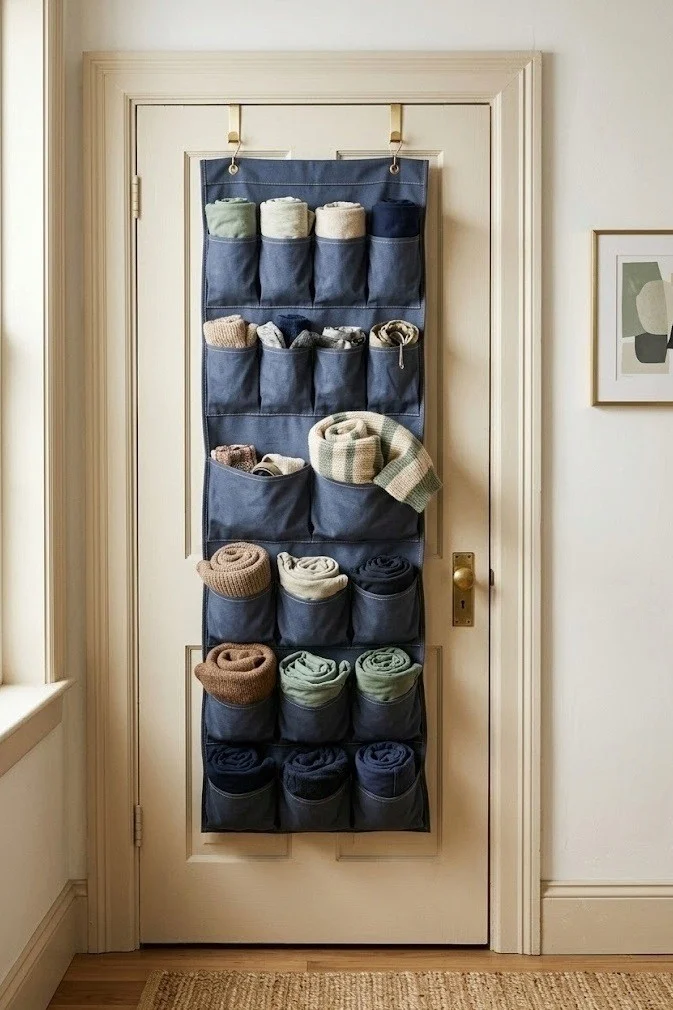
An over-door fabric organizer with rows of pockets stores the small, hard-to-hang things, underwear, socks, folded tees, clutches, on the back of the door. Like the hook rack in idea 16, it needs no fixing and lifts off cleanly, but it adds enclosed cubbies instead of open hooks. Over-door organizers meant for shoes work just as well for rolled clothes and accessories, so you're not limited to the ones sold for wardrobes. The upkeep note: fabric pockets sag over time under weight and collect dust along the top edges, so keep heavier loads in the lower rows and shake it out when you clean. Pick one in a solid, muted color rather than printed nylon, and it reads as tidy storage instead of a gym-locker afterthought.
18. An Over-Door Mirror With Built-In Hooks
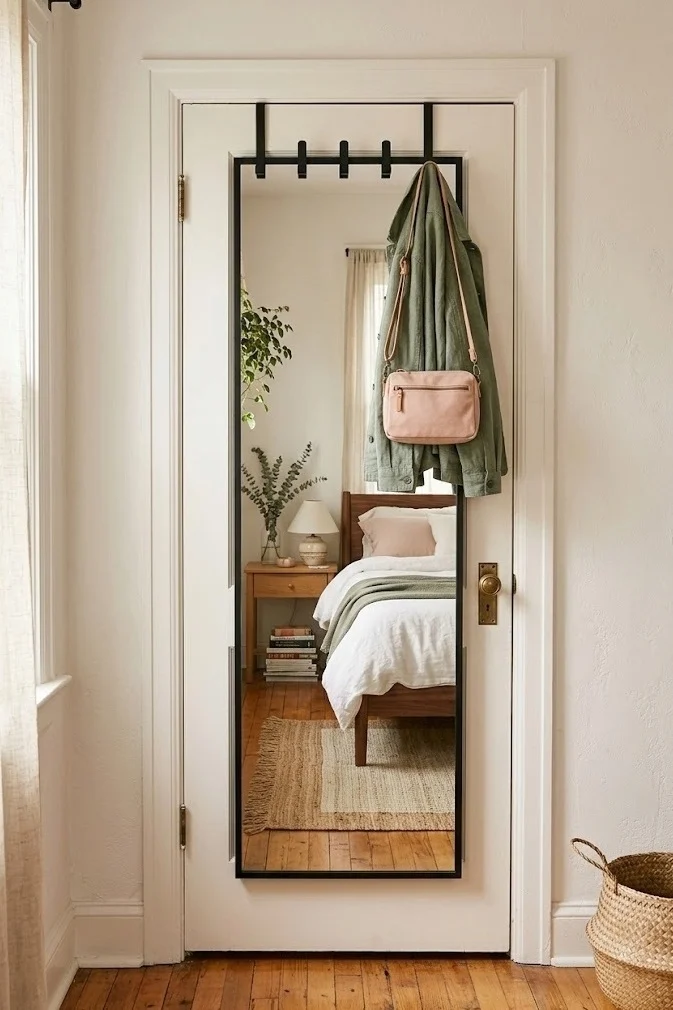
An over-door mirror with hooks on the frame doubles a full-length mirror as hanging storage, saving the wall and floor space a small no-closet room can't spare. You get a place to check an outfit and a spot to hang tomorrow's clothes or a bag, all on hardware that hooks over the door with no drilling. A full-length mirror also bounces light and makes the room read larger, which matters when furniture is already eating the floor. Look for a version with a wide, weighted bracket so the mirror sits flat against the door instead of swinging when the door moves. Keep only a couple of items on the hooks so the mirror stays usable. On moving day it lifts off and travels flat with no wall repair.
19. An Angled Rack Tucked Into a Dead Corner
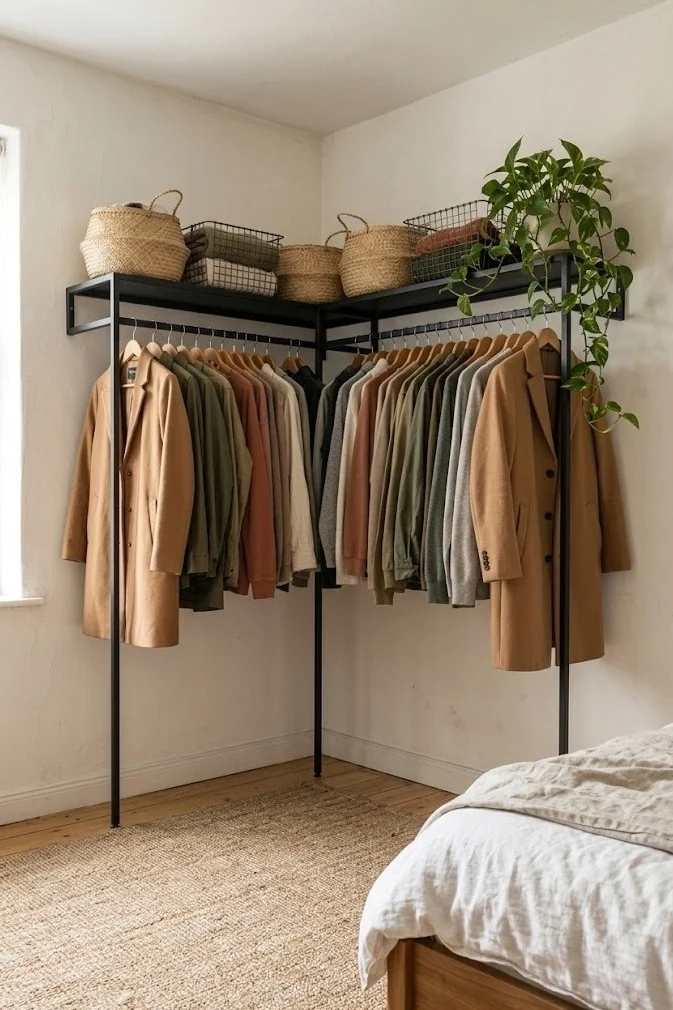
A corner clothing rack claims the triangle of dead space most bedrooms waste, turning it into hanging storage without stealing usable floor. L-shaped and corner-specific racks wrap two short rails around the angle, holding a full wardrobe's worth of clothes in a footprint that was doing nothing. The style formula that keeps a corner rack tidy: roughly 70% hung clothes, 20% a shelf of folded items or baskets up top, and 10% one styled object, a plant or a hat, so the corner looks composed. Because it sits where two walls meet, it's naturally braced and stays put on a rug. Keep the rail height a little lower than eye level so the corner doesn't feel top-heavy in a small room. It's freestanding, so it leaves no mark.
20. A Corner Shelf Tower for Folded Stacks and Baskets
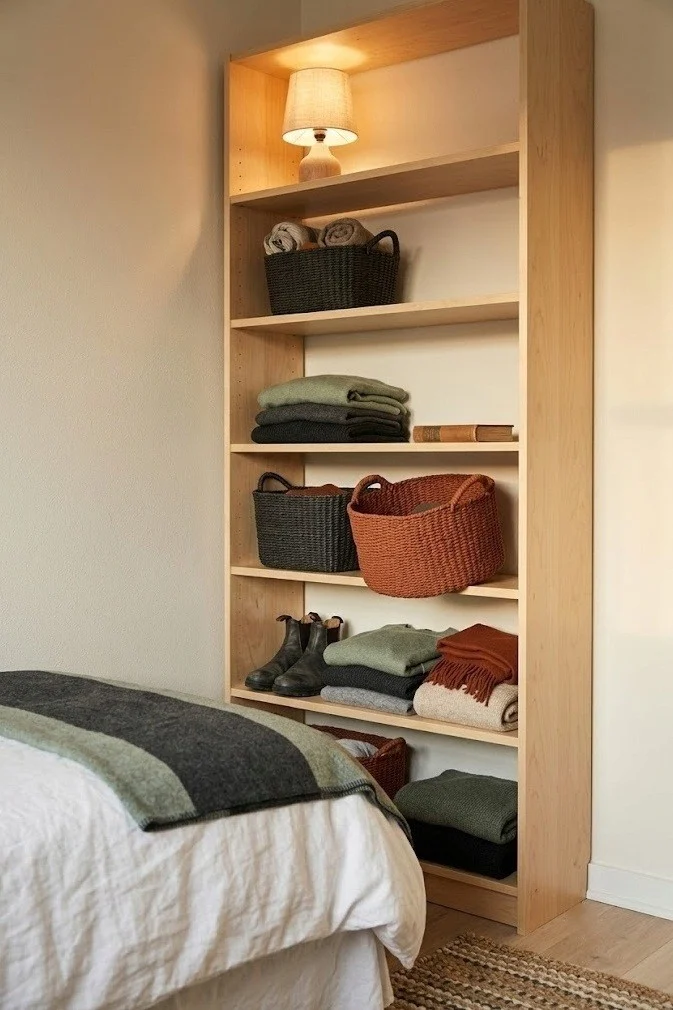
A corner shelf tower stacks folded clothes, baskets, and shoes vertically in the one spot a room can almost always spare. Tall and narrow, it uses height instead of floor, so you gain real storage in a footprint smaller than a nightstand. Here's how to keep it from looking cluttered: give each shelf one job, folded knits on one, a labeled basket on the next, shoes on the bottom, and leave the top shelf lighter for a lamp or a plant. Fold everything to the same width so the stacks line up like a shop display. A freestanding corner unit needs no wall fixing, though on carpet a felt pad under the back feet keeps it from tipping. It's the quiet workhorse of a no-closet corner.
21. A Curtained Corner Turned Into a Dressing Nook
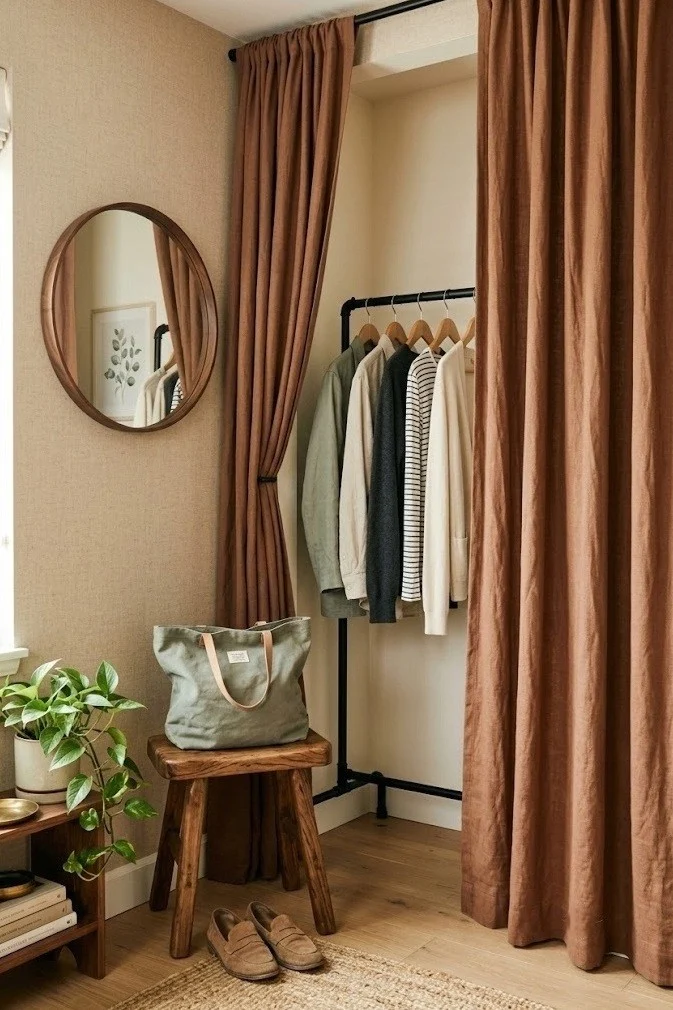
A curtained corner turns two bare walls into a small dressing zone that reads like a built-in dressing room rather than a storage patch. Set a corner or straight rack into the angle, string a curtain across the open face using the tension-wire method from idea 5, and add a stool and a mirror so the corner earns its keep as a place to get dressed, not just store clothes. This is the most finished-looking option on the list because it hides the clothes behind fabric and frames the space as a room feature, echoing the corner rack in idea 19 with a closed front. Keep the curtain floor-length and in a fabric with some weight so it hangs like a proper panel. Everything, rack, curtain, stool, walks out with you.
Final Thoughts
The fix for a no-closet bedroom isn't one perfect piece, it's picking two or three zones and giving each a job: a freestanding wardrobe or rack for hanging, the under-bed cavity for the off-season layer, and the back of the door for daily grab-and-go. Keep the palette of hangers and bins consistent, hide what you can behind fabric, and every one of these leaves clean when your lease ends. Start with the zone that annoys you most today. Save this to Pinterest so it's ready when you're standing in the room deciding.
Frequently Asked Questions
How do you store clothes in a bedroom with no closet without drilling?
Use freestanding and over-door pieces instead of the wall: a wardrobe or garment rack for hanging, under-bed drawers for folded and off-season clothes, and an over-door rack for daily layers. None of these need a drill or an anchor, and all of them lift out clean at move-out, so your deposit stays intact.
What can I use instead of a closet in a small bedroom?
A freestanding wardrobe or armoire is the closest stand-in, giving you a hanging rail and shelves in a doorway-sized footprint. If space or budget is tighter, a rolling garment rack with a fabric cover, a low dresser, and under-bed drawers together cover hanging and folded storage without a built-in closet.
Do freestanding wardrobes look cheap?
Not if you skip raw white flat-pack. A wardrobe in a deep painted color, or a solid secondhand armoire with swapped hardware, reads as chosen furniture rather than budget storage. Styling the top and pushing it against the longest wall makes it sit in the room like a built-in would.
How do I make an open clothing rack look less messy?
Keep it about two-thirds full, use one hanger type throughout, and group clothes by color or length. Add a fabric curtain across the front to hide everything at once, and store folded items in matching bins on the lower shelf. Consistency, not fullness, is what separates styled from cluttered.