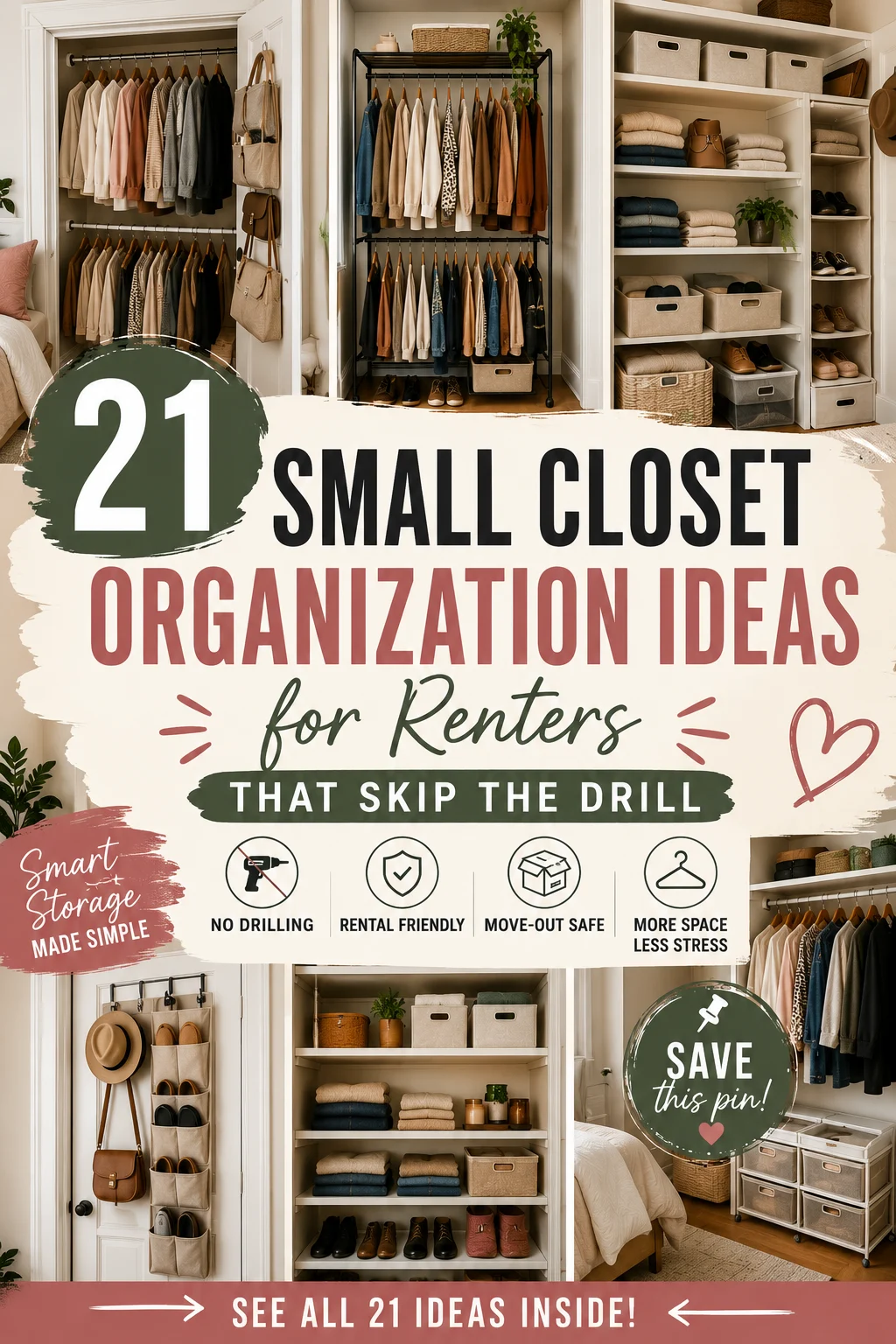
Small closet organization ideas for renters usually open with declutter first, which is useless advice when your closet is already down to clothes you actually wear and still overflowing. This is the version for the genuinely tiny, genuinely stuffed closet, where the fix isn't throwing things out, it's using every vertical inch and every dead zone the single rod ignores. I've overhauled the same sad one-rod closet across three apartments, so every idea here holds one rule: nothing that drills, screws, or costs you the deposit. Each fix is tied to a specific thing you can buy and take with you when you leave. Save this to Pinterest so you have it when the closet finally hits its breaking point.
1. A Drop-Down Double Rod Hung From Your Existing Closet Rod
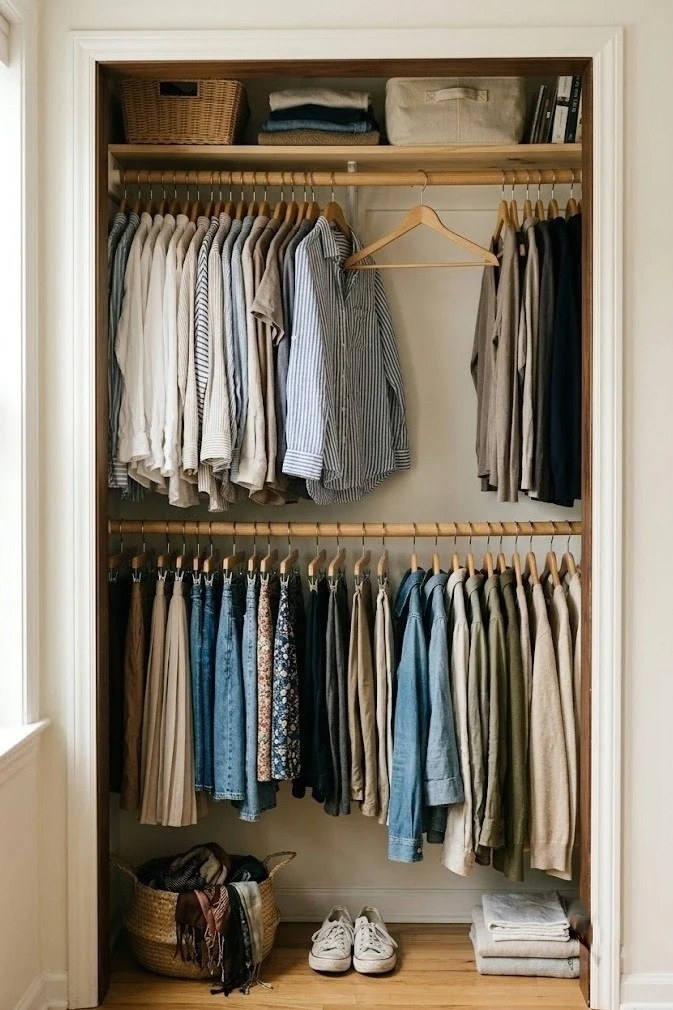
A hanging double-rod extender clips onto your current rod and drops a second bar about 30 inches below it, turning one hang line into two. It's the single biggest space win in a small closet, and it needs zero hardware in the wall. Use the top rod for shirts, jackets and folded-over pants, the bottom for skirts and short items. Chains or straps let you set the drop height, so measure your longest bottom-rod item first and leave two inches of clearance above the floor. It holds a surprising load, but keep heavy coats off it; the weight pulls the whole assembly forward and it starts to sag over time.
2. A Freestanding Two-Tier Garment Rack That Sits Inside the Closet
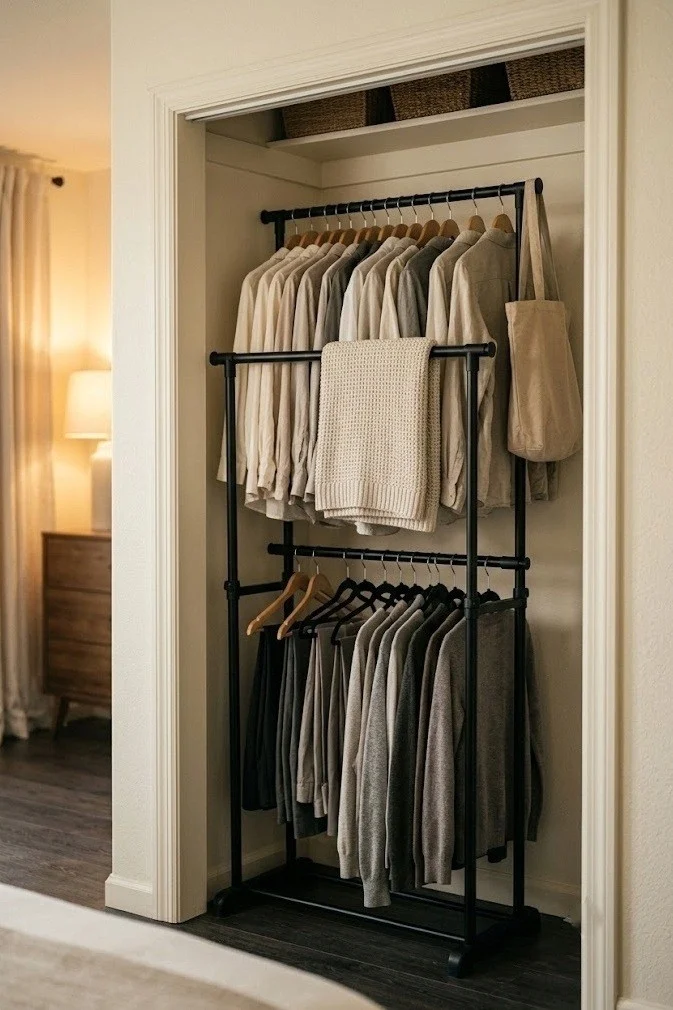
Skip the built-in rod entirely with a freestanding two-tier garment rack that stands inside the closet footprint and gives you double hanging without touching the existing bar, useful when the built-in rod is flimsy or mounted too high to reach. Look for one under 32 inches wide so it clears a standard reach-in opening, and check the top-bar height against your ceiling before buying. Unlike the drop-down extender in idea 1, this stands on its own feet, so it moves with you and holds heavier loads on the lower bar. The downside is footprint: it eats floor space the extender doesn't, so it suits closets with a little depth to spare rather than shallow ones.
3. A Tension Rod Set Low for a Second Row of Lightweight Clothes
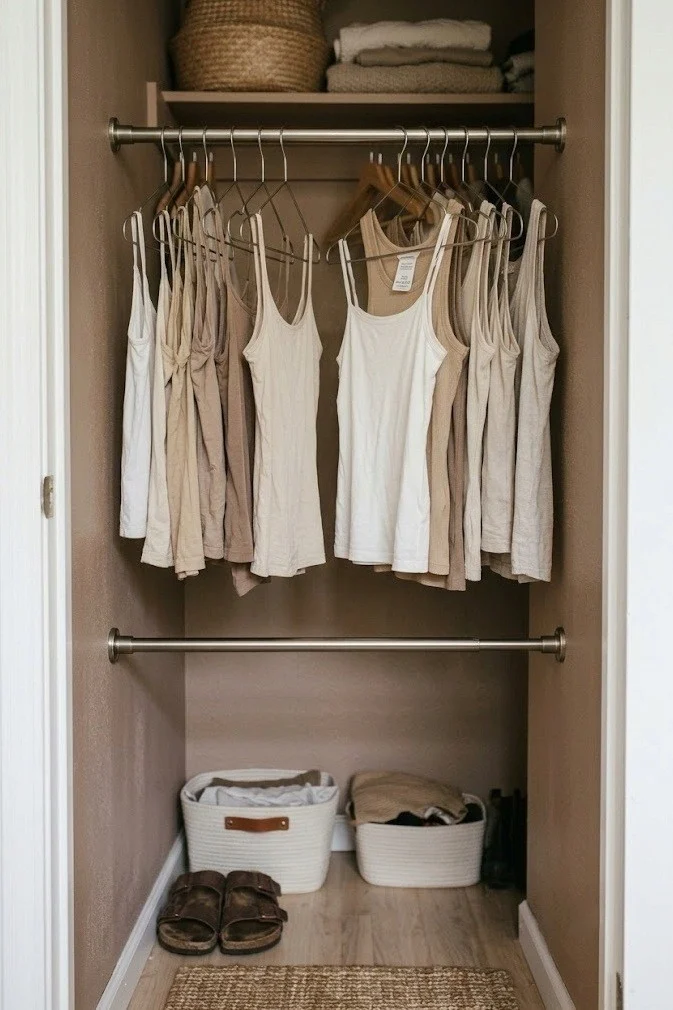
A tension rod wedged between the closet side walls creates a second hanging row for free, as long as you keep it to light items like tank tops, camisoles and kids' clothes. It works because the closet walls give the rod something to grip without any screws. Set it 28 to 34 inches below the main rod so shirts above still clear it. The catch is load: tension rods slip under weight, so this stays a lightweight-only zone, and a rod rated for shower-curtain duty will disappoint you here. Buy one rated for closets or drapery, match it to your closet's exact interior width, and wipe the walls first so the grip pads actually hold.
4. Stackable Shelf Risers Splitting the Dead Space Above the Top Shelf
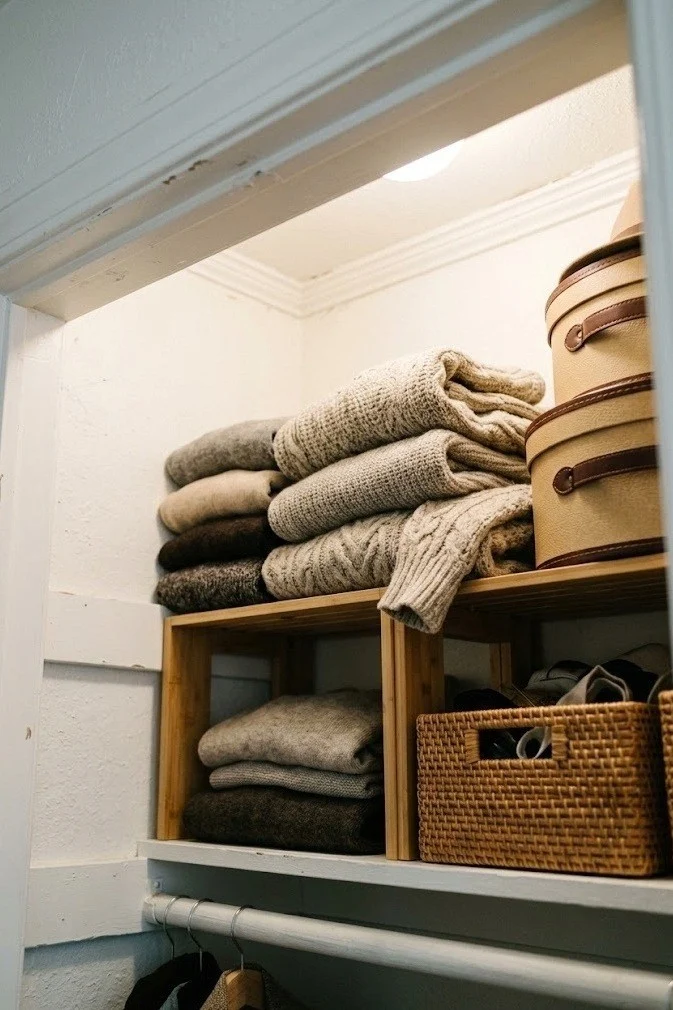
Shelf risers split the tall, wasted gap between your closet's top shelf and the ceiling into two usable layers. That single shelf usually has a foot or more of dead air above it, and a riser or a small modular closet organizer shelf turns it into stacked storage for bags, hat boxes or folded sweaters. Pick risers with feet wide enough not to tip when you pull the bottom item, and keep the heaviest things on the shelf itself, not the riser. A stacked modular shelf system is the version that scales: add units as you accumulate more, then break it back down flat when you move. Leave a two-finger gap at the ceiling so you can actually lift things out.
5. A Hanging Fabric Cubby Column Clipped Onto the Rod for Folded Items
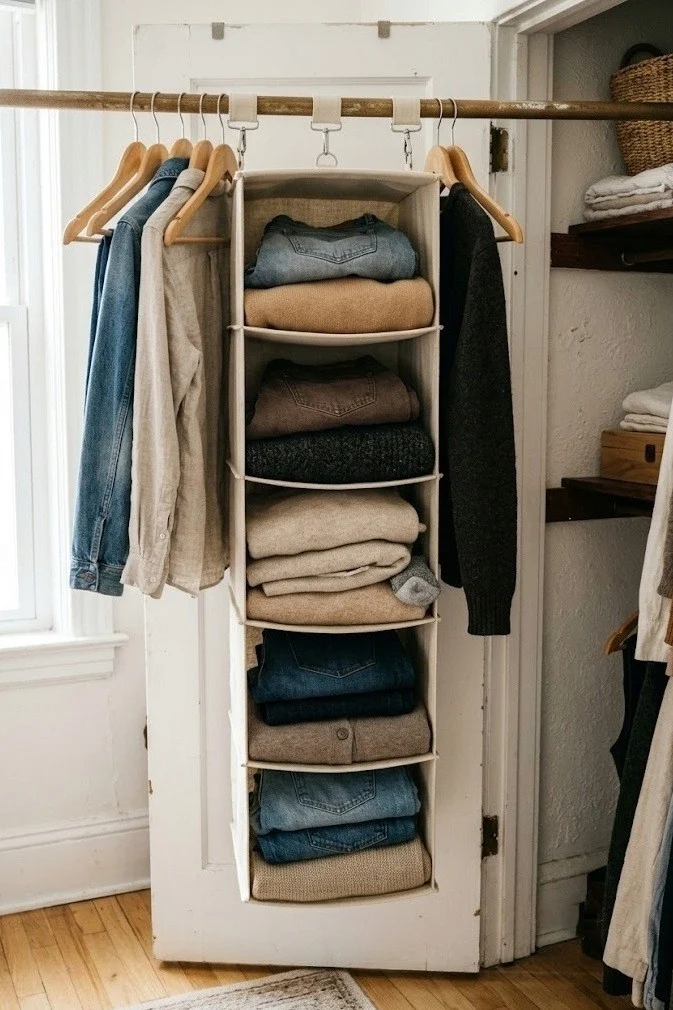
A hanging fabric shelf organizer straps around the closet rod and gives you five or six stacked cubbies for folded jeans, sweaters and gym clothes without a single fold living on the floor. It's the fix for anyone who hates the top-shelf pile toppling over. These hanging shelves take up one to two hangers' worth of rod width, so budget that space, and choose a firm-sided one; floppy fabric collapses the moment a cubby sits half-empty. This pairs well with the shelf risers in idea 4: risers handle bulky items up high, the cubby column handles daily folded items at eye level. Keep each cubby to one category so you're not excavating to find a single shirt.
6. A Two-Tier Expandable Shoe Rack Along the Closet Floor
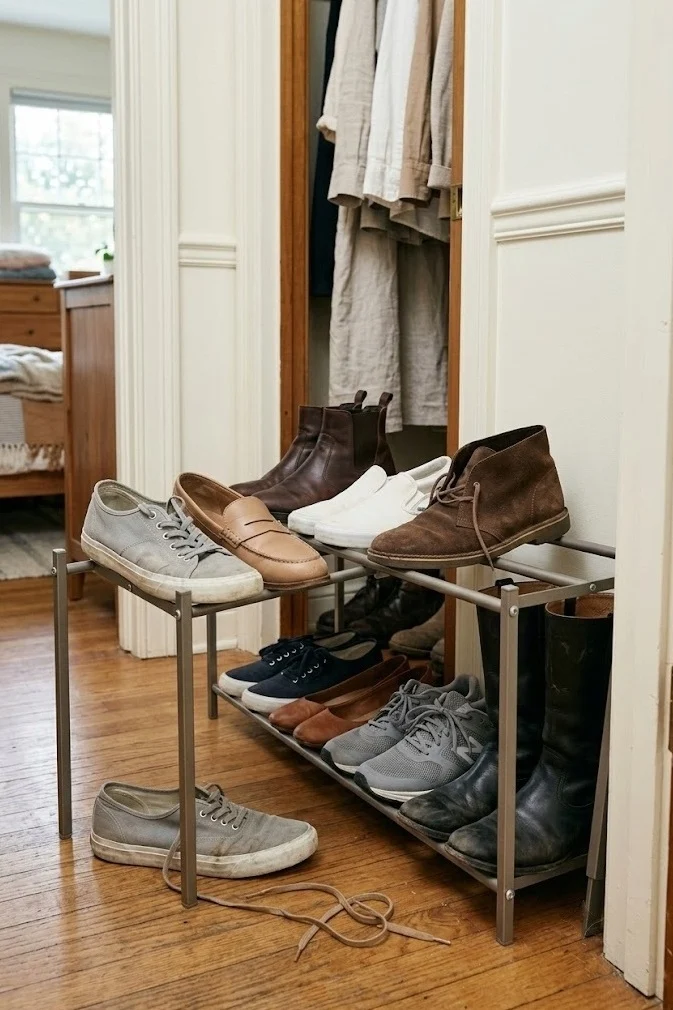
An expandable two-tier shoe rack lifts your shoes into two rows and doubles the pairs the same footprint holds. Floor chaos is usually shoes, and a rack that expands sideways fits the closet's exact width instead of a fixed size that leaves gaps or won't slot in. Get the kind with adjustable-width rails so it grows or shrinks to your opening. Keep the top tier for shoes you wear weekly and the bottom for occasional pairs, since bending for the bottom row gets old fast. Metal racks with wide rungs hold heels and boots better than thin wire, which lets slim soles slip through and tip the whole shoe over sideways.
7. Clear Stackable Bins With Drop-Front Doors on the Closet Floor
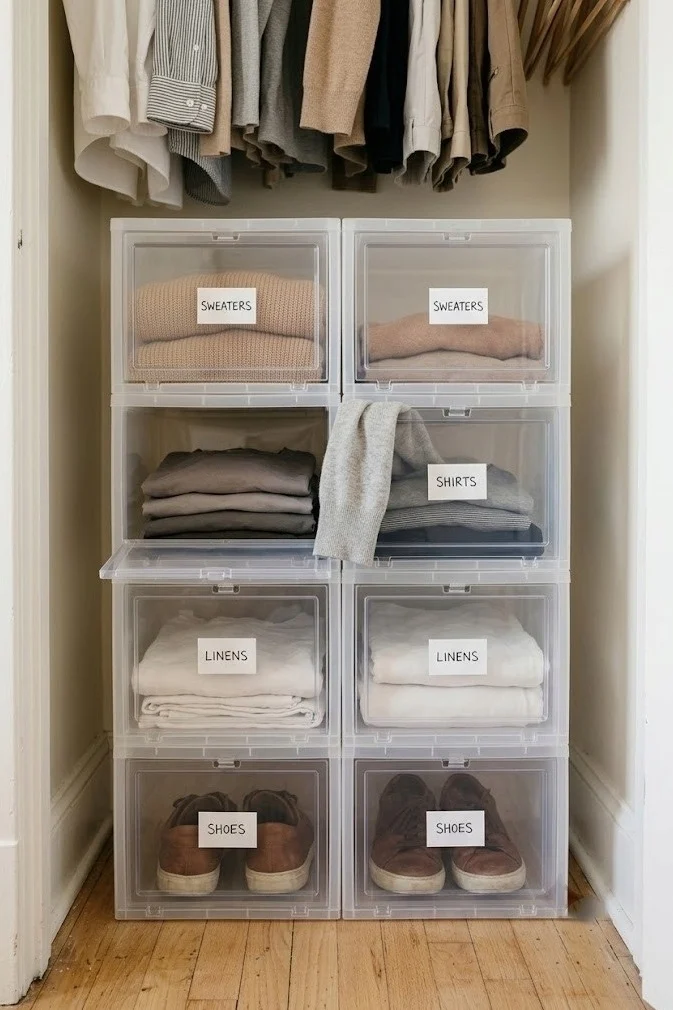
Clear stackable bins with drop-front doors let you pull one item from the bottom of a stack without unstacking the whole tower, which regular lidded bins can't do. They turn the messy floor pile into a labeled wall of storage you can see straight into. The drop-front is the detail that matters; plain stacking bins force you to lift everything above to reach the bottom, and you quietly stop using them. Stack them no more than three or four high so the base bin's door still opens under the weight. Use them for shoes, off-season folding or bags, and face the labels toward the door so you read them at a glance.
8. A Slim Rolling Drawer Cart Tucked Under the Short-Hanging Clothes
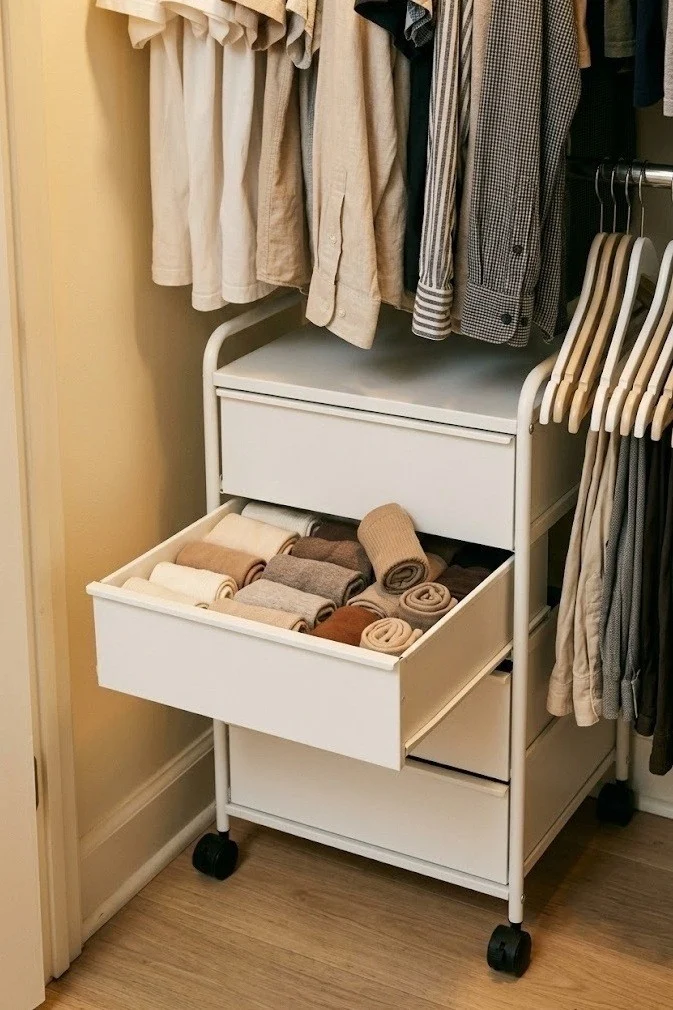
A slim rolling drawer cart slides into the empty floor zone beneath short-hanging shirts and jackets, reclaiming space that's almost always wasted. Anything hung above knee height leaves a floor gap, and a narrow three-drawer cart on casters fills it while rolling out for easy access. Measure the height of your shortest hanging item to the floor and buy a cart a couple of inches under that. Casters matter on carpet; hard plastic wheels stick, so look for rubber or larger wheels. Use the drawers for underwear, socks and folded basics you'd otherwise cram onto a shelf. When you move, it rolls straight out and into the next closet with nothing to unmount.
9. Labeled Fabric Baskets Corralling Loose Items on a Low Shelf
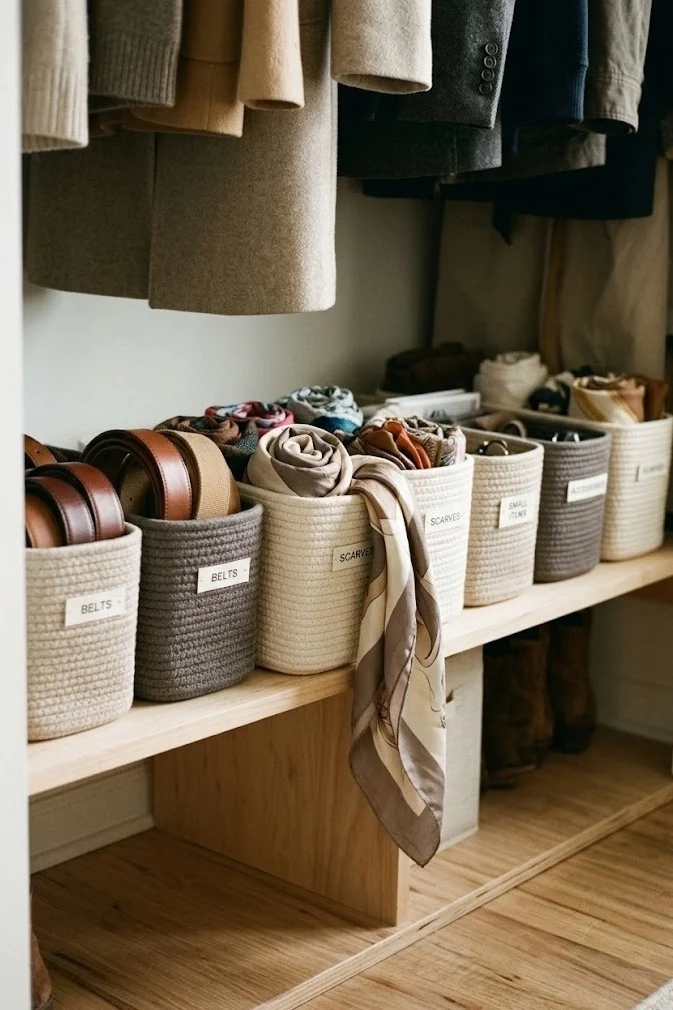
Loose small stuff like belts, scarves, chargers and spare toiletries stops migrating across every surface once labeled fabric baskets corral it on a low shelf. Open shelves read as clutter fast; matching baskets with labels turn six random piles into six tidy boxes. Choose collapsible fabric bins so they fold flat for moving and don't crack like hard plastic in a hot storage unit. Size them to the shelf depth so they don't overhang and catch your sleeve every time you reach past. Stick to one category per basket and label the front edge, not the top, so you can read the label without pulling the whole basket down.
10. Vacuum-Seal Bags Shrinking Off-Season Bulk Into a Single Floor Bin
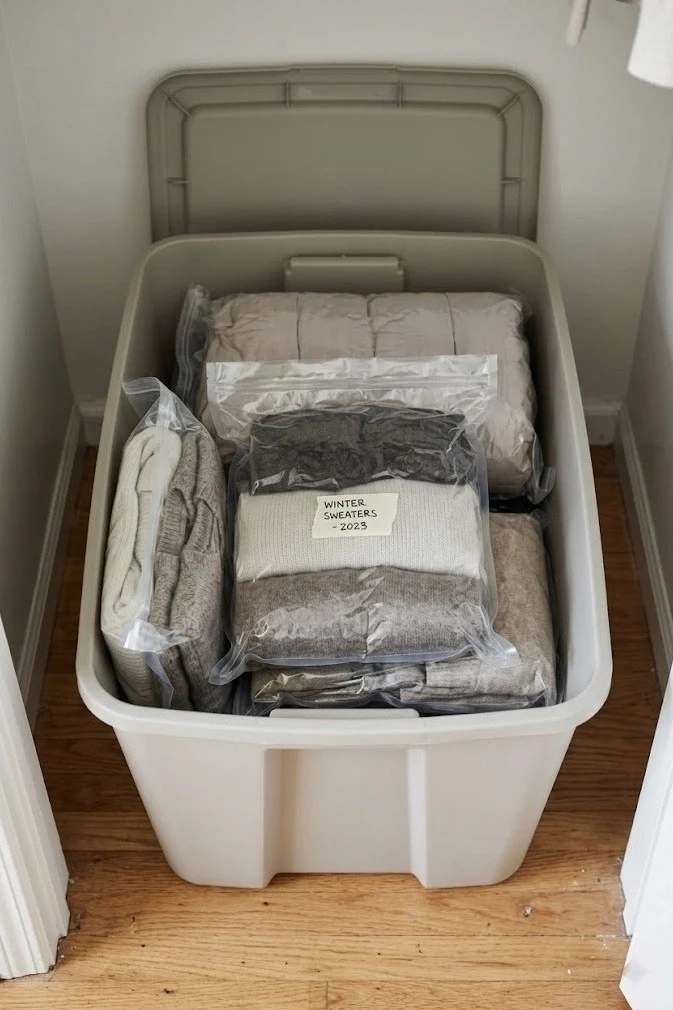
Vacuum-seal bags compress puffy coats, comforters and sweaters to a fraction of their size, freeing the hanging and shelf space they'd otherwise hog year-round. Bulk is the hidden closet-eater, and off-season items don't need to be accessible daily. Roll or vacuum the air out, then store the flat bricks in one lidded floor bin or under-bed box. Don't seal anything you'll want in a month; re-compressing is a chore, so this is strictly for the season you're not in. Leather and anything structured shouldn't be vacuum-packed, since it creases permanently. Keep current-season clothes at eye level, next-season on the shelf, and off-season sealed and out of the way.
11. An Over-the-Door Pocket Organizer Holding Accessories, Not Just Shoes
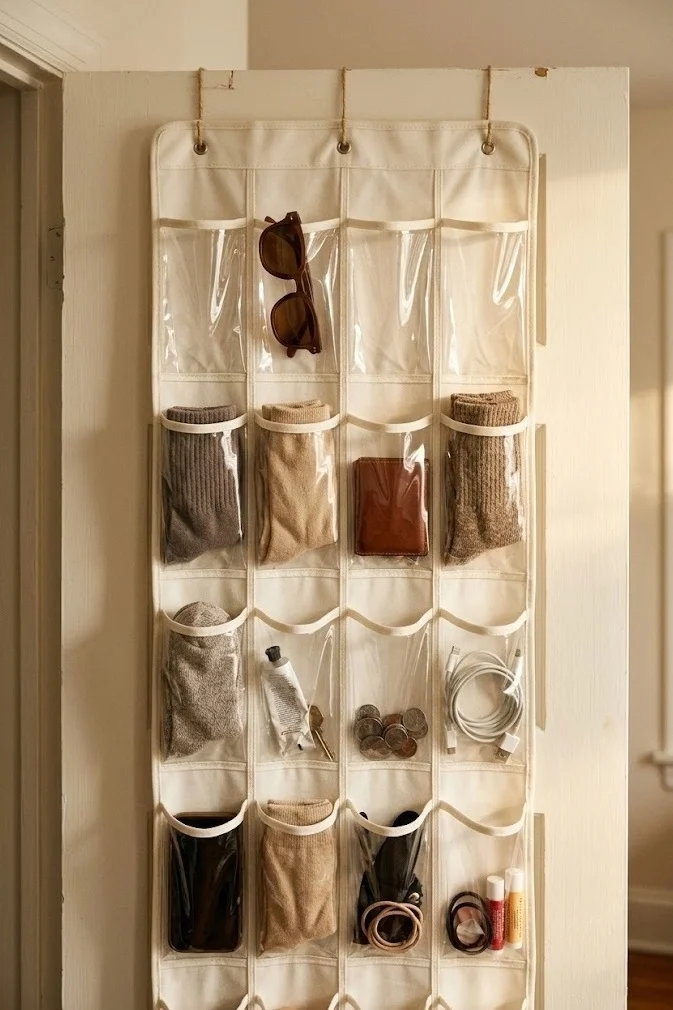
An over-the-door pocket organizer hangs on the back of the closet door and turns a completely dead surface into two dozen small compartments for accessories, socks, sunglasses and travel-size everything. The door is the most ignored storage in any small closet. Clear-pocket versions let you see the contents; opaque ones look tidier but hide what's inside. Hang it on the door's inside face so it stays out of sight, and check the door still has clearance to close over the filled pockets, since bulky items make it bind. An over-the-door organizer needs no hardware at all; it hooks over the top edge and lifts off clean when you leave.
12. An Over-the-Door Hook Rack Lined With Bags and Belts
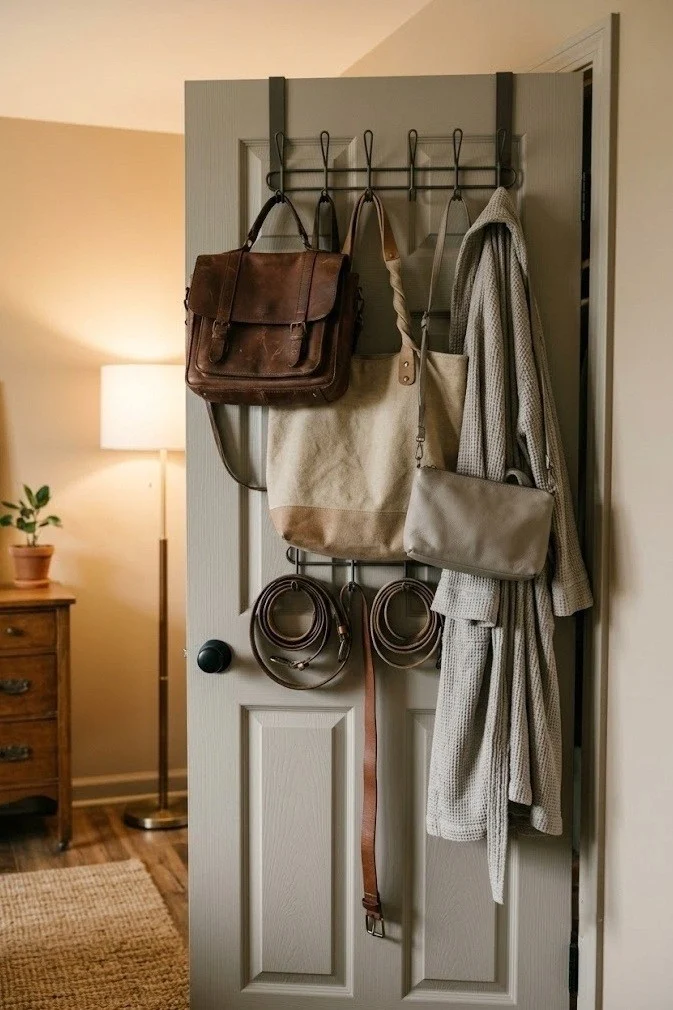
An over-the-door hook rack adds five or six sturdy hooks to the door's back for handbags, belts, robes and totes that have no other home. Bags are awkward to store: they slump on shelves and slide off rods, and hooks let them hang by their straps in a neat row. Like the pocket organizer in idea 11, this hooks over the top edge with no drilling, but it carries weight the fabric pockets can't. Check that the rack's over-door bracket depth matches your door thickness, since one built for a thin hollow door won't seat on a thick solid one. Hang the heavier bags nearest the hinge side so the door still swings easily.
13. An Over-the-Door Full-Length Mirror That Frees the Floor
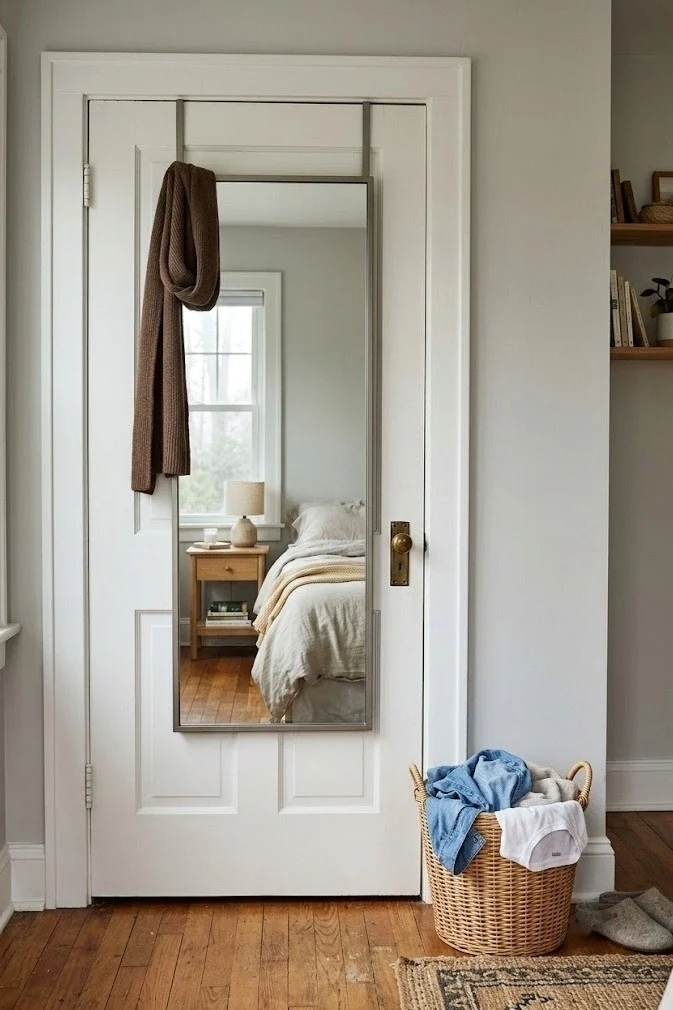
Floor space returns when a full-length mirror moves onto the closet door instead of leaning against the wall, killing the need for a stand that eats square footage in a small bedroom. A leaning floor mirror takes up real estate a small room can't spare; the door already exists. Choose one with a bracket that hooks over the top, not the adhesive kind, which fails on textured doors and can pull paint on move-out. Add the felt spacers so the mirror doesn't bang the door with every open and close. This is more bedroom-saver than closet fix, but it clears the floor zone so a dresser or laundry basket fits where the mirror used to stand.
14. Over-the-Door Wire Basket Shelves Holding Folded Tees and Towels
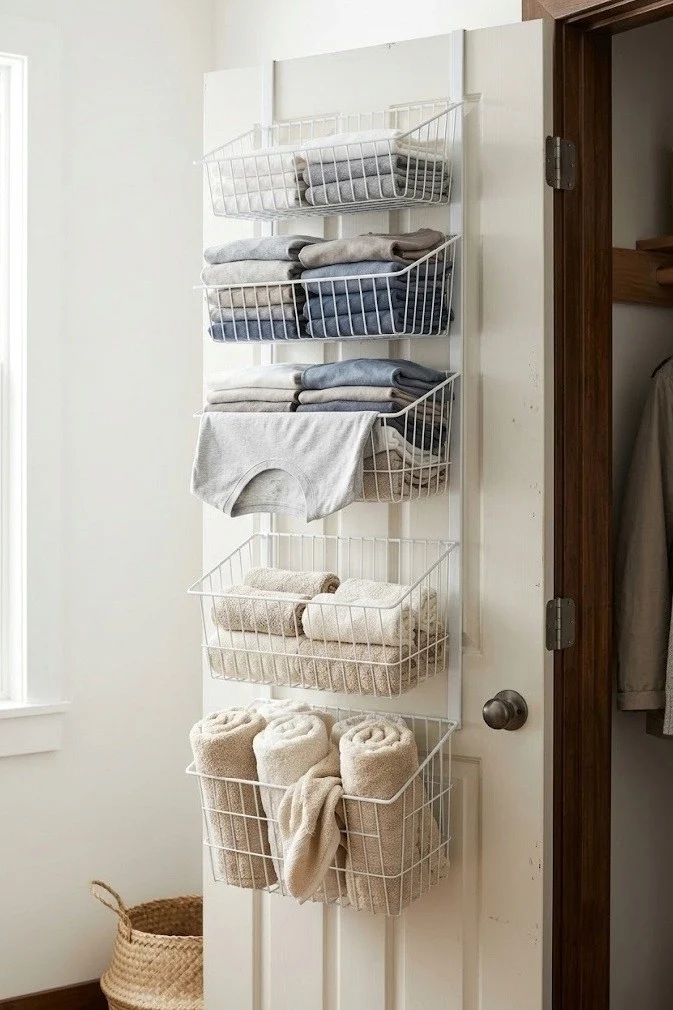
Over-the-door wire baskets stack three or four shallow shelves on the door's back for folded tees, towels or gym clothes, adding shelf space where there was none. They work where pockets are too small and hooks too messy for folded stacks. Wire lets air through, which suits towels and workout gear that shouldn't sit sealed. Keep the stacks short so items don't spill over the shallow lip when the door swings, and put lighter loads up high so the whole rack doesn't lever the door outward. Like other over-door fixes, it lifts off clean at move-out. Match the basket depth to your door clearance so the closet still shuts fully.
15. Slim Velvet Hangers Replacing the Bulky Plastic Ones
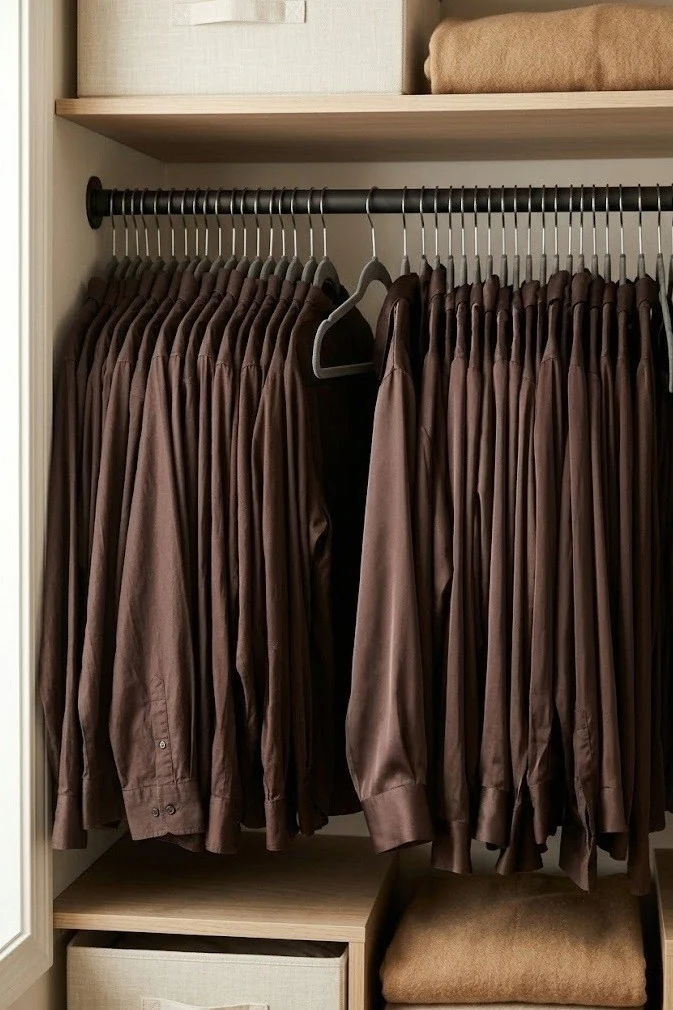
Swapping bulky plastic and wire hangers for slim velvet ones can fit up to twice as many garments on the same rod, because each hanger is about a quarter the thickness. This is the cheapest high-impact fix in the whole closet. The velvet flocking also grips fabric, so wide necklines and silky tops stop sliding to the floor. Buy them in one color for a uniform look that instantly reads tidier, and count your current hangers before ordering so you're not left short. Slim velvet hangers cost little and move with you in a box. The one caution: they aren't built for heavy coats, which can bend the thinner ones, so keep outerwear on sturdier hangers.
16. Cascading Hanger Hooks Stacking Garments Vertically Off One Hanger
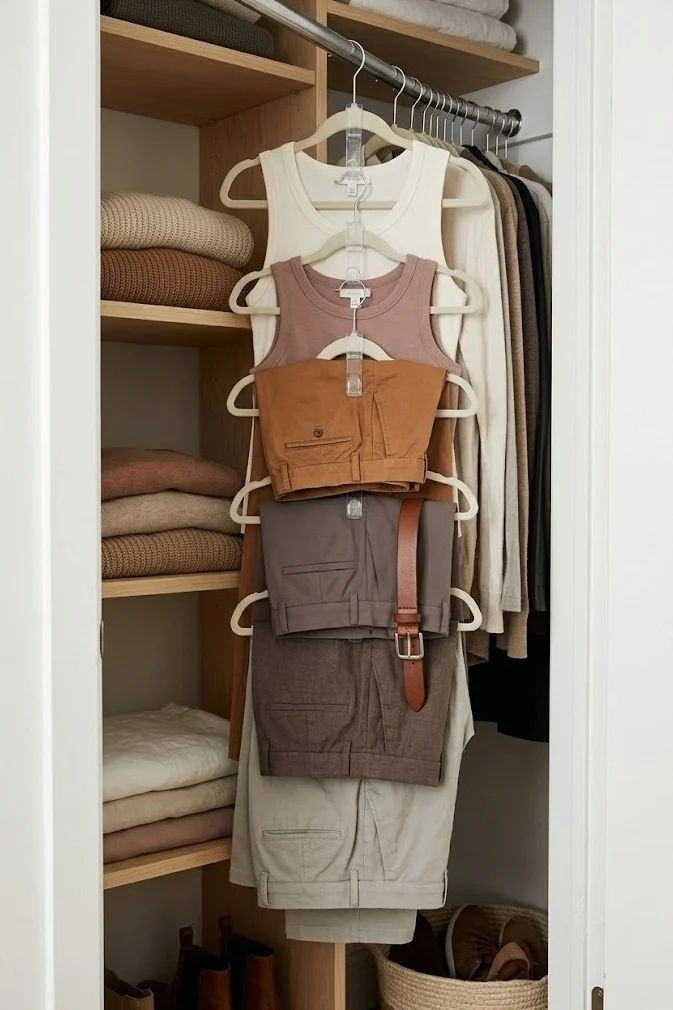
Cascading hanger hooks let one hanger hold four or five more beneath it, stacking outfits or same-category items down instead of along the jammed rod. They multiply capacity in the exact spot where the rod is most crowded. Slip the connector over a hanger's neck and drop more hangers into its lower slots, building a vertical column of clothes. This pairs naturally with the slim velvet hangers in idea 15, since thin hangers keep the stacked column from bulging into the next one. Use it for pants, tanks or a coordinated outfit set, not heavy items, which drag the column down and stress the top hanger. A few plastic connectors cost almost nothing and clip on in seconds.
17. A Hanger-Mounted Loop Organizer Holding Scarves and Belts in One Slot
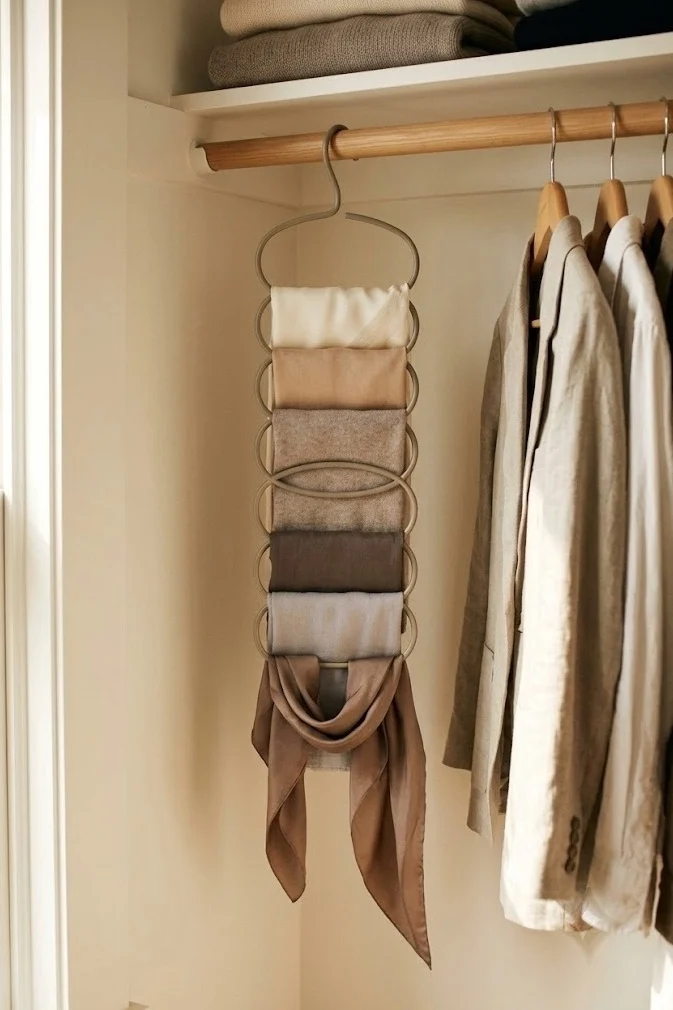
Eight to twelve scarves or belts fit on one hanger's width with a loop-style organizer, clearing the tangle they cause loose on hooks or shelves. Accessories are space-inefficient scattered; threaded through loops, they hang flat and visible. Choose one with a non-slip coating on the loops so silk scarves don't slide out onto the floor. Hang it near the door end of the rod so you grab a scarf on the way out without digging. It reads busy if overloaded, so keep it to one accessory type per organizer rather than mixing belts and scarves in the same loops. Like the cascading hooks, it turns one hanger's footprint into storage for many items.
18. Adjustable Drawer Dividers Splitting a Jumbled Closet Drawer Into Zones
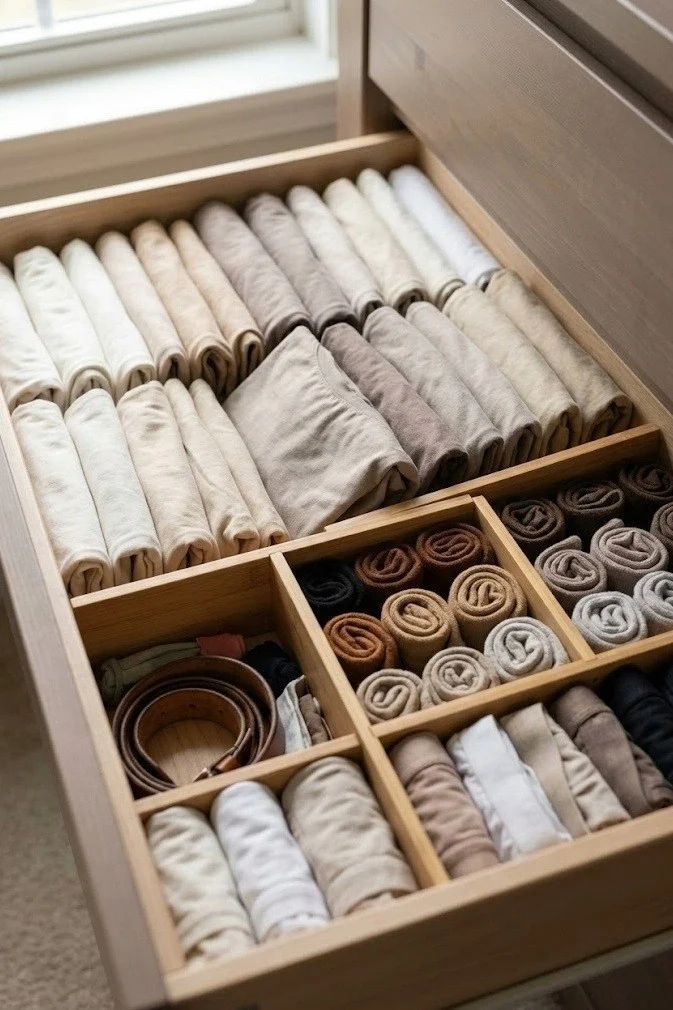
Adjustable drawer dividers partition a chaotic closet drawer into fixed zones so socks, underwear and folded tees stop merging into one pile. A single open drawer is where organization goes to die; dividers give every category its own wall. Spring-loaded or expandable dividers wedge against the drawer sides with no screws, so they suit a rented dresser or a rolling cart drawer. Set them to your folded-item width first, then adjust as you go. Drawer dividers pair with file-folding: stand items upright in each zone so you see everything at once instead of stacking and digging. Buy expandable ones that fit a range of drawer widths so they carry over to your next place.
19. A Hanging Jewelry and Accessory Organizer on the Rod's End
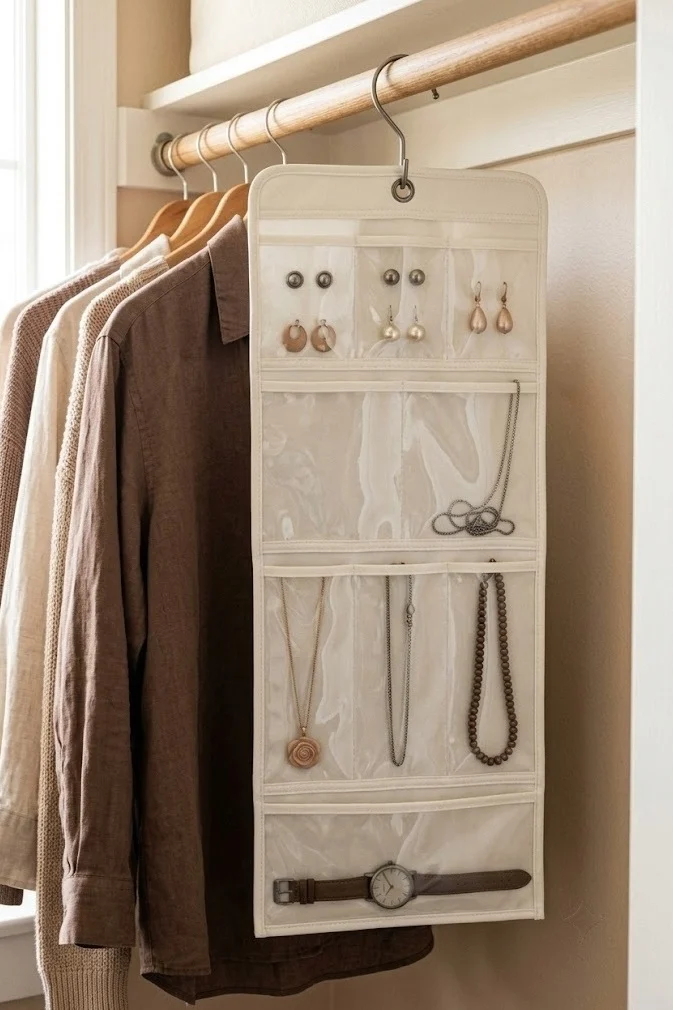
A hanging accessory organizer with clear pockets holds jewelry, watches and small items on the rod, keeping them visible instead of tangled in a drawer. Small valuables vanish in bins; a pocketed panel keeps each piece in its own window. Hang it at the door end of the rod where light hits it, and pick a double-sided one to double capacity in the same footprint. Clear vinyl pockets let you spot the earring you want without opening anything. Keep heavier necklaces low so the panel hangs straight rather than bunching. These hanging shelves take one hanger's width and lift off with everything inside when you move, no repacking each piece.
20. A Stackable Cube System Built Up Like a Mini Closet Wall
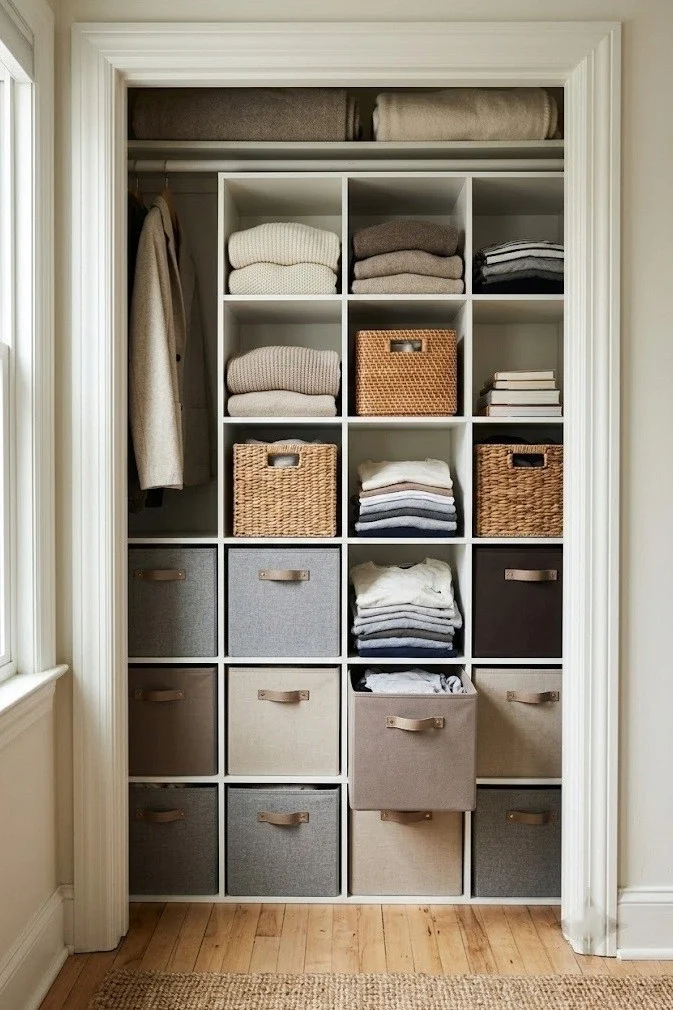
When hanging space is maxed, a stackable cube storage system builds a freestanding grid of open and bin-fronted compartments that works like a built-in closet without a single screw. Vertical cube towers add folded and binned storage on the floor footprint you already have. A modular closet organizer in cube form lets you configure it to your exact closet width and stack only as high as the ceiling allows. Anchor tall stacks by keeping heavy bins at the bottom, since a top-heavy tower tips. Mix open cubes for grab-and-go items with fabric-drawer inserts for anything you'd rather hide. It disassembles flat, so the same system reconfigures into whatever your next closet needs.
21. A Narrow Rolling Shelf Filling the Awkward Dead Corner
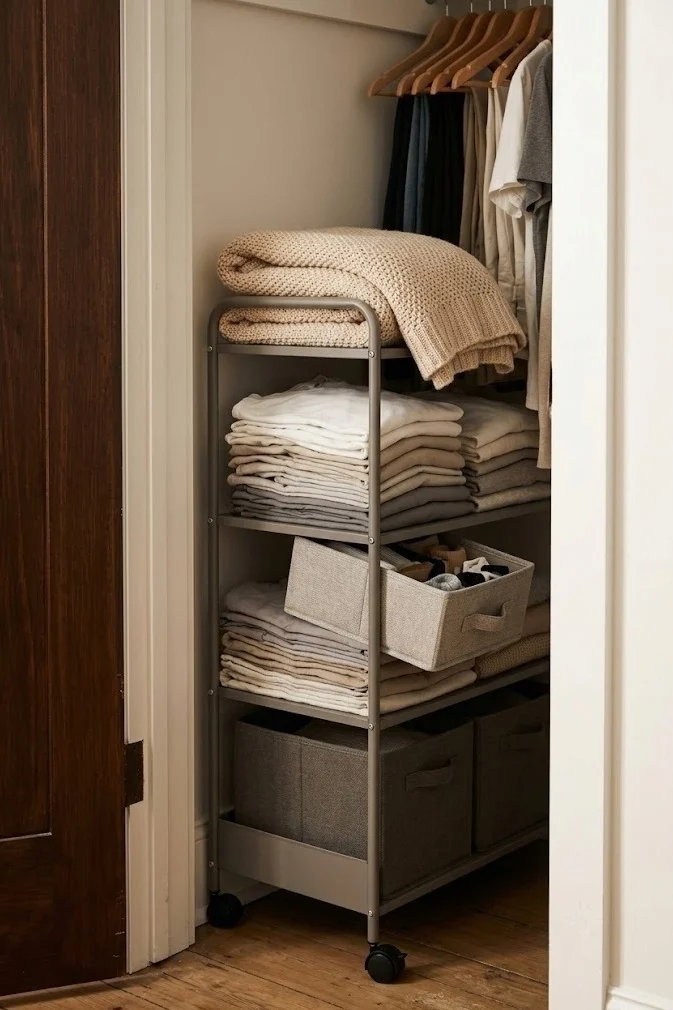
A narrow rolling shelf or slim tension-rod corner unit claims the dead corner a rectangular closet always leaves unused behind the door swing. Every reach-in has a low-traffic corner where nothing reaches; a slim vertical unit on wheels turns it into stacked storage. Measure the corner's usable depth with the door open, then find a cart under that width so it rolls in and out cleanly. This complements the shoe rack in idea 7: the rack handles the open floor, the corner unit handles the pocket the rack can't reach. Keep it light and rolling so you can pull it forward to grab items at the back. It leaves nothing behind on move-out day.
Final Thoughts
Every fix here holds the same two rules: it uses space the single rod ignores, and it comes out clean when your lease ends. Start with the two cheapest, highest-impact moves, the slim velvet hangers and a double-rod extender, then layer in floor bins, over-door storage and a cube system only where you still feel the squeeze. You don't need all 21; you need the three or four that match your closet's specific problem. A tiny closet stays workable when every inch is doing a job and nothing is screwed to a wall. Save this to Pinterest so it's ready the next time the closet overflows.
Frequently Asked Questions
how do you organize a small closet without drilling?
Use only tension-mounted and hang-over fixes: a double-rod extender that clips to the existing rod, a tension rod for a second light row, over-the-door organizers, and freestanding racks or cube systems. None touch the walls, so nothing needs patching or repainting when you move out.
how can I get more hanging space in a tiny closet?
Add a hanging double-rod extender to split one rod into two rows, then switch to slim velvet hangers, which fit roughly twice as many garments in the same width. Cascading hanger hooks stack more hangers vertically off a single one, multiplying capacity where the rod is most crowded.
what's the best way to use the closet floor without it getting messy?
Lift everything off the flat floor: a two-tier expandable shoe rack for shoes, clear stackable drop-front bins so you reach the bottom without unstacking, and a slim rolling drawer cart under short-hanging clothes. Each keeps items visible and contained instead of piling loose.
are over-the-door organizers safe for rental doors?
Yes, if you use the hook-over-the-top style rather than adhesive. Hooked brackets hang on the door's top edge and lift off with no marks. Add felt pads behind them to stop scratching, and don't overload the hooks, since a stuffed organizer can keep the door from latching.