Here is how to cover carpet in a rental without permanent changes: clean it, cover most of it with the right size rug, and give people something better to look at. This guide puts the fixes in order from free to the bigger buys, so you can stop as soon as the room looks right. Each idea is meant to come out on moving day, with real measurements, rough costs and the mistakes that waste money; test anything new in a hidden spot first. Some carpet problems cannot be cleaned away, and where that is true, the post says so instead of promising a miracle. Save this to Pinterest so the rug sizes are handy when you shop.
1. Rent a Carpet Cleaner Before You Buy a Single Rug
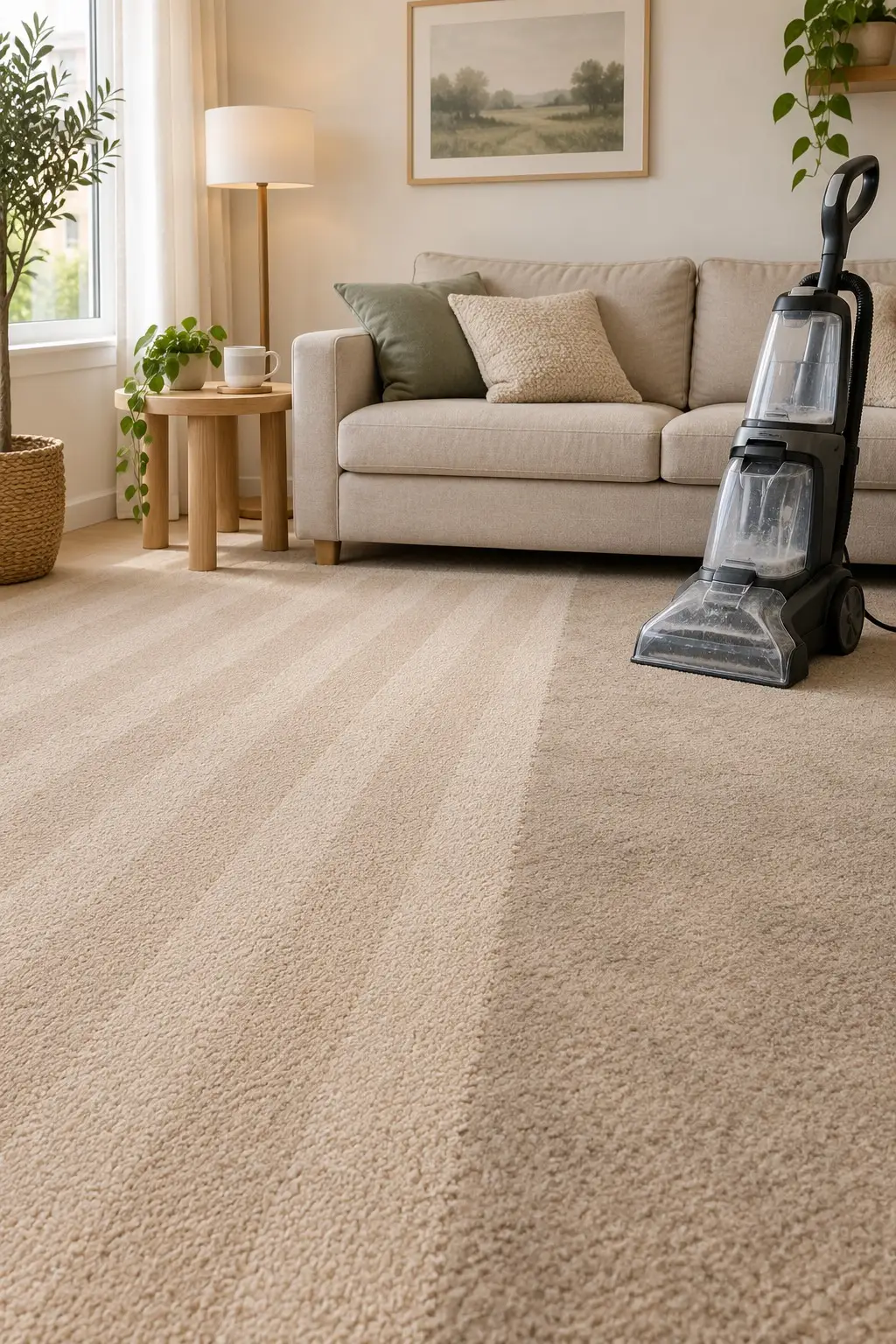
A rented carpet cleaner is the cheapest fix on this list, because a lot of carpet that reads as ugly is really just grey with old dirt. Hardware stores and many grocery stores rent upright extraction machines by the day, and a clean often lifts the dull film that makes beige look brown; check the carpet's care label first, and be extra careful with wool or looped carpet. Vacuum slowly first, in two directions, so the machine is pulling out stains instead of loose grit. Follow the machine's directions, usually one slow wet pass and two or three dry passes, then open windows and run a fan; if the carpet still feels damp the next day, keep the air moving. Check your lease before you start: some landlords ask you to use their cleaning service at move-out anyway, which makes a mid-lease clean the one you do for yourself.
2. Spot-Treat the Stains That Can Actually Come Out
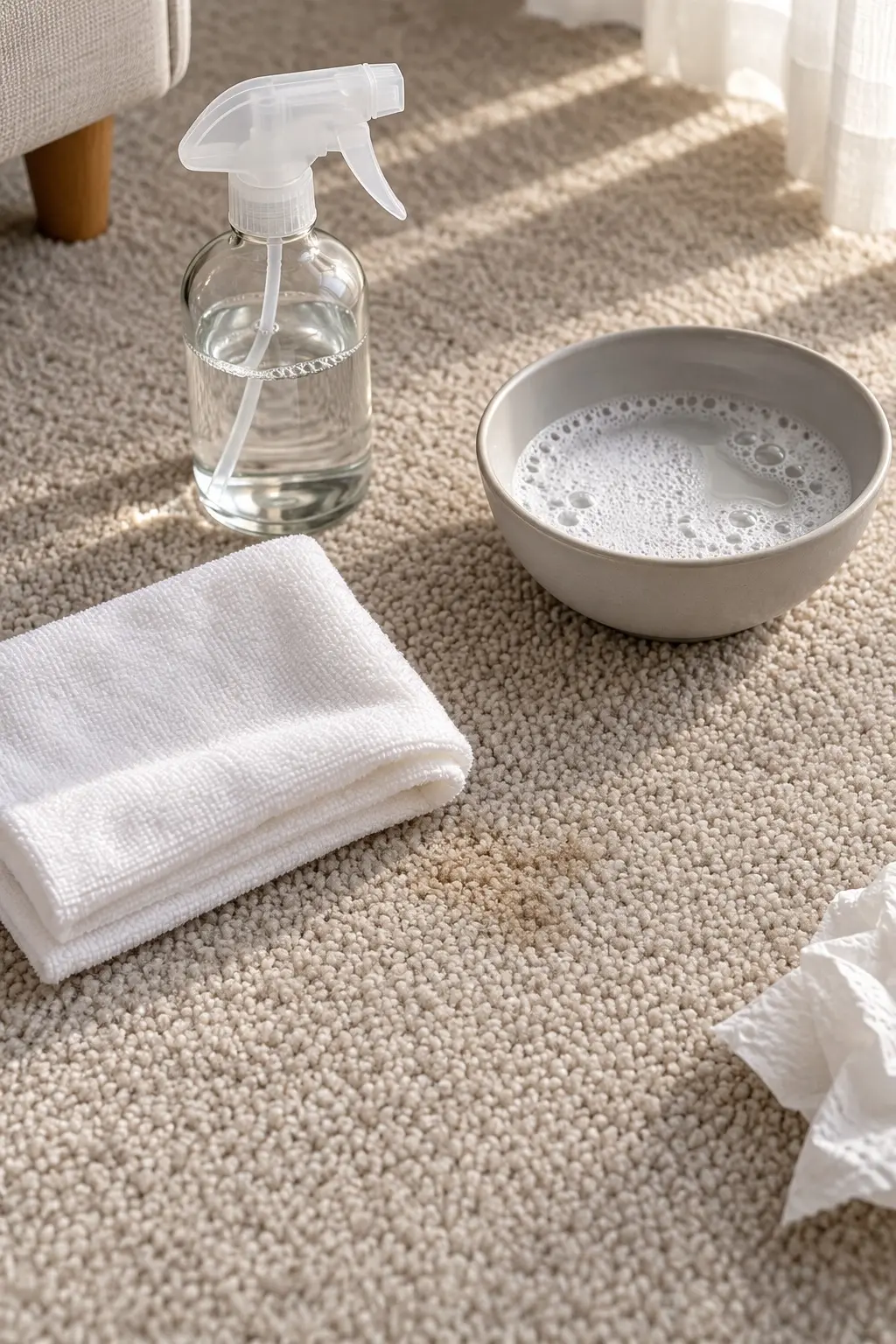
Many food and drink stains on synthetic rental carpet lift with a few drops of clear, non-bleach dish soap in a cup of warm water, blotted from the outside edge inward, then rinsed with a little plain water so no soapy residue attracts new dirt. Pet accidents need an enzyme cleaner used exactly as its label says, since soap can lift the colour but leave the smell behind. Test any product on a hidden patch inside a closet first and judge it only once it is fully dry. Know when to stop: a bleach spot is missing colour, not dirt, and no cleaner will bring it back. Those are the patches to hide with the rug sizing in idea 3 or the furniture moves in idea 11. Photograph every stain you could not remove, with a date, so it is clear at move-out what was there and what you tried.
3. One Oversized Rug That Covers Most of the Living Room
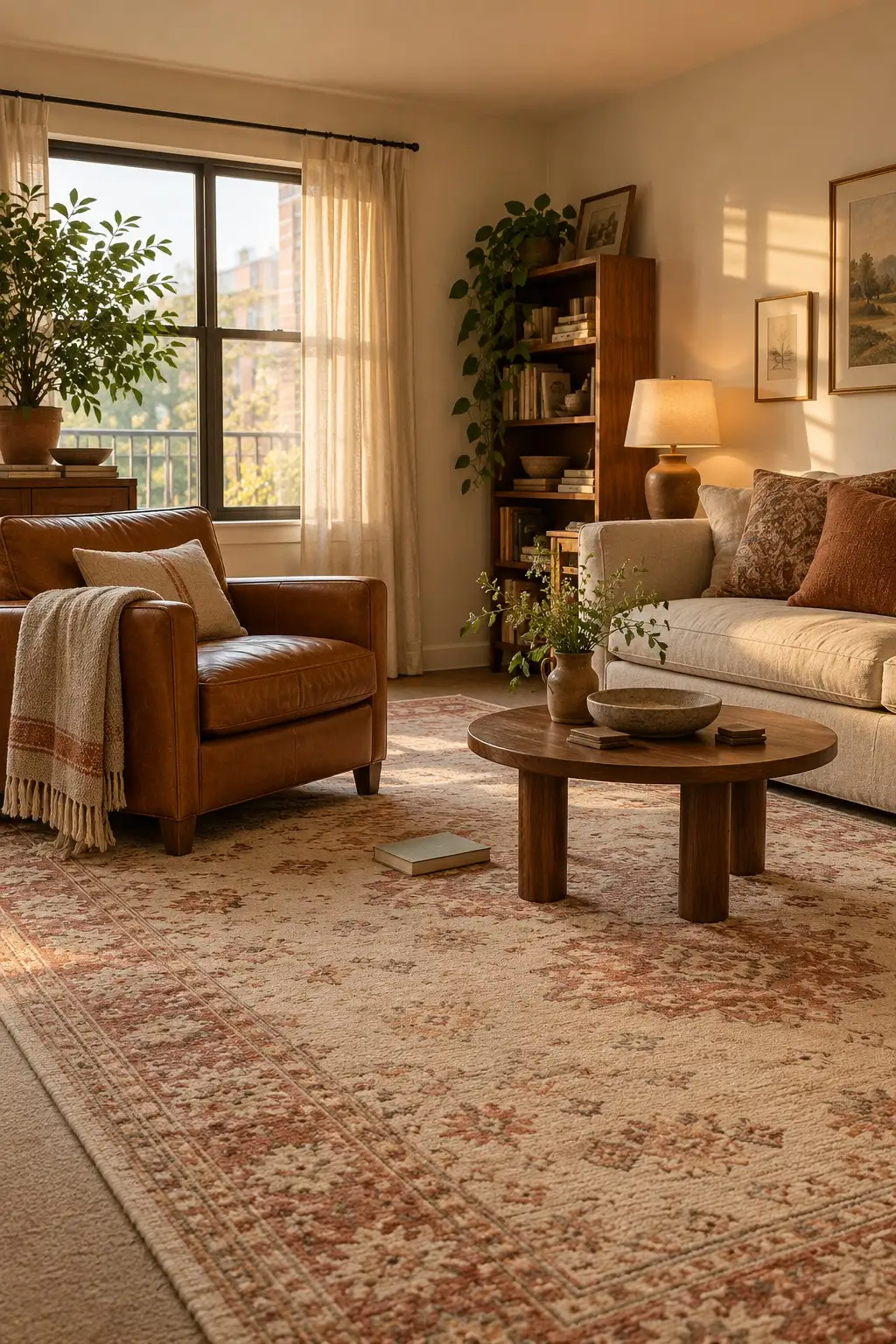
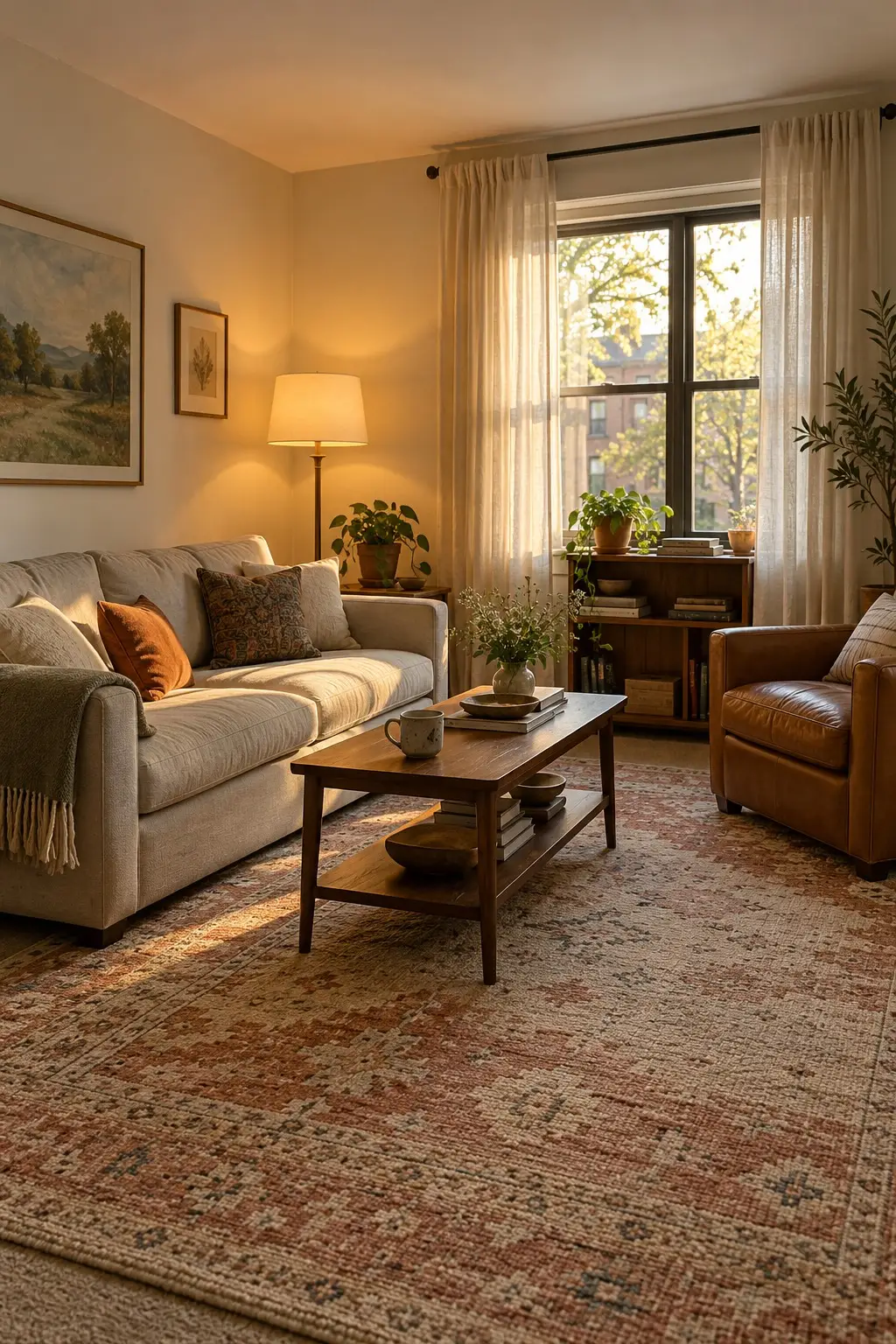
The single biggest change comes from a rug large enough that the carpet becomes a thin border instead of the main floor. In a living room, aim for 10-18 inches of carpet showing between the rug and the walls; in a 12 by 15 foot room that usually means a 9 by 12 rug, not the 5 by 7 most people buy first. A flat-weave or low-pile rug sits better on carpet than a shaggy one, which stacks pile on pile and wobbles under furniture. Wool, jute and polypropylene all work; polypropylene is the cheapest large size and handles spills. Pair it with the grippers in idea 4, because big rugs on carpet drift toward the busiest walkway.
4. Rug Grippers That Stop a Rug From Creeping Across Carpet
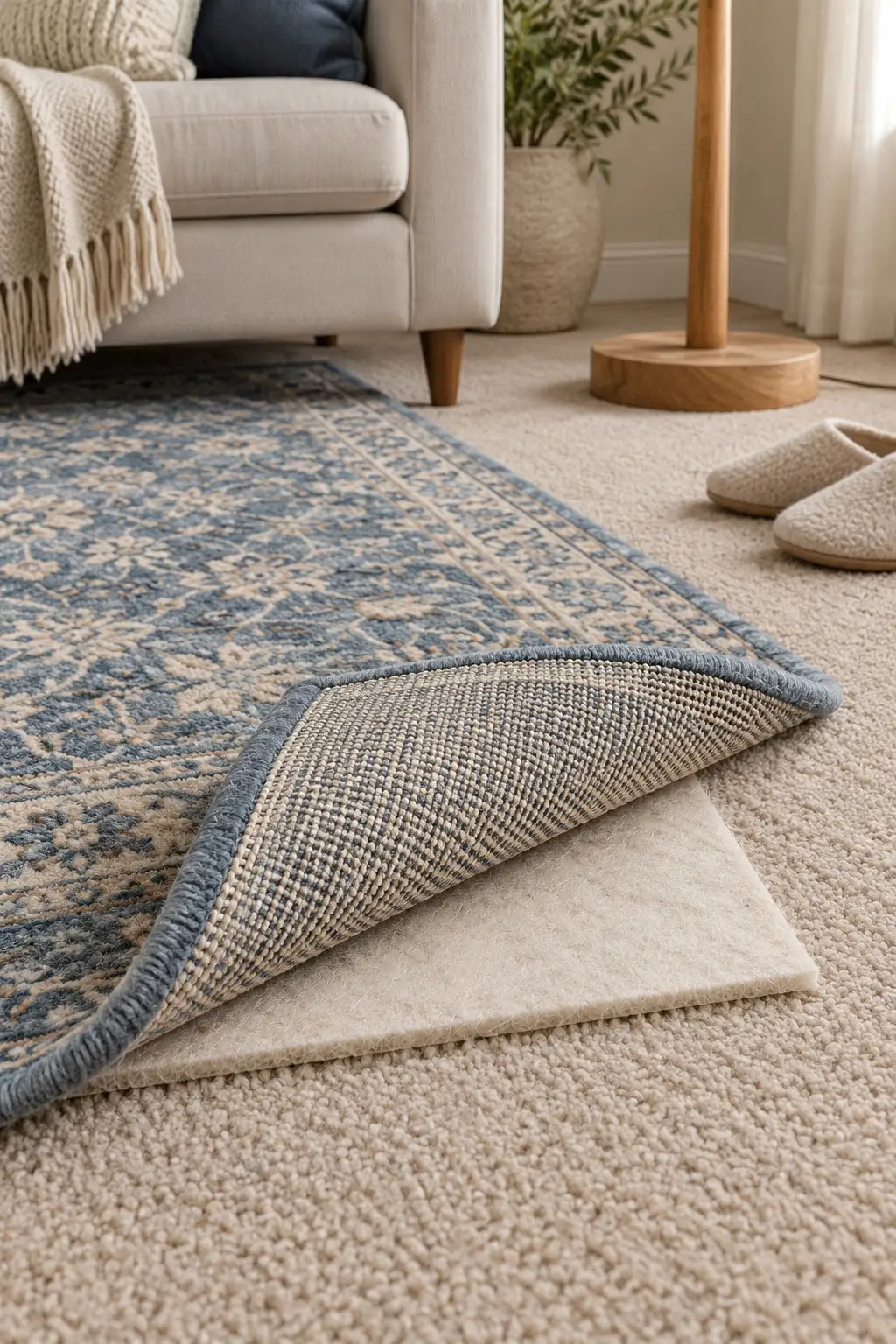
A rug on carpet slowly travels in the direction people walk, bunching into ripples that become trip hazards. The fix is a gripper made specifically for rug-on-carpet use: either a felt-and-mesh pad with a textured underside that grabs carpet pile, or double-sided gripper strips that hook into the carpet and stick to the rug. Standard rubber pads made for hard floors slide on carpet, and plain double-sided tape can leave residue, so skip both and test any gripper in a hidden corner first. Flooring makers widely warn against solid rubber or latex backings on vinyl, and some renters report marks on light carpet, so a felt-based gripper made for rug-on-carpet avoids the question. Strips are the better pick for the layered setup in idea 6, because they hold two rugs together as well as to the floor.
5. A Rug Colour That Makes Dated Carpet Look Chosen
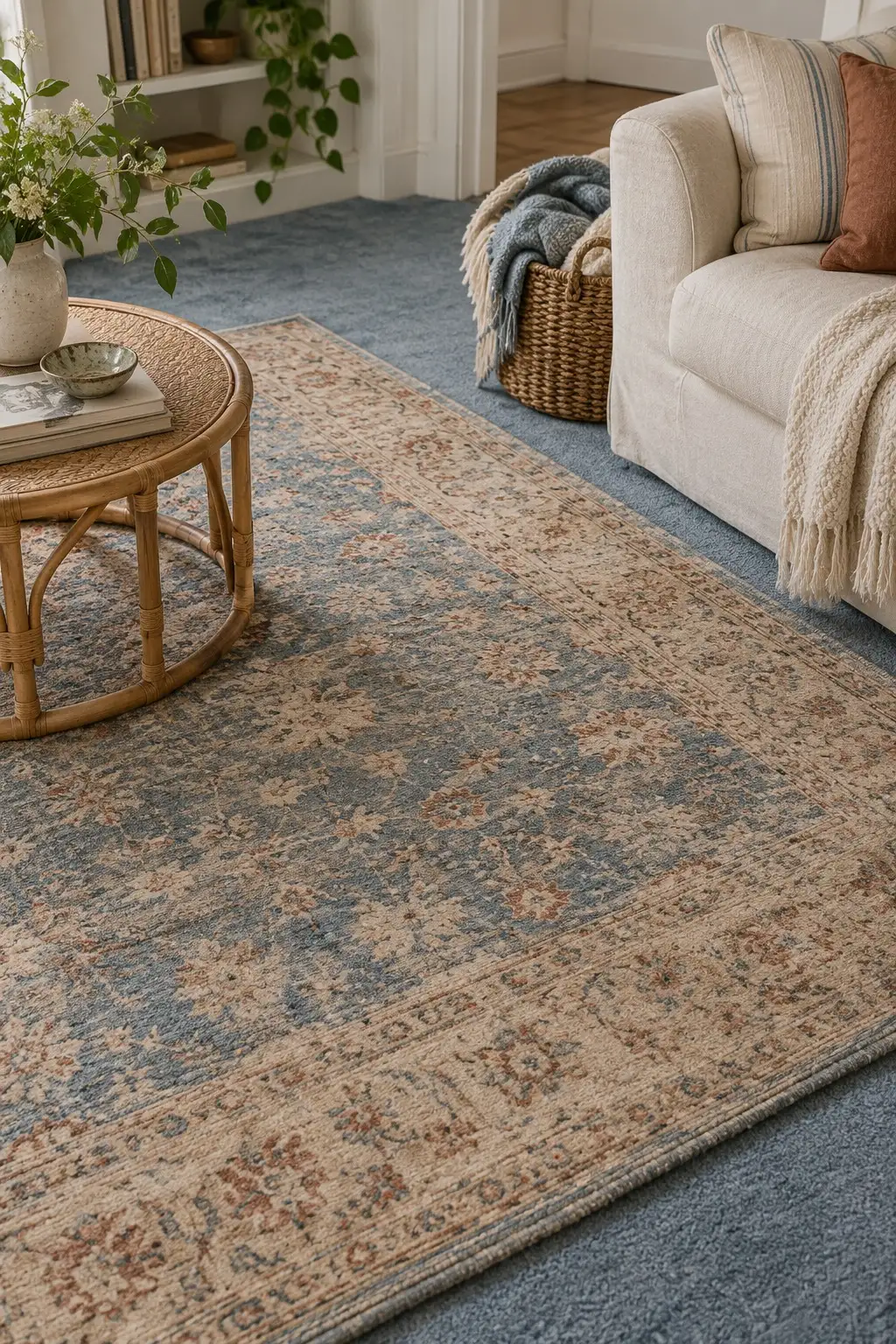
Old carpet looks least dated when the rug on top repeats its colour somewhere in the pattern, because the floor then reads as a decision instead of a leftover. Tan or brown carpet works with rugs that carry cream, rust and a bit of that same brown. Greige carpet pairs with cool grey and ink blue. The hard ones, dusty blue or mauve, need a vintage-style rug with a faded thread of that exact shade. Fighting the carpet with a stark black-and-white rug usually makes the old colour shout louder. Take a photo of the carpet in daylight, next to a white sheet of paper for true colour, and hold it beside rug listings; never cut fibres from installed carpet.
6. Layer a Patterned Rug Over a Cheap Jute Base
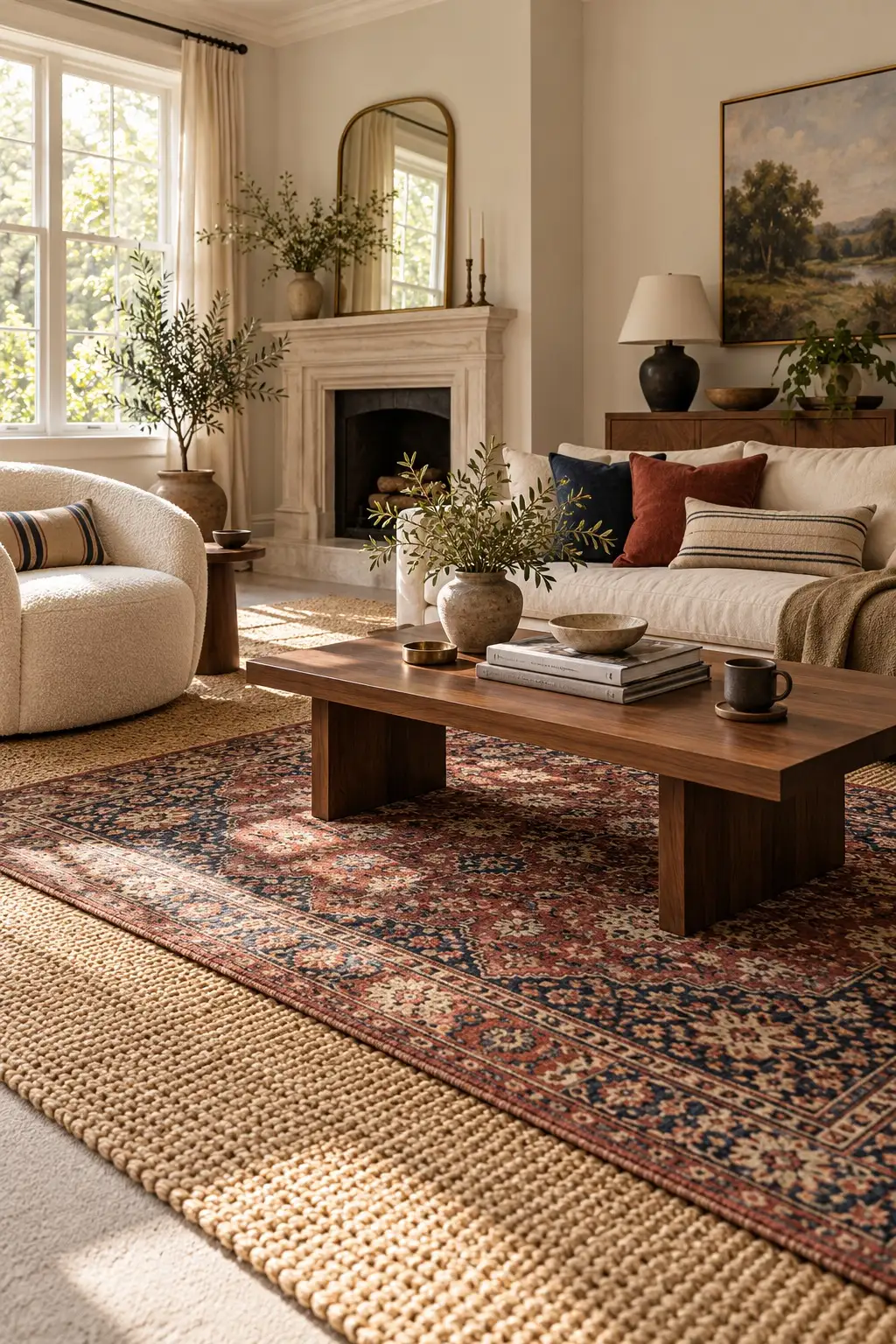
Layering lets a small patterned rug, the kind you actually love but can only afford in 5 by 8, sit on top of a big inexpensive base that does the covering. A flat jute or sisal-look rug in 8 by 10 or 9 by 12 makes a neutral second floor, then the patterned rug goes on top, roughly two thirds the size of the base and slightly off-centre. The base hides the carpet and the top rug brings the colour you chose in idea 5. Jute is coarse underfoot, so put the softer rug where feet land, in front of the sofa. Hold both layers with the gripper strips from idea 4.
7. A Bedroom Rug That Hides the Carpet Where You Step
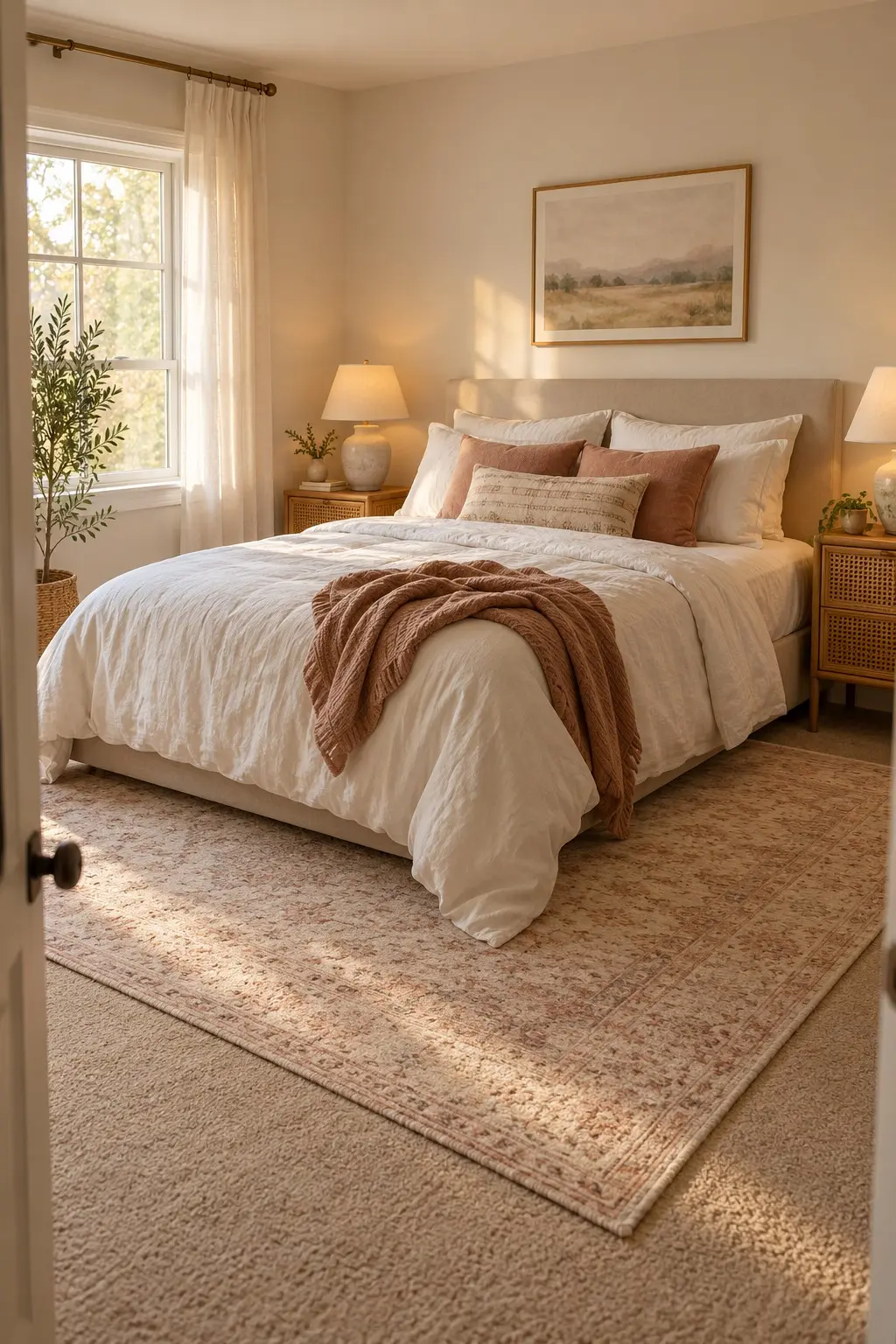
In a bedroom, the carpet you notice is the strip you step on every morning, so the rug should extend 18-24 inches past each side of the bed. For a queen bed that usually means an 8 by 10 placed sideways, starting just in front of the nightstands; for a full bed a 6 by 9 can work. Run it under the bottom two thirds of the bed so it does not shift when you sit down. A soft low-pile rug feels good underfoot and stays flat under the bed frame. If the carpet near the closet is the worst part, a small runner there handles it the same way as the hallway runner in idea 8.
8. A Hallway Runner Over the Worn Traffic Lane
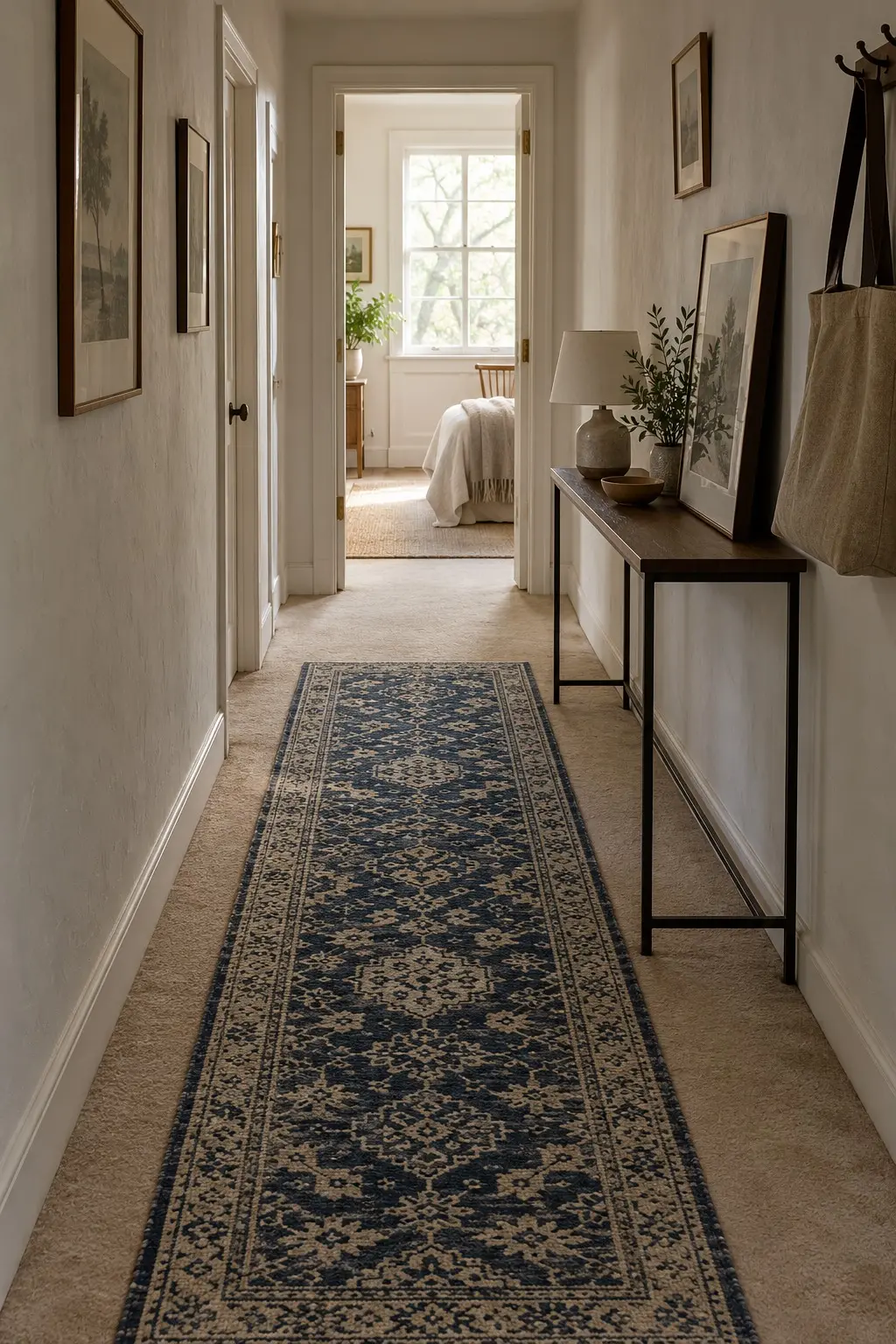
Hallway carpet wears in a single grey path down the middle, and a runner covers exactly that path. Size it so 4-6 inches of carpet shows on each side and the ends stop 6-12 inches short of the walls or door thresholds, which keeps it from catching on doors. Flat-weave runners lie flatter on carpet than tufted ones, and a pattern hides new dirt far better than a solid colour. Hold it down with gripper strips at both ends and once in the middle. If the hall leads straight from the front door, pair it with the inside entry mat in idea 13 so the runner is not doing the mat's job.
9. Machine-Washable Rugs for Pets, Kids and Spills
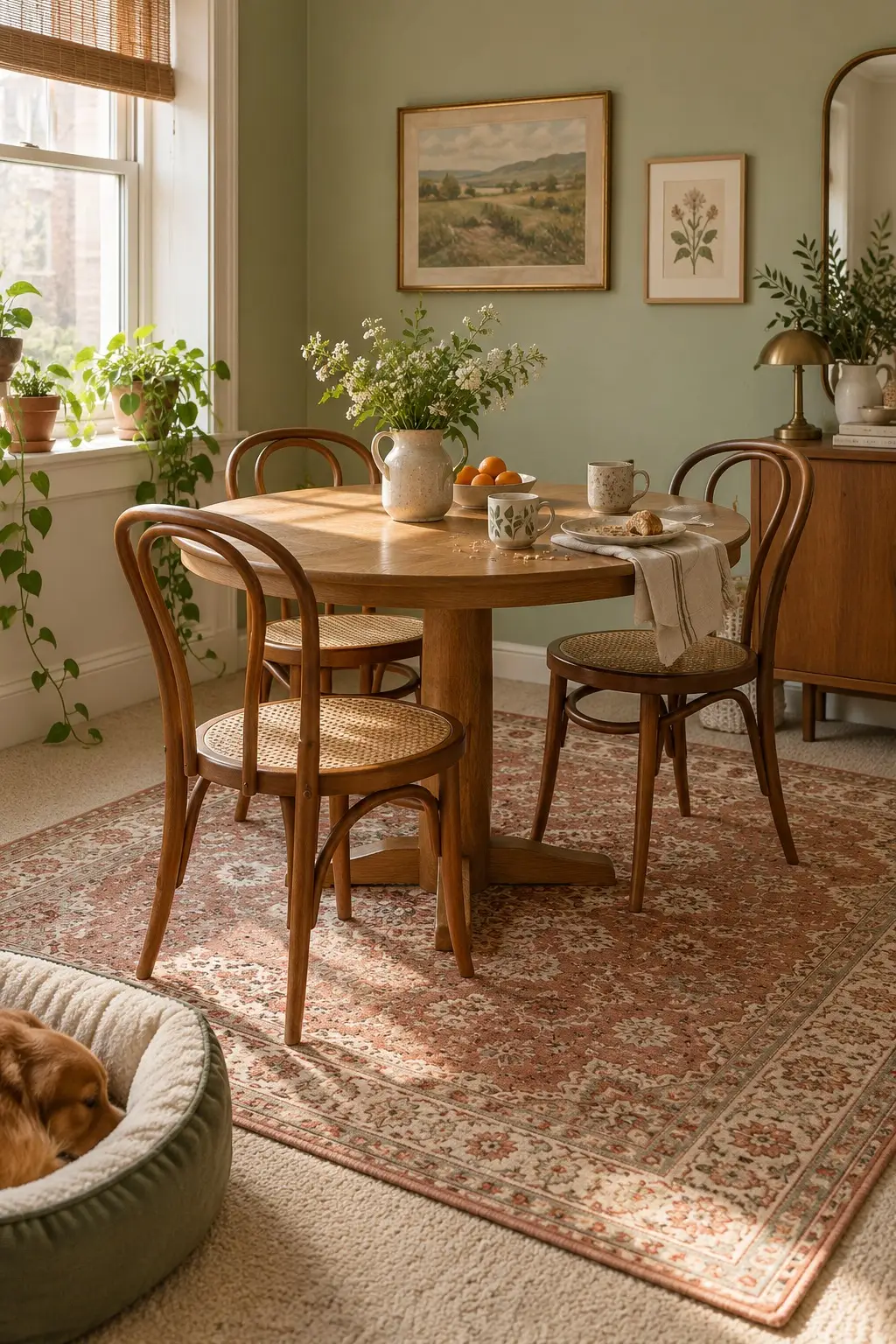
If the carpet is ugly because of pets or small kids, a machine-washable rug is the layer that keeps the problem from spreading. These are thin, flat rugs with a separate non-slip pad, designed to come off the floor and go in a home washer in sizes up to roughly 5 by 7 or 6 by 9, depending on the machine. Put one where the mess happens: under the dining table, by the pet bowls, in front of the sofa where snacks land. Wash and dry exactly as the label says, since water temperature and drying rules differ between brands. They are thinner than the oversized rug in idea 3, so they show the carpet texture a little, but a busy pattern hides that.
10. An Irregular Hide Rug That Breaks Up Wall-to-Wall Carpet
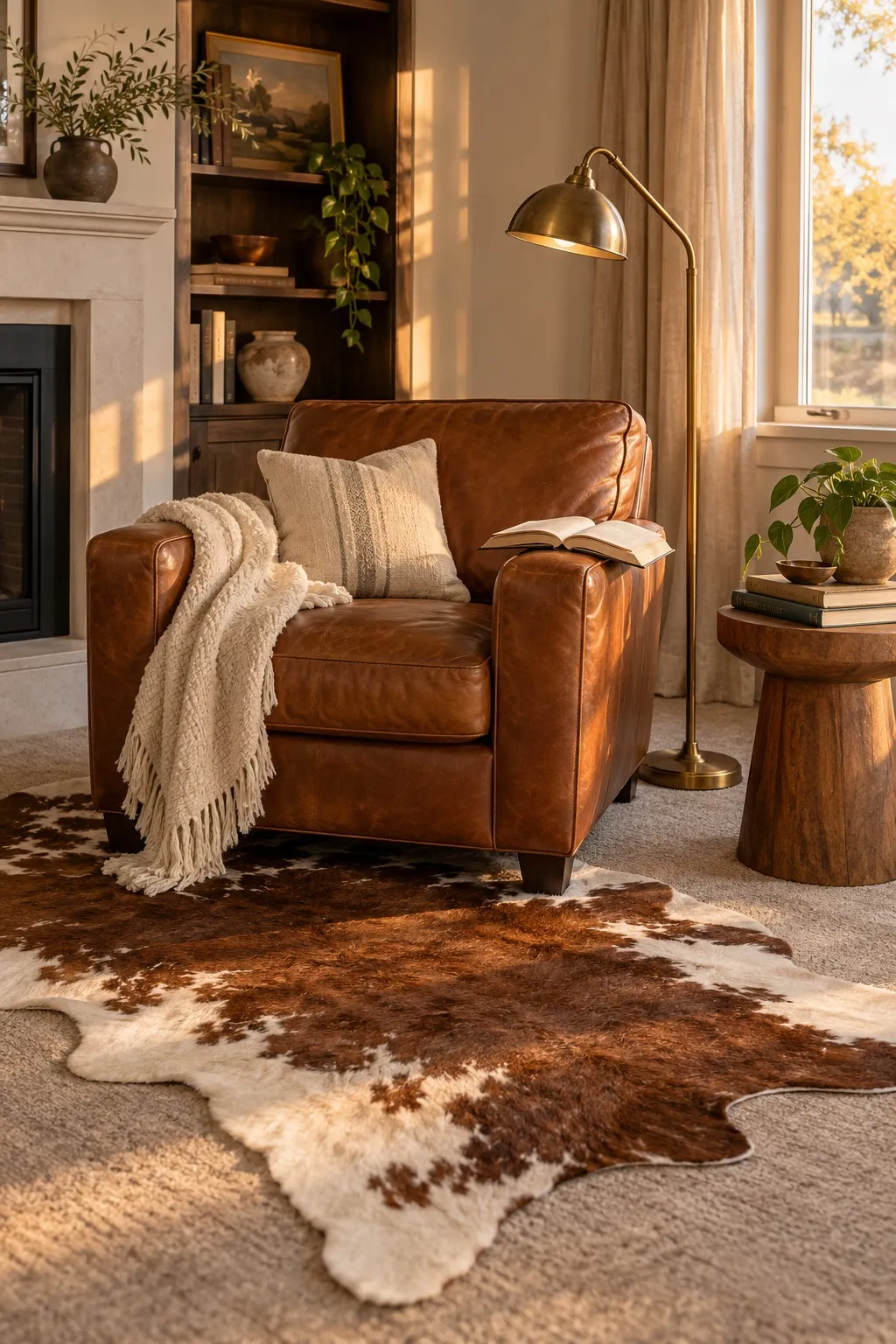
A cowhide or faux hide rug works on carpet because its irregular outline interrupts the flat, edge-to-edge look that makes wall-to-wall carpet feel dated. It reads as a deliberate object on the floor, not a cover-up. Use it in a spot where a rectangle would look forced: angled in front of a reading chair, under a small desk, or across a corner. Real hides are thin and flexible, so the edges can curl on soft carpet; a non-slip felt pad cut just smaller than the hide, like the ones in idea 4, keeps it flat without sticking anything to the hide. Faux versions cost less and some are washable, but cheap ones can look shiny, so check close-up photos.
11. Move the Furniture So It Sits on the Worst Spots
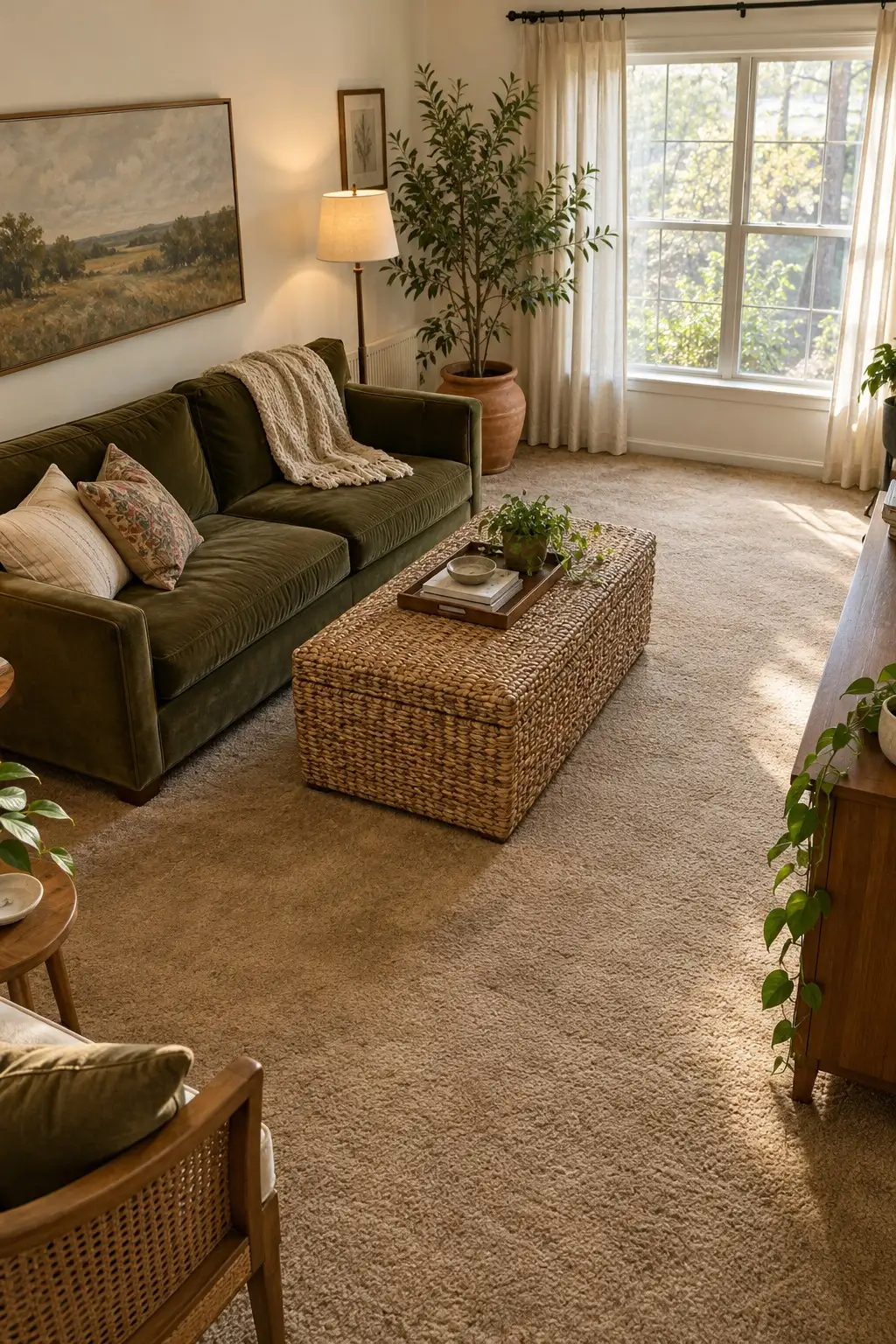
Furniture is the free carpet cover nobody counts: a dresser, bookcase or sofa can sit right on a stain or a burn mark. Hiding a mark is not the same as fixing it, so report any damage that was there before you moved in, in writing, and photograph it. A sofa pushed onto a worn patch, a plant stand on a bleach spot, a storage ottoman over a stain in the middle of the room. Keep walkways at least 30-36 inches wide so the new layout still works. Before you settle on it, check how the room flows; the living room layout guide covers zero-drill arrangements for small spaces. Read idea 12 before moving anything heavy, since furniture leaves dents in carpet.
12. Lift Old Furniture Dents and Stop New Ones
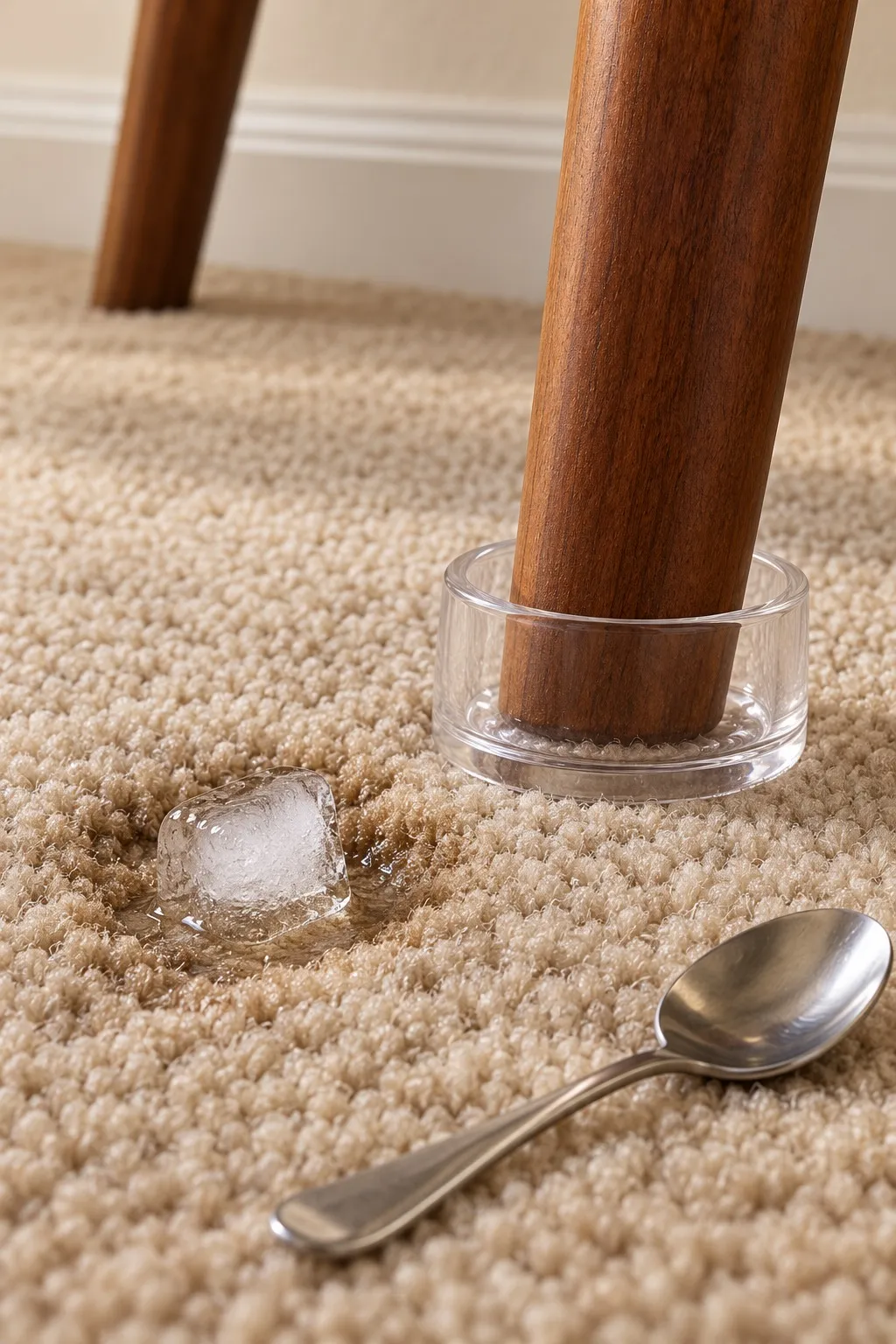
Dents from a previous tenant's furniture often come up with ice: set one small ice cube in each dent, let it melt, blot the extra water right away so the backing stays dry, then lift the fibres gently with your fingertips or the edge of a spoon. Try it on one small dent first and check the carpet's care guide if you have it; very old, deep dents may only partly recover. To stop new dents, put furniture cups or wide coasters under the legs of anything heavy; they spread the weight so the pile is not crushed in one spot. This matters most for the layout in idea 11, where furniture now sits in new places. Shifting heavy pieces an inch every few months helps too.
13. An Inside Entry Mat That Keeps the Carpet From Greying
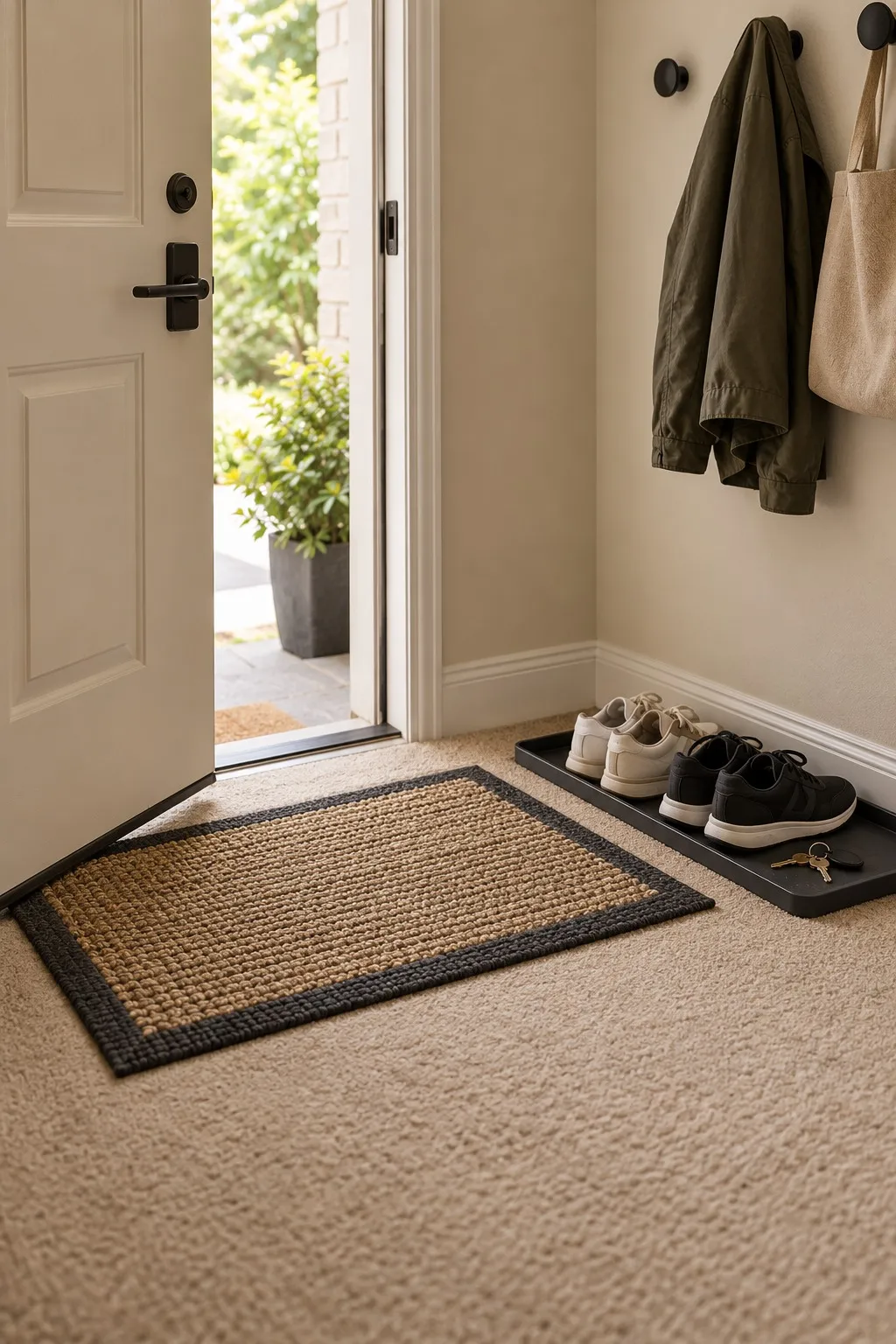
Carpet near a front door goes grey first because grit from shoes gets ground into the pile with every step. An inside entry mat, placed right inside the door, catches that grit before it reaches the carpet and slows the damage the cleaning in idea 1 just reversed. Look for a low-profile mat with a non-slip back made for carpet, at least as wide as the door opening, so both feet land on it. Shake it out weekly. If your front door opens straight into the living room, the entry zone needs more planning, and a flat-weave runner from idea 8 can extend the landing strip.
14. A Carpet Chair Mat That Saves the Office Corner
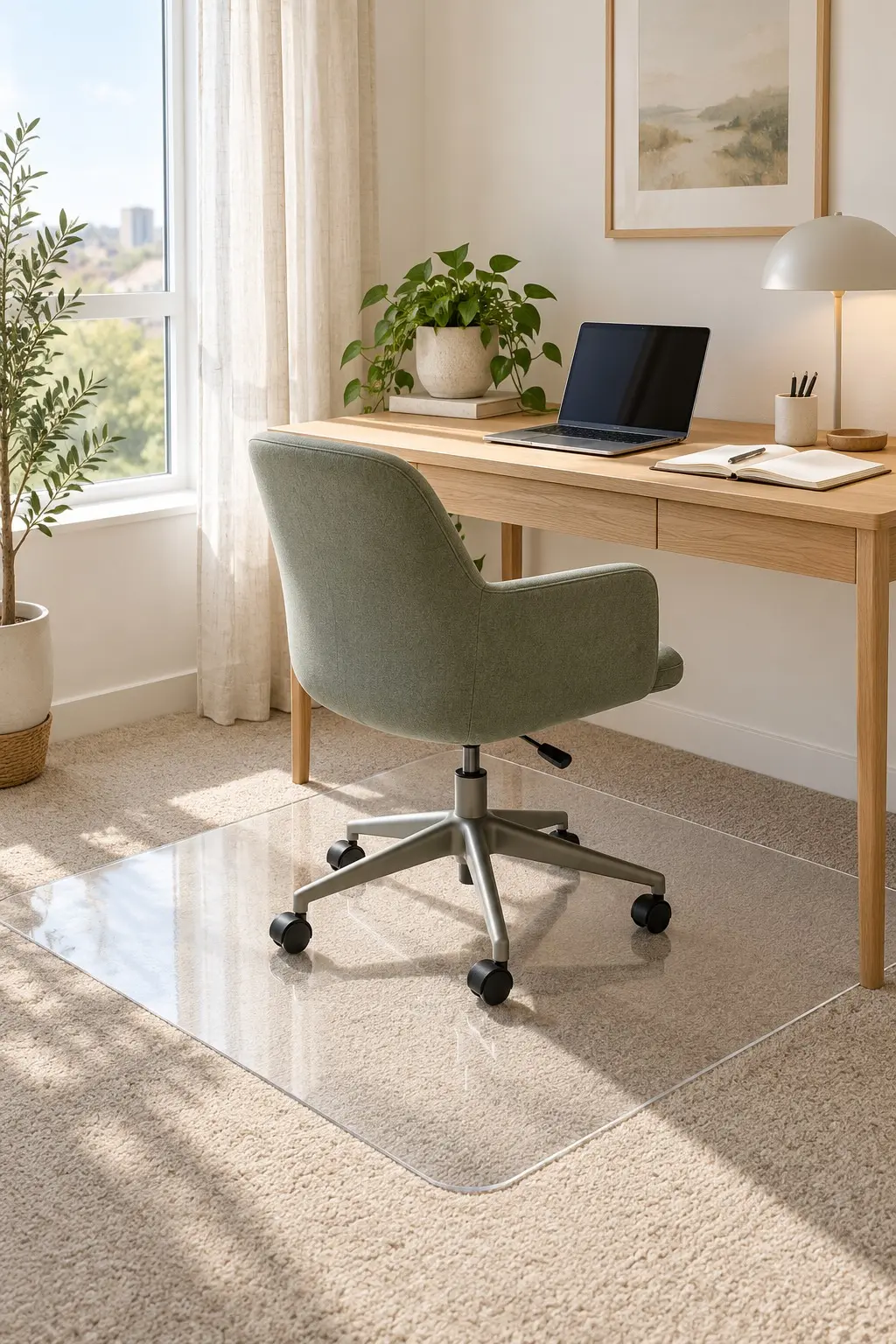
An office chair rolling on rental carpet crushes and frays a half-circle behind the desk within months. A chair mat rated for carpet, with small cleats underneath that grip the pile, takes most of that wear and lets the chair roll freely. Match the mat to the pile height listed on the mat: low-pile carpet needs a standard carpet mat, while plush carpet needs a thicker, firmer one, or it will crack and dip. Clear polycarbonate shows the carpet through it; a woven or printed mat hides an already damaged spot. Size it to where the chair actually rolls, including when you lean back and push away, and check the mat maker's pile-height range before buying.
15. Pull the Eye Up With Curtains, Art and Lamps

A room where the walls and windows are more interesting than the floor makes ugly carpet much less noticeable, because people look at what is lit and at eye level. Hang curtains as high and wide as your hardware allows: no-drill brackets that clamp onto the window casing let the rod run a few inches past the frame, while a tension rod only fits inside it. Lean one large piece of art on a console instead of many small frames. Add lamps at different heights so the room is lit from the sides, not from a ceiling fixture pointing at the floor. A renter-friendly accent wall does the same job on a larger scale and pairs well with the rug colour from idea 5.
16. A Temporary Hard Floor Over Low-Pile Carpet, With Written Permission
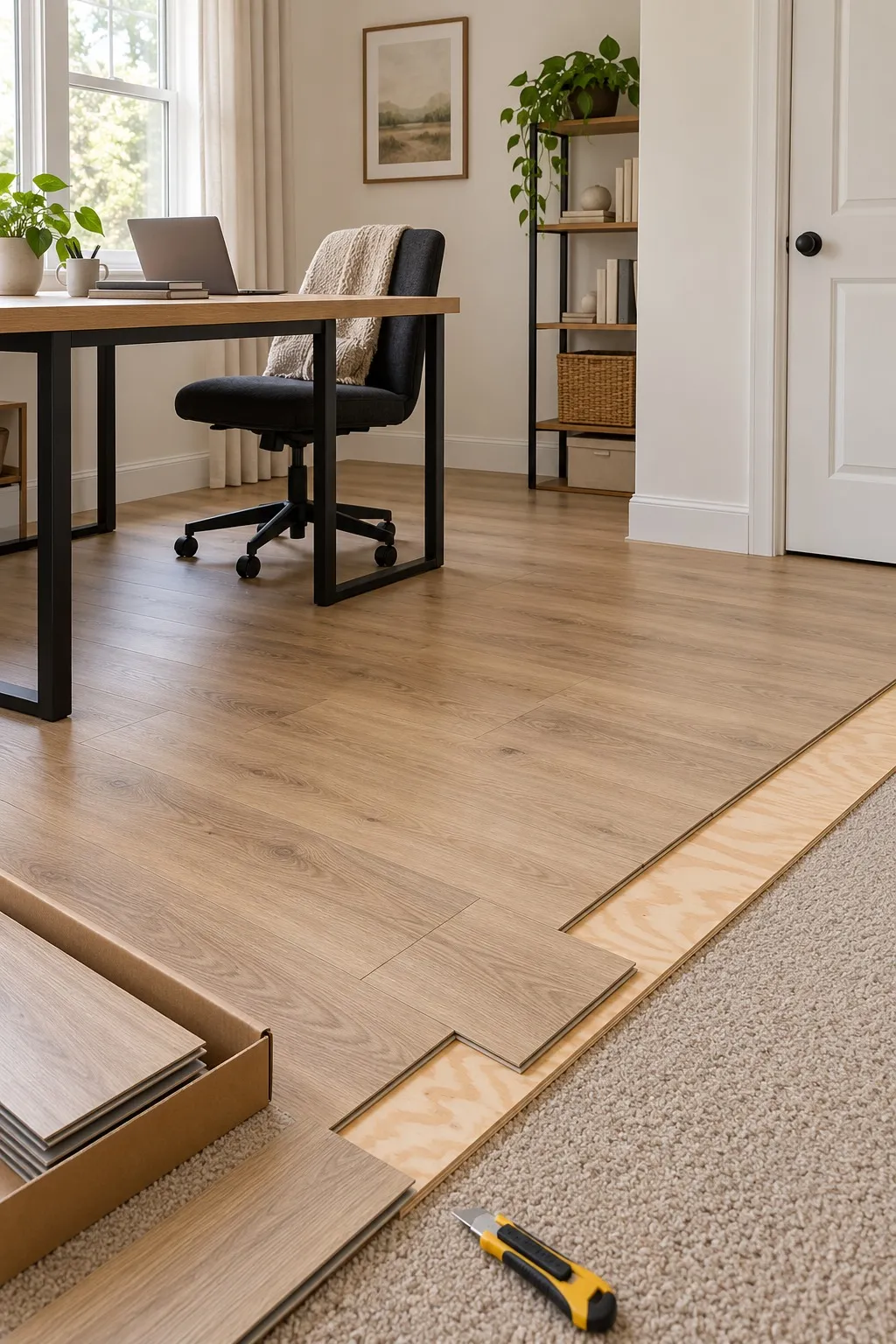
A temporary hard floor is the biggest and riskiest fix here: thin plywood or hardboard sheets laid over the carpet, with floating click-together vinyl planks on top, never planks on the carpet itself. Treat it as a last resort and get written permission first, because most leases have an alterations clause and some buildings ban layered flooring. If the boards rock or bounce on the carpet pad, stop: the planks need a firm, flat base. It only works over low-pile carpet on a sound floor, in a dry room; skip bathrooms, kitchens and anywhere carpet ever gets damp, since trapped moisture can grow mould. The new floor sits roughly half an inch higher, so check every door still swings and finish the edges with a flat transition strip to avoid a trip edge. For most renters, the rug from idea 3 is still the safer route.
Final Thoughts
Ugly rental carpet is mostly a size and order problem: clean what can be cleaned, cover the floor with a rug big enough to matter, protect the high-wear spots, and light the room so eyes stay at wall height. Start with idea 1 and idea 3; for many apartments that pair alone does most of the work. Keep dated photos of the carpet from move-in and before each fix, so you can show what was already there. Save this post to Pinterest so the measurements are with you the next time you shop for rugs.
Frequently Asked Questions
Can you put peel and stick tiles over carpet?
Peel and stick vinyl tiles are not made for carpet; they need a smooth, rigid surface, and on soft carpet they tend to lift, ripple and show seams. A floating floor on thin boards, as in idea 16, is the hard-floor route, and only with your landlord's written OK.
Will a rug on top of carpet damage the carpet?
A rug is generally safe on carpet when the backing is right. Skip solid rubber or latex-backed rugs, which are known to stain vinyl and have been reported to yellow light carpet, and use a felt gripper pad or strips made for rug-on-carpet. Lift the rug and vacuum underneath every month or two.
What size rug do I need to cover carpet in a living room?
Choose a rug that leaves about 10-18 inches of carpet showing at each wall. In a 12 by 15 foot living room that is usually a 9 by 12 rug. Mark the size on the floor with painter's tape first, and make sure the front legs of the sofa and chairs sit on it.
Can I ask my landlord to replace ugly carpet?
Yes, you can ask in writing, with dated photos of stains, wear and tears. What a landlord must replace depends on your lease and state or local rules. Looks alone may not qualify, but mould, strong odours, loose seams or exposed tack strips are safety issues worth reporting separately. Photos put the condition on record.