Moody fall decor ideas for renters come down to one rule most posts skip: fix the light before you touch a single dark textile. Every ranking guide on this look opens with a paint color, then adds a sentence at the bottom about how renters can use throw pillows. That is backwards. This is a whole-home pass, no paint anywhere, ordered by layer, so you build the look in the order that actually works: lighting, then textiles, then walls, then surfaces, then scent and sound. I have been in a builder-beige one-bedroom for three years and I know exactly what a landlord notices at move-out. Save this one to Pinterest before you start buying.
1. Plug-In Brass Sconces Flanking the Sofa, Zero Wiring
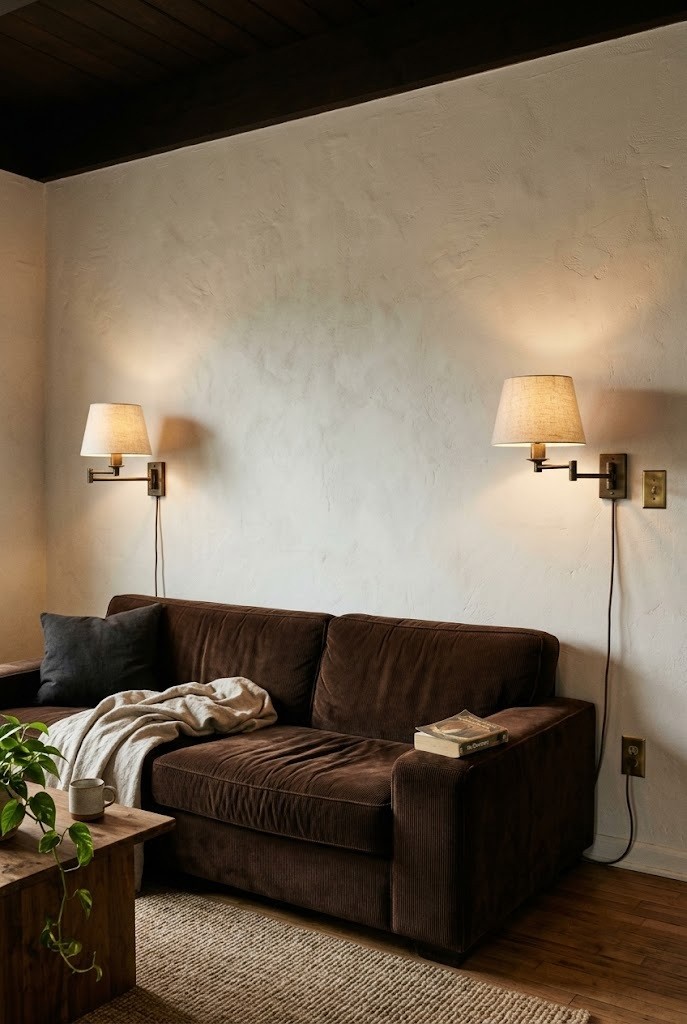
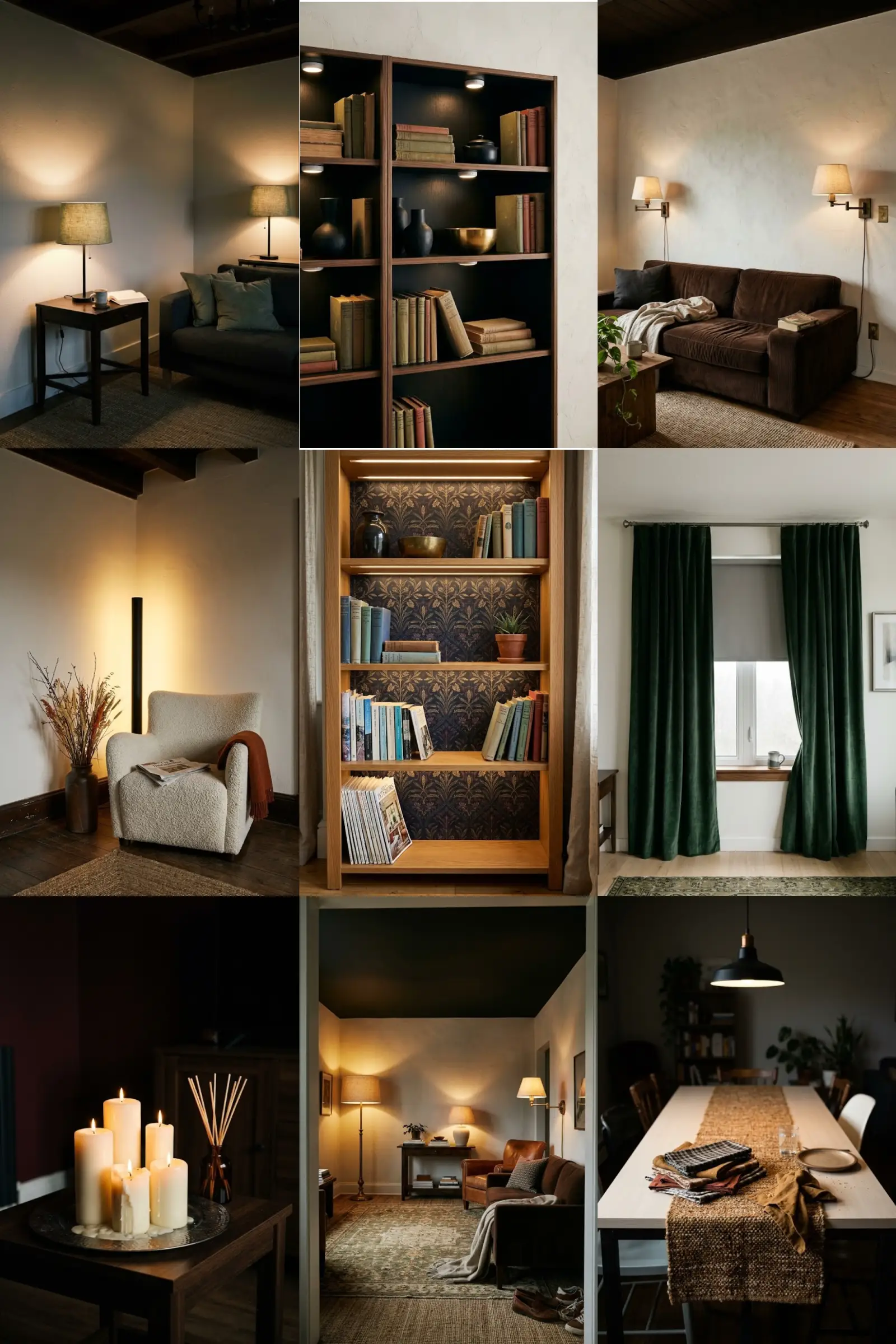
Two plug-in sconces on the wall behind your sofa do more for a moody fall room than any amount of dark decor, because they push light out at eye level instead of down from the ceiling. Mount them 60 to 66 inches from the floor and roughly 8 to 12 inches out from each end of the sofa. The cords are the only real problem, and the fix is a slim adhesive cord channel run straight down to the outlet. A landlord notices cord staples and torn drywall, not two anchor holes filled with a dollar of spackle. If your lease is strict about holes, the same fixtures sit propped on a picture ledge instead.
2. Every Bulb Swapped to 2700K, Ceiling Light Switched Off for Good
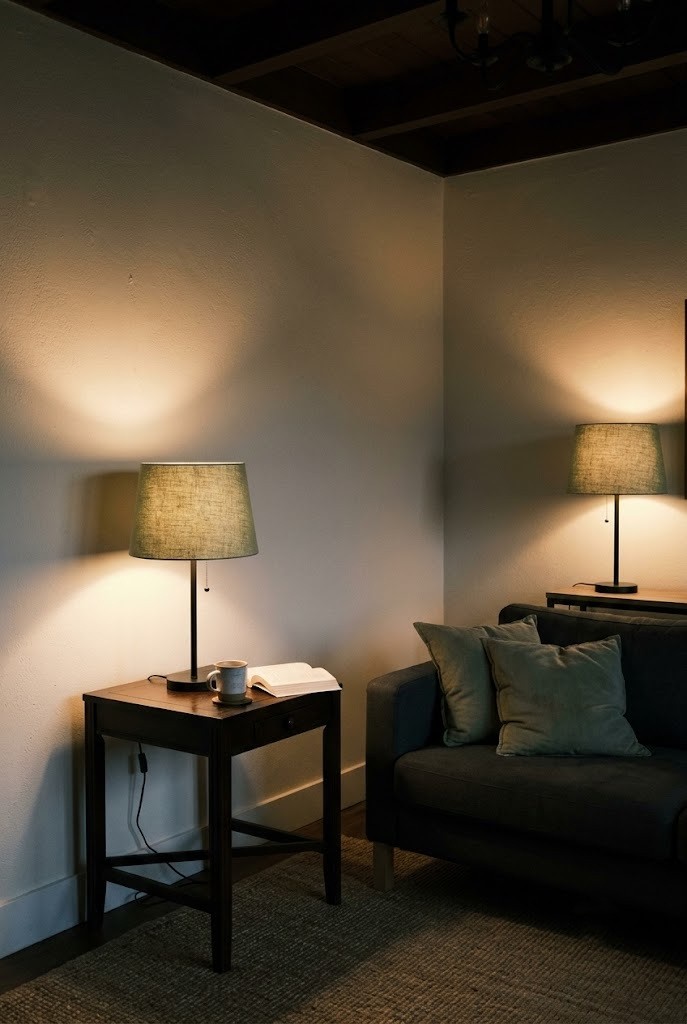
Warm bulbs are the cheapest change on this list and the one that decides whether dark decor reads cozy or grim. Builder-grade apartments ship with 4000K to 5000K bulbs, which turn a chocolate throw muddy grey and make oxblood look brown-purple. Buy 2700K warm bulbs in bulk, do the whole apartment in one evening, then stop using the ceiling fixture in any room where you have two other light sources. That overhead is the single thing making your rental read like a rental. Dimmable versions cost a couple of dollars more each and earn it in the bedroom and dining area, where you want the level to drop after dark.
3. A Floor Uplight Tucked Behind the Armchair
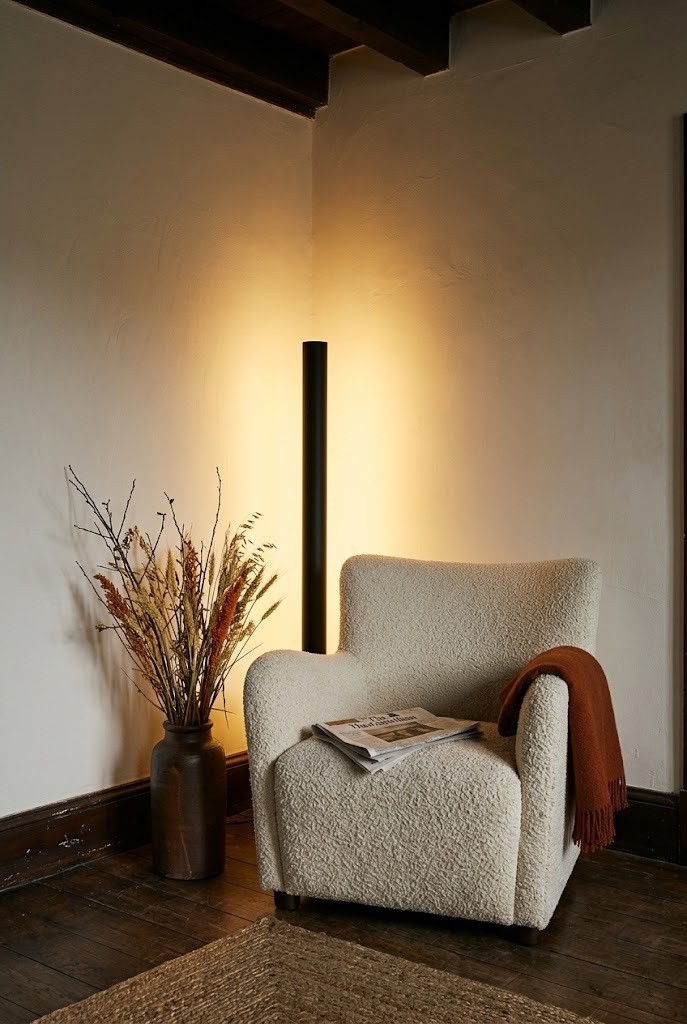
One uplight sitting on the floor behind a chair throws light up the wall and creates the shadow gradient that makes a room look deep instead of flat. This is the move that fakes a fireplace in an apartment that does not have one. Use a small can uplight with a warm bulb, set it about 6 inches from the baseboard, and angle it so the brightest part of the wash lands around 4 feet up the wall. Cost is usually under 30 dollars. Aim it into a corner rather than straight at a flat expanse, and park a tall dried branch arrangement in front of it so the shadow does half the work.
4. Battery Puck Lights Hidden Inside the Bookcase
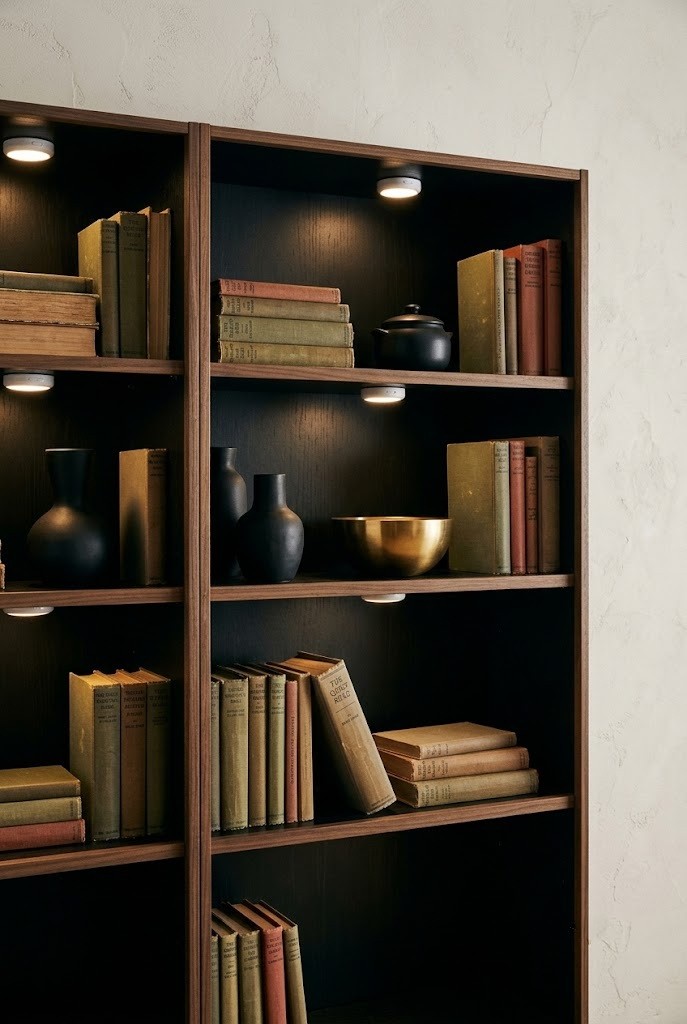
Stick-on puck lights inside a bookcase give you glow without a new outlet or a visible cord, and a set of three costs about 15 dollars. Place them at the top of each shelf, pointing down and slightly back, so the light grazes the objects instead of blasting the front edge. Rechargeable versions are worth the extra money because the AAA kind die in roughly two weeks of daily use. The adhesive pads in the box are weak on melamine, so add a strip of removable mounting tape. Shelf lighting is the fastest way to make cheap flat-pack furniture look like it was chosen rather than inherited.
5. Three Lamps at Three Different Heights in One Room
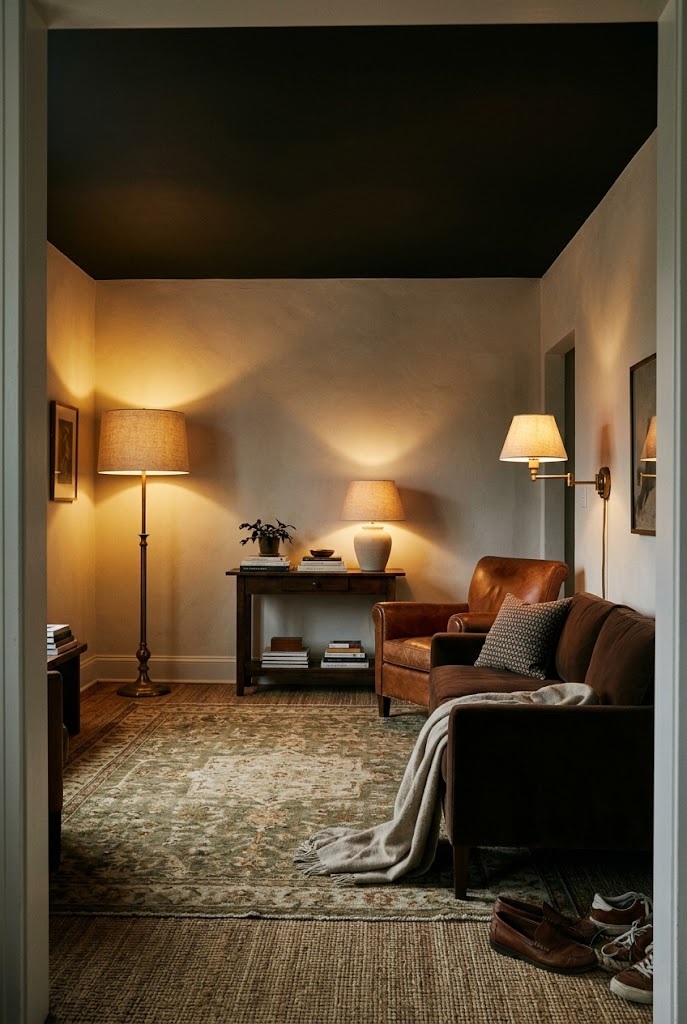
Light has to land at three heights for a dark room to feel layered: floor, table, and something near eye level. Map it before you buy anything. A floor lamp in the far corner, a table lamp at about 30 inches on a console, and either a sconce or a tall lamp near the seating covers all three, and the room stops having one bright spot and one dead zone. Keep all three on the same warm bulbs from idea 2, because mixed color temperature is what makes a space look chaotic instead of moody. Put the two you use most on smart plugs so you can kill them from bed.
6. Velvet Curtain Panels Hung Near the Ceiling, Not the Window Frame
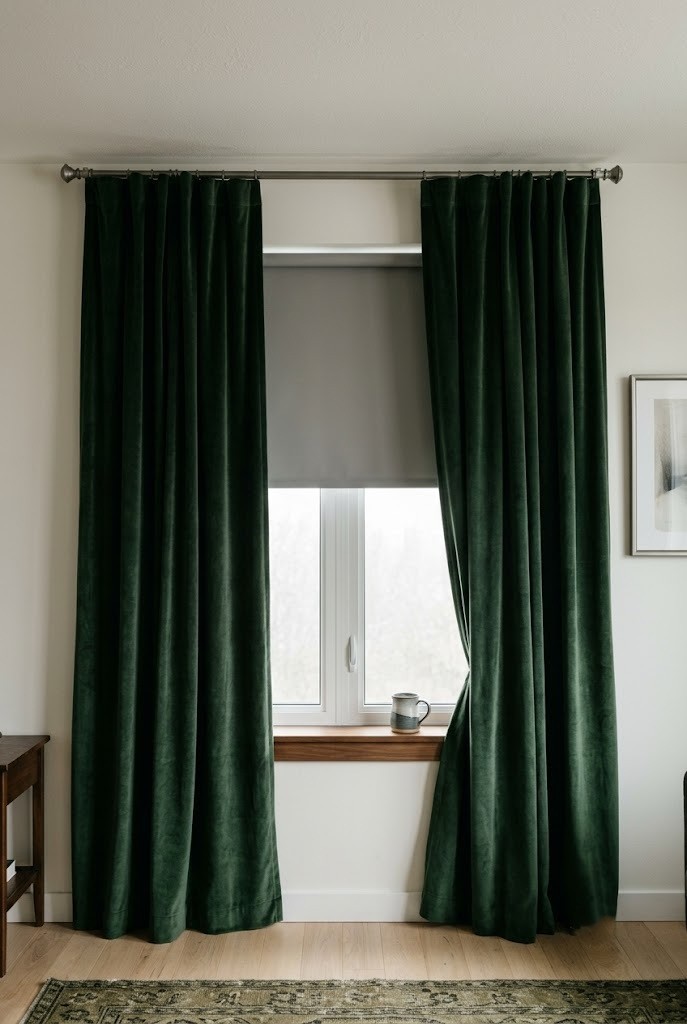
Velvet curtain panels hung 4 to 6 inches below the ceiling and 8 to 10 inches wider than the window on each side make a standard rental window look twice its size while absorbing the echo that makes an apartment feel cold. Velvet carries the fall version of this because it holds shadow in the folds. If your lease bans anchors, tension rods inside the frame work but lose the height, so consider a ceiling track on adhesive brackets rated well above the panel weight. Two panels in deep espresso or forest green run 40 to 90 dollars. Wash them before hanging, because velvet sheds lint for a week.
7. One Oxblood Merino Throw, Folded in Thirds Over the Sofa Arm
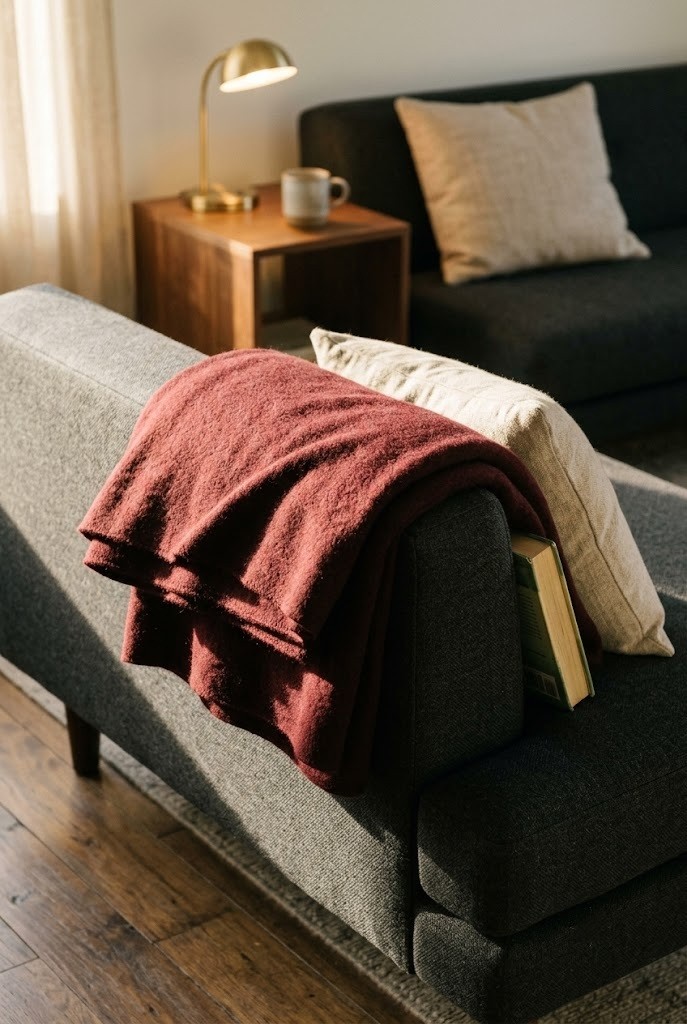
A merino wool throw in oxblood or rust is the highest-impact single item under 100 dollars in this whole list, because it delivers a saturated color and a real texture at once. Fold it in thirds lengthwise and drape it over one arm with about 10 inches hanging, or throw it diagonally across a corner of the seat. Do not center it. Merino beats acrylic here because acrylic reflects light and reads shiny in person and on camera, which kills the matte depth you are building. Real merino runs 60 to 120 dollars. If the sofa is already dark, go oatmeal instead so the throw registers rather than disappearing.
8. A Low-Pile Rug Laid Straight Over the Builder Carpet
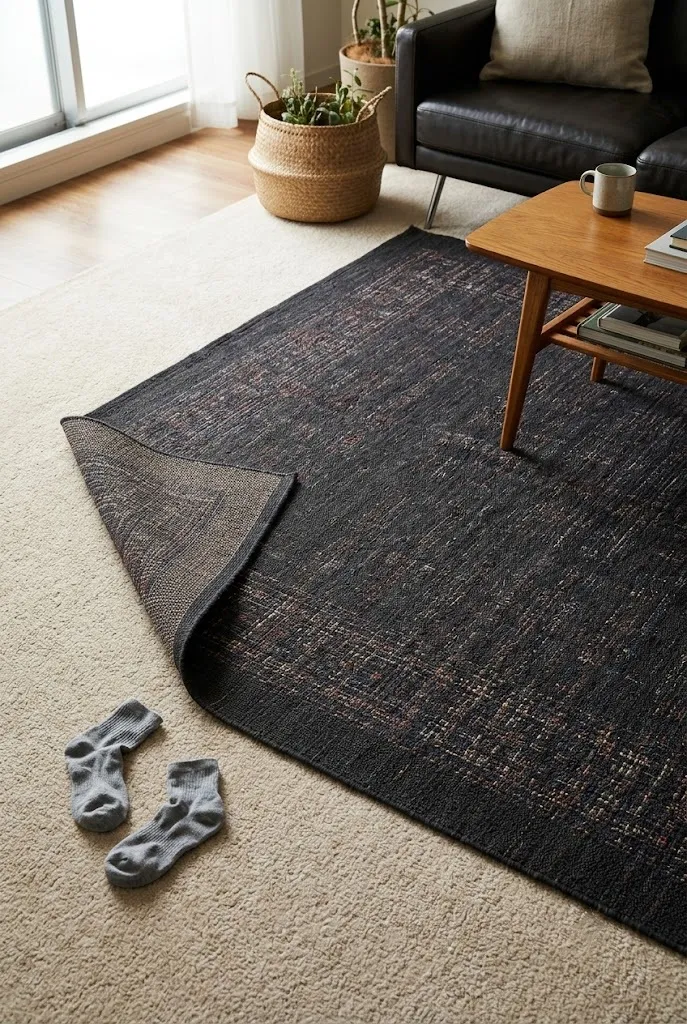
Layering a rug over wall-to-wall apartment carpet is reversible, lease-safe, and the fastest way to cover beige you did not choose. Use a low-pile flatweave rather than a shag, because pile on pile ripples and catches feet. Size matters more than pattern: go large enough that the front legs of every seat sit on it, usually 8 by 10 in a standard living room. A felt pad made specifically for carpet keeps the rug from creeping and leaves no adhesive residue at move-out. Vacuum underneath twice a year, because trapped grit grinds down the carpet below and that wear does come out of your deposit.
9. Cushion Covers Swapped, Inserts Kept
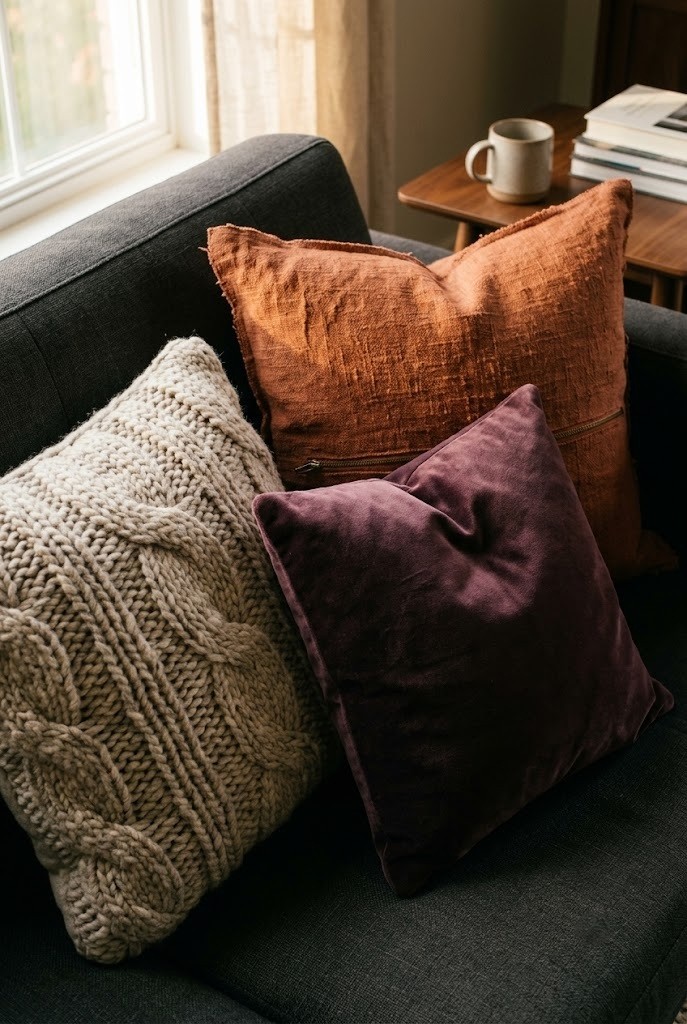
Buying covers only and keeping the inserts you already own drops a full fall cushion refresh from roughly 200 dollars to about 60. Standard sizes are 18 by 18 and 20 by 20, and the rule is to buy covers 1 to 2 inches smaller than the insert so the cushion looks full instead of limp. For the moody version, mix three textures and no more than two colors: a chunky knit, a velvet, and a slubby linen in tones that sit near the throw from idea 7. Store the summer covers flat in a zip bag under the bed. These are the textile swaps you repeat every season, so keep the inserts good and cycle the cheap part.
10. A Dark Duvet Cover Doing the Work of a Whole Bedroom Repaint
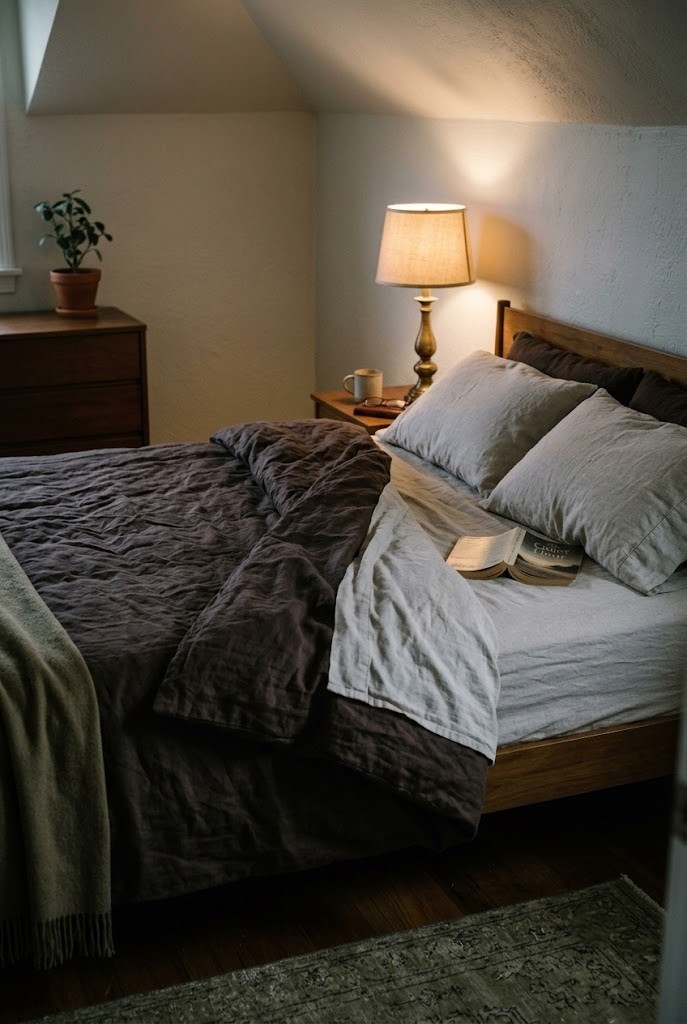
Switching to a deep-toned duvet cover changes more of a bedroom's visual field than an accent wall would, because the bed is the largest single surface in the room. Look at washed cotton or linen in espresso, ink, or deep olive, and check the fabric weight rather than the thread count marketing. Keep the sheets underneath light, oatmeal or bone, because all-dark bedding in a small rental reads like a cave and shows every piece of lint. Budget 70 to 150 dollars for a decent linen-blend cover. Pull it from the dryer slightly damp and shake it out hard before it goes on the bed.
11. A Heavy Runner and Cloth Napkins on the Dining Table
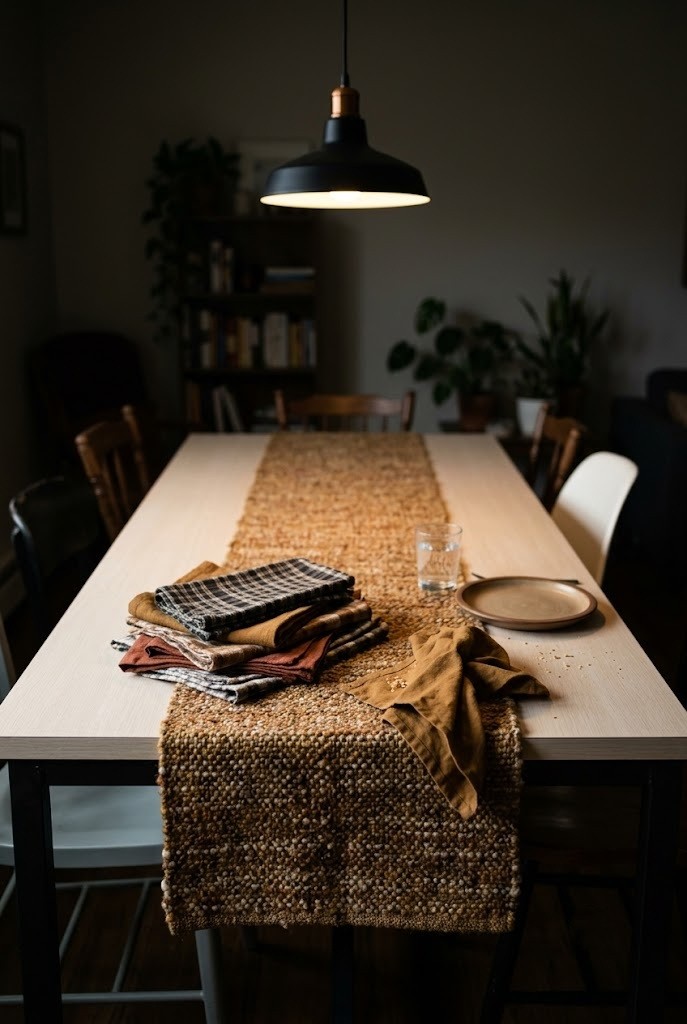
Table linens are the fall layer people forget, and they cost less than anything else in this section. A heavy woven runner in rust, mustard-brown, or a dark check breaks up the expanse of a builder-beige laminate table far better than a centerpiece does. Run it the long way with 8 to 10 inches hanging past each end. Cloth napkins in a related tone, left stacked casually rather than rolled into rings, do more for the lived-in look than any folded display. Wash both cold and skip dryer sheets, since the coating flattens the texture you paid for. This is the corner where you can go darkest without the room feeling heavy.
12. Peel-and-Stick Wallpaper on the One Wall You See From the Door
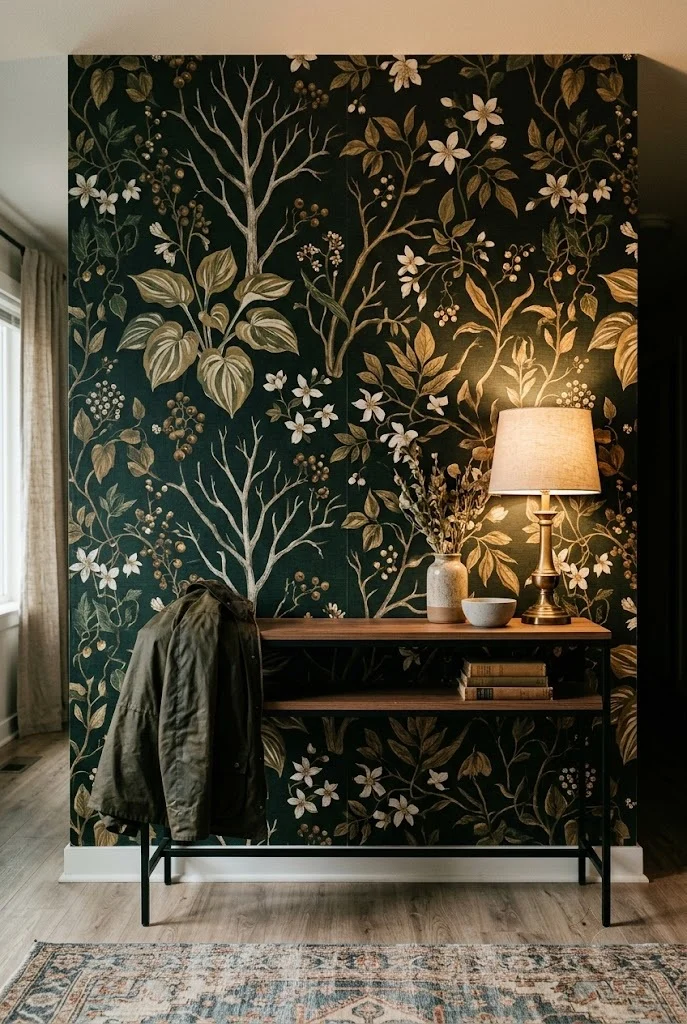
Removable paper is the only genuine paint substitute here, but choose the wall you face when you walk in rather than the one behind the sofa. Test a 6-inch square in a hidden corner for two weeks before committing, because builder-grade flat paint is the surface most likely to lift when the paper comes down. Semi-gloss and eggshell, which most rentals use in kitchens and bathrooms, release cleanly. For fall, a small-scale dark botanical or a grasscloth texture print reads richer than a large graphic. Budget 40 to 120 dollars for an accent wall and buy one extra roll, since pattern matching eats more than you expect.
13. The Same Paper Applied Inside the Bookcase Instead of the Wall
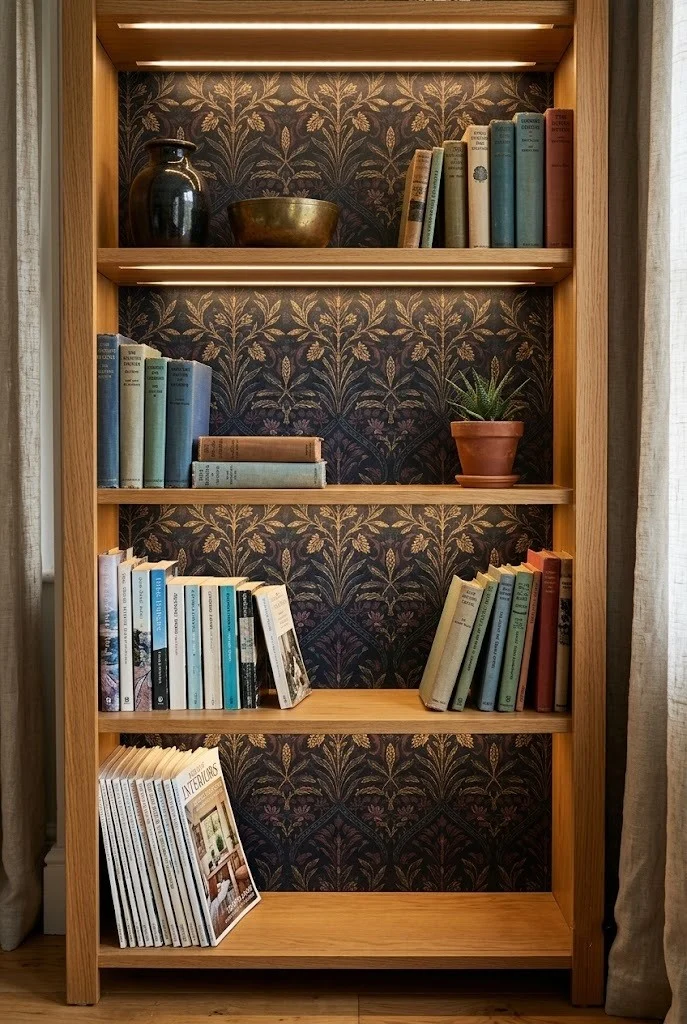
Lining the back panel of a bookshelf is the low-risk version of idea 12, and it frequently looks better. The paper sits behind objects, so a busy or very dark pattern that would overwhelm a full wall works perfectly at that scale. Melamine and laminate backing release adhesive vinyl cleanly, which means effectively zero deposit risk. Measure each shelf opening separately rather than cutting one long sheet, because flat-pack shelves are rarely square and a 3 mm drift compounds over five shelves. One roll usually covers a standard five-shelf unit with enough left for a drawer front or a tray base. Start on a Sunday morning and it is done before lunch.
14. Oversize Art Leaning on the Floor, Never Hung
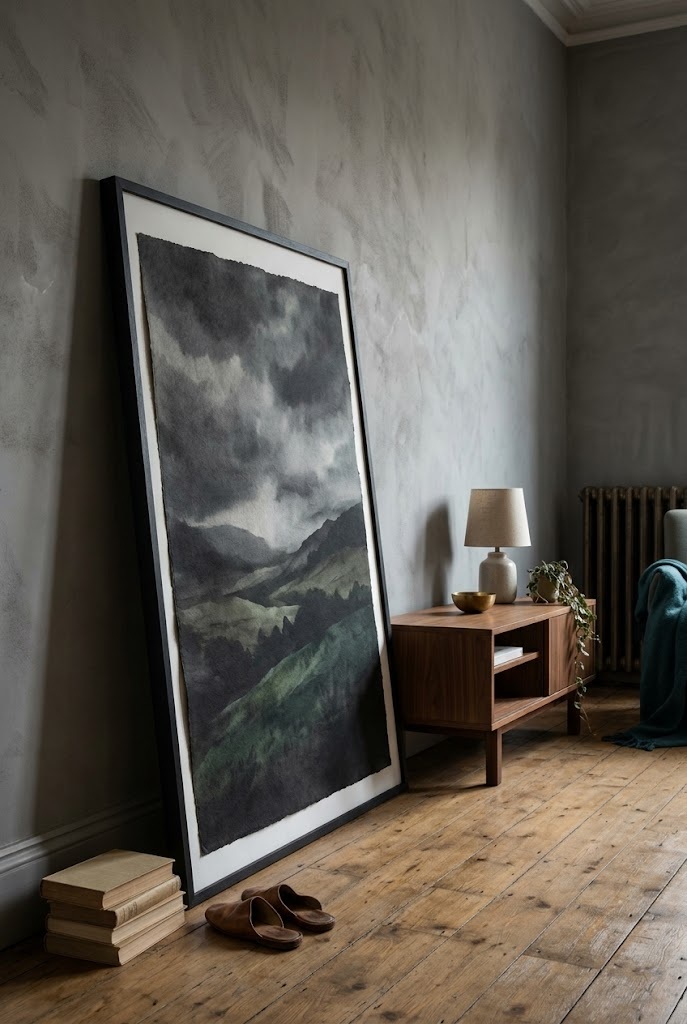
A large framed print leaning against the wall behind a console or beside a chair gives you scale without a single anchor hole. Go bigger than feels sensible, because anything under 24 by 36 inches looks lost sitting on the floor. Prop it at a shallow angle with the base about 2 inches out from the baseboard, and put a felt pad under each bottom corner so it does not scuff the trim. Muddy landscapes, charcoal abstracts, and dark still life prints read as fall without any pumpkin imagery. Two leaning pieces at different heights beat one every time, and thrift frames beat gallery pricing by a wide margin.
15. A Fabric Panel Hung on a Rod Across a Bare Wall
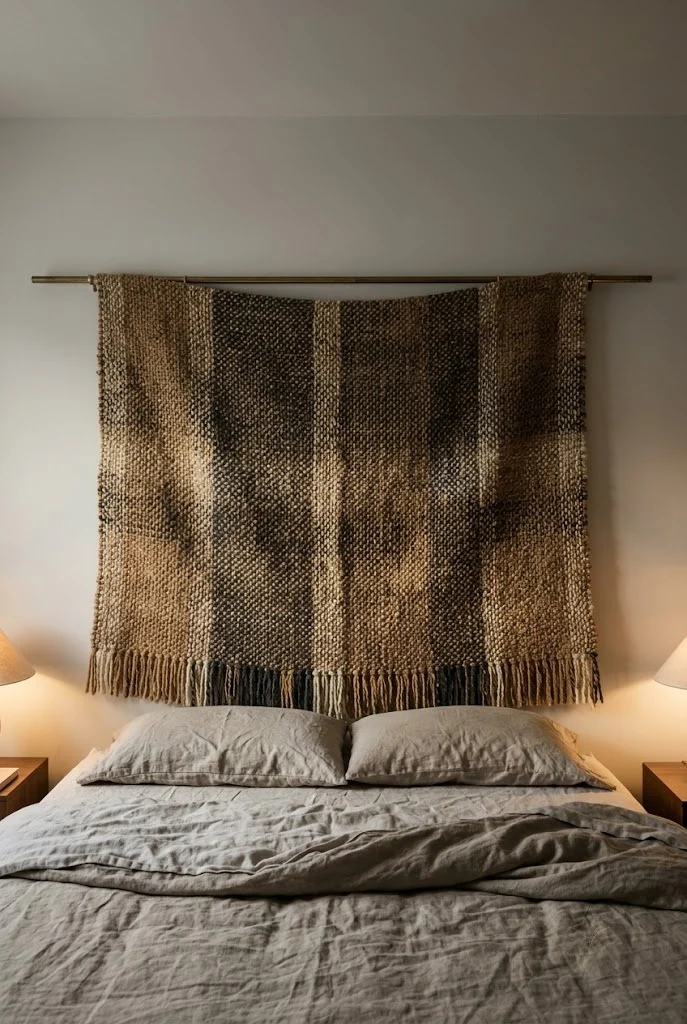
A heavy fabric drop on a curtain rod across a blank wall is the fastest moody wall treatment that leaves nothing behind but two bracket holes. Use a wool blanket, a linen panel, or a flatweave textile, and hang it so the bottom sits 8 to 12 inches above the floor rather than pooling. Behind a bed it functions as a headboard the lease cannot object to. Behind a sofa it fixes the echo that dark rooms with hard floors always have. Keep the width to at least two-thirds of the furniture below it or the whole thing reads like laundry. Steam it once hung and the creases drop within an hour.
16. Ceiling-Height Drapery on a Wall With No Window at All
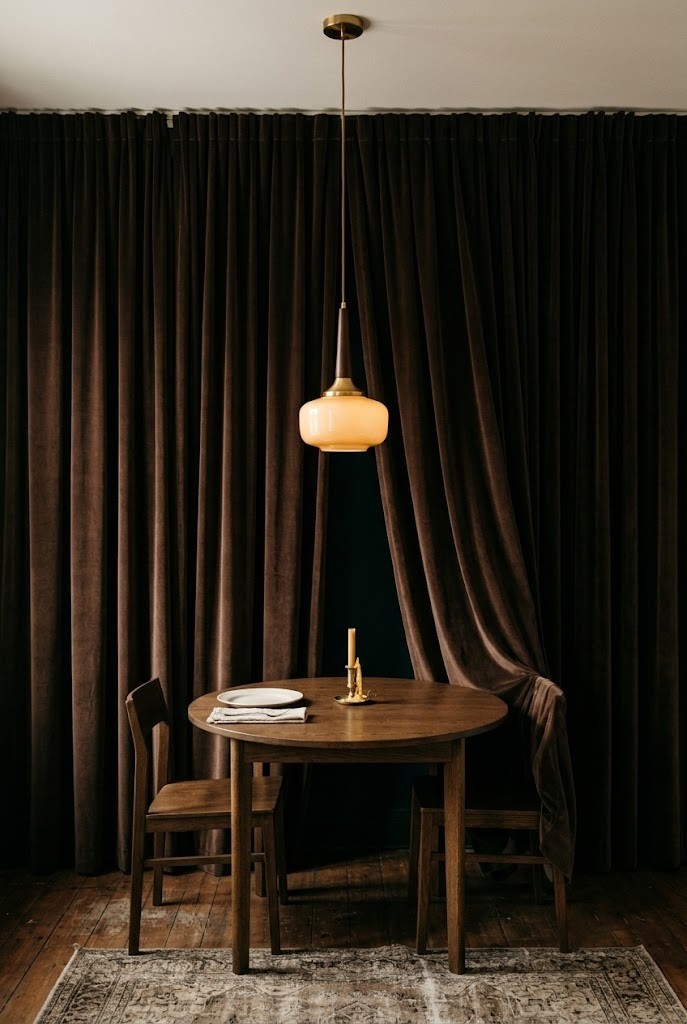
Running the same velvet panels from idea 6 across a windowless wall tricks the eye into reading a window there, and it is the most convincing no-paint move available in a dark apartment. Hang the track at ceiling height and let the panels fall to about half an inch off the floor. Leave them slightly parted at the center so the shadow between them suggests glass. This rescues dining nooks and long hallways, the two places builder apartments handle worst. Skip the fake window frame and skip putting a light behind it, because that is exactly where the illusion breaks and starts looking like a stage set.
17. An Entry Console Tray With a Dark Stoneware Bowl and Dried Grasses
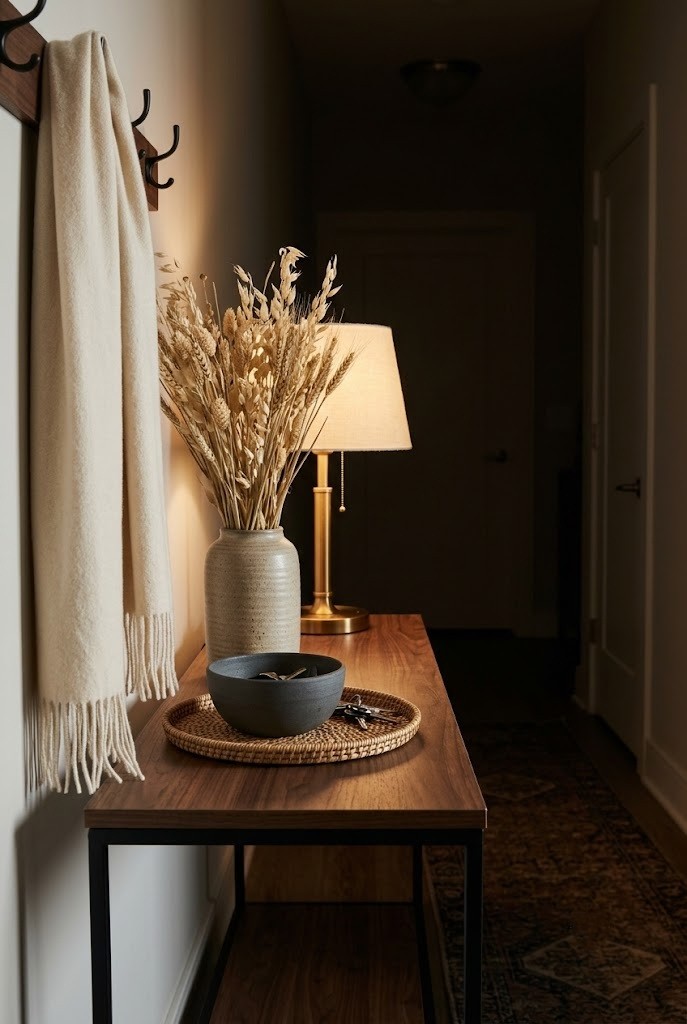
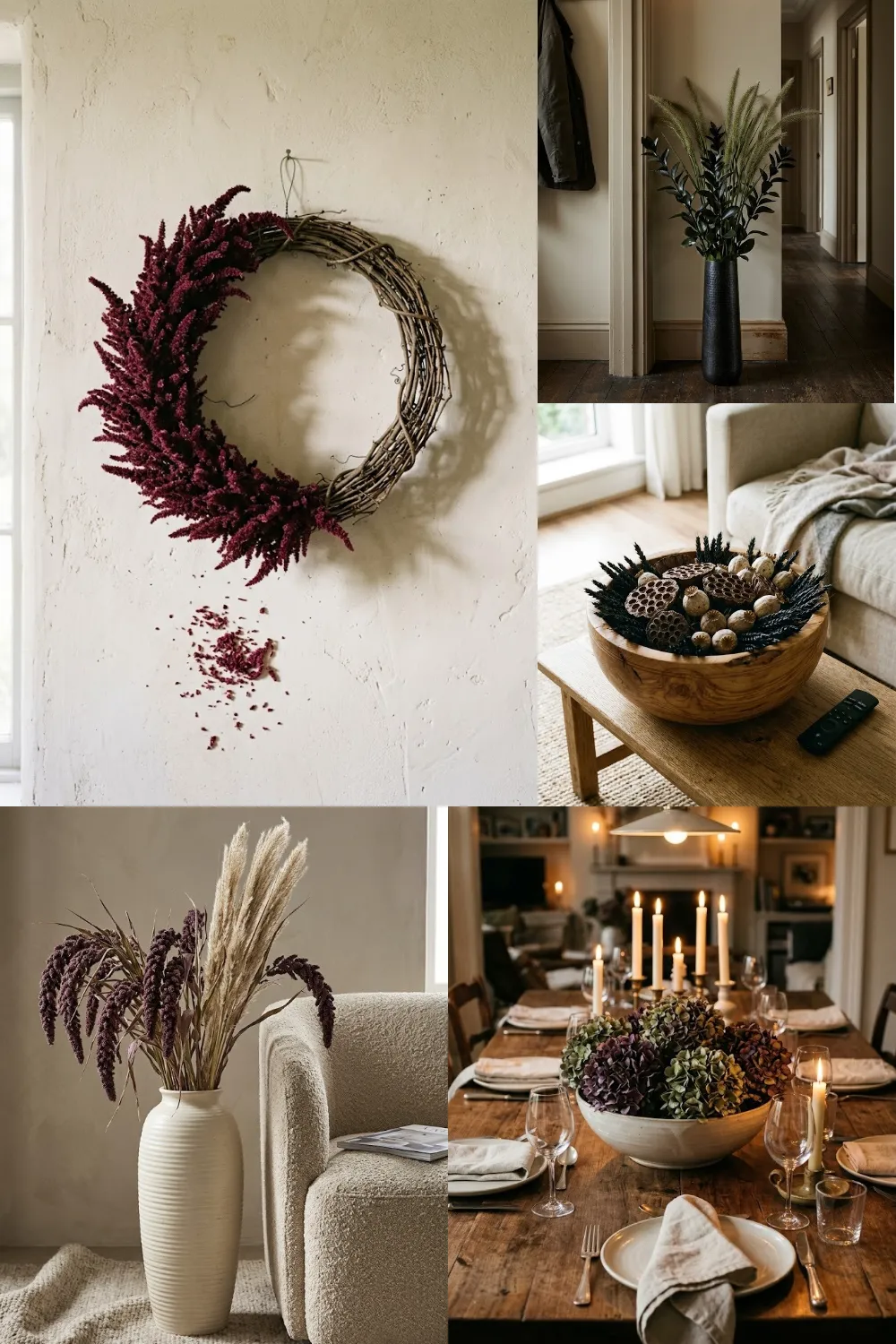
The entry sets the temperature for the whole apartment, so give it one tray, one dark stoneware bowl for keys, and one tall bunch of dried grasses. Three objects at varied heights, then stop. Dried wheat, pampas, and bunny tail last the entire season and run under 20 dollars a bunch. Keep the tray small enough that mail cannot colonize it. The proportion rule: the tallest object should be roughly one and a half times the height of the mirror or lamp behind it, or it visually disappears. If the door opens straight into the living room, a 10-inch-deep console still fits where a standard one will not.
18. A Coffee Table Stack With One Unglazed Terracotta Object
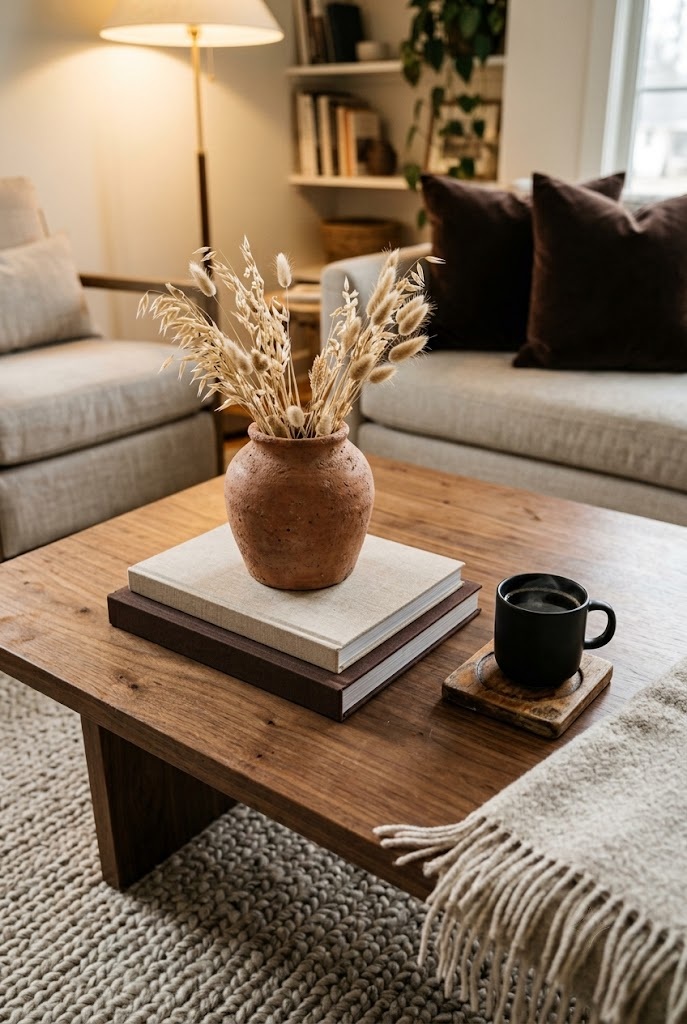
Coffee table styling for this look needs exactly three elements: a stack of two books, one matte ceramic or unglazed terracotta object, and something living or once-living. Terracotta earns its place because it is the only material that reads warm and rough against all the velvet and wool you have layered in, following the same texture logic as the entry tray in idea 17. Stack the books with the larger on the bottom and turn the spines away if the covers fight your colors. Keep the arrangement to a third of the surface, clustered on one half, so there is still room for a mug.
19. The Kitchen Counter Reduced to a Dark Crock and a Wooden Board
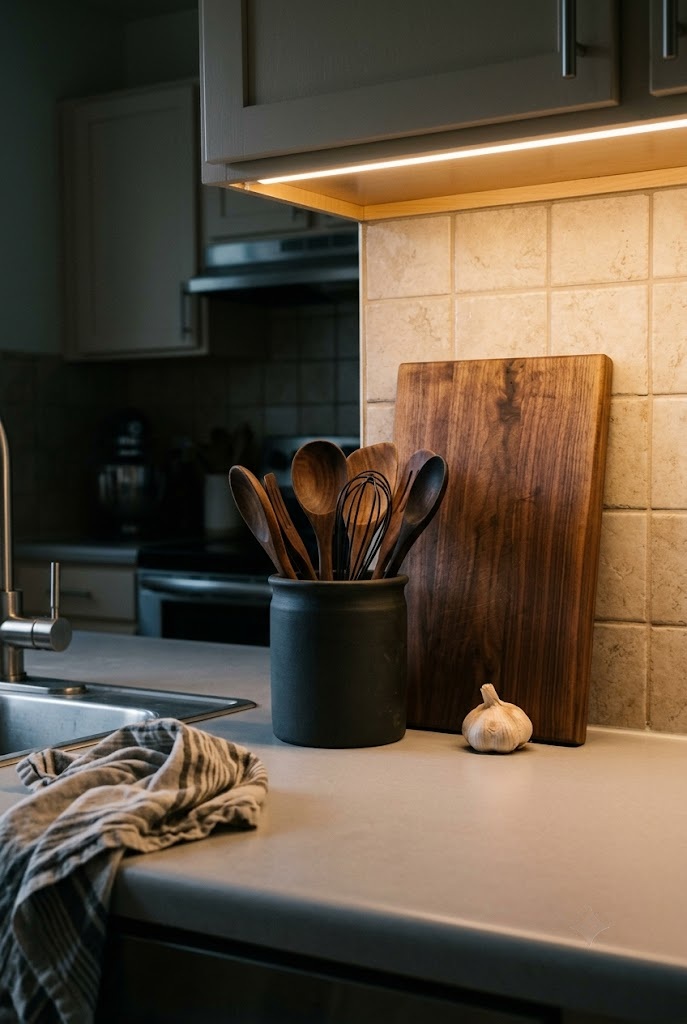
Kitchens resist moody styling because they are full of white appliances and plastic, so the move is subtraction plus two objects: a dark stoneware crock for utensils and a thick wooden board leaned against the backsplash. Everything else goes in a cabinet. A walnut or acacia board around 18 inches wide covers a surprising amount of builder-beige tile. Oil it monthly with food-grade mineral oil or it greys out by December. Skip the open shelving trend in a rental, since you cannot install it and the freestanding versions wobble. Two objects and one material story, and the counter finally looks intentional instead of like storage overflow.
20. The Bookshelf Reshuffled by Color, With Half the Objects Removed
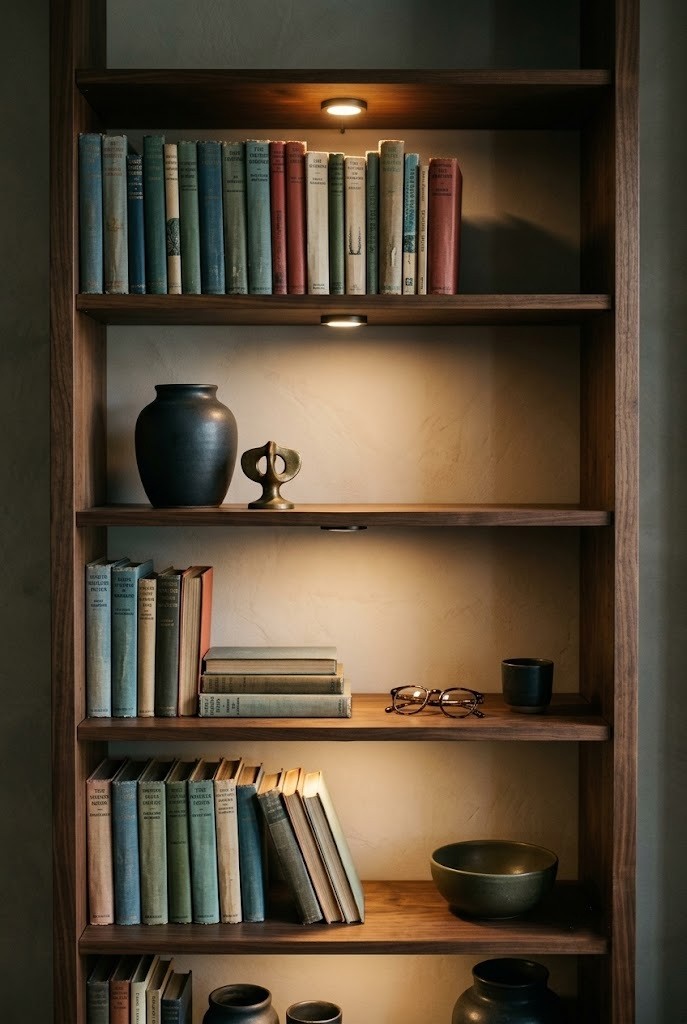
A shelf reads moody when roughly 30 percent of it sits empty, which means the first step is taking things off rather than adding them. Pull every brightly colored paperback and either shelve it spine-in or move it to a closed cupboard. Group what remains in blocks of five to seven books, alternating horizontal stacks with vertical runs. Add two or three dark ceramics and one blackened metal or brass object per shelf, and let the puck lights from idea 4 catch them. Even spacing across every shelf reads like a furniture showroom display, so cluster instead and leave whole sections deliberately bare.
21. A Cluster of Pillar Candles on a Metal Tray, Plus One Real Scent
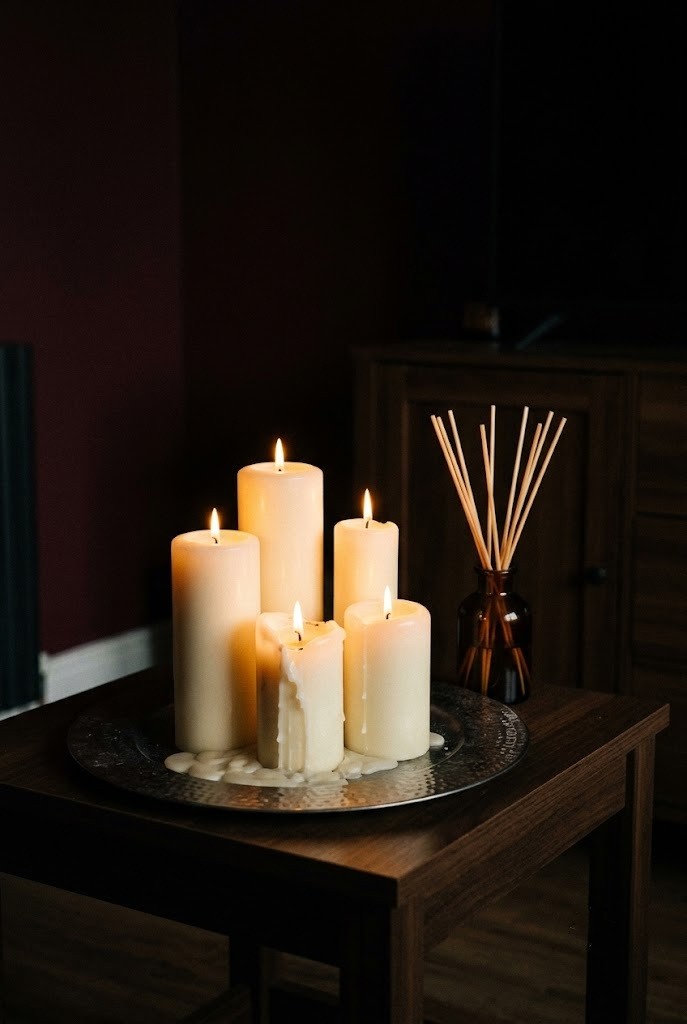
Scent is the layer that makes a room feel like fall when nothing in the photo has changed, and the reliable formula is one warm base note with one dry note: cedar or sandalwood alongside clove, fig, or dried tobacco. Skip the food-scented candles, which read as air freshener in a small apartment. Cluster three to five unscented pillars at different heights on a metal tray for the light, and take the actual scent from one good candle or a reed diffuser placed elsewhere in the room. In a rental with sensitive detectors, keep flames well clear of the ceiling unit.
22. Soft Surfaces That Kill the Apartment Echo, and a Playlist to Match
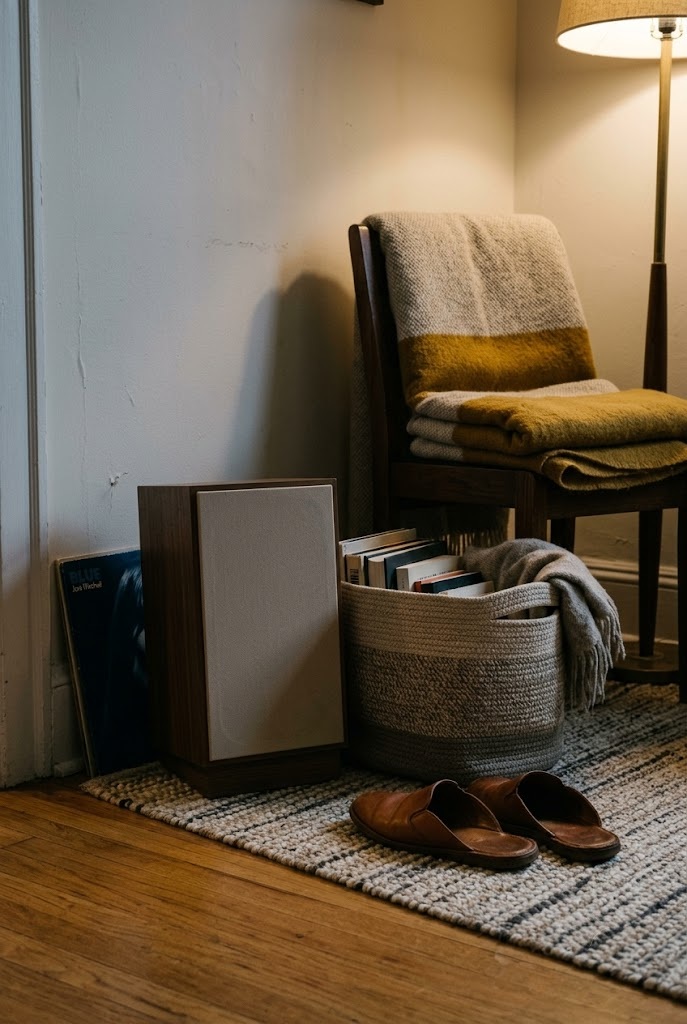
Sound finishes the room, and most rentals fail at it because hard floors, bare walls, and hollow-core doors bounce everything back at you. Curtains, a rug, and a fabric wall panel have already handled most of it. Add felt pads under every chair leg, one fabric basket in a corner, and a folded blanket over the back of any hard dining chair. Then play something with warmth in it: analog jazz, folk, low-tempo soul. A small speaker sitting on the floor in a corner sounds fuller than one on a shelf, because the walls reinforce the low end. This part costs nothing.
Final Thoughts
Work in the order this list is written and the money lands where it matters. Lighting first, always, because dark textiles in a rental without warm light sit somewhere between gloomy and depressing. Then fabric, then one wall, then the small surfaces, then scent and sound. Almost all of it reverses in an afternoon with a putty knife and a tub of spackle, and the same rules carry out to the balcony once the evenings turn cold. Save this to Pinterest so it is there when you start swapping things over.
Frequently Asked Questions
Can I really get a moody fall look in a rental without painting anything?
Yes, and the order matters more than the budget. Warm 2700K bulbs plus lamps at three heights do most of the work, then dark textiles, then one removable wall treatment. Paint changes one surface; light changes how every surface in the room reads, which is why skipping it is what makes renter versions of this look fall flat.
Will peel-and-stick wallpaper damage rental walls?
Usually not, but it depends on the paint underneath. Most peel-and-stick wallpaper releases cleanly from eggshell, satin and semi-gloss finishes. Flat builder-grade paint is the risky one, and cheap flat paint over unprimed drywall is riskier still. Test a small square in a closet for two weeks and pull it slowly at a low angle before you commit to a full wall.
How do I stop dark decor from making my small apartment feel gloomy?
Fix the lighting first and keep one light surface in every room. Three warm light sources at different heights stop dark walls and textiles from swallowing the space. Then leave the ceiling, sheets, or a rug in oatmeal or bone so the eye has somewhere to rest. Gloom comes from flat overhead light, not from dark colors.
What is the cheapest change that makes the biggest difference?
Swapping every bulb to 2700K, which costs about 20 to 30 dollars for a one-bedroom. Nothing else changes the mood of an entire apartment for that money. Second place is a wool throw and cushion covers over inserts you already own, which is roughly 60 dollars and covers the largest fabric surface in the room.