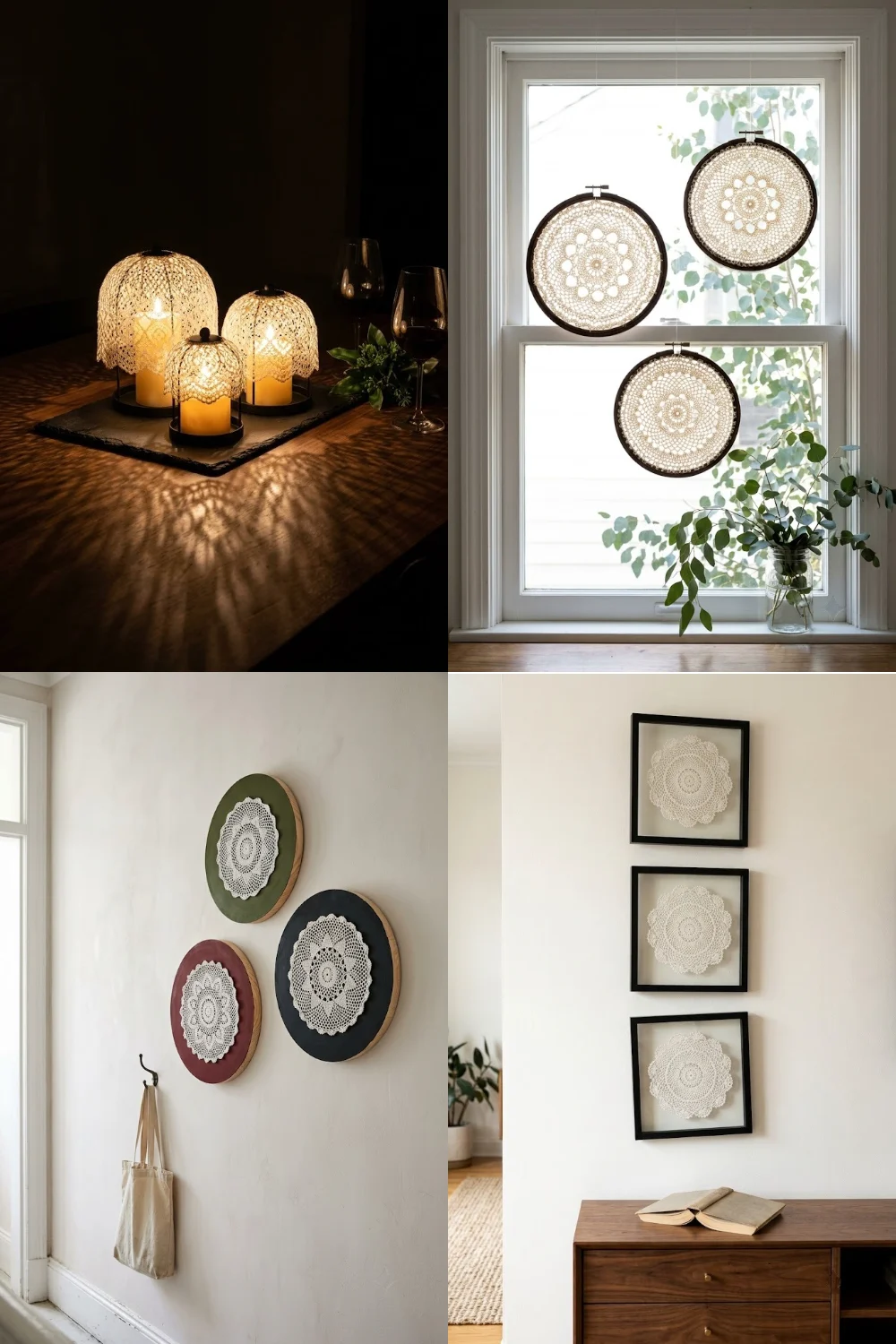
Doilies read modern the moment you stop treating them as covers and start treating them as pattern. Almost every page of doily decor ideas online is a craft tutorial, so the modern styling question, how to put lace in a room without the room aging forty years, goes unanswered. That is what this post covers: 24 placements sorted by surface, from wall to tabletop to lighting to window to furniture, plus the rule for when a doily quietly ruins a room. I inherited a shoebox of my grandmother's crochet and refused to let my apartment look like 1974, so every one of these got tried before it got written down. Save this to Pinterest before the box goes back in the closet.
1. Three float-framed doilies stacked in a narrow vertical column
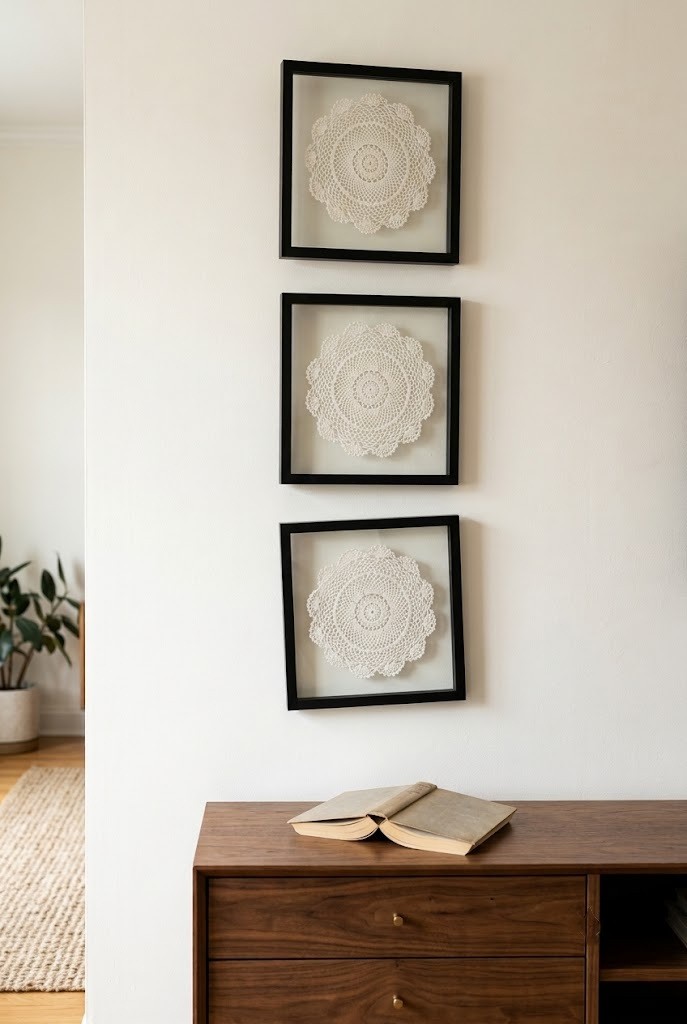
Float frames turn a doily into graphic art, because the glass isolates the pattern and the wall itself becomes the background. Buy three float frames in one finish, roughly 8 by 10 inches, and hang them in a vertical column with about three inches of gap between frames. One doily per frame, all the same size, all the same color. That repetition is what reads as deliberate rather than sentimental. Skip mat board and skip fabric backing, both of which push the piece straight back toward craft fair territory. Mine are plain black frames on a warm white wall, and nobody has ever guessed the contents came out of a shoebox in a hall closet.
2. One oversized doily in a deep shadow box on a charcoal backing
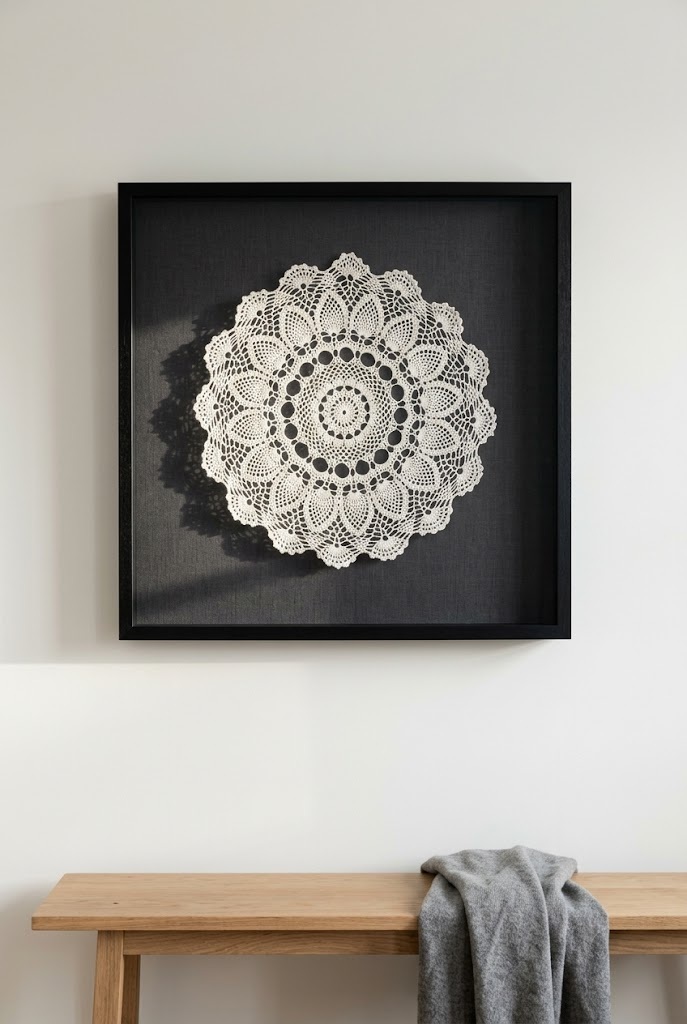
A single large doily in a deep shadow box behaves like a print instead of a keepsake, as long as the backing is dark. Pick the biggest piece in the box, at least 12 inches across, and mount it on charcoal or ink blue linen board inside a shadow box with a full inch of depth. That depth is the whole trick, because the shadow the lace throws onto the backing is the detail that makes people walk closer. White on white kills it completely. Hang it alone at eye level with nothing competing within about three feet. Where idea 1 uses repetition to look intentional, this one uses scale, and shadow box frames are worth the extra cost here.
3. A doily used as a paint stencil for a tone-on-tone wall medallion
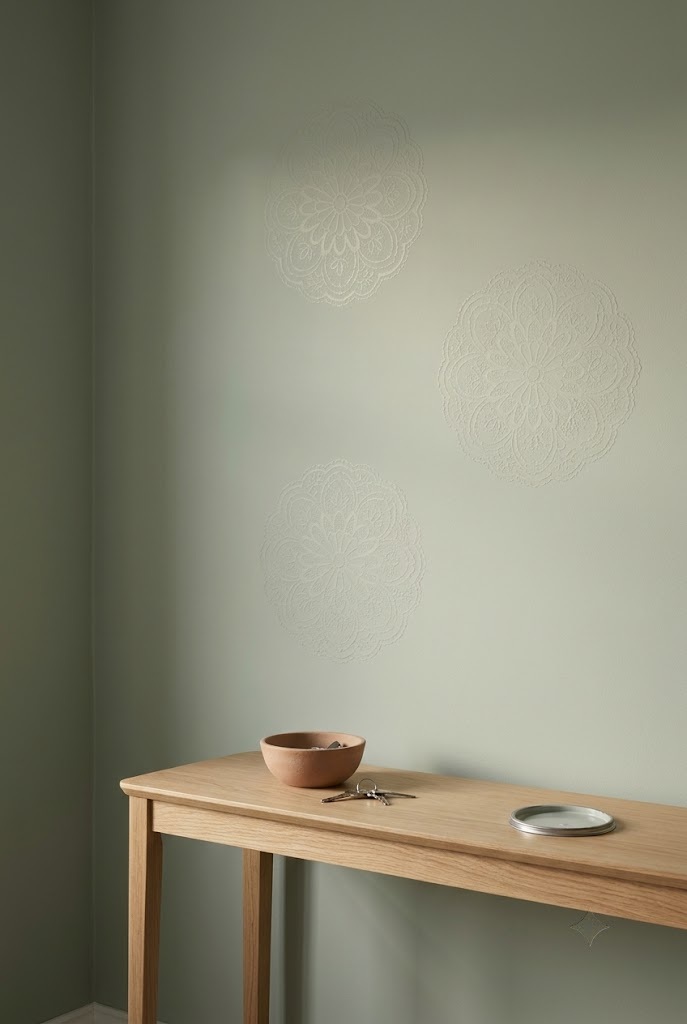
Used as a stencil, a doily leaves behind something closer to a plaster medallion than lace once the paint dries. Lay a flat doily against the wall, tape it at four points, and roll a shade one or two steps off the wall color over it with a nearly dry foam roller. Tone on tone is not optional. High contrast turns it into a visible stencil craft, while a half-shade shift turns it into texture you only catch in raking light. Do a cluster of three at staggered heights above a console rather than a full repeat across the wall. Wash and dry the doily immediately afterwards or the paint sets into the fibers for good.
4. Stiffened doilies mounted on painted wood rounds in a loose triangle
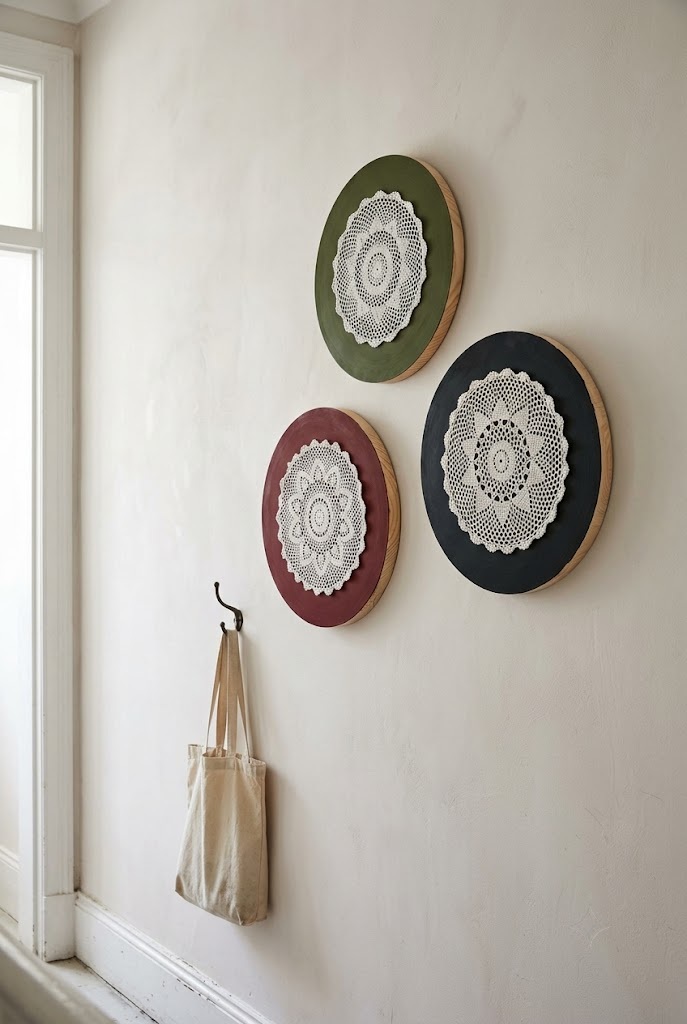
Mounting a doily onto a painted wood round gives lace a hard edge, and that hard edge is exactly what stops it drifting toward craft. Buy unfinished wood rounds in three sizes, paint them a flat deep color like olive, oxblood or near-black, then stiffen each doily with fabric stiffener and glue it centered on the round. Let a rim of painted wood show all the way around, because that visible gap is what makes the object read as designed. Hang the rounds in a loose triangle rather than a straight line. A bottle of fabric stiffener costs a few dollars and handles about a dozen doilies, so this is the cheapest wall idea in the post.
5. Joined doilies hung from a brass rod as a headboard replacement
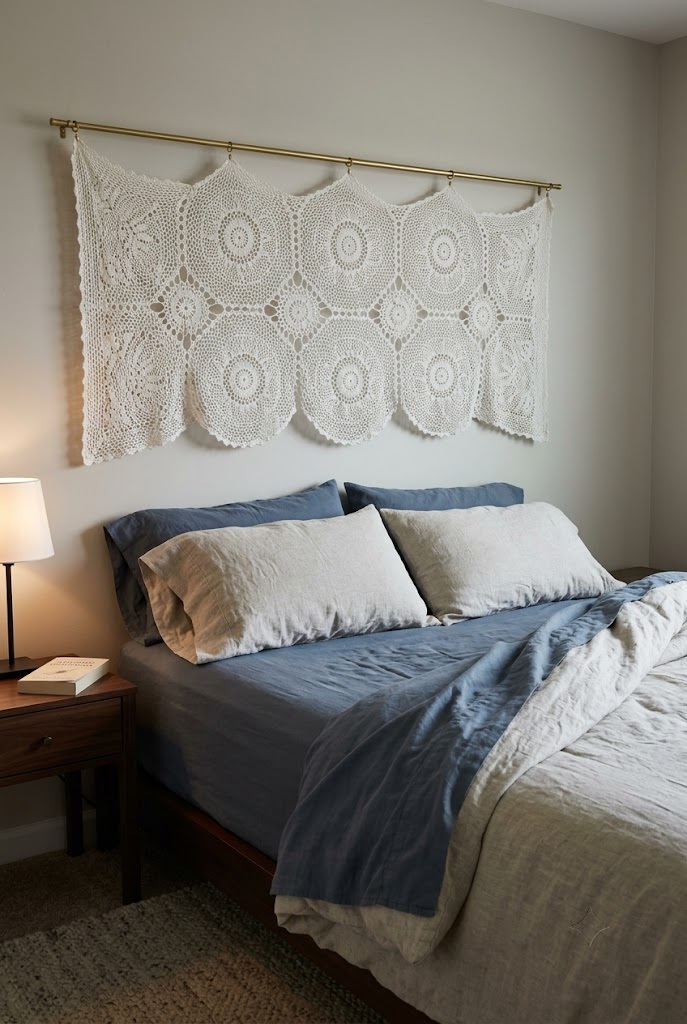
A lace panel hung above a bed stands in for a headboard cheaply, provided it spans at least two thirds of the bed width. Most inherited doilies are far too small for that alone, so join four or five with a few hand stitches where their edges touch, press the panel flat, and hang it from a slim brass rod with clips. The joins do not need to be invisible, and a slightly irregular outline is better than a neat rectangle. Keep the bedding plain and dark so the lace stays the only pattern in the room. This is the reverse of idea 1, where small pieces stay separate; here they become one object.
6. A single doily set under one lamp base on a dark console
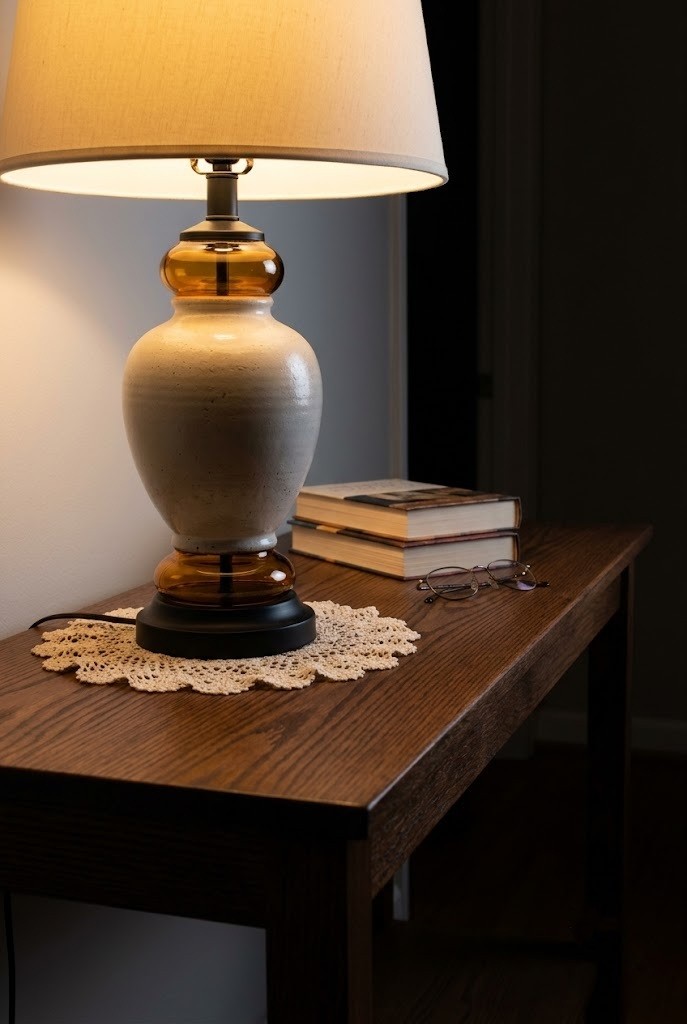
Put one doily under a single object instead of across the whole surface and the dated signal disappears on the spot. A lamp base, a stack of two books, one ceramic vase: the doily now reads as a deliberate mat sized to the object, not as a cover protecting the furniture underneath. Choose a piece two to three inches wider than the base on every side. Any more than that and it starts looking like a place setting. Dark wood or stone is where this works, because the contrast does all the labour. On a white or pale console, skip it entirely, since white lace on a pale surface is just visual noise.
7. Doilies sandwiched under a cut glass coffee table top
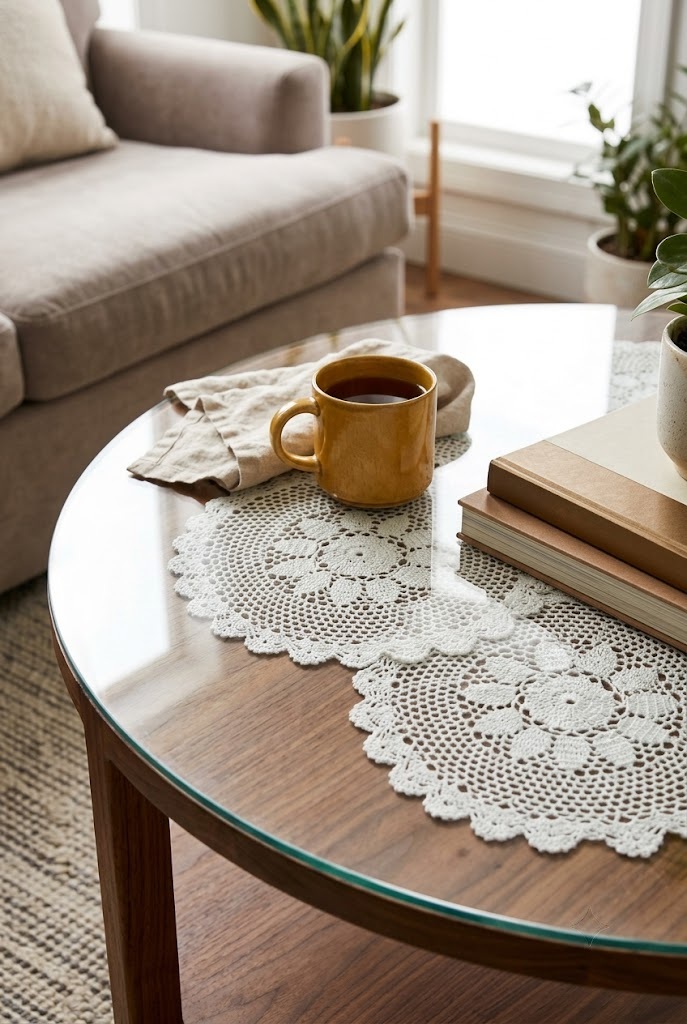
Sandwiching doilies under glass is the safest modern placement of the lot, because the glass flattens them into flat pattern and strips away every fabric cue. Lay two or three pieces directly on the wooden tabletop, then set a cut glass round over them, ordered at any local glass shop for roughly 40 to 80 dollars depending on diameter and thickness. Ask for quarter-inch thickness and polished edges, and add clear rubber bumpers so the glass does not slide. Arrange the doilies off-center and overlapping instead of spaced in a neat row. Centered symmetry is what makes lace look formal, and formal sits one step away from dated.
8. A narrow lace runner down the middle of a dark dining table
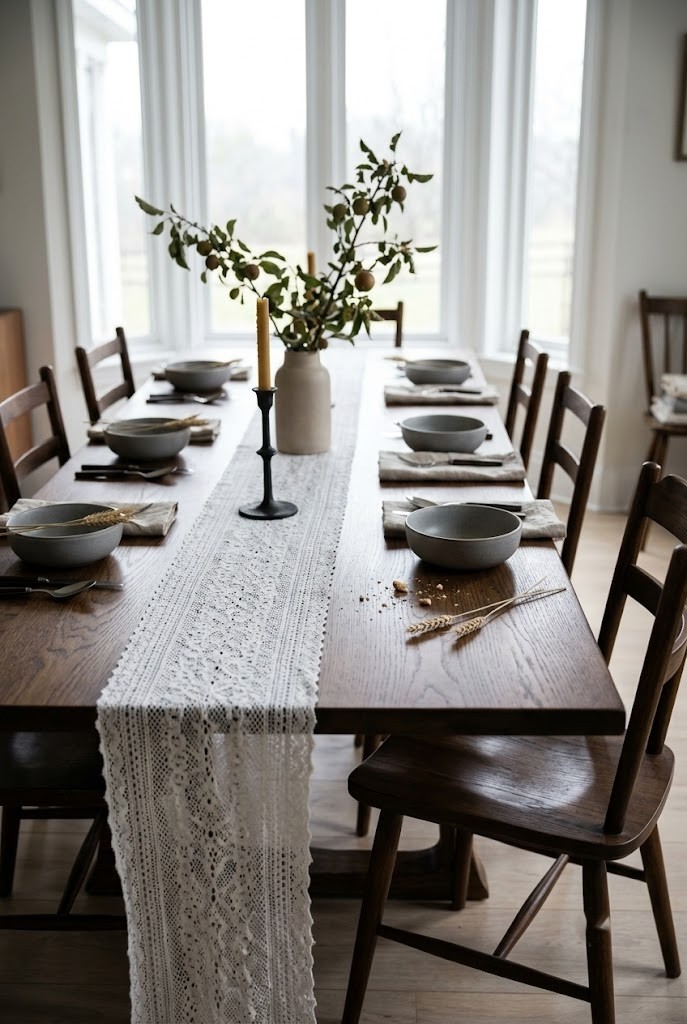
A lace table runner survives on a modern dining table only when the table is dark and the runner is narrow, roughly a third of the table width at most. Wide runners cover, narrow runners draw a line, and that difference decides the whole look. Run it the full length with eight to ten inches of bare wood showing on either side, then set heavy modern objects along it: stoneware bowls, a black candlestick, an untrimmed branch in a plain vase. Weight is the counterbalance to lace. Skip matching lace placemats completely, which is where most dining rooms tip over. Idea 6 covers the single-object version for a console.
9. A drum pendant shade banded with stiffened doilies
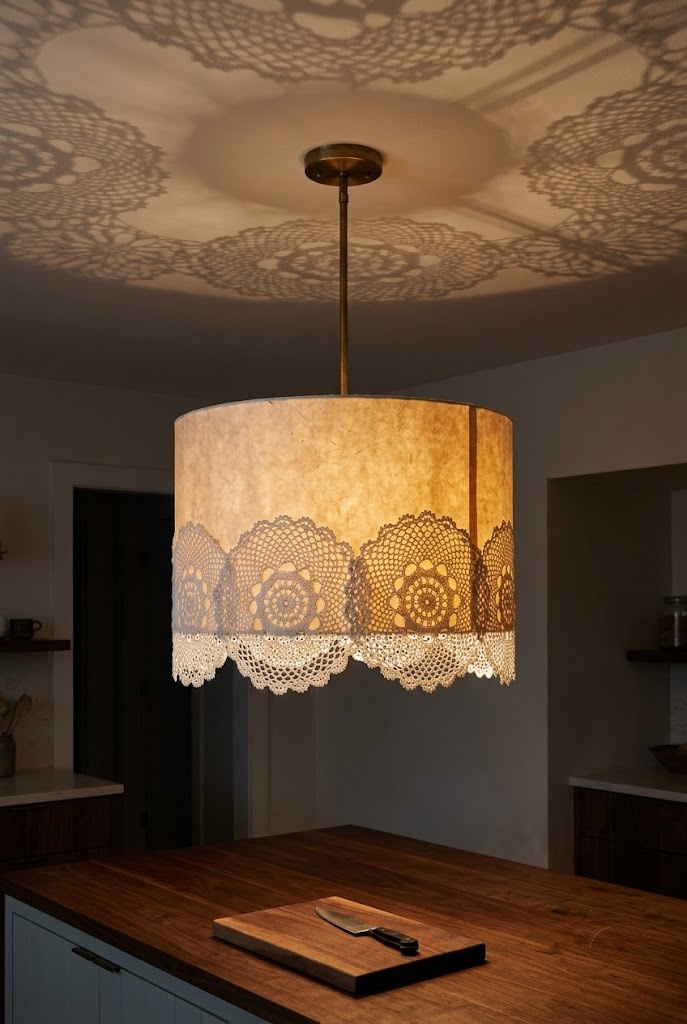
Stiffened doilies glued around a plain drum pendant turn the shade into a light and shadow object, and the pattern it throws across the ceiling is the actual payoff, not the shade itself. Start with a paper or linen drum shade in white or bone, stiffen four to six doilies flat, then adhere them to the outside in an overlapping band around the lower third only. Leaving the top two thirds bare is what keeps it reading as a shade rather than a craft project. Use a low-wattage LED bulb and nothing else. Heat plus stiffener plus cotton fibre is a real fire risk, not a hypothetical one.
10. A stiffened doily dome set over an LED pillar candle
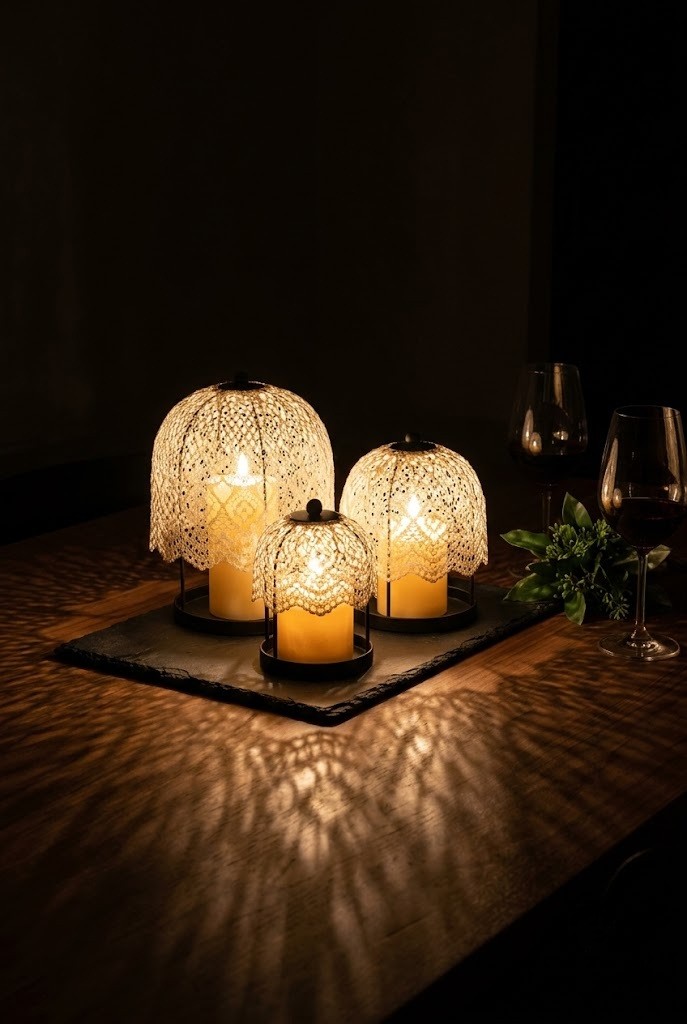
Stiffen a doily into a shallow dome, invert it over an LED pillar candle, and it throws a lace shadow right across the table, which is a far better use of a small doily than any flat placement. Shape the wet doily over an upturned mixing bowl, coat it in stiffener, and leave it overnight to dry completely; anything less and it sags within a week. Battery LED candles only, with no exceptions, since the fabric sits inches from the flame position. Set the finished dome on a dark tray or slate so the shadow has somewhere to land. Three of these in different diameters beat one large centerpiece.
11. A lamp shade with a single lace band along its bottom rim
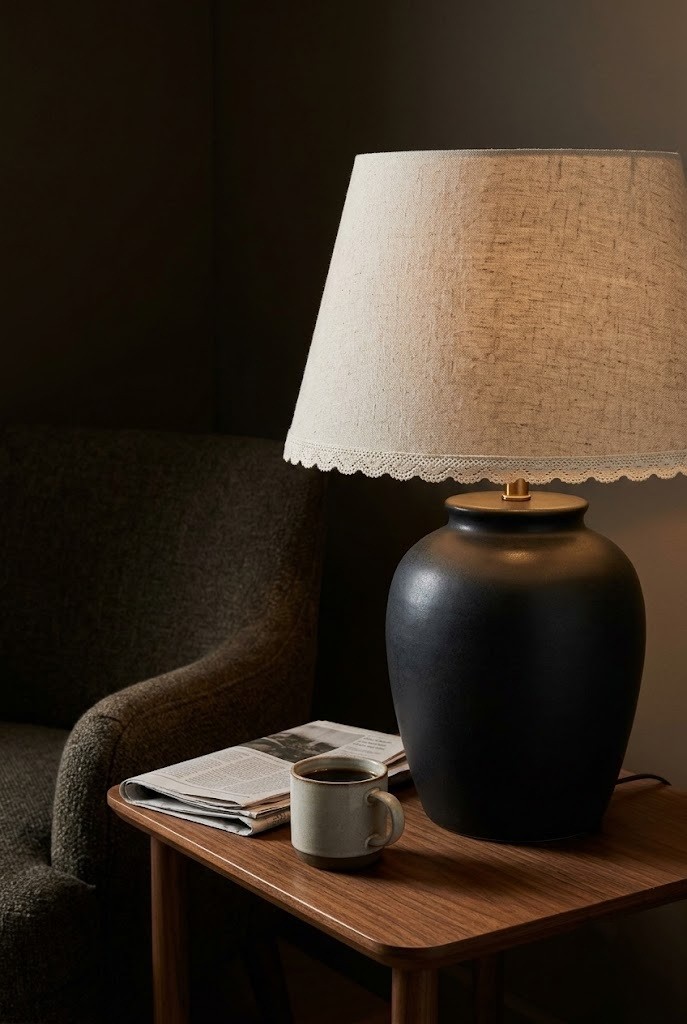
Trimming only the bottom edge of a lamp shade gives you the lace signal across maybe one percent of the surface, which turns out to be roughly the right dose for a modern room. Cut one large doily into a strip along its outer scallop, or line up several small ones edge to edge, and attach with fabric glue to the shade's lower rim. Let the strip hang about half an inch below the shade line so it breaks the silhouette instead of hugging it. Pair it with a heavy ceramic or blackened metal base. Lace on a delicate brass base is precisely where a room starts aging backwards.
12. A doily mounted in front of a wall light as a shadow screen
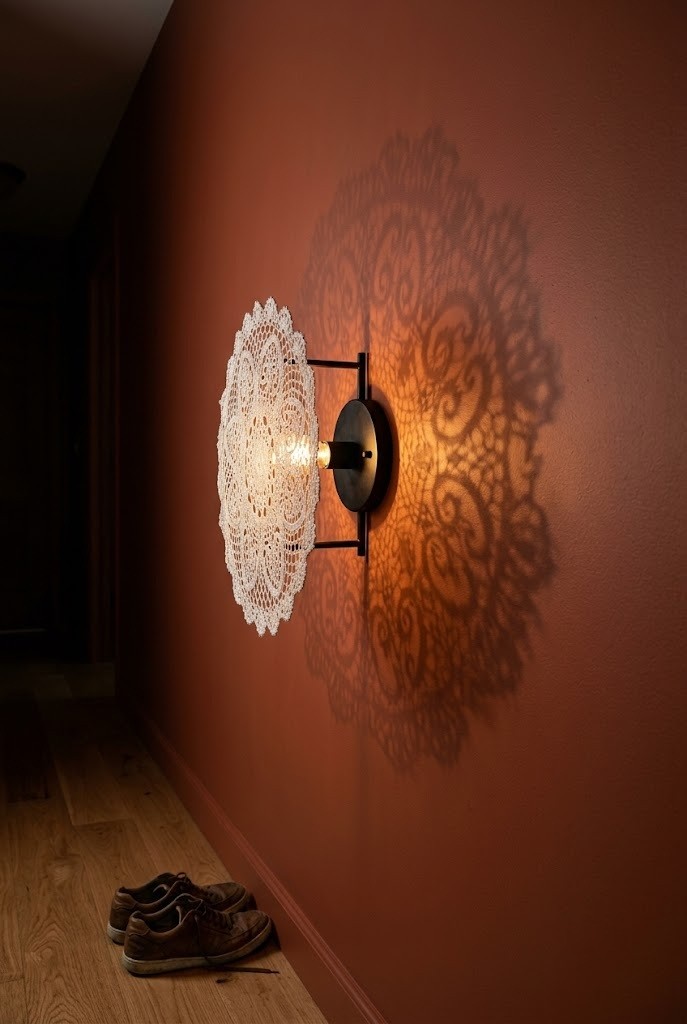
Mounting a stiffened doily a few inches in front of a small wall light turns a builder-grade fixture into a projector for lace shadow, which is the most dramatic return on a single piece anywhere in this post. Bend thin wire into a circle, stitch the doily to it so the piece holds a gentle curve, then fix it off the wall in front of the fixture with two small standoffs. Keep at least three inches of air between fabric and bulb. Matched crochet doily sets make this easier than mixed inherited pieces, because identical shadows repeating along a hallway look composed rather than accidental.
13. A doily edge peeking below one shelf on open kitchen shelving
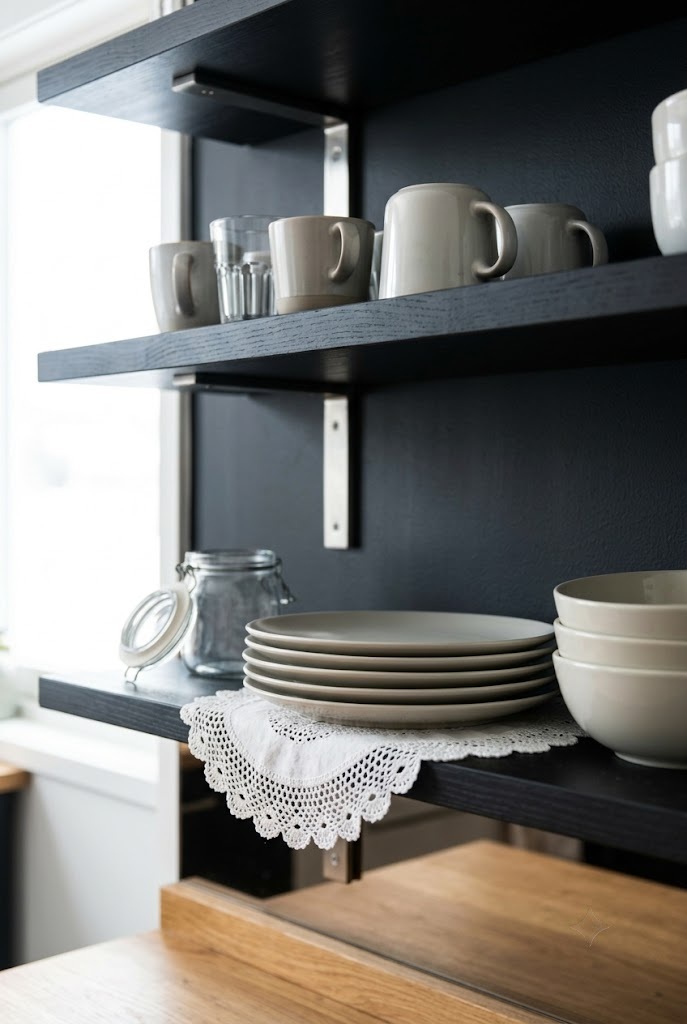
Letting a doily hang an inch or two past a shelf edge, with the rest of it hidden under plates and jars, brings lace into a kitchen without committing a whole surface to a display. Position it so only the scalloped border shows below the shelf line, then load the shelf normally on top. Do this on one shelf out of five, never on every level. Repetition across open shelving reads as a theme, and themed is the exact failure mode this material falls into. Dark painted shelves make the border legible; on white shelves the effect vanishes and you have just put a cloth under your bowls.
14. A stiffened doily bowl holding keys on an entry shelf
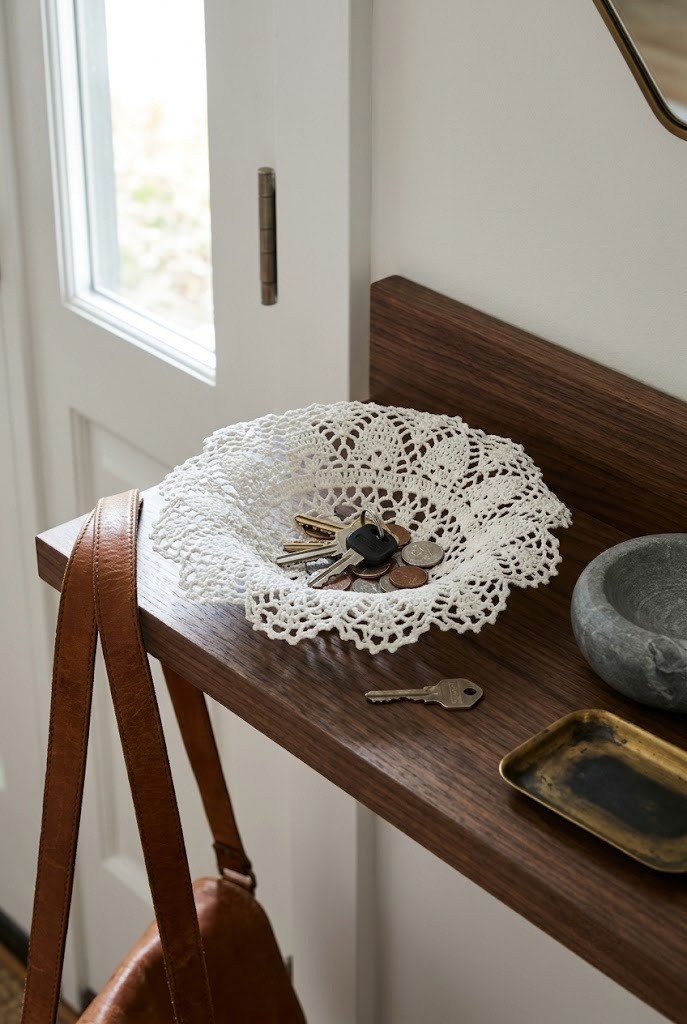
The stiffened doily bowl is the one craft version of this material that still looks current, on the condition that the bowl stays white and nothing around it does. Shape it over a mixing bowl, coat with stiffener, dry overnight, then trim hardened drips off the rim with scissors once it has fully set. Sit it against a dark shelf and put something heavy in metal or stone next to it, because weight beside lace is what keeps the whole vignette from floating. It holds keys, coins, receipts and earrings perfectly well. It holds nothing wet, and one spilled drink ends its life.
15. A doily tucked between two stacks of books as a texture break
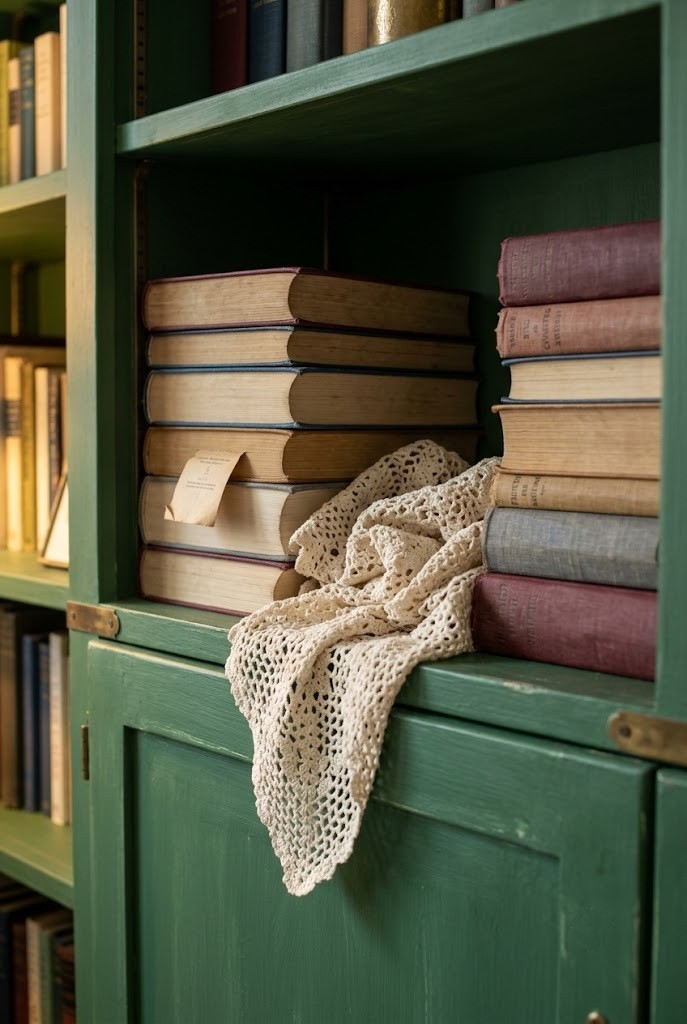
Slipping a doily between two runs of books gives the eye something soft in a shelf full of hard spines, and it costs nothing at all. Scrunch or fold it slightly rather than laying it perfectly flat, because a flat circle reads as a coaster while a gathered one reads as textile. Let a little of it spill forward past the book edges. Use this once per bookcase and no more. Lace collects dust faster than any other surface in a room, so reserve it for a shelf at chest height that you actually reach for weekly, not the top row you never touch.
16. Doilies adhered to the back panel inside a glass-front cabinet
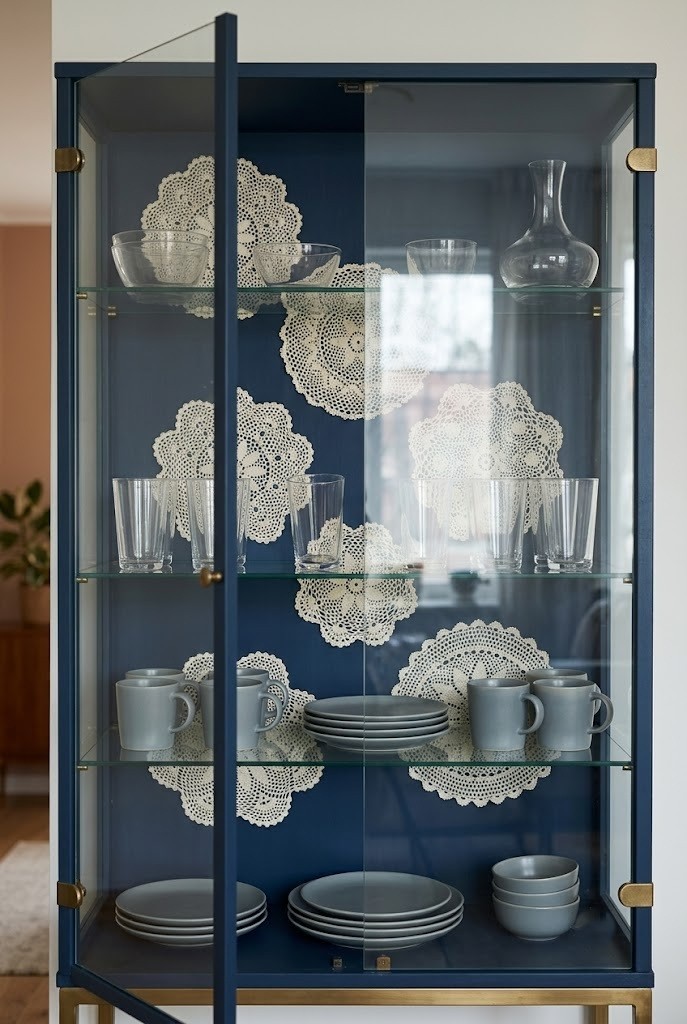
Fixing doilies to the interior back wall of a glass-front cabinet puts lace behind glass, which is where it looks most expensive and least fussy. Spray-adhere three or four pieces to the back panel at uneven spacing, then fill the shelves with plain glassware or dark stoneware so the lace only appears in the gaps between objects. Paint that back panel a deep color first, because the whole effect rests on contrast. On a white interior the pattern disappears completely, which is the same failure as idea 6 on a pale console. Do one cabinet in a room, never a matching pair.
17. Eight doilies stitched into an irregular café curtain panel
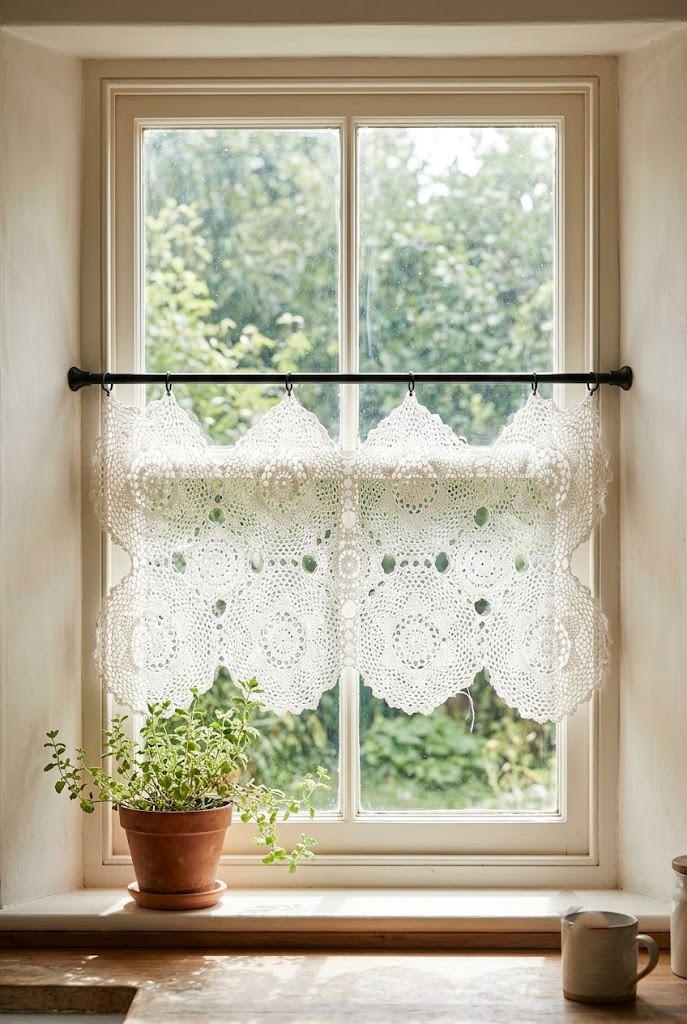
Joining eight to twelve doilies into a single café panel is the strongest argument for lace at a window that does not read as a lace curtain. Stitch them edge to edge into a rough rectangle sized to the bottom half of the window only, then hang it from a tension rod at the sash line. The gaps and uneven outline are the entire point, because a solid lace panel is the dated version and an irregular joined one is not. Kitchen and bathroom windows suit this best, where privacy at the lower half is useful anyway. Budget an evening of stitching and almost nothing in materials.
18. A single open-pattern doily hung in the middle of a window pane
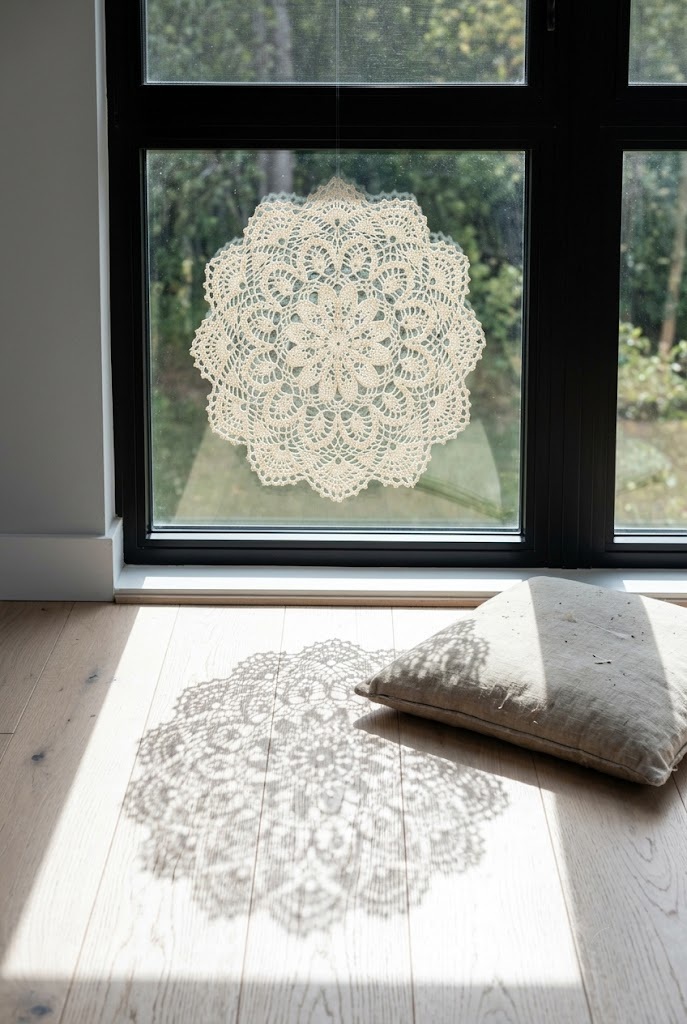
One stiffened doily suspended in the middle of a window pane on clear filament acts as a suncatcher and drags a moving lace shadow across the floor all afternoon, which is the part worth having. Choose the most open pattern in your box, not the densest, since dense crochet blocks light and just reads as a dark blot on the glass. Hang it at the vertical center of the pane rather than up at the top, where it looks like something left over from a holiday. Use fishing line so the hanging method disappears. One per window, and not in every window of the room.
19. A doily border stitched along the hem of a plain linen shade
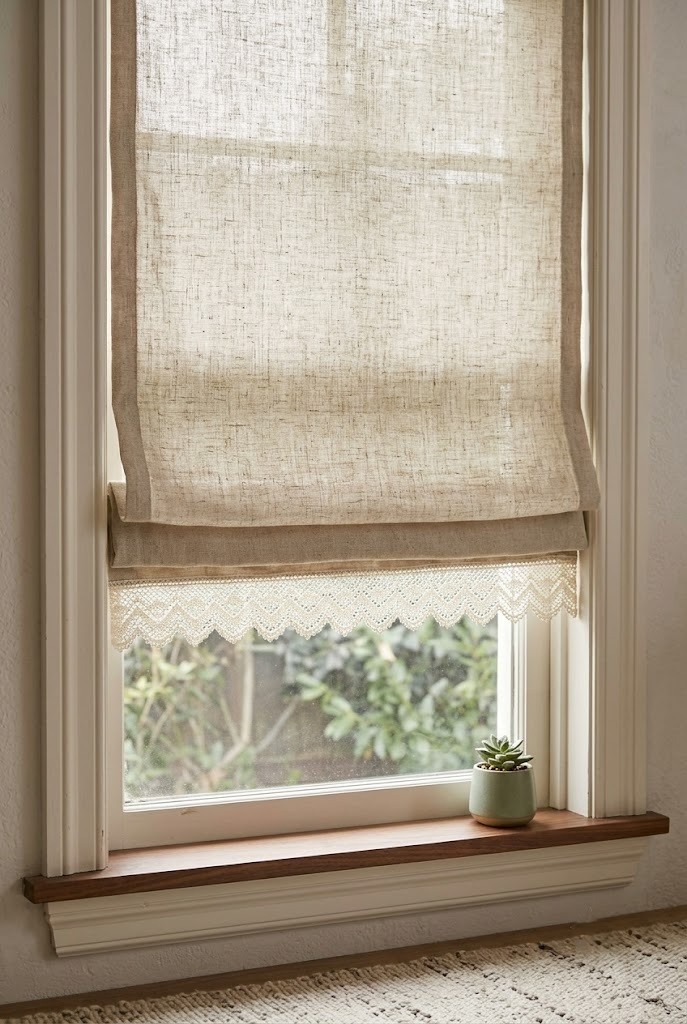
Stitching a lace border onto the bottom of a plain roman shade contains the whole idea to a two-inch band, making it the most conservative version here and the one most likely to survive a change of taste in three years. Cut doilies in half along the diameter and butt the straight edges up to the hem so the scallops hang downward. Use an oatmeal or natural linen shade rather than white, so the lace stays the brightest thing on the window and reads as trim rather than as more of the same fabric. Hand stitching outlasts fabric glue on anything raised and lowered daily.
20. Doilies stretched in dark-stained embroidery hoops at window height
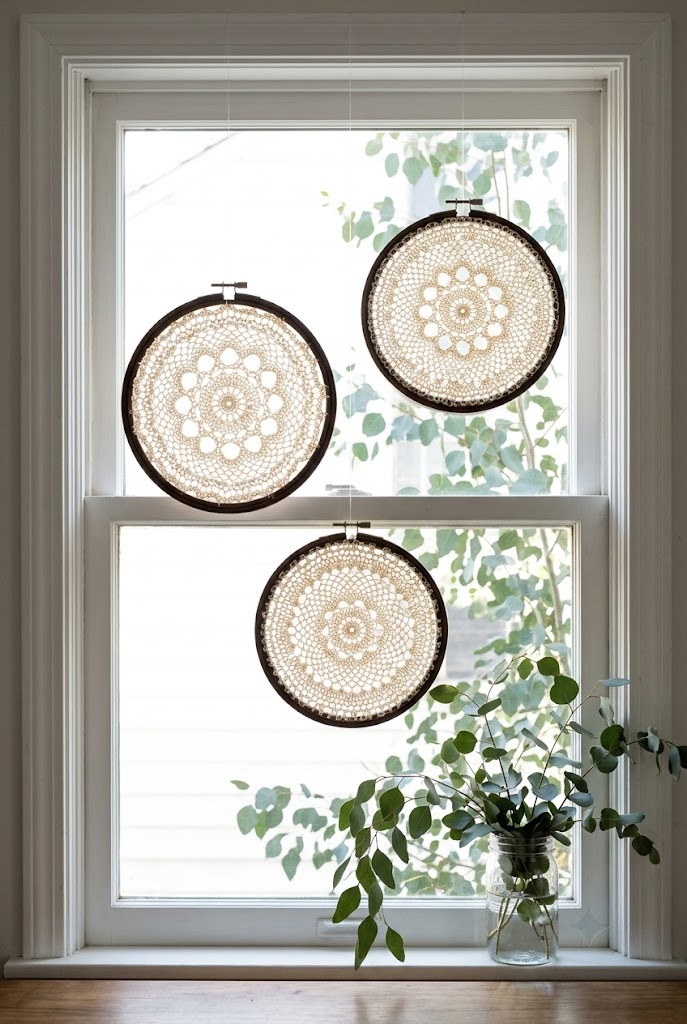
Stretching a doily inside a wooden embroidery hoop frames the lace like a lens, and the hard circle of the hoop is what stops the whole thing reading as a doily at all. Stain the hoops dark walnut before assembling, because raw pale wood is the immediate giveaway that this came from a craft aisle. Pick a hoop an inch or two larger than the doily so a ring of open air surrounds it, then hang three at staggered heights across one window on clear line. Direct sun yellows cotton lace within a year or two, so rotate which hoop faces south each season.
21. One doily draped over the top rail of a black dining chair
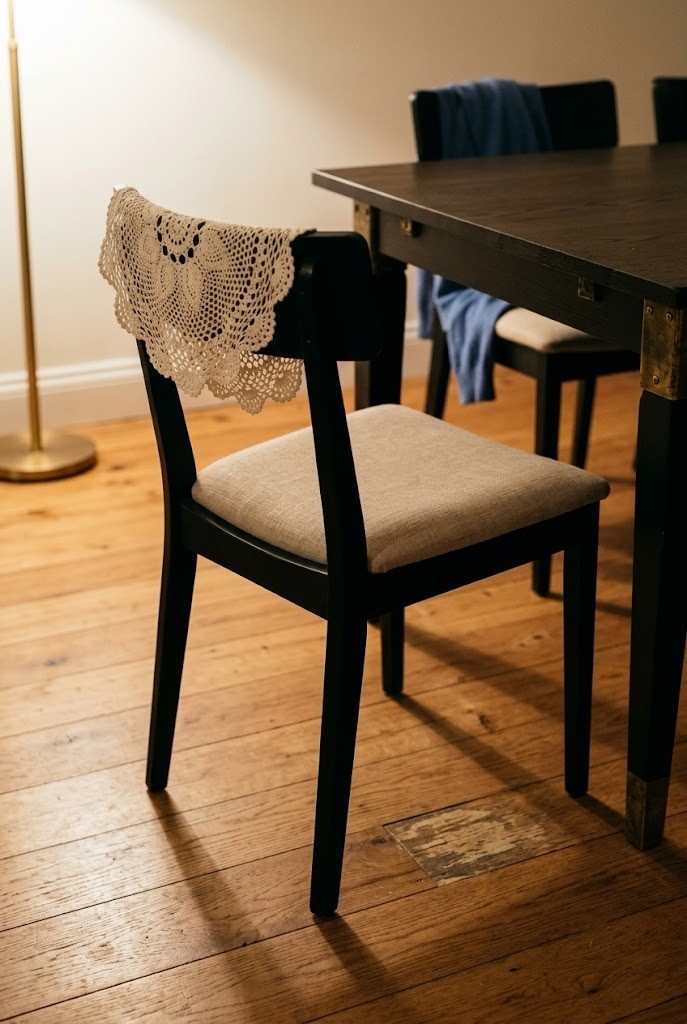
Draping a single doily over the top rail of a dark dining or accent chair puts lace at a height where it catches lamplight, without giving up a surface to it. One chair in the set, not the whole set. The combination that works is a dark frame, a plain seat, one white lace element and nothing else soft anywhere on the chair. Swap the doily for a folded linen napkin over the same rail and the room reads Scandinavian instead, with nothing else changed. A doily on every chair back is exactly the picture you are trying to avoid, so restraint is the entire strategy.
22. A doily set under a cut glass round on a nightstand top
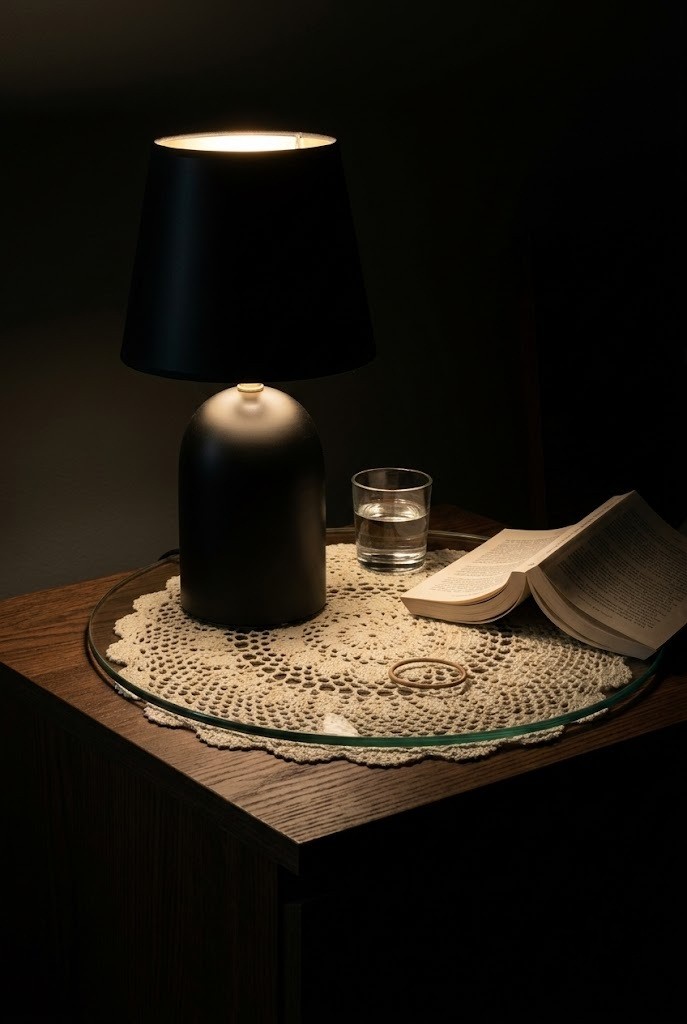
Setting a doily beneath a cut glass round on a nightstand protects it permanently and turns the surface into pattern, which solves the storage problem and the styling problem in one move. Center a single piece on the top, order a quarter-inch glass round cut to the exact dimension, and slip clear rubber bumpers between glass and wood so nothing slides when you reach for the lamp. A small round costs less than most picture frames at a local glass shop, usually 25 to 45 dollars. Idea 7 does the same thing at coffee table scale, so pick one or the other in a single room.
23. A doily lining a metal tray on an upholstered ottoman
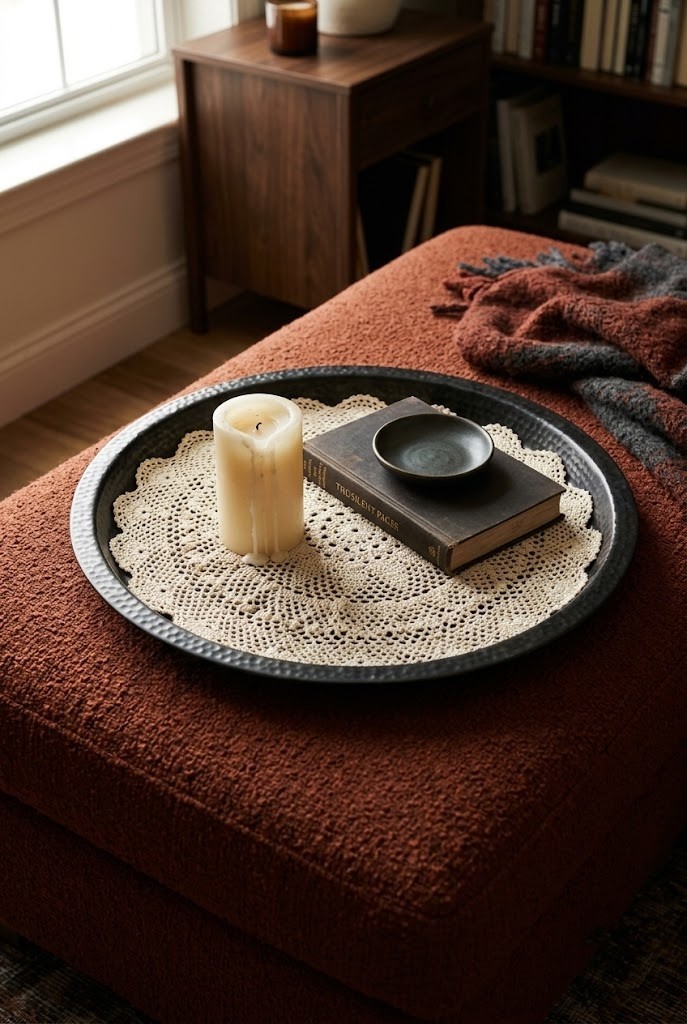
Lining a metal or dark wood tray with a doily before loading it with a candle and a book softens an ottoman vignette without putting fabric anywhere near where drinks land. The tray edge contains the lace, and containment is what stops it spreading across the ottoman and reading as a cover. Choose a doily an inch smaller than the tray's interior on every side so none of it touches or rides up the rim. A tray with a raised lip is essential here. On a flat board the doily slides out from under the objects within a week and instantly reads as a coaster set from 1978.
24. A doily decoupaged onto a deep-painted drawer front
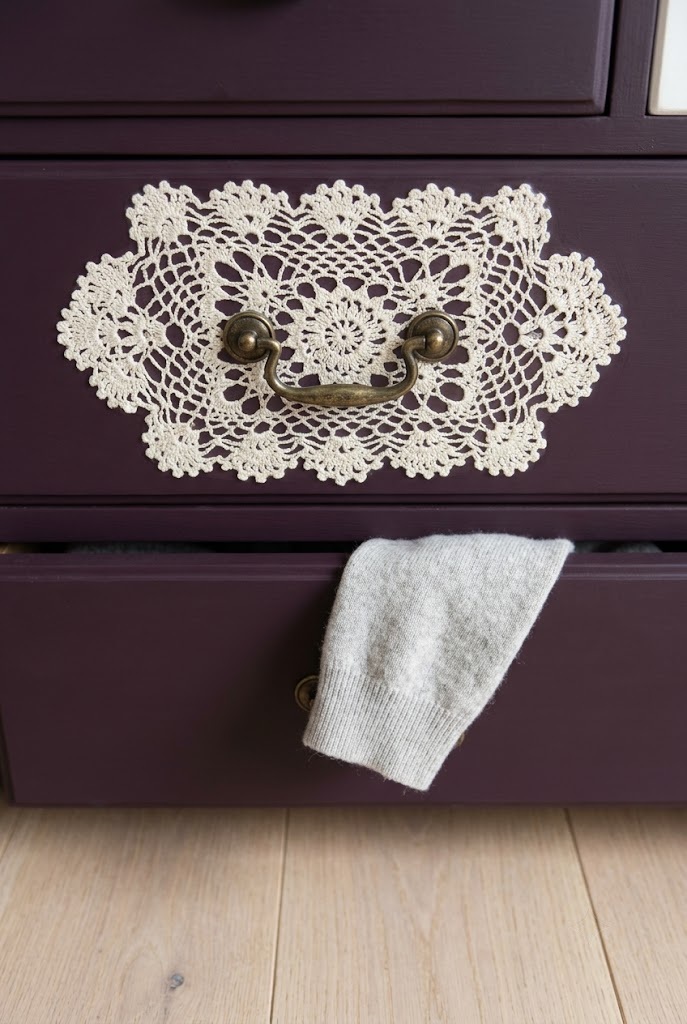
Applying a doily to a painted drawer front with matte decoupage medium gives lace texture to actual furniture, and it stands up to daily use better than any hanging version in this post. Paint the drawer a deep flat color first, position the doily while the paint is fully cured, then seal over the top with two thin coats of matte medium, sanding lightly between them. Gloss is what makes this look like a craft project; matte is what makes it look like inlay. Do the drawer fronts only and never a whole dresser. Wipe with a damp cloth, and expect the raised lace to collect grime near the handles within a year.
Final Thoughts
The rule underneath all twenty-four: a doily fails when it covers a surface and works when it sits on one. Cover, and it reads as protection, which reads as old. Place it, and it reads as pattern. Keep it to one lace element per sightline, put it against something dark or hard, and that shoebox in the closet turns into grandmacore without the mothballs. Start with the float frames or the glass tabletop, since neither one is permanent and both take an afternoon. Save this to Pinterest so you have it when the box comes back out.
Frequently Asked Questions
When do doilies start making a room look dated?
Doilies look dated the moment they cover a surface instead of sitting on one. A doily spread across a whole tabletop reads as furniture protection, which is the signal everyone is trying to avoid. The same piece under a single lamp base reads as a mat. The second rule is one lace element per sightline; two or more in one view and the room tips.
How do you stiffen a doily so it holds its shape?
Soak the doily in liquid fabric stiffener, squeeze out the excess, shape it over a mold like an upturned bowl, and let it dry overnight. Sugar water and diluted white glue both work but yellow within a year or two and attract insects. Commercial stiffener costs a few dollars a bottle and stays clear for years.
Can doilies work in a room with all modern furniture?
Yes, and modern furniture is the easier case by a wide margin. Lace looks dated when everything around it is also old. Against a flat-front cabinet, a matte black lamp or a glass tabletop, a doily reads as deliberate contrast. Keep the surfaces near it hard and dark and the lace becomes an accent rather than a period cue.
Where can I buy doilies if I didn't inherit any?
Estate sales and thrift stores are the cheapest source, where vintage textiles cost almost nothing, usually a dollar or two per piece. Craft-store crochet doily sets give you matched sizes, which matters for repeat placements like the framed column. Buy cotton rather than polyester; polyester lace has a plastic sheen that shows immediately under lamplight.