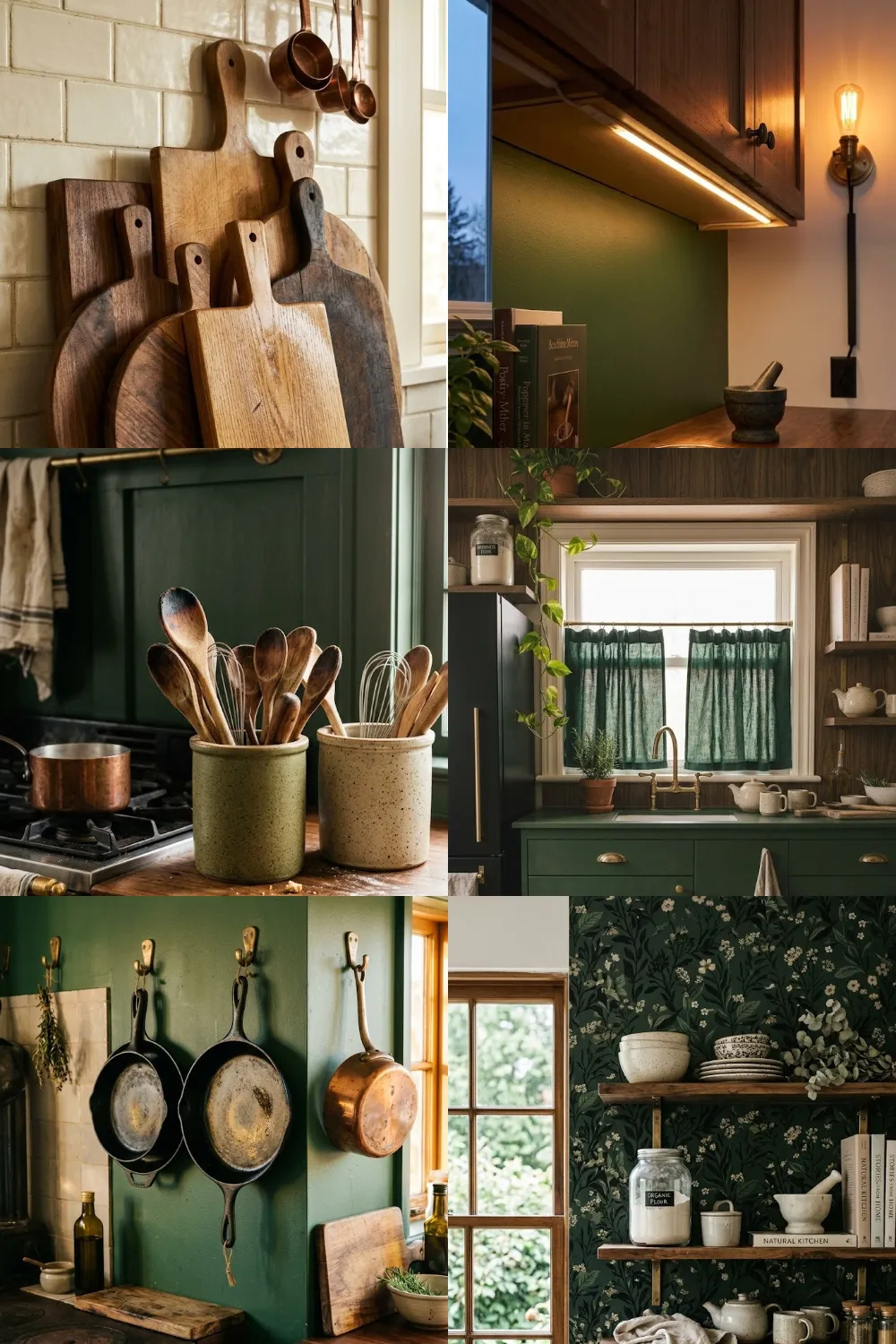
A dark cottagecore kitchen is doable in a rental with builder-white cabinets and a no-touch lease, and every idea here is reversible: no paint, no drilling into cabinet faces. Most dark cottagecore kitchen guides quietly assume you can paint the cabinets and swap the counters; this one is built for renters and grouped by the actual swap you will make, from peel-and-stick to tension-rod textiles to hardware you can put back, plug-in light, and freestanding decor. Nothing here costs you a deposit. Work zone by zone, pick the swaps that fit your kitchen, and layer moody green, walnut, and warm brass until the room stops reading builder-beige. Save this to Pinterest so you can pull it up aisle by aisle.
1. Moody Floral Peel-and-Stick Wallpaper Behind the Shelves
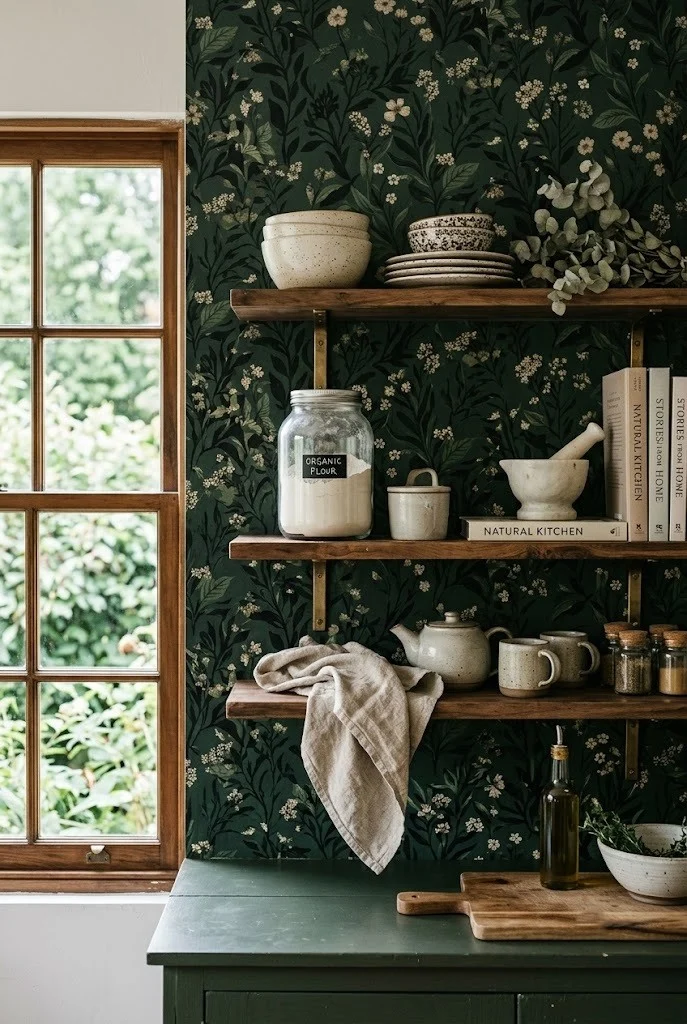
Peel-and-stick wallpaper in a dark botanical print is the fastest way to make a white rental kitchen read cottage. Run it on the wall behind open shelves or across a low-splash section where grease won't hit it daily, and choose a vinyl-coated peel-and-stick wallpaper rated wipeable, because paper-faced prints stain the first time sauce splatters. Measure the wall height plus four inches for trimming, and buy one extra roll for pattern matching. Prep matters: wipe the wall with a degreaser and let it dry fully, or the panels lift at the corners within a week. Keep the offcuts flat in a drawer for when you move and need to patch.
2. Forest-Green Faux Zellige Backsplash You Can Peel Off
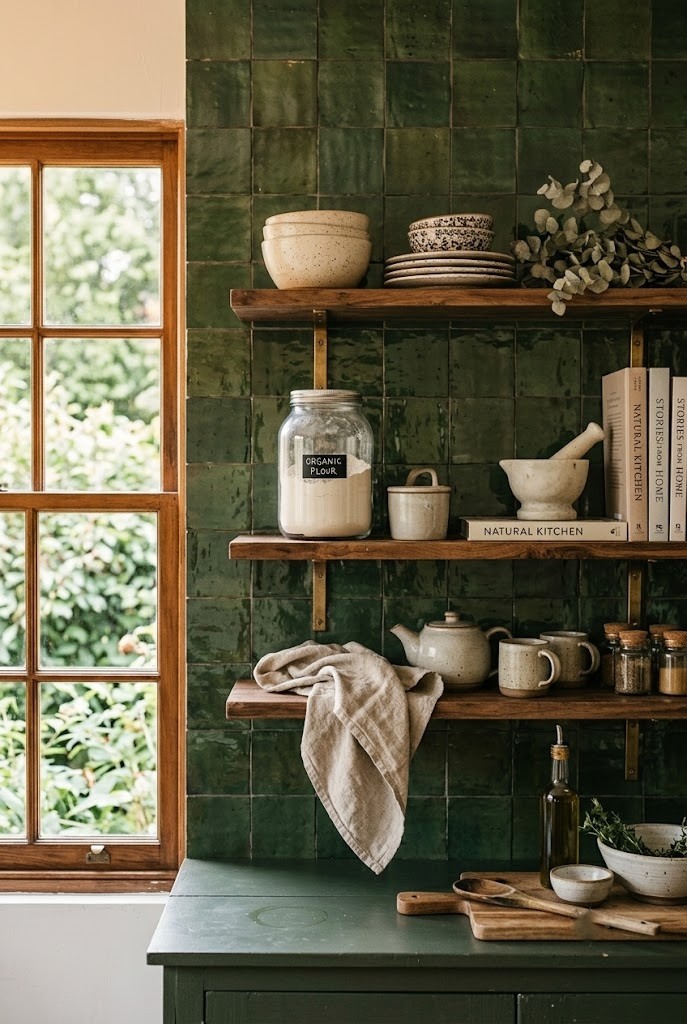
Peel-and-stick tile panels in a glossy forest or olive green give you the handmade-zellige look without a tiler or a security deposit fight. Gel-based 3D panels read most convincingly because they catch light like real glaze; flat printed sheets look like stickers up close. Run them only across the true backsplash zone between counter and uppers, and stop short of the stovetop's immediate heat area, where adhesive softens. Wipe the wall clean first, warm each panel with a hairdryer before pressing, and roll the seams flat. A softer take than the wallpaper in idea 1, this reads tile, not pattern, so it grounds the room rather than busying it.
3. Pressed-Tin Ceiling Panels Above the Range
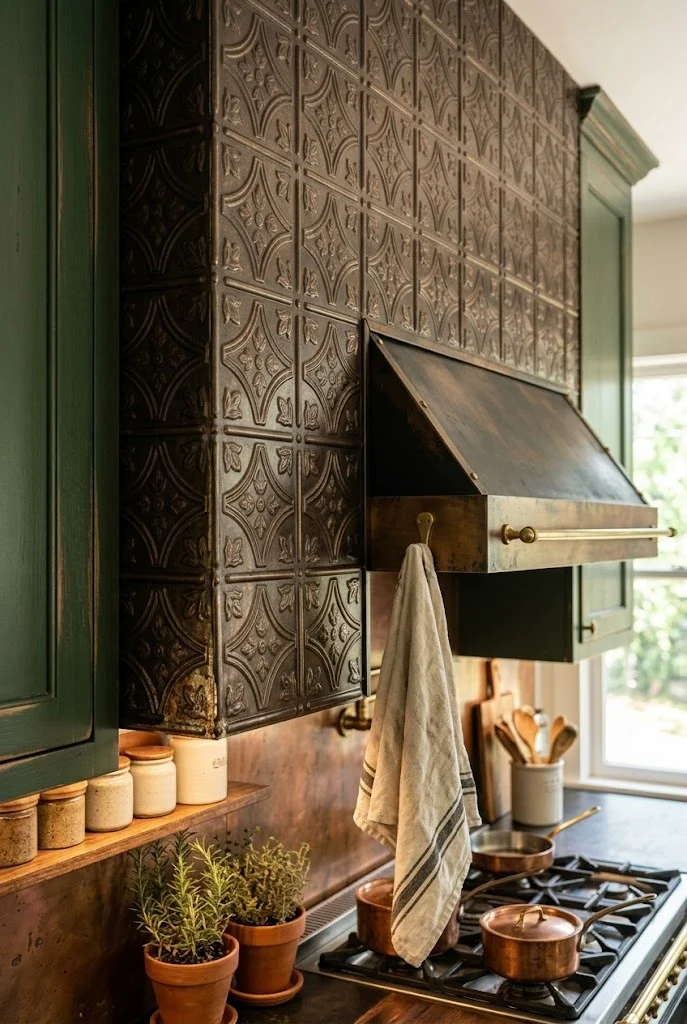
Faux pressed-tin panels in an oil-rubbed-bronze or matte-black finish, stuck to the wall above the range hood, add the old-cottage detail moody kitchens live on. Use lightweight PVC or foam panels sold as peel-and-stick ceiling tiles, not real metal, so the adhesive holds and you can pull them down cleanly. Keep them a safe distance above any gas flame and never directly behind an open burner. Cut them with scissors to fit around the hood and outlet. The dimensional shadow they throw is what sells the look, so light them from the side with a warm under-cabinet strip rather than a flat overhead.
4. Forest-Green Removable Vinyl on the Lower Cabinets
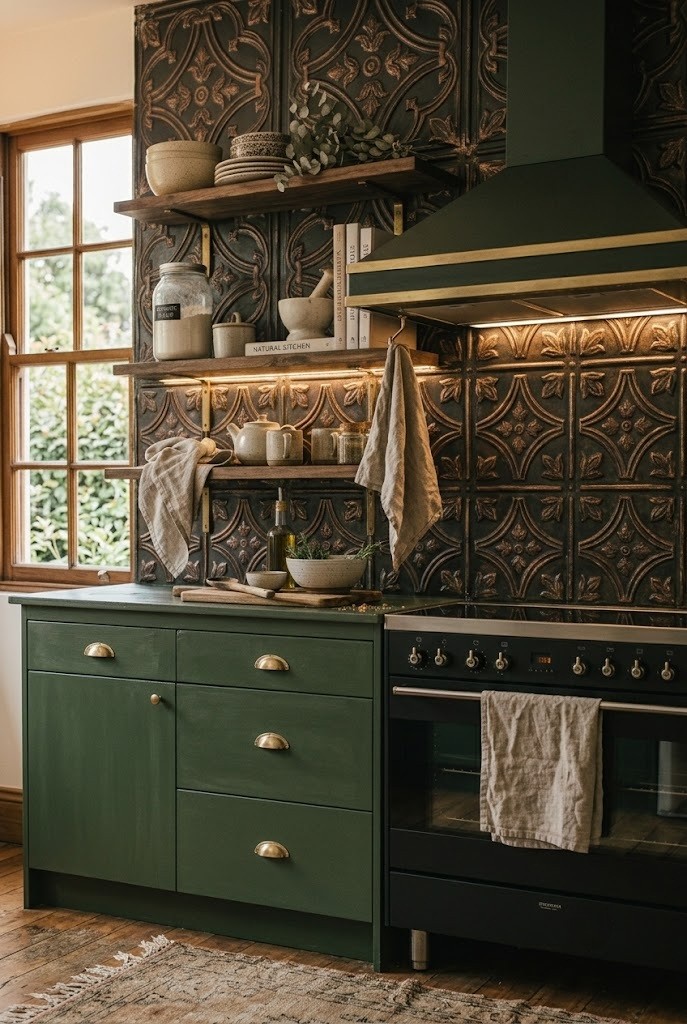
Removable cabinet vinyl in matte forest green wraps builder-white lower doors and does the single biggest mood shift in the whole list, without a drop of paint. Buy a matte or eggshell-finish removable cabinet vinyl rated for kitchens; high-gloss shows every fingerprint and bubble. Pull the doors off, clean and dry them, wrap on a flat table with a felt squeegee, and wrap the door edges so no white peeks at the seams. If forest green feels heavy in a small kitchen, a moody blue on just the sink run keeps it from closing in. Score around handles with a fresh blade. It peels off in one piece when you leave.
5. Matte-Black Vinyl-Wrapped Fridge
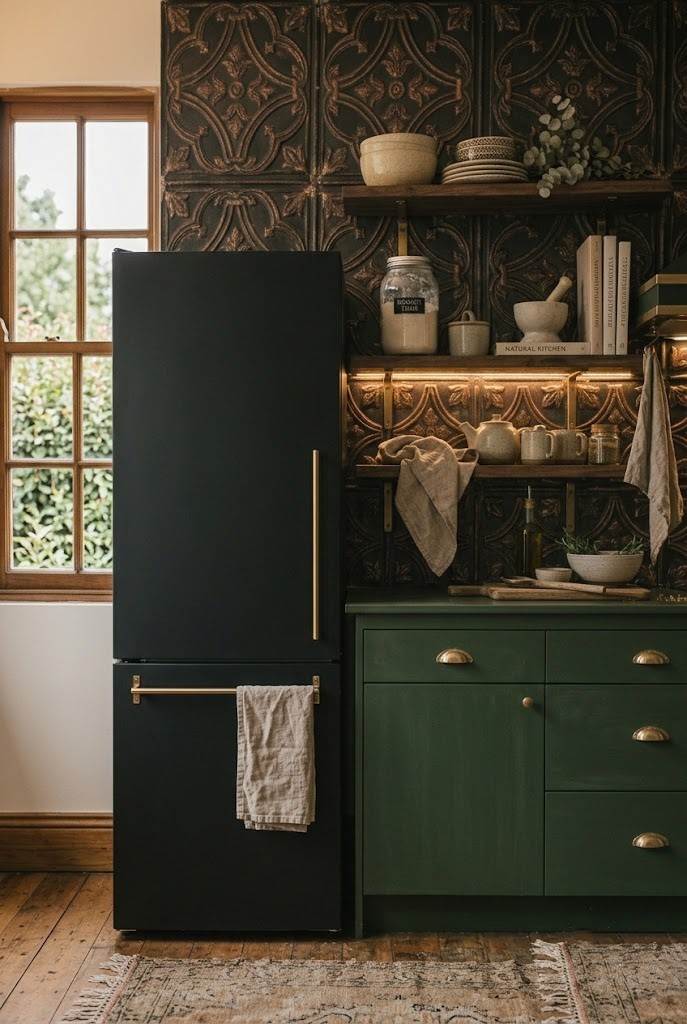
Wrapping a white or stainless fridge in matte-black removable vinyl kills the biggest cold, shiny object in most rental kitchens and lets the moody palette take over. Matte black reads more cottage than gloss and hides seams better on a large flat door. Measure each panel, wrap the door faces separately from the box, and leave a hair of gap around the gasket so the seal still closes. Warm the vinyl to bend it around the handle recess. This is the one swap that most changes the room's temperature, and it pairs with the green cabinets in idea 4 for a two-tone, not all-dark, effect.
6. Warm Walnut Contact Paper Lining the Open Shelves
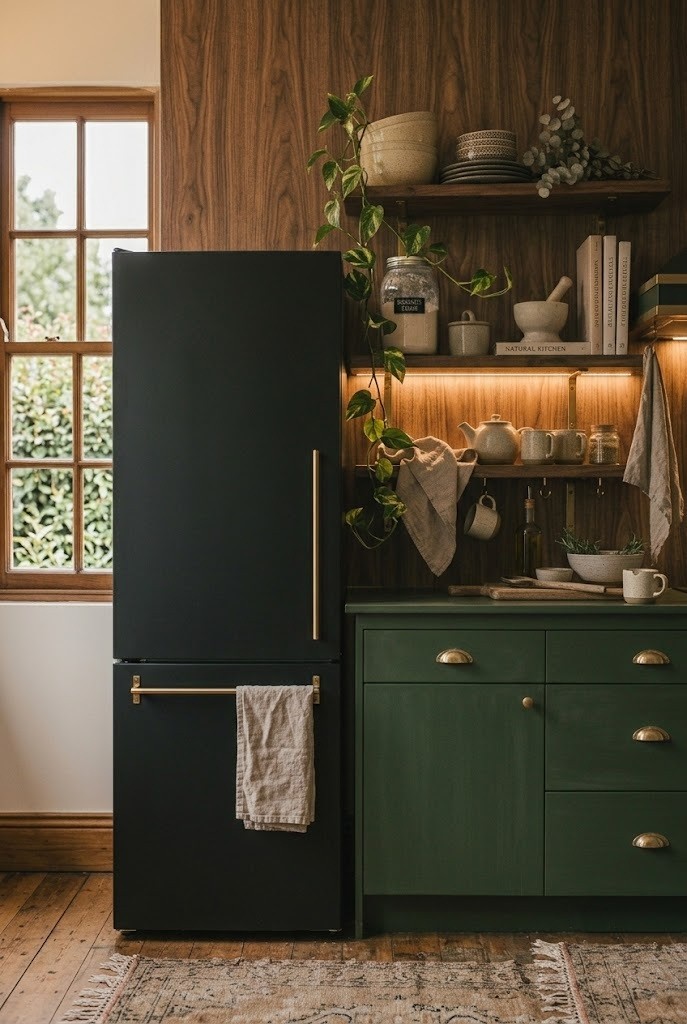
Wood-grain contact paper in a warm walnut tone, stuck to the back wall of open shelving or glass-front cabinets, gives cheap builder shelves the depth of real wood. Choose a realistic walnut or aged-oak grain, not an orange fake pine, and line only the vertical back panel so dishes still sit on the original shelf. Because it hides behind your stoneware, small bubbles and seams never show. Cut it a quarter-inch shy of each edge so no corner curls into view. It warms the whole shelf display and makes even plain white plates look intentional against it.
7. Charcoal-and-Bone Checkerboard Peel-and-Stick Floor
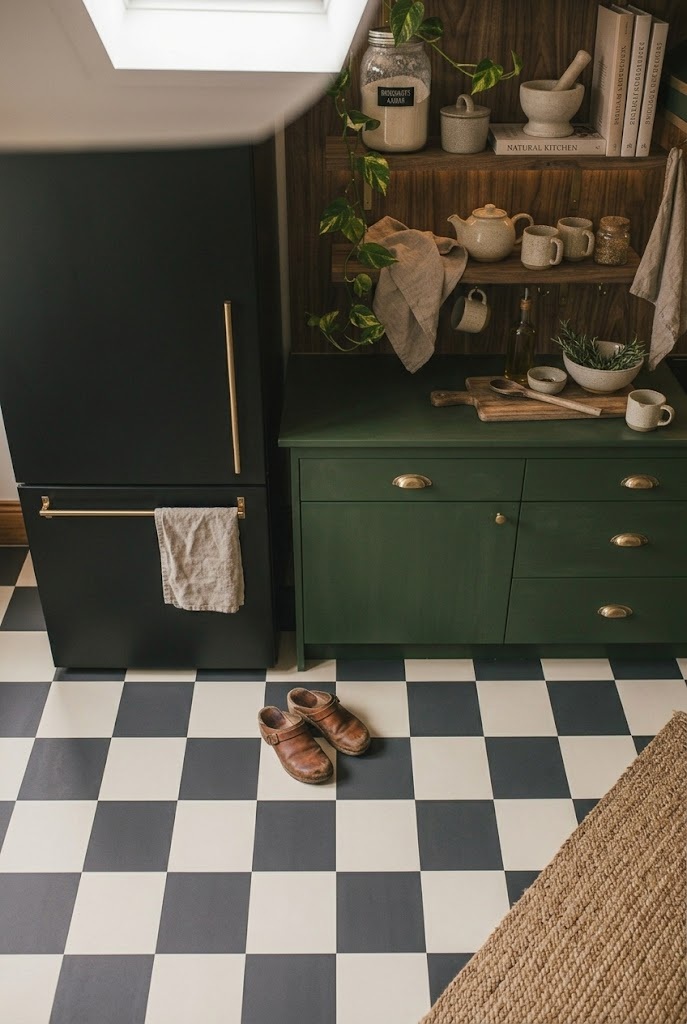
Peel-and-stick vinyl floor tiles in a charcoal-and-bone checker lay a moody cottage floor straight over ugly rental lino or tile. Buy thick, rated peel-and-stick floor planks or tiles, not the paper-thin dollar kind, which telegraph every grout line beneath. Lay them over a clean, dry, flat floor; if the existing tile has deep grout lines, a thin luan sheet or a large layered rug over the tiles hides them better. Dry-lay the checker pattern first so cut tiles land at the edges, not in the doorway. They lift when warmed with a hairdryer at move-out. Keep the room's other patterns quiet so the floor stays the star.
8. Dark Linen Cafe Curtains on a Tension Rod
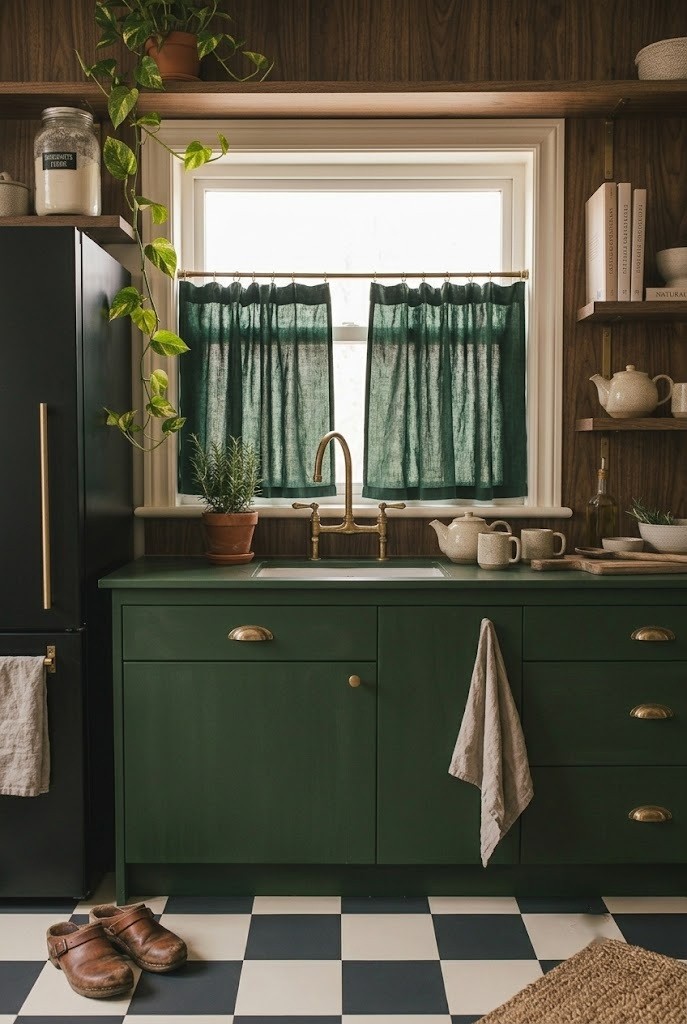
A tension rod inside the window frame holding dark linen cafe curtains softens the hardest surface in the kitchen, the glass, with zero screw holes. Half-height cafe curtains keep daytime light while still framing the window in moody fabric; full drops make a small kitchen feel damp and dark. Choose a washed linen or linen-blend in forest, ink, or deep plum, and hang it inside the frame on a spring-tension rod so nothing mounts to the wall. Iron in a soft fold before hanging. If the window sits over the sink, keep the hem above splash height. This is where the room's softness starts before any decor lands.
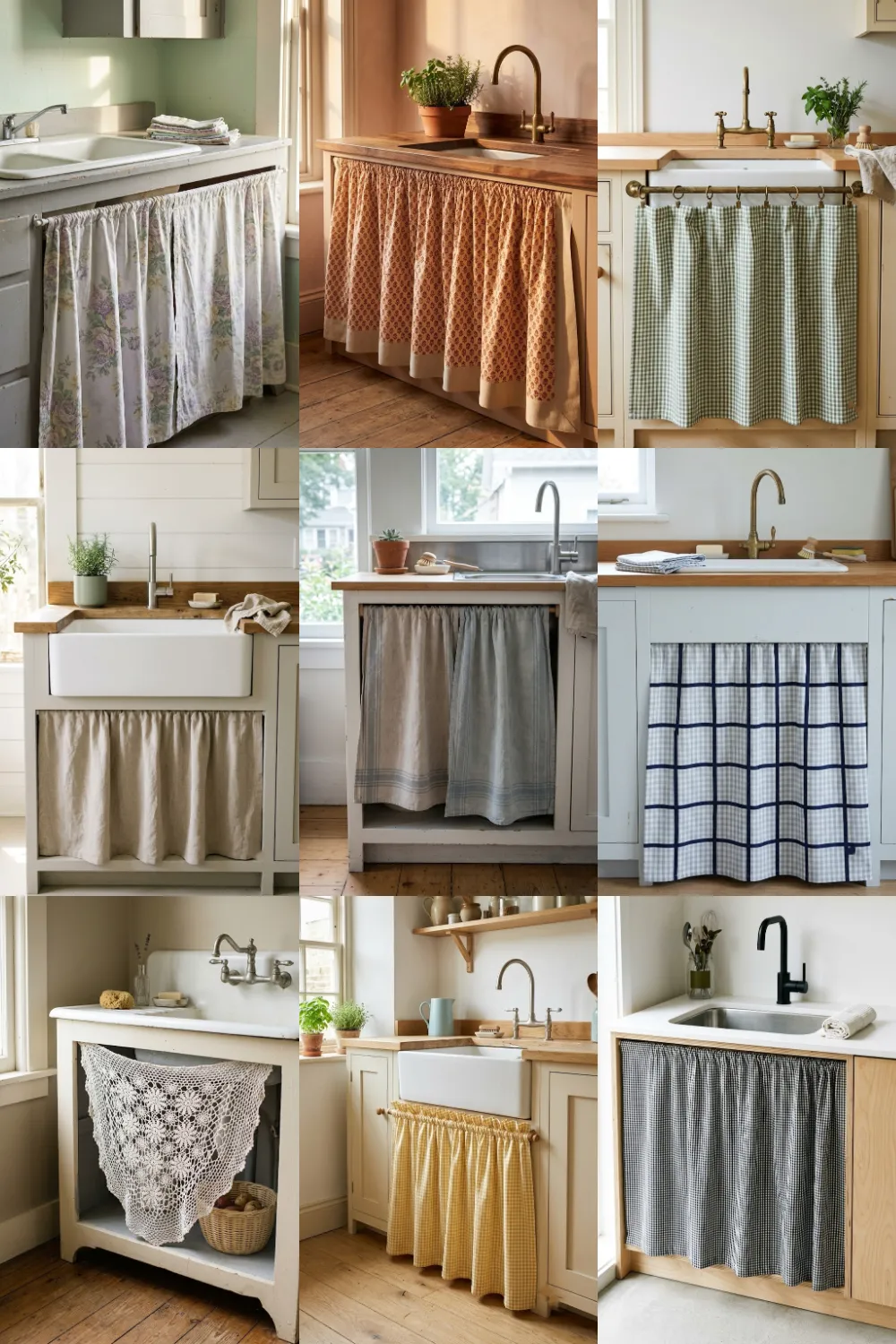
9. A No-Sew Sink Skirt to Hide the Under-Cabinet Clutter
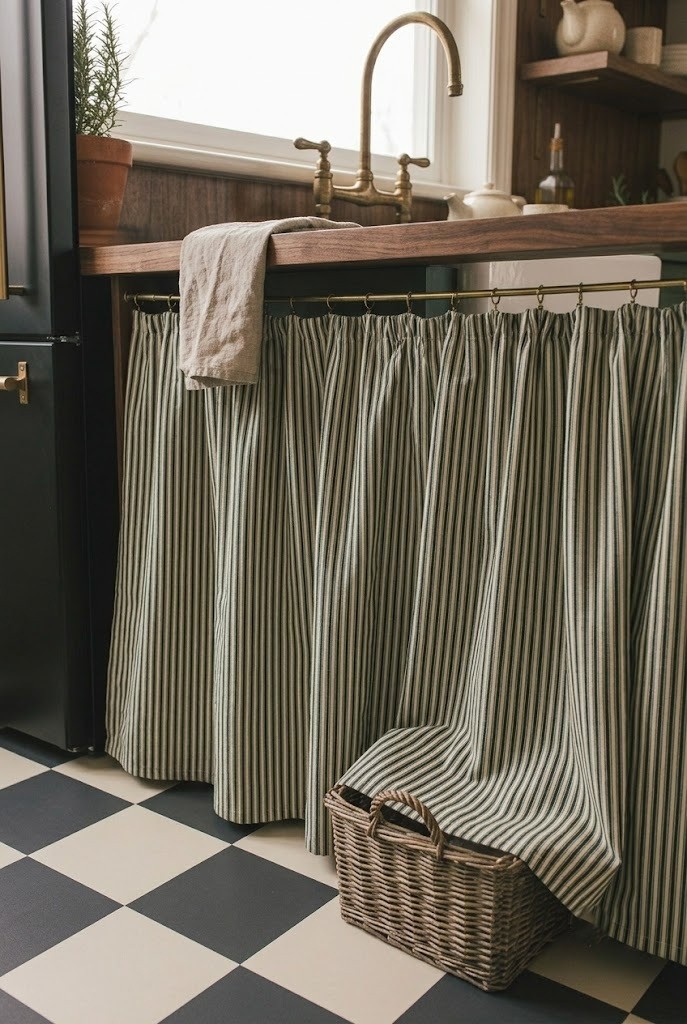
A no-sew sink skirt on a tension wire strung under the counter lip hides exposed pipes, bins, and cleaning bottles behind moody fabric in an afternoon. Use hem tape or clip rings so there is no sewing, and pick a heavier linen or a dark ticking stripe that reads cottage, not shower-curtain. String the wire under the counter overhang with its screw-in clips, or use an adhesive-mounted rod if you cannot screw at all. Keep the skirt an inch off the floor so it does not mop up water. It softens the base cabinets the cafe curtains in idea 8 started, carrying the fabric down to the floor.
10. A Linen Valance and Hung Tea Towels for Soft Layers
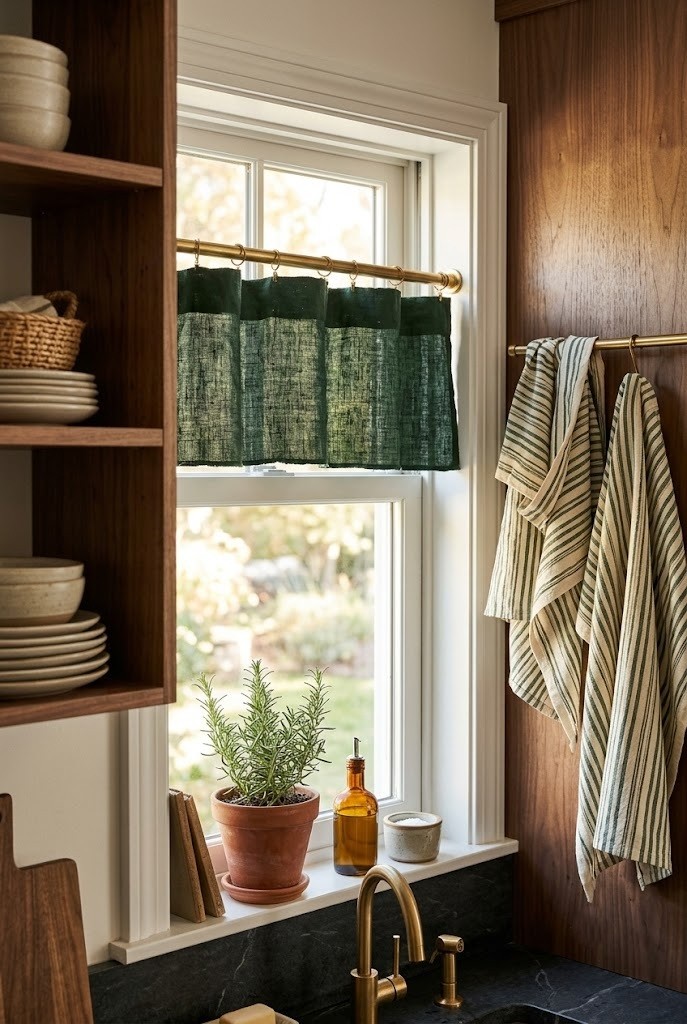
A short linen valance on a tension rod above the window, plus dark tea towels hung along a second rod on the cabinet face, layers soft fabric where kitchens usually go hard and bare. A plain valance adds a top line that frames the window without blocking the light. Hang striped or checked tea towels in forest and cream on a slim tension rod fitted inside a cabinet's toe-kick recess or across the oven handle. The trick is repetition: the same two or three fabrics showing up in curtain, valance, and towel make the room feel styled instead of accidental.
11. A Dark Botanical Runner Down the Galley
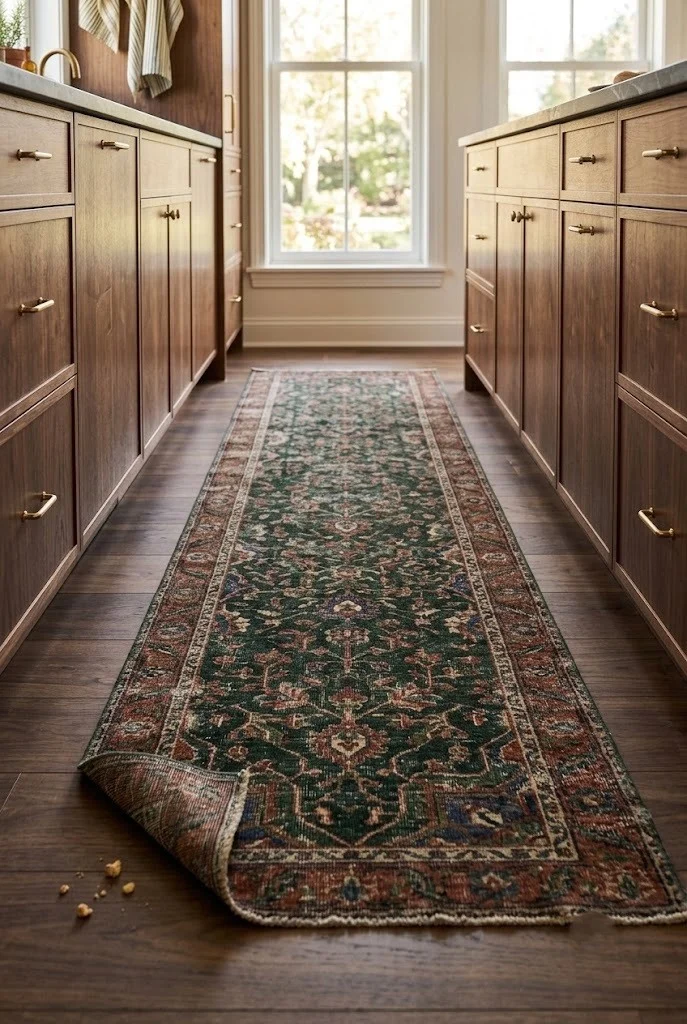
A washable runner rug in a dark botanical or faded-Persian pattern warms a cold rental floor and pulls the whole moody scheme together underfoot. Runners suit galley and narrow kitchens; measure your clear floor width and buy a runner that leaves four to six inches of floor showing on each side, or it looks like fitted carpet. Choose a low-pile washable style, because kitchen floors collect crumbs and drips. Deep greens, rust, and near-black grounds hide stains far better than cream. A runner is also the softest, lowest-commitment way to add pattern underfoot if peel-and-stick floor tiles feel like too much.
12. Oil-Rubbed-Bronze Cup Pulls in Place of Builder Knobs
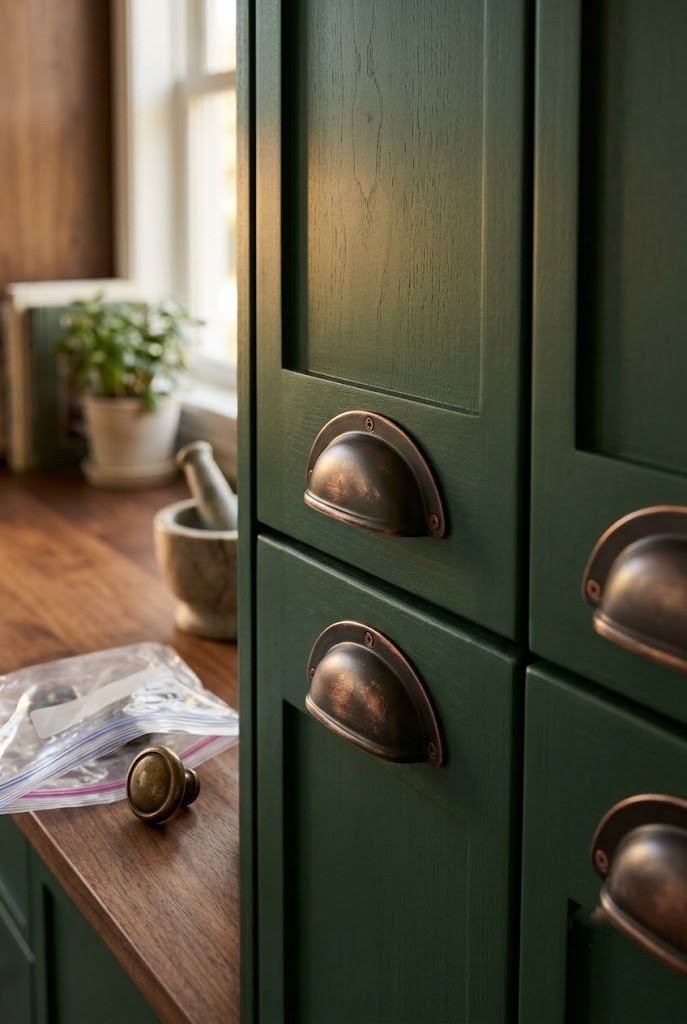
Swapping shiny builder knobs for oil-rubbed-bronze cup pulls is a five-minute change that instantly ages a kitchen toward cottage, and you keep the originals to screw back at move-out. The reversibility catch: cup pulls need a single center hole or a matching bolt spacing, so measure your existing hole first and buy pulls sized to it, or you drill new holes and lose the deposit. For doors with one knob hole, choose single-hole cup pulls or plain bronze knobs. Bag the old hardware and screws in a labeled zip bag the day you swap. This is the highest-impact, lowest-cost swap on the whole list.
13. Unlacquered Brass Knobs on the Upper Cabinets
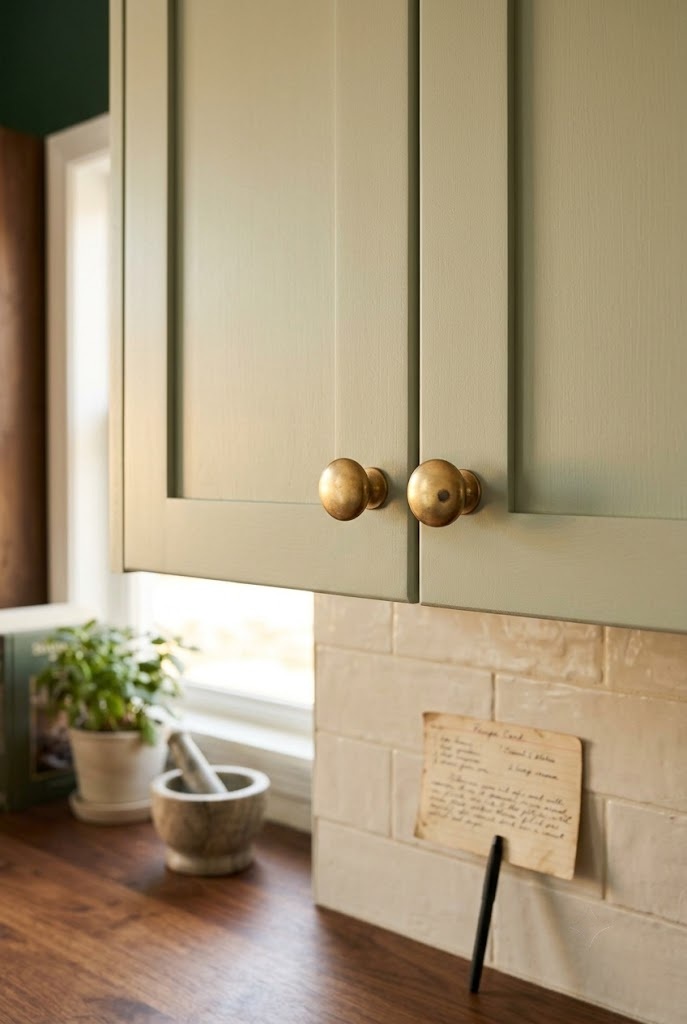
Unlacquered brass knobs on the upper doors bring in the warm, living metal that gives cottage kitchens their glow, and they reuse the existing knob holes exactly. Aged brass leans grandmillennial without the fussy chintz, and because uppers get handled less than drawers, the patina develops slowly and evenly. Match the hole size to your current knobs, matching the cup pulls in idea 12 so the metals agree across the room. Unlacquered means it will darken and spot over time, which is the point, not a defect. If you want the warmth without the upkeep, a lacquered antique-brass finish holds its color. Keep the old knobs bagged with the rest.
14. Blackened-Iron Bin Pulls on the Drawer Bank
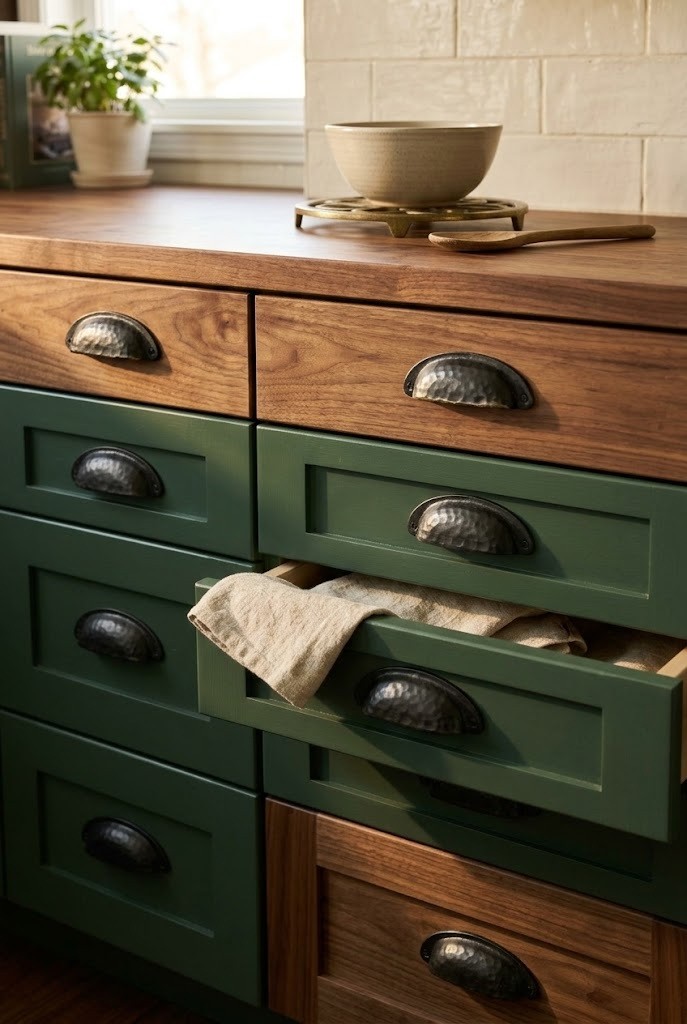
Blackened-iron or matte-black bin pulls on the drawer fronts add the heavy, forged look that reads old-farmhouse and grounds all the brass elsewhere. Drawers usually already wear pulls, so measure the existing bolt spacing, commonly 3 or 3.75 inches center to center, and buy bin pulls to match, keeping the swap reversible. If your drawers currently have single knobs, single-hole bin cups exist so you skip drilling entirely. Mixing black on the drawers with brass on the doors is deliberate: the contrast reads more collected than one perfectly matched set. Save every original screw. This finish hides kitchen grime better than any bright metal.
15. A Plug-In Edison Sconce Beside the Window
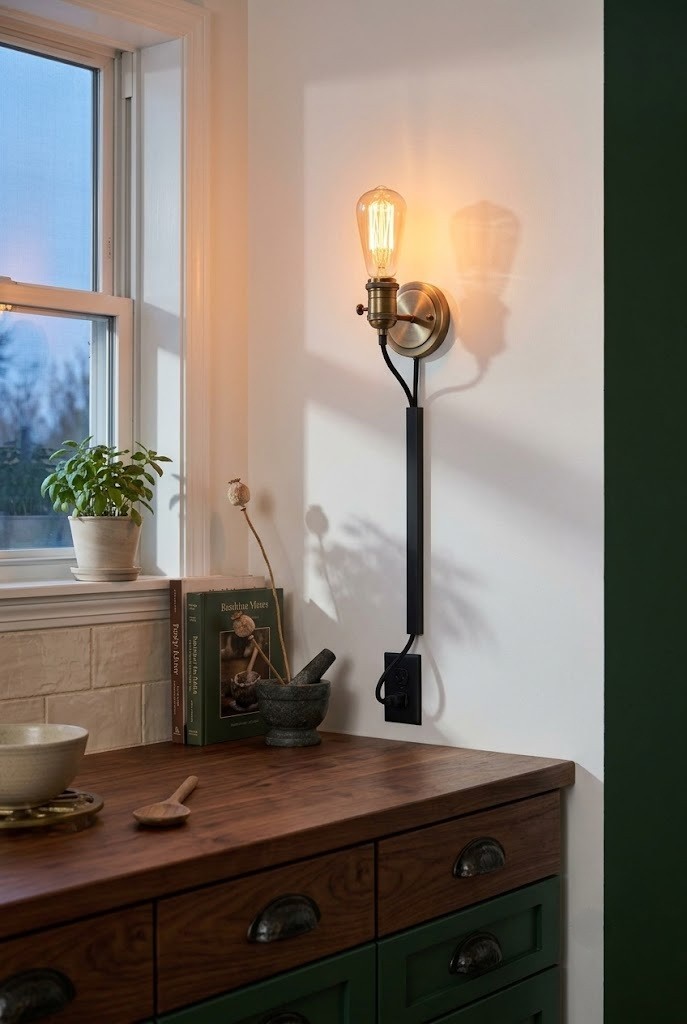
A plug-in Edison sconce mounted with removable strips beside the window adds the warm, low, cottage light a bright ceiling fixture kills. Because it is plug-in, there is no electrician and no junction box: the cord runs down to an outlet, hidden in a paintable cord channel or a fabric cord cover so it does not dangle. Choose a sconce with a warm 2700K bulb, ideally on a small dimmer plug, so evenings go golden instead of clinical. Mount the backplate with heavy-duty removable strips rated well above the fixture's weight. This warm pool of light is what makes the room feel like a cottage after dark, not a work triangle.
16. Warm Stick-On Under-Cabinet Lighting
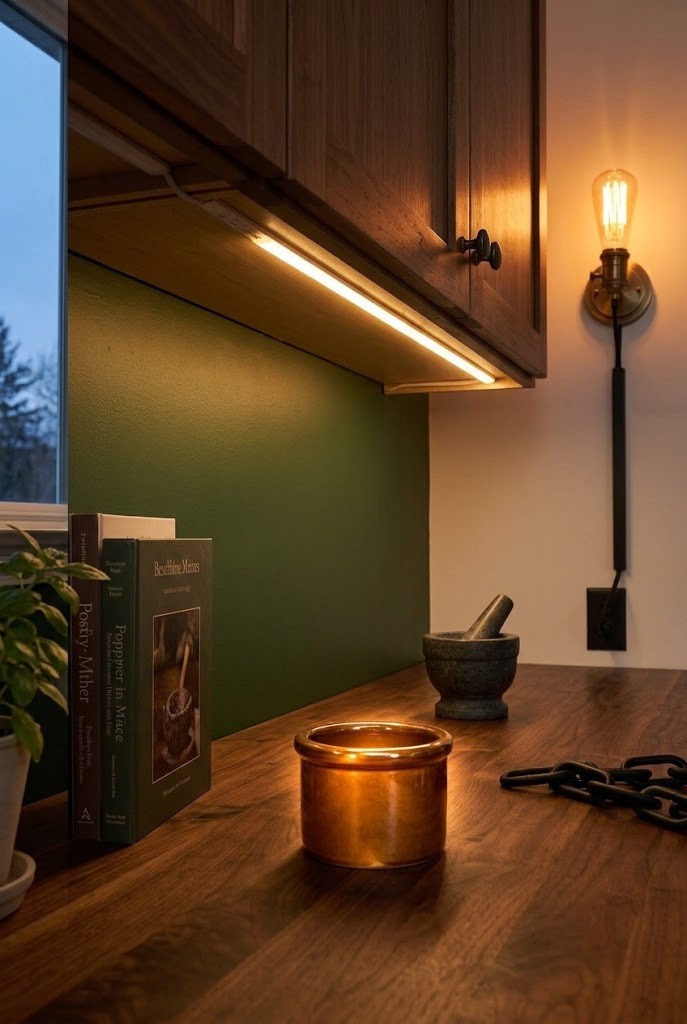
Stick-on, warm-white LED strips or puck lights under the upper cabinets throw the low side-glow that makes a moody kitchen readable without a harsh overhead. Battery or plug-in versions need no wiring; choose 2700-3000K warm white, because cool-white strips make green cabinets look grey and grim. Stick them to the underside front lip of the uppers so the light washes the backsplash, not your eyes. Rechargeable puck lights with a remote are the least fussy option going. Clean the surface with rubbing alcohol first, or the adhesive quits within weeks and the strip sags off the cabinet.
17. A Plug-In Picture Light Over a Leaning Print
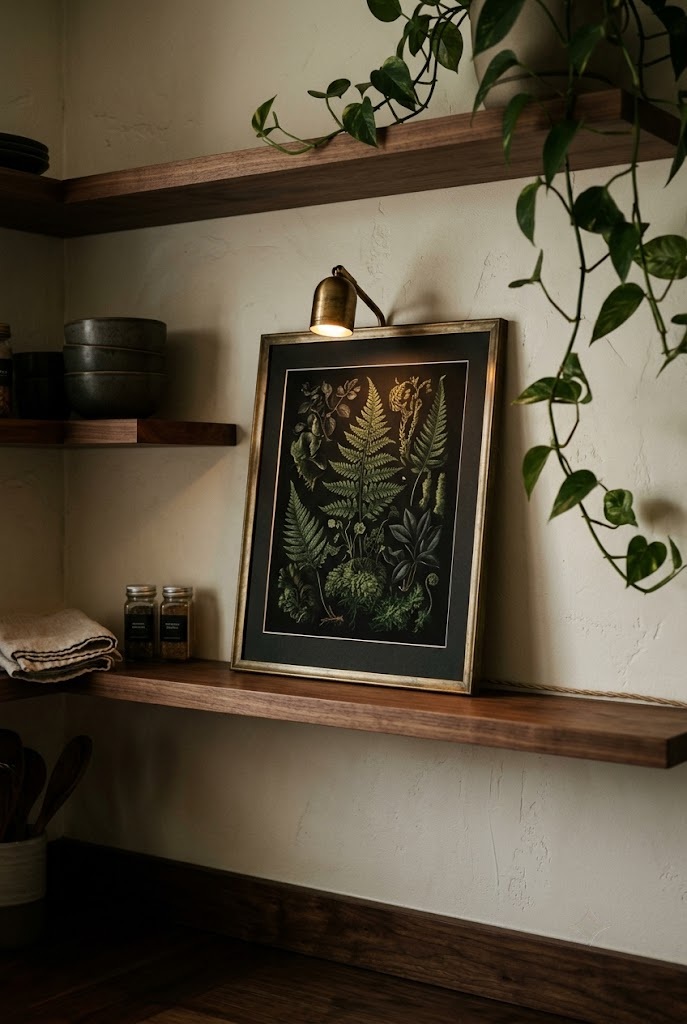
A small plug-in picture light clipped or leaned above a dark botanical print or open shelf gives one moody focal glow, the kind galleries use to make a wall feel considered. It is a lower-commitment glow than a hardwired fixture: many run on rechargeable batteries with a remote, so there is no cord at all. Aim it at a framed botanical, a hung enamelware plate, or the top shelf of your styled display. Warm bulb only. Keep it off during cooking and on for the evening so the room shifts mood at night. One small light doing one job reads richer than a bright ceiling doing everything.
18. A Small Table Lamp on the Kitchen Counter
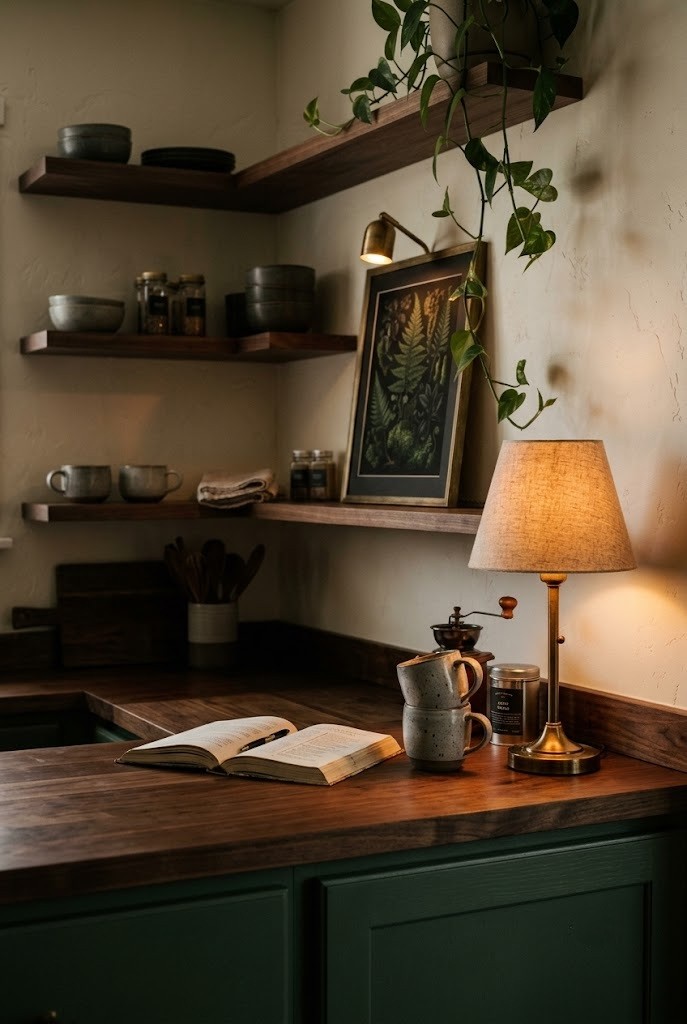
A little table lamp on the counter is the most cottage move on this list, trading task glare for a warm reading-room glow in a corner you don't prep in. Put a compact ceramic or brass lamp near the coffee station or a dead counter end, with a warm dimmable bulb, and suddenly the kitchen feels like a room you would sit in. Keep it well away from the sink and stove for safety, and off any surface that gets wet. A linen or amber shade throws the softest light. It is the finishing layer the sconce in idea 15 and the under-cabinet strips in idea 16 build toward.
19. Warm Glow Inside a Glass-Front Cabinet
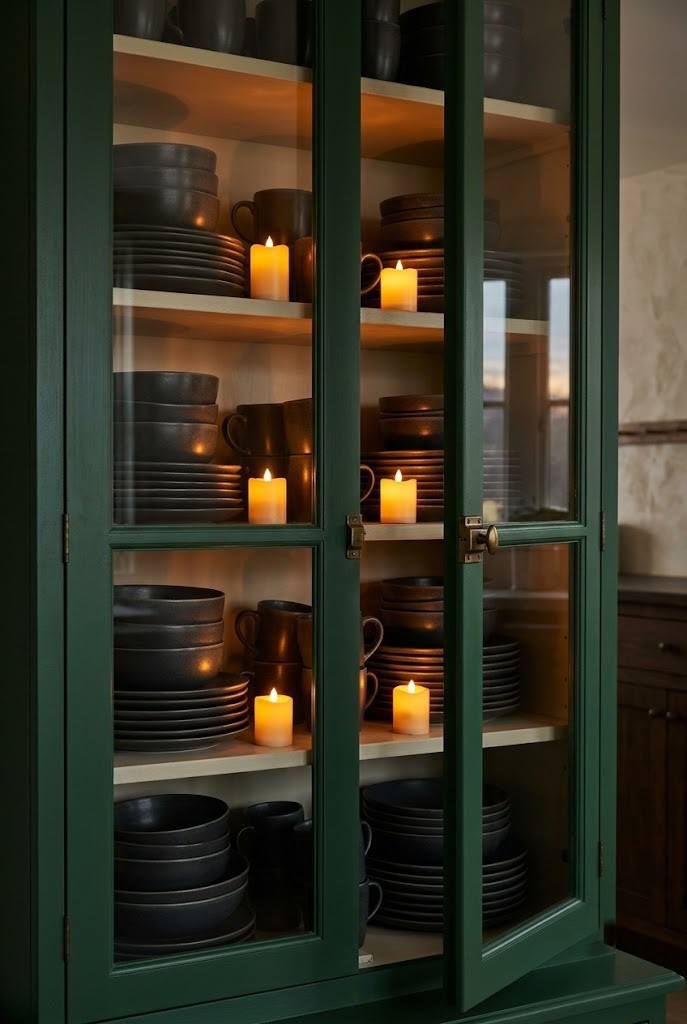
Battery pillar candles or warm puck lights set inside a glass-front cabinet make the dishes glow from within, the trick that gives old dressers their evening warmth. Stand two flameless pillars or a couple of stick-on puck lights behind the glass, behind your darkest stoneware, so the light rims the shelves. Use a timer or remote so it clicks on at dusk. Only real flameless candles here, never an open flame in a closed cabinet. If your uppers are solid rather than glass, do this inside an open hutch or on a leaning shelf instead. It is a small, cheap effect that makes the whole wall feel lit from the inside.
20. Stoneware Crocks Corralling the Utensils
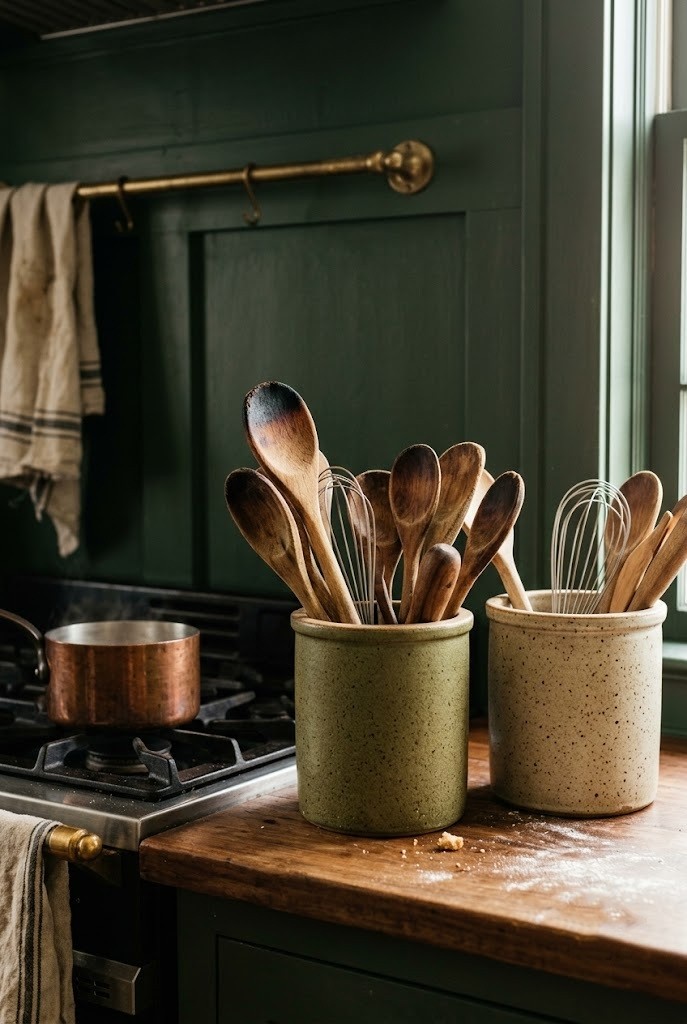
A pair of stoneware crocks by the stove holding wooden spoons and whisks does double duty: it clears drawer clutter and adds the earthy, handmade texture cottage kitchens run on. Choose matte, speckled, or reactive-glaze stoneware crocks in olive, oatmeal, or near-black rather than shiny white, and vary the heights so the grouping has a little rhythm. Fill them with real tools you actually use, plus one wooden-handled brush for looks. Keep them a hand's width from the burner so bristles and handles don't scorch. Grouped with a leaning board and a small plant, they read like a still life, not storage.
21. Woven Baskets Filling the Space Above the Cabinets
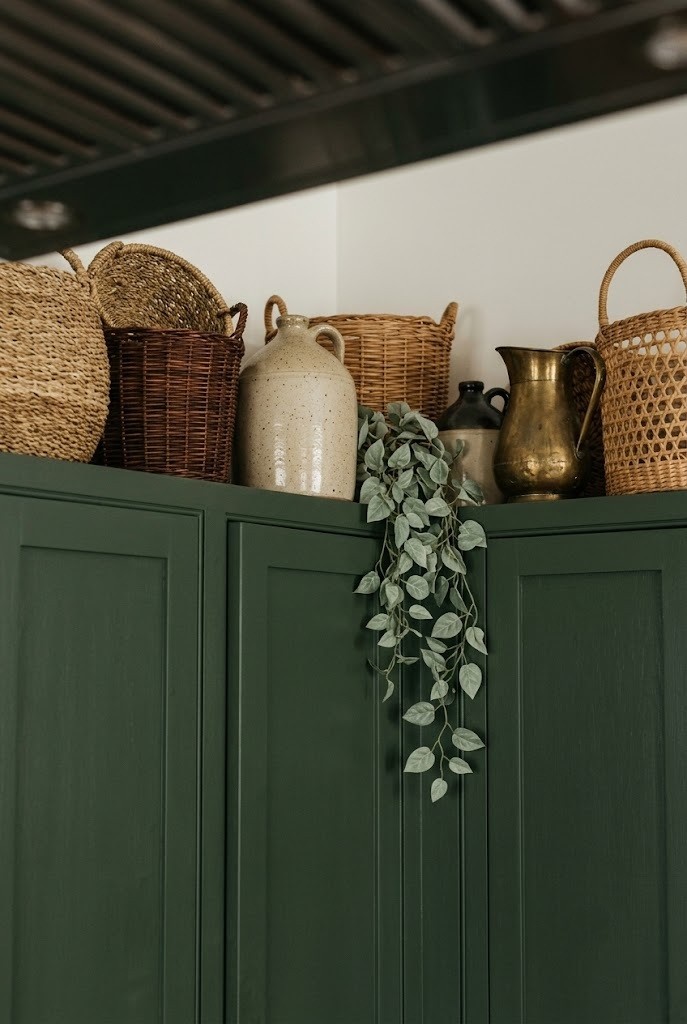
Woven baskets and a few stoneware jugs lined along the top of the wall cabinets fill that dead builder gap and pull the eye up into cozy, collected territory. Use a run of woven baskets in mixed weaves and warm tones, turned so the prettiest face shows, and tuck out-of-season or rarely-used kitchen gear inside them for real storage. Vary the sizes and leave small gaps so it looks gathered, not walled-in. Add one trailing faux vine for softness. This is prime space renters ignore; it costs nothing structural and comes straight down when you move. It is warmth up high, in the one zone most rental kitchens leave blank.
22. Dried Herb and Eucalyptus Bunches Hung to Dry
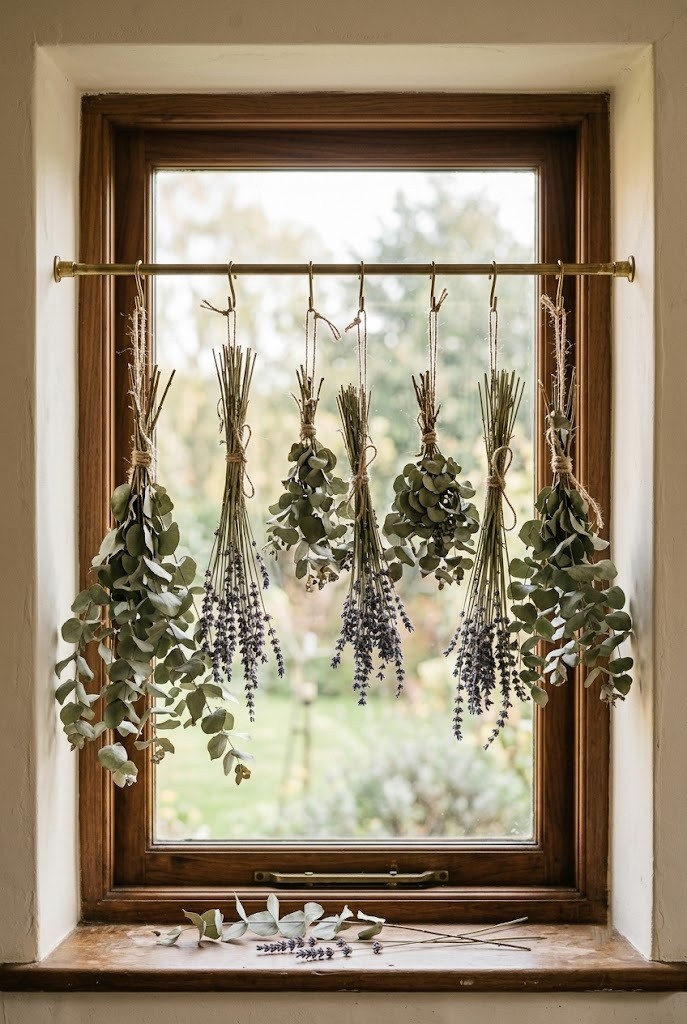
Bunches of dried eucalyptus, lavender, or bay hung from a slim tension rod or an adhesive hook bring the forager, herb-cottage note that anchors this whole aesthetic. Tie three or four small bunches with twine and hang them under a shelf, across the window frame on a tension rod, or from a single stick-on hook by the range. Eucalyptus and lavender dry beautifully and hold scent; fresh cooking herbs mold, so use ornamental dried stems, not your basil. Keep them off direct heat and out of splash range. They cost a few dollars a bundle and replace the need for any wall art on a tricky no-nail wall.
23. Vintage Wooden Boards Leaned Along the Backsplash
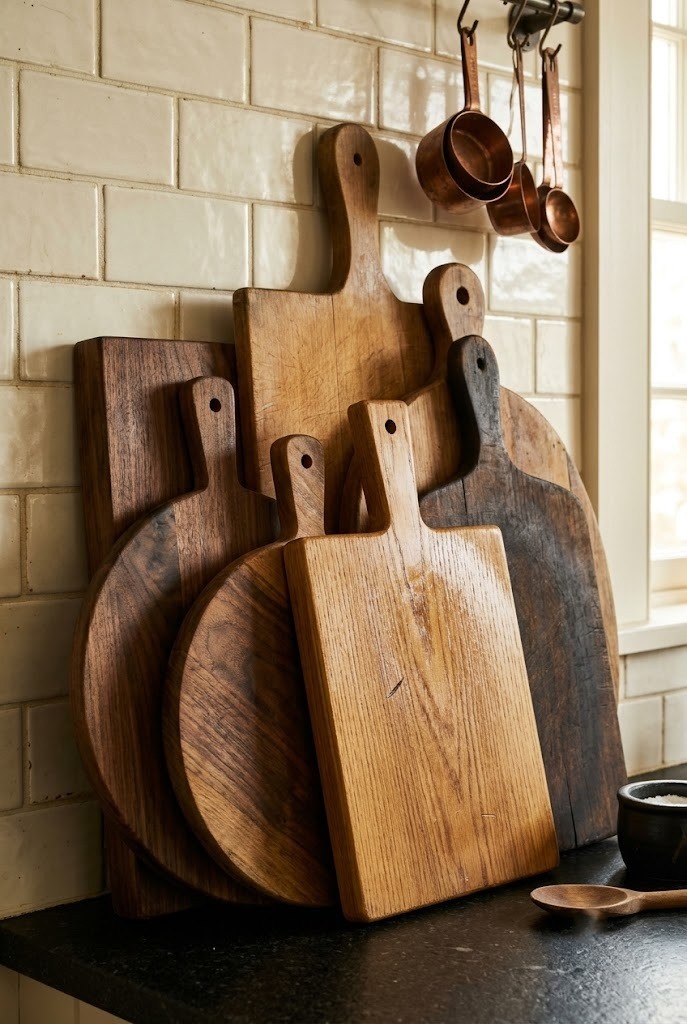
A cluster of vintage cutting and bread boards leaned upright against the backsplash adds instant warm wood and age without a single fixing. Layer three or four in different shapes and wood tones, largest at the back, and let them overlap so the grouping has depth. Thrift and charity shops are full of them for a dollar or two, and the worn, oiled patina is exactly what a new board cannot fake. Lean them behind the counter where you don't prep, or they slide when you work. A quick rub of food-safe oil revives a dry, grey board. They warm the same corner your crocks and lamp already claimed.
24. A Freestanding Baker's Rack as a Moody Pantry
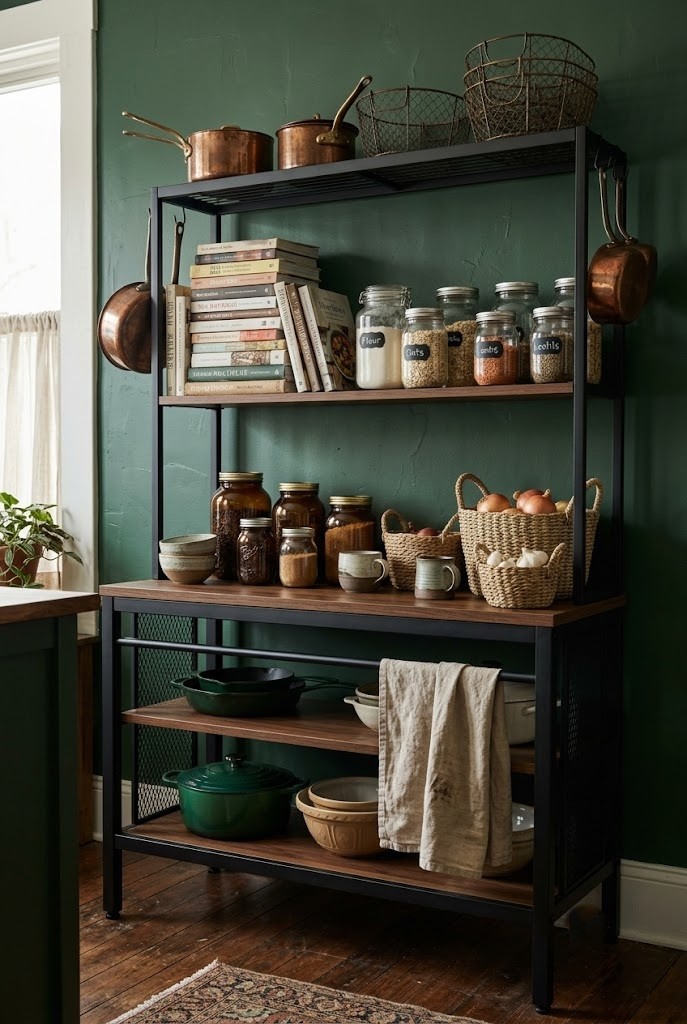
A freestanding baker's rack or dark metal cart turns an empty wall or awkward corner into a styled open pantry, adding storage no rental gives you. Choose a black or bronze metal frame with wood shelves, and style it in layers: stoneware and glass jars of dry goods up top, cookbooks and a basket in the middle, heavier pots below. It reads intentional because it is grouped by weight and repeats the room's metals. Because it is freestanding, it moves with you and needs no wall anchors. Keep it a few inches off the wall so it does not scuff the paint. Let it hold the darkest tones in the room.
25. A Styled Open Shelf: Stoneware, Brass, One Trailing Plant
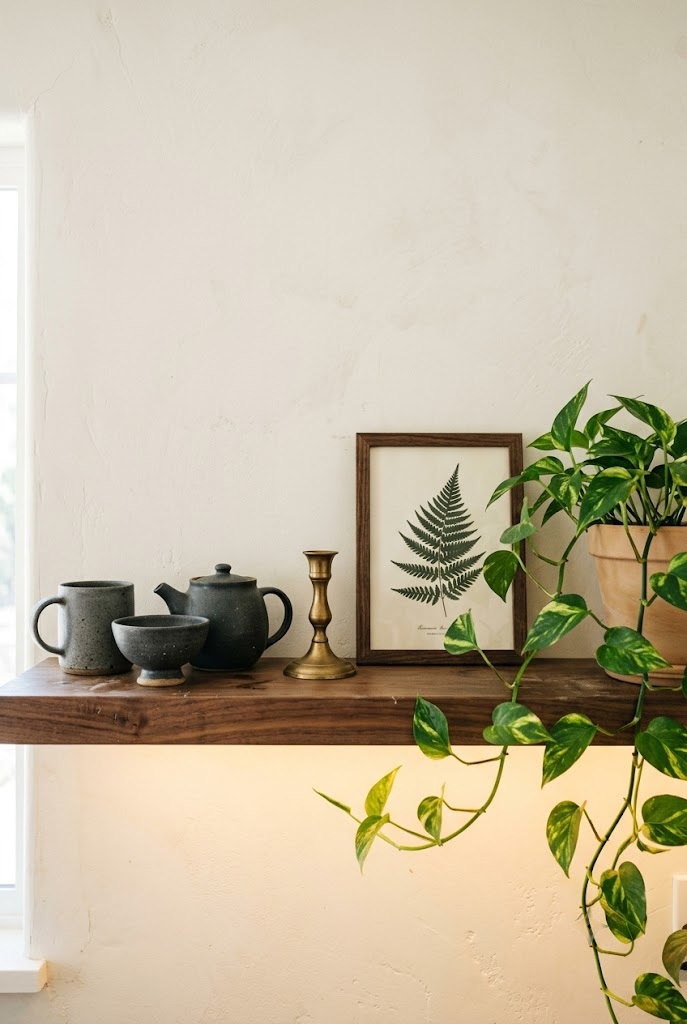
Styled open shelves do the heavy lifting in a dark cottagecore kitchen, so treat one shelf as a deliberate vignette rather than storage. Pull color down from the baskets in idea 21: stack a few dark stoneware plates, stand two mugs, lean a small framed botanical, and add one brass object with a single trailing pothos or ivy. Odd numbers and varied heights read as styled; a straight row of matching dishes reads as a cupboard. Keep negative space between the groupings so each piece breathes. Style the shelf that catches your under-cabinet light so it glows at night. This one shelf sets the tone the rest of the room follows.
26. Cast-Iron and Copper on Display, Not in a Cupboard
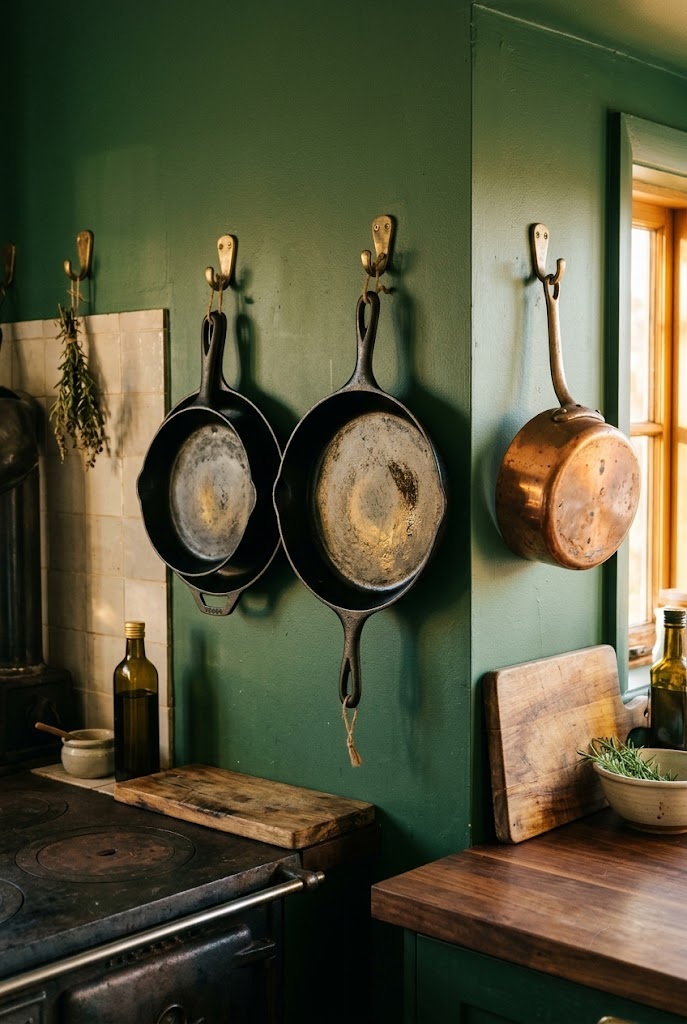
Hanging or leaning your cast-iron pans and a copper pot out on display turns everyday cookware into the moody, working-kitchen decor cottage style is built on. Use adhesive-mounted hooks rated well above each pan's weight, or lean the pieces on a freestanding rail, so nothing drills the wall. A single copper saucepan or a well-seasoned skillet adds warm metal and honest wear you cannot buy new. Group the heavy pieces low and the light ones high. Keep them near, not over, the stove so grease does not coat them daily. It is free decor you already own, and it repeats the dark-metal-and-warm-copper story the hardware started.
27. A Moody Countertop Tray to Anchor the Corner
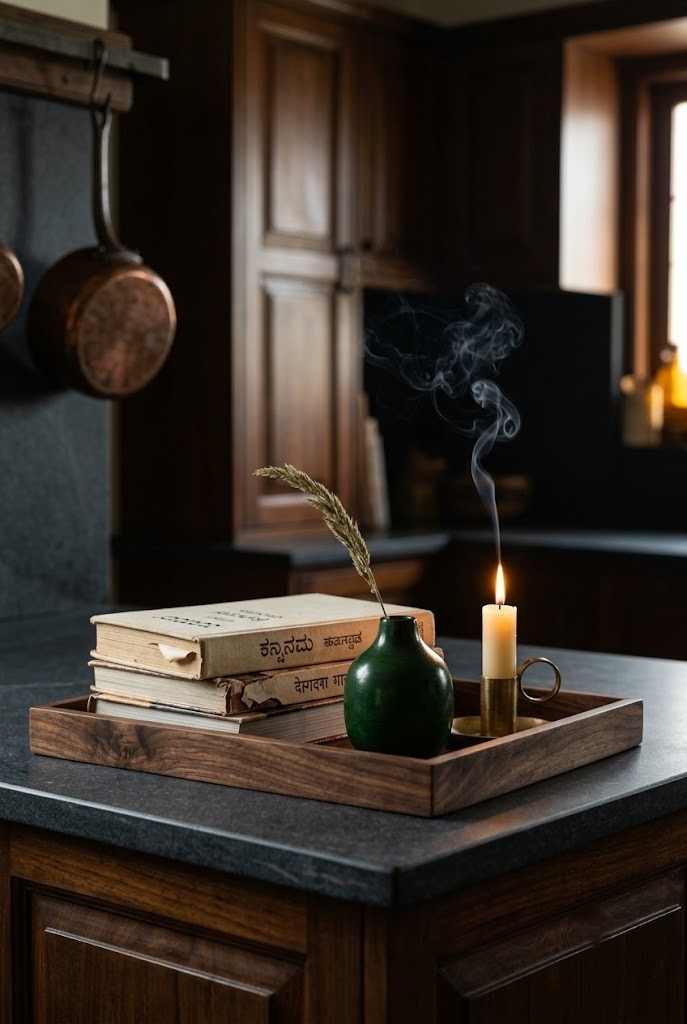
A small tray holding a candle, a stacked cookbook, and one ceramic piece gives a bare counter corner a reason to look composed instead of empty. Corral everything on a dark wood or metal tray so it reads as one deliberate object, not scattered clutter, and it wipes down or moves in one lift when you cook. Choose a warm-scented candle, a book with a moody spine, and a small vase or crock; keep it to three or four pieces so it stays a vignette. Set it on the counter end you never prep on. It is the last, smallest layer, the tabletop still life that ties the whole moody corner together.
Final Thoughts
None of these swaps touches paint, cabinets, or your deposit, and you do not need all 27. Start with the two or three that fit your kitchen, layer green, walnut, and warm brass, and let the light go golden at night. The same moody decor for renters logic works room to room, so once the kitchen lands, the rest of the flat follows. Reversible does not mean it has to feel temporary; done in layers, a rental can read as cottage as any owned home. Save this to Pinterest and tackle it one swap at a time.
Frequently Asked Questions
Can I really make a rental kitchen look cottagecore without painting the cabinets?
Yes. Removable cabinet vinyl, peel-and-stick backsplash, tension-rod curtains, swapped hardware, plug-in lighting, and freestanding decor together shift a builder-white kitchen fully into moody-cottage territory, all reversible. The single biggest change is wrapping the lower cabinets in matte forest-green vinyl; pair it with warm brass hardware and dim, warm light and paint never enters the picture.
Will peel-and-stick backsplash and cabinet vinyl damage the walls or cabinets when I remove them?
Usually no, if you buy quality removable products and prep the surface first. Clean, dry, grease-free surfaces let vinyl peel off cleanly, often in one sheet, especially if you warm it with a hairdryer as you pull. Cheap dollar-store vinyl and dirty surfaces are what cause tearing and residue. Test a small hidden patch first and keep offcuts for patching at move-out.
How do I swap cabinet hardware without drilling new holes and losing my deposit?
Measure your existing hole spacing first, then buy hardware that matches it. Single-knob doors take single-hole knobs or single-hole cup pulls; drawers with two-hole pulls need bin pulls at the same center-to-center spacing, often 3 or 3.75 inches. Match the spacing and you reuse the existing holes. Bag every original knob and screw to reinstall when you leave.
What colors work best for a dark cottagecore kitchen if I can't paint?
Deep forest and olive green, warm walnut and oak wood tones, matte black, and unlacquered brass do most of the work, warmed by oatmeal and dark botanical prints in the fabric. Bring these in through vinyl, textiles, hardware, and wood decor rather than paint. If green feels heavy in a small space, a moody blue on one run reads calmer while keeping the cottage mood.