Neutral fall porch decor ideas usually get one rushed paragraph at the end of a whole-home tour, which is why this post is only about the porch and only about pieces that actually last. The neutral fall porch decor here is sorted by palette family, cream and jute, brown and toffee, black and white, olive and brass, so you can build one clean scheme instead of a beige jumble. I keep a west-facing porch, so every idea below flags what bleaches, rots, or mildews before Thanksgiving and what to buy instead. Real white pumpkins collapse faster than orange ones, jute mildews, and cheap foam goes chalky in sun. Save this to Pinterest so you have the durable-swap notes when you shop.
1. Cream Dense-Foam Pumpkin Cluster Beside a Cream Front Door
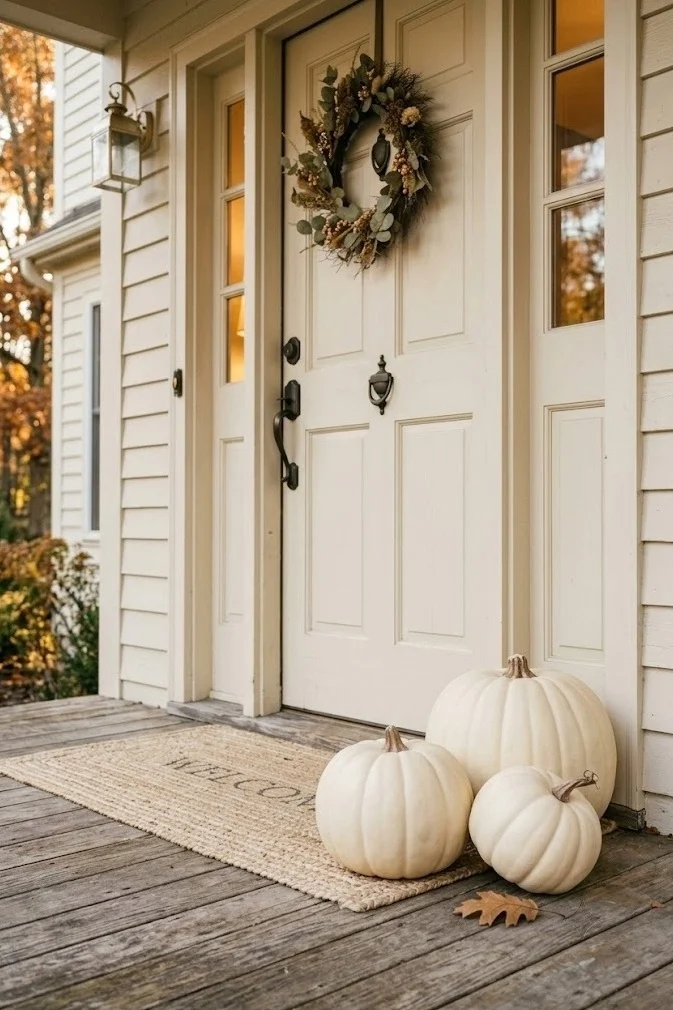
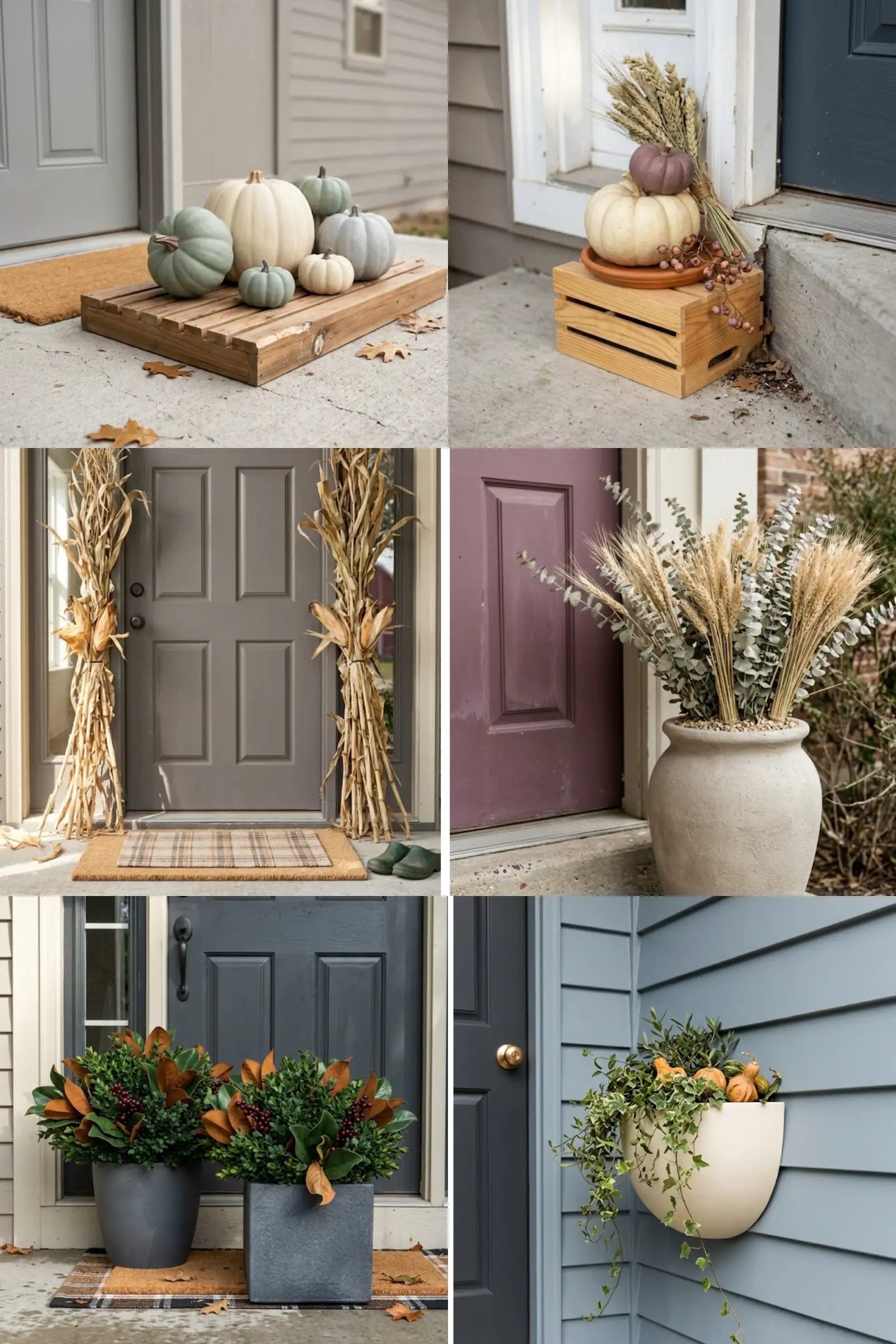
A cluster of cream dense-foam faux pumpkins in three graduated sizes beside the front door reads seasonal without a speck of orange, and it survives the whole run because dense foam does not rot or cave the way a real white pumpkin does by week two. Set the largest at the hinge side and let the sizes step down toward the handle so the group has a clear anchor. On my west-facing porch the cheaper thin-shell foam ones went chalky by mid-October, so I now buy only the heavier dense-foam or ceramic kind rated UV-resistant. Keep them off the top step where they get kicked, and a shallow wooden tray corrals them so the smallest does not roll off.
2. Cream Doormat Layered Over a Larger Jute-Look Rug
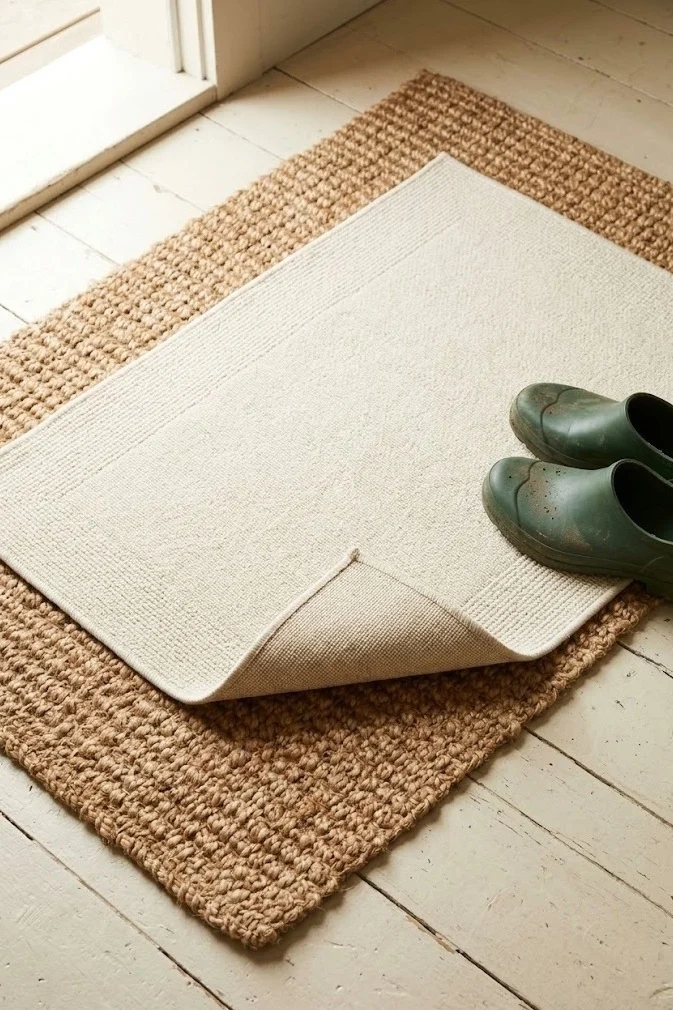
Layering a low-pile cream doormat over a larger jute-look rug gives the porch floor a finished base that hides the grit tracked in all fall. Put the bigger rug down first, roughly 2x3 or 3x5 depending on your door width, then center a coir or cream doormat on top so the edges frame it. Here is the durability catch: true jute mildews if it stays damp, so on a covered-but-exposed porch I switched to a poly-jute or polypropylene rug that looks like jute and shrugs off rain. Rotate it a quarter turn every couple of weeks so one edge does not fade faster than the rest under direct sun.
3. Cream Lantern Trio With Flameless Candles on the Step
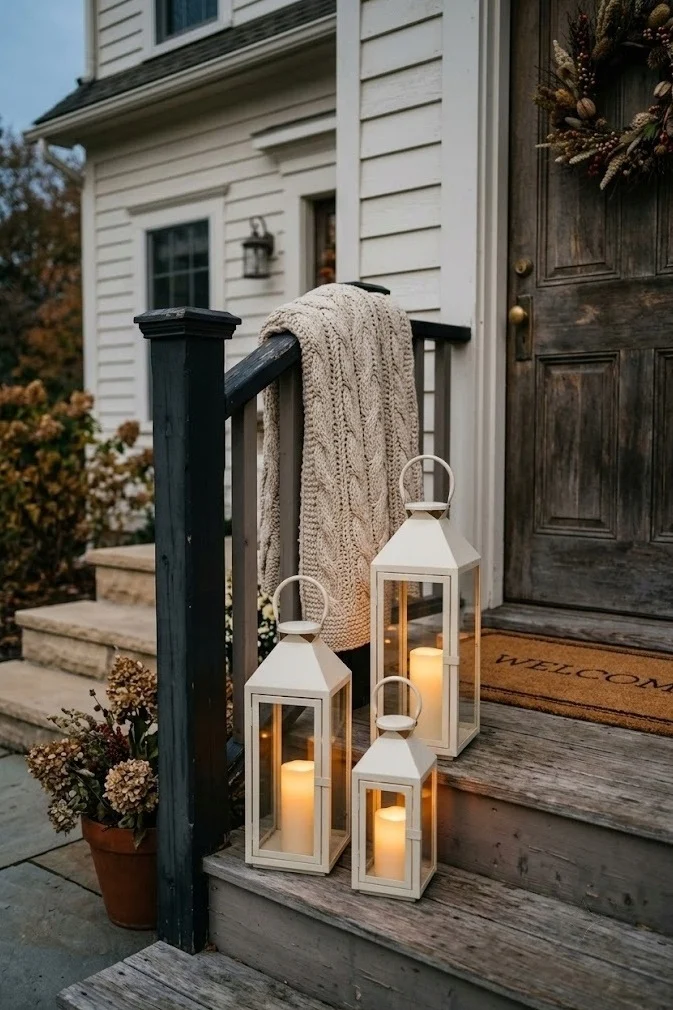
Three cream or bone metal lanterns grouped at one side of the top step carry the fall mood after dark without a single pumpkin, and flameless LED candles inside mean you can leave them lit on a timer through Thanksgiving. Vary the heights so the trio has a tall, a medium, and a short, and cluster them tight rather than spacing them evenly across the step where they read like bollards. The common mistake is real tea lights outdoors: wind snuffs them and the heat warps cheap lantern tops. On my porch, powder-coated cream lanterns held up three seasons while a raw-metal one rusted at the seams by spring, so finish matters more than price here.
4. Cream Dried-Wheat Wreath on a Natural Wood Door
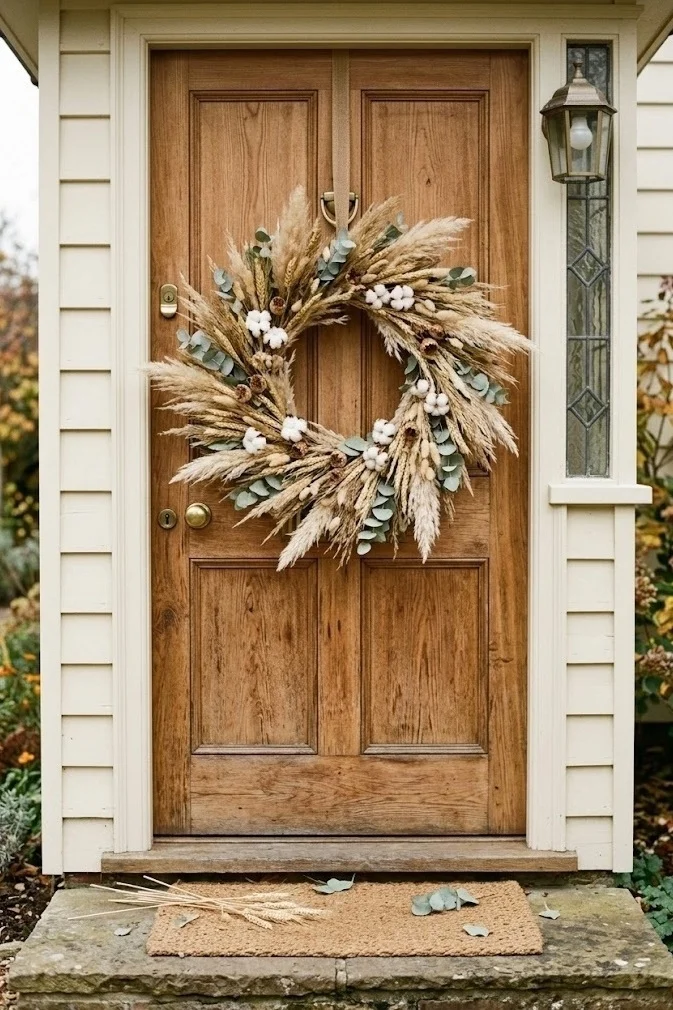
A cream dried-flower and wheat wreath on a bare or natural-wood door is the quiet anchor the whole porch hangs off, and dried wheat and bunny tails read fall from September clear through November without tipping into Halloween. Follow a simple proportion: about 60% neutral dried base of wheat, grasses, and pampas, 30% texture like cotton stems or preserved eucalyptus, and 10% a single accent such as dried seed pods. Swap the pods for tiny brass bells closer to the holidays and the same wreath leans toward Thanksgiving. Hang it on a wreath hanger rated for the door weight, because adhesive hooks let go in afternoon heat and drop the whole thing.
5. Draped Cream Cheesecloth and Dried Grass Railing Garland
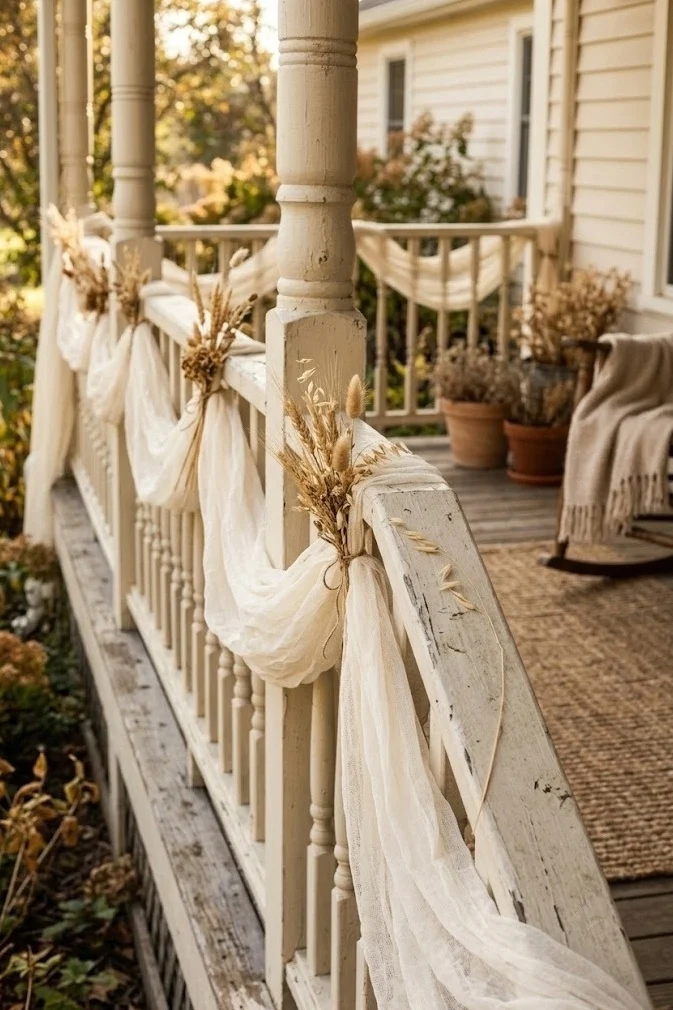
A length of cream cheesecloth draped along the porch railing with dried grasses tucked into the folds gives instant softness for under twenty dollars, and unlike fresh garland it will not brown or drop leaves by November. Bunch the cheesecloth loosely so it swags between posts rather than pulling tight, then anchor each dip with a zip tie hidden under a tuck of wheat or pampas. This is a softer take than the structured wreath in idea 4, and it suits a long rail better than a single focal point. Cheesecloth frays and flattens in steady wind, so keep it to a sheltered railing, not an exposed corner, and re-fluff it after windy days.
6. Cream Ceramic Pumpkins on a Jute-Runner Bench
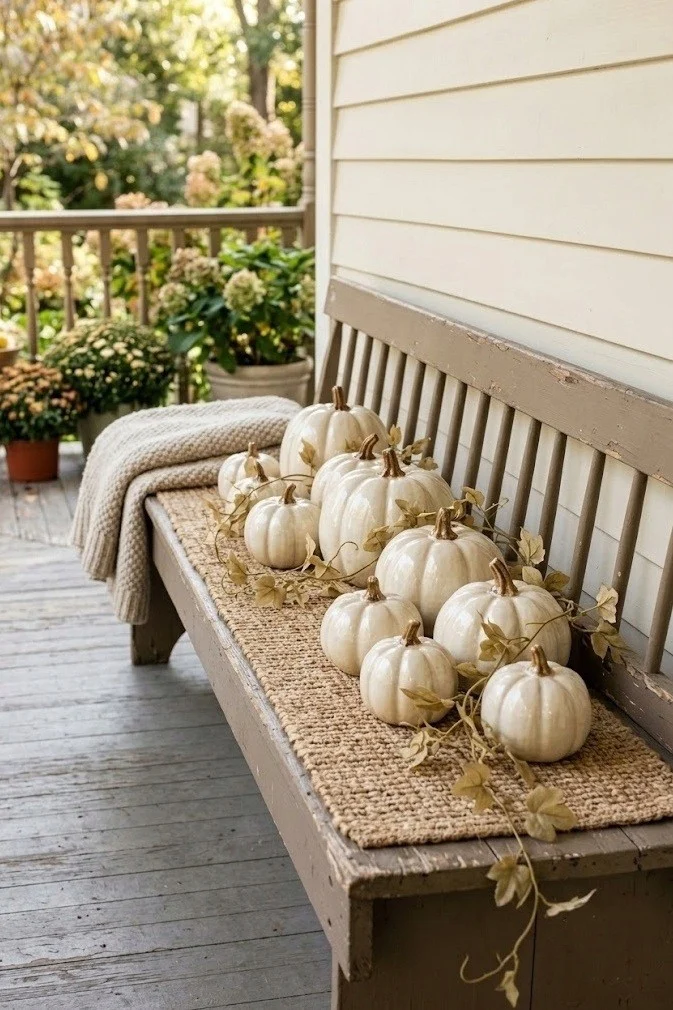
A row of cream ceramic pumpkins along a narrow porch bench, set on a jute runner, is the version of this look that genuinely lasts, because glazed ceramic does not fade, dent, or tempt chewing squirrels the way foam sometimes does. Keep the pumpkins to two or three sizes and let a trailing faux vine soften the hard line of the bench edge. This carries the same cream palette as the door cluster in idea 1, so the two read as one scheme from the street. Ceramic's downside is weight and breakage: one gust took mine off the rail once, so anything ceramic goes on a stable surface, never a ledge, and the jute runner comes in after sideways rain since it wicks damp.
7. Toffee-Brown Velvet Pumpkins Massed on the Top Step
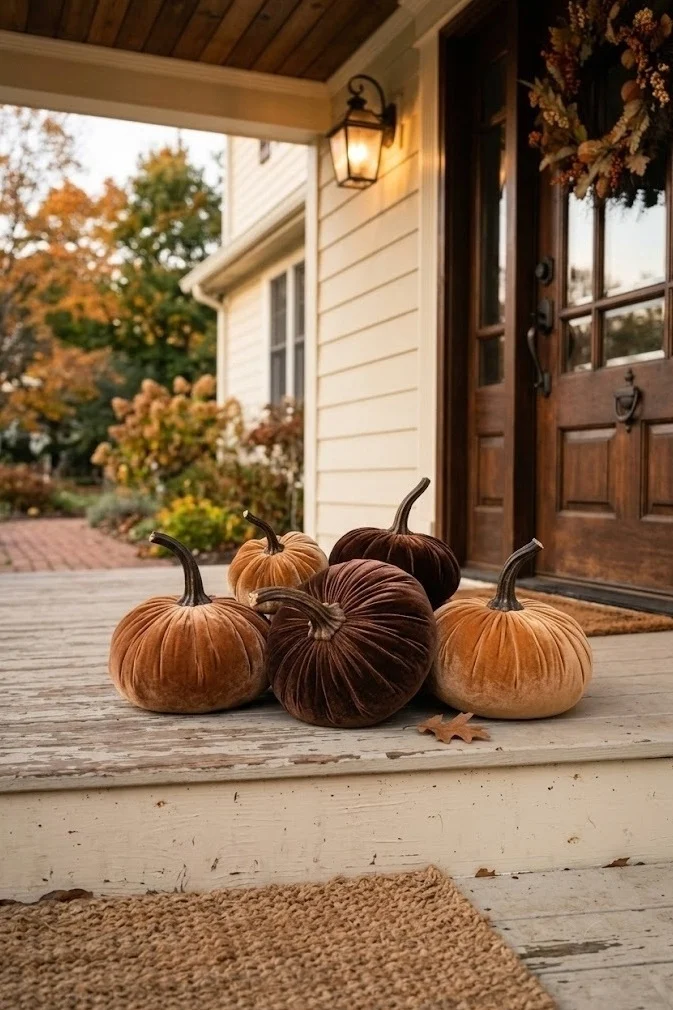
Toffee and chocolate-brown velvet pumpkins massed on the top step bring a warmth that cream alone can miss, and velvet reads richer and more grown-up than a shiny plastic gourd. Group an odd number, five or seven, in a loose pile rather than a neat line so it looks gathered, not arranged. The mistake people make is putting fabric velvet pumpkins where rain reaches them: the velvet spots, the stems bleed dye, and they smell musty within a week. Keep these under a real roof overhang, and if your porch is fully open, choose brown dense-foam instead. I learned this the wet way in a September thunderstorm and threw out the whole batch.
8. Toffee-and-Cream Plaid Throw Over a Porch Chair
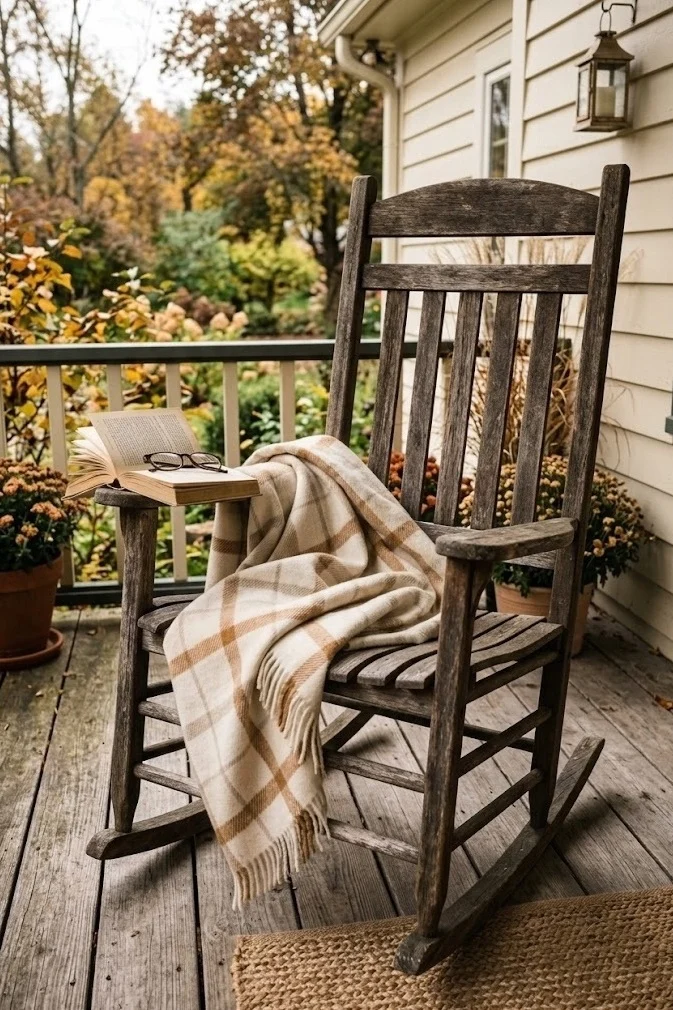
A toffee-and-cream plaid throw tossed over a single porch chair does more seasonal work than most props for the money, and a wool-blend or acrylic outdoor throw takes weather far better than a soft cotton one that stays damp. Drape it off-center so one corner pools on the seat rather than folding it neatly, which always looks staged. Skip anything labeled dry-clean for a porch, because you want machine-washable for the pollen, leaves, and cat prints it will collect. Mine lives on the chair from Labor Day to December and washes clean every time, which is the only reason it survives a whole season outdoors.
9. Brown Resin-Wicker Planter of Ornamental Cabbage and Kale
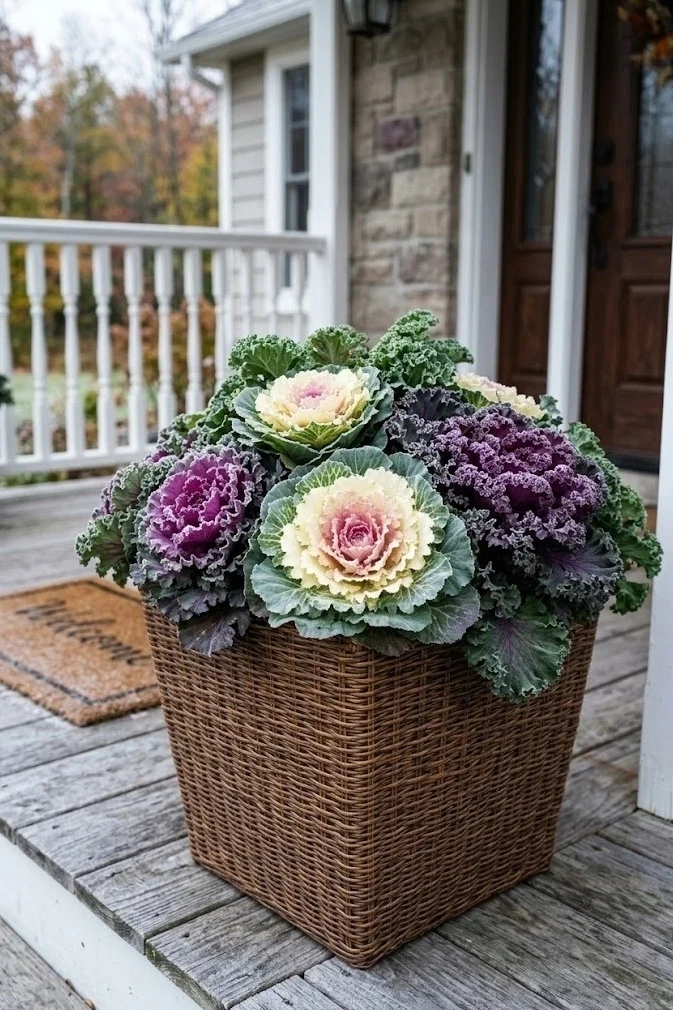
A brown resin-wicker planter filled with ornamental cabbage and kale is the porch plant that actually gets better as it gets colder, since a light frost deepens the purples and creams instead of killing it. Plant them slightly crowded for instant fullness, because they will not grow much once nights turn cold. Choose resin wicker over real here: real wicker mildews and unravels after a few soakings, while resin holds up for years. Water at the soil line, not over the leaves, or the crowns rot. This is one of the few live elements that comfortably makes it to Thanksgiving on my porch, which is exactly why it earns the space.
10. Toffee Welcome Mat Layered Over Dark Coir
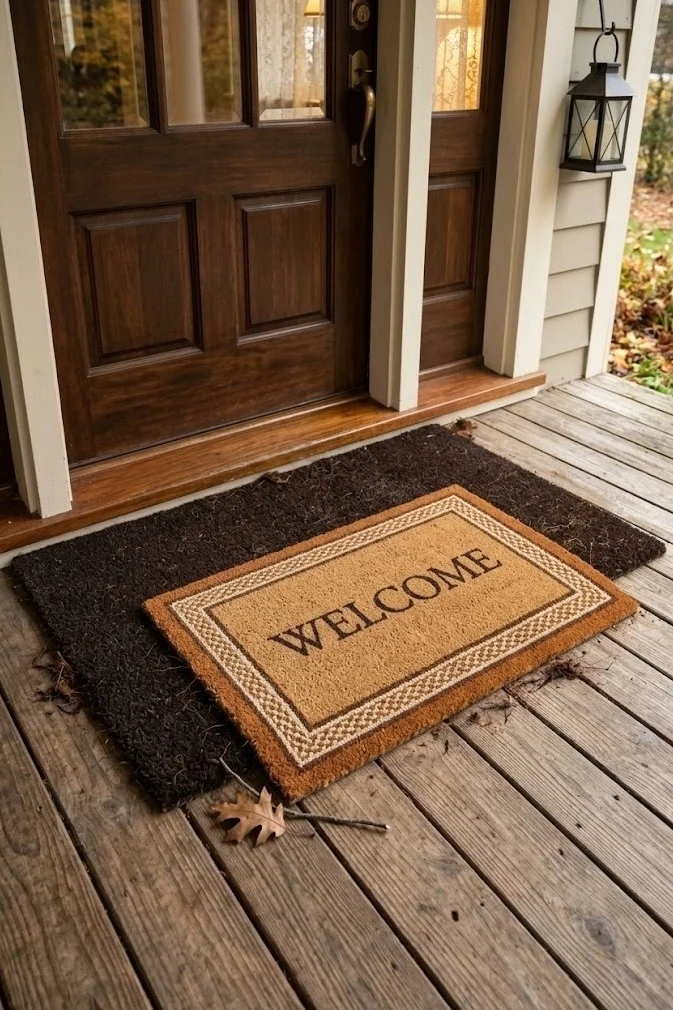
A toffee-toned welcome doormat layered over a larger dark coir mat frames the door and traps the worst of the grit before it travels inside. Offset the top mat slightly forward so both borders show and the layering actually reads. The same layered-rug logic from idea 2 scales down cleanly to the doormat here. The frequent mistake is a low-contrast pairing where both mats are the same brown and the effect disappears from three feet away, so keep a clear tone gap of toffee over espresso. Coir sheds fibers at first and mildews if it stays soaked, so shake it out weekly and stand it on edge to dry after heavy rain.
11. Stacked Brown Foam Pumpkin Topiary in a Wooden Crate
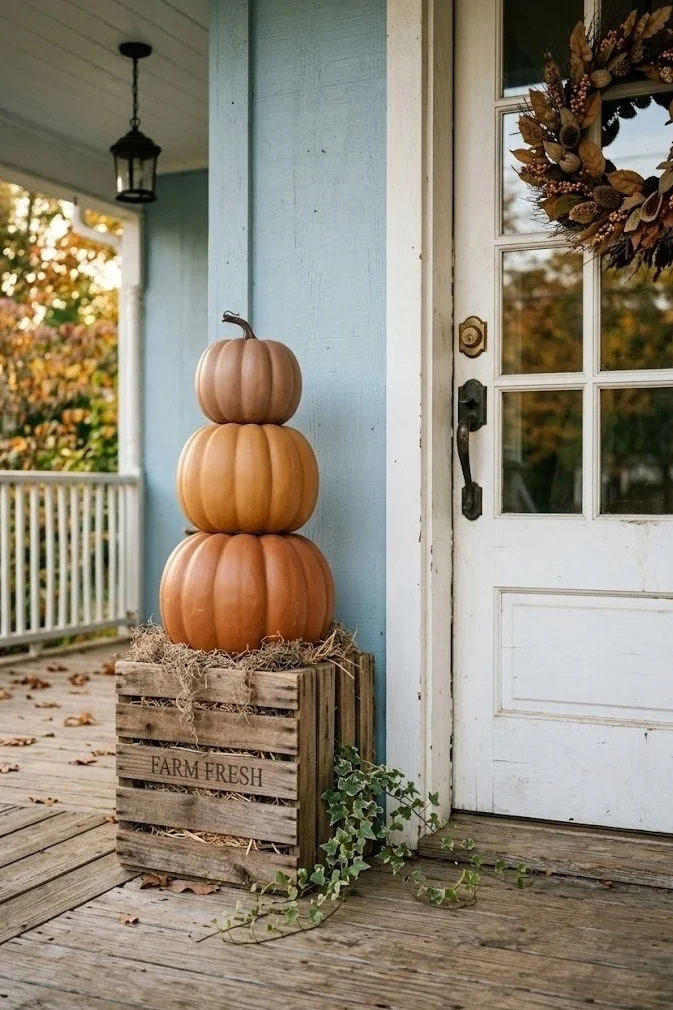
A stacked topiary of three graduated brown foam pumpkins in a wooden crate gives height beside the door for maybe fifteen dollars in parts, and building it from dense-foam pumpkins means it will not slump or rot across the season. Push a wooden dowel down through all three to keep the stack from toppling in wind, then hide the dowel top under the smallest pumpkin's stem. Weight the crate with a brick so a gust does not take the whole tower off the step. I rebuilt mine twice the first year before adding the dowel, and now it stays put through November storms without a wobble.
12. Black Door With White Pumpkins and Matte-Black Lanterns
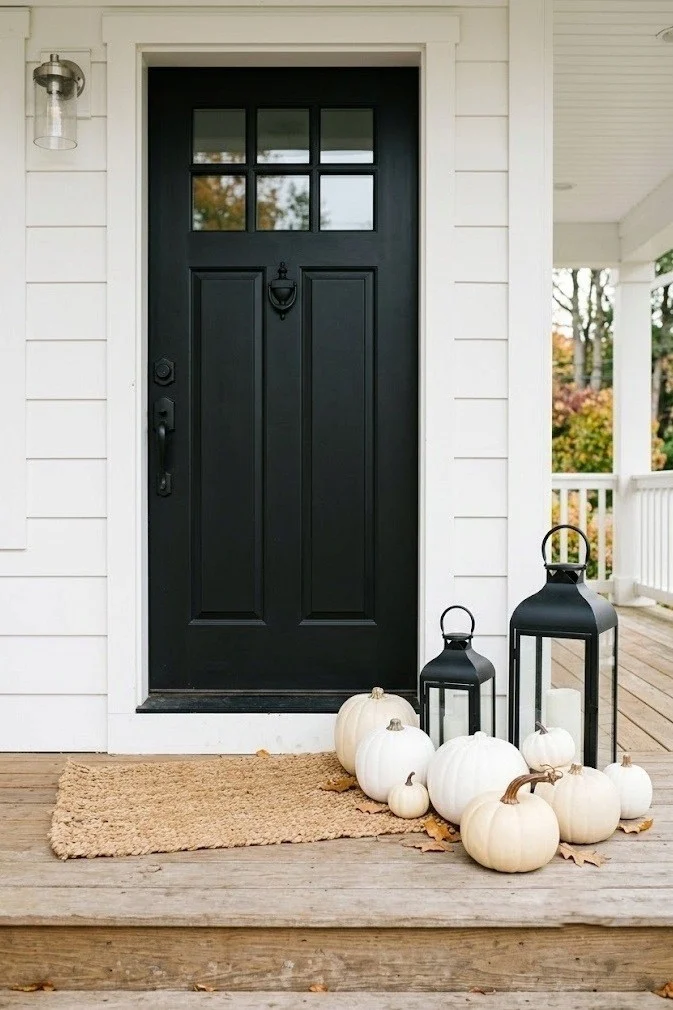
A black front door with a cluster of true-white and cream faux pumpkins and matte-black lanterns is the crisp, modern read on neutral fall, and the hard black-and-white contrast keeps it from going soft or overly cottage. Use a proportion of about 70% white and cream, 20% black hardware and lanterns, and 10% natural wood or jute so it does not feel stark. This runs the opposite temperature to the toffee warmth in idea 7, and either works, depending on your exterior. Swap the wood accent for brushed brass and the whole scheme warms up instantly. Choose ceramic or dense-foam whites, not real white pumpkins, which yellow and collapse faster than any orange one on a warm porch.
13. White Pumpkins on a Black-and-White Checkerboard Mat
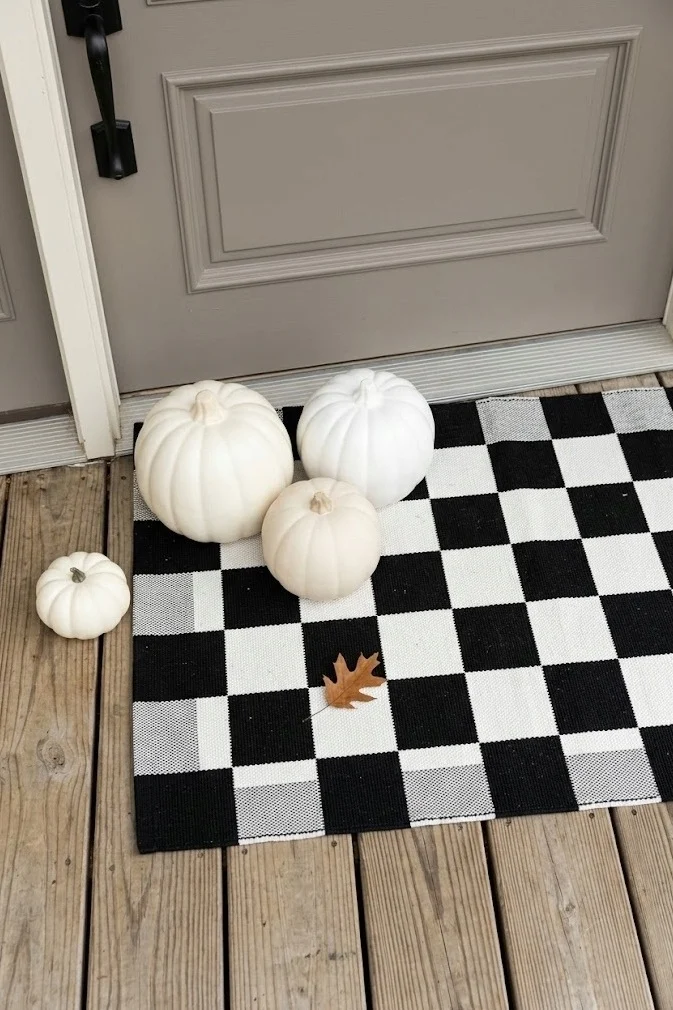
White faux pumpkins on a black-and-white checkerboard outdoor mat give a graphic base that looks intentional rather than seasonal-clearance, and a printed polypropylene mat keeps its pattern where a woven one blurs. The white surfaces are the maintenance problem: they show every splash of mud and pollen, so a monthly wipe is not optional if you want them crisp into November. Position the mat under enough overhang to avoid standing puddles, which lift cheap prints at the corners. Black frames dirt less than white, which is part of why this combo ages better than an all-cream floor and reads sharp even after a rainy week.
14. White Birch Branches in a Tall Black Urn
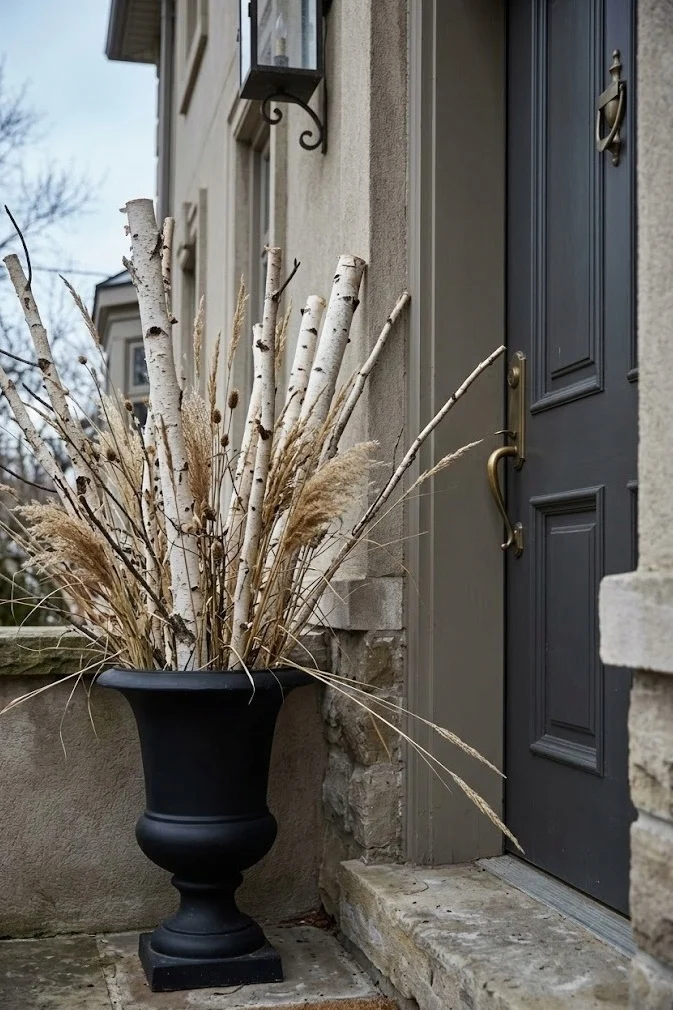
A tall black urn packed with white birch branches and dried grasses flanks a door with real height, and birch reads wintry-neutral so it carries from fall straight into December. Anchor the branches in floral foam or sand, not loose, or the first wind fans them flat. The mistake here is a too-light urn: a plastic one topped with tall branches becomes a sail and tips, so use a heavy resin or concrete-look urn, or weight the base with rocks. On my exposed corner even a medium urn needed ballast before it would stay upright. Keep real birch out of standing water at the base, or it spots black with mold.
15. Black Bench With a Single White Outdoor Pillow
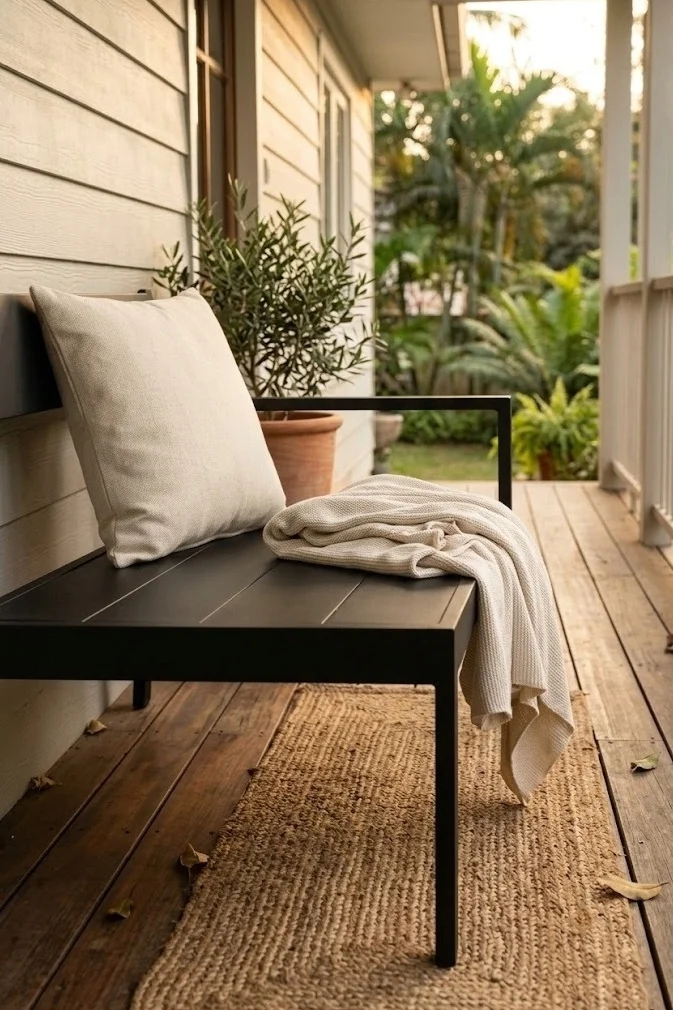
A black porch bench with a single white or cream outdoor pillow and a folded throw is a low-effort anchor that photographs well and reads seasonal through the soft goods alone. Choose a solution-dyed outdoor pillow cover, which resists fading far better than a cotton one that goes grey on a sunny porch by mid-October. Keep it to one pillow, not a styled pile, so a real person can still sit down. This holds the same black-and-white restraint as idea 12, just at seating scale. Bring the insert in when rain threatens even if the cover is outdoor-rated, since trapped damp inside is what breeds the musty smell that ruins them.
16. White Pumpkins in a Powder-Coated Black Wire Basket
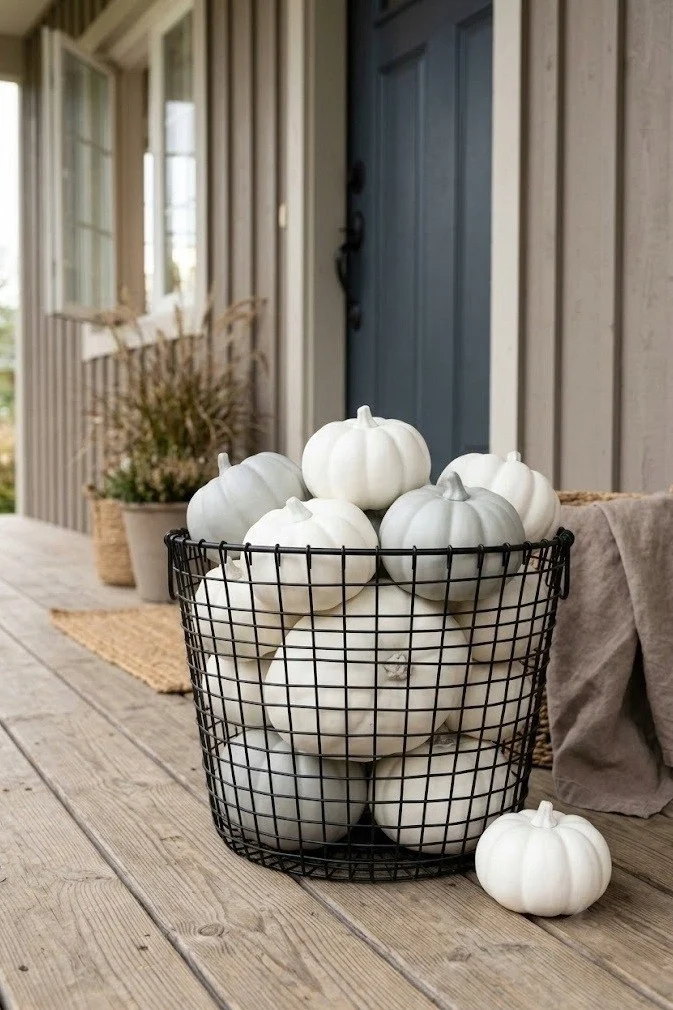
A black wire basket filled with white and pale-grey faux pumpkins keeps the modern scheme going while the open weave lets rain drain straight through instead of pooling around the bases. Mound the pumpkins slightly above the rim so the basket looks full, not half-empty. Powder-coated black wire is the durable pick, because raw metal baskets rust at the welds and streak the white pumpkins with orange after a few rains, which is a bitter irony on a no-orange porch. Give it a quick rust check each month and touch up any chips with enamel paint before they spread and stain everything sitting inside.
17. Sage and Olive Pumpkins Beside a Brushed-Brass Lantern
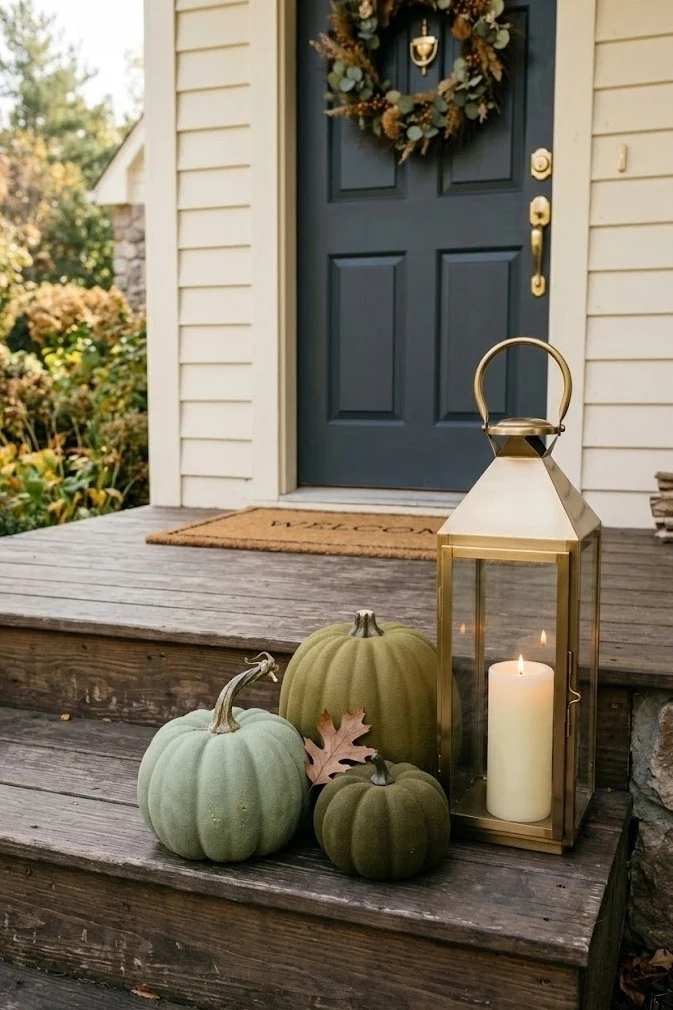
Sage and olive faux pumpkins beside a brushed-brass lantern is the most under-used neutral fall combo, and the muted green sidesteps both orange cliche and all-beige boredom. Cluster three olive pumpkins low and let the brass lantern rise behind them for a height break. This runs warmer than the black-and-white urn in idea 14 while staying just as restrained. The mistake is shiny lacquered brass that is really coated steel: it peels and rusts outdoors within a season, so look for solid brass or genuinely powder-coated finishes. Sage foam pumpkins also fade toward grey in strong sun, so on a bright porch I keep the greens to the shadier side of the door.
18. Walnut Wooden Planter Box With a Small Brass Tag
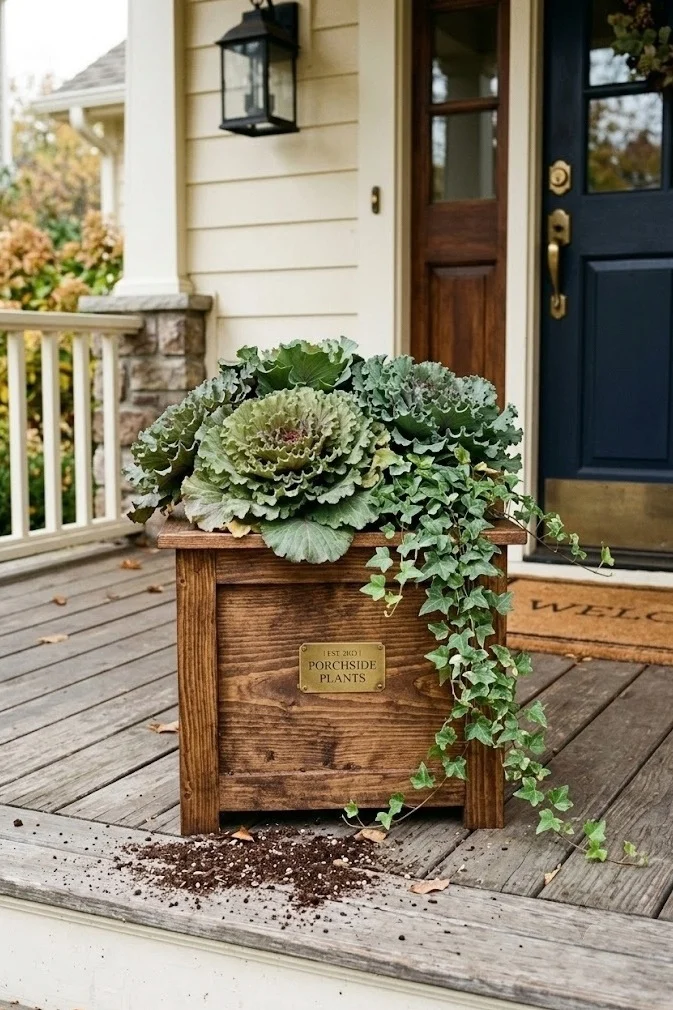
A simple wooden planter box stained walnut with a small brass tag holds ornamental kale and trailing ivy for a tailored look you can build in an afternoon. Line the box with landscape fabric before adding soil so the wood does not rot from the inside, which is what kills most DIY planters by their second season. Drill drainage holes in the base, or the roots drown in the first heavy rain and the whole thing turns sour. I seal the outside with exterior stain each August, and the boxes I skipped went soft and splayed at the joints, so the yearly coat is what buys the extra seasons.
19. Olive Runner and Brass Tray Console Vignette
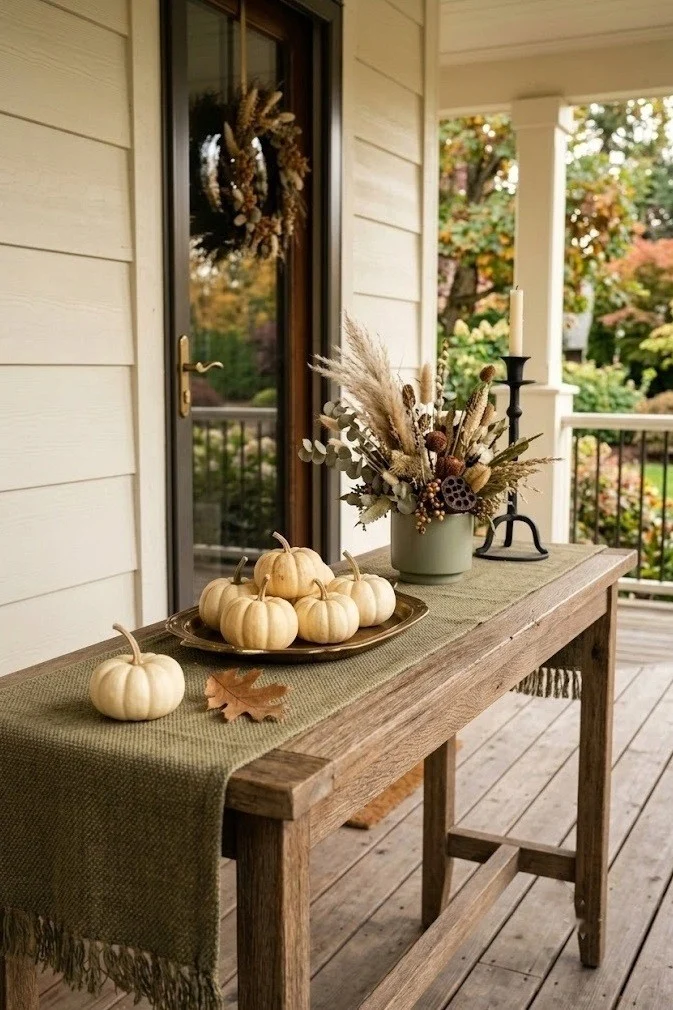
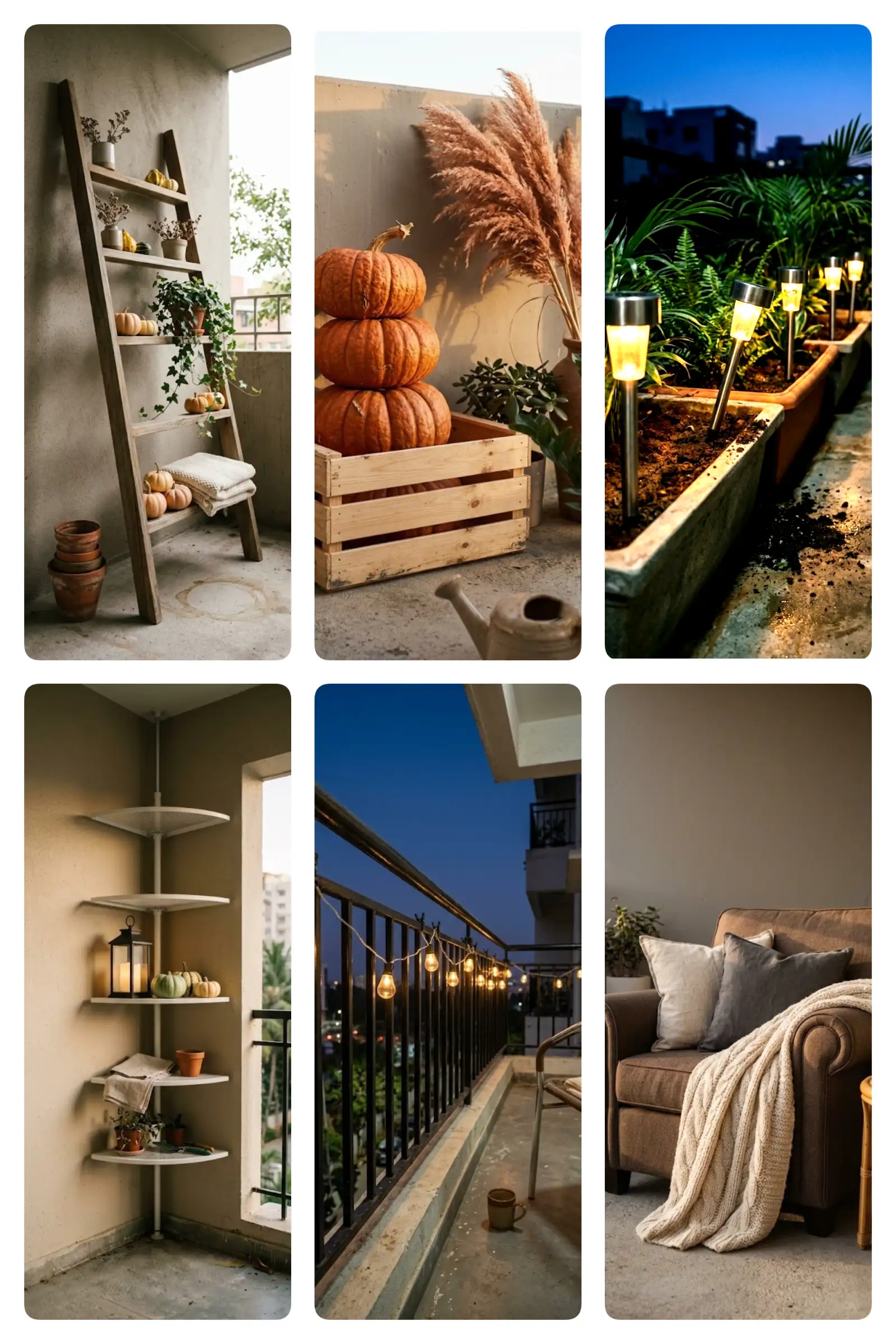
An olive runner, a brass tray of small pumpkins, and a low dried arrangement make a tight console vignette that gives a covered porch an indoor-living feel without eating floor space. Build it on a formula: about 60% neutral base of the console and runner, 30% the green and brass mid-layer, and 10% a single dark accent like a black urn or iron candlestick to ground it. Swap the dried arrangement for evergreen sprigs after Thanksgiving and the vignette rolls straight into winter. Keep the brass tray out of direct rain so it does not waterspot, and this stays a covered-porch idea rather than an open-air one.
20. Olive Flatweave Rug Layered Under a Jute Mat
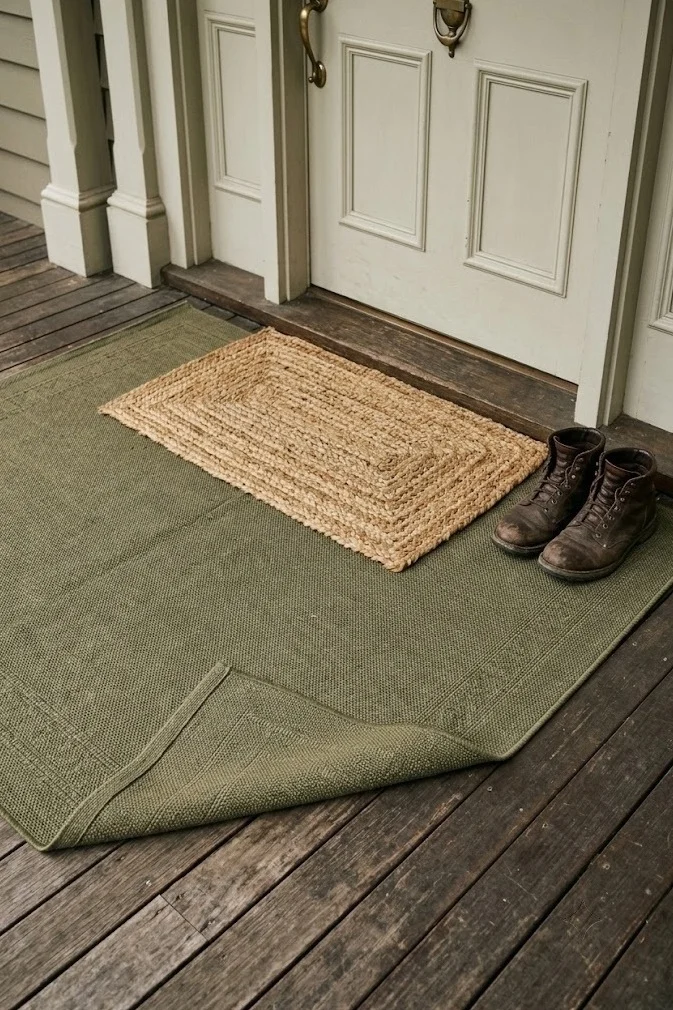
An olive flatweave outdoor rug layered under a smaller jute or cream mat brings color to the floor while keeping the base neutral, and a solution-dyed polypropylene olive rug holds its color through months of direct sun where a natural-dyed one would fade patchy. Vacuum or shake it weekly, because flatweaves trap fine grit that grinds the fibers over time. The layering also lets you swap just the top mat for a holiday one later without redoing the whole floor. Lift both after sideways rain and let the underside dry, since trapped damp between two rugs is exactly where mildew starts on a porch.
21. Asymmetric Olive and Brass Door Swag
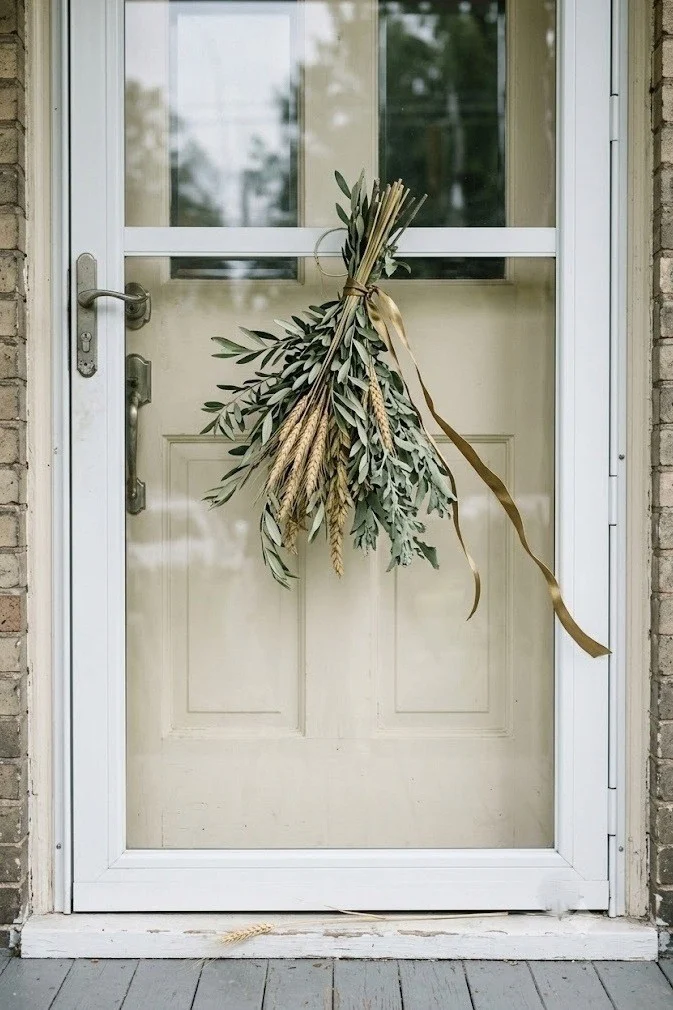
An asymmetric door swag of preserved olive branches, wheat, and a thin brass ribbon is a fresher alternative to a round wreath and drapes better on a storm door where a wreath gets crushed. Hang it slightly off-center and let the tail fall to one side for movement. Preserved, not fresh, olive is the key: fresh branches dry brittle and drop leaves all over the step within two weeks, while preserved holds for the whole season. The common error is a flimsy ribbon that frays in wind, so use a wired brass-toned ribbon that keeps its shape. Store it flat in a box over winter and it comes back the next year.
22. Pared-Back Olive and Brass Porch Pulled Together
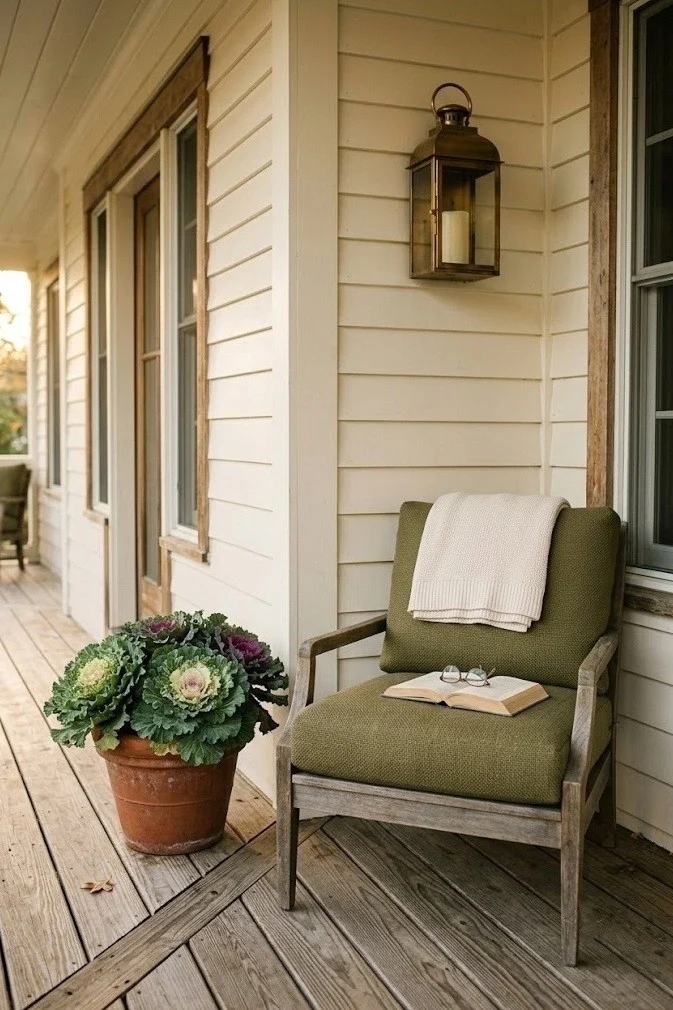
Pulling the whole scheme together means one anchor plant, one soft layer, and one metal accent rather than covering every surface, and this restraint is what keeps a neutral porch from tipping into cluttered farmhouse. A brass lantern, an olive-cushioned chair, and a single planter of kale will carry a small porch for the entire season on a modest budget. Buy the metal and ceramic pieces once and reuse them yearly, so only the plants and a top doormat stay true annual spends. That is the whole logic of my porch now: durable neutral bones bought once, small seasonal swaps on top, and nothing that cannot survive to Thanksgiving.
Final Thoughts
The porches that still look right in late November are not the ones with the most pumpkins, they are the ones built from durable neutral bones with small seasonal swaps on top. Pick one palette family, buy the ceramic, metal, and resin pieces once, and keep the fabric and live plants to the sheltered spots. Everything here is chosen to survive sun and rain from September through Thanksgiving, so you decorate once and leave it be. Save this post to Pinterest so the palette families and durability notes are ready when you shop.
Frequently Asked Questions
do white pumpkins last longer than orange ones outside?
No, real white pumpkins usually rot faster than orange ones, because their thinner skin and higher water content break down sooner, especially in warm sun. For a porch that has to last to Thanksgiving, use ceramic or dense-foam faux white pumpkins rated UV-resistant, and keep any real ones in shade and off damp surfaces.
what fall porch decor actually survives rain and wind?
Ceramic and dense-foam faux pumpkins, powder-coated metal lanterns and baskets, resin-wicker planters, and solution-dyed polypropylene rugs survive rain and wind best. Keep fabric pieces like velvet pumpkins, cheesecloth, and cushions under a roof overhang, and weight tall arrangements so gusts do not tip them. Anything real, such as birch, olive, or grasses, should be preserved, not fresh.
how do I make a fall porch look seasonal without any orange?
Stick to one neutral palette family, cream and jute, brown and toffee, black and white, or olive and brass, and let texture do the seasonal work through wheat, dried grasses, plaid, and faux pumpkins in those tones. Ornamental cabbage and kale add live fall color that reads seasonal without a single orange gourd.
does jute mildew on a covered porch?
Yes, natural jute can mildew even under a cover, because blowing rain and humidity keep the fibers damp. Use a polypropylene rug that mimics jute for an exposed or semi-covered porch, and lift layered rugs to dry the undersides after sideways rain so moisture does not sit between them.