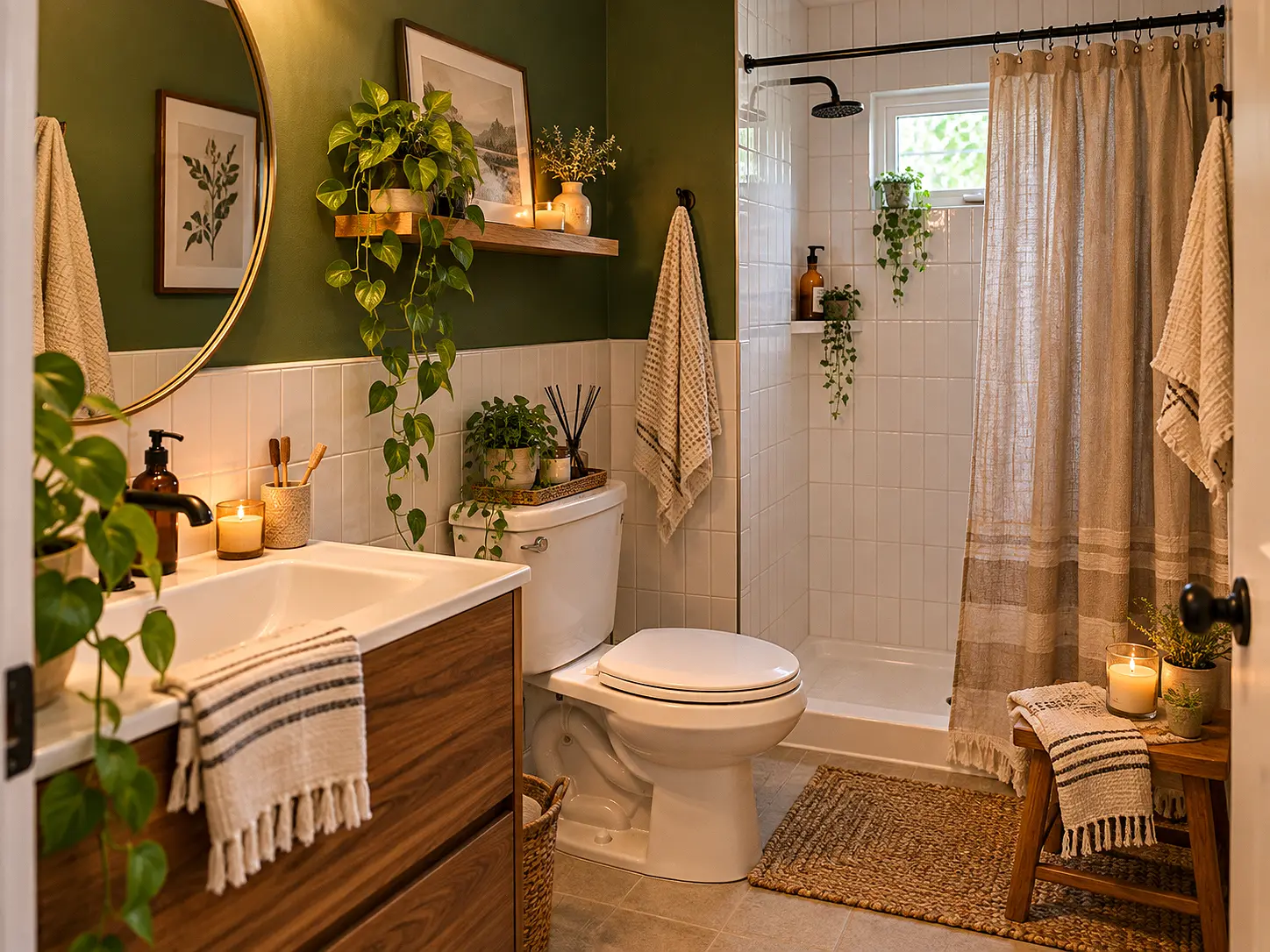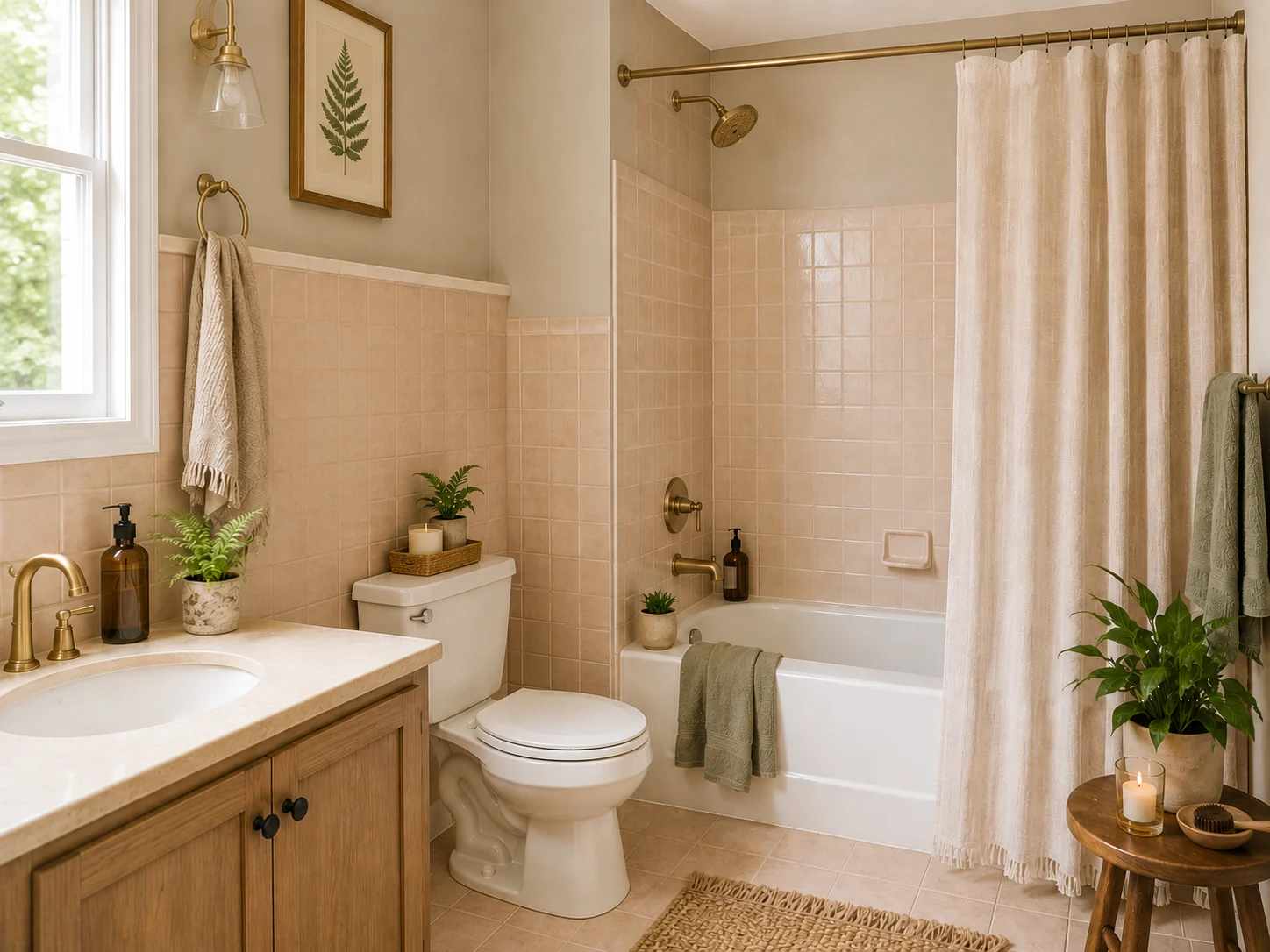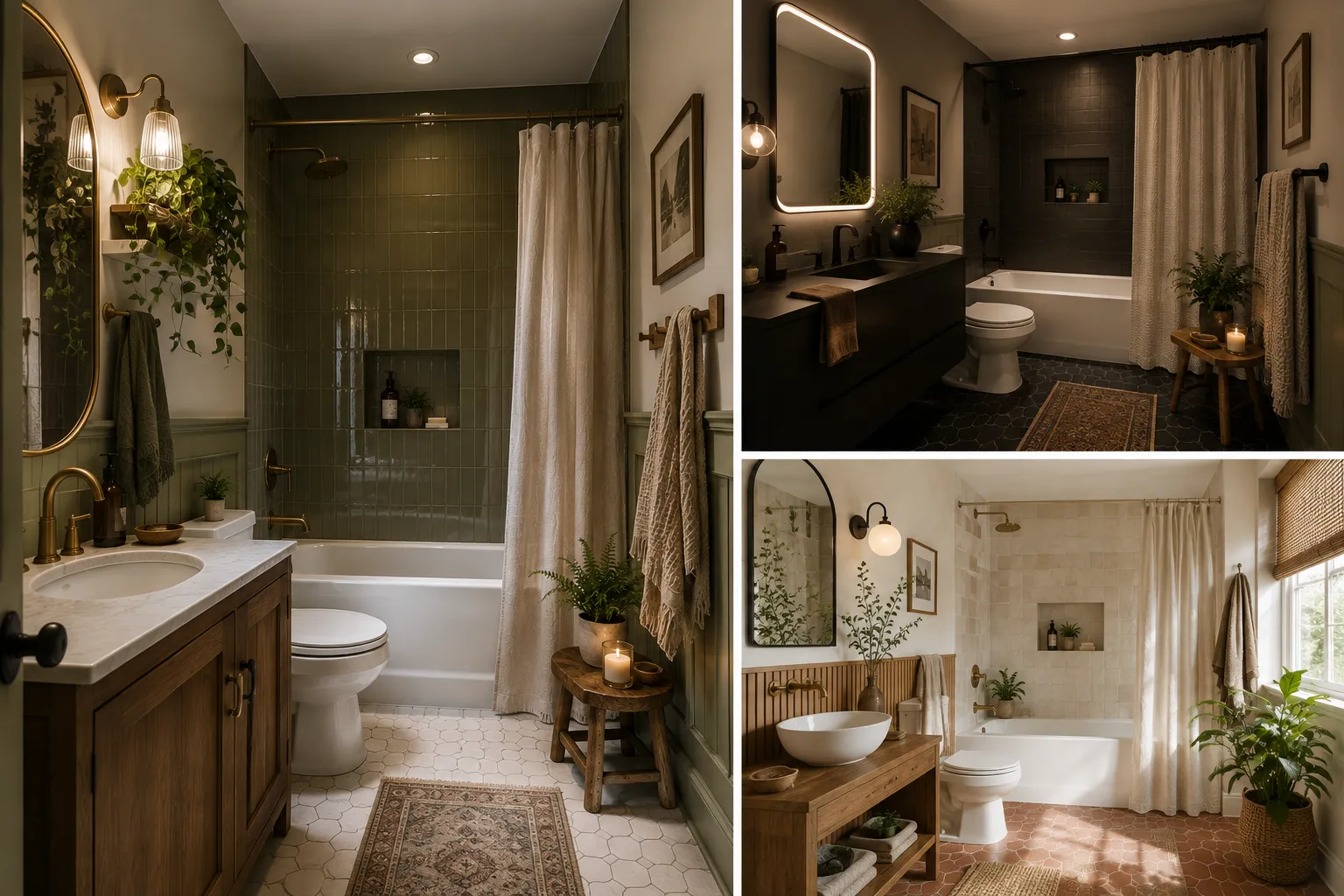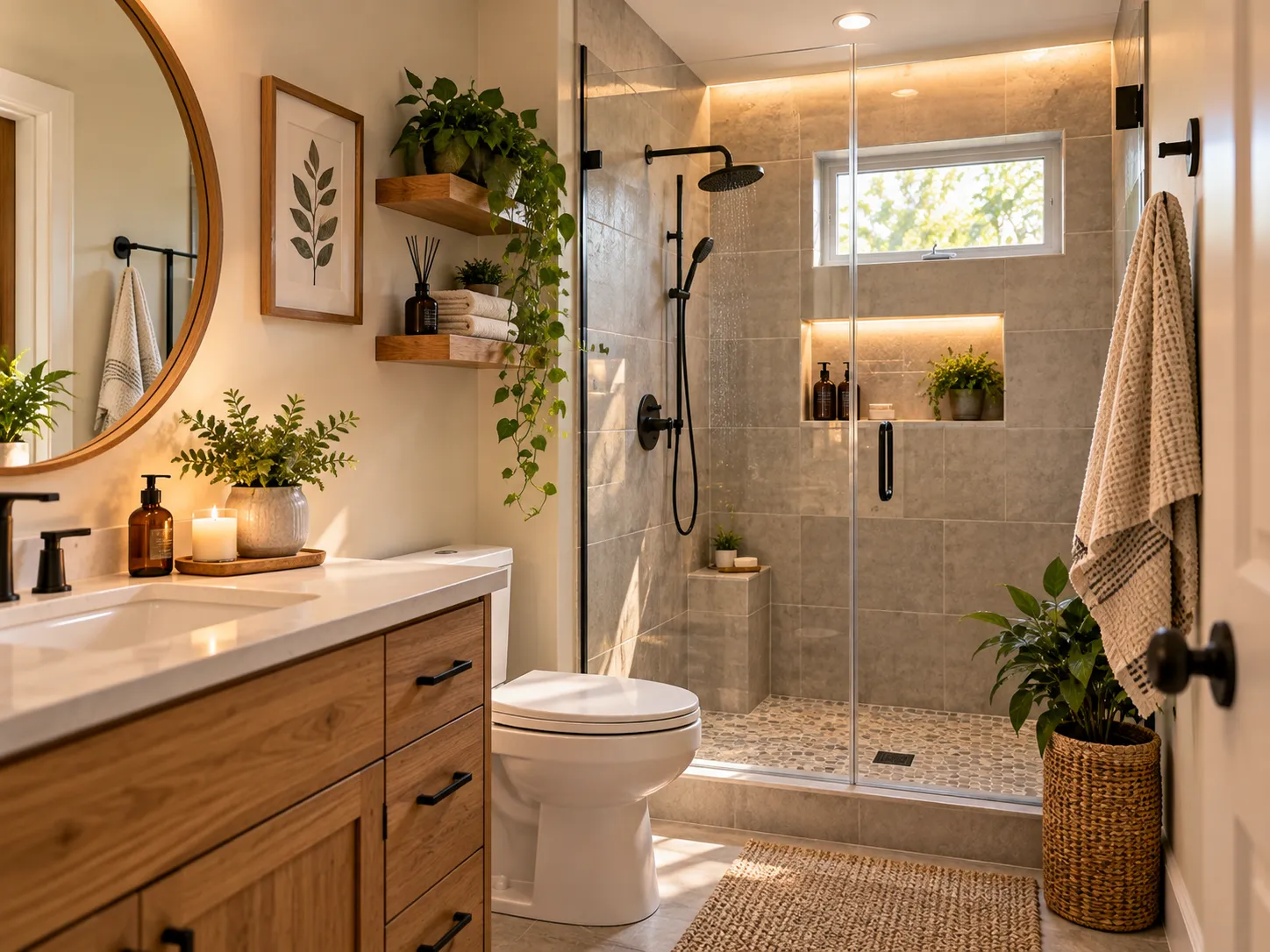
Cozy bathroom ideas with shower only start with everything except the shower itself, because the shower is the one thing most of us cannot change. Almost every guide on shower-only bathrooms is really a renovation guide: curbless pans, frameless glass, tile selection, or the advice to knock out a wall and put a tub back in. This post assumes the shower stays exactly as it is, tile and all. What changes is the light, the smell, what your feet land on, what your eye stops at, and where the plastic bottles go. Nineteen ideas, ordered by those five layers, in the order you actually feel them. Save this one to Pinterest so you have it when the cold hits.
1. Warm 2700K Bulbs in the Vanity Light Bar You Already Have
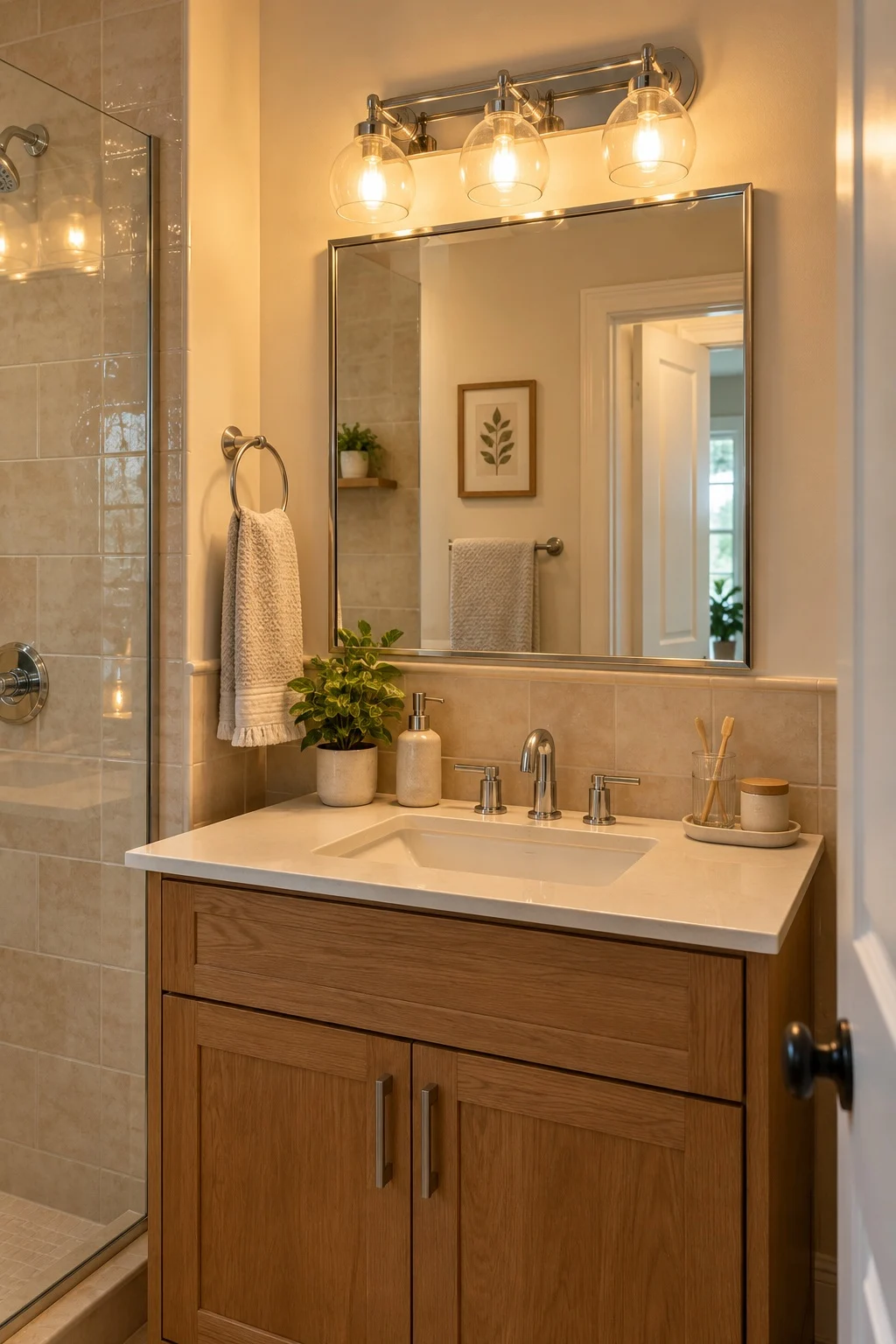
Bulb colour temperature does more for warmth in a bathroom than any object you can hang on the wall, and fixing it costs under twenty dollars. Most builder-grade vanity bars ship with 4000K or 5000K bulbs, which read blue-white and make dated beige tile look grey and clinical. Swap them for 2700K bulbs at roughly 450 to 600 lumens each and the room starts looking the way a good hotel bathroom looks at night. Buy every bulb from the same box so the colour matches across the fixture, and check whether yours need to be dimmable before you order. Two temperatures in one light bar is worse than the cold light you started with.
2. A Waterproof Warm-Toned Light Strip Along the Shower Ceiling
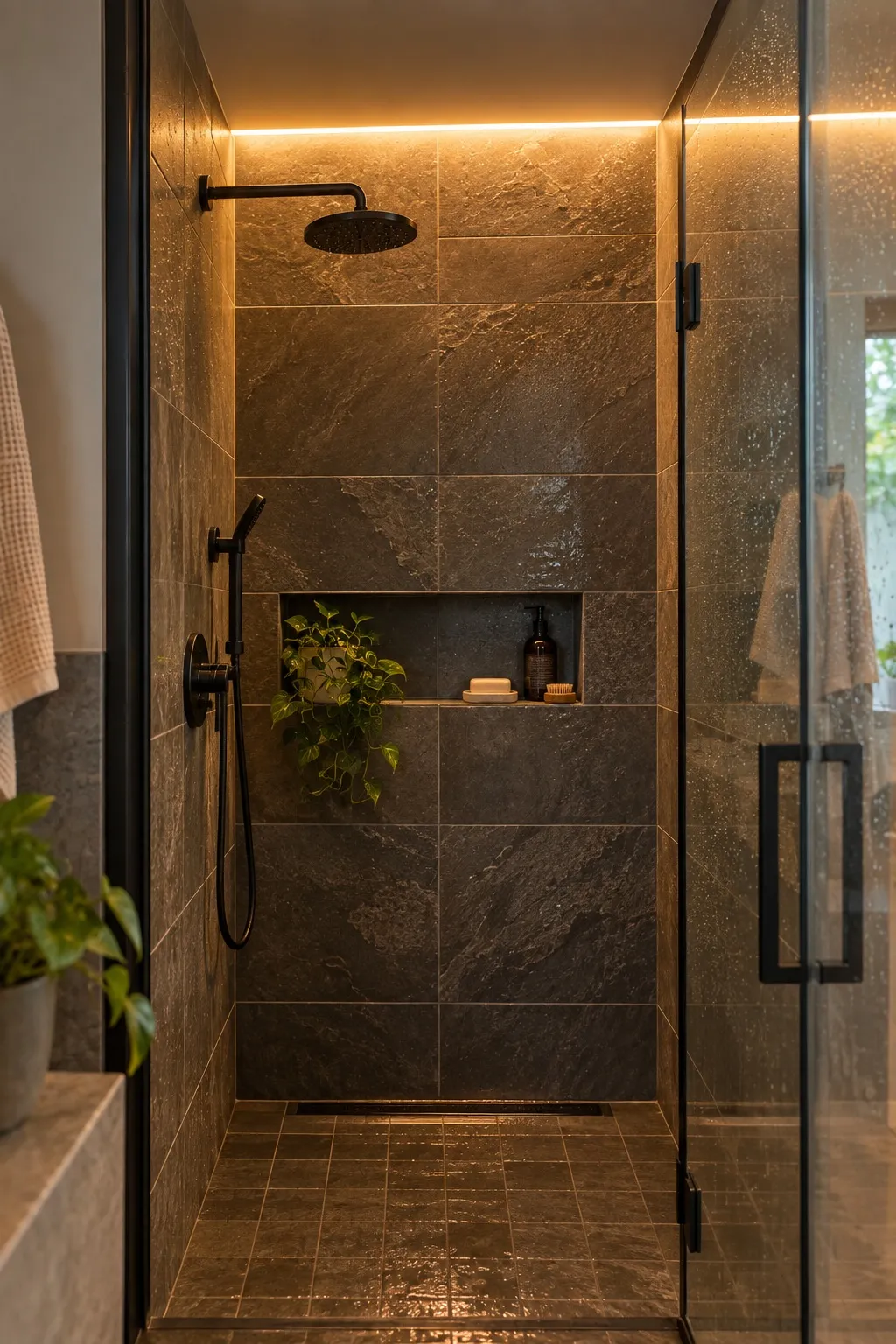
Putting a dedicated light inside the shower changes those five minutes more than anything you add to the rest of the room. Most stalls borrow light from a ceiling fixture behind you, which means you shower in your own shadow. A damp-rated waterproof warm-toned shower lighting strip run along the top edge of the shower ceiling gives a soft downward glow instead of flat overhead glare. Rechargeable versions stick on with adhesive pads and need no electrician at all. Look for 2700K to 3000K and read the IP rating on the box rather than the listing photo, because plenty of strips sold as bathroom-safe are only splash resistant and will fail inside a year.
3. One Dimmer or Smart Bulb for the Six A.M. Shower
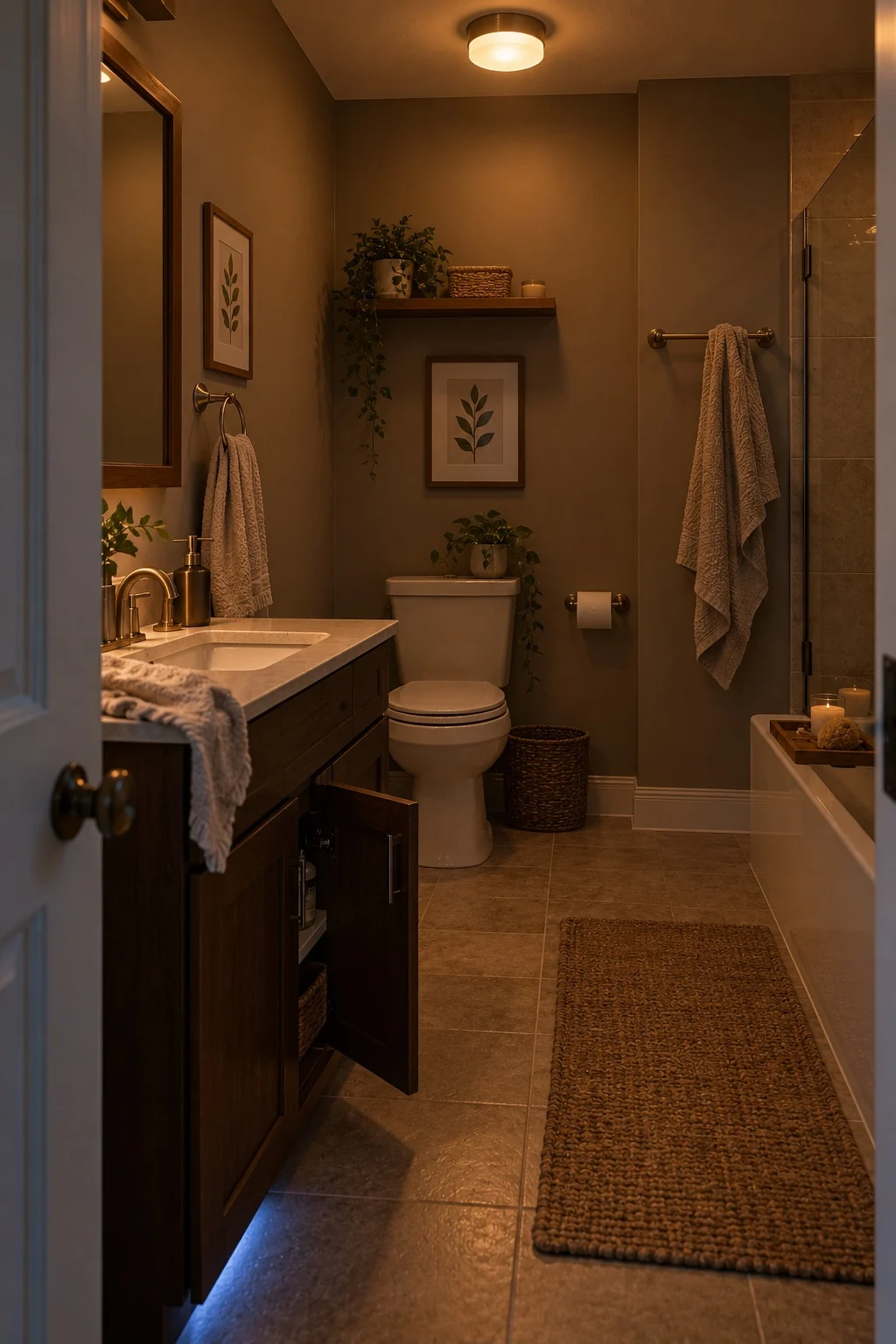
Dropping the ceiling light to roughly 20 percent is what makes an early bathroom feel like a room rather than an inspection. A smart bulb costs $12 to $20 and needs no wiring, so this still works if the fixture is hardwired with no switch worth replacing. Set one schedule: low warm light before seven, full brightness after. If the fixture takes a standard socket, that is the entire job. Older LEDs buzz or flicker on dimmers they were never built for, so check the packaging for the word dimmable instead of assuming. Keep the mirror light on a separate switch so you can still see properly when you need to.
4. Frosted Film and a Short Linen Cafe Curtain on the Window
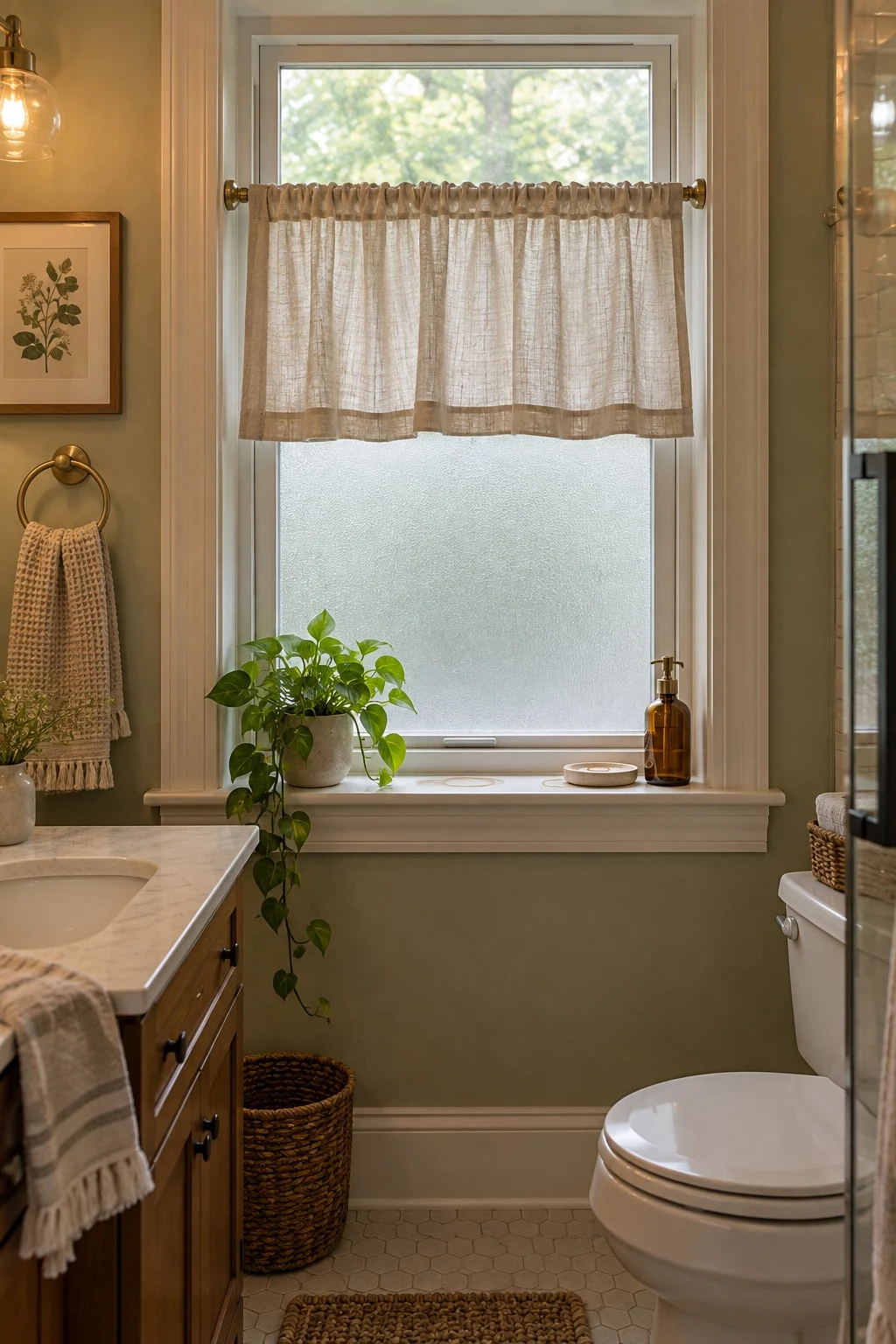
Frosted privacy film on the lower pane with a short linen curtain above it turns hard midday glare into a soft wash across the tile. The film goes on with soapy water and a credit card, peels off cleanly years later, and costs around $12 for a roll that covers a standard bathroom window. Hang the curtain on a tension rod at about two-thirds of the window height so the top pane still throws light onto the ceiling. Pick unbleached or oatmeal linen rather than white, because white cotton greys the light passing through it. Keep fabric short and well away from the shower opening, since anything that hangs into the wet zone stays damp.
5. A Small Plug-In Lamp Where the Toothbrush Charger Usually Sits
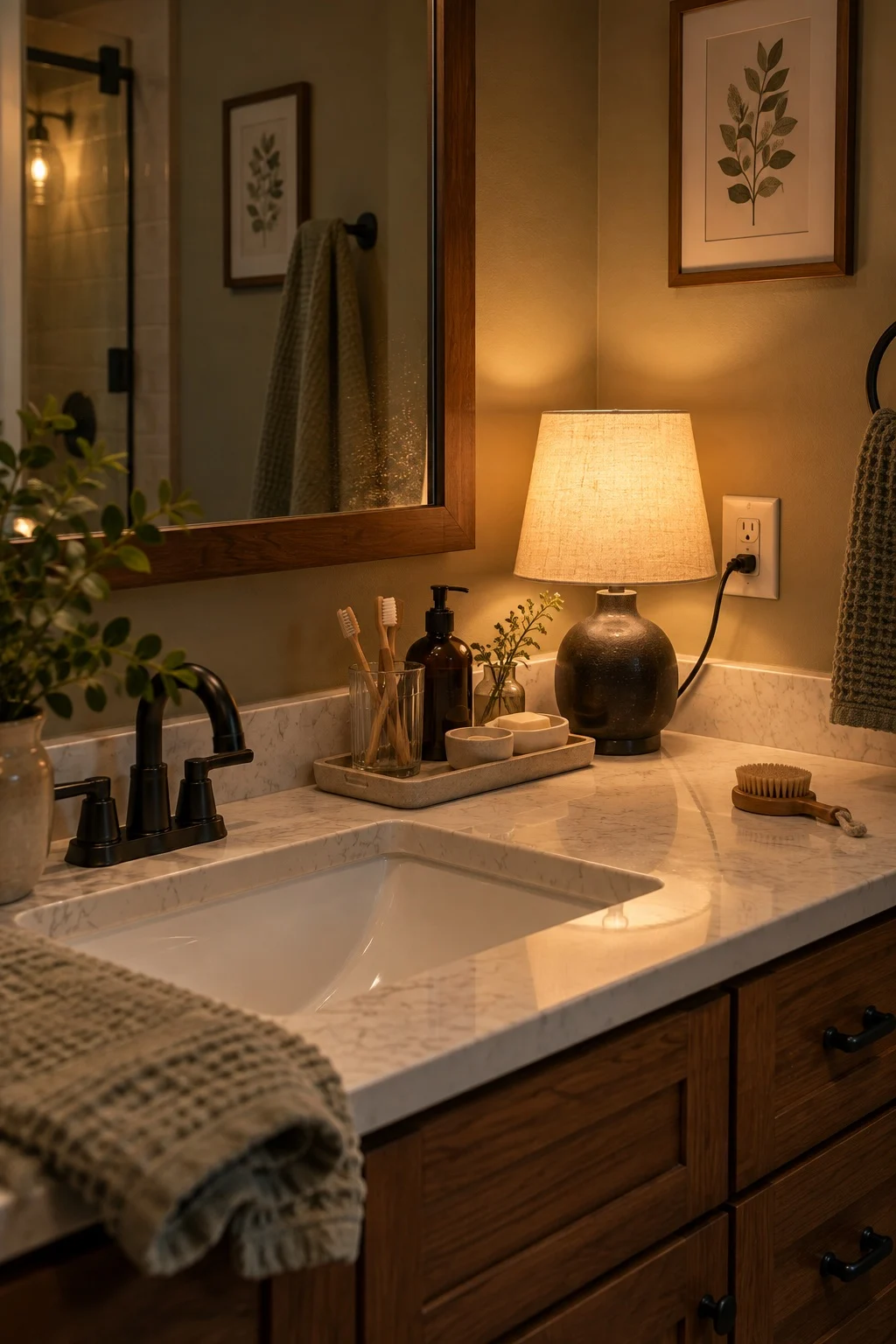
A lamp on the vanity counter adds a light source below eye level, which is the one thing bathrooms almost never have. Anything around 40 watts equivalent with a warm bulb does the job, and it pairs with the 2700K bulbs from idea 1 so the two sources agree instead of fighting each other. Safety sets the limits here: the outlet must be GFCI protected, the lamp needs to sit at least a foot back from the sink edge, and the cord should never cross the wet zone. Choose a ceramic or metal base with a washable shade. Paper and fabric shades spot, warp and start smelling within one humid season.
6. A Eucalyptus Bundle Tied to the Showerhead Arm
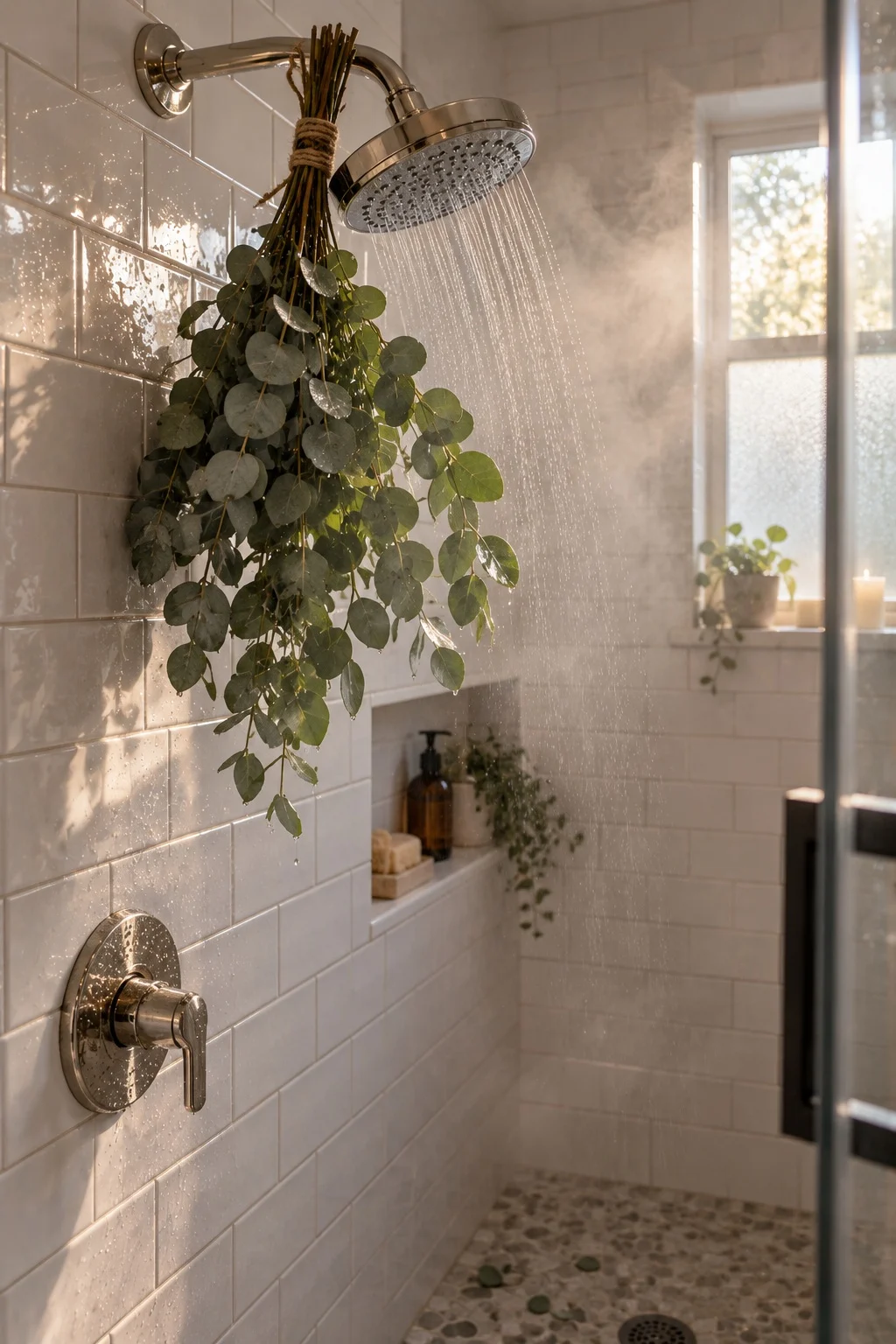
Eucalyptus releases its oil when hot steam hits the leaves, which makes it the cheapest ritual on this list and the one people notice first. Hang the bundle off to the side of the spray rather than under it, because soaking the leaves washes the oils out within a few days. Fresh eucalyptus bundles last two to three weeks and cost roughly $10 to $18 delivered. Crush one leaf between your fingers as you step in to wake the scent back up. Once the leaves go pale and brittle they are finished, and no amount of steam brings them back. A rainfall showerhead spreads steam wider, so the scent carries further.
7. Running the Shower Two Minutes Early to Build Steam
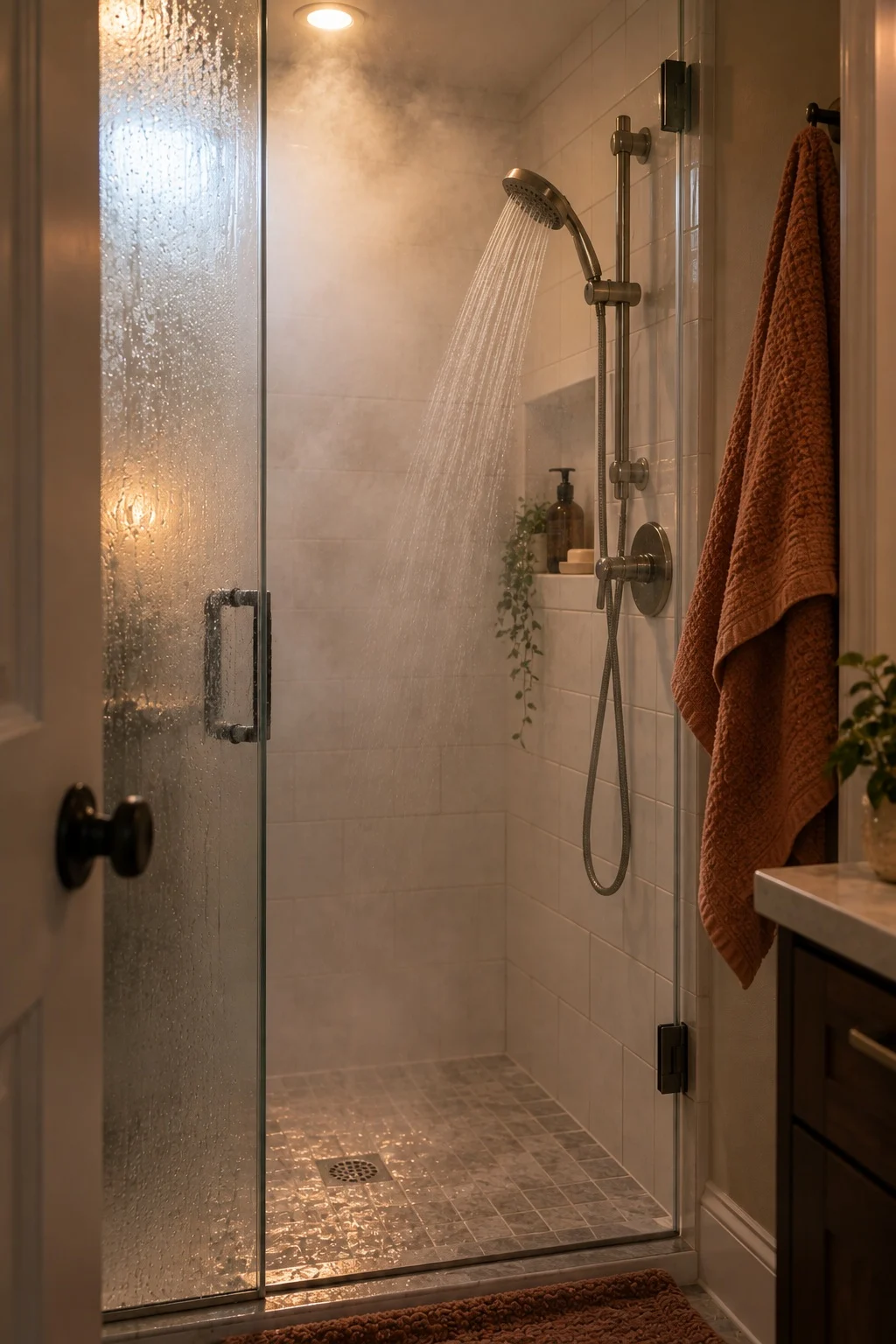
Turning the water on two minutes before you get in raises the room temperature enough that stepping out stops being the worst part of the morning. Close the door and leave the fan off for those two minutes, then run the fan for fifteen to twenty minutes afterwards, which is when the moisture genuinely needs to leave. A handheld showerhead on a slide bar makes the preheat easier because you can aim the spray at the wall and warm the air without flooding the floor. If your water is metered, save this for the coldest months and skip it in summer. It is a ritual, not a rule.
8. A Scent Stone at Chest Height Beside the Door
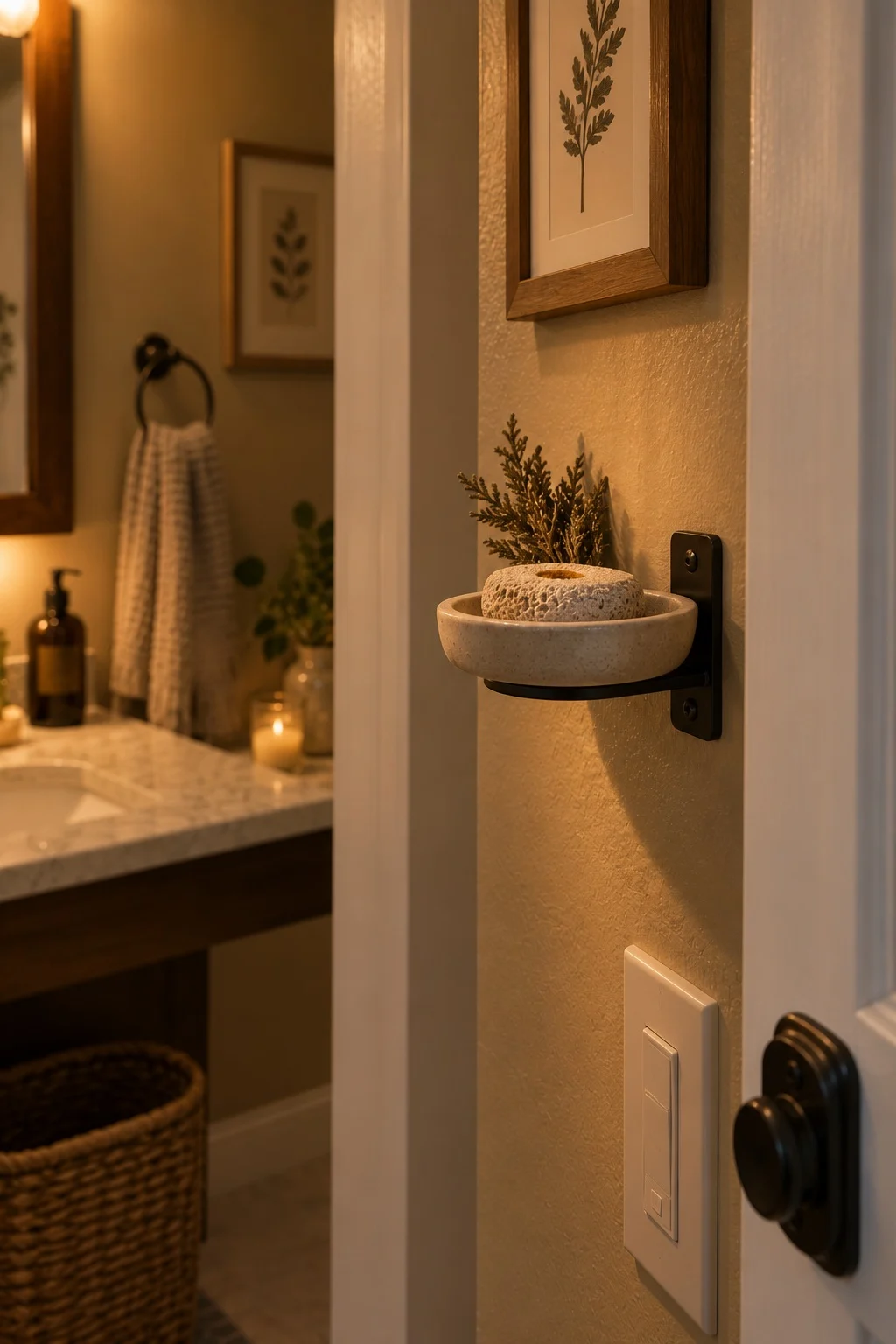
Scent that lives outside the shower is what carries the room between showers, and steam-based scent cannot do that job. Chest height beside the door is the right position, because that is where air moves every single time the door swings. Cedar, vetiver and bergamot read warm in a tiled room, while citrus on its own tends to smell like cleaning product. Three or four drops on a porous stone holds for about a week before it needs topping up. Keep the stone off painted trim and away from anything acrylic, since undiluted oils lift paint and fog plastic surfaces after only a few uses.
9. A Plug-In Towel Warmer Beside the Shower Opening
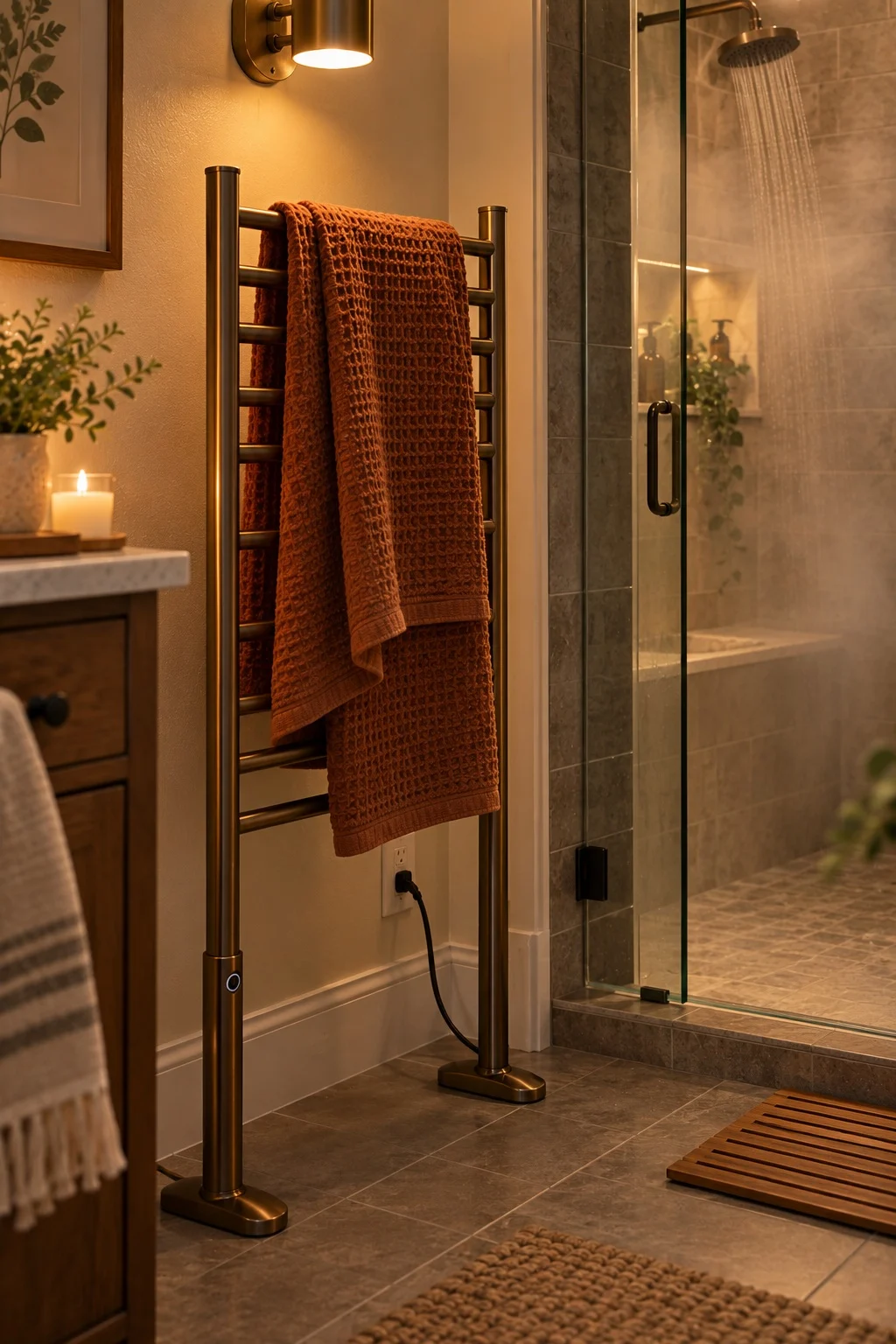
Reaching for a warm towel does more for the whole experience than any decorative object in the room, and a freestanding warmer needs no wiring at all. Most plug into a standard GFCI outlet and draw roughly what a lightbulb draws, so running one is cheap. Give it fifteen minutes, or put it on the same timer you use for the preheat trick in idea 7 so both are ready together. Measure first: freestanding racks usually need around 20 by 15 inches of floor plus clear space above. Wall-mounted versions look better and cost less to run, but they almost always mean drilling into tile.
10. A Teak Slat Mat Sitting Inside the Shower Pan
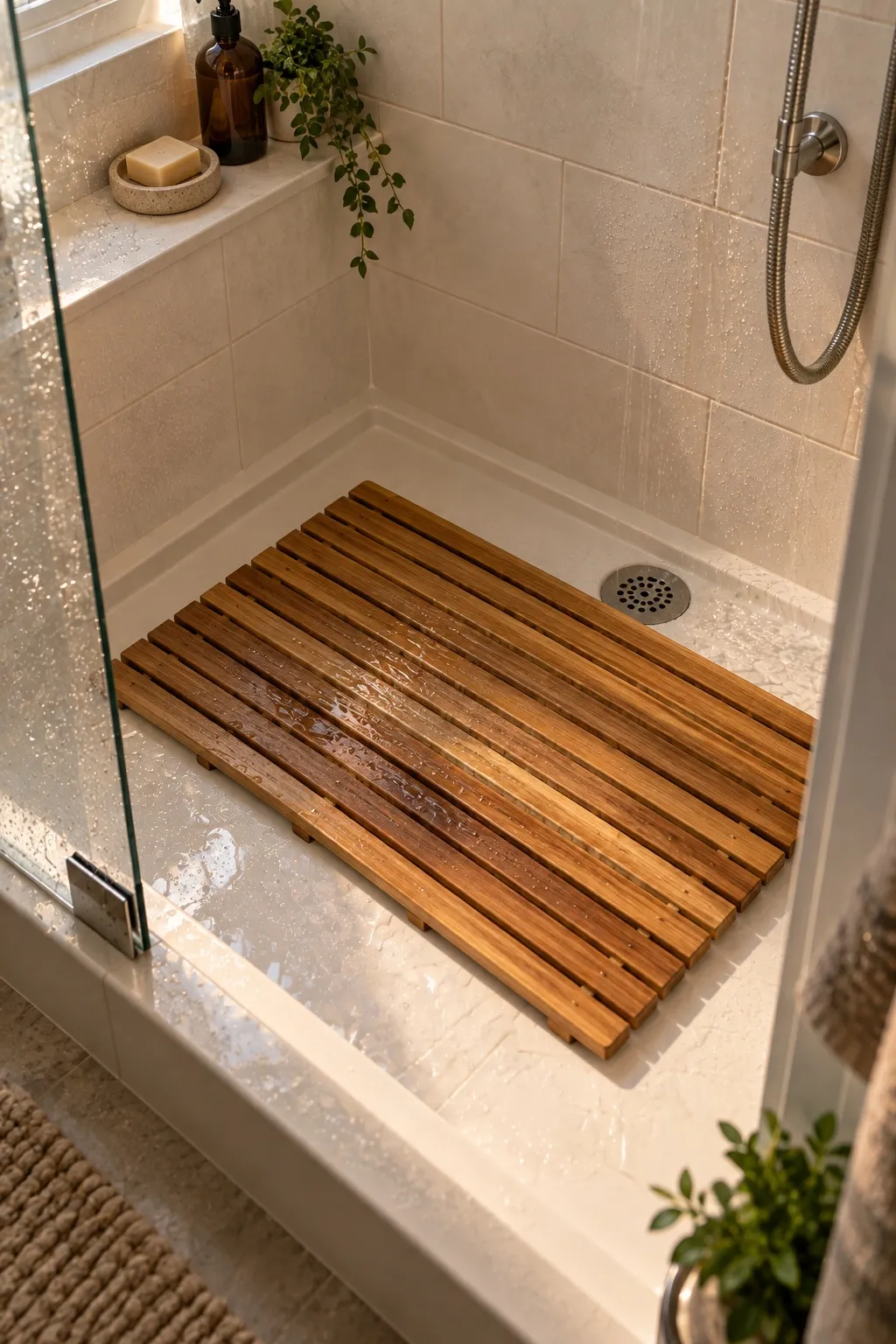
Warm wood underfoot instead of cold porcelain is the fastest sensory change in this entire post, and it takes ten seconds to install. Standard sizes run about 20 by 20 inches for a square pan and around 24 by 16 for a rectangular one, so measure the flat area between the drain and the curb before ordering. Teak shower mats sit on low feet that let water drain underneath rather than pooling. Unfinished teak silvers over a year or two, which most people end up preferring. Skip bamboo here. Bamboo splits along the seams and grows mildew far faster than teak, and the price gap is only about fifteen dollars.
11. A Thick Cotton Rug Layered Just Outside the Shower
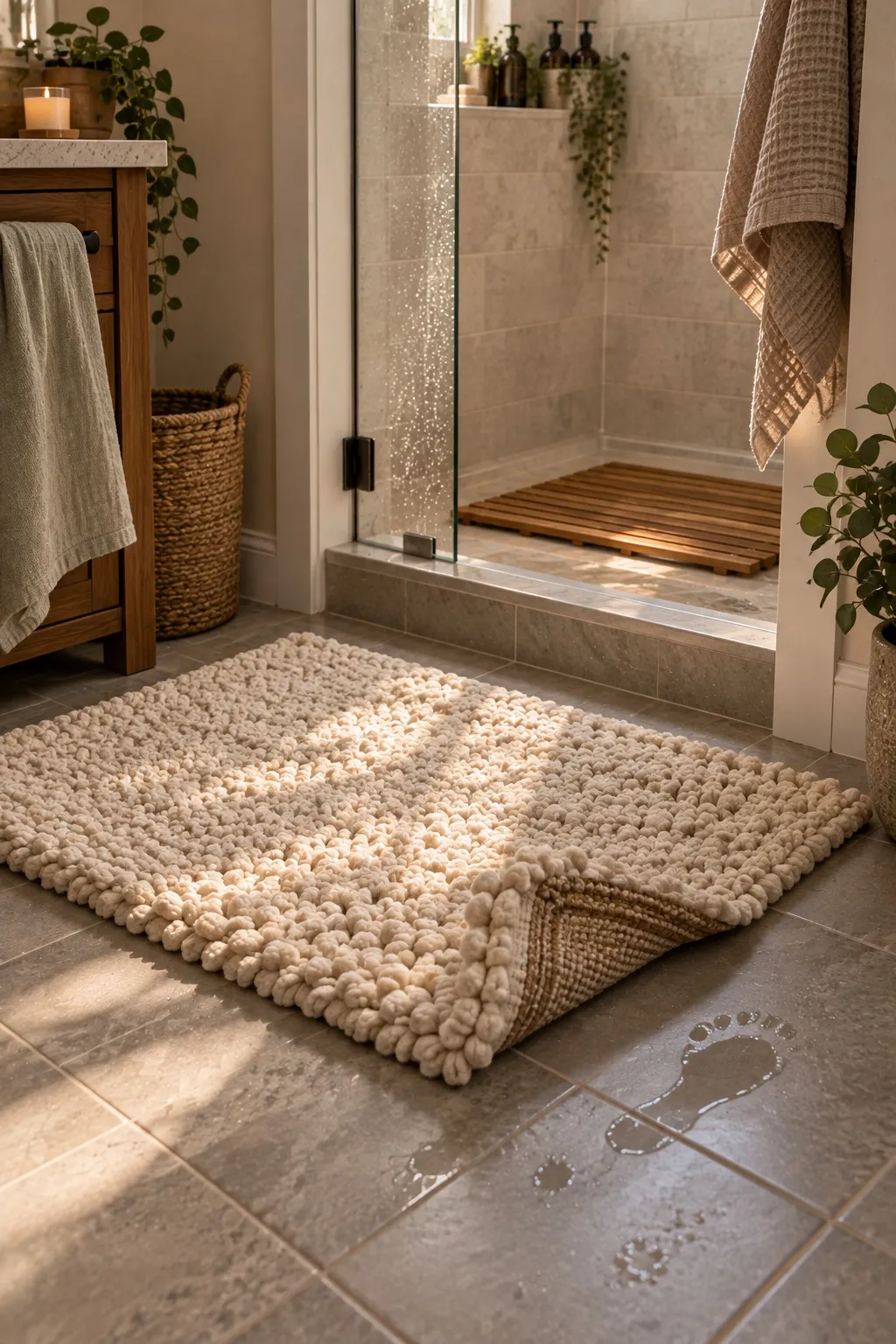
Somewhere warm for your feet to land in the second after you step out is worth more than it sounds, and cotton pile beats a thin bath mat every time. Look for at least an inch of pile with a cotton canvas backing rather than latex, because latex crumbles in a hot damp room within roughly a year. Paired with the teak mat in idea 10, both feet, inside and out, hit something soft. Wash it weekly on a warm cycle and buy two so one is always dry. Ivory and oatmeal stay looking clean far longer than white and read warmer against grey or beige tile.
12. A Plug-In Heated Floor Mat Where You Stand to Dry Off
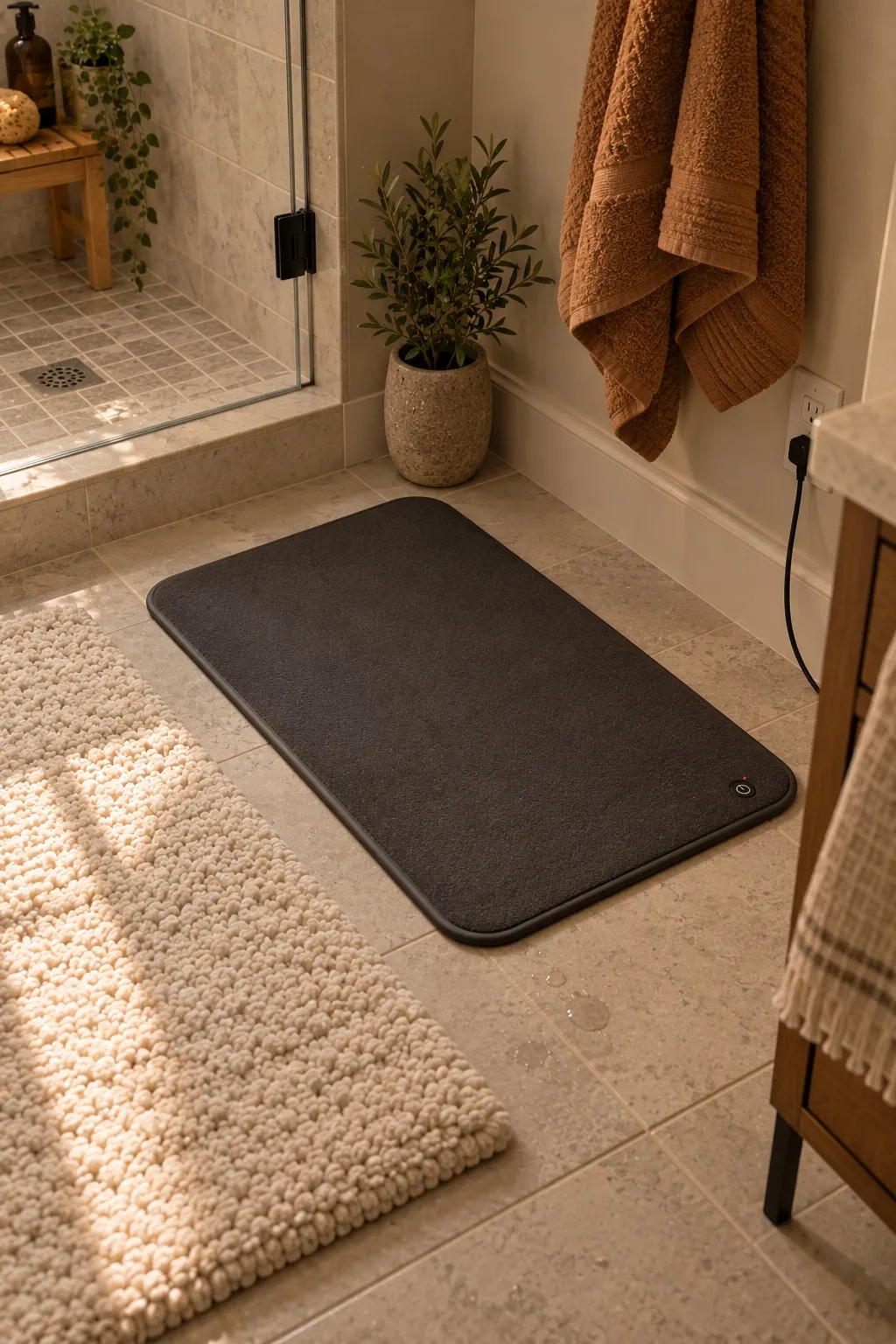
The coldest ten seconds of the day happen on bare tile while you dry off, and a plug-in heated mat solves exactly that for $40 to $70. These sit on top of the existing floor, plug into a GFCI outlet, and reach a comfortable surface temperature in about five minutes. Choose one with an auto shut-off timer so it cannot run all day unnoticed. Place it where your feet actually land, usually 18 to 24 inches out from the shower opening, and route the cord along the baseboard away from the drip zone. This is not underfloor heating and will not warm the room, only the patch you stand on.
13. A Wooden Slat Stool Standing Beside the Shower Door
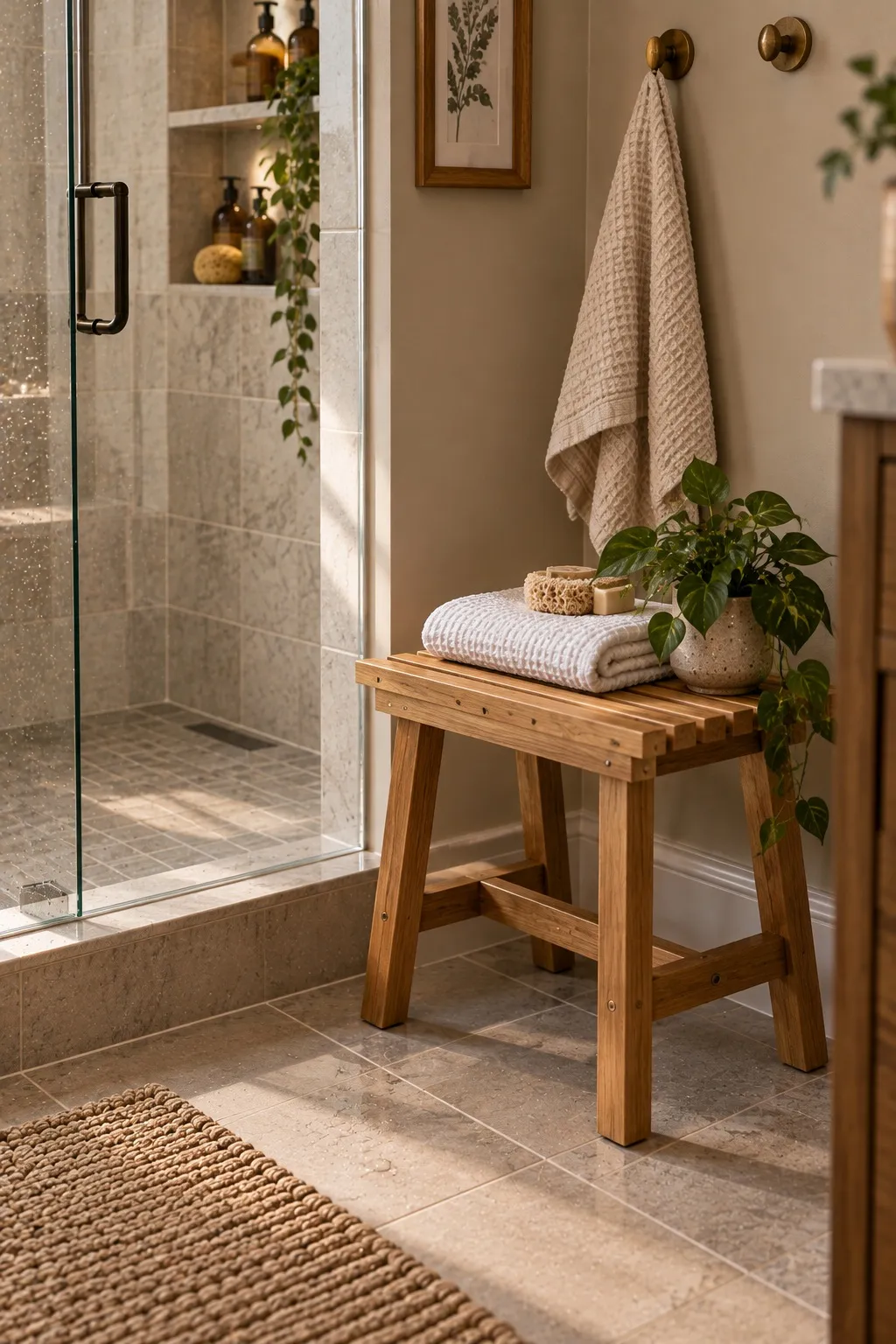
Giving the towel, the phone and the folded clothes somewhere to sit that is not the toilet lid is what makes a small bathroom read cared for rather than coped with. Teak, oak and acacia all survive bathroom humidity provided they are oiled or left raw rather than lacquered, since lacquer traps moisture underneath and lifts in sheets. Aim for something 16 to 18 inches tall and no wider than 14 inches so it never fouls the door swing. On days you are not using it as a surface, the same stool works as a plant stand or a place to stack two rolled towels.
14. One Large-Leaf Plant at Eye Level Across From the Shower
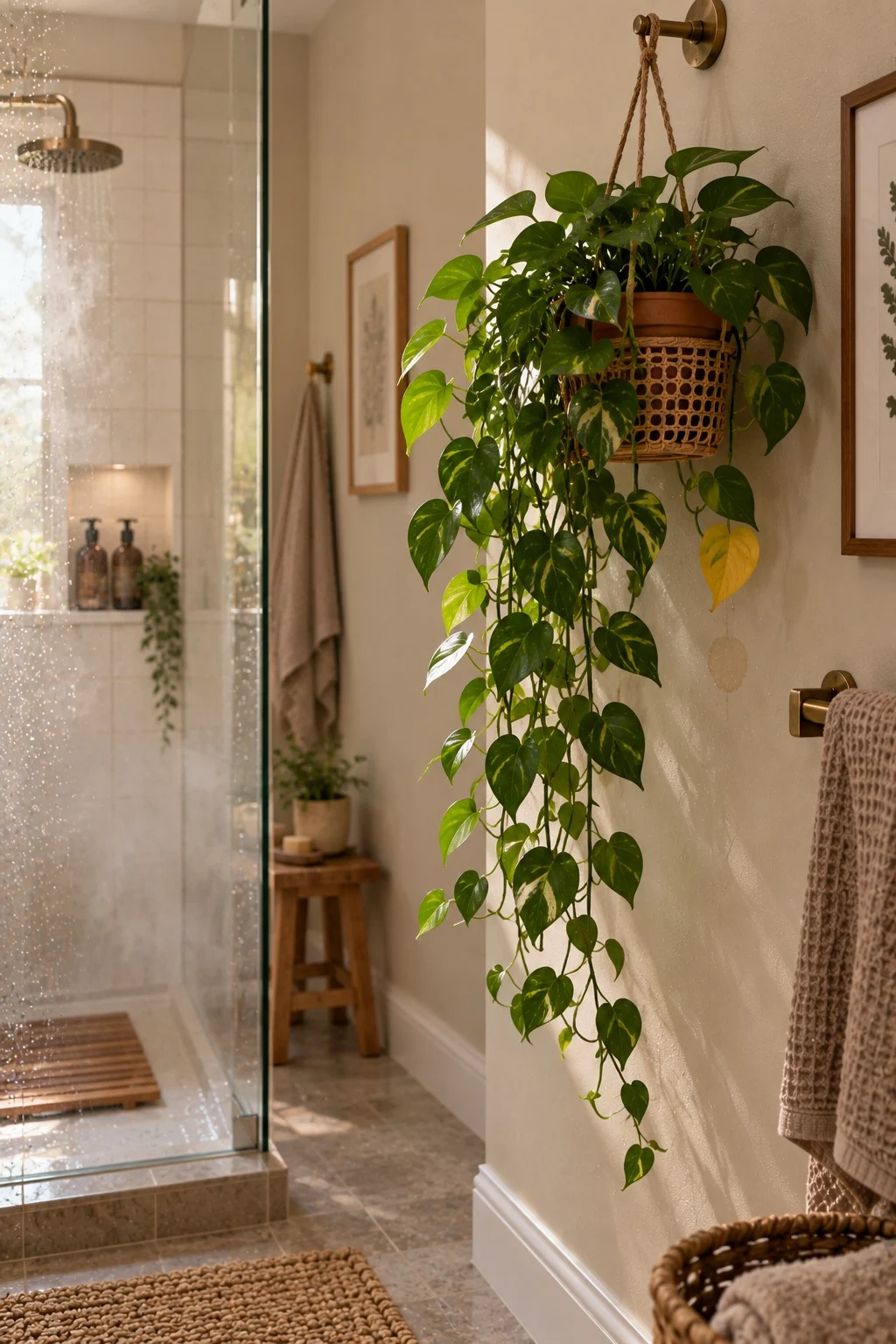
Something green to look at while the room fills with steam changes what the space feels like, and a bathroom is one of the few rooms where a pothos genuinely thrives. Height matters more than size here. A plant on the floor disappears behind the toilet, while a plant at around five feet is the first thing you see when you turn around. Pothos, heartleaf philodendron and a small maidenhair fern all handle high humidity and low light. Water far less often than you would elsewhere, because steam does half the work and root rot is how most bathroom plants die.
15. A Clay-Toned Curtain Wrapping the Shower Opening Instead of Clear Plastic
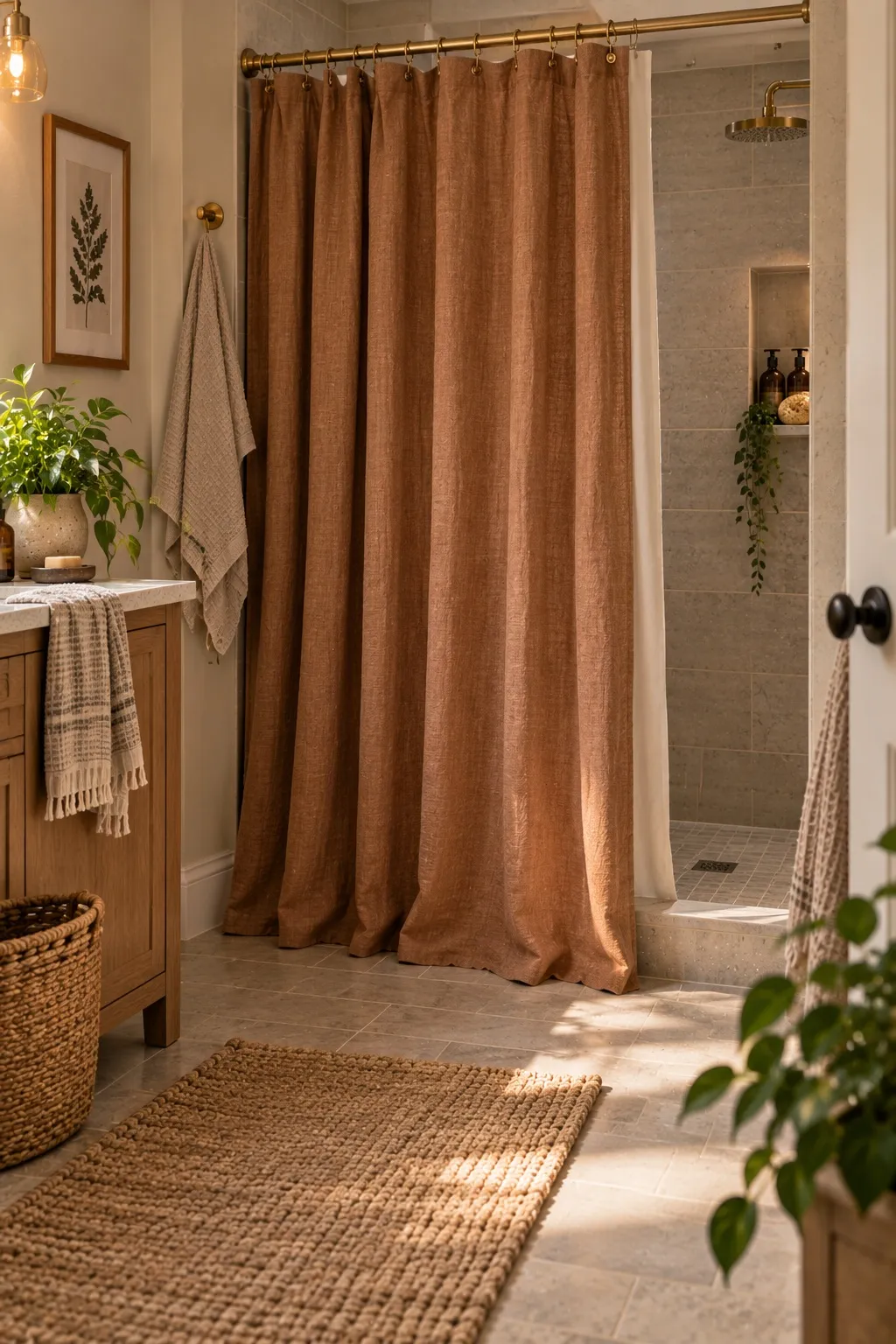
Fabric across the shower opening reads softer than clear glass or a clear plastic liner, and it is one of the few renter-safe swaps that changes the whole room from the doorway. Cloth also absorbs the hard echo of a tiled room, which is part of why it feels warmer than it measures. Use a cotton or linen-blend outer curtain with a separate plain liner behind it, and wash that liner monthly. Extend the rod a few inches past the opening so the fabric hangs in folds instead of pulling flat. Oatmeal, clay and muted sage sit better against beige or grey tile than pure white, the same logic as the window curtain in idea 4.
16. A Framed Print on the Wall You Face When You Step Out
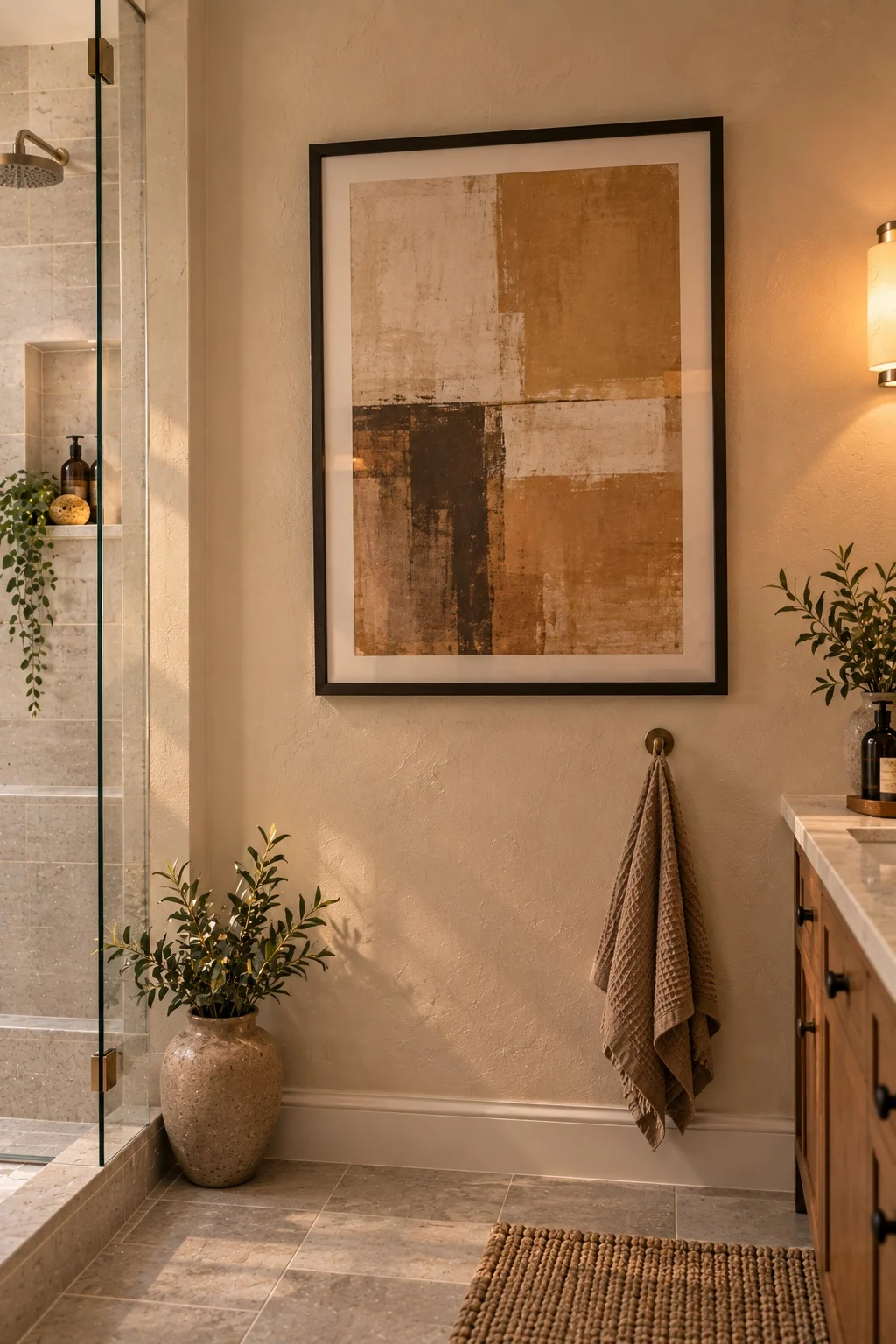
Art gives the eye somewhere to land that is not the toilet or the towel bar, and the wall you face on the way out is the only wall that matters. Bathrooms destroy paper, so choose an acrylic-glazed frame with a sealed back, a canvas print, or a print mounted on tile, and keep it on the wall furthest from the spray. Anything you would be upset to lose belongs in another room. Hang the centre at roughly 57 inches, the height galleries use, which puts it directly in your sightline while drying off. One larger piece beats three small ones in a room this size.
17. Deep Warm Paint on the Wall Above the Tile Line
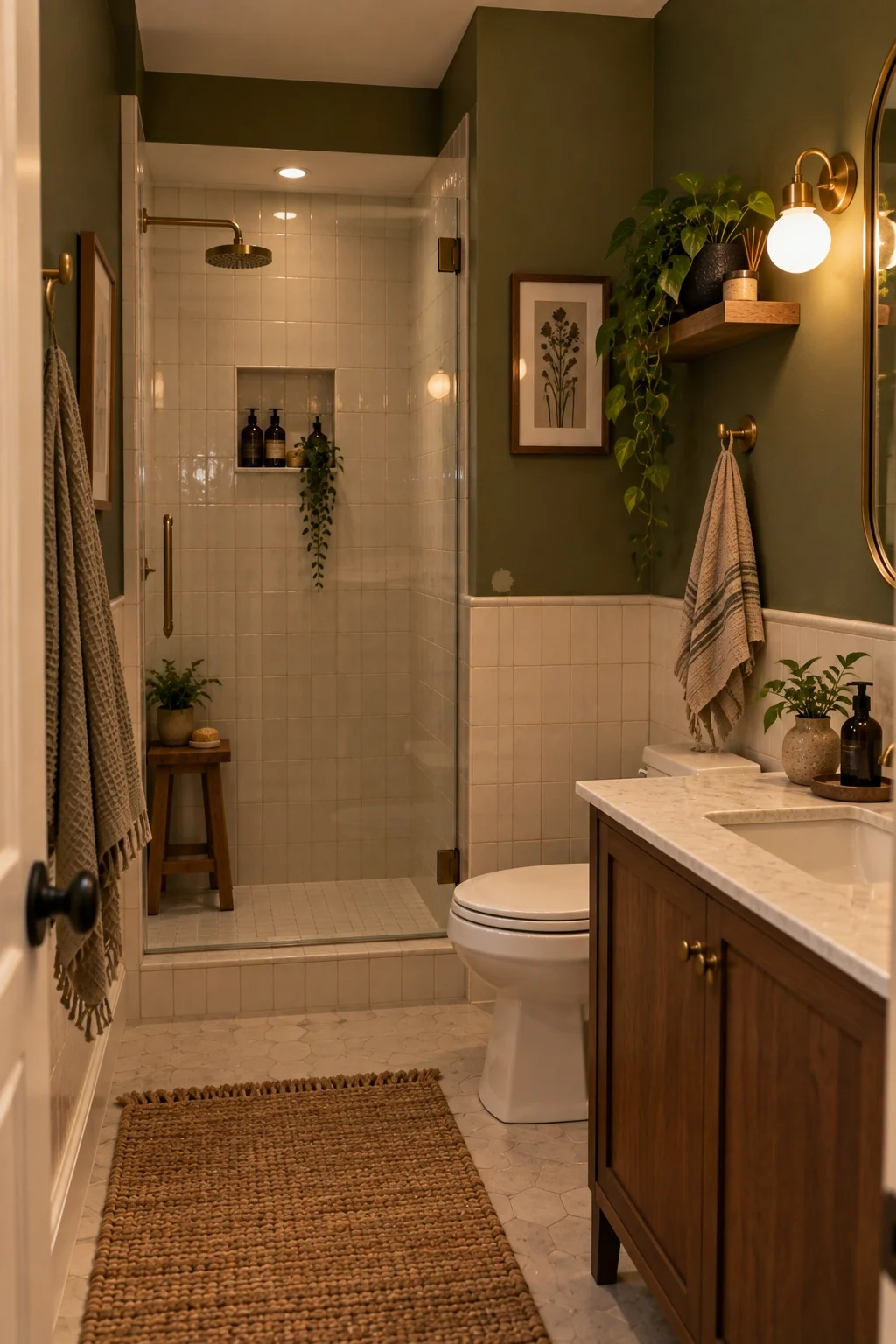
Painting everything above the tile line in a deep warm colour shrinks the visual weight of the tile and stops the room reading like a clinic. Warm greens, clay browns and deep taupes work far better than grey, which pushes cold light around a small space. In a windowless bathroom a dark upper wall is not the mistake people expect, because the light in there is artificial anyway and a dark surround makes warm bulbs like the ones in idea 1 look richer. Use a bathroom or kitchen grade paint in eggshell, run tape along the tile trim for a clean line, and plan on two coats over builder white.
18. No-Drill Suction Shelves Holding the Bottles Off the Shower Floor
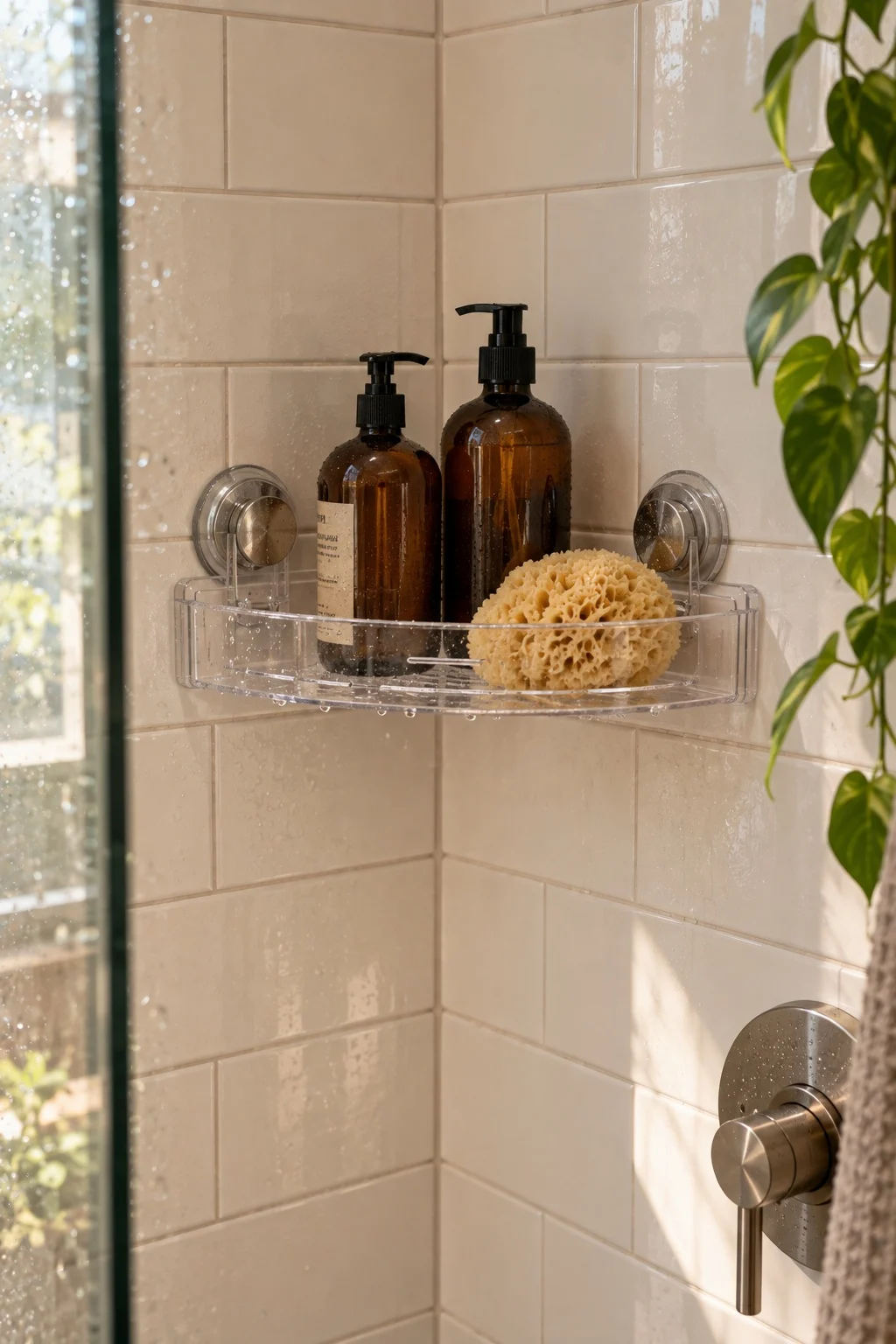
Bottles sitting on the shower floor are the single biggest source of visual noise in a shower-only bathroom, and getting them up is free warmth. No-drill suction hooks and suction-mounted corner shelves carry a surprising load if you mount them on flat glass or a single large tile face, never across a grout line. Clean and dry the surface with rubbing alcohol first, then leave the mount empty for 24 hours before loading it. Decant into two or three matching bottles rather than keeping five branded ones on display. A shelf holding two bottles and looking calm beats one holding five and looking like a shop shelf.
19. A Lidded Basket on the Floor That Swallows the Overflow
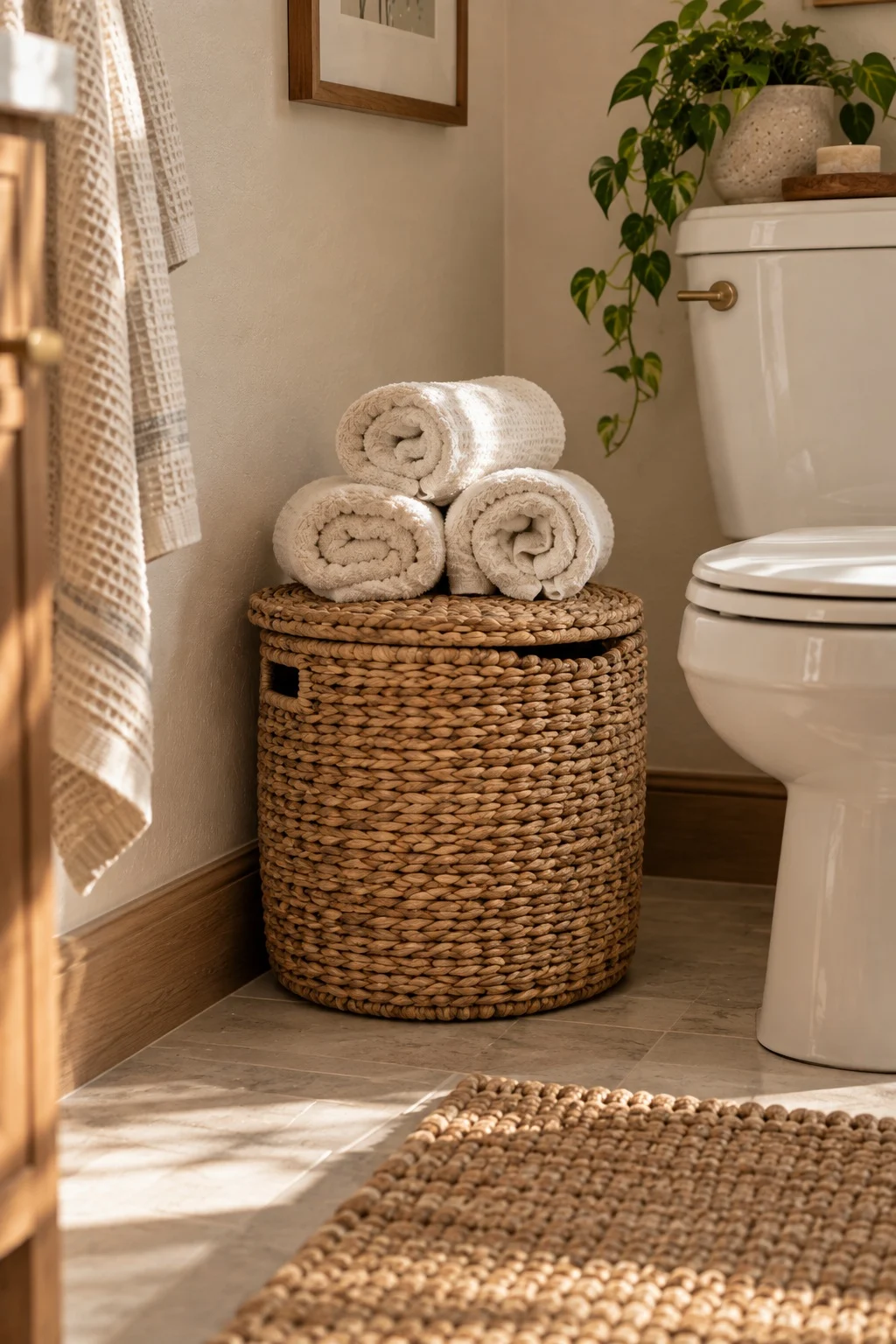
Everything the shelves cannot hold needs one closed home: refill bottles, the spare loofah, the razor multipack, the travel sizes. The lid is the entire point, because an open basket in a small bathroom only relocates the clutter to a lower shelf where you still see it. Look for seagrass or cotton rope around 12 to 14 inches wide so it tucks beside the toilet or under the sink without blocking the door swing. Line it if anything inside might leak. The aim is simple: everything still visible in the room should be something you actually chose to look at.
Final Thoughts
None of this touches the shower. The tile stays, the pan stays, the glass stays, and the room still ends up warmer than the one you started with, because warmth in a bathroom is mostly light temperature, smell, and what your feet land on. Start with the bulbs and the wooden mat. Those two cost under sixty dollars together and you will notice both by tomorrow morning. The rest can happen one payday at a time, in whatever order suits you. Save this to Pinterest so it is waiting when you get to it.
Frequently Asked Questions
How do you make a bathroom cozy if there is no bathtub?
Change the light first, then the floor. Warm 2700K bulbs and something soft where you step out do more than any decor object, because a cold-looking bathroom is usually a lighting problem rather than a fixture problem. After that, add one scent source and one warm textile. None of it involves touching the shower itself.
Does hanging eucalyptus in the shower actually do anything?
Yes, as long as it stays out of the water. Steam heats the leaves and releases the oil, which is what you smell. Hung directly under the spray, the oils wash out in three or four days and you are left with wet sticks. Hung off to the side, a bundle keeps working for two to three weeks.
What colour light bulb is best for a bathroom?
2700K for warmth, or 3000K if you do makeup in there. Anything 4000K and above reads blue-white and makes both tile and skin look grey. Keep every bulb in the room at the same temperature, because one warm bulb sitting next to a cool one is more noticeable than either would be alone.
How do I stop my bathroom feeling cold in winter without adding heating?
Run the shower for two minutes before you get in with the door shut and the fan off, then run the fan for fifteen minutes afterwards. Add a warm towel and something soft underfoot. Most of the cold feeling comes from the moment you step out, not from the shower itself.