Cozy small bathroom ideas for renters fall into two piles, and most lists refuse to separate them: the changes that peel off in ten minutes, and the ones that need a text to your landlord first. I have moved four times in six years, and I now judge every bathroom purchase by one question. Does it come with me, or does it stay on the wall? Everything below is sorted by the surface you are not allowed to touch, walls through textiles, and each idea says plainly whether it is fully reversible or a permission job. The two surfaces nobody else covers, existing tile and shower glass, get their own section. Save this to Pinterest before your next lease starts.
1. Peel-and-Stick Wallpaper on the Toilet Wall Only
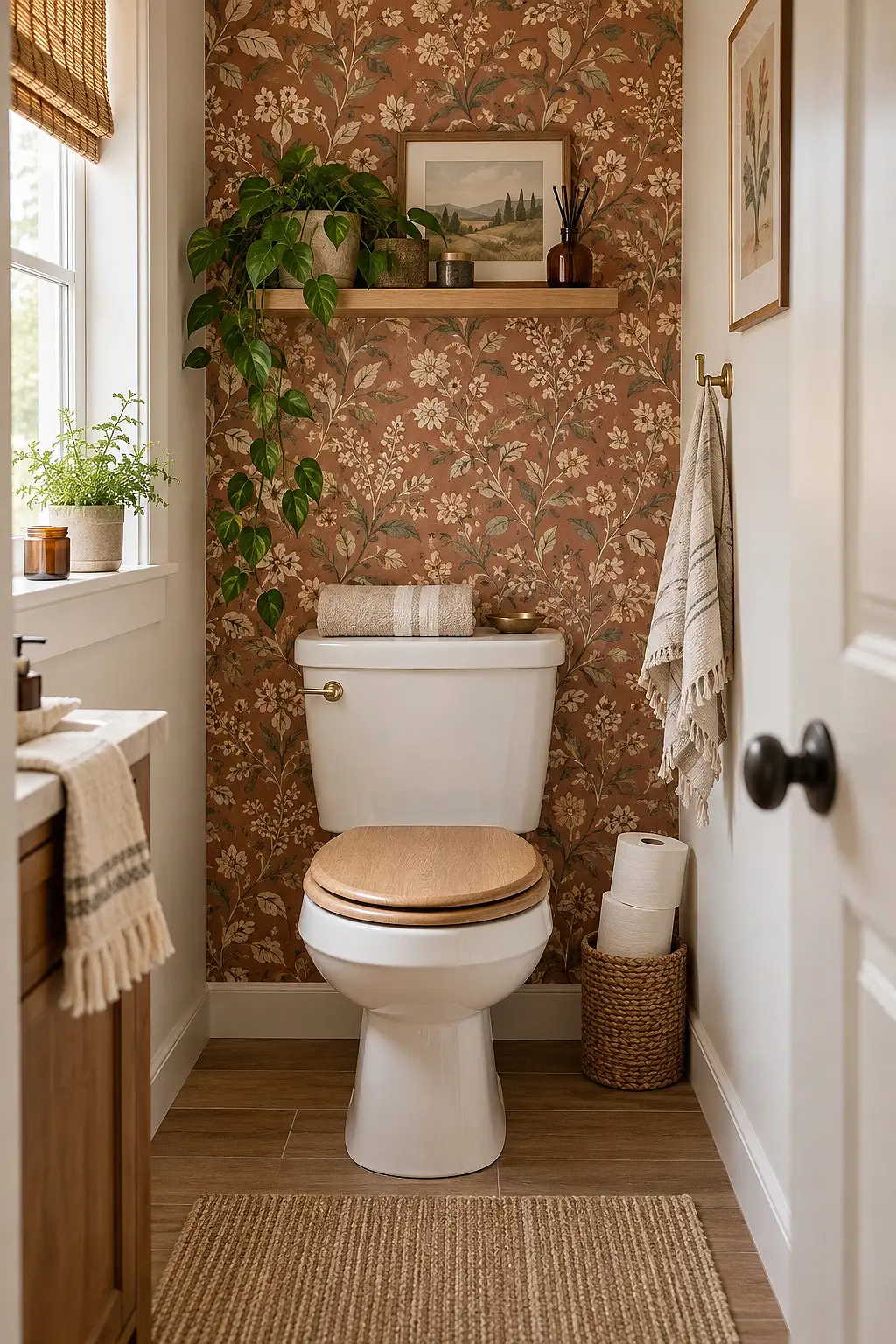
One papered wall behind the toilet gives a small bathroom a whole personality for under forty dollars, and it comes down in one piece if you buy the right product. Papering all four walls in a room this size is where renters get into trouble, both visually and at move-out. Stick to the wall the toilet sits against, because it is the smallest, has the fewest cuts around fixtures, and is the first thing you see from the doorway. Test a scrap in the corner behind the door for a week first. Bathroom humidity is what makes cheap peel-and-stick curl at the seams. Fully reversible if your walls are eggshell or satin paint. Flat builder paint is a permission job, because it lifts.
2. A Leaning Picture Ledge Held by Adhesive Strips
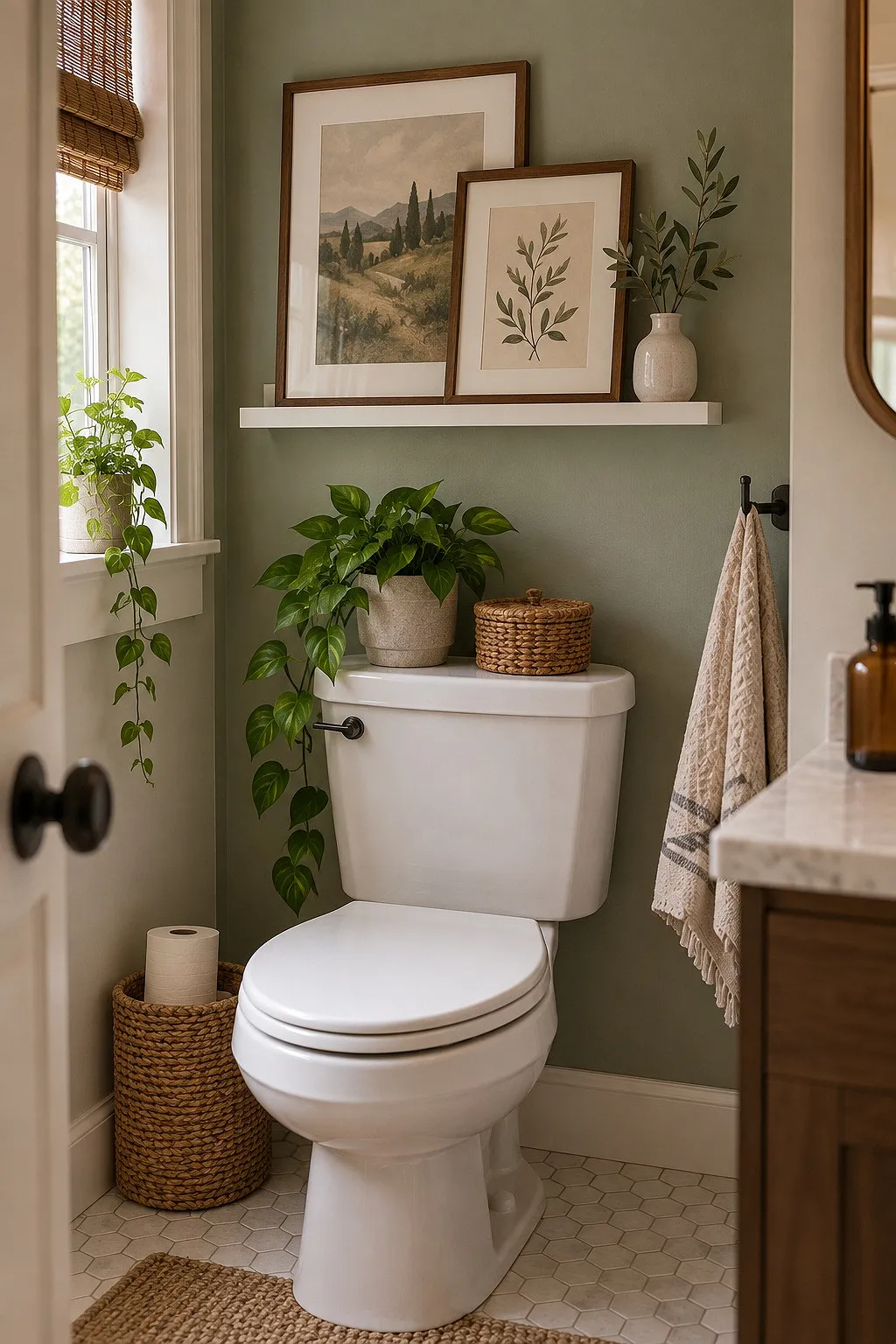
Art at eye level makes a bathroom feel like a room instead of a utility closet, and a shallow ledge lets you do it with zero holes. Buy a ledge no deeper than three inches and rated well under the weight you plan to put on it, then mount it with heavy-duty adhesive strips on a wall wiped down with rubbing alcohol first. Lean two frames, overlap them slightly, and add one small object so the arrangement does not look staged. Keep the ledge at least fifteen inches above the tank so the lid clears when you lift it. Everything here travels with you, and the strips release with a slow downward pull that leaves the paint intact.
3. Adhesive Trim Around the Builder Mirror
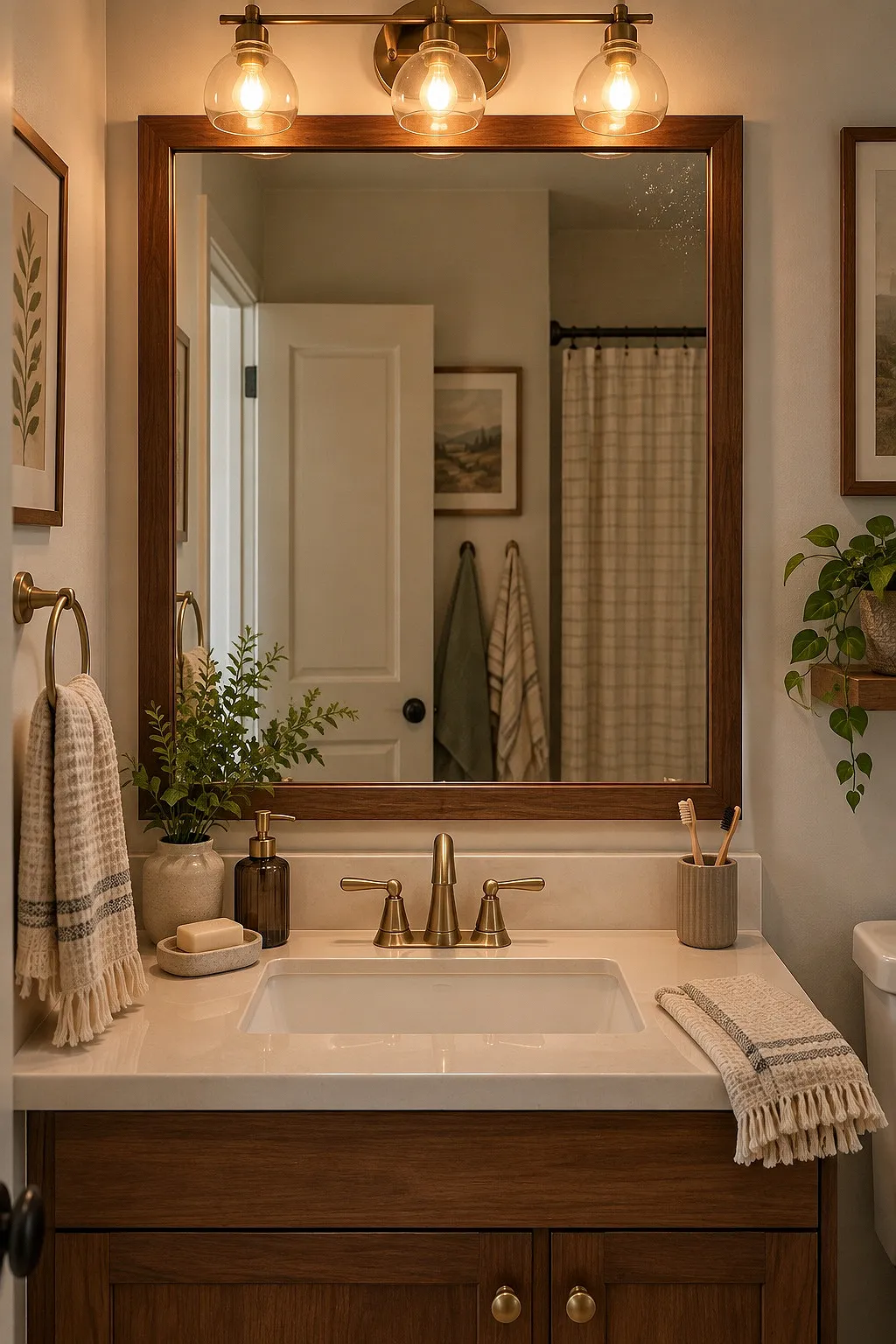
A frameless builder mirror stops looking rental-grade the moment you border it with adhesive mirror trim, and the whole job takes under an hour. Trim kits come as flexible strips you cut with scissors or rigid pieces you miter, and the good ones stick to the mirror face rather than the wall, which is the part that matters at move-out. Measure twice and cut long, because a short piece cannot be rescued. Warm walnut or matte black reads more expensive than glossy gold on a small mirror. Reversible, with one caveat worth knowing before you start: adhesive left on glass wipes off with rubbing alcohol, adhesive left on drywall does not.
4. An Oversized Mirror Propped on the Floor Beside the Vanity
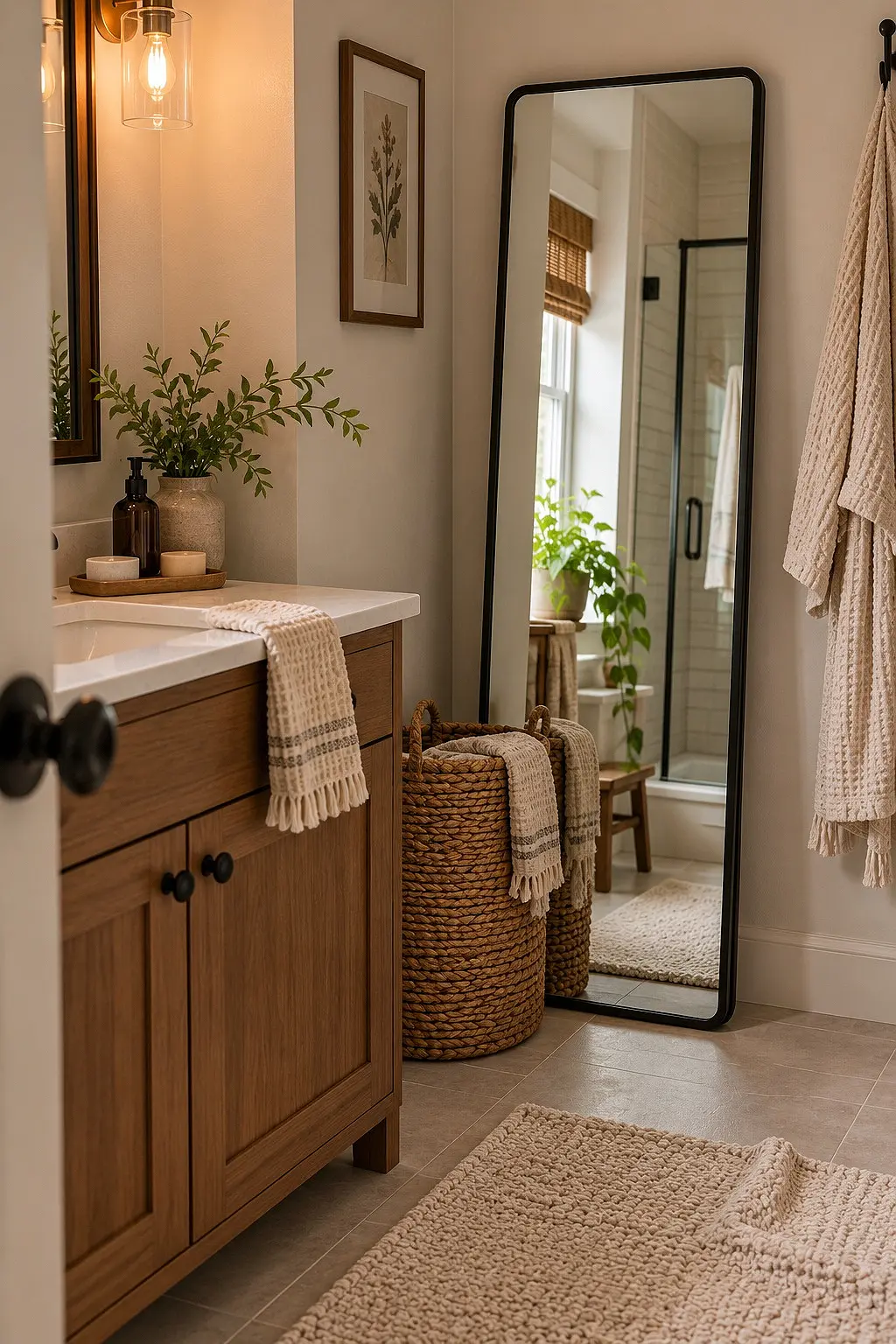
A full-length mirror leaning against the wall doubles the apparent light in a small bathroom without touching a single surface. Floor space is tight in a rental bath, so measure the wall between the vanity and the door before you buy, and look for a mirror under sixteen inches wide. Lean it at a shallow angle and put a felt pad under each bottom corner so it cannot slide on wet tile. If there is no clear floor at all, the same trick works propped on the toilet tank at a smaller scale. Nothing is fixed to anything here. That is the entire point, and it is why I have carried the same one through three apartments.
5. A Washable Low-Pile Rug Covering the Cold Builder Tile
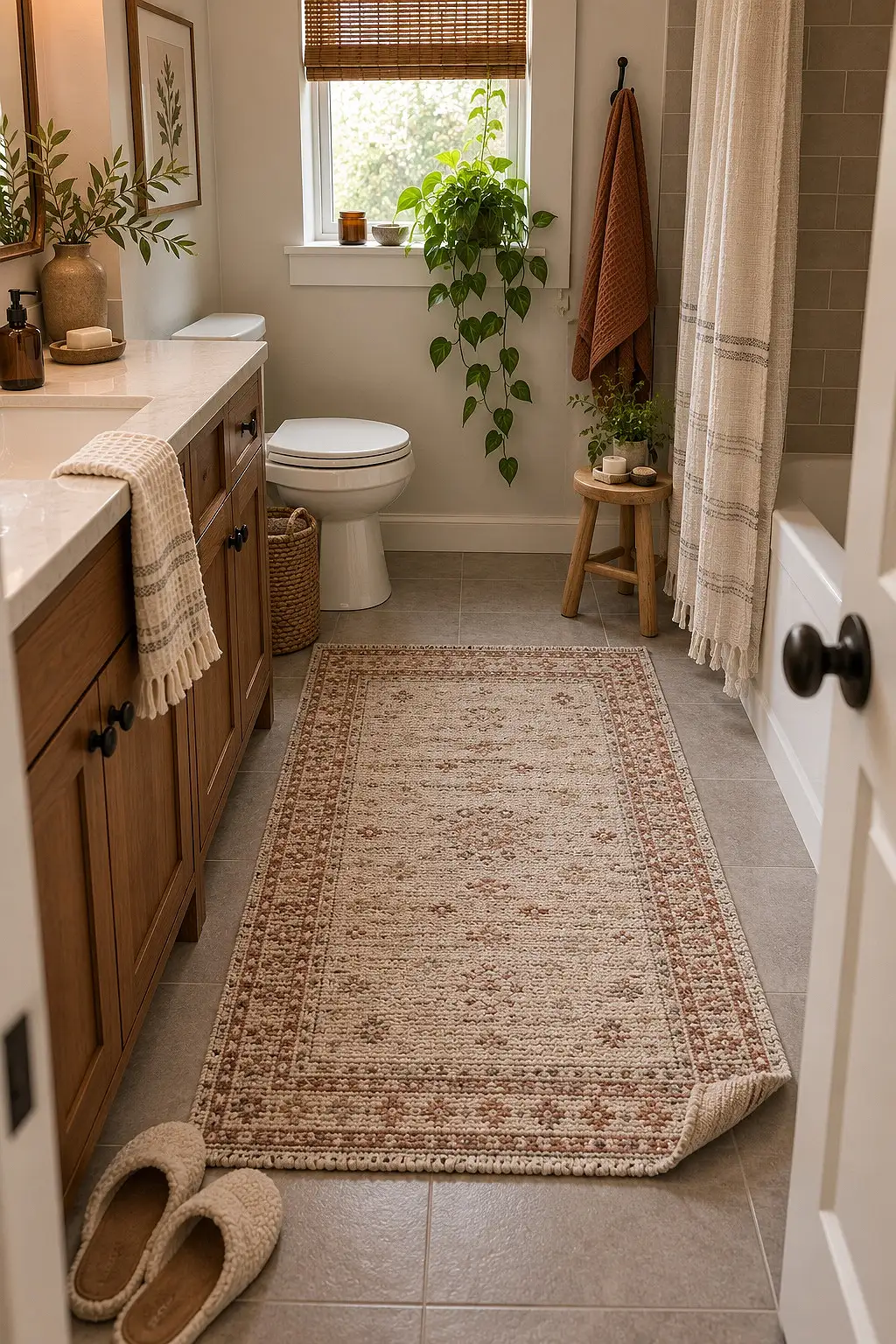
Covering most of the floor, not just the strip in front of the sink, is what makes a small bathroom read warm instead of clinical. A washable low-pile rug at two by three or three by five will cover the usable floor of a typical rental bath. Low pile matters twice over: it dries faster, and it clears the door swing, which a plush rug will not. Check your door gap with a ruler before ordering, half an inch is the usual working limit. Machine washable has to mean actually washable, which cotton flatweave handles and jute does not. It rolls up and comes with you, which is the whole test.
6. Layering a Runner Over the Bath Mat
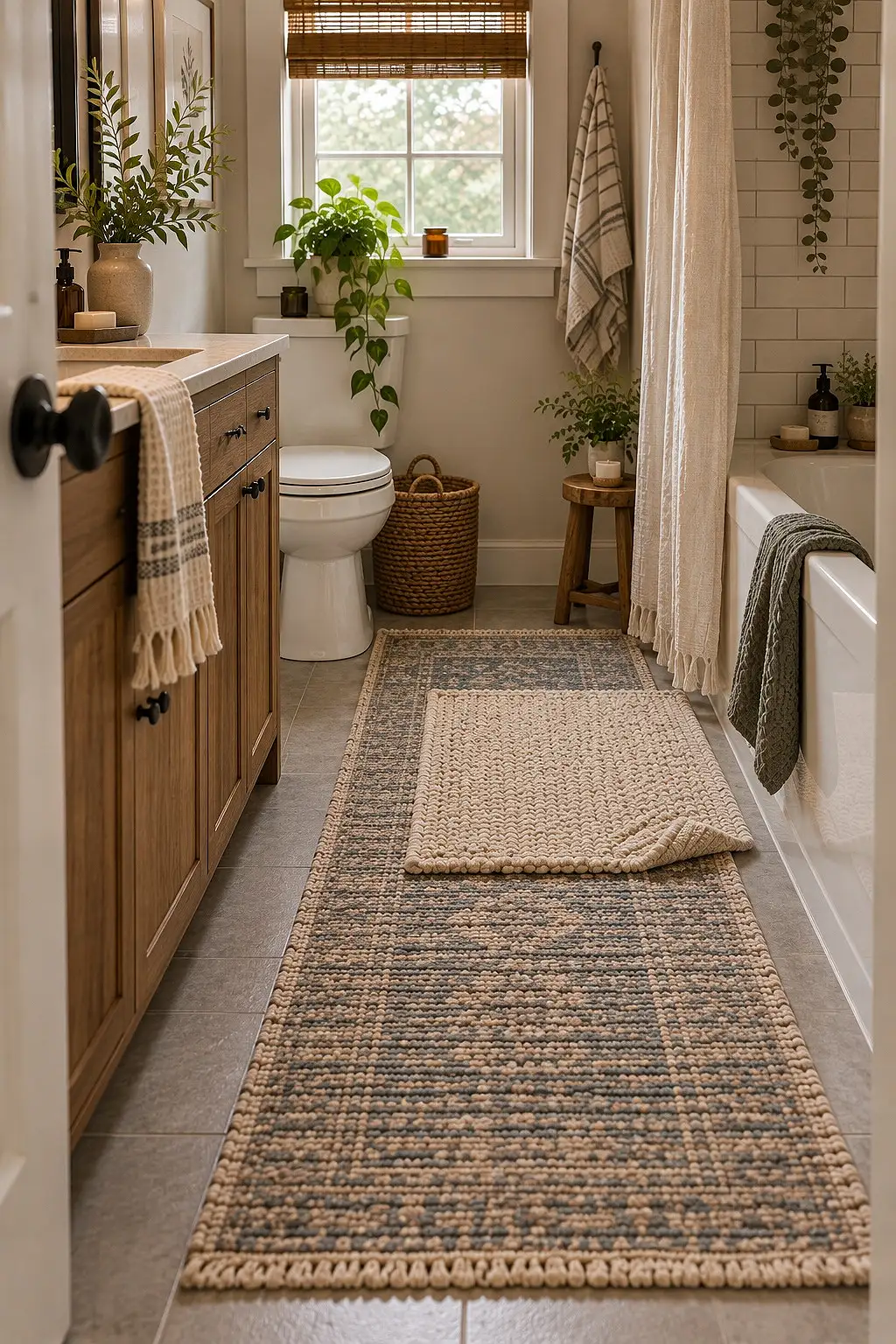
Two rugs beat one in a narrow bathroom, because the layered edge breaks up a long empty floor and gives the eye somewhere to stop. Put a flat runner down the length of the room and a smaller absorbent mat on top of it in front of the tub, so the wet zone stays separate from the decorative layer. Sizes to look for are around two by six for the runner and twenty by thirty for the mat. Contrast the textures rather than the colors, a flatweave under a tufted mat. Think of it as a softer take on the single large rug in idea 5, and it usually costs less, since the runner underneath can be plain cotton. Both go in the wash.
7. Peel-and-Stick Vinyl Tile Over an Ugly Bathroom Floor
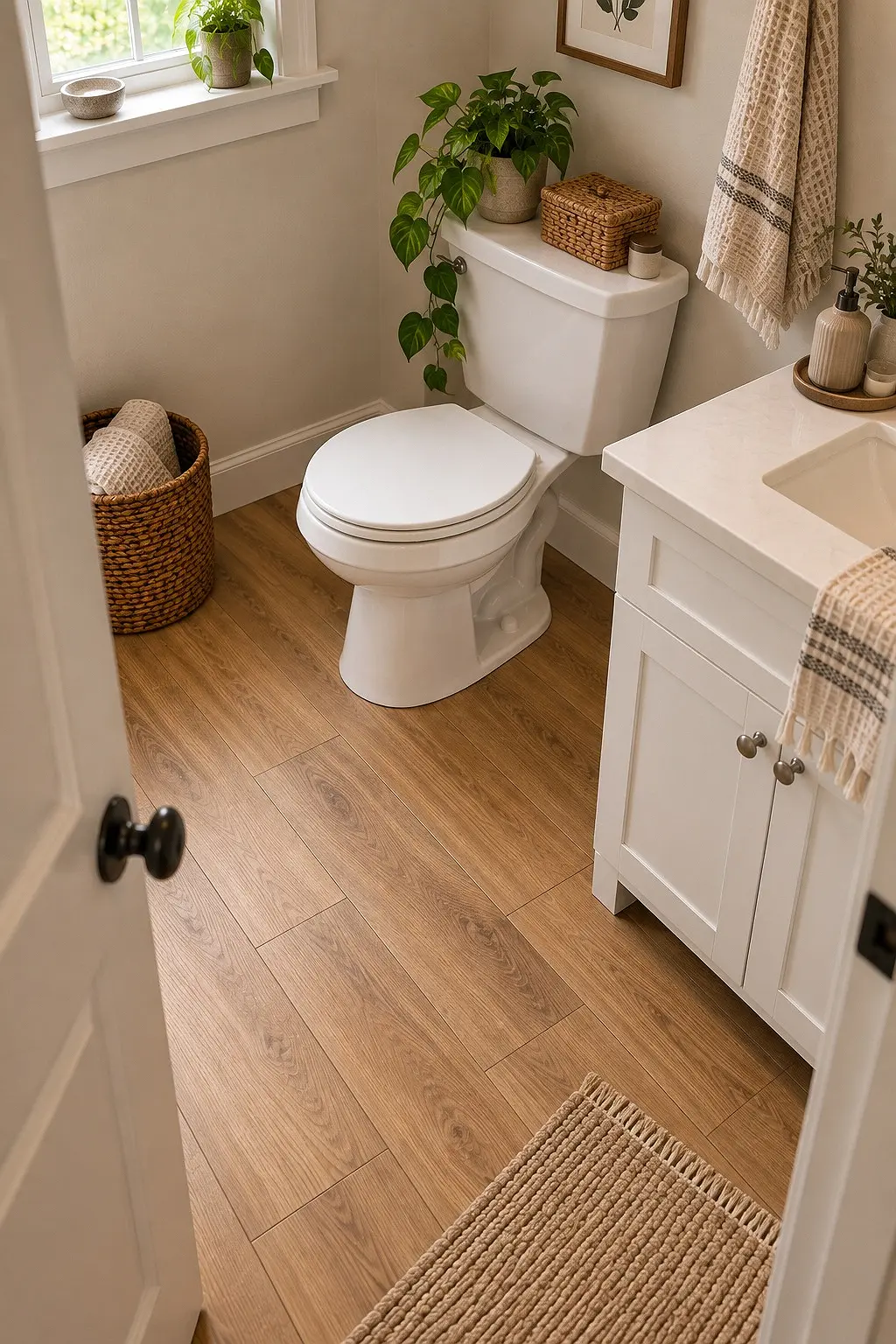
Vinyl floor tile hides a dated floor completely, and it is one of only two ideas in this post I would not do without asking first. Adhesive vinyl bonds hard to old sheet flooring and can lift the surface underneath when it comes up, which is a deposit problem rather than a decor problem. Over sealed ceramic tile it usually releases cleanly, but grout lines telegraph through within a few months and look worse than the original floor. Get permission in writing, or use a rug instead. If you do get the yes, buy fifteen percent extra, lay from the center out, and roll every tile firmly. Cost lands around two to four dollars a square foot.
8. A Teak Duckboard Mat in Front of the Tub
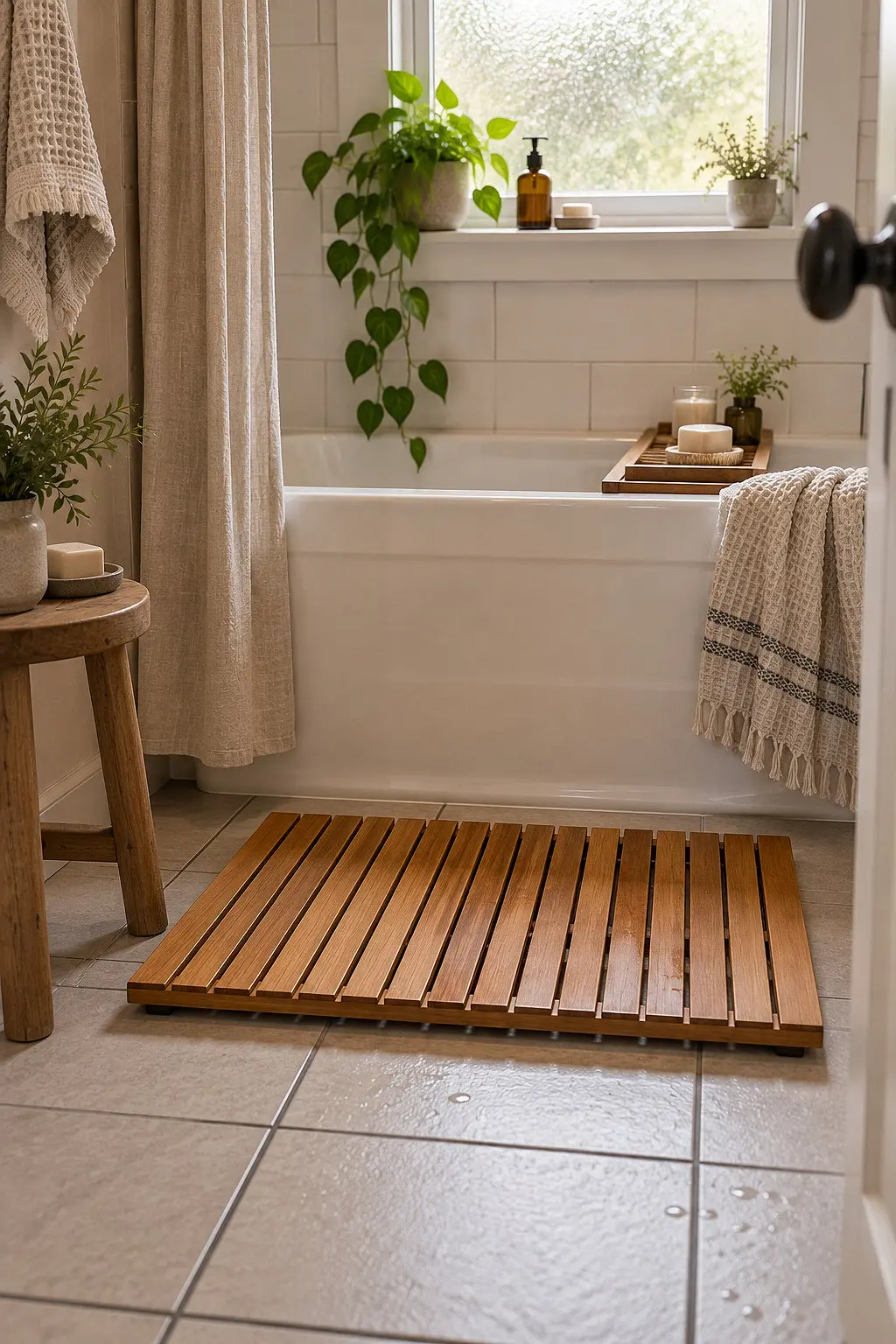
Wood on a bathroom floor is the fastest way to make cold tile feel less like a hospital corridor, and a slatted teak mat delivers it for roughly thirty to sixty dollars. Teak handles standing water better than any other affordable wood because of its natural oils, which is exactly why it turns up in spas and outdoor showers. Buy one slightly narrower than your tub is long so it sits square against the tub apron. Lift it after showers for the first week to see how quickly the tile underneath dries. Trapped water under wood is how you get a mildew ring you will be scrubbing on move-out day. Oil it twice a year and it outlasts the lease.
9. Static-Cling Frosted Film on the Shower Glass
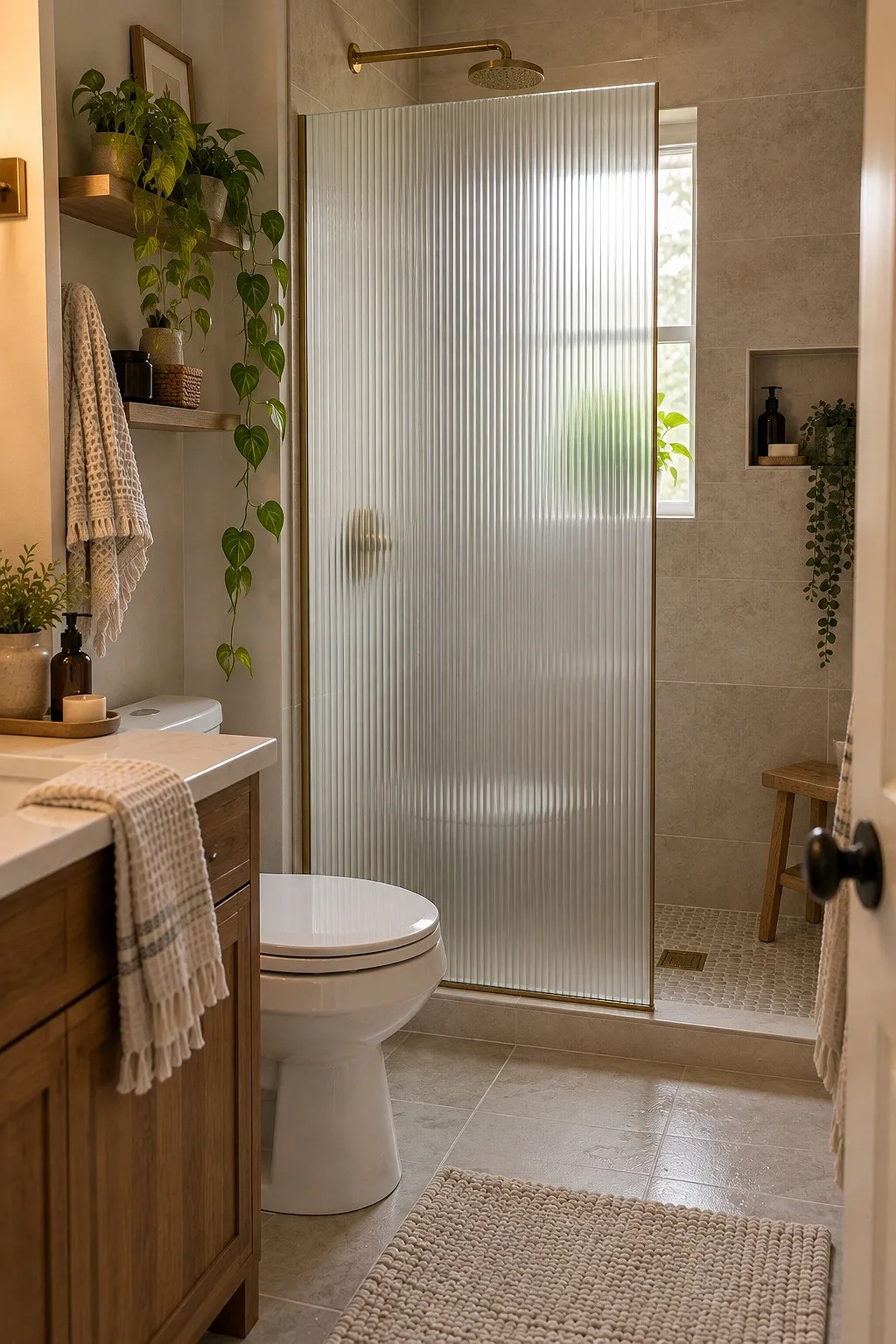
Frosted film softens a hard glass shower panel and hides permanent water spotting, and static-cling versions use no adhesive at all. Cling film holds by surface tension on clean wet glass, so it repositions freely while you fit it and peels off in one sheet years later. Adhesive film costs less and grips better in a steamy room, but it leaves a residue that needs a razor scraper and a lot of patience. Measure the panel, cut the film an eighth of an inch small on each side, then squeegee from the center outward. A reeded or fluted pattern reads more deliberate than plain frost in a small room. Twenty to thirty dollars covers a standard panel.
10. Tile Stickers Over a Dated Four-Inch Wall Tile
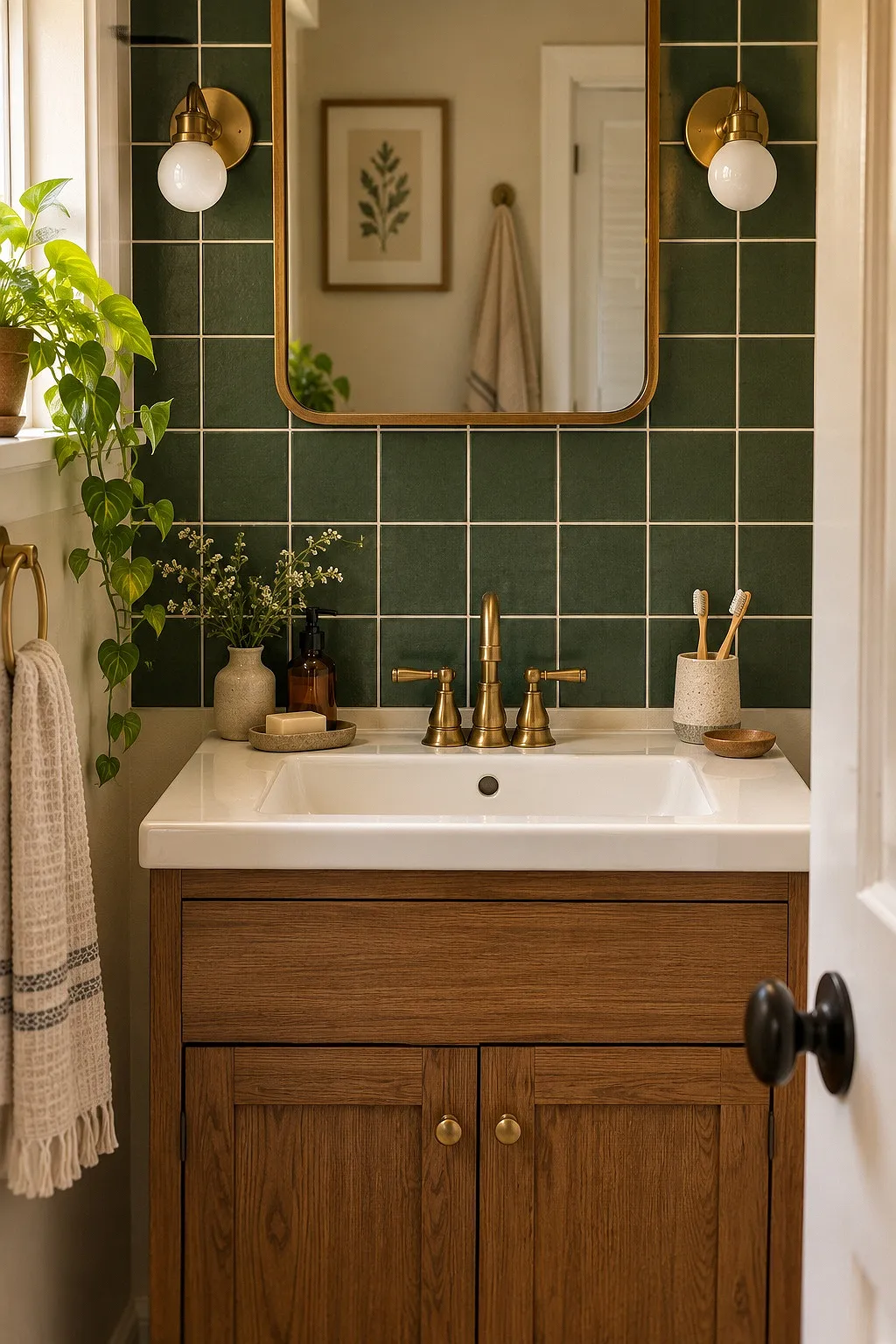
Vinyl tile stickers can cover beige tile or dated pink squares convincingly, but they belong in the permission column, not the reversible one. Adhesive strong enough to survive shower steam is adhesive strong enough to pull glaze off an older tile, and there is no way to test that without finding out the expensive way. Ask, and ask about your specific tile rather than the idea in general. If the answer is no, everything else in this section still works and none of it needs approval. If it is yes, clean with rubbing alcohol first, keep the stickers well out of the direct spray zone, and expect five to eight years rather than forever. Budget roughly one to two dollars per tile.
11. Suction Hardware That Actually Holds on Tile and Glass
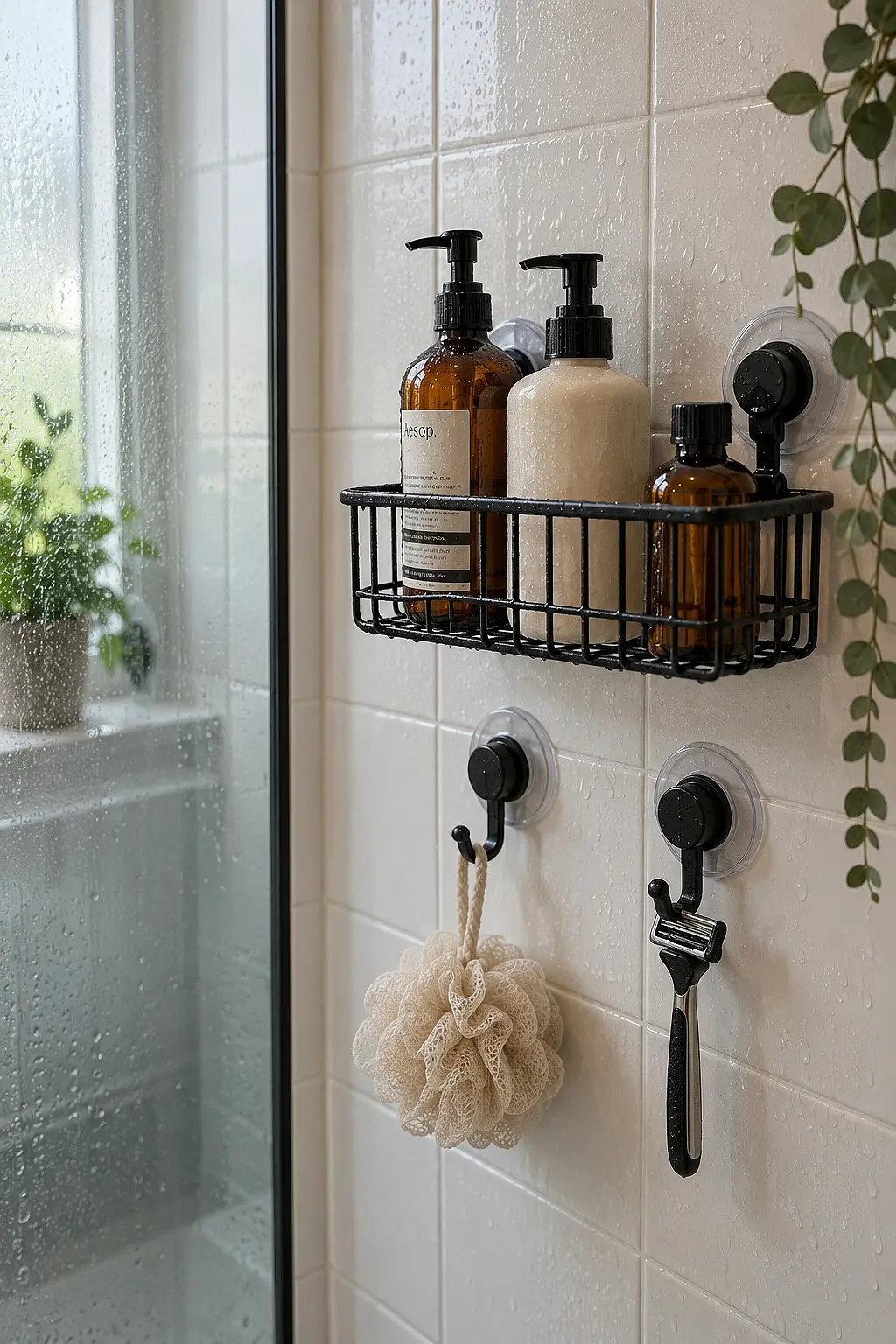
Suction cups fail on textured tile and hold beautifully on glass and glossy tile, and knowing which surface you have decides your entire storage plan. Locking-lever suction hardware rated for five to fifteen pounds will carry a shampoo caddy, a small towel bar, or a razor hook on a smooth surface. Any grout line running under the cup is a leak path for air, so the cup has to sit entirely inside one tile face. Wipe the spot with alcohol, wet the rim very slightly, press, then close the lever. Re-seat everything once a month, because heat cycles let air creep in. On the shower glass from idea 9, these are the only hardware that leaves no trace at all.
12. A High-Hung Curtain That Hides the Tile Surround
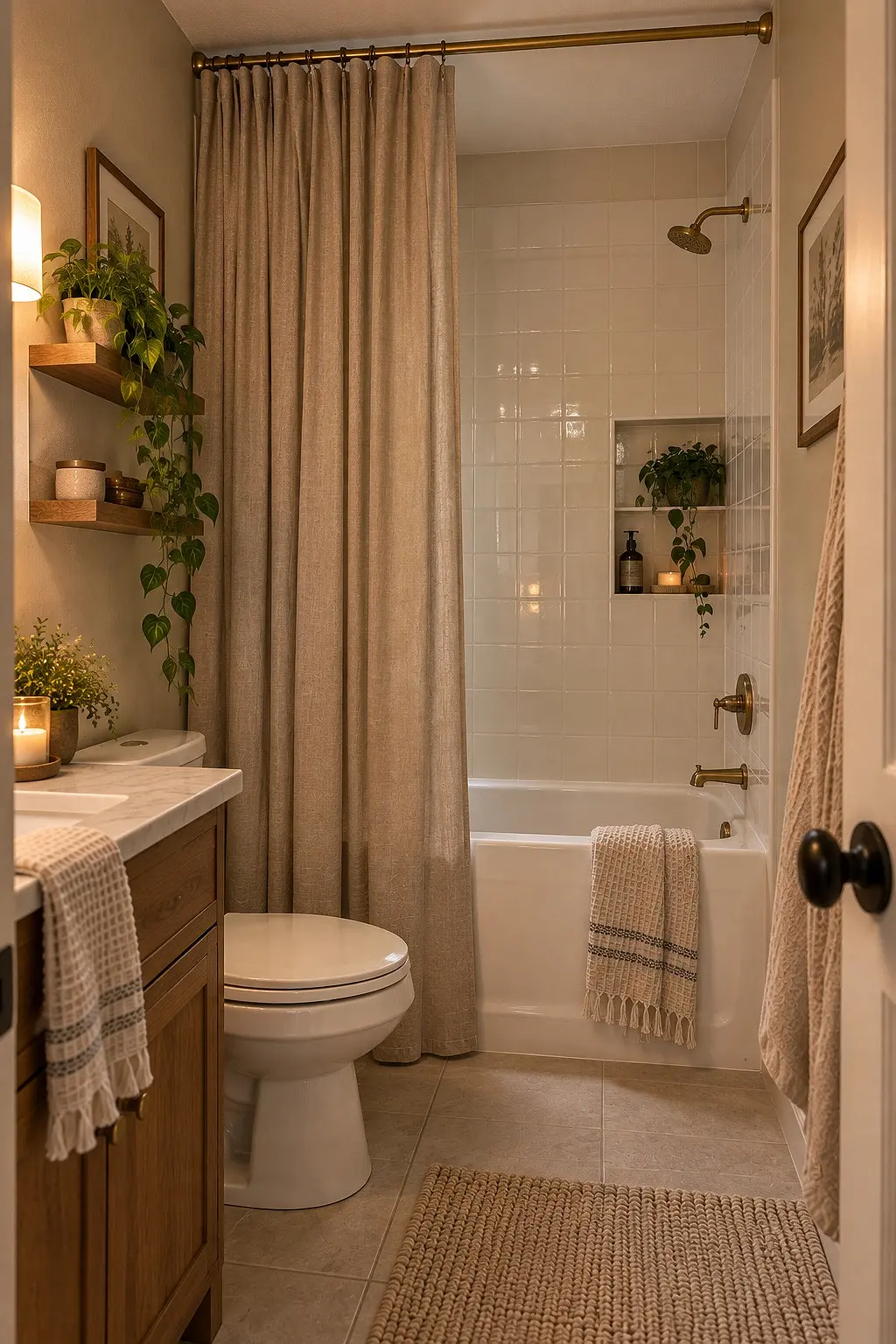
Hanging the shower curtain from a tension rod set as high as the ceiling allows covers more of a dated tile surround and pulls the eye upward in a low bathroom. Standard rods sit at seventy-two inches out of habit, not necessity. Move yours to around eighty-four inches and buy a curtain to match, or clip a standard curtain lower on the rings if you are not ready to replace it. Check the rod against your wall type first, since it needs solid backing at both ends and will creep down a curved fiberglass surround. If you have a tub shower combo, this one change does more visible work than anything else in the section, for about fifteen dollars.
13. Swapping Every Bulb to 2700K Warm White
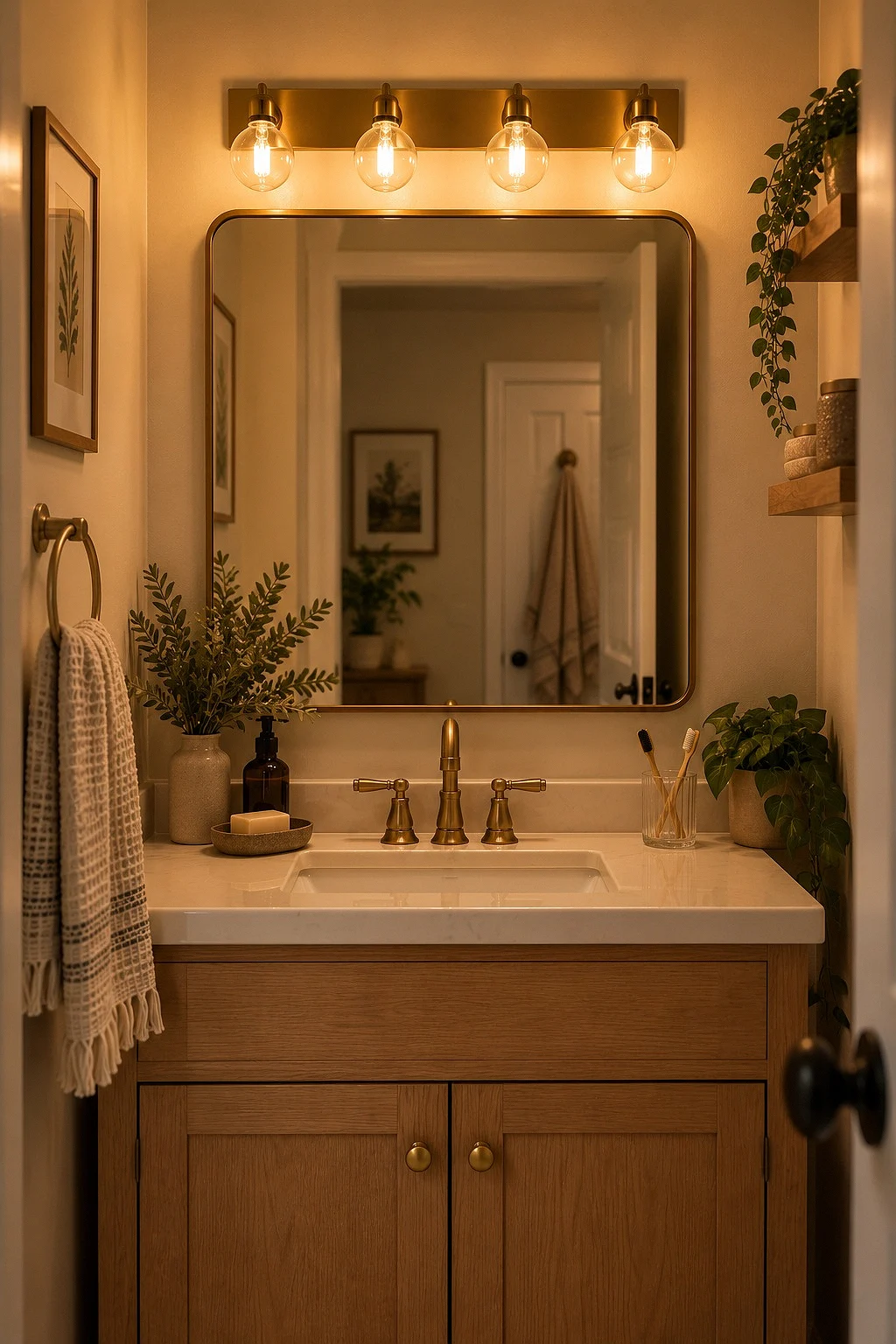
Bulb color temperature changes a bathroom more than paint does, and warm-white 2700K bulbs are the single cheapest cozy upgrade available to a renter. Builder fixtures ship with 4000K or 5000K bulbs that make skin look grey and make tile read faintly green. Buy 2700K, aim for 450 to 800 lumens per bulb in a small room, and check the CRI figure on the box, ninety or above if you do makeup in there. Replace all of them at once, because one cool bulb in a warm row looks worse than leaving them all alone. Keep the originals in a labeled bag under the sink. Screwing them back in at move-out takes four minutes.
14. A Plug-In Sconce Beside the Mirror, Cord and All
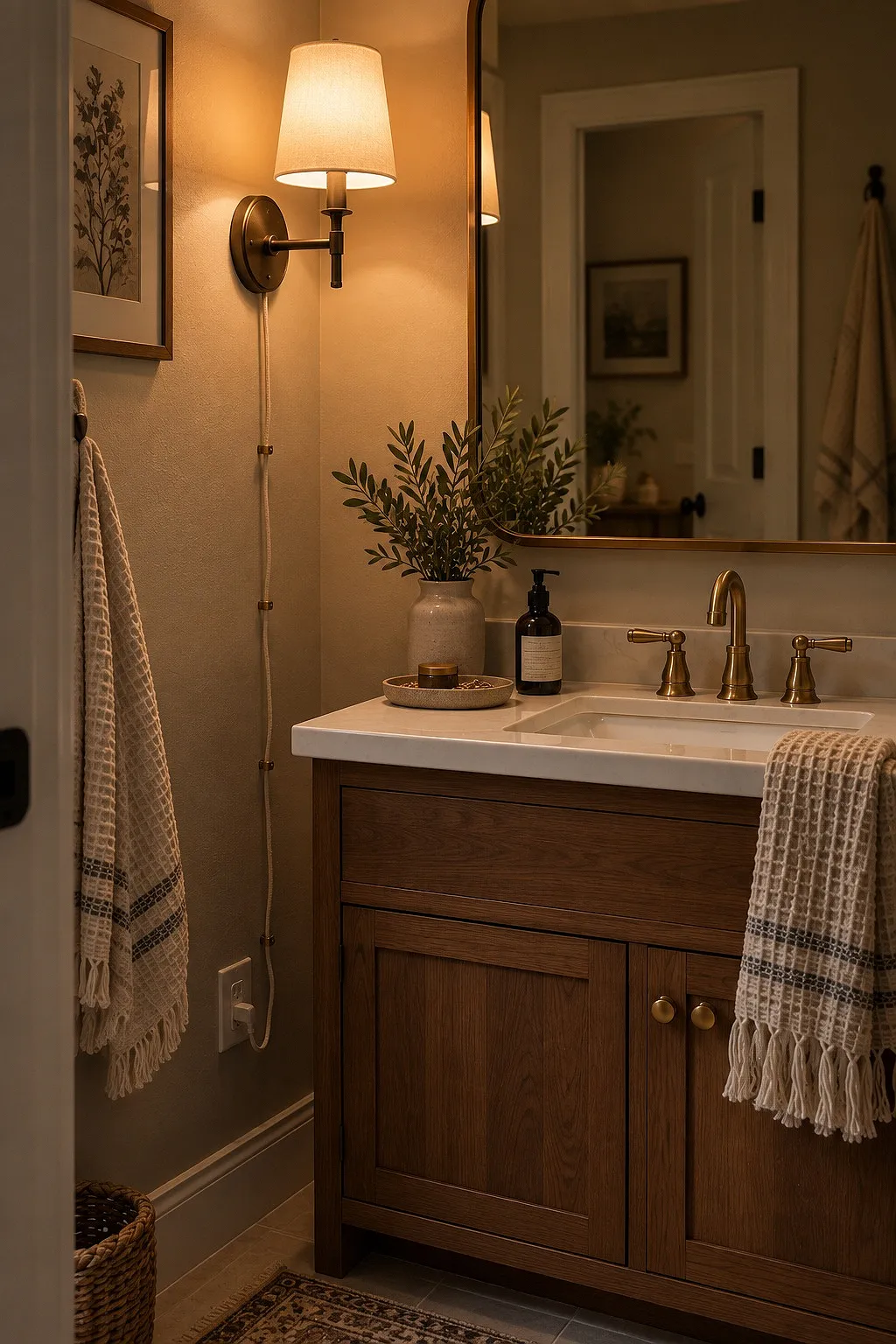
Light at face height beside the mirror beats an overhead bar for both flattery and mood, and plug-in sconces give you that without touching any wiring. Look for a version with an adhesive plate or hook mount and a fabric cord, then run the cord down the wall in small adhesive cord clips to the outlet. Bathroom outlets are usually GFCI and usually sit right beside the mirror, which works in your favour here. Keep any plug-in fixture at least three feet from the shower spray and never run a cord across the floor. Nothing here needs an electrician or a single hole. The clips release with the same slow downward pull as picture-hanging strips.
15. Battery Puck Lights Under the Vanity for a Low Glow
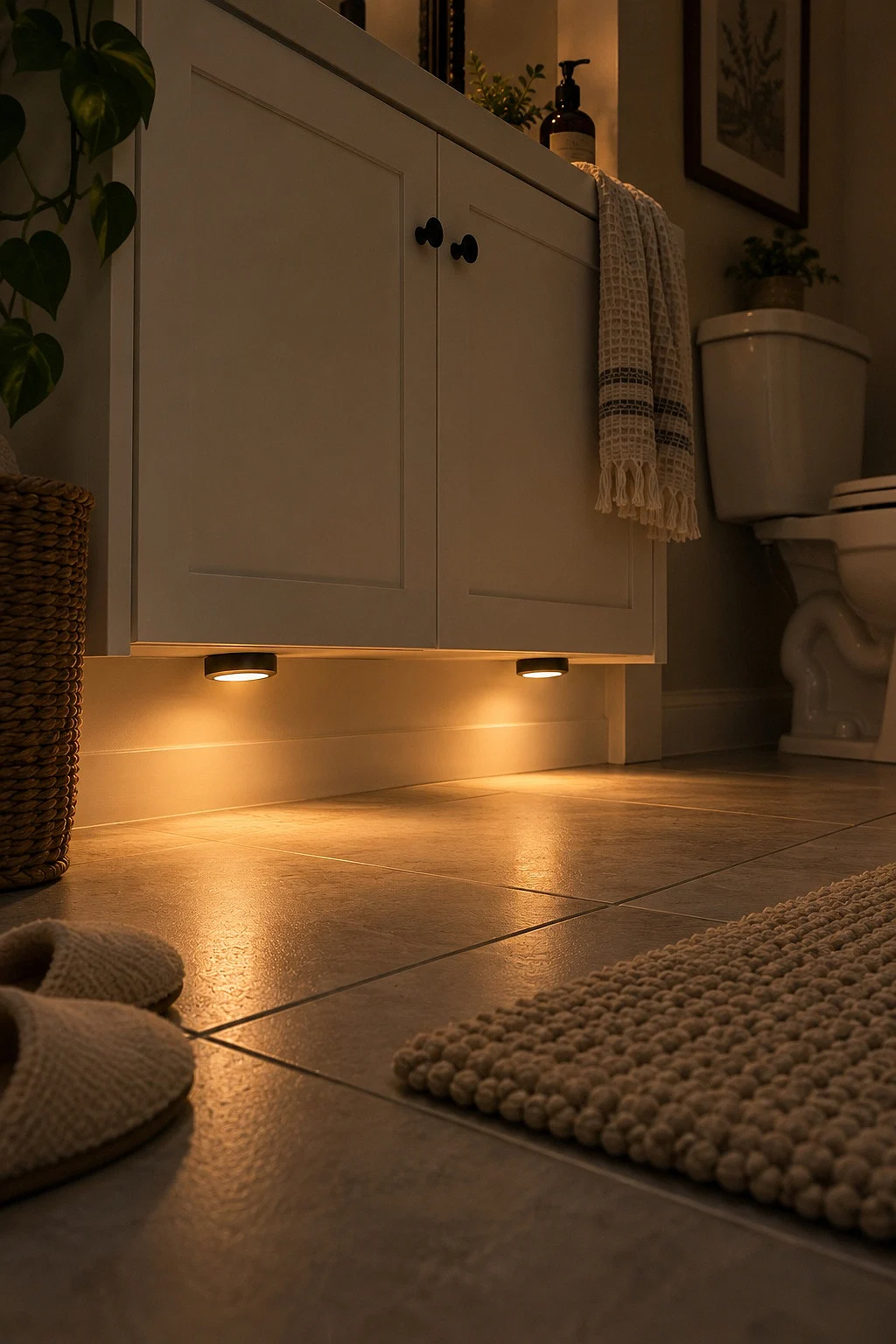
Two battery puck lights stuck under the vanity lip turn the harsh overhead off at night and still let you see the floor. Motion-sensing versions run roughly eight months on three AAA batteries at normal bathroom use. Stick them on the underside where the light bounces off the floor, not on the front edge where it shines straight into your eyes. Warm-white versions only, because cool white under a vanity makes the room look like an open fridge. The magnetic-backing models are worth the extra few dollars, since you stick the metal plate once and pop the light off for battery changes forever after. Removal is a hairdryer and a plastic card.
16. A Cordless Table Lamp on the Vanity
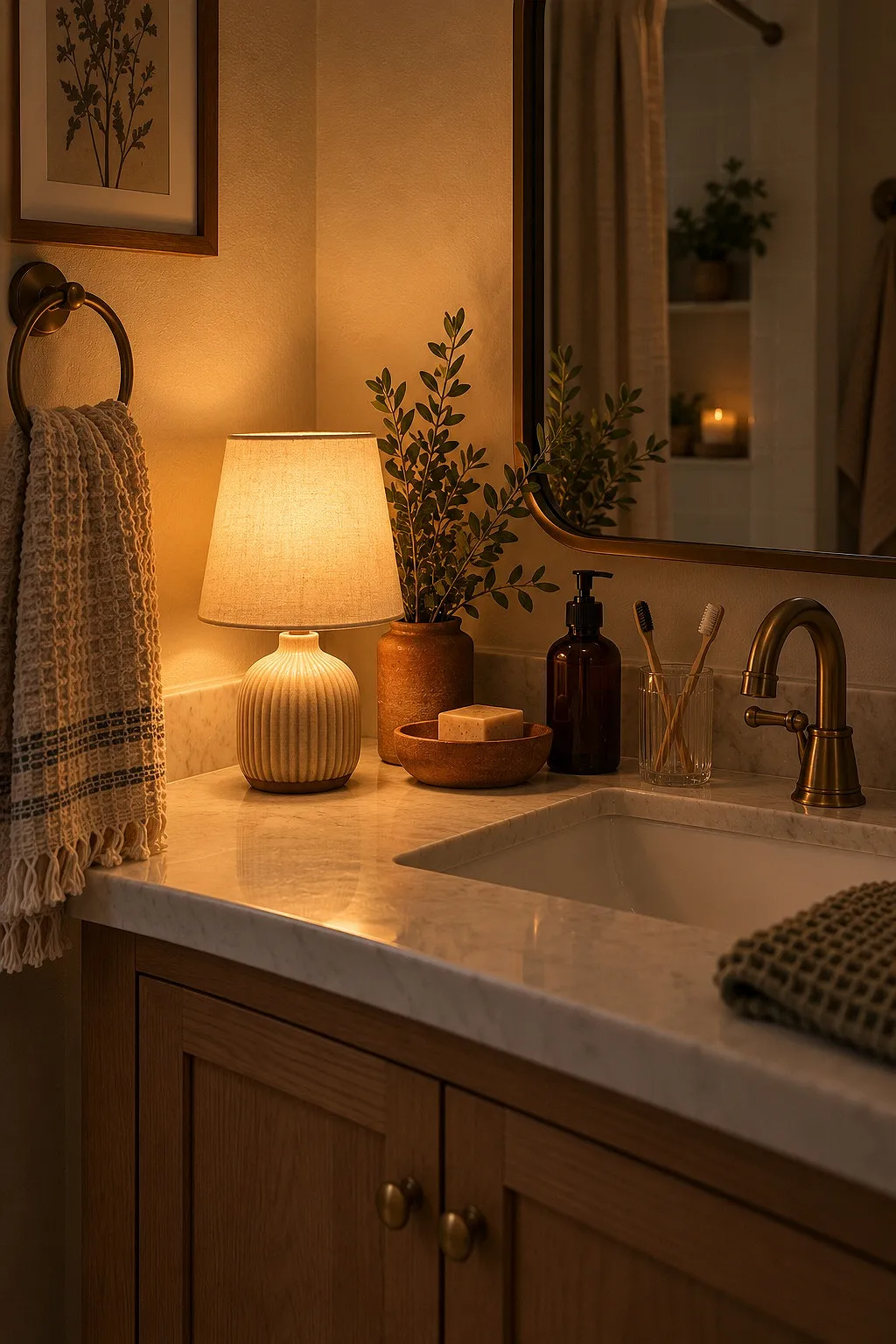
Rechargeable cordless lamps have made a table lamp in the bathroom genuinely practical, and nothing else changes the evening mood so completely for so little effort. Three to six inches tall is the right scale for a rental vanity, which usually leaves about eight free inches beside the sink. Look for a warm dimmable setting and a USB-C base, and expect twenty to forty hours per charge on the lowest setting. Pair it with the 2700K bulbs from idea 13 so the color temperatures match, otherwise the room reads as two different times of day at once. Splash zone matters, so park it on the far side of the faucet. It packs in a shoe box.
17. A Freestanding Over-the-Toilet Shelf That Leans, Not Drills
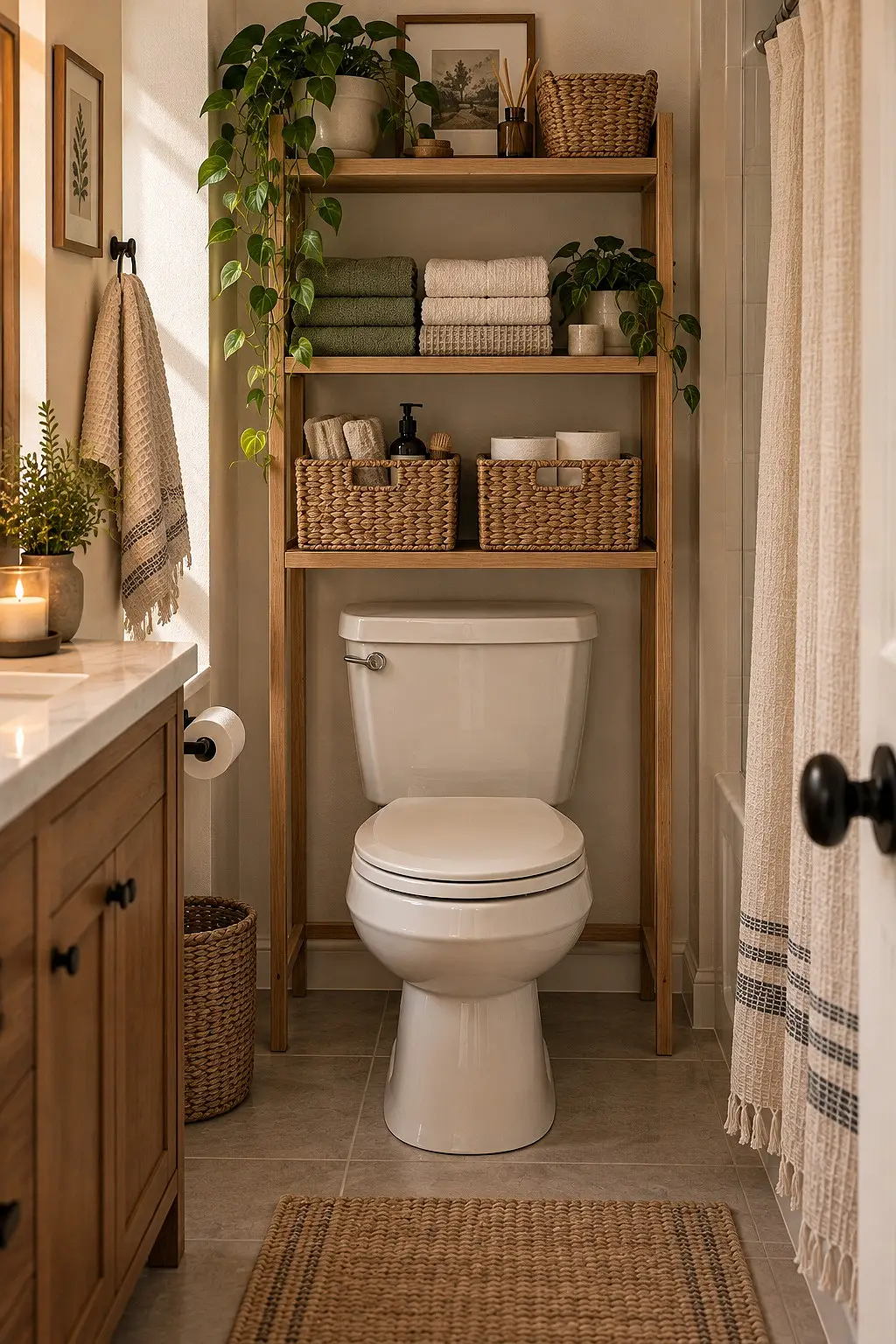
Over-toilet freestanding shelving is the highest-value renter purchase in a small bathroom, because it turns dead vertical air into three shelves of storage without a single anchor in the wall. Measure the tank height and the distance from the wall to the front of the bowl before buying, since most units want about ten inches of clearance and plenty of tanks are taller than the listing assumes. Four-legged floor-standing units sit far stabler than the two-legged ladder style on uneven tile. If an anti-tip strap is included, use it, because one small screw hole is worth the argument you avoid. Keep daily things low and backups high. It disassembles flat into a car boot.
18. Woven Baskets Instead of Open Shelf Clutter
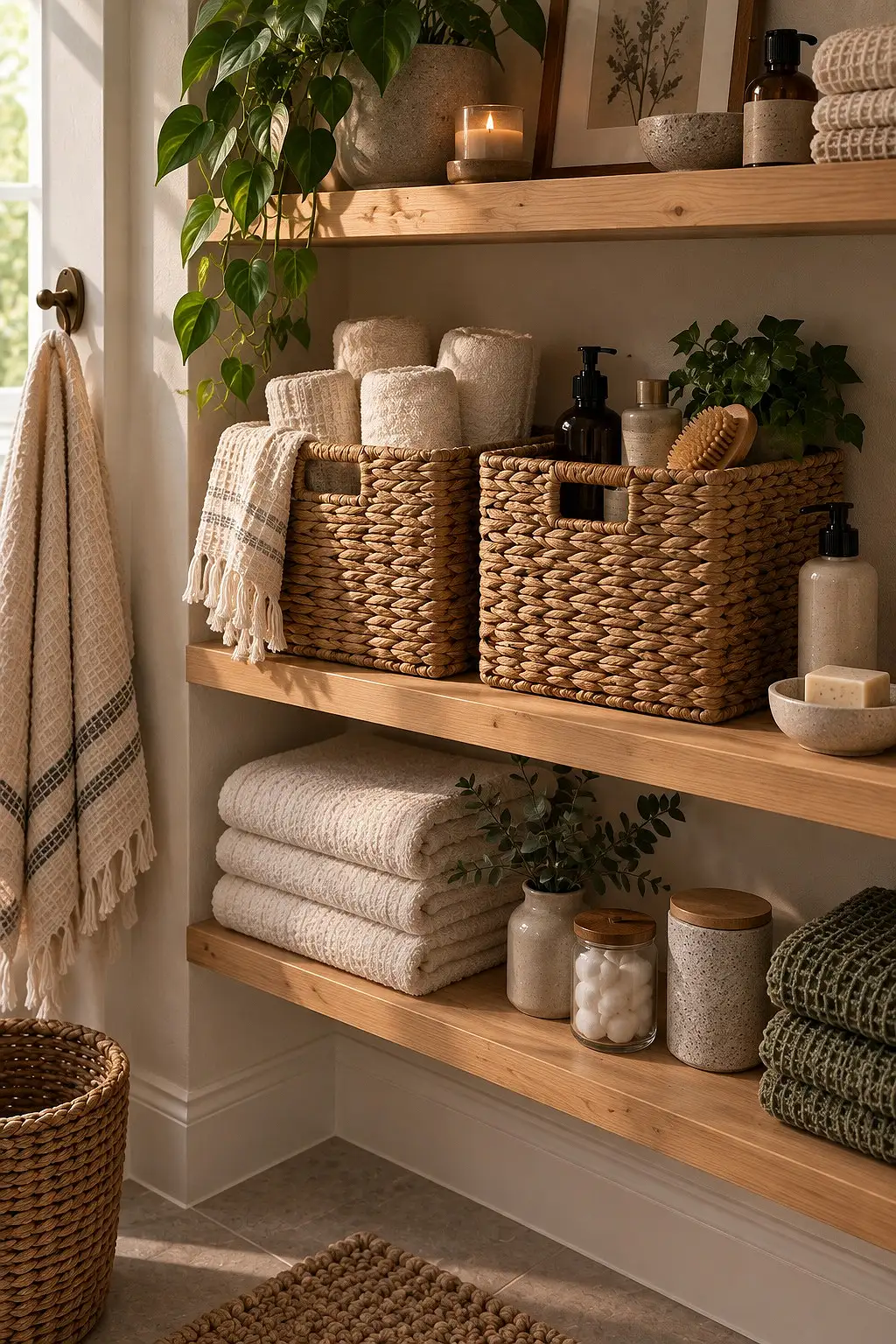
Woven storage baskets do most of the actual cozying in a bathroom, because they hide the printed plastic packaging that makes every rental bath look messy no matter how clean it is. Buy fewer and larger rather than many small ones, two per shelf is usually the right count. Seagrass and water hyacinth handle humidity well, while felt bins and cardboard-backed fabric ones do not, and they will start to smell within a year. Measure shelf depth first, since most rental shelving runs under eleven inches. Line the basket you keep towels in so nothing snags on the weave. Keep any labels facing backwards so the shelf reads calm from the doorway.
19. Over-the-Door Hooks for Towels and a Robe
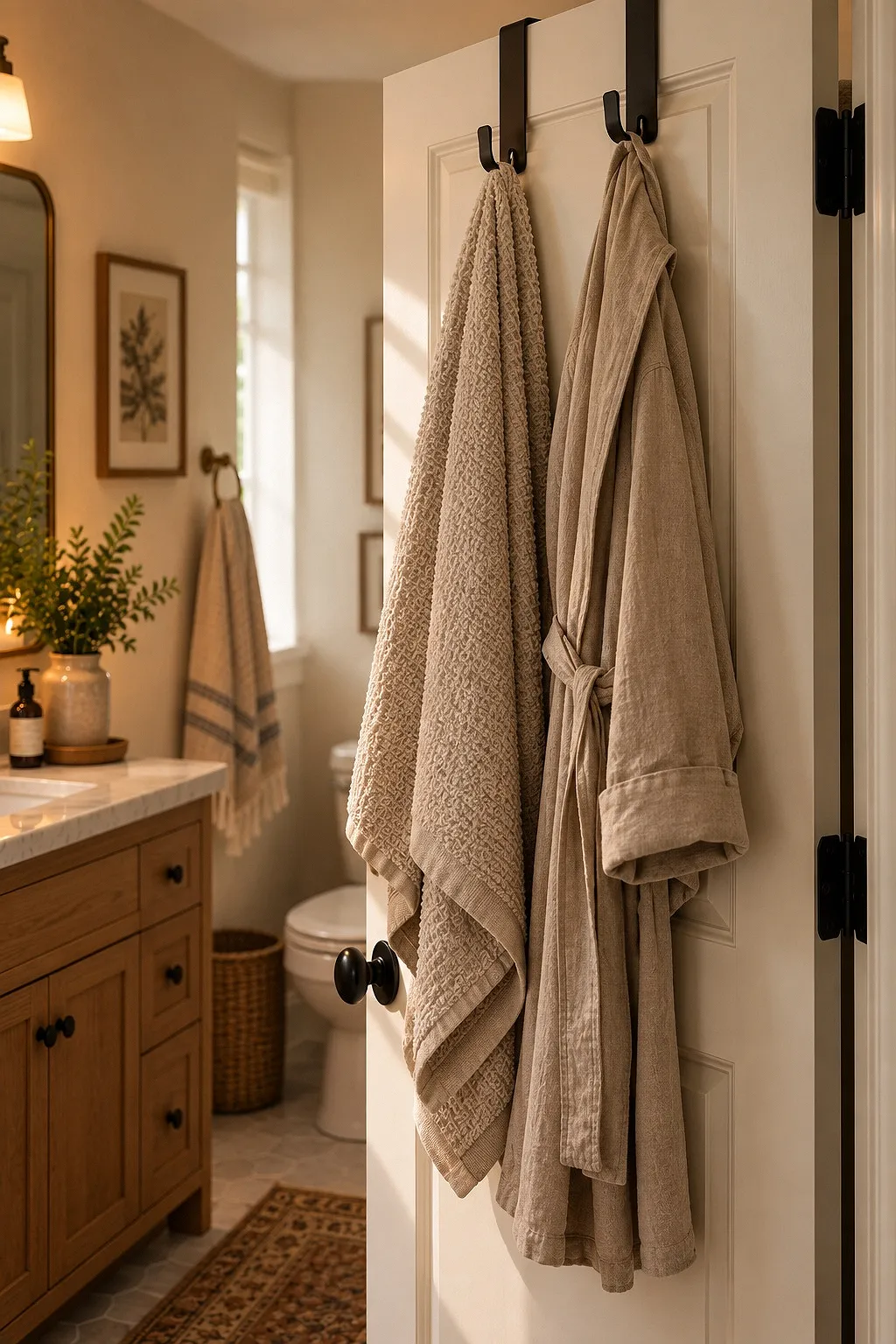
Hooks that hang over the door hold more than a towel bar and need no wall at all, which is why they end up in every place I move into. Check the door thickness first, since standard interior doors run about one and three eighths inches and most hooks fit, but a thicker door will stop the door closing properly. Padded or felt-lined hook backs prevent the paint scuffing that a landlord will absolutely notice at inspection. Two hooks handle a robe and a towel comfortably, five is where the door starts looking like a closet. Hang the wettest item on the outward-facing hook so the door itself stays dry.
20. A Narrow Rolling Cart in the Gap Beside the Vanity
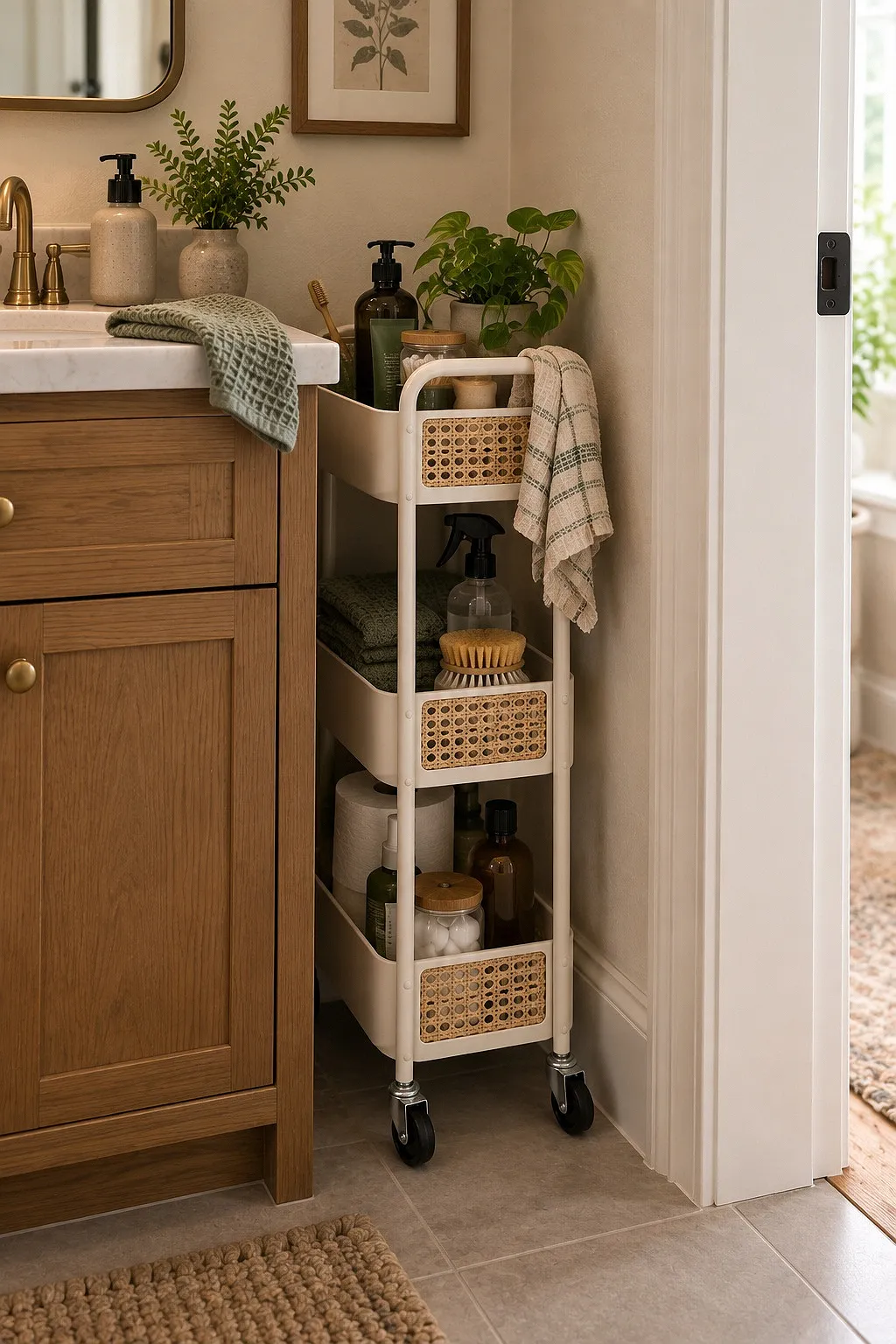
The eight to twelve inch gap between a vanity and the wall fits a narrow rolling cart, and that gap is usually the last unused space in a rental bathroom. Measure the gap at its tightest point, which is often the baseboard rather than the wall itself. Three-tier carts under twelve inches wide are easy to find and cost around thirty to fifty dollars. Wheels matter more than they sound, because you will roll it out to clean behind it, and that hidden strip is exactly where mildew grows unseen. Store the ugly things here and the pretty things on the shelf unit from idea 17. On moving day it rolls straight out the door.
21. A Fabric Waffle-Weave Shower Curtain in Place of Plastic
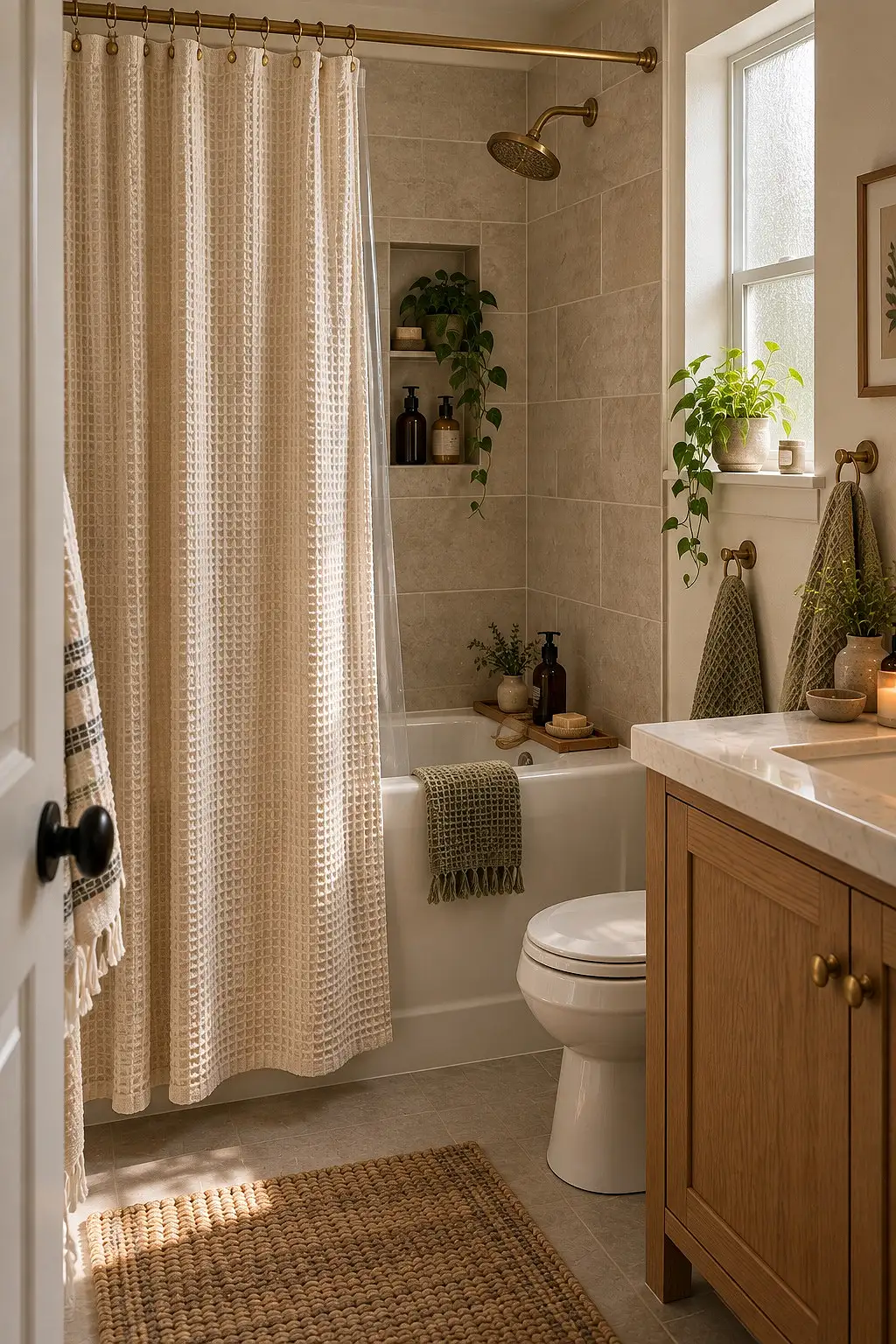
Swapping a plastic curtain for a fabric waffle-weave or linen-look shower curtain changes the texture of the entire room, and it is the first thing I buy in any new bathroom. Fabric curtains need a separate liner, which is the trade-off people forget when they see the photos. Buy the liner in clear or white, hang it inside the tub and the fabric curtain outside. Standard length is seventy-two inches, so if you followed the high rod in idea 12, order eighty-four instead. Wash the fabric panel every few months on cold with the liner and skip the dryer. Cotton waffle runs thirty to sixty dollars and reads far more expensive than that.
22. Two Towel Colors, Heavier Weight, Hung Not Folded
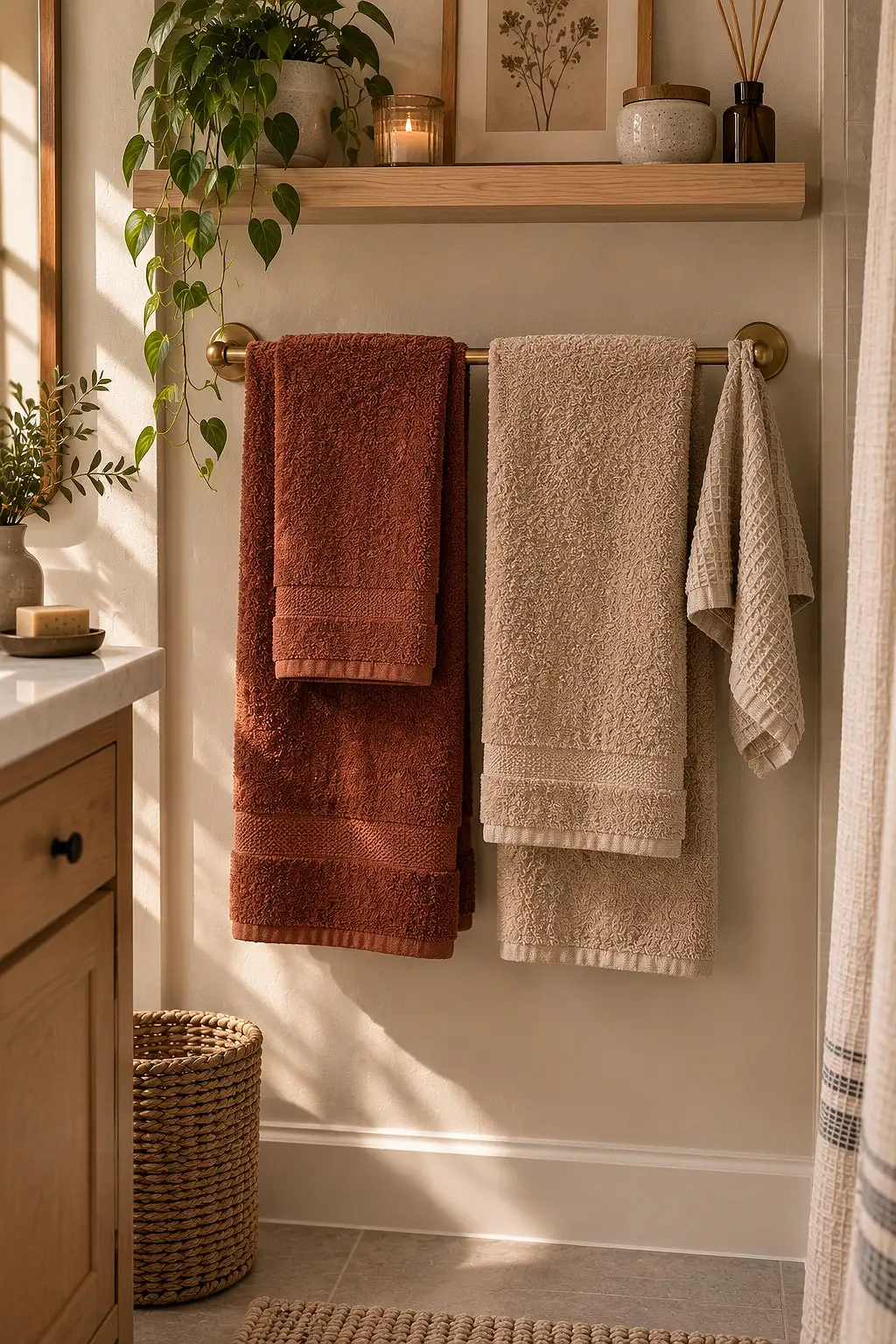
Towels are the largest block of color in a small bathroom, so limiting yourself to two shades does more for coherence than any decor object you could buy. Weight is the other half of it: 600 GSM and above feels like a hotel, under 450 feels like exactly what a rental gives you. Pick one neutral for the bath sheets and one deeper tone for hand towels, then match the undertone to the shower curtain in idea 21 rather than to the wall color, which you did not choose anyway. Hang them folded in thirds over the bar instead of draped. Buy four good towels rather than a twelve-piece set.
23. A Linen Cafe Curtain on a Tension Rod Inside the Window Frame
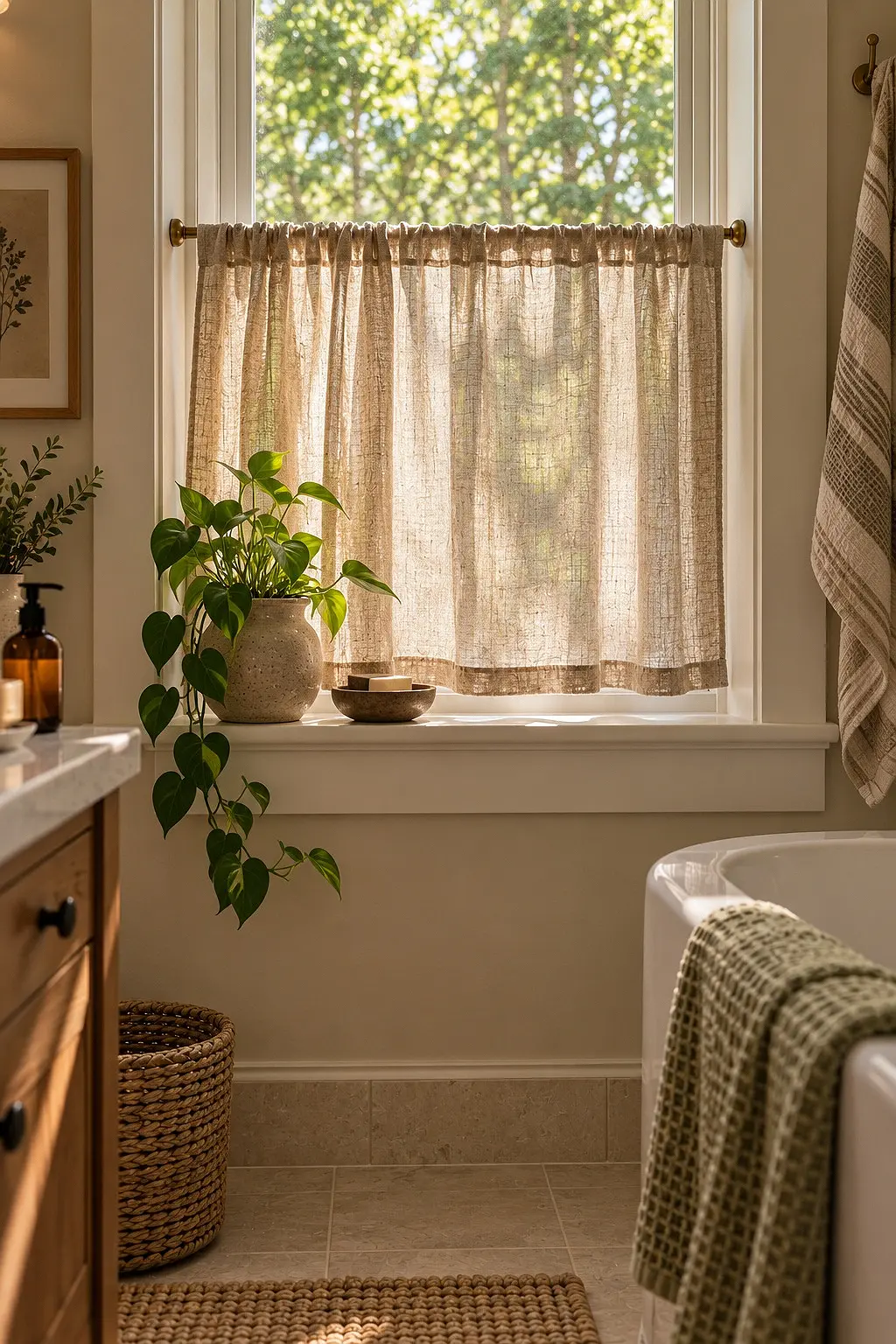
A small window curtain is the detail that separates a decorated bathroom from a bare one, and a tension rod inside the frame means no brackets and no holes anywhere. Measure the inside width of the recess and buy a rod with at least an inch of adjustment beyond it at each end. Half-height cafe panels keep the privacy where you need it and let the light in above, which matters in a room with one small window. Linen and cotton blends cope with humidity, while anything lined or heavy holds damp and mildews at the hem. Hang it high inside the recess so the rod barely shows. Twenty dollars, ten minutes, lifts out with two hands.
24. A Wooden Stool With a Folded Quilt or Hammam Towel
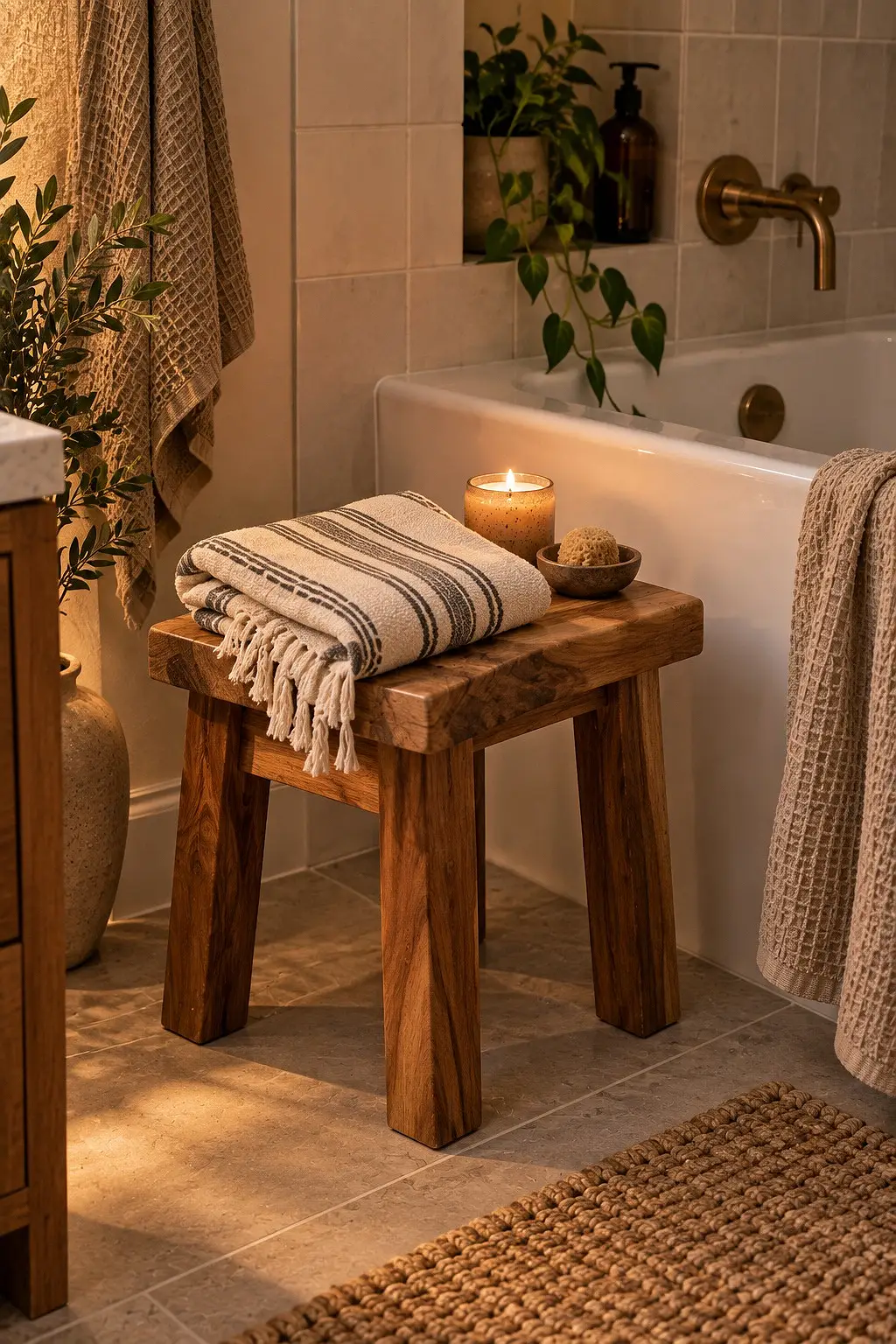
One piece of furniture in a bathroom is what makes it read as a room rather than a fixture cupboard, and a small wooden stool with something soft folded on it is the least demanding way to get there. Look for teak, acacia, or any sealed hardwood at around twelve to sixteen inches square, which fits beside a tub in most rental bathrooms without fouling the door swing. Use it for a folded hammam towel, a candle, and nothing else. Overloading it turns the whole idea into a side table of clutter. Adhesive film on the vanity doors is the other half of this job if your cabinet is dated oak. The stool moves house in the back seat.
Final Thoughts
Sorted by surface, the reversible pile is bigger than most renters think: curtains, bulbs, baskets, rugs, suction hardware, leaning mirrors, film, and one good stool. The permission pile is short, and it is mostly floor vinyl and tile stickers. Start with the bulbs and a fabric curtain in a single afternoon, then add storage once you know where the room is actually tight. Ask about the two adhesive ideas only if you genuinely want them. Everything else answers yes to the question that matters. Does it come with me? Save this to Pinterest so it is waiting on your next move-in day.
Frequently Asked Questions
Can I use peel-and-stick wallpaper in a rental bathroom?
Yes on eggshell or satin paint, and no on flat builder paint, which lifts when the paper comes off. Bathroom humidity is the other variable, so run a test strip in a low-visibility corner for a week before committing to a full wall. Papering one wall rather than four cuts both your removal risk and your cost.
How do I make a rental bathroom feel warm without painting?
Change the bulbs to 2700K warm white first, then add fabric: a woven shower curtain, heavier towels, and a floor covering. Those three changes account for most of the warmth in a small bathroom and none of them touch a wall. Wood and woven baskets do the rest by breaking up the plastic and the tile.
Do suction cup shower caddies actually stay up?
On glass and glossy tile yes, provided the cup sits entirely inside one tile face with no grout line running under it. On matte, textured, or stone tile, no. Clean the spot with rubbing alcohol, press and close the locking lever, and re-seat the cup about once a month as temperature swings let air in.
Will my landlord charge me for adhesive hooks and strips?
Usually not, if you remove them correctly and the paint underneath is sound. Pull the tab slowly straight down along the wall, never outward, and give it fifteen seconds. Cheap flat builder paint is the exception, because it can come away with the strip. Photograph the wall before you stick anything and again after removal.