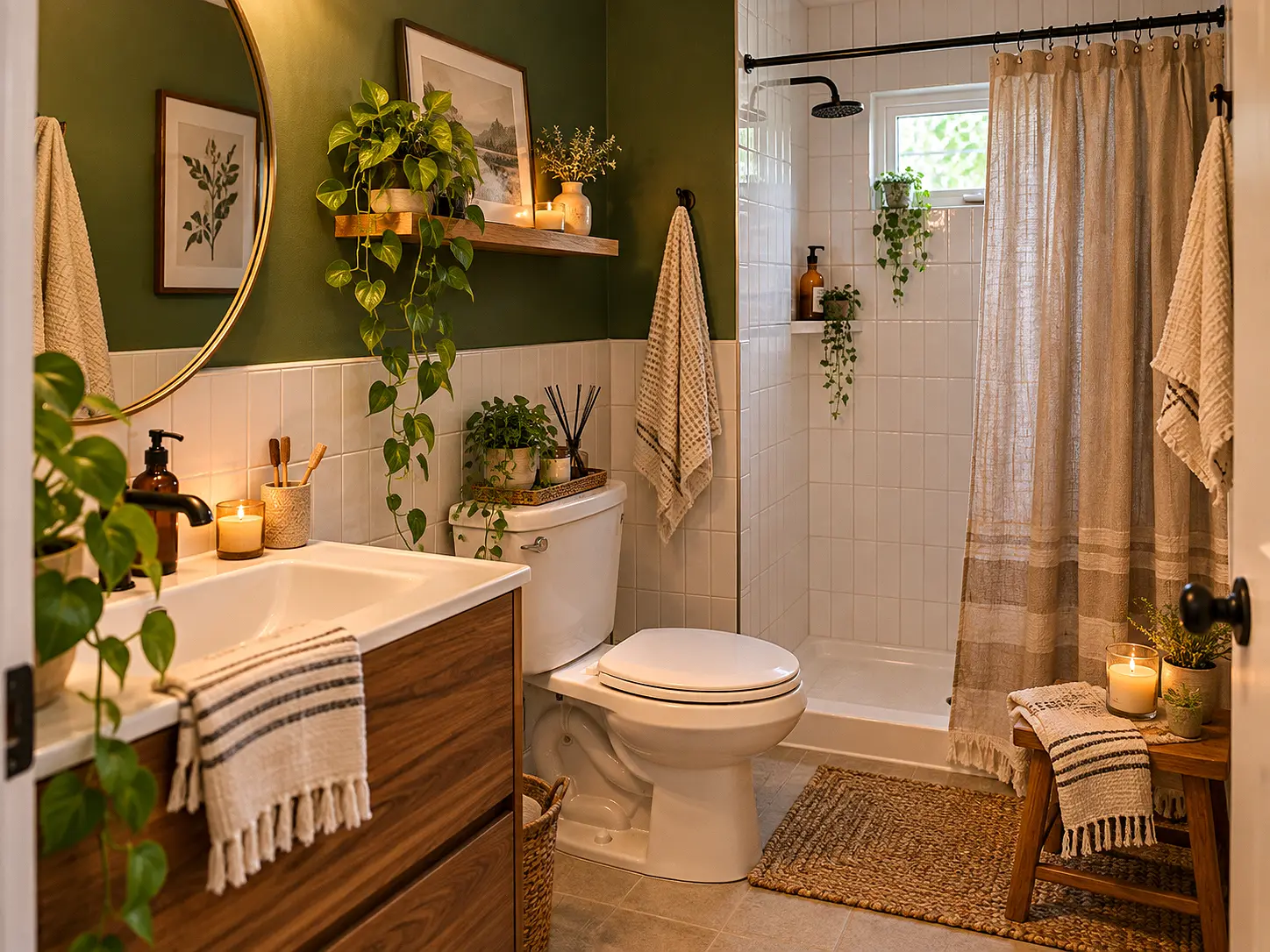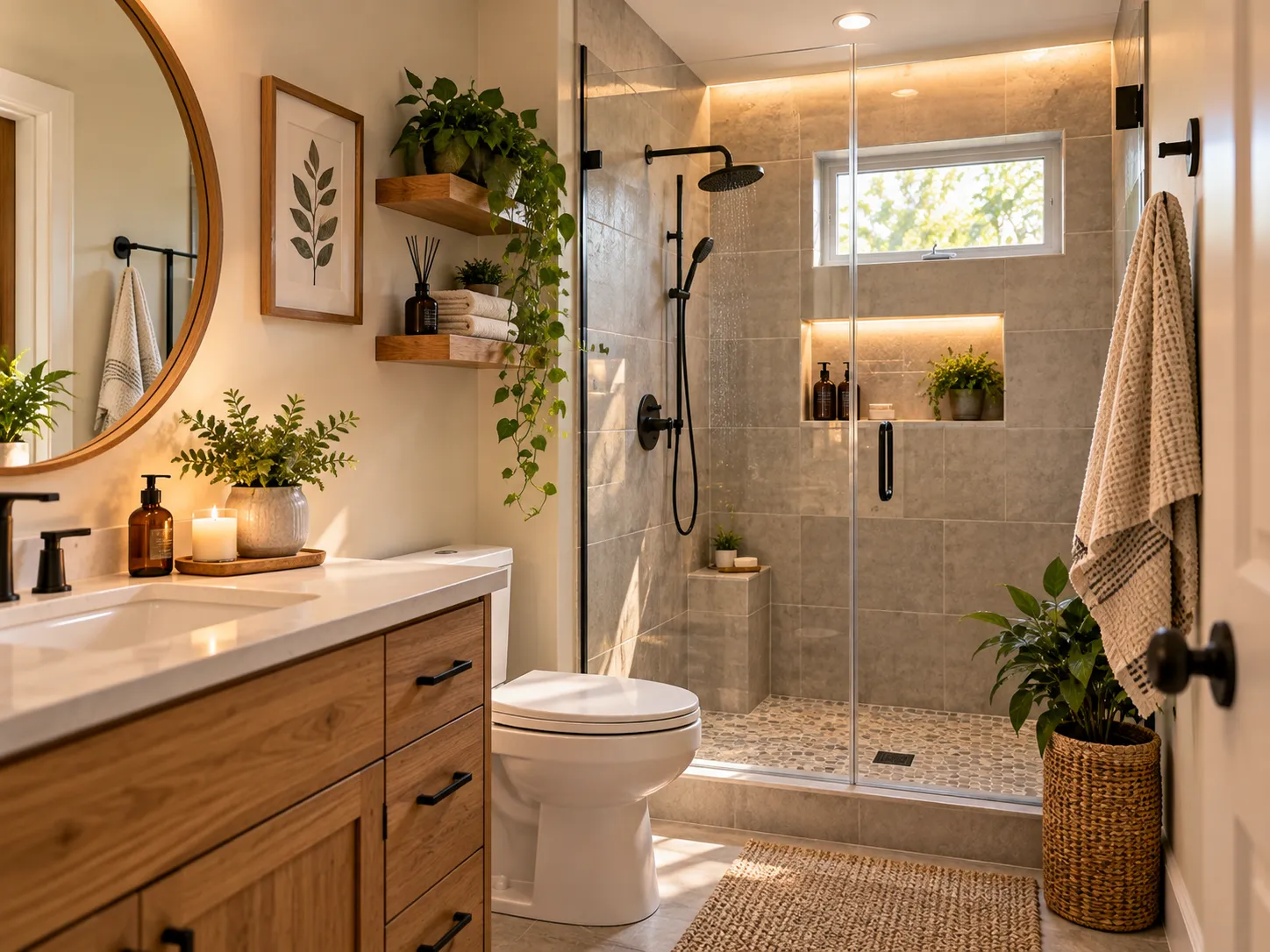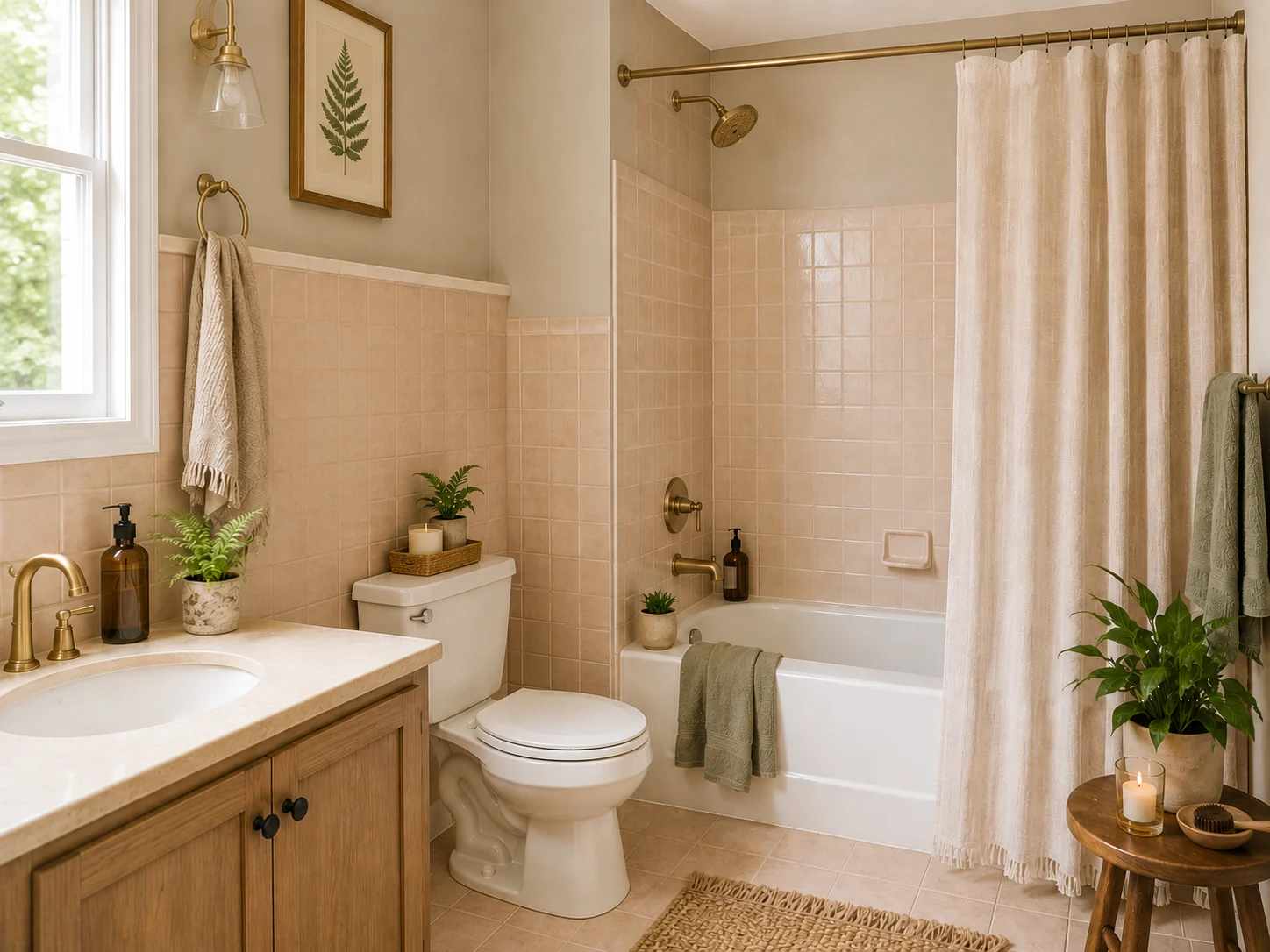
Renter-friendly bathroom decor ideas only earn their keep if they come off clean on move-out day, so I've ranked these 17 by damage risk instead of by looks. I've rented five places and lost part of one deposit to a 'removable' hook that pulled paint off a steamy wall, which is exactly the failure most lists ignore. The fully deposit-safe ideas (freestanding, tension-based, over-the-door) come first. The removable-but-test-first ones come last, each with the humidity caveat that decides whether it survives your shower or slides off by week two. No drills, no paint, no landlord confrontations. Pin this so it's on hand when you're standing in an empty rental wondering where to start.
1. Freestanding Over-the-Toilet Shelf That Never Touches the Wall
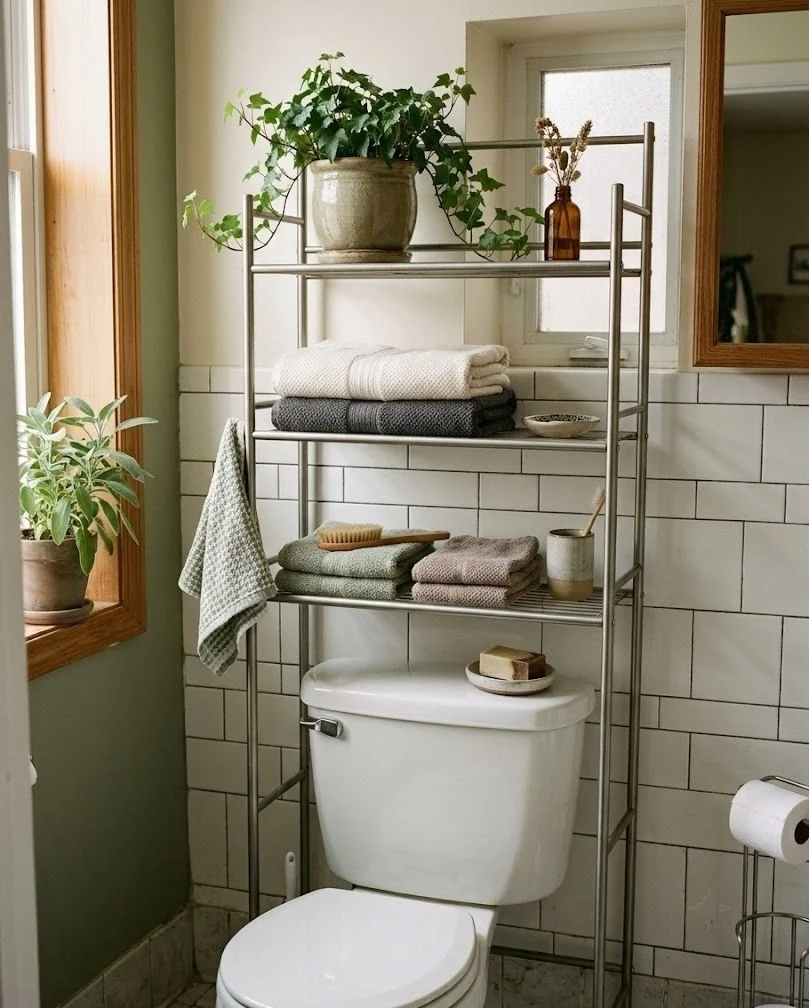
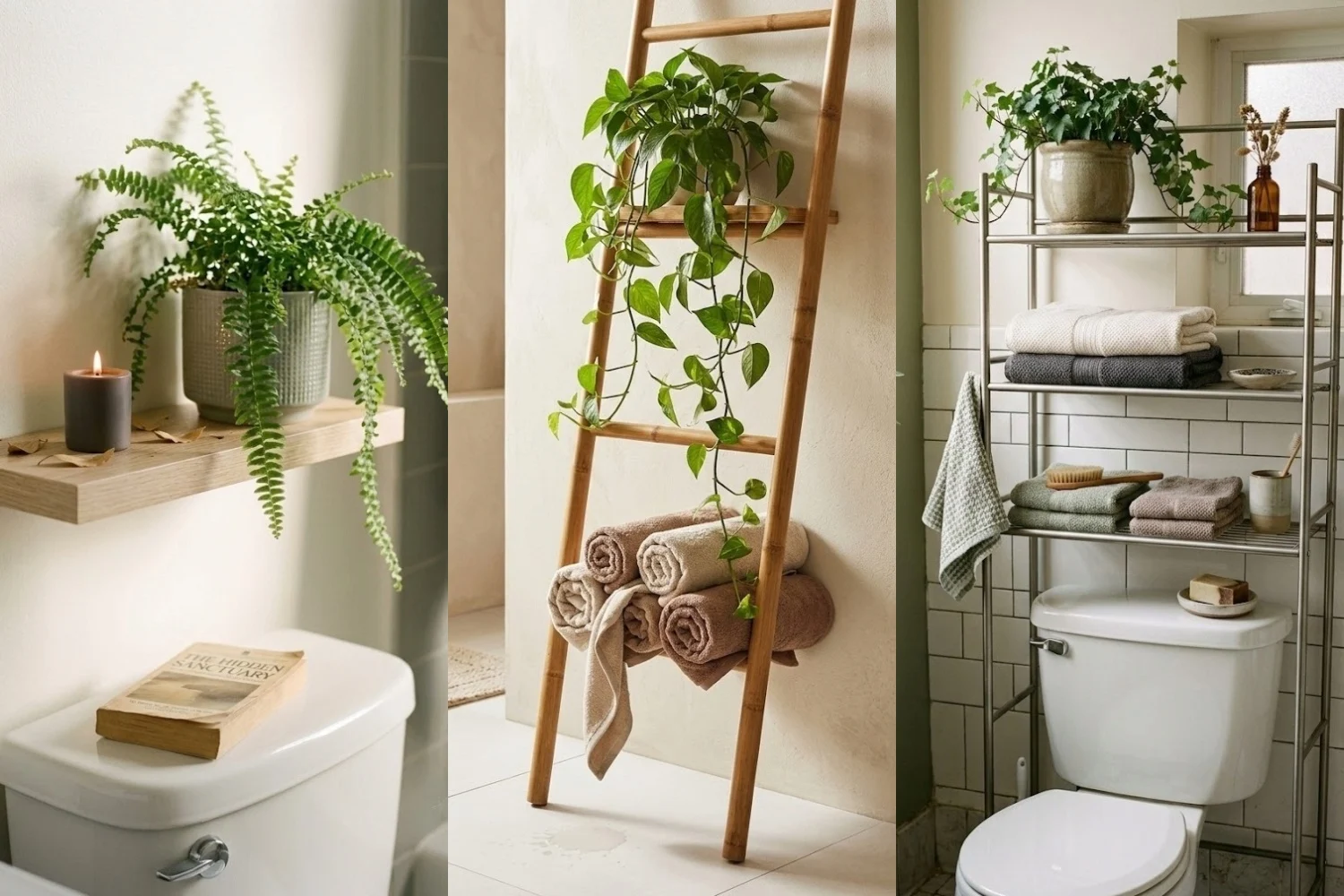
A freestanding over-the-toilet organizer gives you three shelves of storage without a single screw, because it straddles the tank on its own legs and leans nothing on the wall. This is the safest storage upgrade in any rental: zero wall contact means zero residue, zero holes, zero argument at move-out. Look for a freestanding over-the-toilet organizer with a footprint narrow enough to clear your baseboard and a top shelf you can actually reach. Metal frames handle bathroom humidity better than particleboard, which swells and delaminates within a year of steam. Keep the heaviest items on the bottom shelf so the whole unit stays stable when you bump it. Weight low, towels up top, and it won't tip.
2. Leaning Bamboo Ladder Shelf for Towels and Trailing Plants
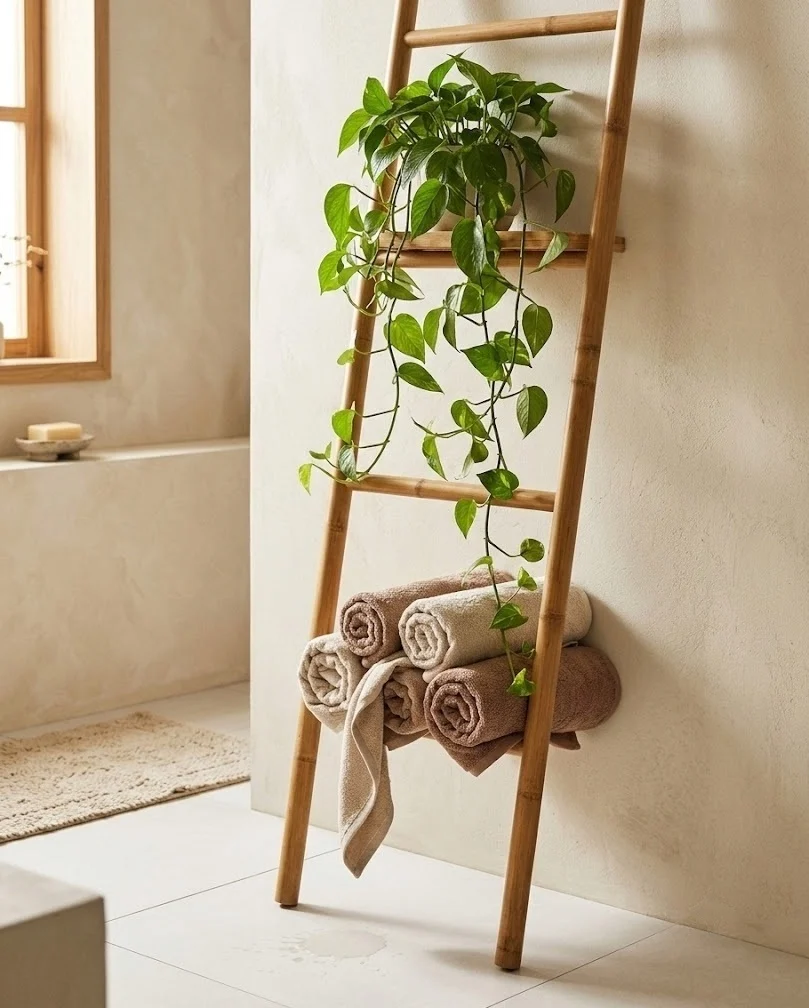
A leaning bamboo ladder shelf turns empty wall space into towel-and-plant storage while resting on the floor, held up by gravity and the wall's friction, not fasteners. It reads as intentional decor rather than a storage stopgap, and it lifts out in one motion when you leave. Angle the base far enough from the wall that it can't slide, roughly a 15-degree lean on a non-slip floor. Bamboo shrugs off humidity better than raw pine, which spots and darkens near a shower. Drape hand towels over the lower rungs and let a pothos trail from the top. Keep total weight modest; these leaners are balanced, not bolted, so a top-heavy load tips them forward the first time you brush past.
3. Corner Tension-Rod Caddy That Wedges In Without Suction Cups
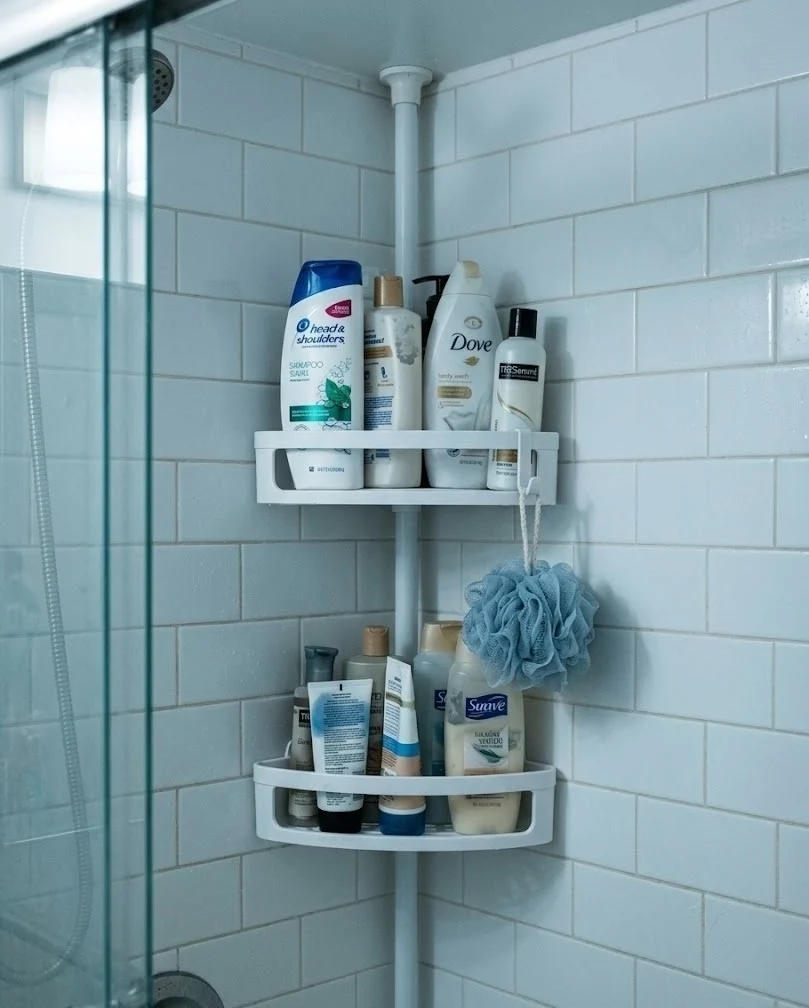
Wedged floor-to-ceiling by spring pressure alone, a corner tension shelf gives you shampoo storage that suction cups can't match for weight. Tension rods are the renter's workhorse because they leave nothing behind; the only mark is a faint pressure ring that wipes off. Buy a rust-resistant aluminum or coated-steel tension unit rated for the wall gap you're spanning, and check that width before ordering. The classic error is trusting a tension rod on glossy tile without cranking it tight, so it creeps down under a loaded caddy and drops your bottles at 6 a.m. Set it, hang from it for a second to test, then re-tighten. A little rubber shelf liner stops everything from sliding when the walls fog up.
4. Layered Washable Rugs to Cover Cracked or Dated Floor Tile
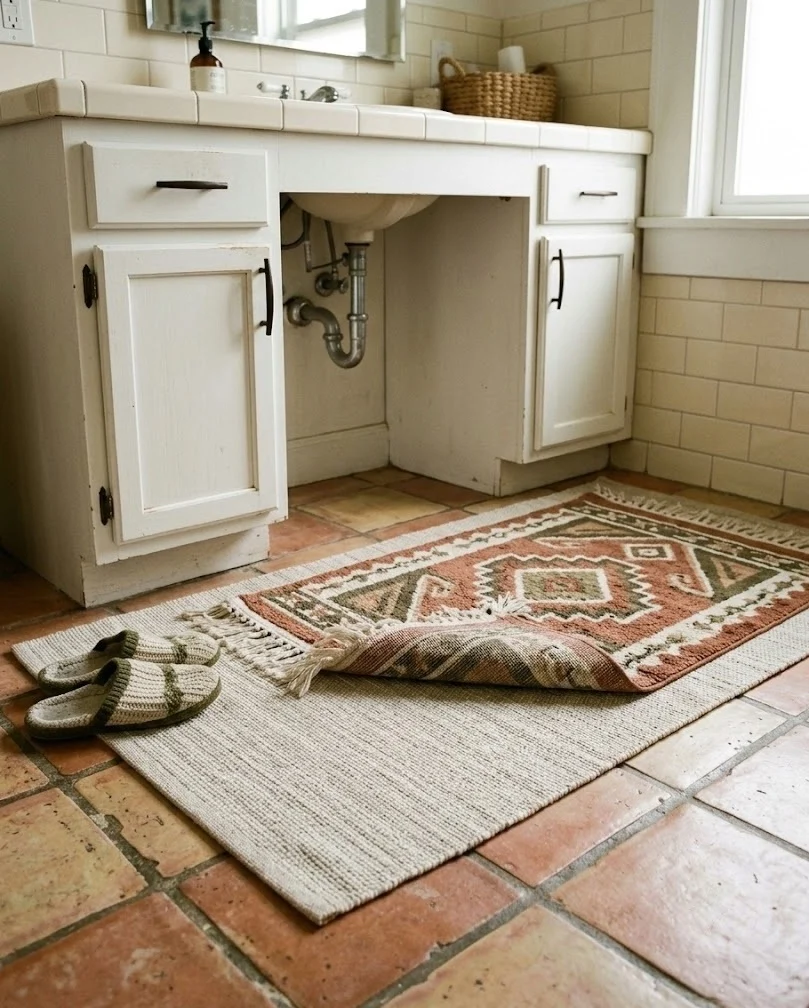
Two washable cotton rugs, layered, hide an ugly or cracked tile floor completely, with no adhesive and nothing that voids your lease. Start with a larger flatweave runner as the base, then set a smaller patterned mat on top near the vanity where you stand most. Cotton rugs that machine-wash are non-negotiable in a bathroom; anything you can't throw in the wash grows mildew on the underside within weeks of damp feet. Add a thin non-slip pad underneath so the layers don't skate on tile and send you down. This covers the floor you hate without touching it, and the whole stack comes up and goes in the wash the day you leave, no residue, no repair bill.
5. A Full-Length Fabric Curtain Hung Over the Ugly Builder Liner
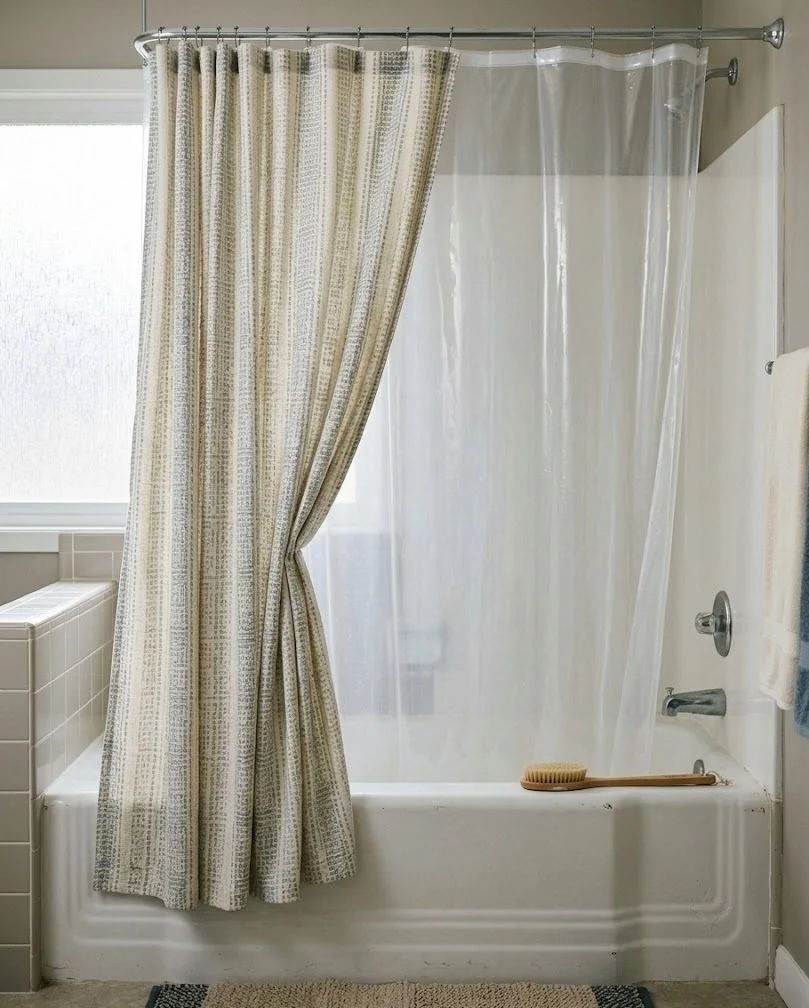
A fabric shower curtain hung in front of the existing plastic liner instantly hides a stained builder curtain and adds the biggest color change a rental bathroom can take, using only the rod that's already there. You keep the landlord's liner doing its waterproof job and layer your curtain on the outside, so nothing you own gets soaked. Choose a machine-washable fabric that clears the tub lip by an inch, because puddling fabric wicks water and mildews. This is a five-minute swap with a five-second reversal at move-out, which is why it opens the removable section of this list. A weighted hem or a couple of curtain clips keeps it from billowing into the spray.
6. A Styled Vanity Tray That Corrals Clutter Into One Clean Vignette
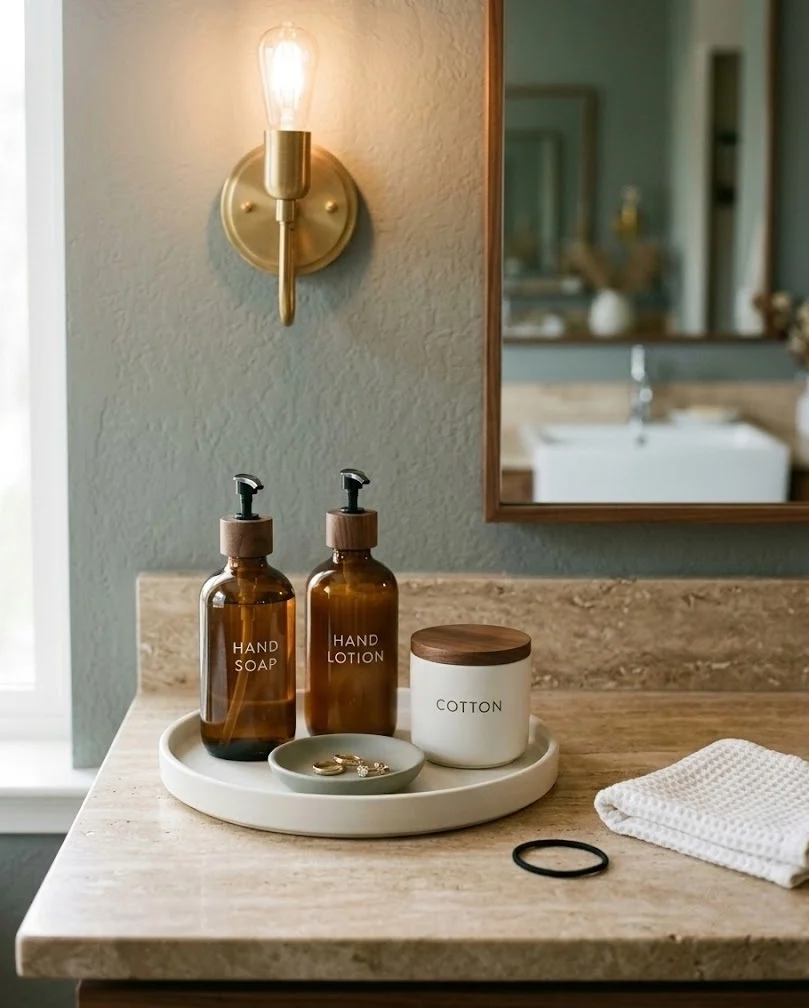
Corralling soap, lotion, and the toothbrush cup onto one tray turns vanity clutter into a single deliberate vignette, and nothing attaches to anything. Decanting hand soap and lotion into matching pump bottles does more visual work than any wall project, because it kills the jumble of mismatched retail packaging. Pick a tray with a lip so nothing rolls into the sink, and a material that laughs off water rings: ceramic, resin, or sealed stone over raw wood. Group in odd numbers and vary the heights, a tall bottle, a mid canister, a low dish, so the surface everyone sees first reads composed instead of cluttered. It's pure decor, so it undoes itself the moment you pack the tray into a box.
7. Woven Baskets on the Floor for Towels and Toilet-Paper Overflow
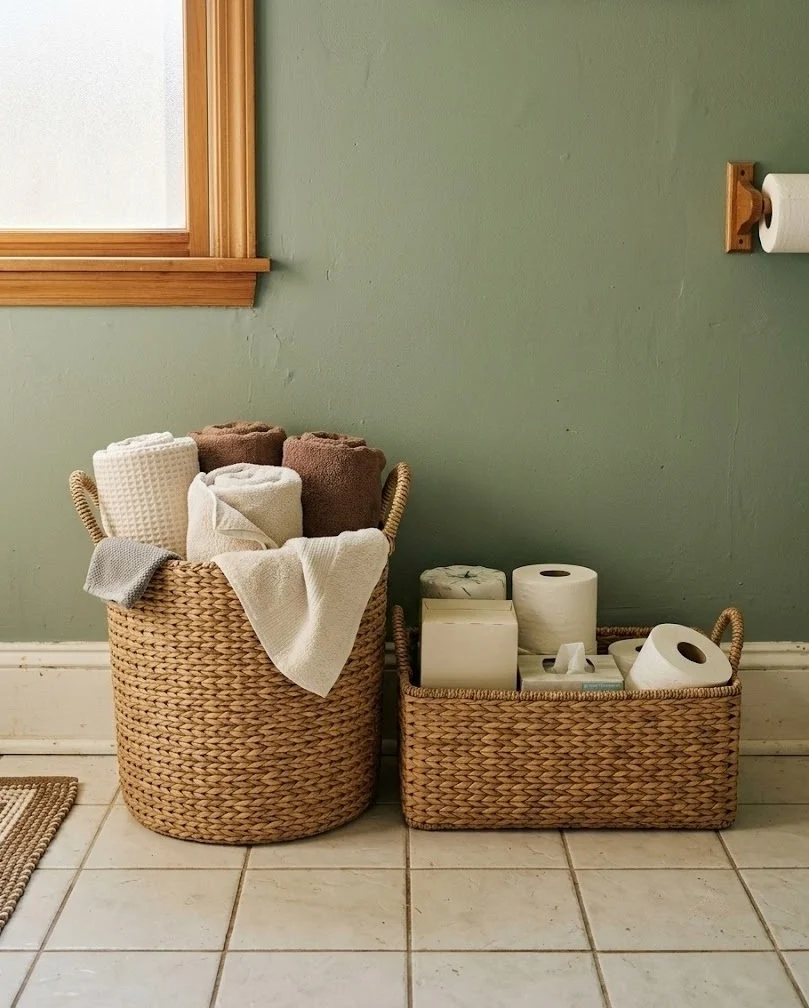
A couple of woven baskets on the floor absorb the overflow (spare towels, backup toilet paper, hair tools) with zero mounting and a look that softens a cold tile room. Baskets are the least risky storage there is: they sit on the ground and move whenever you clean. Choose a tight weave with a fabric or plastic liner if you're stashing paper goods, since an open weave sheds and snags. Seagrass and water hyacinth tolerate bathroom damp; avoid untreated wicker, which grows brittle and can spot near a shower. Put one tall basket beside the toilet and a low, wide one under a window or in a dead corner. Fill them two-thirds full so they read styled, not stuffed.
8. An Over-the-Door Rack That Adds Five Hooks With No Hardware
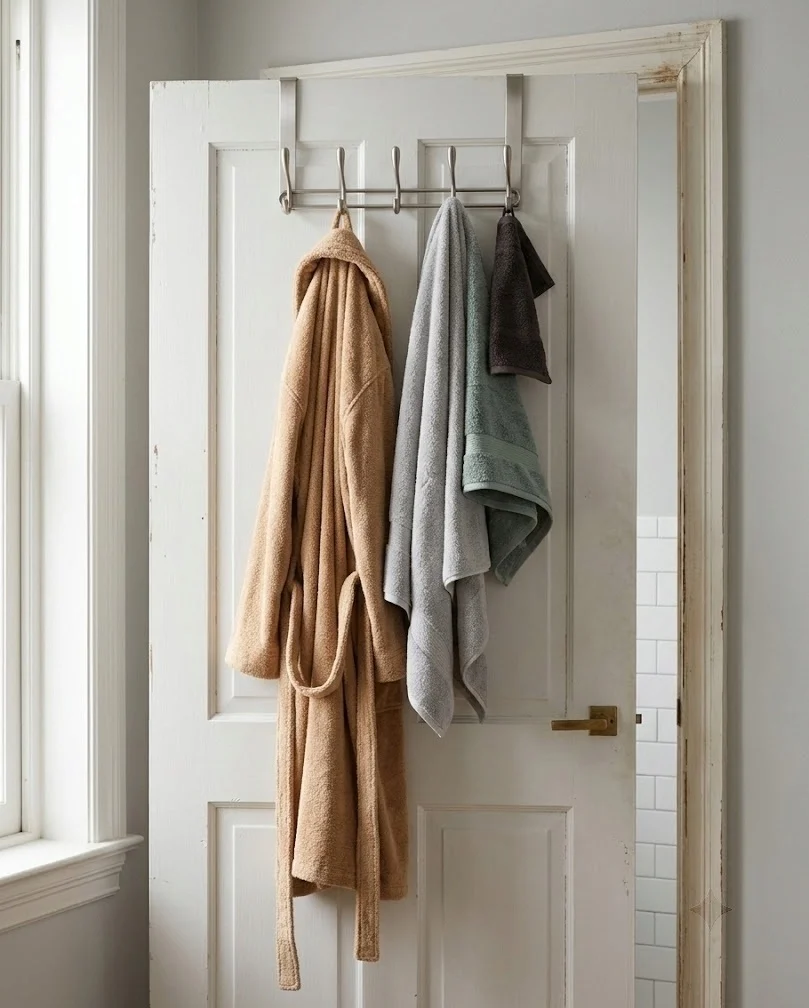
Hooking over the top edge of your bathroom door, an over-the-door rack adds five or more hooks with no hole drilled. It holds with its own weight, so it comes off clean the day you move. Measure your door's thickness first; most racks fit standard 1-3/8 inch slabs, but a thicker or slab-clad door can stop the hooks from seating. The common mistake is loading it so heavy the door won't latch or the hooks scratch the paint on both faces; a felt or rubber pad on the over-door bracket prevents the rub marks that cost deposits. Hang robes and dry towels here, not dripping ones, which invite mildew on the door.
9. Adhesive Hooks for Towels If You Respect the Humidity Limit
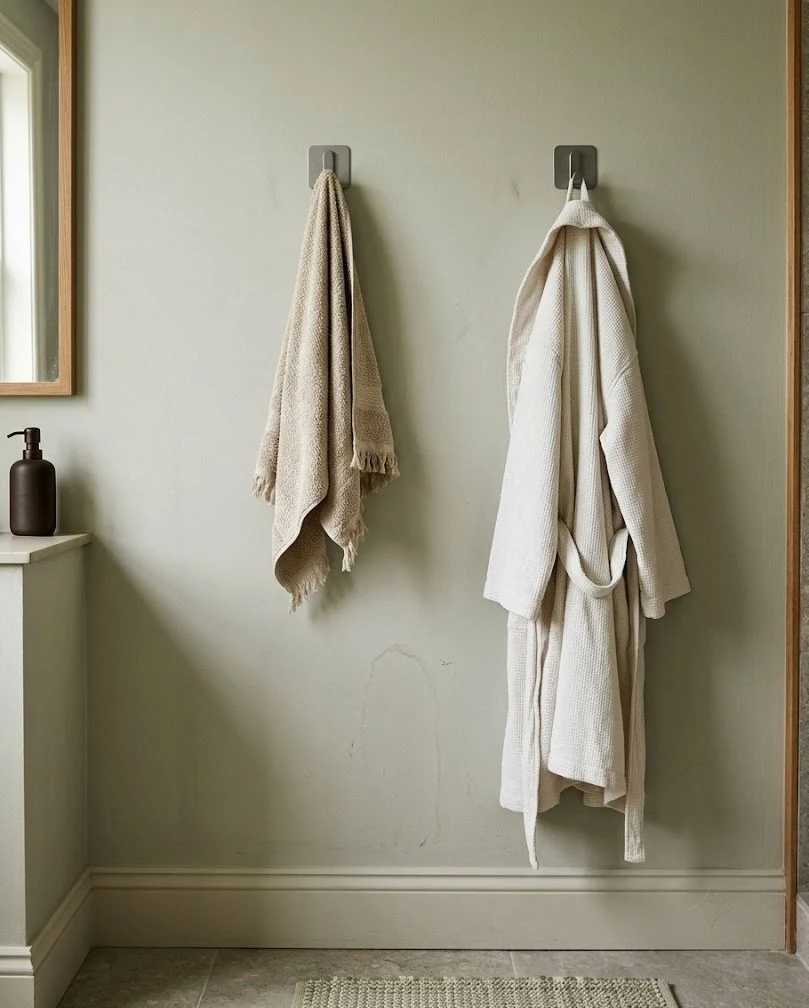
Adhesive hooks give you towel and robe storage on a bare wall with no drilling, but they're the first idea on this list where the humidity caveat actually bites. The adhesive that grips fine in a dry hallway lets go in a steamy bathroom, and a hook that falls can take a flake of paint with it. If the tension caddy in idea 3 felt too bulky for a small wall, hooks are the flatter option; just place them on a wall away from direct shower spray, not inside the tub surround. Press for the full 30 seconds the instructions demand and wait the full hour before hanging anything. Use them for dry hand towels and light robes; a soaked bath towel's weight is what pulls them down.
10. Stick-On Battery LED Sconces to Fix Grim Rental Lighting
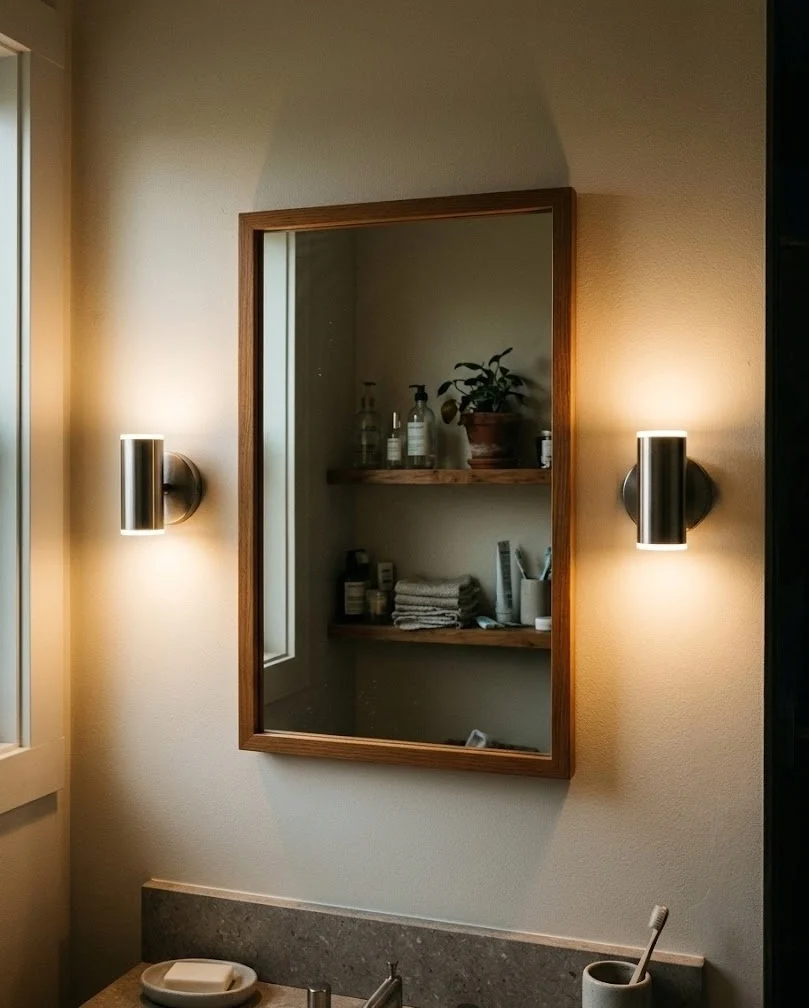
Battery-powered stick-on LED sconces add warm light beside a mirror without touching the wiring or drilling for a fixture, which is the one bathroom upgrade that changes how the whole room feels. Rental bathrooms almost always have a single harsh overhead; a pair of stick-on sconces at eye level fills the shadows a downlight throws under your face. Most run on rechargeable batteries or USB pucks and mount with an adhesive plate or a magnet, so removal is clean if you go slow. Choose a warm 2700-3000K color temperature, because cool white reads clinical. Place them at eye level flanking the mirror, roughly 28 to 36 inches apart depending on mirror width, so the light hits your face evenly instead of from above.
11. An Adhesive Shower Caddy That Actually Holds (Skip the Suction Cups)
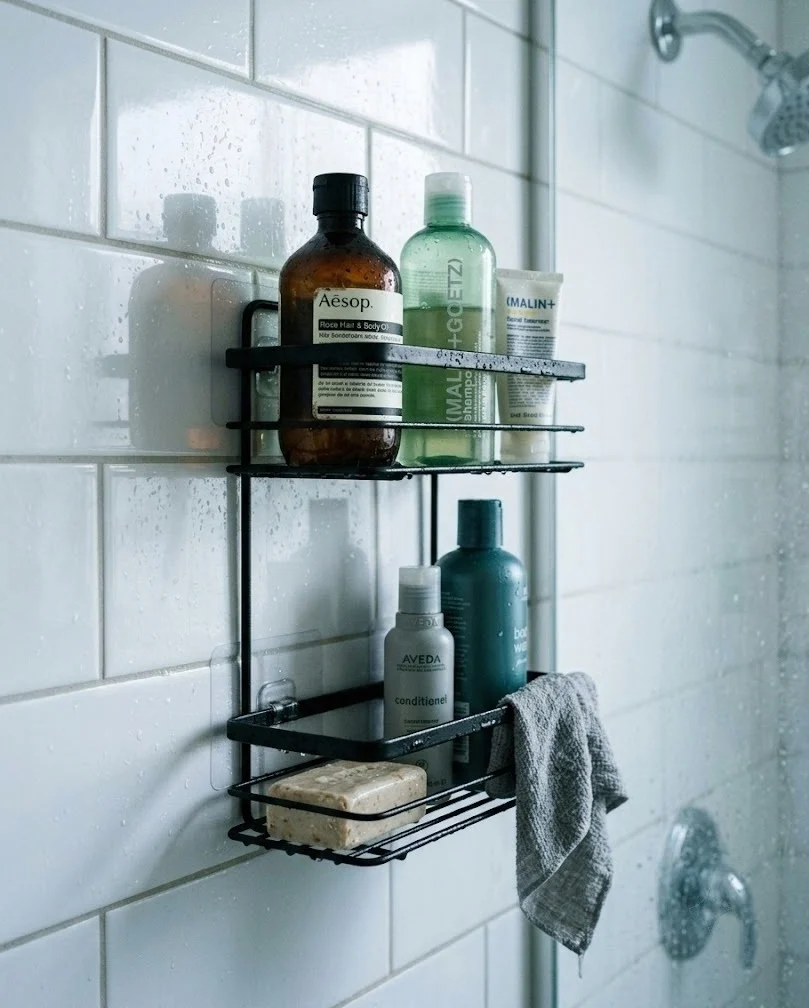
Inside the wet zone, an adhesive-mounted shower caddy holds bottles far better than suction cups, which fail on any tile that isn't perfectly smooth. Suction needs a flawless flat surface; on textured or matte tile it loses grip and drops the caddy at the worst moment. A caddy with adhesive discs bonds to the face of a single large tile and stays through steam, as long as you respect the cure time before loading it. The tension caddy in idea 3 stays outside the spray; this one lives in it, so the bond matters more. Test the surface with one disc for 24 hours before trusting the whole thing. At move-out, warm the adhesive and peel slowly, checking an inconspicuous spot first.
12. Small Adhesive Floating Shelves for the Wall Above the Toilet
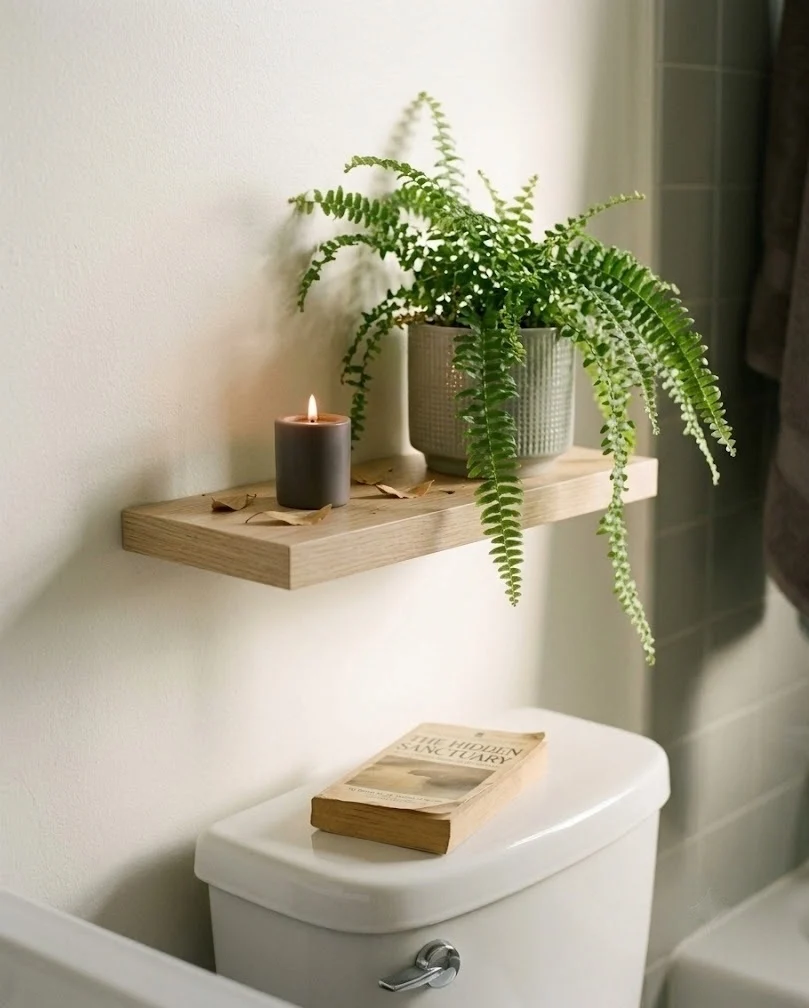
Adhesive floating shelves put a narrow ledge above the toilet or beside the mirror for plants and small bottles, mounting on foam strips instead of screws. They work best small and light: a shelf under 16 inches carrying a plant and a candle, not a stack of hardbacks. The same weight rule from idea 9 applies, since adhesive holds a modest load in a humid room but sheds a heavy one, usually overnight and usually onto the floor. Mount on a fully dry, wiped-down wall and let the bond cure a full day before you load it. Keep these out of the direct shower spray. A single styled shelf at eye level does more for a bare wall than three crammed ones, and it peels off clean if you warm the adhesive first.
13. Peel-and-Stick Tile as a Backsplash Behind the Sink Only
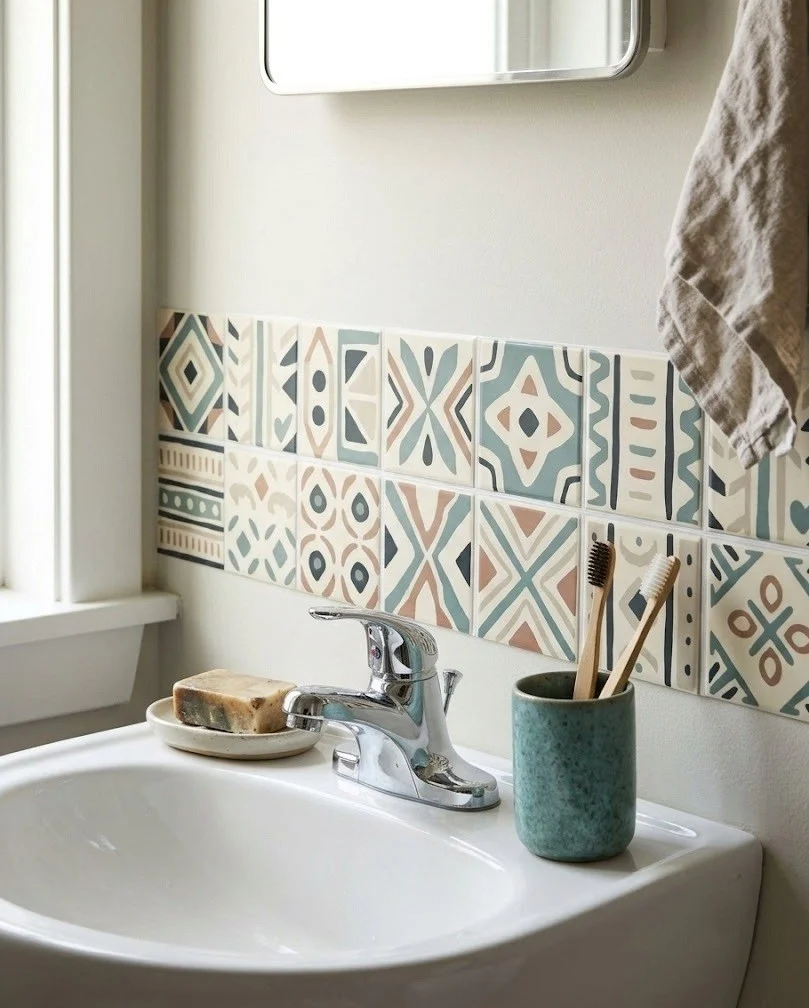
Peel-and-stick tile on the small wall strip behind the sink adds a real design moment while keeping the risky adhesive area tiny and away from standing water. Confining it to a backsplash (not the shower, and not the floor yet) is the deposit-smart way to test how a product behaves in your specific bathroom before committing anywhere wetter. Buy peel-and-stick tile rated for kitchens and baths, wipe the wall with rubbing alcohol so it bonds, and start from a level pencil line, not the crooked countertop edge. Press each sheet hard and roll the seams. Because it's a small area behind a splash zone, not inside the shower, humidity has less chance to creep under an edge and lift it. Warm removal at move-out peels most brands clean off a smooth painted wall.
14. A Stick-On Frame Around the Builder-Grade Mirror
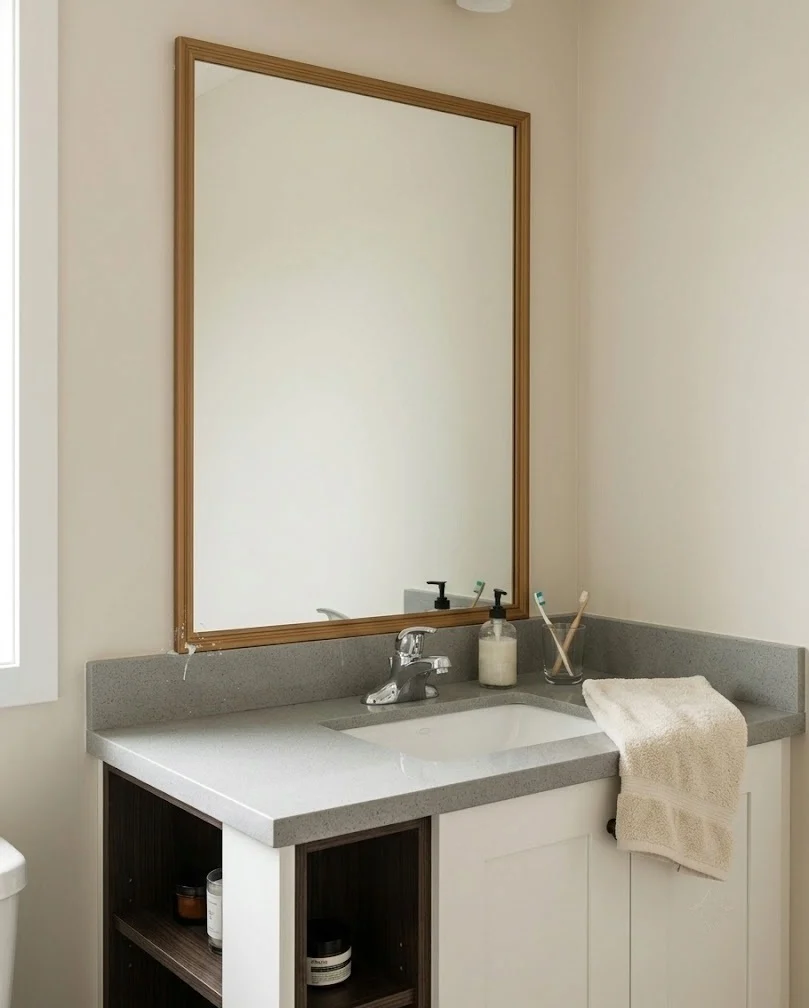
Framing the frameless glued-to-the-wall mirror every rental seems to have, a stick-on frame turns builder-grade glass into something finished, using adhesive strips on the mirror's own surface. Because the frame sticks to the glass, not the wall, there's no paint at risk and no hole to fill. Peel-and-stick frame kits come sized to standard mirrors, or you can cut slim molding and mount it with the same removable adhesive from idea 12. Stick to the mirror edge, not the wall around it, so removal leaves nothing behind on paint. Clean the glass edge with alcohol first, since hairspray and toothpaste film is why these frames slide. Keep the frame above the splash line where the mirror stays driest, and it'll hold for years and lift off with gentle heat.
15. Peel-and-Stick Wallpaper on One Dry Accent Wall, Never the Whole Room
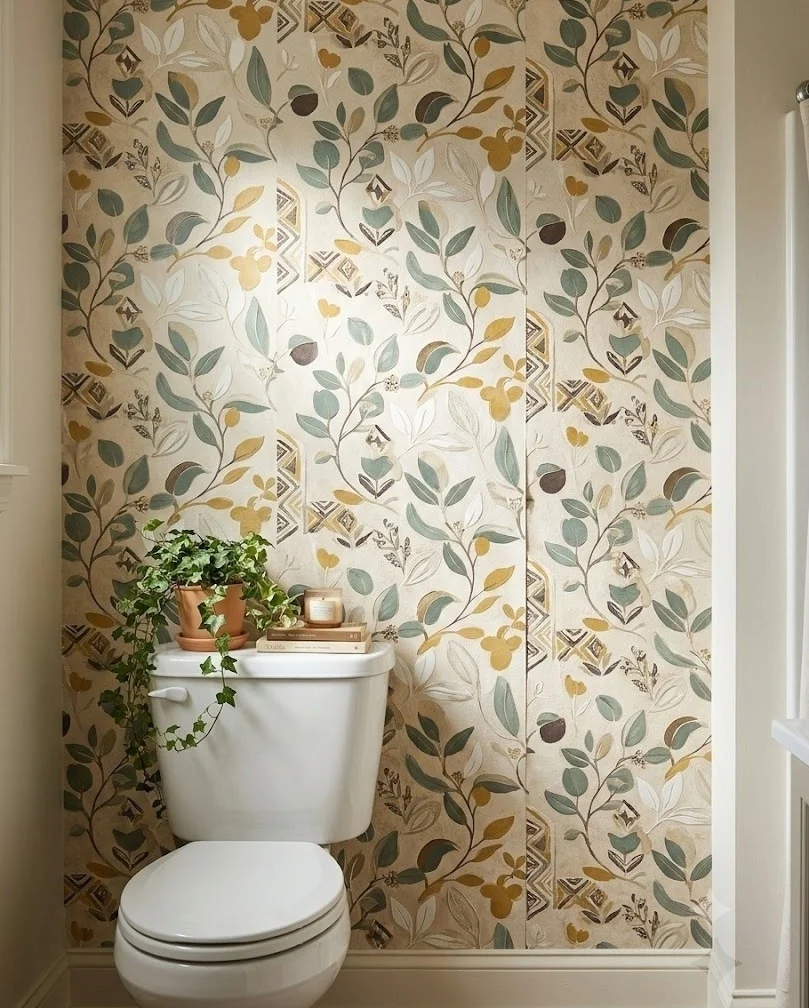
Peel-and-stick wallpaper on a single dry wall (the one behind the toilet or over the vanity, never near the shower) gives the biggest visual change on this list and carries the biggest residue risk, which is why it sits down here. Bathroom humidity is the enemy: steam creeps behind seams and edges and lifts the paper, and a wall that stays damp can pull the paper's adhesive into the paint when you remove it. Pick a heavier textured vinyl over thin budget rolls, which telegraph every wall flaw and curl fast. Test one strip in a low corner and leave it a full week through several showers before you paper the wall. Keep it to the driest wall, seams tight, and you get an accent that still comes off, usually.
16. Peel-and-Stick Vinyl Floor Tile Laid Over the Existing Floor
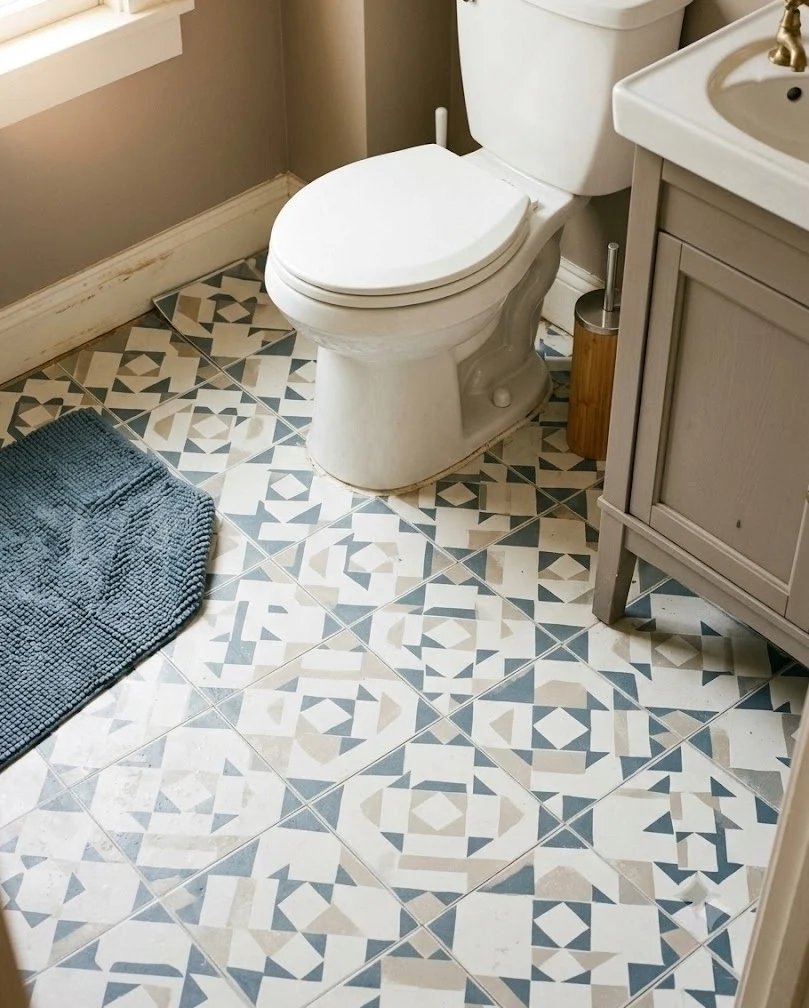
Peel-and-stick vinyl floor tile lays directly over dated bathroom flooring for a full makeover, and it sits near the bottom of this list because moisture at the edges is exactly what makes it hard to remove cleanly. The same humidity caveat from the wallpaper in idea 15 applies underfoot: water wicks into seams around the tub and toilet, and cheap tiles curl or leave sticky shadow when you lift them. The genuinely reversible alternative is loose-lay or click-together vinyl plank that floats over the old floor with no adhesive at all, pricier, but it lifts out with zero residue. If you do go peel-and-stick, choose thicker tile rated for wet areas, dry-fit the whole floor first, cut around the toilet base with a paper template, and start from a centered line so cut pieces land at the walls.
17. Contact Paper on the Vanity and Frosted Film on the Window
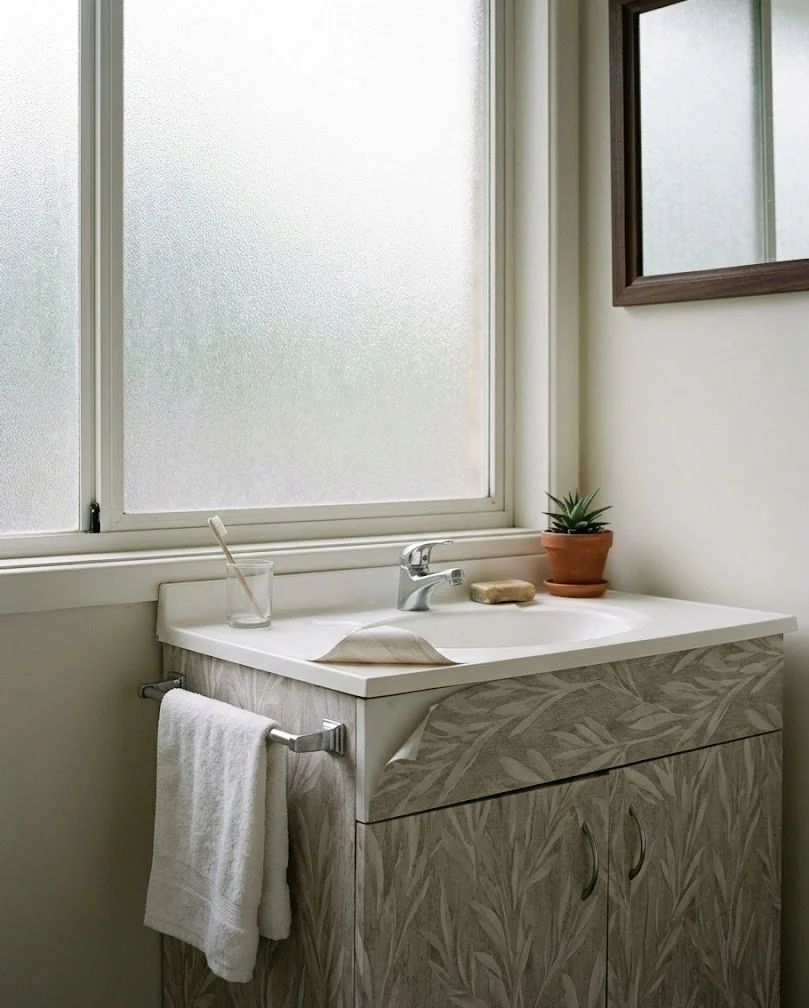
Contact paper wraps a dated vanity or countertop and removable frosted film covers a bad window, and both land last because their edges sit right where bathroom water attacks adhesive. Contact paper on a vanity door or counter transforms the ugliest surface in the room for a few dollars, but water seeping under a lifted edge near the sink is what leaves gummy residue behind. The moisture lesson from the floor tile in idea 16 repeats here at the edges. Wrap surfaces away from constant standing water, burnish every edge down hard, and seal the sink-side edge with a bead of removable caulk you can peel later. Static-cling window film needs no adhesive at all and is the safest item in this pair; it lifts off glass with zero residue whenever you leave.
Final Thoughts
The safest bet in any rental is the idea that touches nothing: freestanding organizers, tension rods, baskets, and over-the-door racks come off clean every time and belong at the top of your list. The peel-and-stick and adhesive projects near the bottom can look incredible, but they earn their spot only after you test one small piece through a week of real showers. Match the ambition to the humidity, keep receipts on what's reversible, and your deposit stays yours. Pin this list so it's ready the next time you're staring at a rental bathroom you can't stand.
Frequently Asked Questions
does peel-and-stick wallpaper ruin walls in a bathroom?
It can, mostly because of humidity rather than the paper itself. Steam gets behind seams and edges and lifts the paper, and a wall that stays damp can pull adhesive into the paint on removal. Keep it to one dry accent wall away from the shower, test a strip for a week, and peel slowly with heat when you leave.
will command hooks damage paint in a steamy bathroom?
They can if you put them in the wrong spot or overload them. The adhesive fails in direct steam and a falling hook can tear paint. Mount them on a wall away from shower spray, hang only light dry items, and at removal warm the strip and pull straight down slowly so it releases instead of ripping paint.
how do i make a rental bathroom look better without drilling?
Stack changes that touch nothing permanent: a freestanding over-the-toilet organizer, layered washable rugs over the ugly floor, a fabric curtain over the builder liner, a styled vanity tray, and stick-on battery sconces for warmer light. These five alone reset the whole room and every one of them undoes itself at move-out with no residue.
is peel-and-stick floor tile safe for renters?
It's the riskiest floor option because moisture at the seams makes clean removal hard, so treat it as test-first. If you want a truly reversible floor, use loose-lay or click-together vinyl plank that floats with no adhesive at all. If you use peel-and-stick, pick thicker wet-rated tile and keep edges sealed away from the tub.