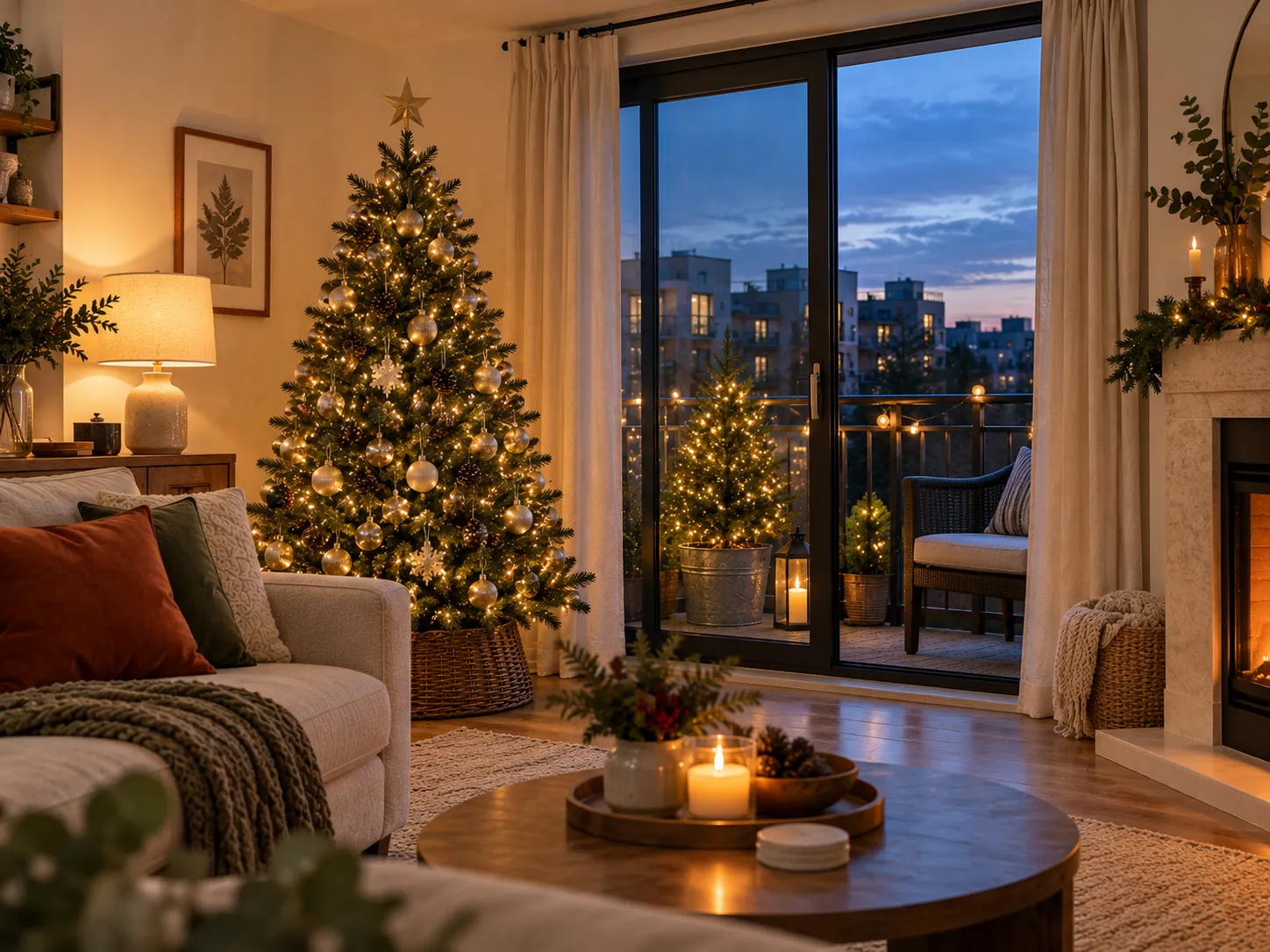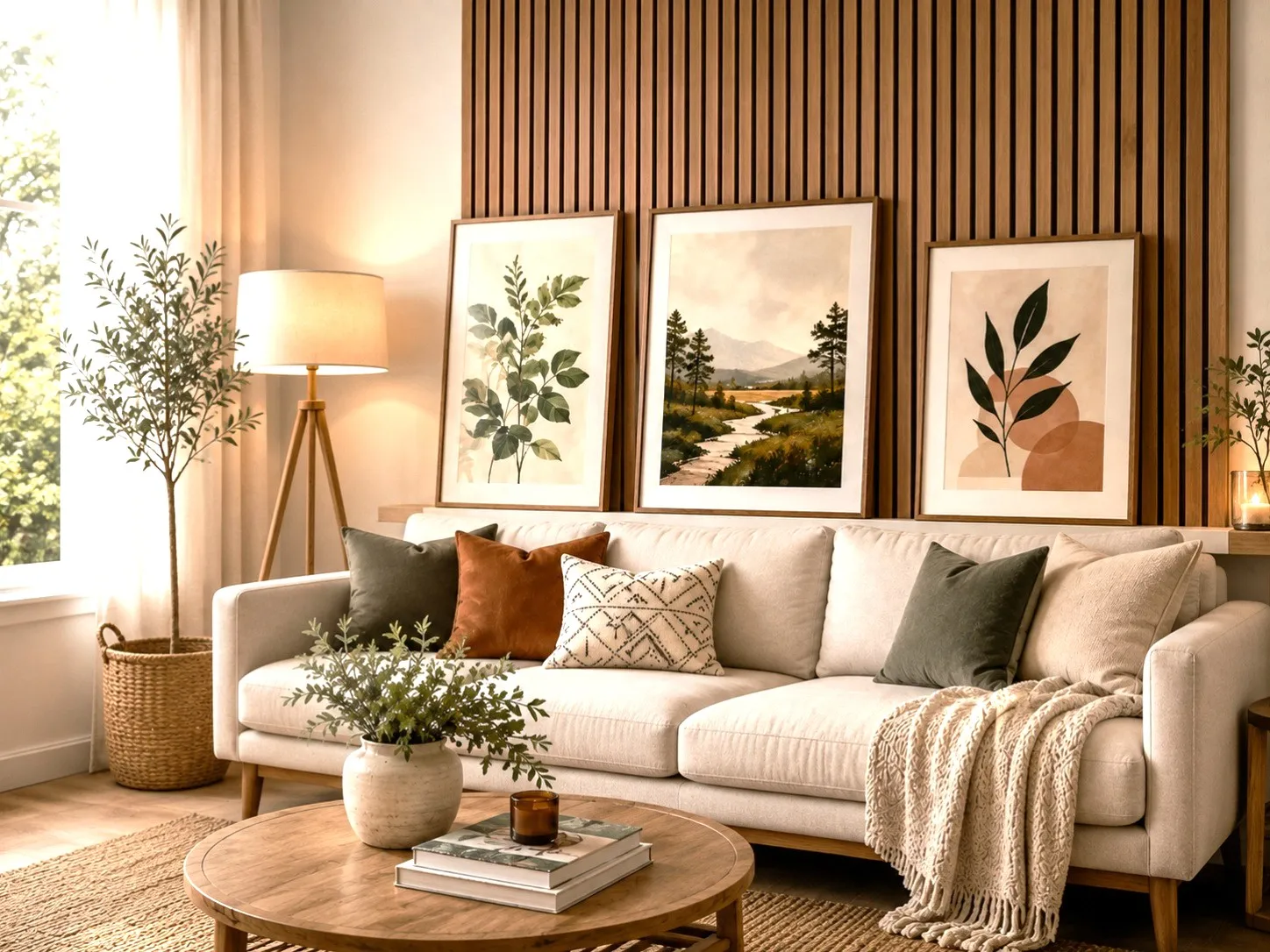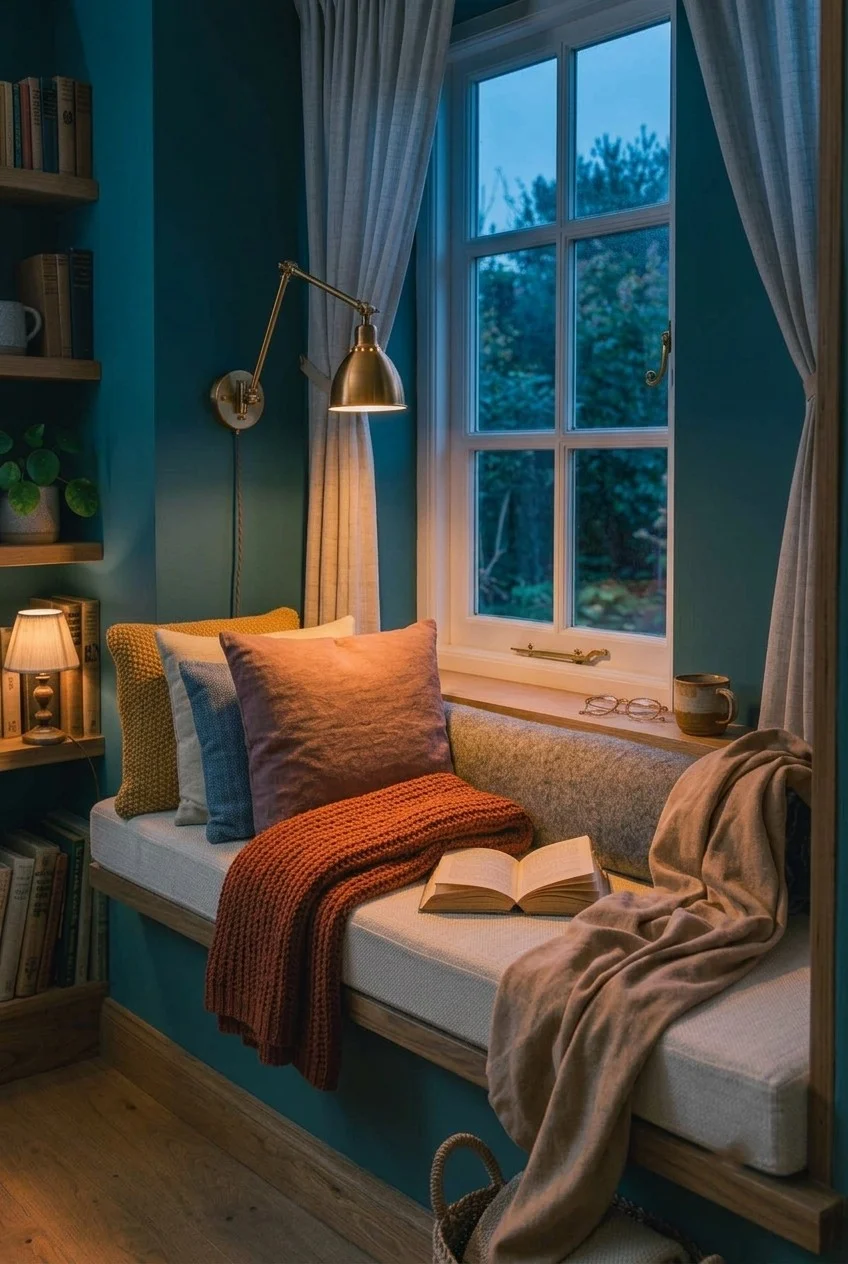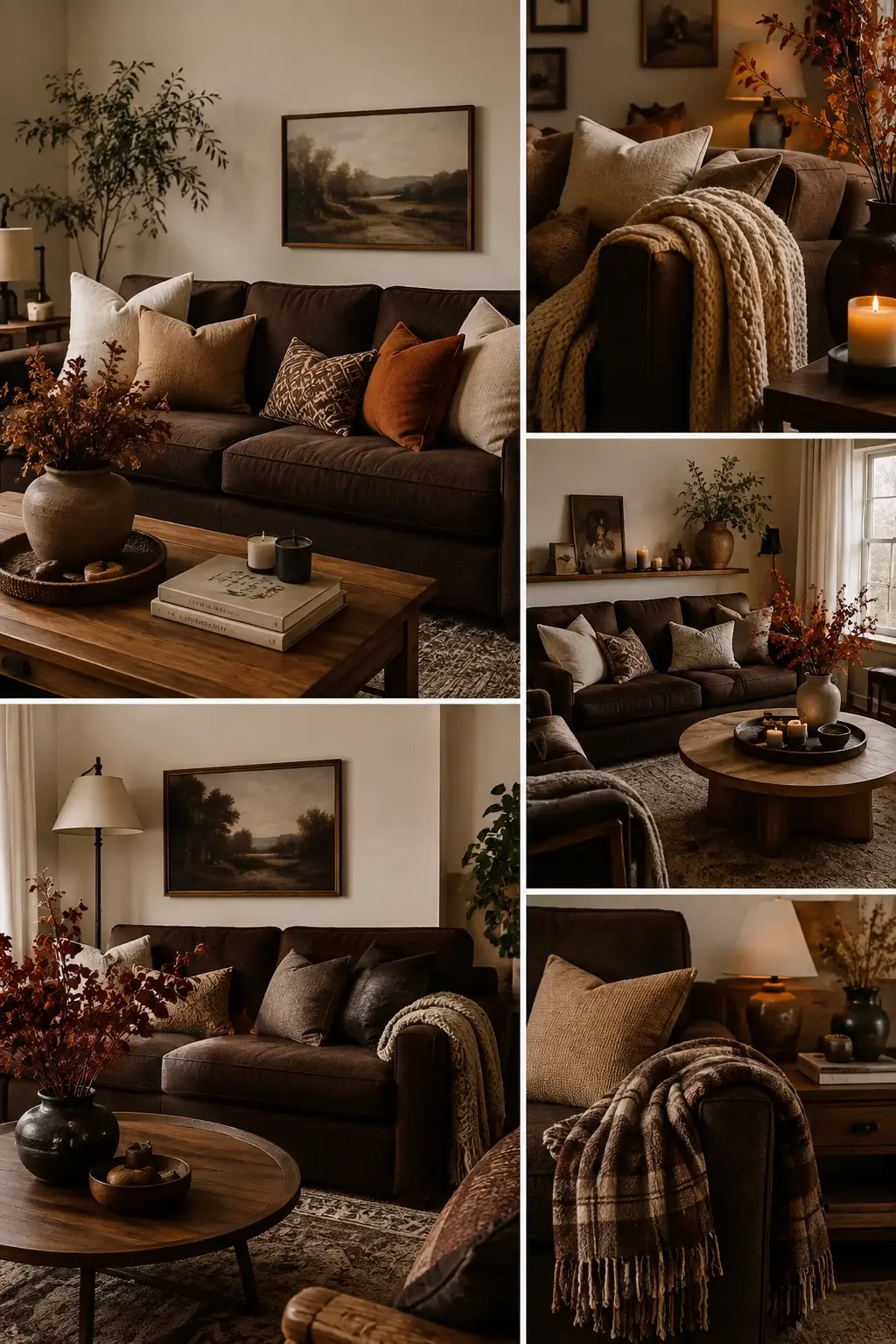
Cozy dark brown sofa living room ideas work best when you pick one accent palette and commit to it, instead of scattering a little of everything the way most lists suggest. That is how this post is organized: cream and wood, rust and terracotta, olive and brass, then plaid and wool, with what to actually buy and roughly what it costs under each look. I bought a chocolate brown three-seater last year and spent a week convinced it had eaten the room. It had not. It just needed the rest of the room to warm up around it, which is exactly what fall styling is good at. Save this to Pinterest so you have it when you start shopping.
1. Cream Boucle Armchairs Facing the Sofa Across a Raw Oak Coffee Table
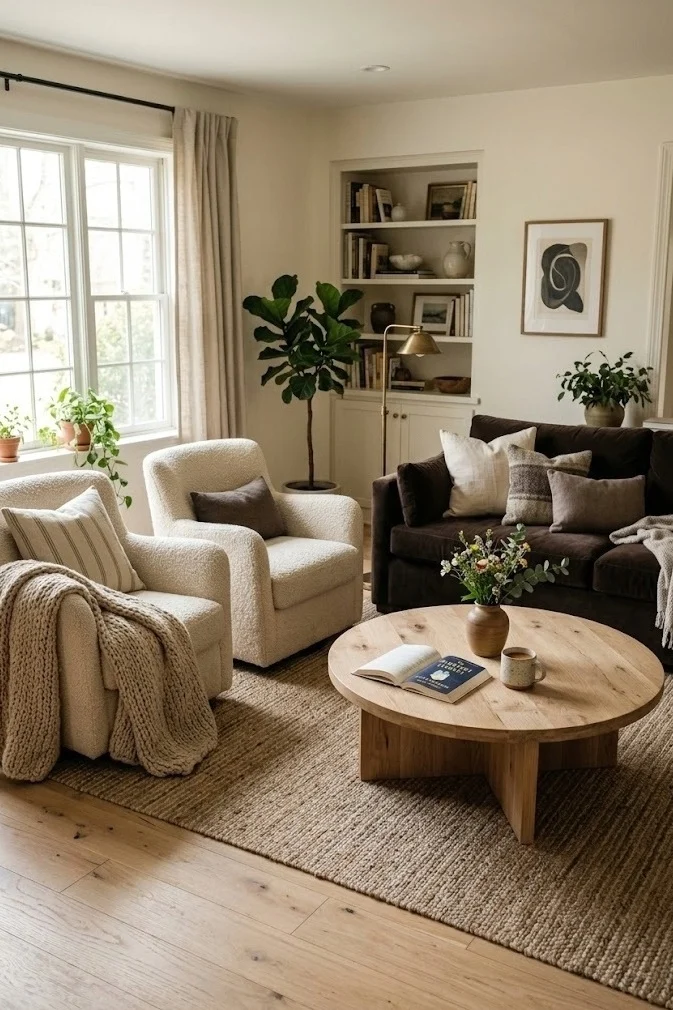
Two cream boucle chairs pulled up opposite a dark brown sofa split the visual weight of the room so the sofa stops reading as the only thing in it. Nubby off-white fabric throws light back instead of drinking it, and that contrast is what keeps a chocolate three-seater from looking like a hole in the corner. Keep 16 to 18 inches between the coffee table edge and the sofa front so people can pass without turning sideways, and pick a round table if the chairs sit at an angle. Raw oak beats painted white here because the grain gives the brown something to rhyme with. Already own dark chairs? A cream slipcover, or a folded wool blanket over each seat back, gets you most of the way there.
2. Oatmeal Chunky-Knit Throws Draped Over Both Sofa Arms
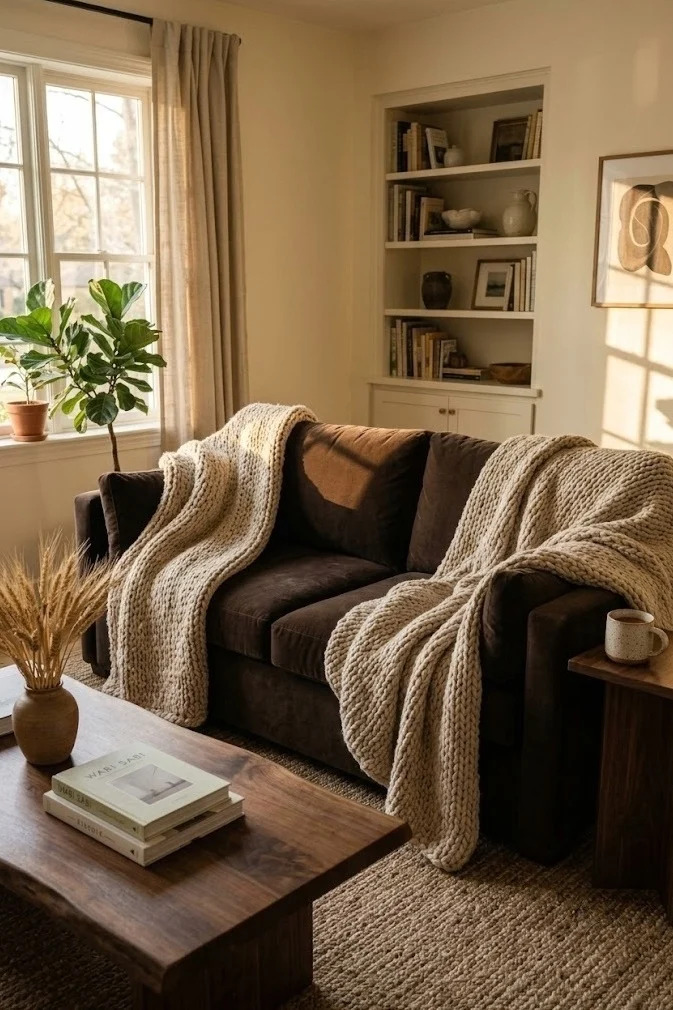
Draping oatmeal chunky-knit throws over both arms of a dark brown sofa breaks up the long slab of color without touching the walls or spending a weekend. Two throws read as intentional. One reads as forgotten. Go for real weight, wool or a wool-cotton blend in a thick braided or garter knit, because thin acrylic slides off leather and looks flat against a deep brown. Let each throw hang about eight inches past the arm so it drops instead of perching. Undyed oatmeal and warm cream sit better on chocolate than bright optic white, which turns slightly blue next to brown and reads cold. If your sofa has low arms, fold the second one lengthwise across the back instead.
3. Warm White Walls With Unpainted Oak Trim Behind the Sofa
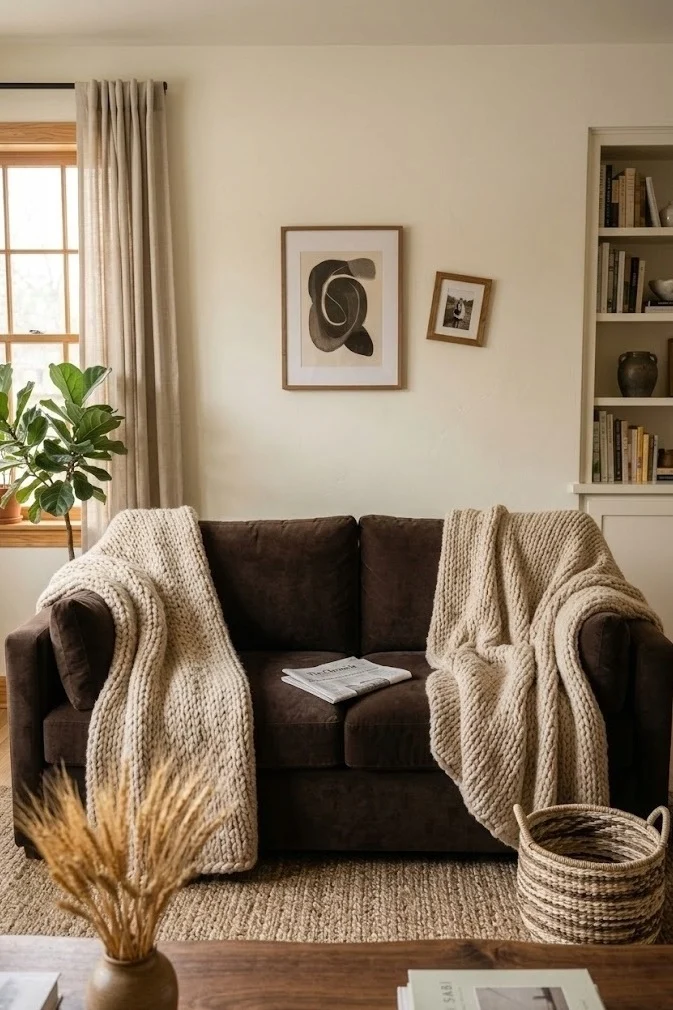
Warm white paint with a yellow or red base makes a dark brown sofa look deliberate instead of stranded, and it is the cheapest single change on this list. Cool grays and builder-grade stark white push brown toward muddy, especially in north-facing rooms with flat afternoon light. Look for whites with a light reflectance value in the low eighties and a visible warm cast on the swatch. Paint two-foot test squares directly behind the sofa, not on a far wall, and check them at night under bulbs as well as at noon. Leaving the trim as unpainted oak, or stripping it back to a clear satin finish, gives the brown a second wood note to talk to so the sofa is not the only dark object in the room.
4. Three Cream Ceramic Vases on a Reclaimed Wood Console
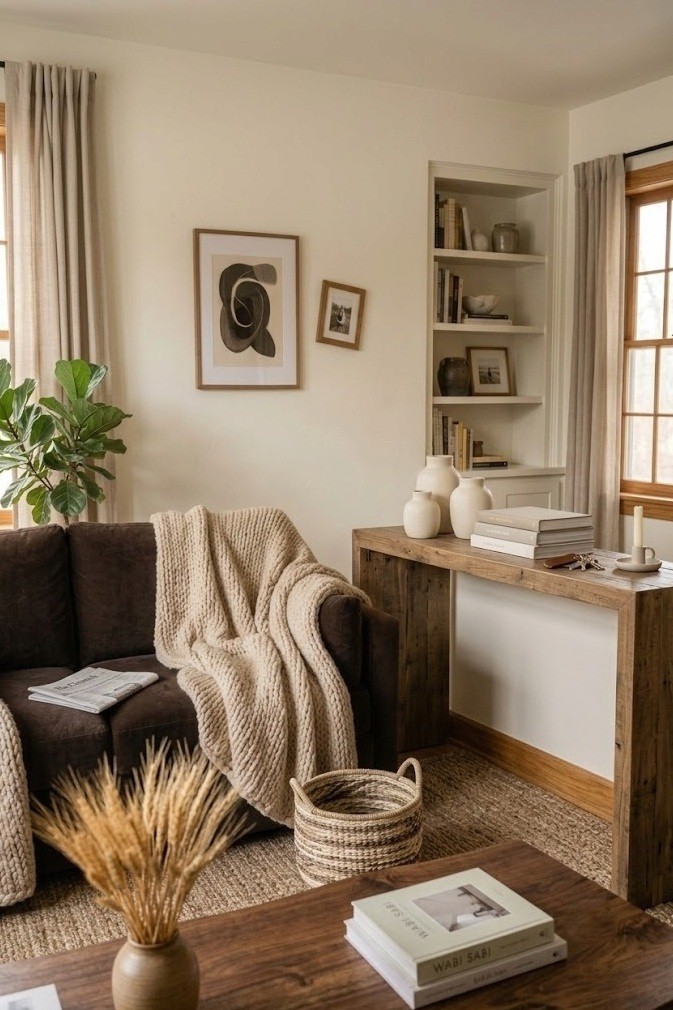
Three cream ceramic vases in graduated heights on a reclaimed wood console give the eye a pale stop at standing height, which is where most brown-sofa rooms go empty. Vary the silhouettes, one tall and narrow, one round and low, one squat with a wide lip, but keep them in the same off-white family so the group reads as one object rather than three. The tallest should hit about two-thirds of the console height. It works on the same light-on-dark logic as the boucle chairs in idea 1, only for about the price of one takeout dinner. Matte glaze beats gloss in a room lit by warm bulbs after dark, since glossy ceramic picks up every bulb as a hot white dot.
5. Ivory Linen Curtains Hung Ten Inches Above the Window Frame
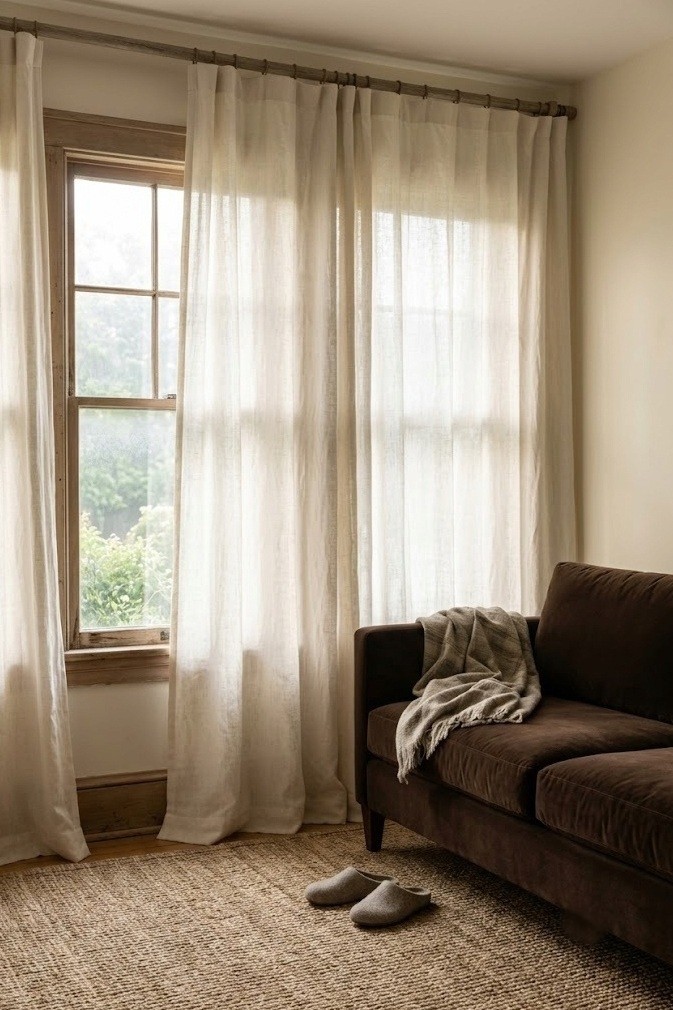
Ivory linen curtains that start ten inches above the window frame and stop a half inch off the floor make the wall behind a dark sofa read taller and softer at the same time. Run the rod wide enough that the panels stack on the wall instead of the glass, and buy two and a half times the window width in total fabric so they look full rather than skimpy. Real linen, or a linen-cotton blend, falls in soft irregular folds that suit brown upholstery; crisp polyester reflects light in a way that reads cheap next to natural fiber. Ivory rather than optic white keeps the whole window warm, which matters more in October than it does in June.
6. Cane and Light Oak Side Table With a Cream Stoneware Table Lamp
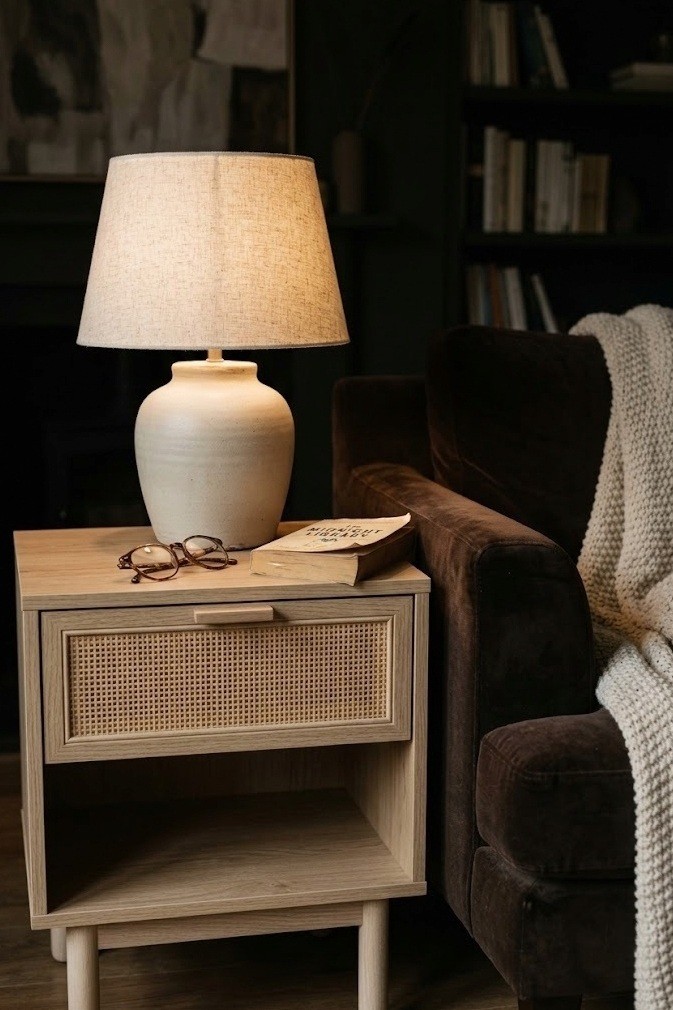
A cane and light oak side table topped with a cream stoneware table lamp does two jobs at once: it lifts light off the ceiling and puts a pale object right beside the darkest thing in the room. Overhead light is what makes brown furniture look flat and heavy, so the real fix is two or three low sources at roughly seated eye level, around 24 to 30 inches from tabletop to the bottom of the shade. A linen or parchment shade glows warm; a dark or metal shade drops a puddle on the table and leaves the sofa in shadow. Cane keeps the piece visually light, so the corner does not end up stacking two solid brown volumes on top of each other.
7. Rust Velvet Pillow Covers Clustered at One End of the Sofa
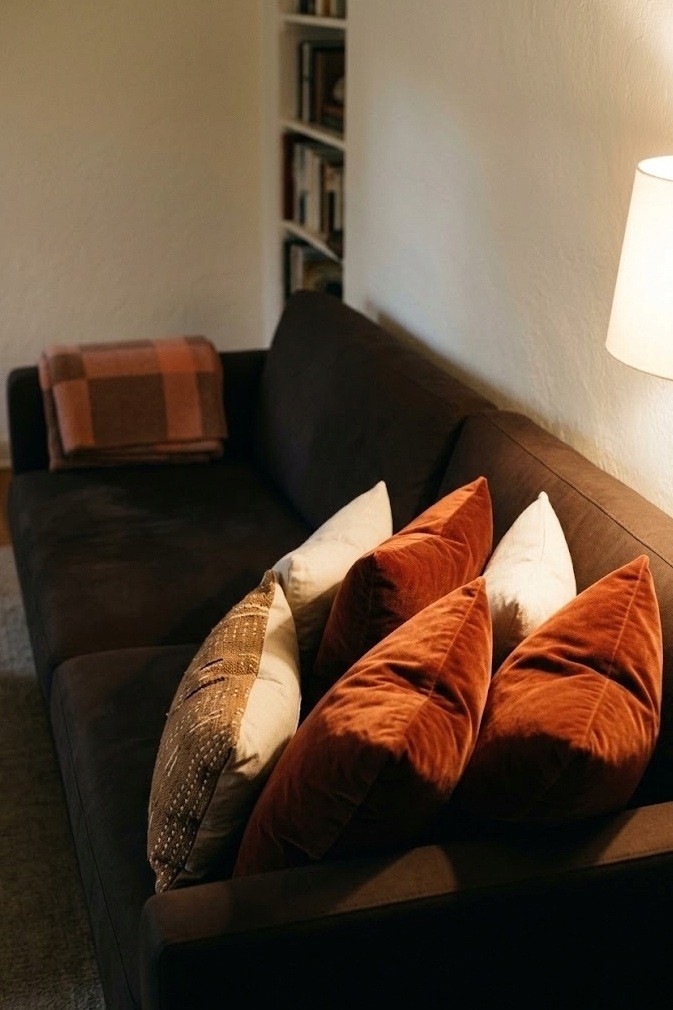
Rust velvet pillow covers grouped at one end of a dark brown sofa give the room a single warm focal point, which works far better than spreading the same color evenly until it disappears. Build the group in odd numbers: two rust, one cream, one small lumbar in a rough weave, all pushed toward the end you actually sit on. Velvet earns its place here because the nap shifts shade as it moves, so one dye color reads as three under evening light. Buy covers rather than whole pillows and keep a single set of inserts; the rust goes in a box in March. Size inserts up by two inches so the corners stay full instead of collapsing.
8. A Trio of Terracotta Planters Beside the Sofa Arm
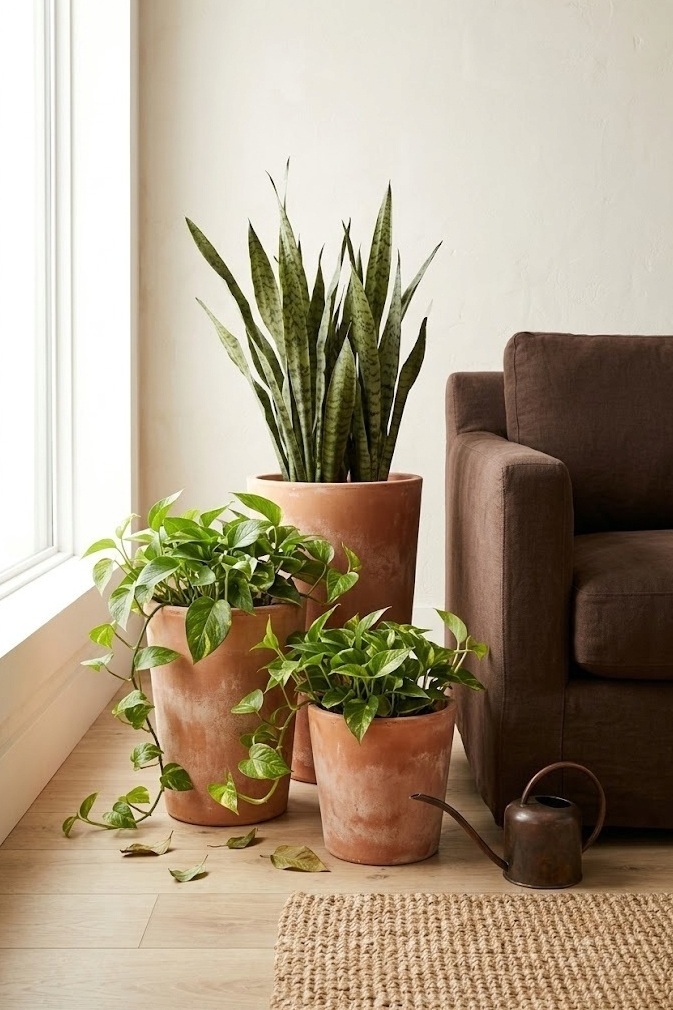
Three unglazed terracotta planters in different heights beside the sofa arm bring in the one material that flatters brown better than anything else. The orange in raw clay and the red buried in dark brown are close cousins, so the pots look like they belong before you have even planted anything. Keep the group tight, within about a foot of each other, so it reads as a planting rather than scattered pots someone forgot to put away. For a low-light corner choose a snake plant, a ZZ plant or a cast iron plant; a fiddle-leaf sulks and drops leaves within a season if it sits more than six feet from a window. Unglazed clay wicks moisture, so expect to water every week or so.
9. A Rust-Painted Alcove Shelf Beside the Chimney Breast
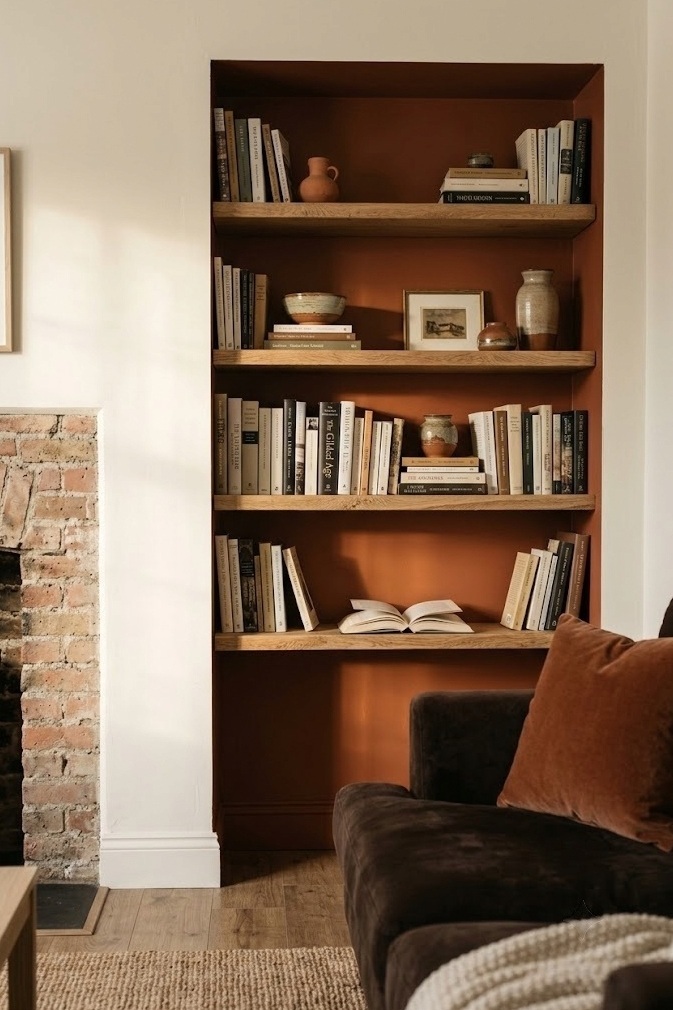
Painting the inside of an alcove rust while the surrounding wall stays warm white creates a pocket of color behind the sofa for the price of one quart of paint. The recess frames whatever sits on the shelves, and the brown sofa in front of it starts reading as part of a color story instead of a heavy object parked against nothing. Use eggshell or satin inside, never flat, because alcoves collect dust and get touched every time someone reaches for a book. Keep the warm white from idea 3 on every other surface so the rust stays a single deliberate accent. If your alcoves flank a fireplace, paint both; one painted recess looks like an abandoned project.
10. A Faded Vintage-Look Rug in Rust and Cream Under the Coffee Table
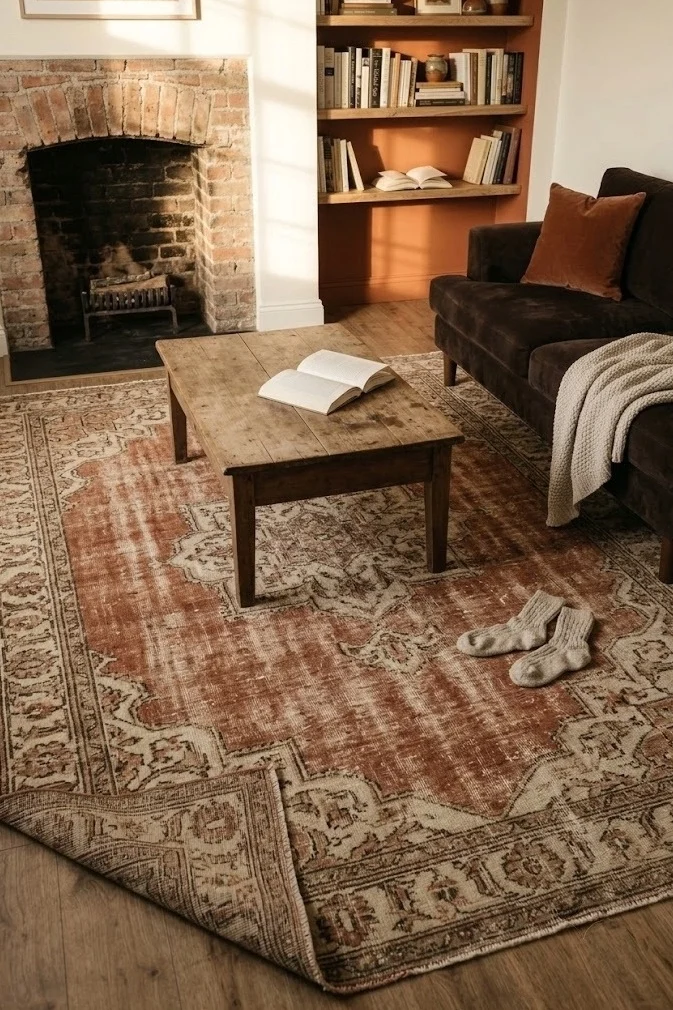
A faded vintage-look Persian rug in rust and cream pulls the sofa's brown into a pattern that already contains it, which is why old rugs almost never clash with brown furniture. Look for a low-pile machine-woven copy with a washed, muted ground; high-contrast bright reproductions fight the sofa instead of sitting quietly beneath it. Size matters more than pattern here. The front legs of the sofa and of every chair should land on the rug, which in most living rooms means 8 by 10 feet rather than the 5 by 7 people buy first. A rug floating in the middle of the floor is the most common reason a brown-sofa room looks unfinished no matter what else you add.
11. Amber Glass Candle Holders on a Copper Tray
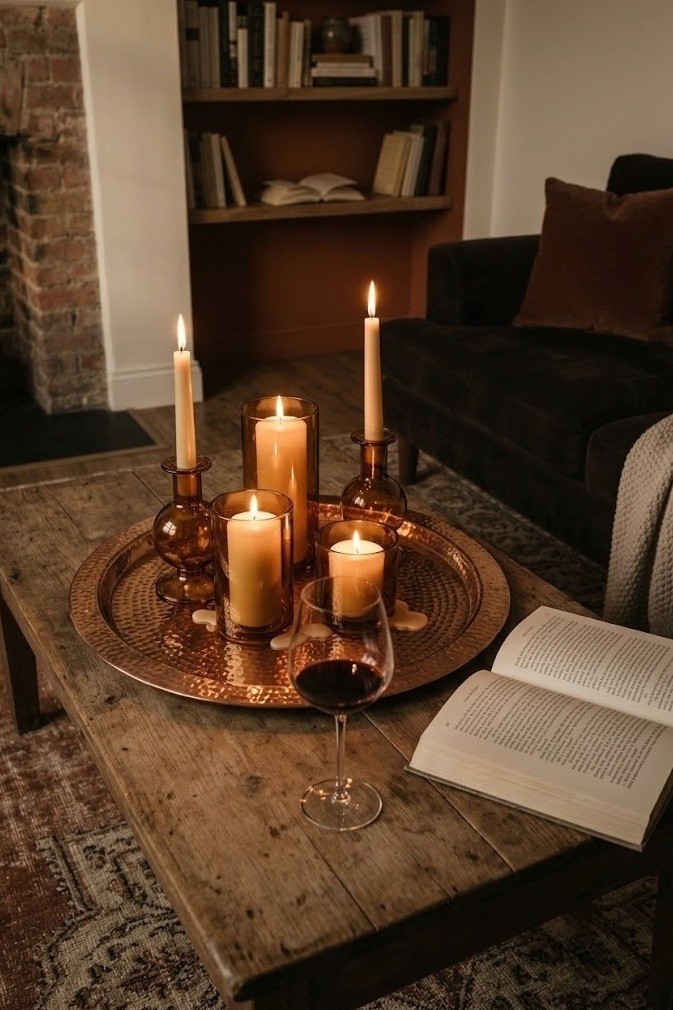
Amber glass candle holders clustered on a copper tray turn the coffee table into the warmest square foot in the room after dark. Amber glass does something specific that plain glass cannot: it tints the flame before that light reaches the walls, so the whole room picks up an orange cast that flatters brown upholstery. Group three to five holders in mixed heights on the tray so the arrangement lifts away as one piece when you need the table for dinner. Real wax over LED if the room allows it, because the flicker is half the effect. Keep the tray under about 14 inches wide or it crowds the surface and you will end up moving it nightly, which is how coffee table styling quietly dies.
12. Clay and Terracotta Pottery on Floating Walnut Shelves
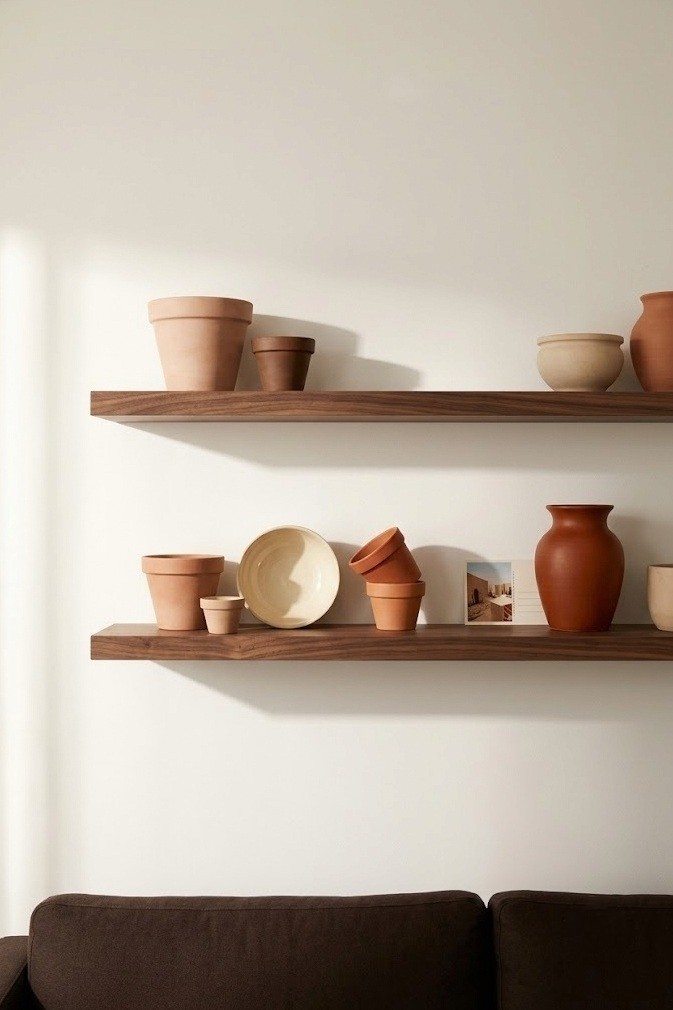
Clay and terracotta pottery lined along floating walnut shelves repeats the sofa's brown at a smaller scale, so the sofa stops looking like the one dark outlier in the room. Mix the finishes: mostly matte bisque, one or two pieces with a cream glazed interior that flashes when you walk past. Leave real gaps between groupings, because shelves packed edge to edge read as storage rather than decor. Walnut floating shelves at 1.5 to 2 inches thick look substantial without visible brackets, and 10 inches deep holds pottery while staying shallow enough to walk past without clipping your shoulder. Thrift shelves are full of this stuff, and the chips and glaze runs are what make it look collected rather than ordered.
13. An Olive Velvet Ottoman Used as the Coffee Table
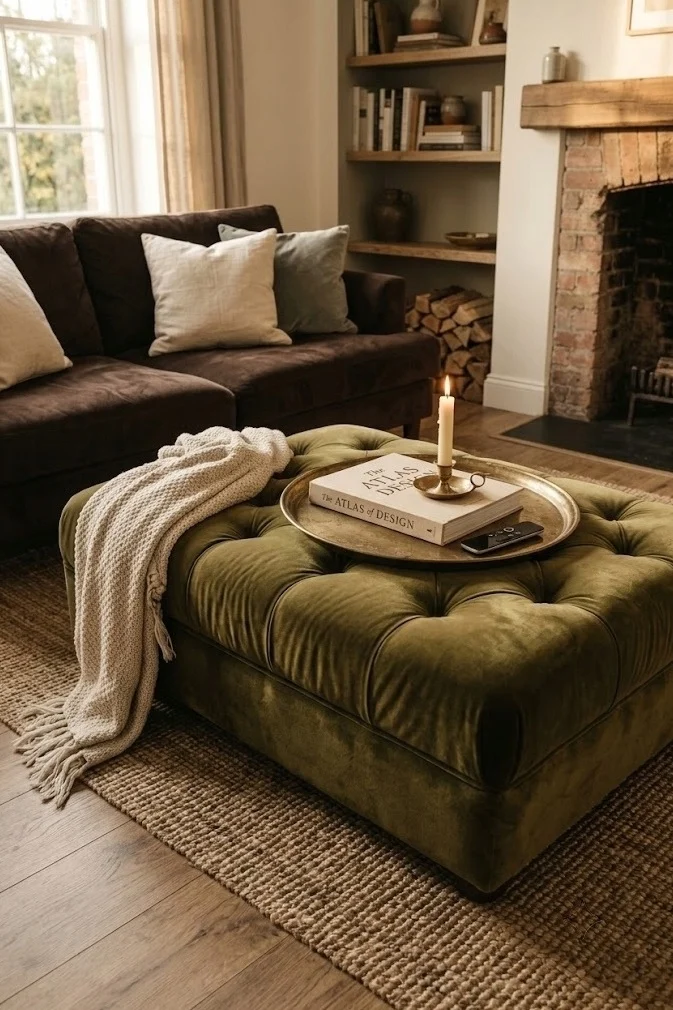
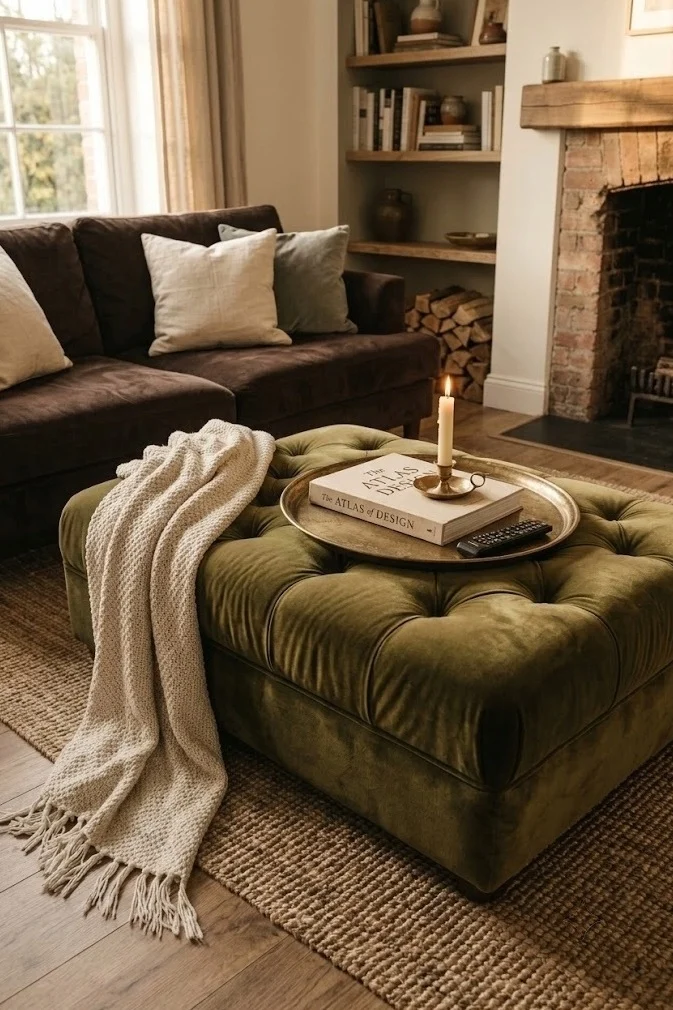
Swapping the coffee table for an olive velvet ottoman softens the entire seating group, because the hardest edge in most brown-sofa rooms is that rectangle of wood sitting in the middle of it. Olive and brown share a yellow base, so the pairing feels older and quieter than brown next to a cool mint or emerald green. Buy a firm top rather than a squashy one and set a wood or metal tray on it so drinks still have somewhere flat to land. Height should fall within an inch of the sofa seat, usually 17 to 19 inches. Performance velvet is worth the upcharge with kids or a dog, since flat velvet crushes into shiny patches exactly where feet go.
14. Aged Brass Sconces Flanking the Art Above the Sofa
Aged brass sconces mounted on either side of the art above a sofa put light at wall height, which is the layer nearly every room skips. Brass against dark brown reads warm rather than showy, particularly unlacquered brass that dulls and darkens over a couple of years. Mount them roughly 60 to 66 inches from the floor and about 6 inches out from the frame edge on each side, then check the sightline from the sofa so nobody stares into a bare bulb. Plug-in versions with a fabric cord cost a fraction of hardwiring and survive a lease if you clip the cord down the wall. Together with the low light in idea 6, you get three heights of light, which is what actually makes a room feel warm.
15. An Olive Tree in an Aged Brass Planter Beside the Sofa
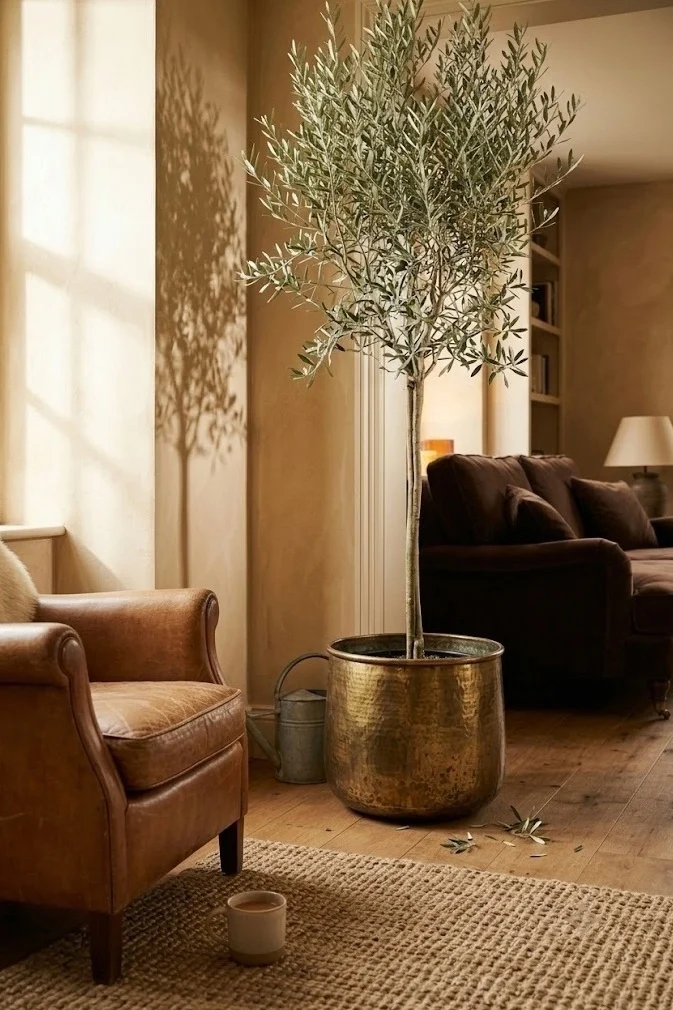
An olive tree in an aged brass planter beside the sofa adds height on the side of the room that usually stays empty. Anything over five feet tall changes how a big sofa reads, because it interrupts the long horizontal line of the back cushions and gives the eye somewhere to travel upward. Brass planters do more work than ceramic here, since the metal picks up light from across the room and gives the corner a small glow after dark. Real olive trees want four to six hours of direct sun and thin out fast without it, so be honest about your window before buying. In a genuinely dark corner, a faux olive with detailed trunk texture is the better call.
16. A Tight Grid of Brass-Framed Prints Above the Sofa
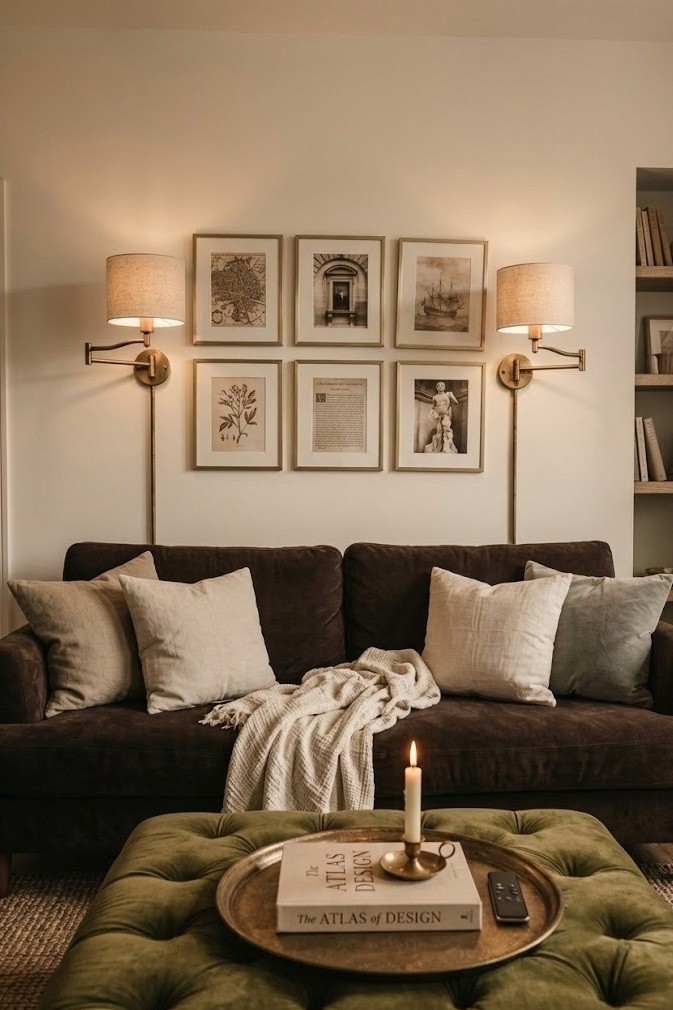
A tight grid of brass-framed prints gives the wall above the sofa a defined shape instead of one lonely picture floating over three feet of upholstery. Six frames in a two-by-three grid with a consistent 2 to 3 inch gap looks deliberate, while scattered sizes need far more skill to land. The whole arrangement should span roughly two-thirds of the sofa width, and the bottom row should sit 8 to 10 inches above the sofa back so the two read as one unit. Warm brass or antique gold frames repeat metal from elsewhere in the room and keep the grid from feeling like an office corridor. Keep the art muted: sepia photographs, ink studies, botanicals, plain textured paper.
17. Olive Green Panels on the Window Wall
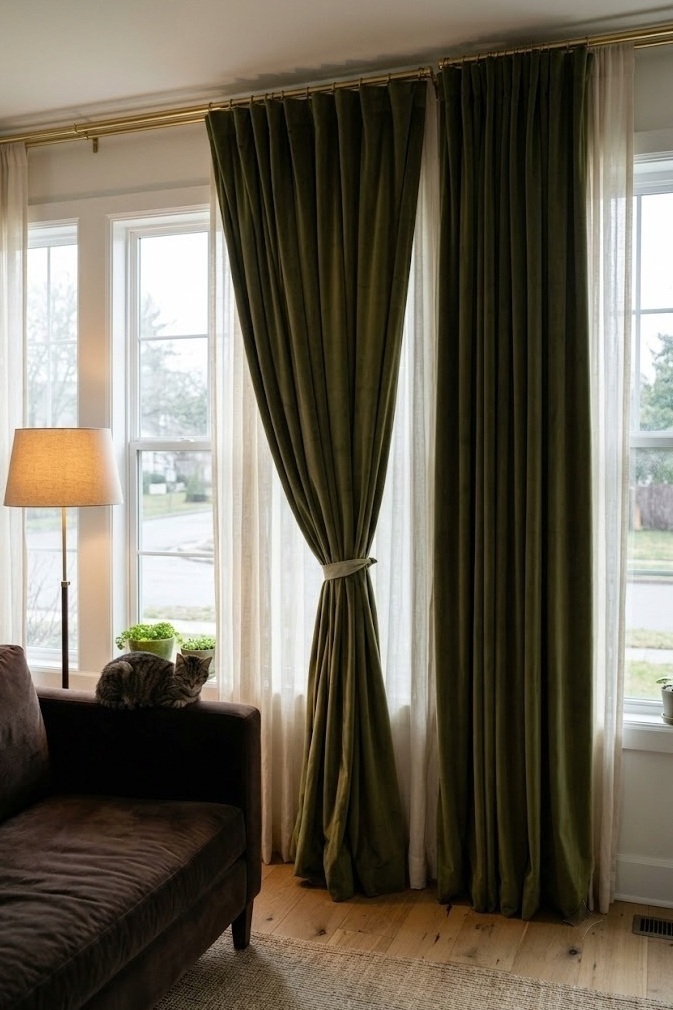
Olive green panels on the window wall wrap the room in a second color at full height, which does more for a brown sofa than any number of small accents scattered around it. Olive is deep enough to hold its own beside chocolate without the two competing, and it stops an all-neutral room from tipping into flatness. Hang the panels floor to near-ceiling, and choose a matte weave such as cotton velvet or heavy linen, because sheen turns olive slightly acidic under warm bulbs. If ivory panels are already up, add olive on an outer rod rather than replacing them, so daylight still filters through when the olive is pulled back. Two layers also cut drafts in an older house.
18. Antique Brass Candlesticks Down a Dark Wood Mantel
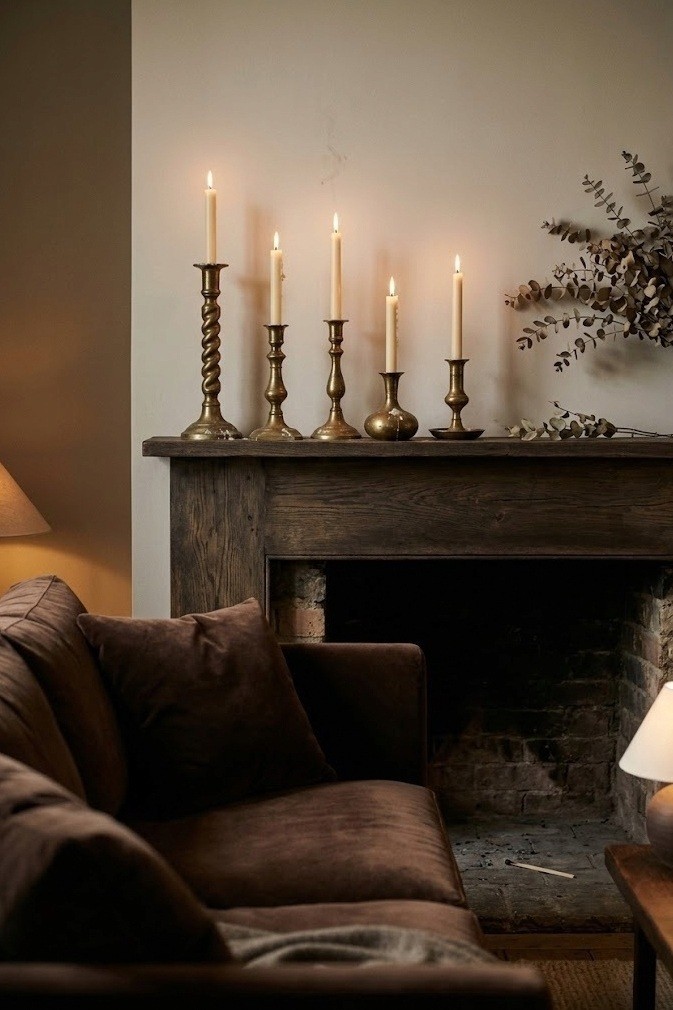
Brass candlesticks in a run of three or five along a dark wood mantel repeat warm metal up high, which balances a room where all the visual weight sits at floor level. Vary the heights by at least two inches between neighbors so the line has rhythm instead of reading like a fence, and push the group slightly off-center if the mantel already carries a mirror or a painting. Unlacquered brass is the one to hunt for; polished lacquered brass looks new and thin against old wood. Paired with the amber glass from idea 11 on the coffee table, the two catch the same light after dark and the room stops feeling like separate zones. Taper candles burn roughly seven to nine hours, so buy them by the box.
19. A Buffalo Check Wool Blanket Folded Over the Sofa Back
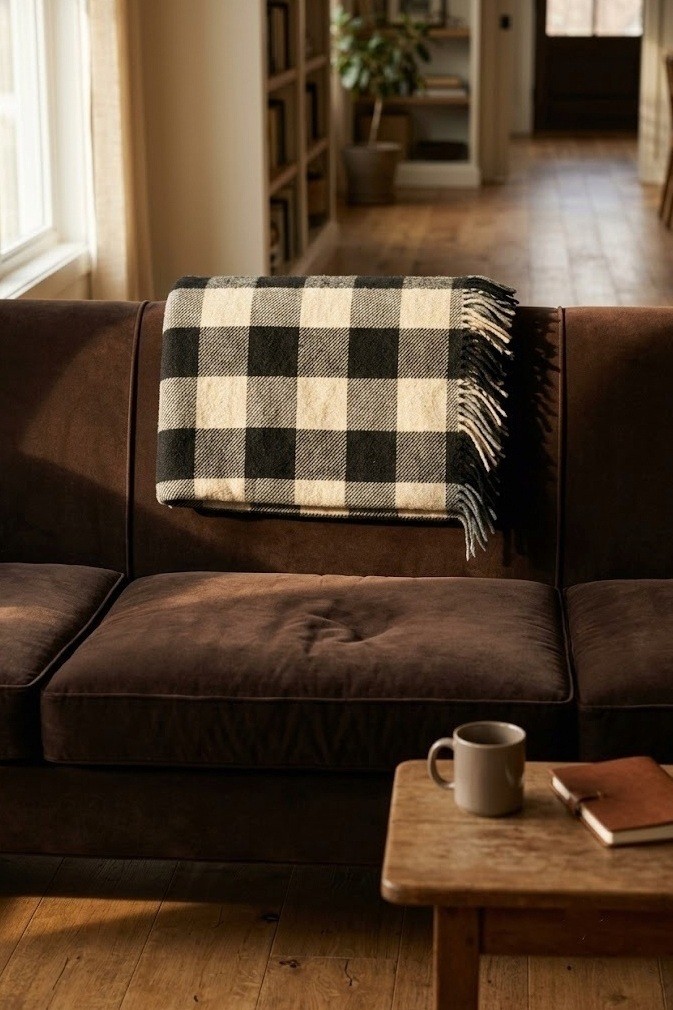
A buffalo check wool blanket folded in thirds over the sofa back adds pattern without asking you to change a single piece of furniture. Black and cream check works on chocolate because the black picks up the sofa's own shadows while the cream picks up the trim; brown and cream check disappears against a brown sofa, and that is the version most people buy by mistake. Lay it across one half of the sofa back rather than centering it, so it looks used instead of staged. Wool is warmer and stiffer than cotton, which is exactly what lets a folded edge hold its shape all week instead of slumping into a heap by Tuesday evening.
20. A Wool Blanket Ladder Stacked With Plaid in the Corner
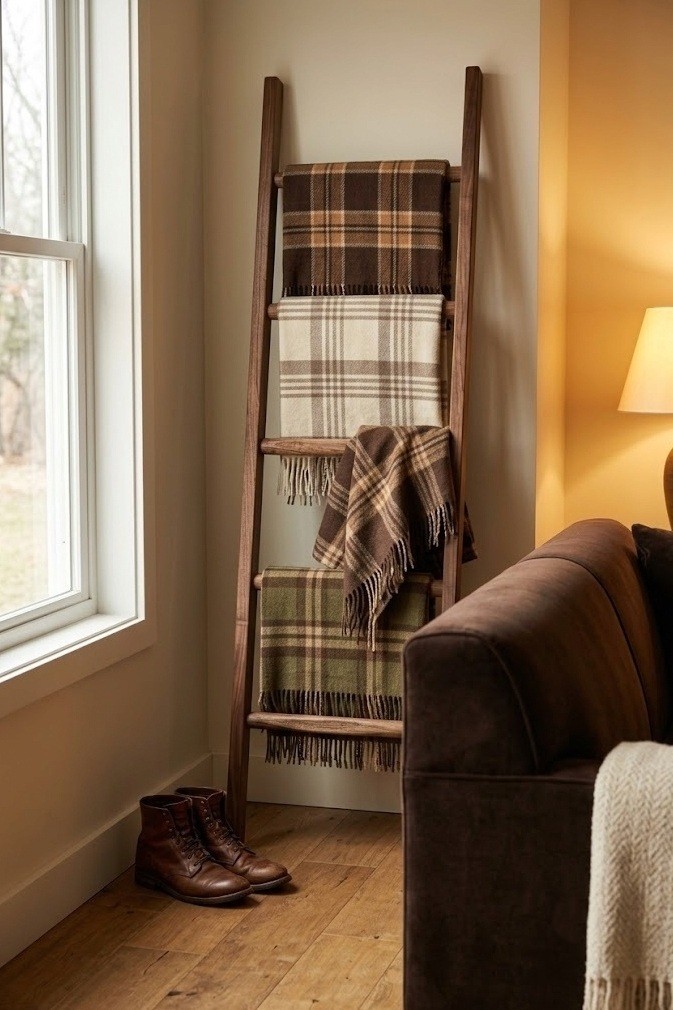
A leaning blanket ladder in the corner beside the sofa stores three or four plaids in plain sight and gives that dead corner a vertical line it never had. Five-foot ladders with rungs about 12 inches apart hold four blankets comfortably; tighter spacing crushes the folds into each other and the plaid stops reading. Lean it at roughly a 15 degree angle and, if there are toddlers or a climbing cat in the house, anchor the top rail with a small L-bracket into a stud. Unfinished oak or dark walnut both sit well next to brown, but skip painted white ladders, which look like they wandered in from a different house. Hang each blanket folded lengthwise so the pattern shows from across the room.
21. An Undyed Wool Pouf Pulled Up as a Footrest
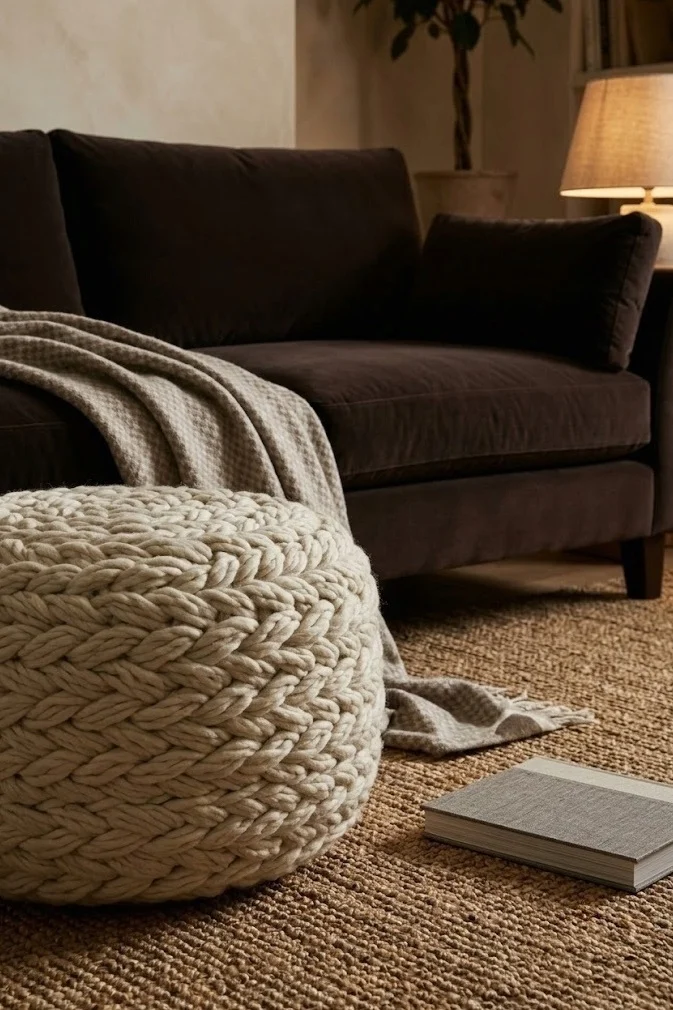
An undyed wool pouf pulled up in front of the sofa gives you a footrest that also breaks the floor plane with texture instead of another hard surface. Cream or oatmeal wool against dark brown is the same light-on-dark contrast running through this whole post, except at knee height where you see it constantly while seated. Look for a firmly stuffed pouf, 16 to 18 inches tall, ideally with a removable cover; loosely filled ones flatten within a few months and end up as a sad disc nobody uses. Hand-knotted or braided wool holds its shape far better than loosely wrapped versions, which shed fibers across the floor for the first year and need vacuuming around constantly.
22. A Herringbone Wool Rug Layered Over Jute Under the Sofa Legs
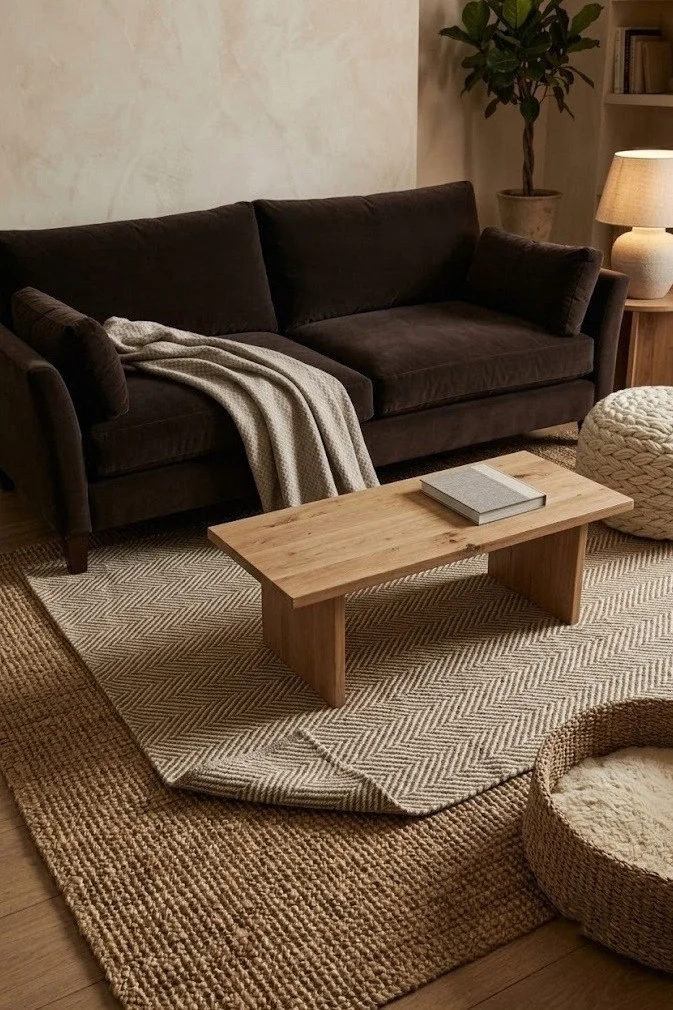
Layering a herringbone wool rug over a larger jute rug under the sofa legs buys you two textures for less than one large wool rug, which is usually the most expensive object in the room. The jute does the size work, so it should extend roughly 18 inches past each end of the sofa; the wool layer sits centered under the coffee table and absorbs the traffic. Cream and brown herringbone reads soft from a distance and hides crumbs considerably better than a flat weave. This is the cheaper route to the same floor coverage as the vintage-look rug in idea 10, and it suits a room already carrying plaid or pattern elsewhere. Use a rug pad between layers or the wool creeps.
23. A Sheepskin Draped Over the Reading Chair Across From the Sofa
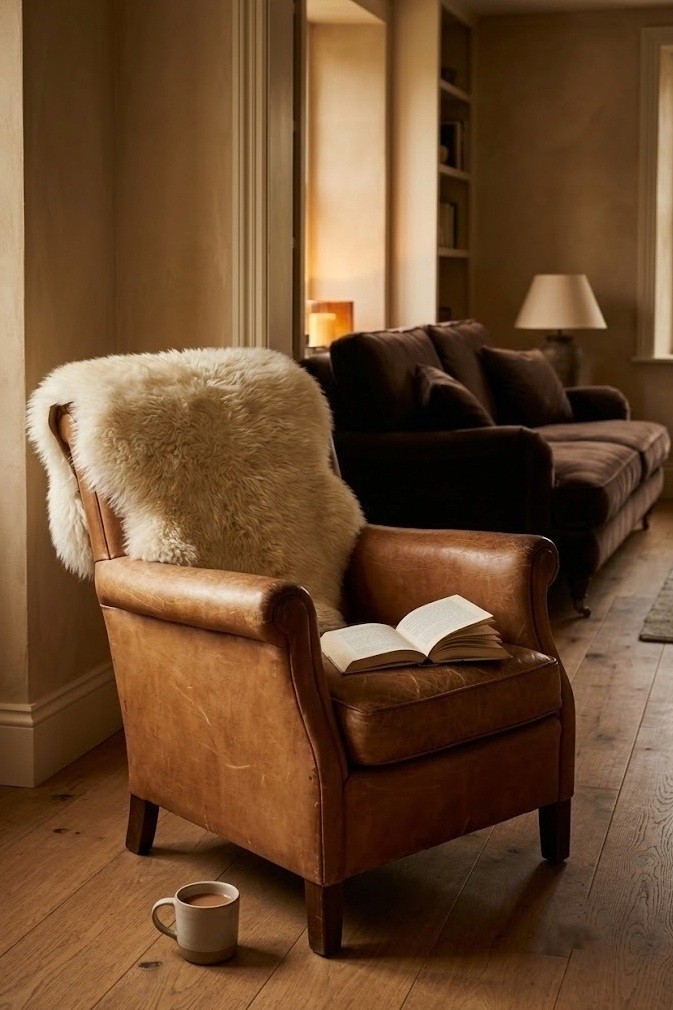
A sheepskin draped over the reading chair opposite the sofa is the last five percent that makes a room look styled by someone who actually lives in it. Hang it over one back corner at an angle rather than squaring it to the chair, because a centered sheepskin reads as a seat cover. Real sheepskin lasts years and can be brushed back to life with a pet slicker brush, while faux versions mat down permanently in the exact spots you sit. Keep it to one per room. Two sheepskins plus a wool pouf plus a plaid ladder in the same eyeline turns cozy into a costume, and that is the fastest way to lose the calm a dark brown sofa gives you for free.
Final Thoughts
The sofa was never the problem in any of these rooms. Dark brown behaves like a neutral once you stop fighting it, and it will sit quietly under whichever accent palette you pick, as long as you pick one and repeat it three or four times. If you do nothing else before October, add light at two heights, put one pale texture directly against the sofa, and get a rug big enough for the front legs. Those three moves beat twenty small purchases. Save this post to Pinterest so you can work through the rest at your own pace.
Frequently Asked Questions
What colors go best with a dark brown sofa?
Warm white, cream, rust, olive green and brass work best, because each one shares a yellow or red undertone with the brown. Cool grays and blue-based whites are what make brown look muddy. Pick one accent family rather than all of them, and repeat it three or four times around the room so it reads as a decision instead of an accident.
Does a dark brown sofa make a small living room feel smaller?
Not by itself. What shrinks a room is a dark sofa combined with dark walls, heavy curtains and no light at seated height. Keep the walls warm white, add two or three low light sources, and put something pale directly against the sofa, like a cream throw or a boucle chair, and the sofa reads as an anchor rather than a wall.
How do I make a brown sofa look cozy for fall without redecorating?
Three things: a wool or chunky-knit throw over one arm, rust or amber accents on the coffee table, and warmer bulbs at around 2700K in every lamp. That is usually under a hundred dollars and takes an afternoon. Swap the accents back to cream and linen in spring and the same sofa carries both seasons without looking seasonal.
What size rug should I use with a dark brown sofa?
Big enough that the front legs of the sofa and every chair sit on it, which in most living rooms means 8 by 10 feet rather than 5 by 7. A small rug floating in the middle of the floor is the single most common reason these rooms look unfinished. If yours has to be small, layer it over a larger jute rug.