Stackable washer and dryer laundry closet ideas mostly fail on one thing: reach. Stacking the machines frees the floor and pushes every shelf above 70 inches, so the storage exists but you need a stool to use it. Most posts on this keyword show renovated closets with custom cabinetry and a contractor behind them. Nothing here needs building work. All 19 ideas are sorted by zone, working around the stack from the space above it to the gap beside it, the door, the floor and the machine panels themselves, and every one comes with the measurement that decides whether it fits. Save this to Pinterest so you have the numbers with you when you measure your own closet.
1. Drop-Down Rod That Brings the High Rail Into Reach
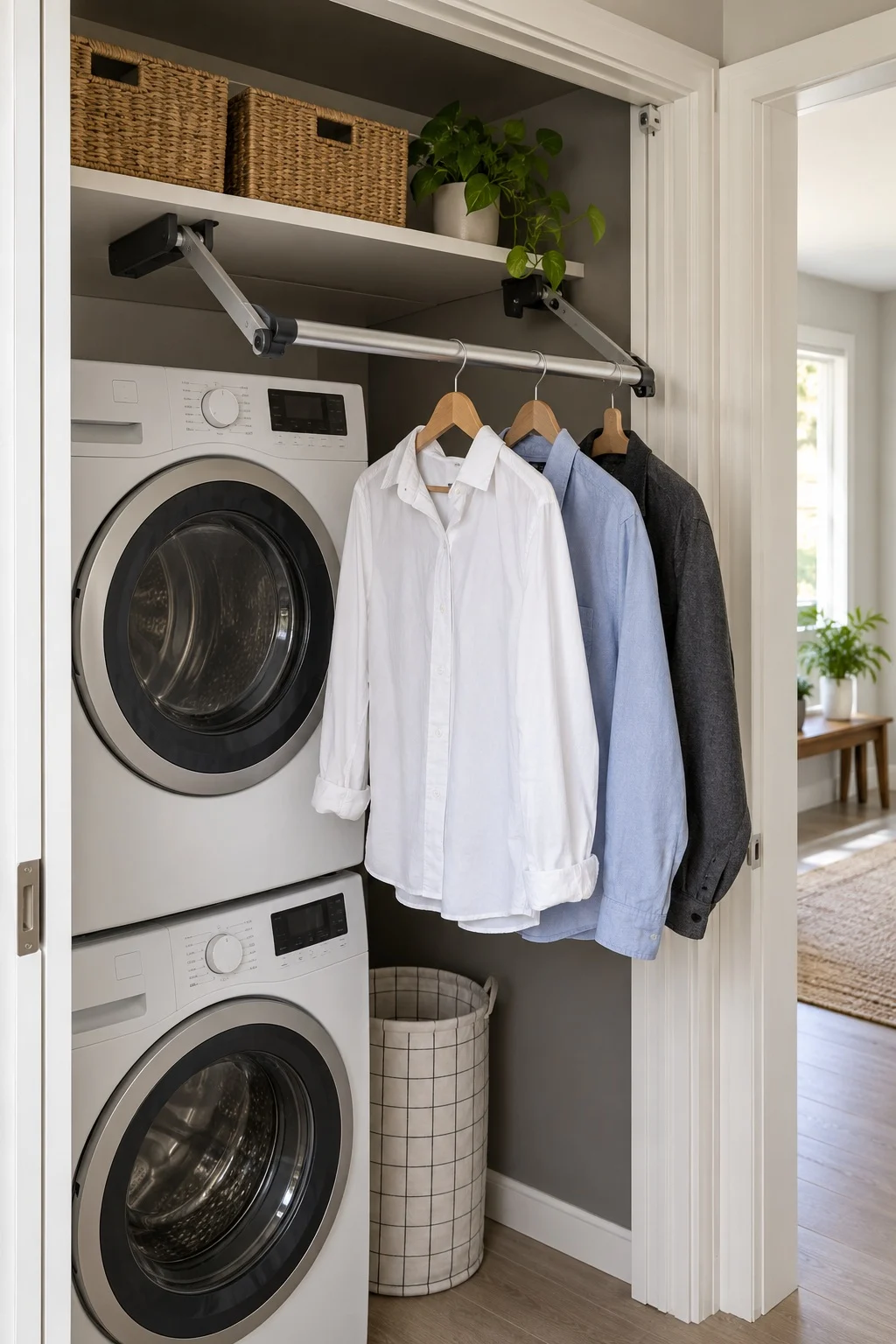
A pull-down closet rod mounted under the shelf above a stacked unit lets you hang shirts at 78 inches and then lower the whole rail to chest height with one hand. Stacked machines push every bit of storage above 70 inches, which is exactly the height most people cannot load without a stool. The rod needs about 12 inches of vertical swing clearance below it, so measure from the shelf down to the top of the dryer before ordering. Rated capacity on the common units is around 20 to 30 pounds, which is roughly a dozen wet shirts. The same rail problem shows up in small closet organization, where the top rod is always the part nobody uses.
2. Two Shallow Shelves Instead of One Deep One
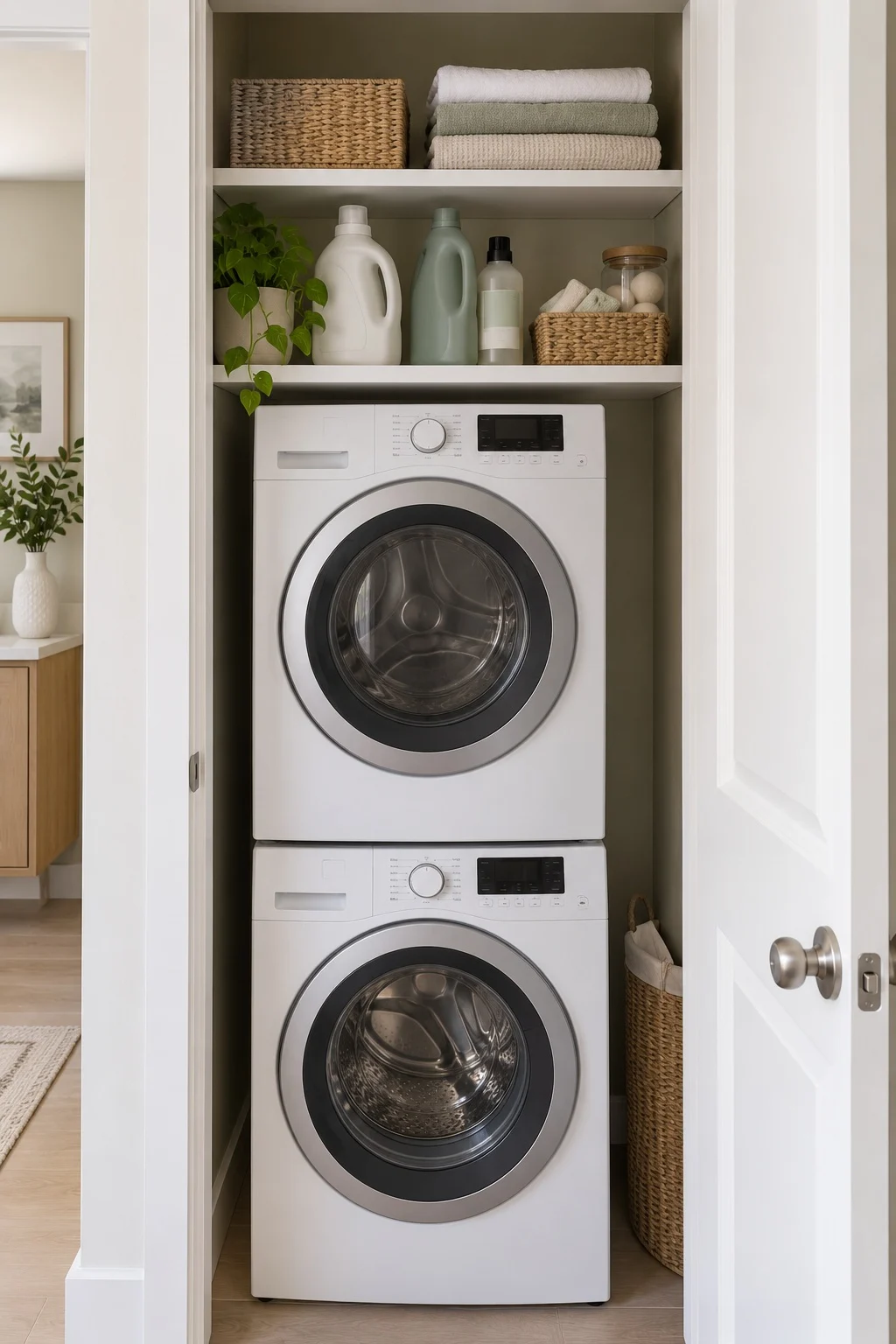
Splitting the space above a stacked unit into two shelves at 10 to 12 inches deep beats a single deep shelf, because anything you push to the back of an 18 inch shelf at head height is gone for good. Set the lower shelf about 4 inches above the dryer top so the stacking kit and the vent have room, then leave 13 to 15 inches between the two so a detergent jug stands upright. Shallow shelving is what makes a closet office work in the same footprint. Rental closets usually come with one wire shelf already, so adding a second below it is often the whole job.
3. Clear Stackable Bins You Can Read From Below
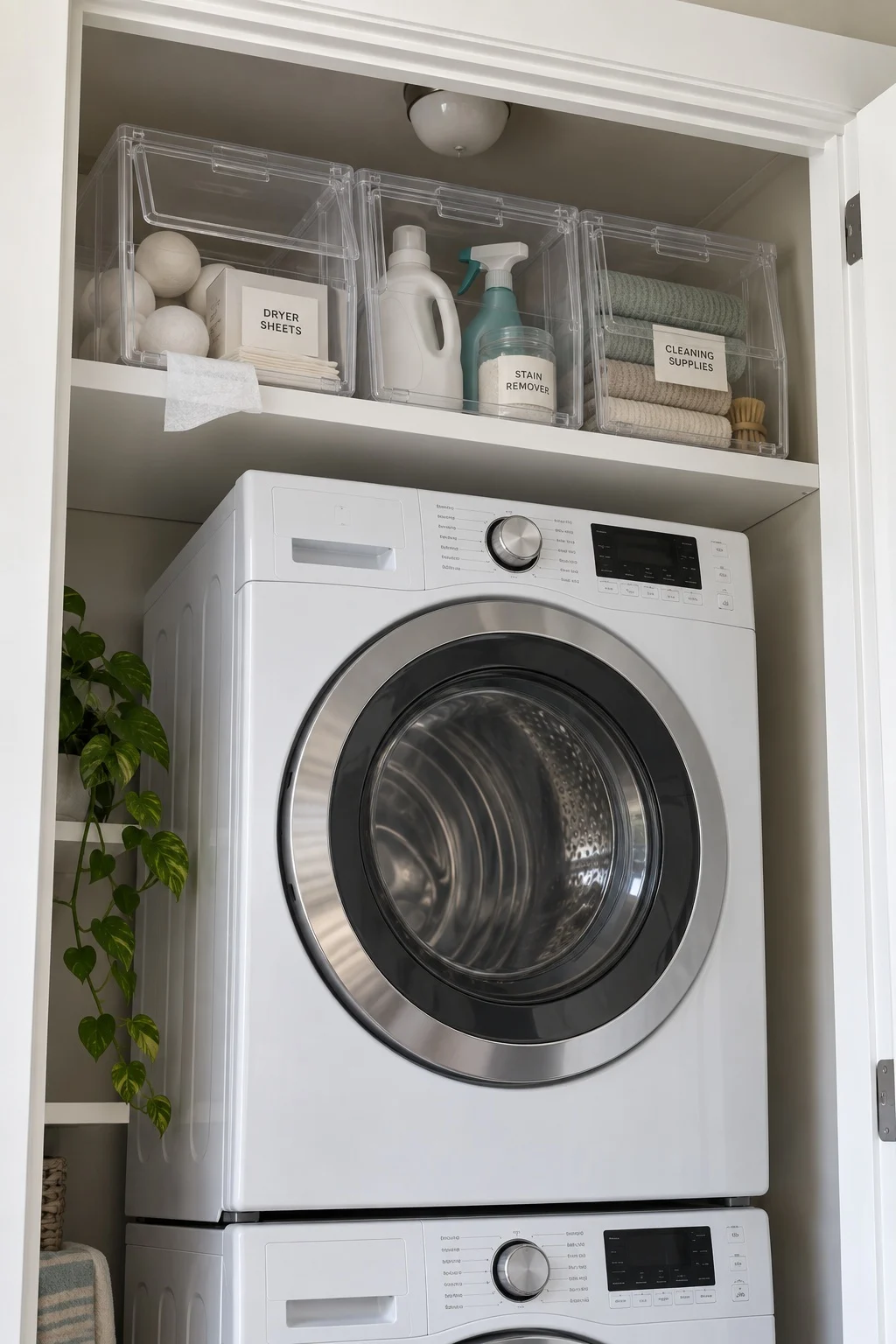
Clear stackable bins with a drop-front opening solve the real problem of a high shelf, which is that you cannot see into an opaque basket from five feet below it. Pick bins no taller than 7 inches so the lid still clears the shelf above, and keep them under about 6 pounds loaded, since you will be lifting them down at arm's length over a machine. Label the front face, not the lid, because the lid is the one surface you will never look at again. Paired with the two-shelf split in idea 2, a row of three bins holds a full restock without anything disappearing to the back.
4. A Handled Tote That Comes Down as One Unit
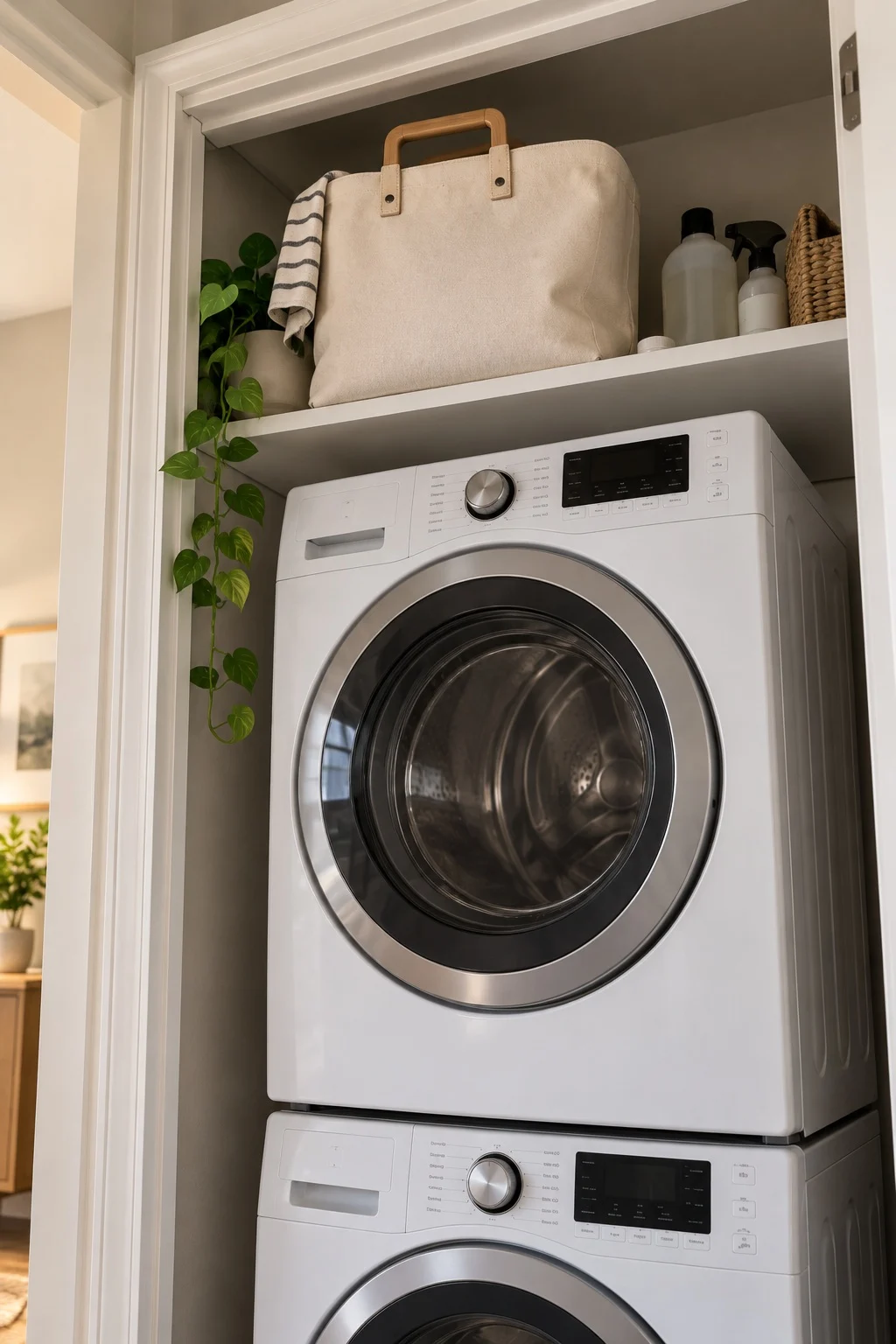
Keeping the top shelf as a single handled tote rather than loose items means one reach instead of five, and it is the only way a shelf above 72 inches stays usable long term. Choose a tote with a rigid handle and a footprint under 14 by 10 inches so it clears the shelf front without catching. Fill it with the things you touch once a month: wool wash, spare dryer balls, the spot cleaner. Total weight should stay under about 8 pounds, since you are lifting it down over a machine with your arms extended. Pull the whole tote to the counter, use what you need, put it back.
5. Clip-On Baskets Hung Under the Existing Wire Shelf
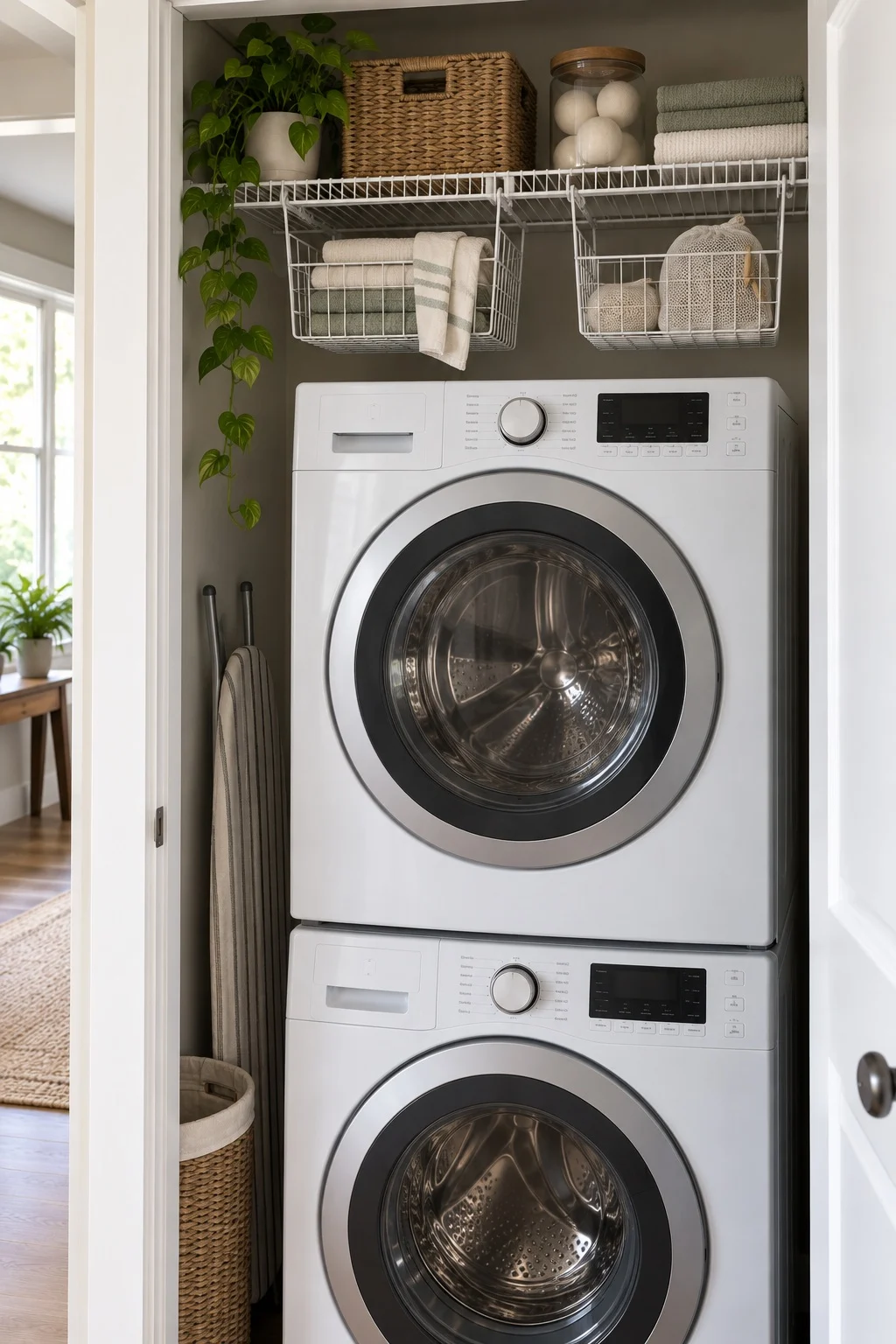
Under-shelf baskets that clip onto the builder wire shelf drop the usable storage height by 6 to 8 inches, which is often the difference between reaching something and not. They slide on from the front and need a shelf wire gauge they can grip, so check yours is a standard coated wire rack rather than solid melamine. Load them with flat, light things: dryer sheets, mesh bags, folded cloths. A loaded basket sways when you pull it, so leave 2 inches of clearance to whatever sits below. On a rental shelf this adds storage without a single new hole in anything.
6. A Narrow Gap Cart Sized to the Tightest Point
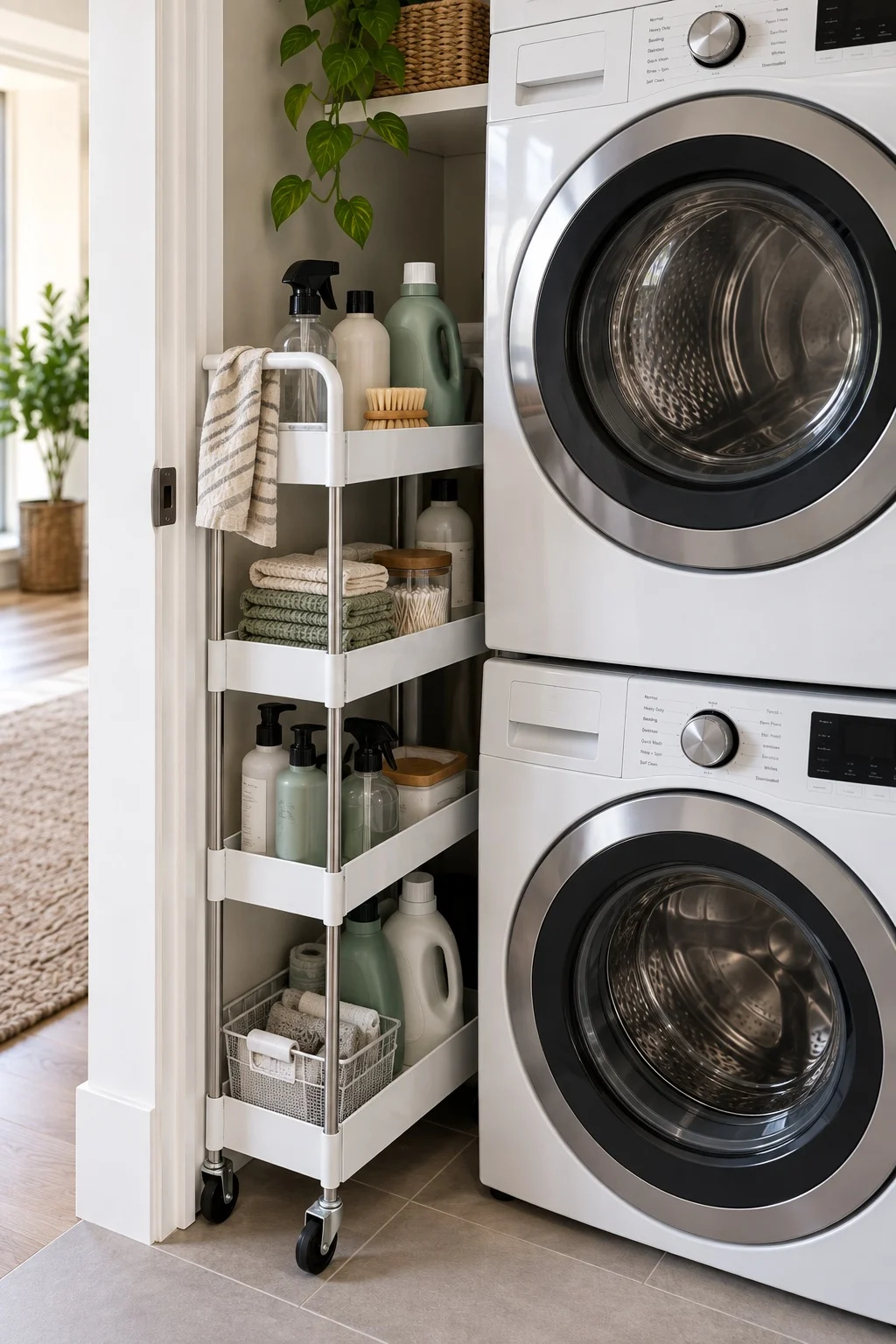
A narrow gap cart on casters turns the dead slot beside a stacked unit into four or five shelves that pull fully into the room. Measure the narrowest point, not the opening, because the baseboard and the door casing usually steal an inch from what you measured at the front. Most stacked closets leave a 6 to 10 inch gap on one side. Locking casters matter more here than anywhere else in the closet, since a stacked unit vibrates harder than a side-by-side pair and an unlocked cart will creep and wedge itself behind the machine. Load the bottom shelves heavy so it does not tip on the pull-out.
7. A Full-Height Pull-Out Rack When the Gap Is Wider
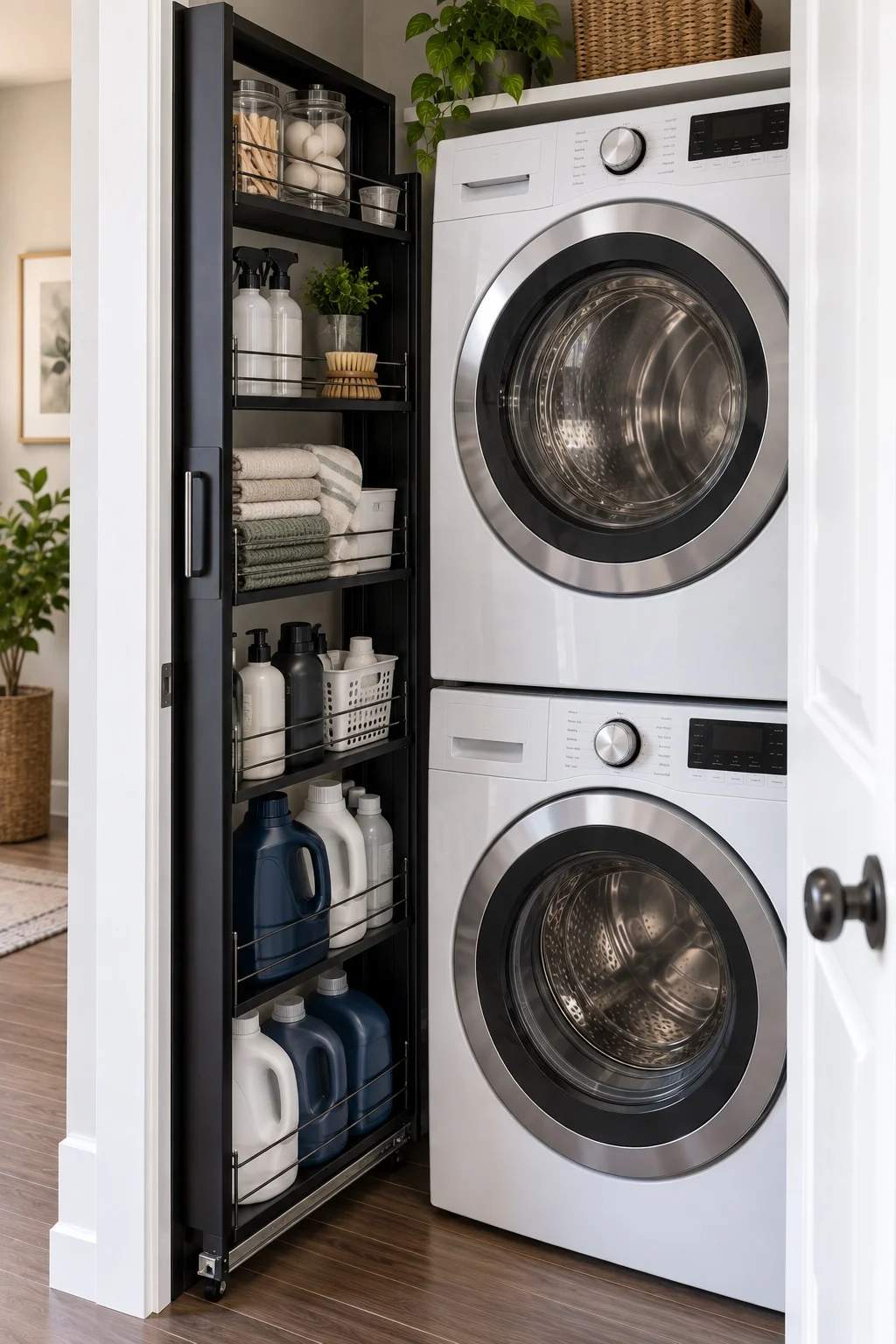
Gaps over about 10 inches take a full-height pull-out rack that runs floor to shelf and holds jugs upright, which is a different piece of furniture from the shallow cart in idea 6. Depth is the number that decides it: the rack must clear the machine face by at least an inch so the dryer door can still swing past it. Front-loader doors swing 20 to 24 inches, so check the arc, not just the gap width. Racks with a top handle pull straighter than ones you grab by a shelf edge. Keep gallon jugs on the bottom two tiers where the weight sits low and the pull stays smooth.
8. A 4-Inch Slot Turned Into a Broom and Board Garage
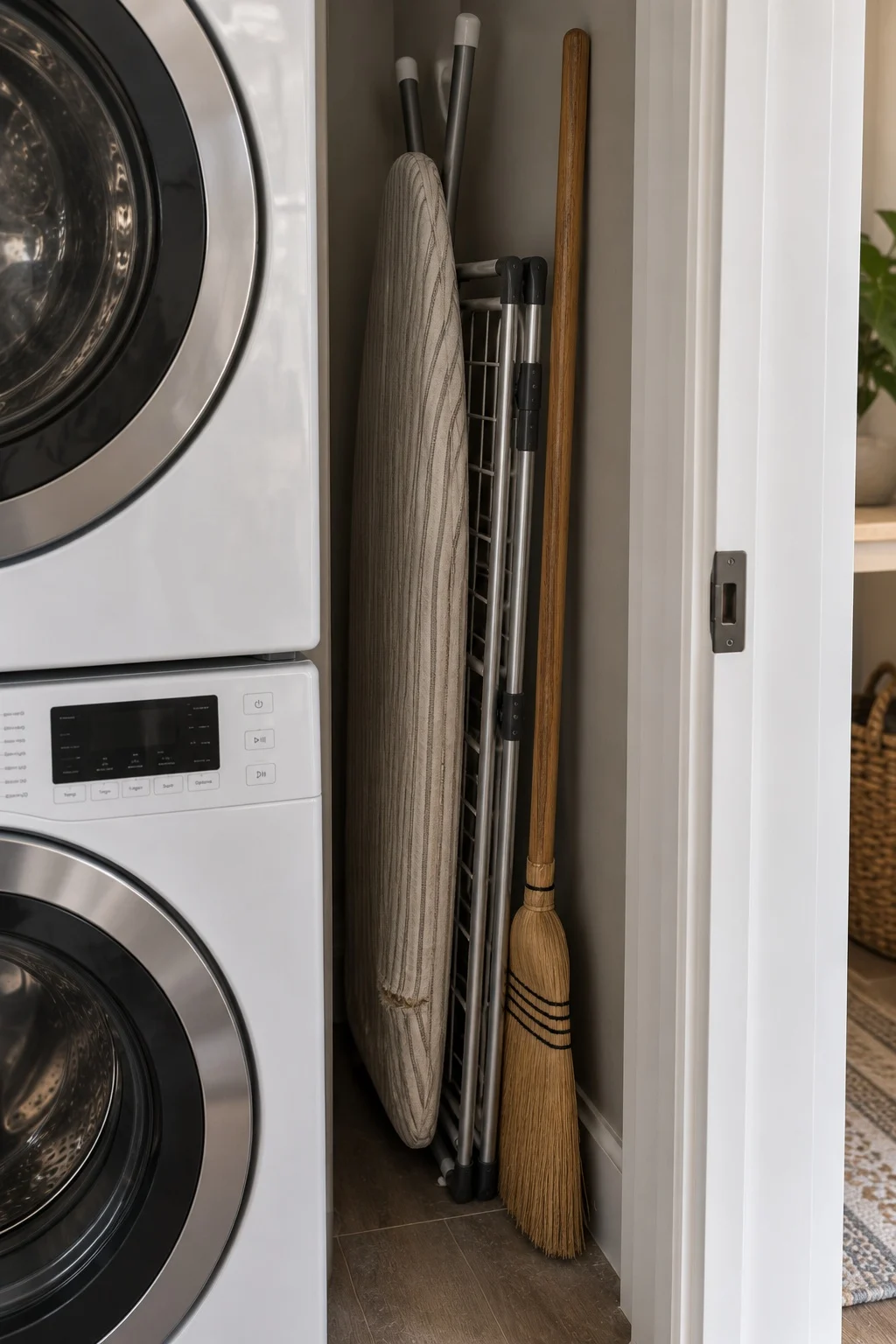
Gaps under 5 inches will not take a cart, but they hold an ironing board, a folding drying rack and a broom standing on end, which are the four awkward objects a laundry closet never has room for. Stand them with the handles toward the front so you can pull one out without unloading the rest. A slim organizer with divided slots stops everything sliding sideways into one leaning pile. Keep the mop out of a gap that stays damp, because a tight slot beside a warm dryer does not dry anything. Felt tape on the leading edge saves the paint from handle scuffs.
9. A Rolling Hamper That Lives in the Gap and Rolls Out
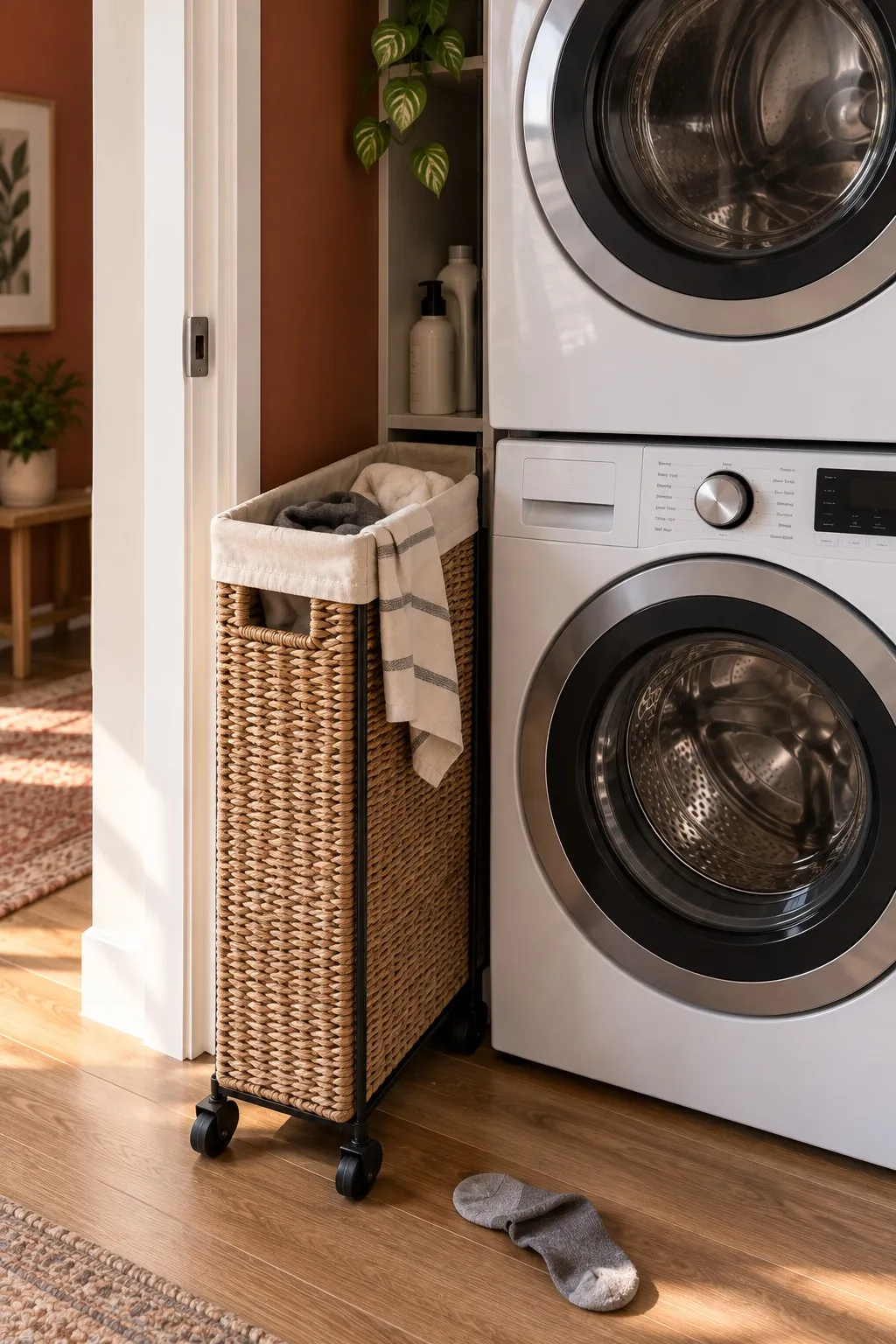
A tall narrow hamper on casters parked in the side gap keeps dirty laundry inside the closet instead of on the bathroom floor, and it rolls to the machine rather than being carried. Height is the lever here: a 28 to 32 inch hamper fits under a low shelf where a standard basket wastes the air above it. Removable liner bags make the trip to a shared laundry room bearable if your building has one. Check the caster height, since an extra 3 inches of wheel can push a hamper past the shelf it was meant to slide under. Two locking wheels stop it drifting on spin cycles.
10. Over-the-Door Storage, and the Gap That Decides It
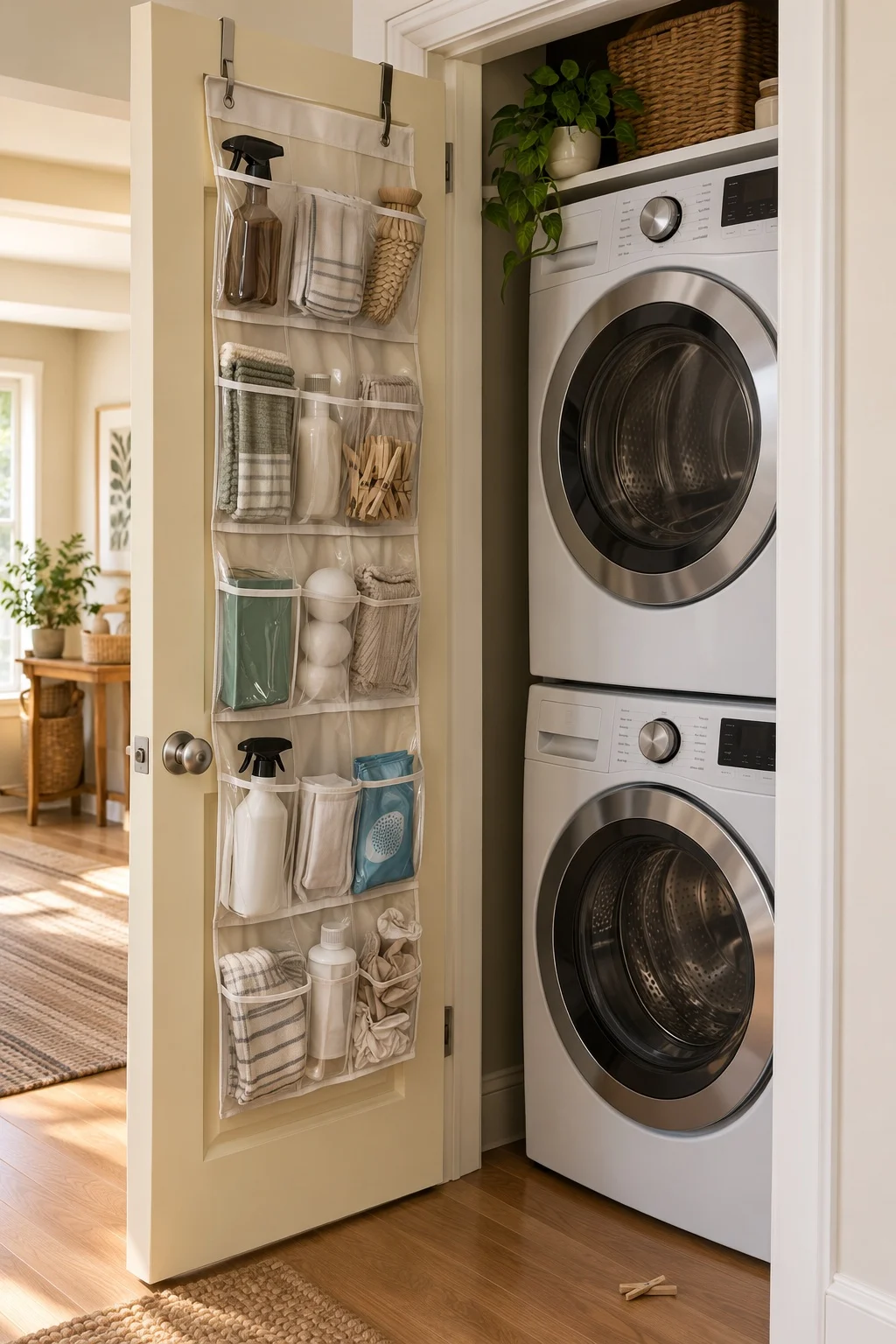
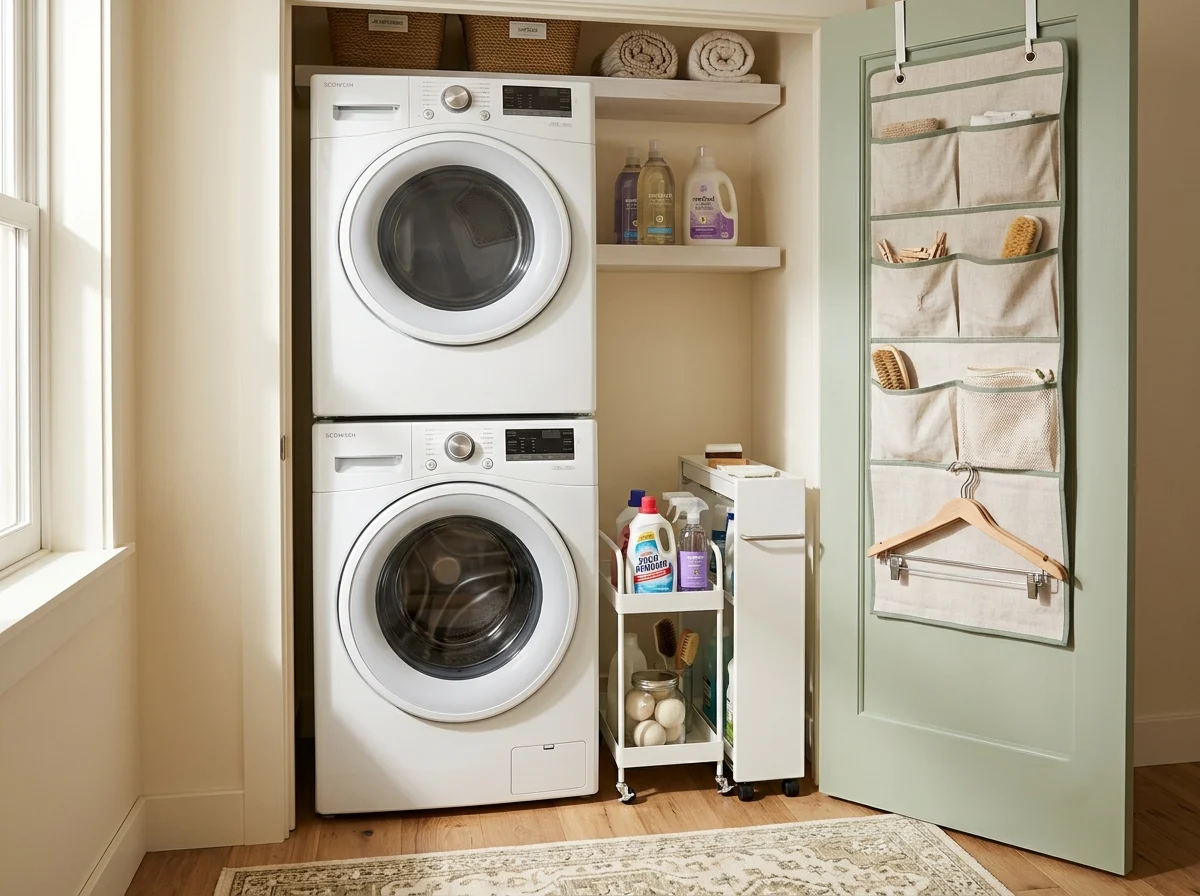
An over-the-door rack is the highest-capacity addition to a stacked laundry closet, but only a hinged door takes one, and that is the measurement almost no guide prints. The steel hooks need roughly half an inch to an inch of gap between the top of the door and the frame. Bifold doors almost never work: the track eats about 1.5 to 2 inches of the opening and the panels fold back on themselves with no clearance at the top. On a hinged hollow-core door, stay under about 15 pounds total, because the door flexes and starts to bind in the frame long before the hooks fail.
11. Pull the Bifold and Hang a Curtain Instead
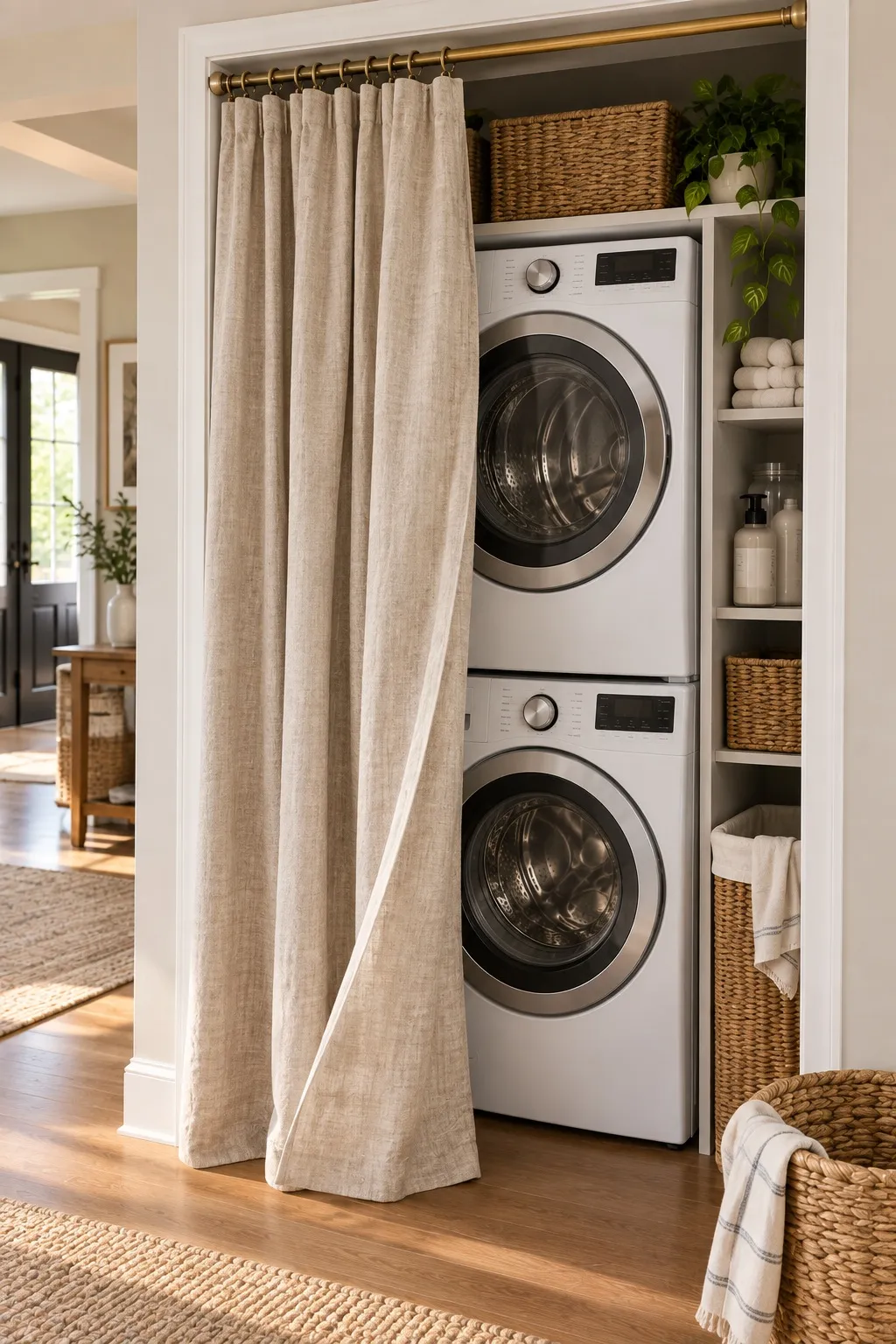
Taking the bifold doors off their track and hanging a curtain gains you the full closet opening plus the 1.5 to 2 inches the track was eating, and it is the single cheapest change you can make to a stacked laundry closet. Lift the panels off the top pivot, unscrew the track, and keep both in a closet for move-out. A tension rod at the top of the frame holds a curtain without touching the frame itself. A no-sew curtain panel in mid-weight cotton hangs straight, while anything lighter lifts every time the dryer vents. Stop the hem an inch off the floor so it does not sweep up lint.
12. The Inside Face of the Door as a Small-Tools Wall
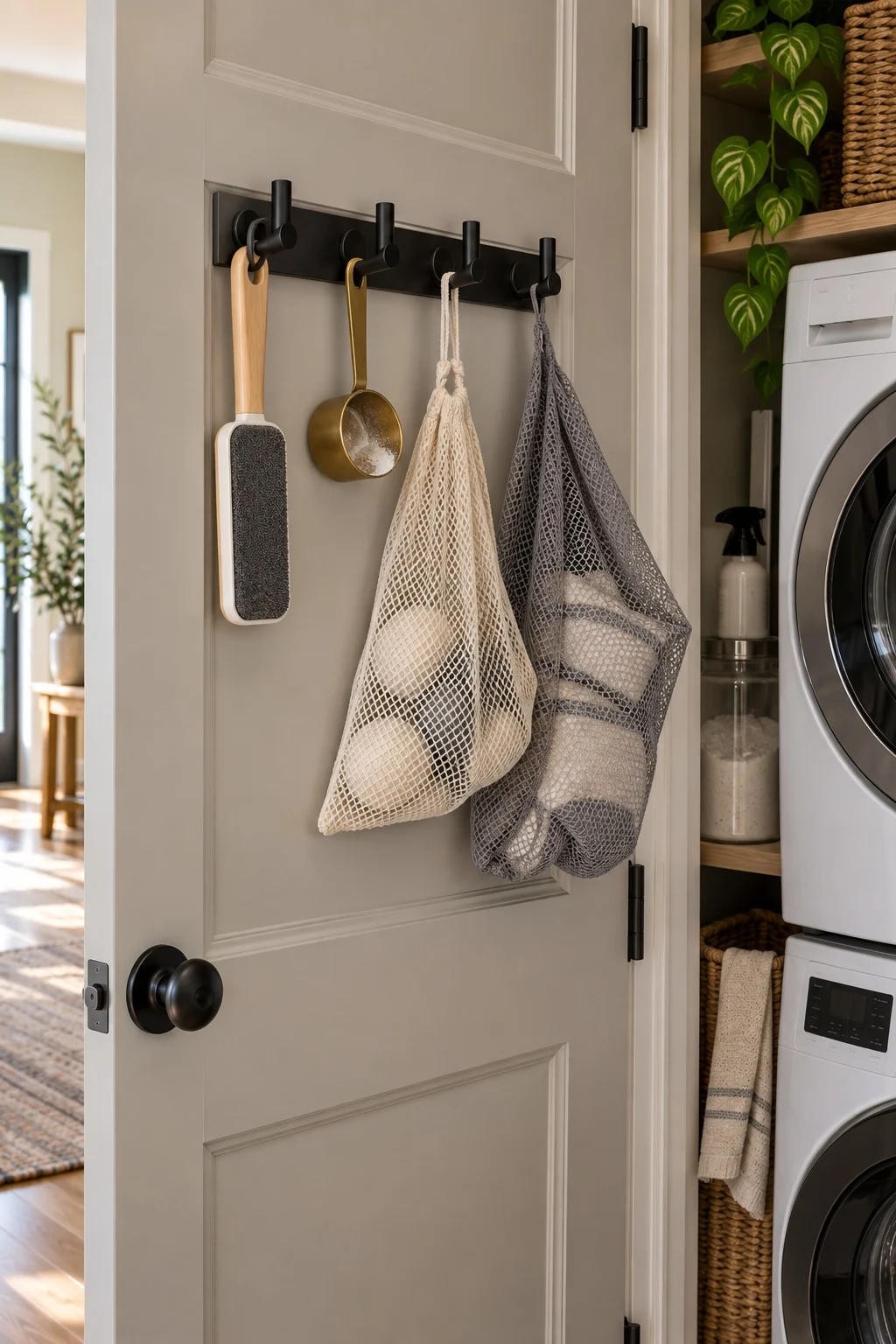
The inside face of a laundry closet door holds every small item that otherwise lives loose on top of the machines: lint brush, measuring cup, stain stick, mesh bags. Set a row of adhesive hooks at about 50 inches, which is chest height and the one zone in a stacked closet that is genuinely easy to reach. Stick them to the flat panel rather than the raised molding, since adhesive needs full contact to hold its rating. Wipe the door with rubbing alcohol first and give it an hour before loading anything. Heavy-duty hooks hold around 5 to 7.5 pounds each, which is plenty for this category of object.
13. Drying Bars on the Door for Hand-Wash Items
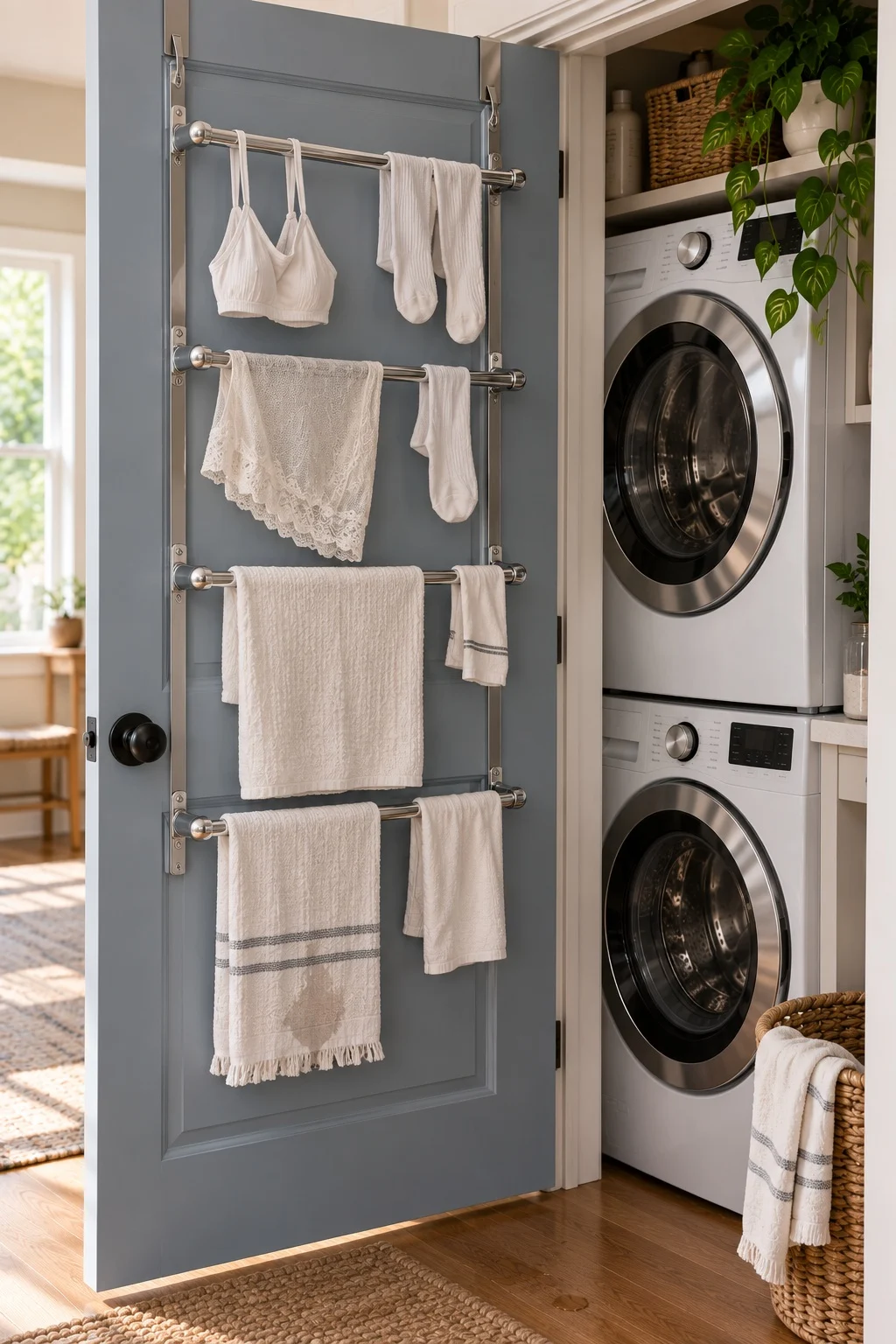
Three or four over-the-door towel bars give you drying rails in the width of a single door, which matters more with a stacked unit because there is no machine top to lay flat items on. Skip a rail between each item so thick things are not touching, and hang a thin towel on the lowest bar as a drip catcher, since damp items mark a painted door over time. Chrome and stainless survive the humidity; powder-coated steel chips where the hook rubs the door edge and rusts in that one spot. Close the door slowly while anything is hanging, or the swing throws the lot onto the floor.
14. A Low Rolling Bin That Tucks Under the Door Swing
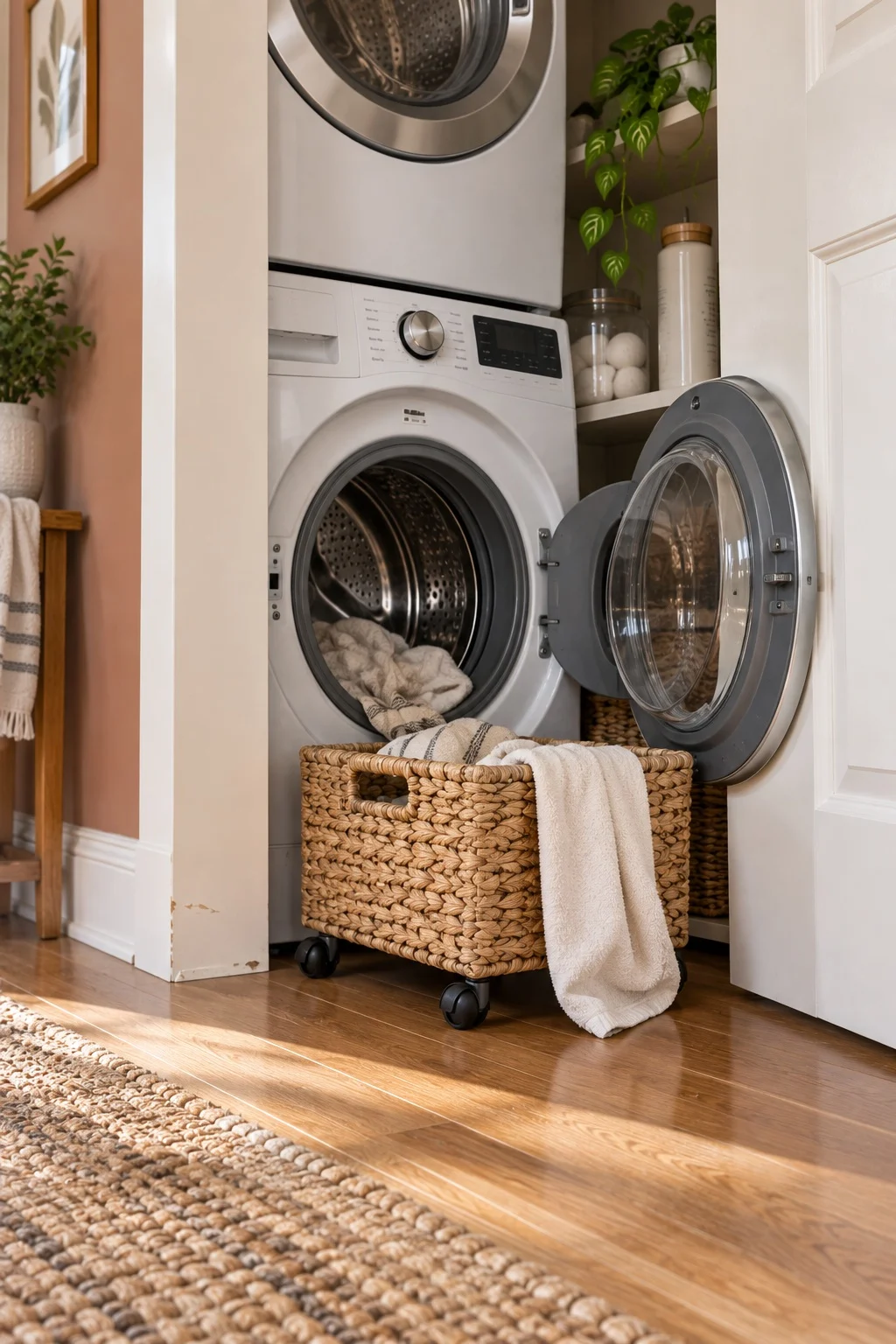
The floor in front of a stacked unit is usable up to the point where the dryer door swings, and a low rolling bin under about 14 inches tall slides into that strip and rolls out of the way. Map the swing first: open the lower machine door fully and mark where the edge lands, because a front-loader arc of 20 to 24 inches eats more floor than people expect. A bin on casters can sit inside that arc as long as it rolls, since you push it aside rather than lifting it. Use it for the overflow that would otherwise pile on the floor.
15. A Slim Runner That Handles Drips and Vibration
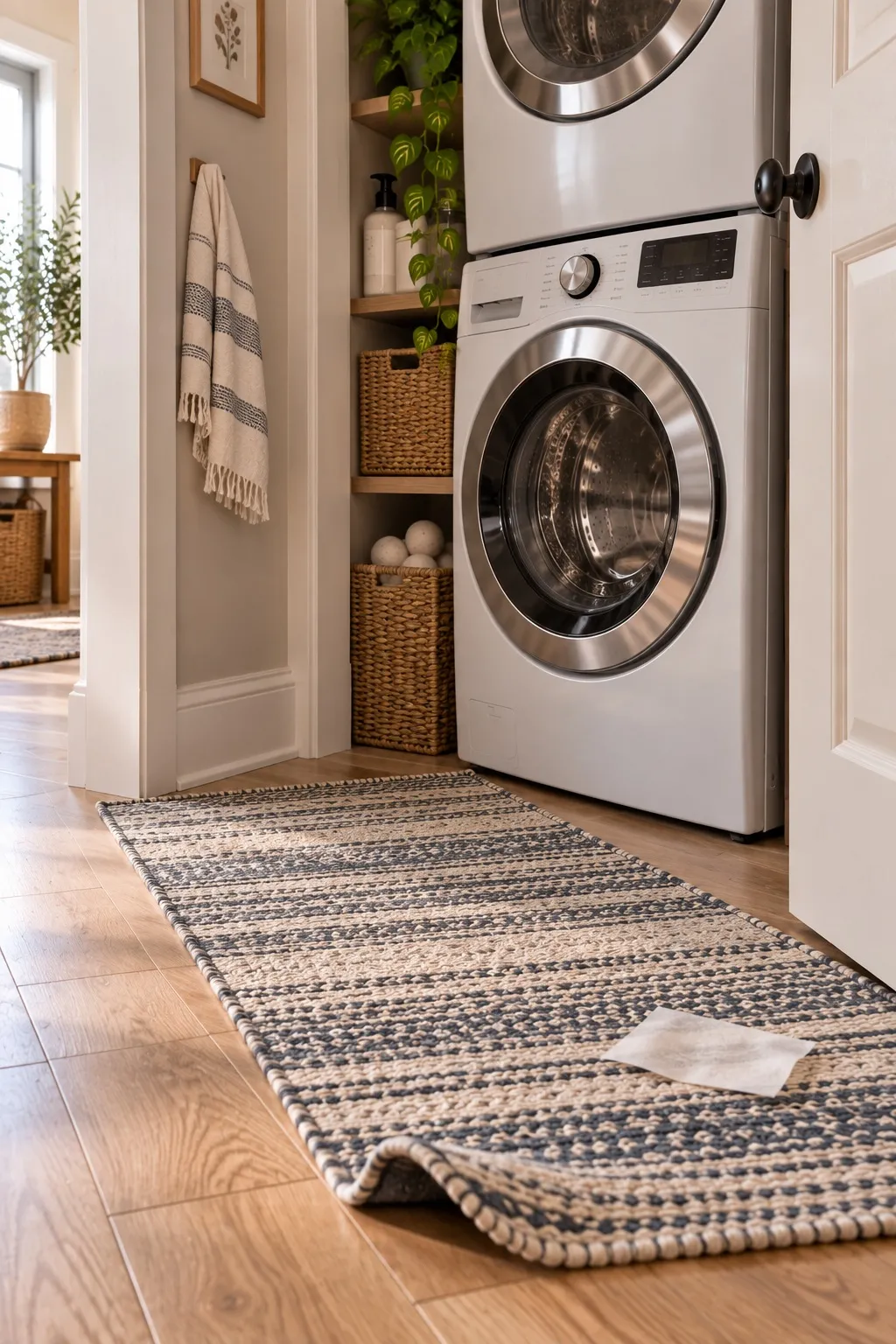
A low-pile washable runner in front of a stacked unit catches drips and takes the edge off the noise a stacked machine pushes into the floor. Keep the pile under about half an inch so the dryer door clears it, and pick a rubber-backed runner rather than a loose rug that slides every time you step off it. Runners around 2 by 3 feet suit most closet openings without running into the door swing. Wash it monthly, because the strip directly in front of a laundry machine collects more detergent residue and lint than any other floor in the home.
16. Anti-Vibration Pads Under the Feet
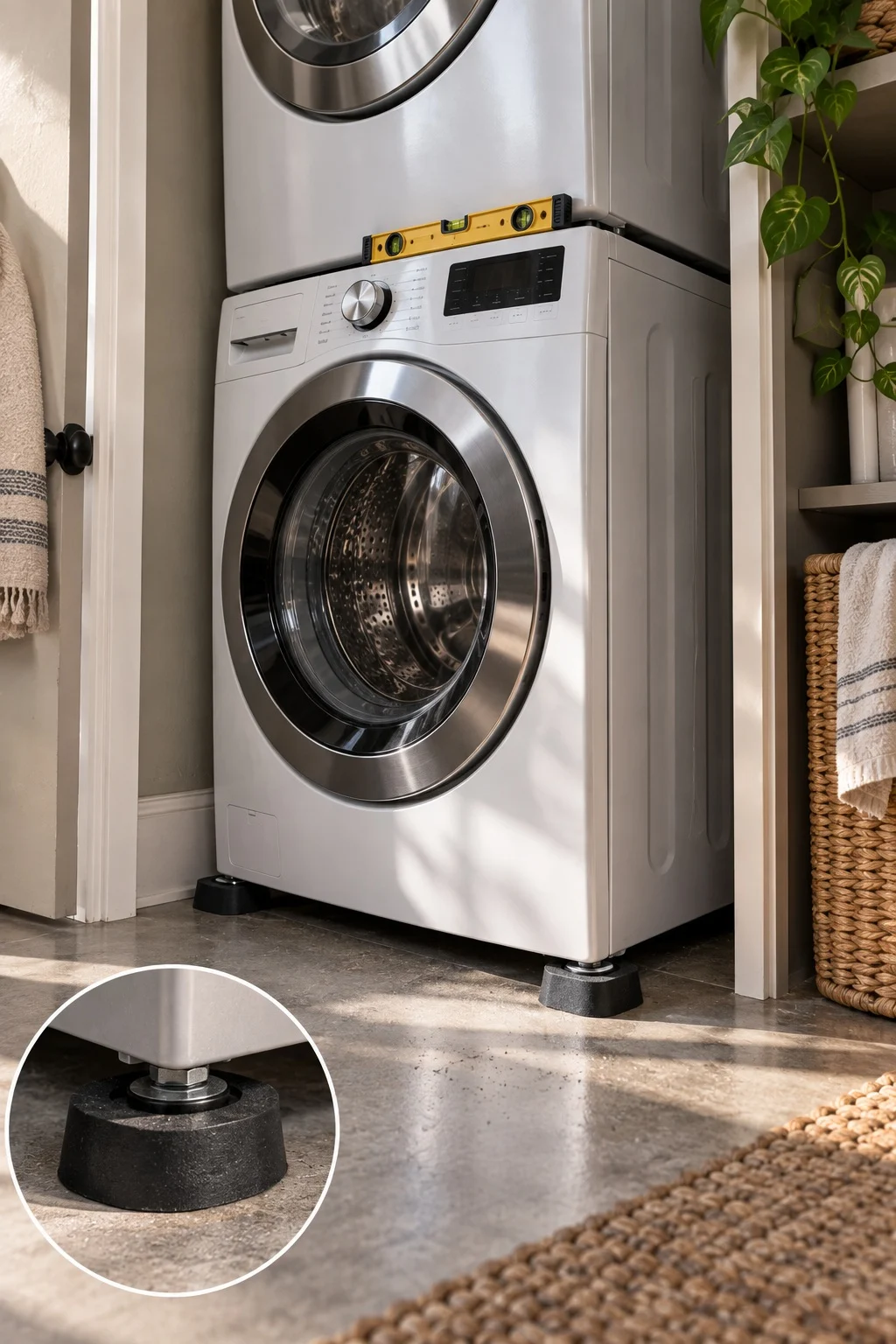
Rubber anti-vibration pads under the four feet of the lower machine stop a stacked unit walking across the floor, which is the reason so many stacked closets end up with scuffed side walls and a cart wedged behind the machine. Level the machine first with a spirit level across the top, then adjust the feet, then add the pads, because pads on an unlevel machine just change the direction it walks. Pads run about $15 to $25 a set and take ten minutes. A stacked unit sits taller and narrower than a side-by-side pair, so it amplifies any wobble it starts with.
17. A Magnetic Shelf on the Lower Machine's Side Panel
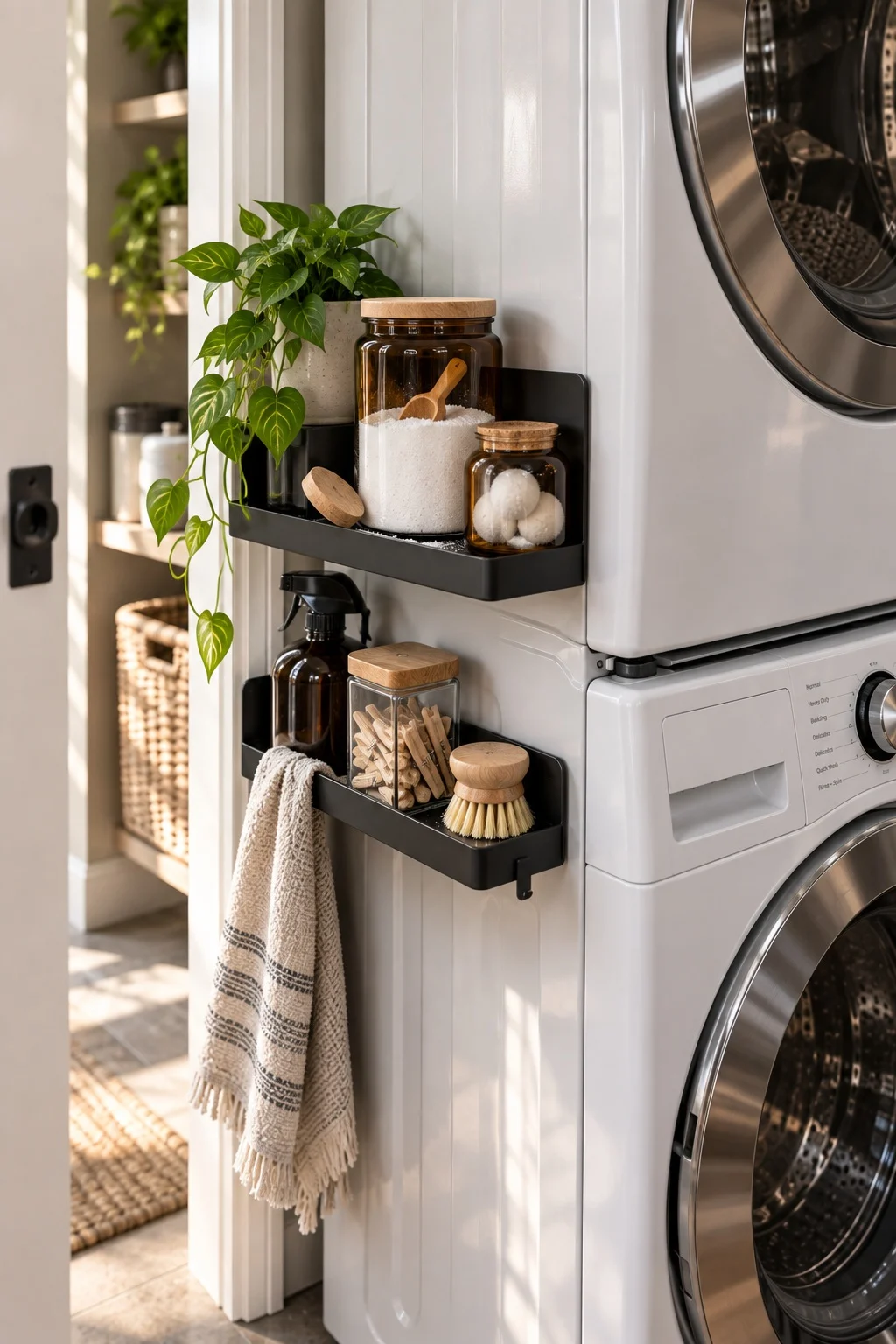
The painted steel side of the lower machine is the best storage surface in a stacked closet, because it sits between hip and chest height while everything else has been pushed above your head. A magnetic shelf holds roughly 5 to 7 pounds and mounts wherever you slide it, no bracket and no hole. Keep it on the washer rather than the dryer, since the lower machine vibrates less at the sides than the stacked unit does up top. Test with a fridge magnet before buying, because some newer machines use stainless or plastic-clad panels that a magnet slides straight off.
18. A Column of Magnetic Hooks Down the Same Panel
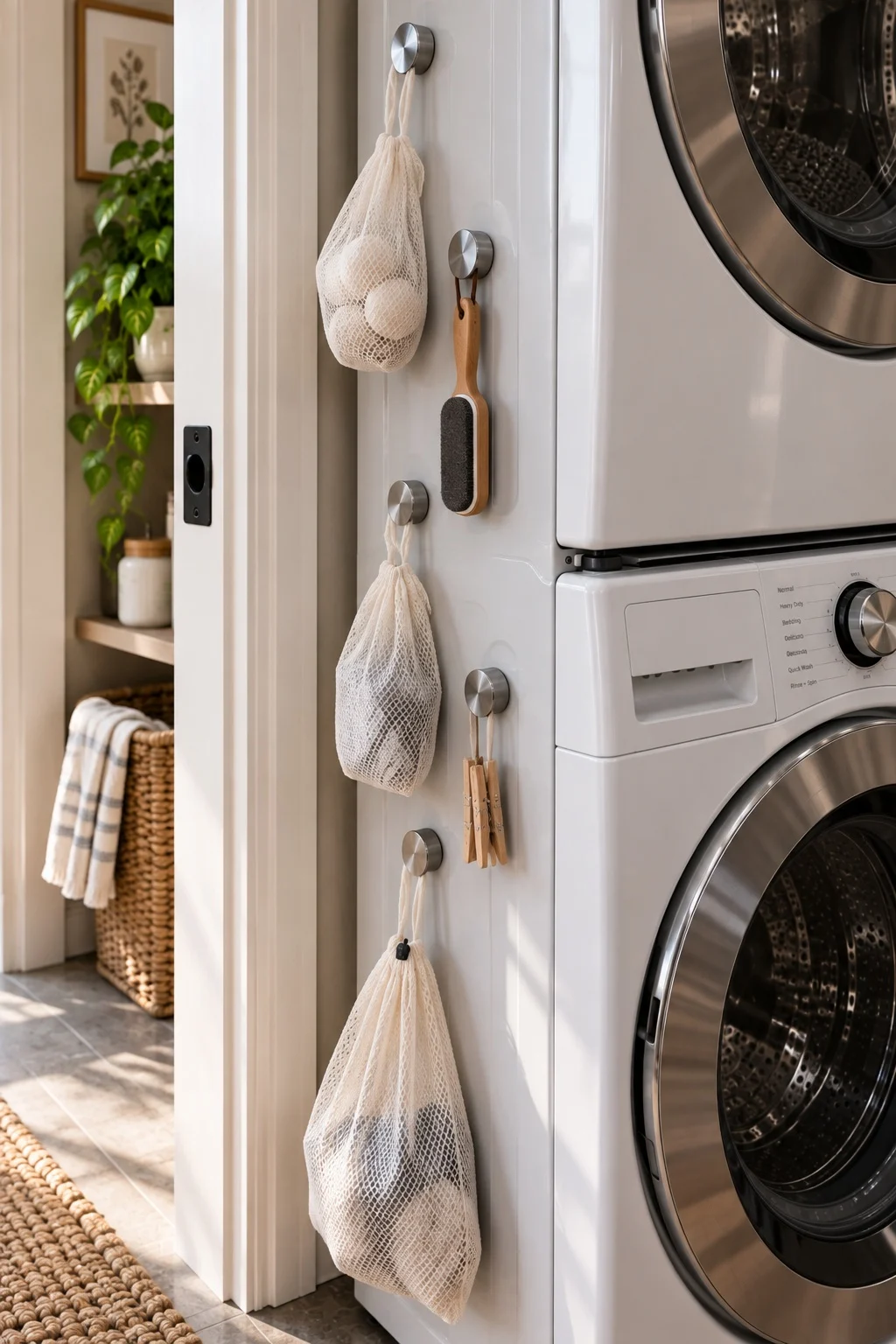
A vertical run of magnetic hooks down the machine side panel takes the mesh bags, the lint brush and the measuring cup off every flat surface in the closet without adding a shelf. Space them about 8 inches apart starting at around 40 inches from the floor, which keeps the lowest hook clear of the baseboard and the highest one within easy reach. Each hook holds roughly 2 to 5 pounds depending on the magnet size, so keep jugs off them entirely. Combined with the shelf in idea 17, this covers almost everything you touch on a normal wash day without reaching above shoulder height.
19. A Magnetic Board on the Dryer Front for the Things You Forget
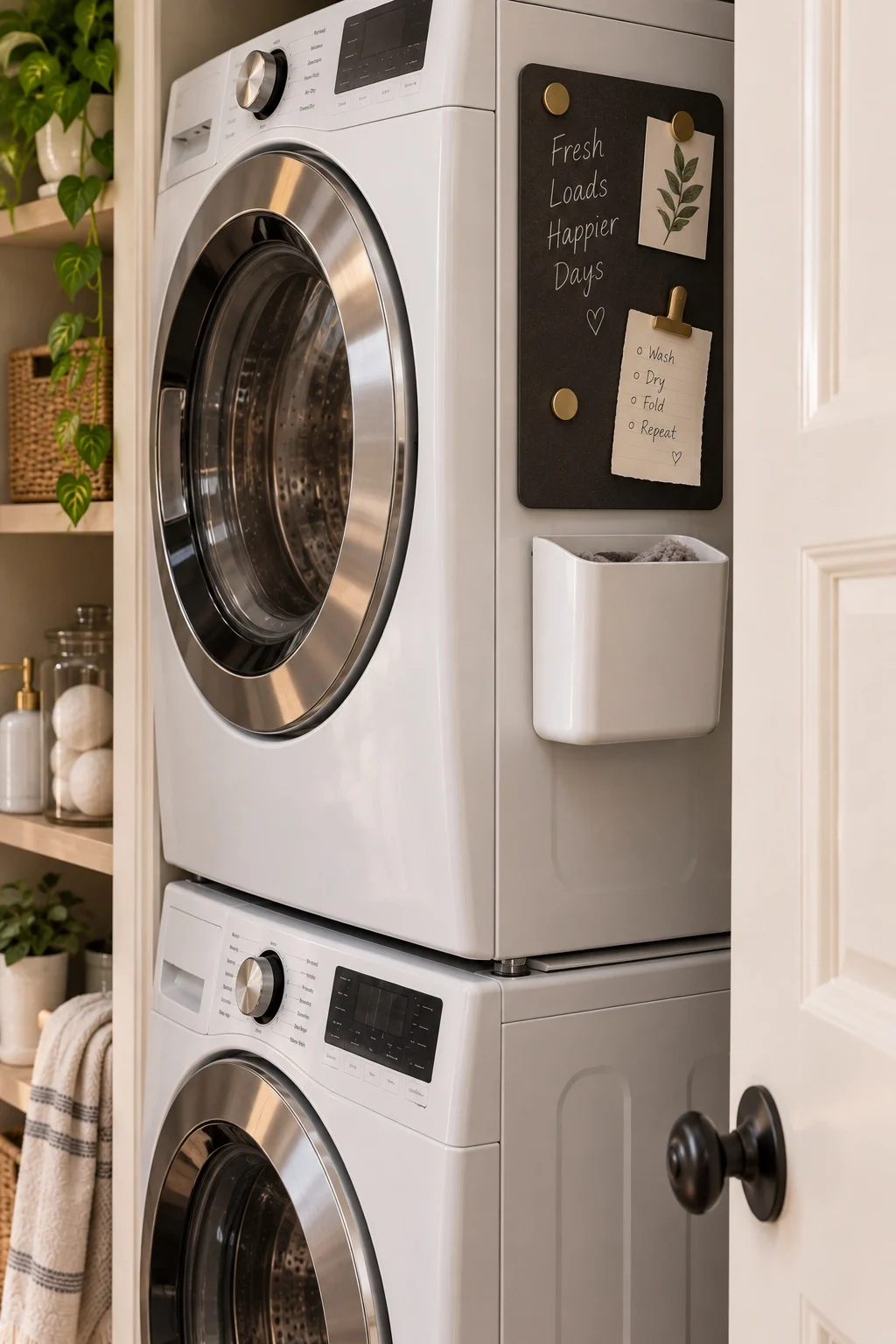
A thin magnetic board or card on the front of the upper dryer puts the wash symbols and the cycle notes at eye level, which is the one height a stacked unit actually gives you for free. Mount it beside the door rather than over it so the drum opening stays clear, and keep it small, around 6 by 8 inches, because anything larger starts to look like office equipment in a closet. A magnetic lint bin below it puts the bin within arm's reach of the trap, which is the only reason anyone empties it weekly instead of monthly. Both lift off in a second.
Final Thoughts
Measure three things before you buy anything: the gap at its narrowest point, the height from the dryer top to the shelf, and how far the lower door swings. Those numbers rule out most of what you would otherwise order. Then work down from the top, because the space above a stacked unit is where storage goes to be forgotten, and fixing the reach there changes the closet more than anything you add at floor level. Pin this to your laundry board so the measurements are there when you are standing in the closet with a tape.
Frequently Asked Questions
How much space do I need around a stacked washer and dryer?
Leave about 1 inch on each side and 4 to 6 inches behind for hoses and the vent, plus clearance for the lower door to swing 20 to 24 inches. A standard stacked unit runs roughly 24 inches wide, 24 to 26 inches deep and 66 to 72 inches tall, so most closets end up with a usable gap on one side only.
How do I reach the shelf above a stacked washer and dryer?
Lower the storage rather than climbing to it. A pull-down rod brings the hanging rail to chest height, clip-on baskets drop the shelf line by 6 to 8 inches, and keeping the top shelf as a single handled tote means one reach instead of five. A folding step stool behind the door is the backup, not the plan.
Can I put an over-the-door organizer on a bifold laundry closet door?
Usually no. Bifold panels fold back on themselves with no clearance at the top, and the track takes about 1.5 to 2 inches of the opening. Over-the-door hooks need roughly half an inch to an inch of gap on a hinged door. If you have bifolds, removing them and hanging a curtain is the better move.
Why does my stacked washer move during the spin cycle?
It is almost always levelling. A stacked unit is tall and narrow, so any wobble in the lower machine gets amplified. Put a spirit level across the lower machine top, adjust the feet until it reads level front to back and side to side, then add rubber anti-vibration pads underneath and run a spin cycle to check.